What to see
Visiting Machu Picchu: Complete Guide to the Lost Inca City
We may earn a commission when you book through links on this page, at no extra cost to you. We don't visit or try the places we cover: we summarize published sources. How we work
In short
- Tickets are online only and limited (about 4,500 visitors a day, up to 5,600 in high season); book at least 2 to 4 weeks ahead, ideally 1 to 2 months, on the official ticket office.
- Most visitors take the PeruRail or Inca Rail train from Ollantaytambo (about 1 h 30 to 1 h 45) or Poroy (about 3 h 30) to Aguas Calientes, then a 25-minute bus.
- The site opens at 6 am and closes at 5:30 pm; early entry gives the best light and fewer crowds, and the busiest period is 10 am to 1 pm.
- The dry season, May to October, is best; June to August is the peak, so May, September and October offer a better balance.
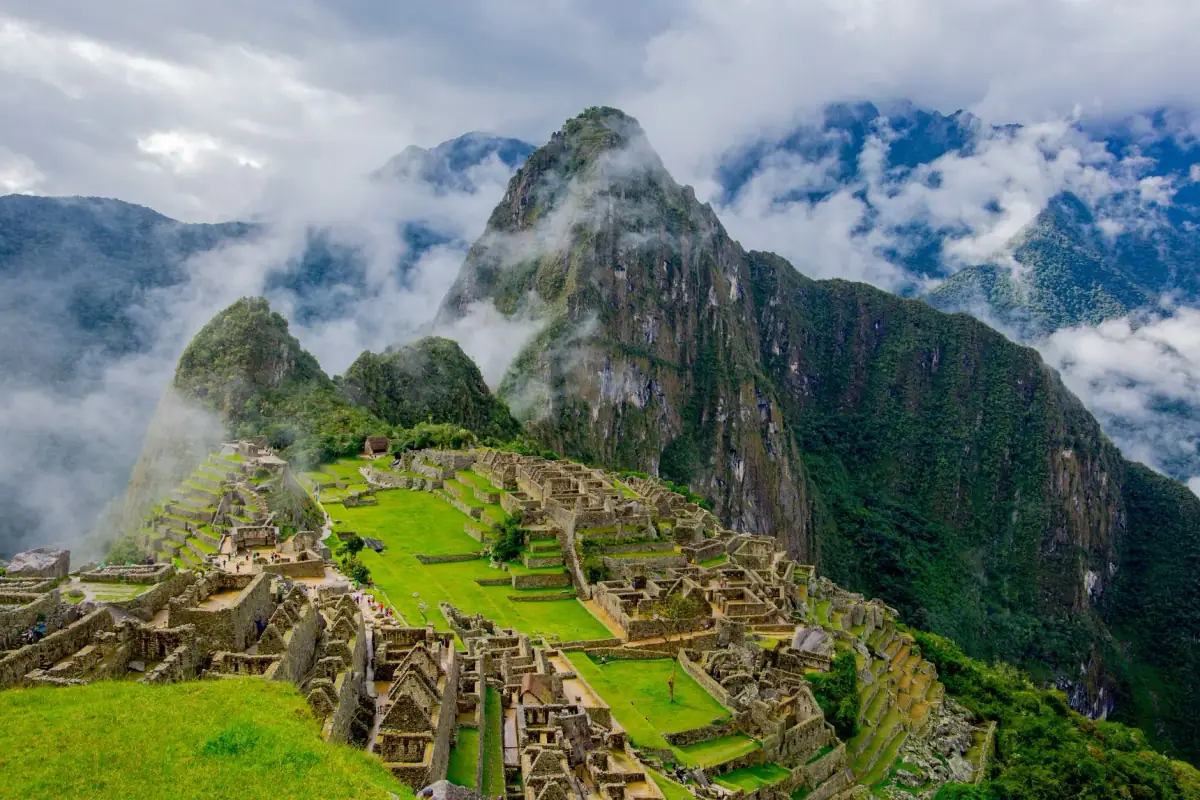
Machu Picchu. Two words that make millions of travelers around the world dream. Nestled at 2,430 m (7,973 ft) in a bend of the Andes mountain range, this Inca city built in the 15th century is at once a masterpiece of pre-Columbian architecture, a fascinating historical mystery and one of the most spectacular landscapes on the planet. A UNESCO World Heritage Site since 1983 and named one of the New Seven Wonders of the World in 2007, the “lost Inca city” fully deserves its reputation, as long as you prepare your visit well.
This complete guide gives you all the keys to visiting Machu Picchu under the best conditions: tickets, circuits, logistics from Cusco, what to see, where to sleep in Aguas Calientes, and tips to avoid the pitfalls.
History of Machu Picchu: the city that defies the centuries
Built around 1450 under the reign of the Inca Pachacútec, Machu Picchu was abandoned less than a century later, probably following the smallpox epidemic that decimated the Inca Empire even before the Spanish conquistadors arrived. Its extraordinary geographic position, on a ridge between two peaks (Huayna Picchu and Machu Picchu Mountain), kept it invisible from the surrounding valleys. The Spanish never discovered it.
For nearly 400 years, only a few local farmers knew of its existence. It was the American explorer Hiram Bingham III, of Yale University, who revealed the site to the world on July 24, 1911. Guided by a local child named Pablito, he was stunned to discover an entire city hidden under vegetation. His photographs, published in National Geographic in 1913, caused a worldwide sensation.
Archaeologists still debate the exact function of the site: royal palace? Retreat for the elite? Solar religious site? The answer is probably a mix of all of these. What we know is that Machu Picchu was a place of capital importance for the Incas: the quality of its construction, the precision of its astronomical alignment and the richness of its temples bear witness to this.
The key areas and monuments of the site
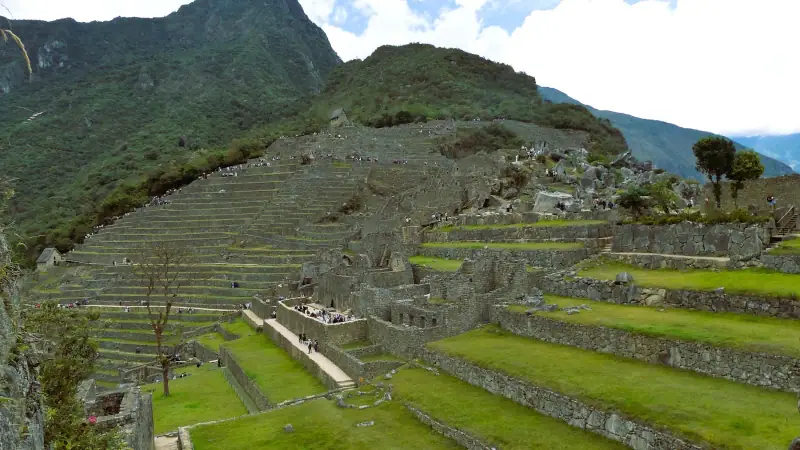
The Machu Picchu archaeological site extends over about 32,500 hectares (about 80,300 acres, counting the buffer zone), but the citadel proper occupies a much smaller area, easily covered in 2 to 4 hours. It is divided into several distinct zones.
The agricultural sector: the terraces that fed the city
Entering through the main gate (the highest point of the site), the first panorama is that of the famous agricultural terraces (andenes), which descend like shelves along the mountain. These terraces were not merely decorative: they solved a major engineering problem by stabilizing the mountain against landslides, while creating microclimates at different altitudes that allowed many plant species to be grown (corn, potatoes, quinoa, coca).
Their internal drainage system, made of successive layers of gravel, sand and soil, is so effective that it remains functional today, six centuries after it was built.
Guided tours of Machu Picchu
Guided tours of the archaeological site with a certified guide. Entry tickets included or not depending on the package.
The urban sector: temples, palaces and squares
The heart of the Inca city unfolds around the Main Plaza (Huacaypata), surrounded by buildings with various functions:
The Temple of the Sun (Torreón) is the most finely built structure on the site. Its semicircular tower of perfectly fitted stones housed an altar dedicated to the sun god Inti. At every June solstice, the first rays of the rising sun pass exactly through a trapezoidal window and illuminate the central stone of the altar, a deliberate astronomical alignment of stunning precision.
The Temple of the Three Windows overlooks the Main Plaza with its three large, perfectly proportioned trapezoidal openings. According to some theories, these windows symbolize the three realms of the Inca cosmos (the underworld, the earth and the celestial world). The view from this open space over the terraces and mountains is one of the most photographed on the site.
The Intihuatana (literally “hitching post of the sun”) is one of the few Inca gnomons to have survived the Spanish conquest intact; missionaries systematically broke these ritual stones at other sites. This granite monolith, carved from the mountain rock itself, served to measure the passing of the seasons and to determine the dates of the major agricultural and religious festivals.
The Priestesses’ Quarter (group of three doors) is a residential complex presumed to have been dedicated to the Acllas, young women chosen from the Inca elite to serve the Sun. The trapezoidal buildings with intact walls illustrate the Inca mastery of earthquake-resistant architecture.
The Sun Gate (Intipunku) and the Caretaker’s Hut
Going up the Inca trail from the citadel to the southeast (45 to 60 minutes’ walk one way from the main entrance), you reach Intipunku, the Sun Gate. This is where pilgrims and travelers arriving by the Inca Trail had their first glimpse of Machu Picchu. In clear weather, the plunging view of the citadel below, framed by snow-capped peaks, is unforgettable.
The Caretaker’s Hut, perched on a terrace above the entrance, offers the emblematic panorama seen in all photos of the site: the whole citadel with Huayna Picchu in the background. It is Machu Picchu’s classic photo spot; get there at the site’s opening for the light and no crowds.
Tickets and circuits: how to buy and what to choose
Since 2021, Machu Picchu ticketing has been entirely online and the system has been reorganized into numbered circuits. Do not count on buying tickets when you arrive; book in advance on the official ticket office of the Ministry of Culture (tuboleto.cultura.pe, linked to the machupicchu.gob.pe site).
The available circuits
The site is divided into several circuits (names and numbers change regularly; check the exact names when you book):
- Circuit 1 (Panoramic): the upper terraces and the classic viewpoint over the citadel. In high season, it also includes two variants: the Sun Gate (Intipunku, about 45 to 60 min walk one way) and the Inca Bridge (Inca Drawbridge), an Inca walkway hanging at the edge of a cliff (about 1 hour round trip).
- Circuit 2 (Classic): the main route, with the lower terraces, temples and palaces. It is the most complete for discovering the citadel (about 2 h 30 to 3 h).
- Circuit 3 (Royalty, “Realeza”): a developed route of the site, with a variant to Huchuy Picchu in high season.
The extensions: Huayna Picchu and Machu Picchu Mountain
Huayna Picchu (the iconic mountain visible in the background of all photos) is the site’s most popular hike. The climb (about 45 to 60 min, 360 m / 1,181 ft of elevation gain on a very steep trail) offers a dizzying 360° view of the citadel and valleys. Places are very limited (about 400 people a day, in two time slots) and must be booked in advance.
Machu Picchu Mountain (the mountain above the site) is less well known but offers an even wider panorama over the whole region, with a plunging view of the citadel from above. The climb takes about 1 h 30, with an elevation gain of about 600 m (1,969 ft). More places are available than for Huayna Picchu, but these also must be booked in advance.
How to get to Machu Picchu
By train from Ollantaytambo or Cusco
The great majority of visitors arrive by train. Two rail companies operate the route:
PeruRail and Inca Rail both offer trains from two departure stations:
- Poroy (about 15 km / 9 mi from Cusco, reachable by taxi): about 3 h 30 to Aguas Calientes.
- Ollantaytambo (in the Sacred Valley, about 72 km / 45 mi from Cusco by road): about 1 h 30 to 1 h 45 to Aguas Calientes. This is the recommended option as it lets you combine a visit to the Sacred Valley and shortens the train ride.
From Aguas Calientes (officially Machu Picchu Pueblo), Consettur buses run to the site’s entrance gate in about 25 minutes. The buses leave from the town center, just below the station, with the first departure at 5:30 am.
On foot: the Inca Trail and alternative treks
For hikers, the classic Inca Trail (4 days from kilometer 82) is the ultimate experience: arriving at Machu Picchu through the Sun Gate at daybreak, after walking in the footsteps of the Incas. Tickets are strictly limited (500 people/day, guides included) and must be booked months ahead.
The alternative treks (Salkantay, 5 days; Inca Jungle, 4 days of biking + walking; Lares, 3 days) also let you reach Aguas Calientes on foot with fewer booking constraints. See our Machu Picchu trek guide for the details of each option.
Aguas Calientes: sleeping at the foot of Machu Picchu
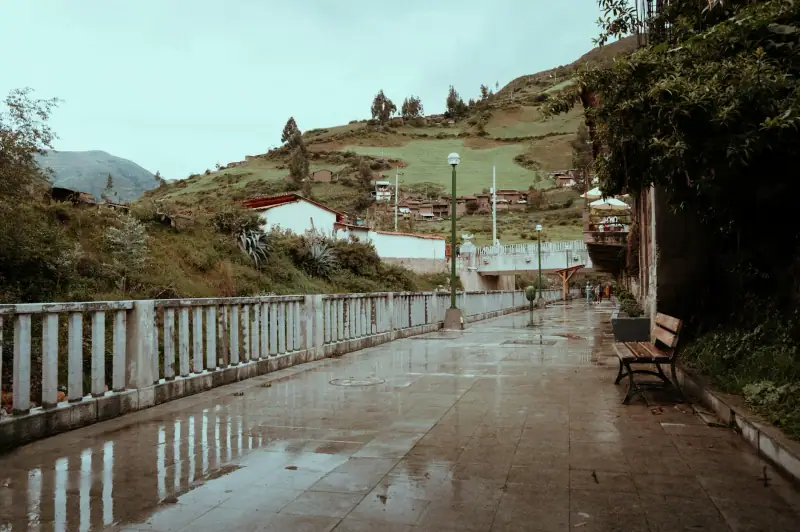
Aguas Calientes (Machu Picchu Pueblo) is the base town for visiting the site. Reachable only by train (there is no road), it is perched at 2,040 m (6,693 ft) at the bottom of a deep gorge crossed by the Urubamba River. Despite its openly touristy side, the town has a particular charm: its colorful houses tumble down the mountainsides, the tropical vegetation is exuberant and the thermal hot springs (which gave the town its name) invite relaxation after a long day of walking.
Staying a night in Aguas Calientes lets you reach the site at the 6 am opening, avoid the day-trip groups (who generally arrive between 9 and 10 am) and enjoy the town without the stress of a train to catch.
Accommodation:
- The town center holds most of the hotels, from simple to comfortable. Rooms with a river view are the most pleasant.
- There is only one hotel directly at the edge of the archaeological site (very high-end luxury); for all the others, everyone stays in Aguas Calientes.
Food:
- The restaurants on the main street all offer more or less the same tourist menu. For a more authentic meal, head up to the Mercado Municipal (covered market) where local comedores serve hearty menus del día at reduced prices.
- The thermal baths of Aguas Calientes (a 10-minute walk from the center) are open during the day and evening, a relaxing option to finish your Machu Picchu visit.
Hotels in Aguas Calientes
Hotels and lodges in Machu Picchu Pueblo for a night at the foot of the site, from budget to comfort.
Which season to choose to visit Machu Picchu?
Machu Picchu is open all year, but conditions vary considerably by season.
Dry season (May to October): The ideal period. Blue skies in the morning, pleasant temperatures (59 to 68 °F / 15 to 20 °C by day), dry hiking trails. May and September-October offer the best compromise between good weather and moderate crowds. June to August is the absolute high season: tickets go weeks ahead and the site is very busy, especially in the middle of the day.
Wet season (November to April): Rain is frequent, especially in the afternoon. Mornings are often clear. Vegetation is more lush and the terraces take on a bright emerald color. February is the rainiest month and the Inca Trail closes for maintenance; Machu Picchu stays open. The wet season is recommended for tight budgets (lower hotel and train prices) and for travelers avoiding crowds.
Temperature and altitude: At 2,430 m (7,973 ft), Machu Picchu is much lower than Cusco (3,400 m / 11,155 ft). The site has a tropical-mountain microclimate: it can be very hot in the sun and very cool in the shade or when clouds roll in. Dress in layers. For anything related to altitude, ask your doctor or a travel clinic, and see the official travel health pages (CDC in the US, TravelHealthPro in the UK).
Practical information: everything you need to know
Hours and access
The site opens at 6 am and closes at 5:30 pm (check the official information at the time of your visit). Tickets show an entry slot per hour, starting at 6 am, the last in mid-afternoon; a tolerance of about 30 minutes is granted after the printed time, beyond which entry is in principle refused.
You reach the site from Aguas Calientes by bus (25 min) or on foot by a steep path alongside the bus road (about 1 hour uphill; keep in mind the energy you will need for the rest of the day).
What to bring
- ID matching the one used to book the ticket (passport recommended)
- Printed ticket or on your phone (a screenshot is recommended in case the network fails)
- Sunscreen and a hat: the high-altitude sun is intense
- Light rain jacket or poncho: showers can occur at any time
- Water (at least 1.5 liters / 1.6 qt): there is no drinking fountain inside the site
- Small snack: snacks and restaurants are outside the site only
- Walking poles if you climb Huayna Picchu or the Mountain (mandatory, check the current regulations)
Rules to follow
The Peruvian authorities have tightened the rules in recent years:
- Bags limited in size (about 40 × 35 × 20 cm / 16 × 14 × 8 in maximum; storage available at the entrance)
- No smoking anywhere on the site
- No eating in the main archaeological zone
- Drones are strictly forbidden without special authorization
- Do not touch the stones and stay on the marked paths
Car rental in Peru
Explore the Sacred Valley and reach Ollantaytambo at your own pace before taking the train to Machu Picchu.
Sample itinerary: Cusco + Machu Picchu in 3 days
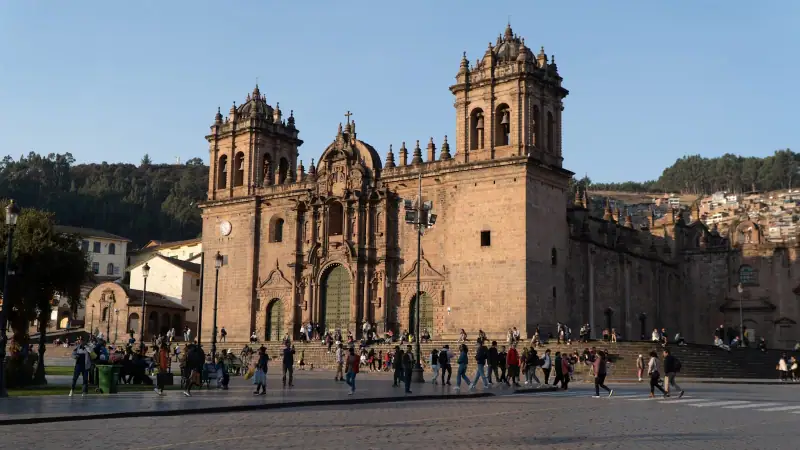
Day 1: Cusco and the Sacred Valley Arrive in Cusco and take it easy. Light visit of the historic center and Qorikancha. In the late afternoon, leave by combi or taxi for Ollantaytambo (about 1 h 30 from Cusco) to spend the night. Visit the Ollantaytambo ruins in the evening or the next morning.
Day 2: Machu Picchu Leave early by train from Ollantaytambo (first departure around 5 to 6 am depending on the company). Arrive in Aguas Calientes, take the bus straight to the site. Enter at opening (6 am) to enjoy the light and relative calm. Visit the main circuit (2 h 30 to 3 h), optional climb of Huayna Picchu or to Intipunku. Lunch in Aguas Calientes. Free afternoon or train back to Ollantaytambo.
Day 3: Return to Cusco If you spent the night in Aguas Calientes: a second early-morning visit to the site (different ticket if you want to re-enter), then the train to Ollantaytambo and back to Cusco by taxi or bus. Half a day free in Cusco for craft shopping. Explore San Blas or the markets.
For a fuller itinerary in Peru, see our Peru circuit and the 7-day Peru itinerary.
Machu Picchu is one of those experiences that never disappoints, as long as you have a realistic picture of it: it is not a site lost deep in the wild jungle, but a very busy and very well managed place, whose beauty remains absolutely striking despite (or thanks to) its worldwide fame. The secret to getting the most from it? Arrive early, book your ticket long in advance, and take the time to look up from the photo signs and simply contemplate this miracle of stone suspended between sky and Andes.
Frequently asked questions
Do you need to book Machu Picchu tickets in advance?
Yes, it is absolutely essential. Tickets are sold in limited numbers (about 4,500 visitors a day, up to 5,600 in high season, split into time slots) and must be bought on the official ticket office of the Ministry of Culture (tuboleto.cultura.pe). In high season (June to August), tickets go several weeks ahead. Book at least 2 to 4 weeks before your visit, ideally 1 to 2 months.
How much does Machu Picchu cost?
The ticket price varies with the circuit chosen. Allow about 152 soles (about €38 / $44) for the classic site-only circuit, and more if you add the Huayna Picchu or Machu Picchu Mountain climb (supplement of about 70 to 90 soles). Prices are updated regularly; check the official site before buying.
What is the best time of day to visit Machu Picchu?
Opening at 6 am is the best time: golden light bathes the terraces, the mist gradually fades and the groups have not yet arrived. If you want to see sunrise over the citadel, take the first bus from Aguas Calientes (around 5:30 am) or, better, finish the Inca Trail at the Sun Gate (Intipunku). The afternoon, especially between 10 am and 1 pm, is the most crowded period.
How do you get to Machu Picchu from Cusco?
There are two main options. By train: from Cusco (Poroy station) or better from Ollantaytambo, take the PeruRail or Inca Rail train to Aguas Calientes (Machu Picchu Pueblo), then the bus to the site (25 min). On foot: the classic Inca Trail (4 days from km 82), the Salkantay (5 days) or other alternative treks let you arrive on foot, but require very early booking.
Can you visit Machu Picchu without a guide?
Yes, you can visit the site independently with visitor apps or the explanatory signs there. However, a certified guide greatly enriches the visit: they put the Inca architecture in context, explain the functions of the different areas, the legends and the history of the site's rediscovery in 1911. Guides can be booked at the site entrance or through an agency in Aguas Calientes.
Can you spend the night at Machu Picchu itself?
No. There is no accommodation inside the archaeological site. All visitors sleep in Aguas Calientes (also called Machu Picchu Pueblo), the town at the foot of Machu Picchu, reachable by train from Ollantaytambo or Cusco. A night there lets you take advantage of the 6 am opening and avoid the day groups coming from Cusco.
What is the best season to visit Machu Picchu?
The dry season, May to October, offers the best conditions: clear skies, dry paths, fewer clouds in the morning. June to August is high season with peak crowds; May, September and October offer a better balance of good weather and moderate crowds. The rainy season (November to April) makes the site greener but morning rain is frequent. In February, the Inca Trail is closed for maintenance.
More Peru guides
Keep reading
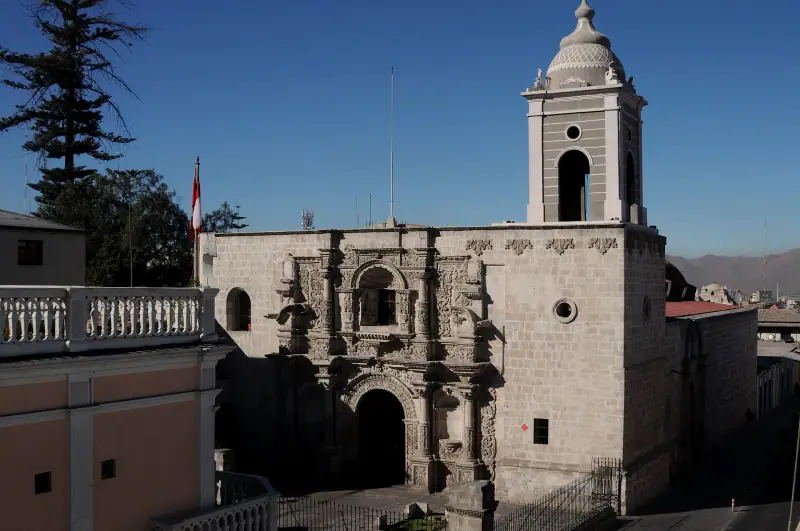
Visiting Arequipa: Complete Guide to Peru's White City
Complete Arequipa guide: Santa Catalina Monastery, Colca Canyon, UNESCO, hotels and practical tips for your stay in Peru's White City.
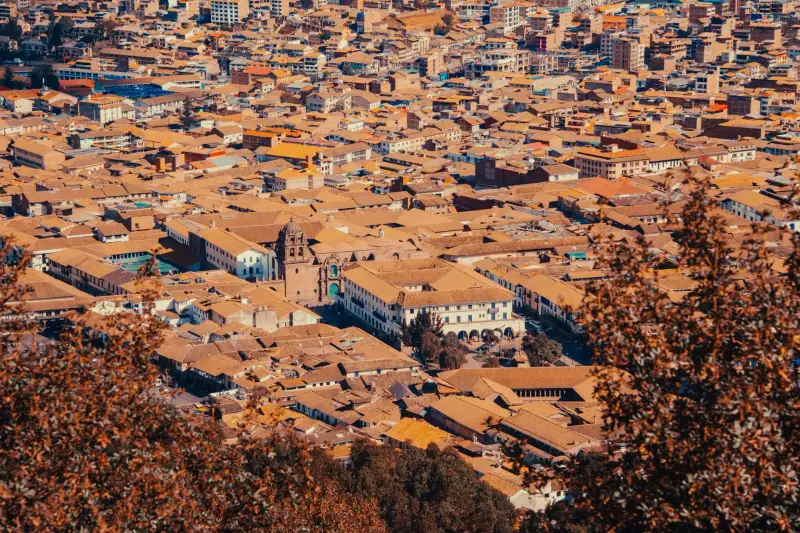
Visiting Cusco: Complete Guide to the Former Inca Capital
Complete Cusco guide: Plaza de Armas, Qorikancha, Sacsayhuamán, San Blas, Sacred Valley. Where to stay, food, the Boleto Turístico and itineraries.
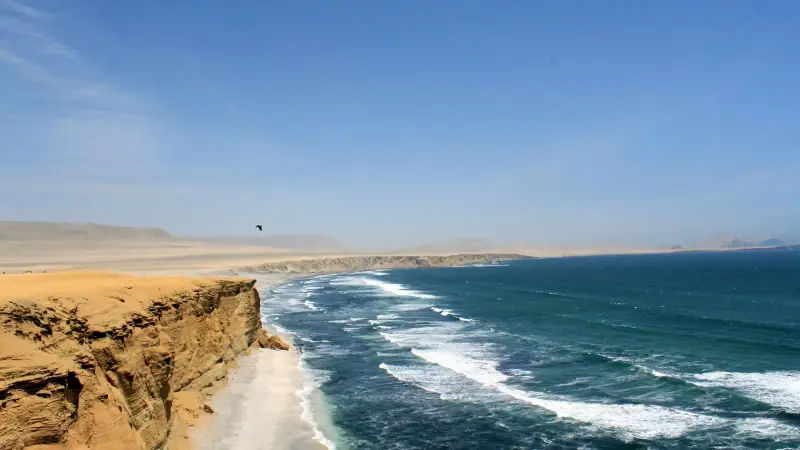
Visiting the Peruvian Coast: Complete Guide to the Pacific Coast
Complete guide to the Peruvian coast: Lima, Paracas, Huacachina, Nazca Lines, Trujillo and Máncora. UNESCO sites, desert and Pacific beaches.
Ready-made
Peru itineraries
7 days
Peru in 7 Days: The Ideal One-Week Itinerary
LimaCuscoAguas CalientesCusco
12 days
Peru Sierra Road Trip: 12 Days from Cusco to Huaraz
12-day Peruvian Sierra road trip: Cusco, Machu Picchu, Lake Titicaca, Arequipa, Colca, Huaraz. Complete itinerary with budget.
4 days
Lima, Paracas, Huacachina and Nazca in 4 Days by Bus: Doable Without a Car?
Lima, Paracas, Huacachina and Nazca in 4 days by bus: stages, km, real travel times, recommended departures and what to sacrifice to keep the pace.