Things to do
Vinicunca Without a Tour from Cusco: Prices, Transport and Difficulty
We may earn a commission when you book through links on this page, at no extra cost to you. We don't visit or try the places we cover: we summarize published sources. How we work
In short
- No permit or agency is required for Vinicunca: take a bus to Cusipata, a taxi to the trailhead, and pay a cash entry fee to the local community.
- Expect 120 to 200 soles per person on your own versus 100 to 180 soles on a group tour; the entry fee is about 10 to 30 soles.
- The trail is about 10 to 15 km (6 to 9 mi) round trip with about 700 m (2,300 ft) of climb, peaking at 5,036 m (16,522 ft).
- The dry season, May to October, is the most reliable; November to March brings rain, mud and possible snow. Palccoyo is a quieter alternative.
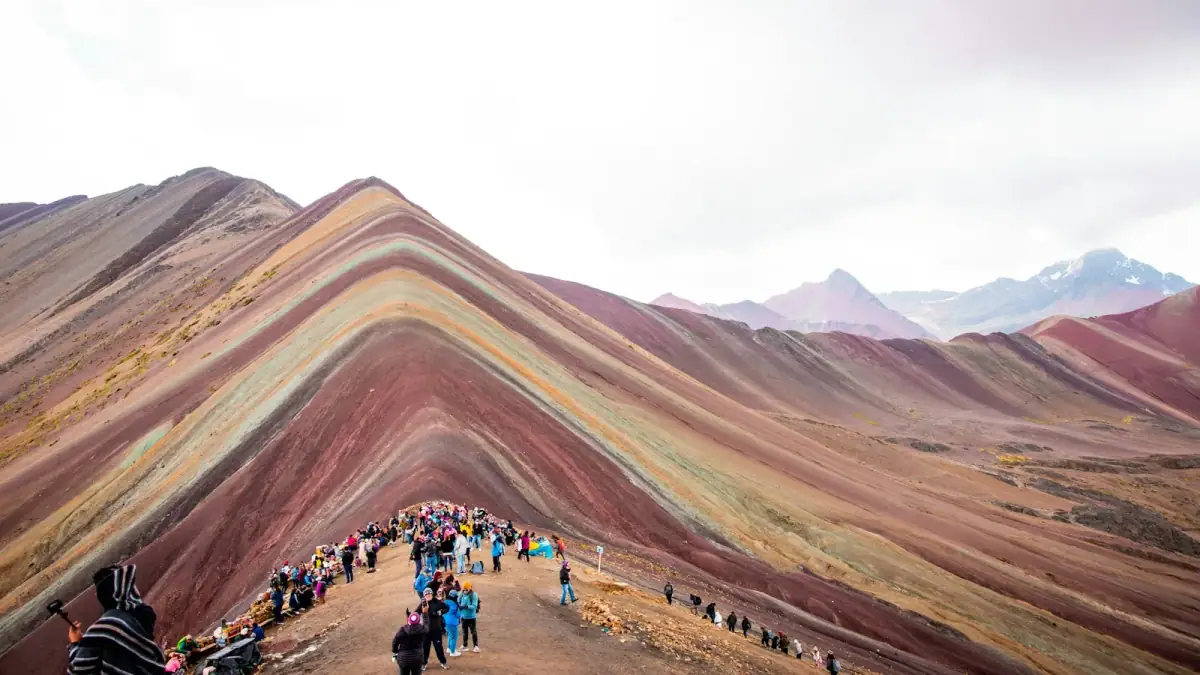
Every morning, hundreds of minibuses leave Cusco before dawn for Rainbow Mountain. Yet nothing obliges you to follow them: Vinicunca is easy to organize on your own, for a comparable budget and with more freedom. Here is how to do it, what it really costs, and when a tour remains the better choice.
Vinicunca without a tour: is it really possible?
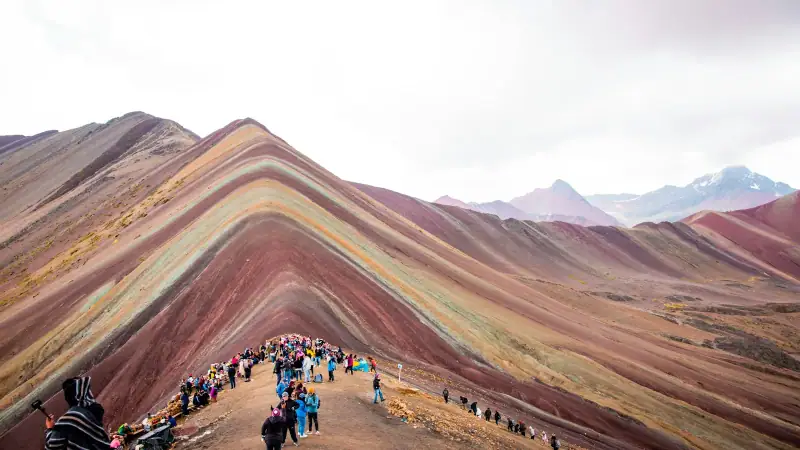
Yes. Unlike the Inca Trail, access to Vinicunca is not subject to any named permit or agency quota. The site is managed by the Quechua communities of the Pitumarca valley, who collect an entry fee at the start of the trail. What an agency sells is mostly logistics: transport from your hotel, breakfast and sometimes a guide.
The main drawback of going independently is time. Groups leave around 3:30 am to arrive at sunrise, with the advantage of soft light and a less crowded trail. On your own you can aim for the same schedule, but the public bus starts later: you must make up for it with a private taxi or accept arriving in mid-morning.
Vinicunca excursion from Cusco
If you would rather not organize anything: compare departures, with or without breakfast and lunch included.
The independent route, step by step
Step 1: Cusco to Cusipata by bus (about 1 h to 1 h 15)
From Huayruro Pata street, buses and minibuses to Sicuani stop at Cusipata. The ride costs a few soles (around 6 to 10 soles) and departures are frequent from dawn. Ask the driver to drop you at the Cusipata junction.
Step 2: Cusipata to the trailhead by taxi (1 h to 1 h 30)
In Cusipata, taxis and collectivos wait. For a round trip with waiting time during your hike, expect about 80 to 120 soles per vehicle, to be shared between travelers. Negotiate before getting in and agree on the return time.
Step 3: paying the entry fee and climbing
Pay the entry fee in cash at the start of the trail, then climb at your own pace. Keep your ticket: you may be asked for it higher up.
Step 4: the return
If your taxi is waiting, it takes you back to Cusipata, then you take a bus to Cusco. Plan to be back in Cusco in the early evening.
Real budget: on your own or on a tour?
| Item | On your own | Group tour |
|---|---|---|
| Round-trip transport | 40 to 70 soles | included |
| Entry fee | 10 to 30 soles | often paid extra |
| Breakfast / lunch | 20 to 40 soles | often included |
| Indicative total | 120 to 200 soles | 100 to 180 soles |
The gaps are small: saving money is not the main argument. Prices are indicative and vary with the season and negotiation.
Difficulty and altitude: the real issue
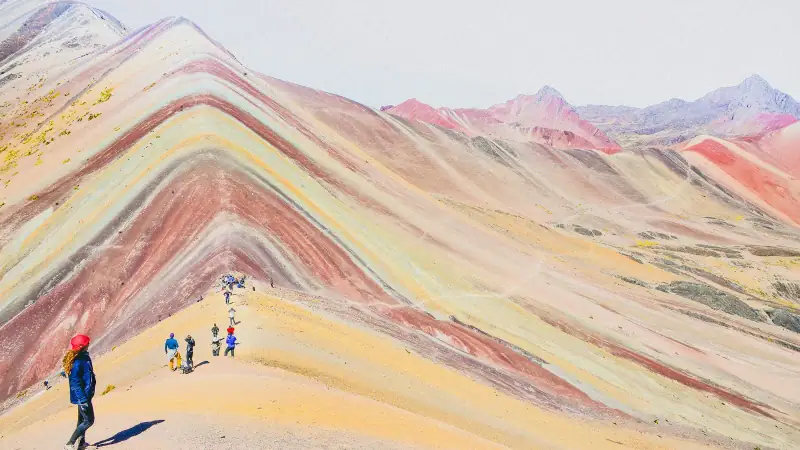
The trail is not technical (about 700 m / 2,300 ft of elevation gain), but the highest point reaches 5,036 m (16,522 ft). At this altitude, oxygen pressure is about half that at sea level. Take it slow, and do not come straight from sea level. For anything related to altitude, ask your doctor or a travel clinic, and see the official travel health pages (CDC in the US, TravelHealthPro in the UK).
One simple practical rule: walk slowly, breathing deeply.
Sleep in Cusco before the climb
Give yourself time in Cusco before Vinicunca: compare hotels in the center.
Which season to choose?
The dry season, May to October, is the most reliable. Nights are very cold and the morning light brings out the colors. From November to March, rain and fog dull the landscape, and snow can cover the mountain. If you hesitate over the period, see our page on the best time to visit Peru.
What to put in your bag?
- 1.5 to 2 L (1.6 to 2.1 qt) of water and energy snacks;
- a windproof, waterproof jacket, a hat and gloves;
- SPF 50 sunscreen, sunglasses;
- cash in small bills for the entry fee, toilets and horses;
- trekking poles, useful if the trail is muddy.
When a tour is preferable
Take an organized excursion if you have few days in Cusco, if you travel alone and prefer not to negotiate, or if you are unsure of your physical condition. To compare options, see also things to do in Cusco and our guide to hiking in Peru.
Alternative: Palccoyo
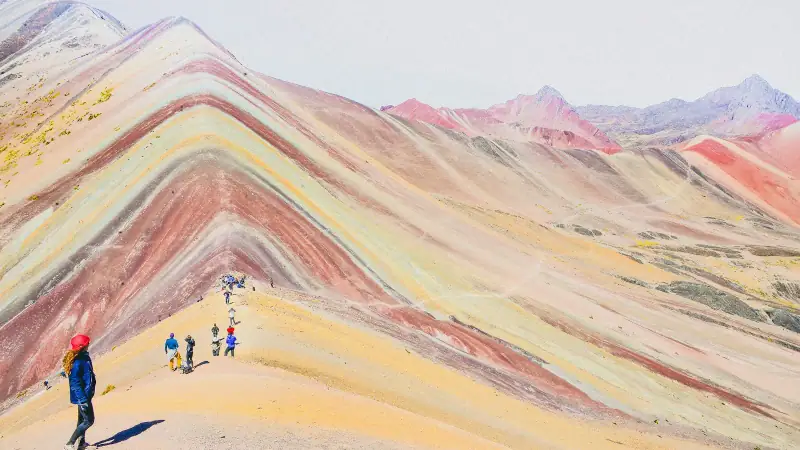
Less well known, Palccoyo offers comparable colored strata with a short walk and a slightly lower altitude. The site is much quieter than Vinicunca: an excellent option with children or if altitude worries you. The main viewpoint is at about 4,900 m (16,076 ft) after a walk of about an hour, and the site includes several colorful formations, including a forest of red stones. Access is by a different road, via Checacupe: without a car, a private taxi from Cusco is the simplest solution, or a half-day excursion. Bring the same warm clothing, cash for the entry fee and plenty of water. As the site is quieter, late-morning light works very well for photos, so you can go without getting up in the middle of the night.
Frequently asked questions
Before booking or heading out on your own, keep the essentials in mind: Vinicunca can be done without a tour with a bus, a taxi and cash; the budget is close to that of an excursion; and taking it slow at altitude matters far more than your fitness. Entry and taxi prices change from season to season, so keep a 20% margin in your budget. The answers below cover the most common questions: entry cost, horses, difficulty, season and alternatives.
Frequently asked questions
Can you do Vinicunca without a tour?
Yes. No regulation requires you to use an agency: take a bus to Cusipata, then a taxi to the trailhead, and pay an entry fee to the local community. Expect 120 to 200 soles per person in total, versus 100 to 180 soles on a group tour. Going independently mainly lets you choose your schedule.
How much is the Vinicunca entry fee?
The entry fee is collected by the local communities and stays modest, around 10 to 30 soles depending on the access and the season. The amount changes regularly: keep cash in small bills and check the price at the ticket office. Bank cards are not accepted.
How hard is the hike?
The trail is about 10 to 15 km (6 to 9 mi) round trip, with about 700 m (2,300 ft) of elevation gain (from 4,326 m / 14,193 ft at the start to 5,036 m / 16,522 ft at the top). The altitude is as tiring as the slope. Allow 1 h 30 to 2 h 30 for the climb.
Do you need to acclimatize beforehand?
Take it slow. Cusco is at 3,400 m (11,155 ft). Do not do Vinicunca right after arriving from Lima. For anything related to altitude, ask your doctor or a travel clinic, and see the official travel health pages (CDC in the US, TravelHealthPro in the UK).
What is the best season?
The dry season, May to October, offers the clearest skies, but mornings are icy (down to -10 °C / 14 °F). November to March is the rainy season: muddy trail, dull colors under the clouds and a risk of snow. Start early, as clouds rise after 10 am.
Is there a less crowded alternative?
Yes. Palccoyo, about 3 h from Cusco, has more accessible colorful mountains (viewpoint at about 4,900 m / 16,076 ft, short climb) and far fewer people. It suits children and people worried about altitude better.
Can you rent a horse?
Yes, horses are offered at the trailhead for about 80 to 150 soles round trip. Negotiate, check the condition of the animal, and know that the last stretch is on foot in every case.
More Peru guides
Keep reading
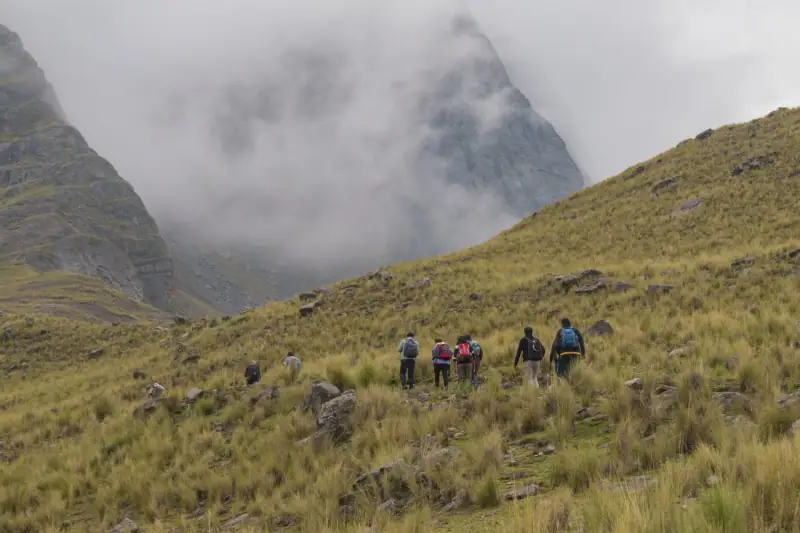
Hiking in Peru: The Best Treks and Trails
The best hikes in Peru: Cordillera Blanca, Inca Trail, Rainbow Mountain, Colca Canyon. Complete guide with levels and practical tips.
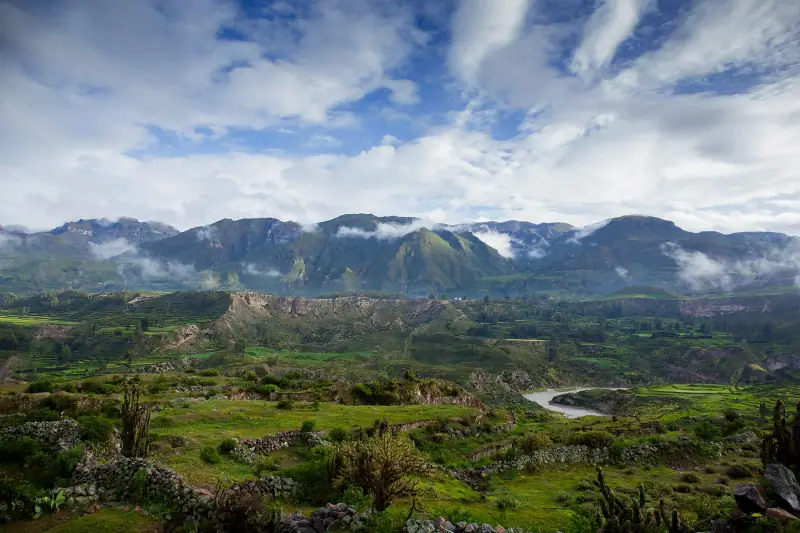
Colca Canyon: Complete Guide to Visiting from Arequipa
How to visit the Colca Canyon from Arequipa: condors, trekking, Chivay, Cruz del Cóndor. Practical tips, budget and itineraries for 1 or 2 days.
Peru Budget 2026: How Much Does a Trip to Peru Cost?
What budget for a trip to Peru? Accommodation, meals, transport, tourist sites: our complete guide with real 2026 figures.
Ready-made
Peru itineraries
7 days
Peru in 7 Days: The Ideal One-Week Itinerary
LimaCuscoAguas CalientesCusco
12 days
Peru Sierra Road Trip: 12 Days from Cusco to Huaraz
12-day Peruvian Sierra road trip: Cusco, Machu Picchu, Lake Titicaca, Arequipa, Colca, Huaraz. Complete itinerary with budget.
4 days
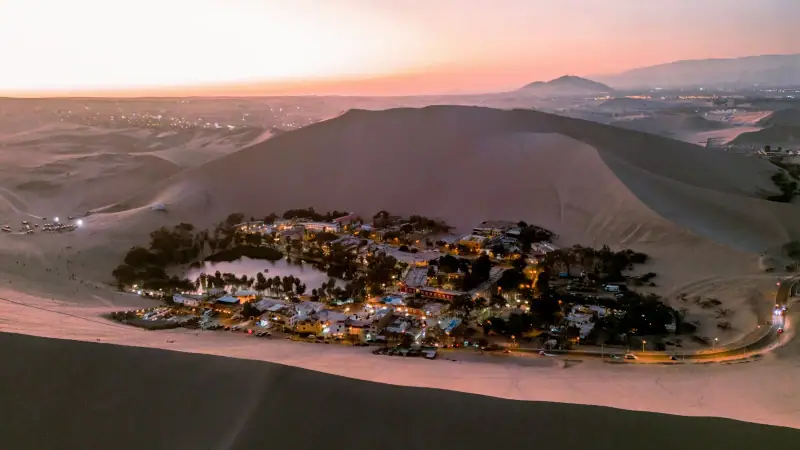
Lima, Paracas, Huacachina and Nazca in 4 Days by Bus: Doable Without a Car?
Lima, Paracas, Huacachina and Nazca in 4 days by bus: stages, km, real travel times, recommended departures and what to sacrifice to keep the pace.