Things to do
Hiking in Peru: The Best Treks and Trails
We may earn a commission when you book through links on this page, at no extra cost to you. We don't visit or try the places we cover: we summarize published sources. How we work
In short
- The Cordillera Blanca around Huaraz is the trekking capital: the 4-day Santa Cruz trek (46 km / 29 mi, pass at 4,750 m / 15,584 ft) and the Laguna 69 day hike (4,604 m / 15,105 ft).
- Rainbow Mountain (Vinicunca, about 5,036 m / 16,522 ft) is a day trip from Cusco, leaving at 4 am; the Colca Canyon has a 2-day descent to the Sangalle oasis from Cabanaconde.
- The Inca Trail requires a licensed guide; other treks are best with a guide, though not mandatory in the Cordillera Blanca.
- The dry season, May to September, is best; May-June and September-October are less crowded than July-August.
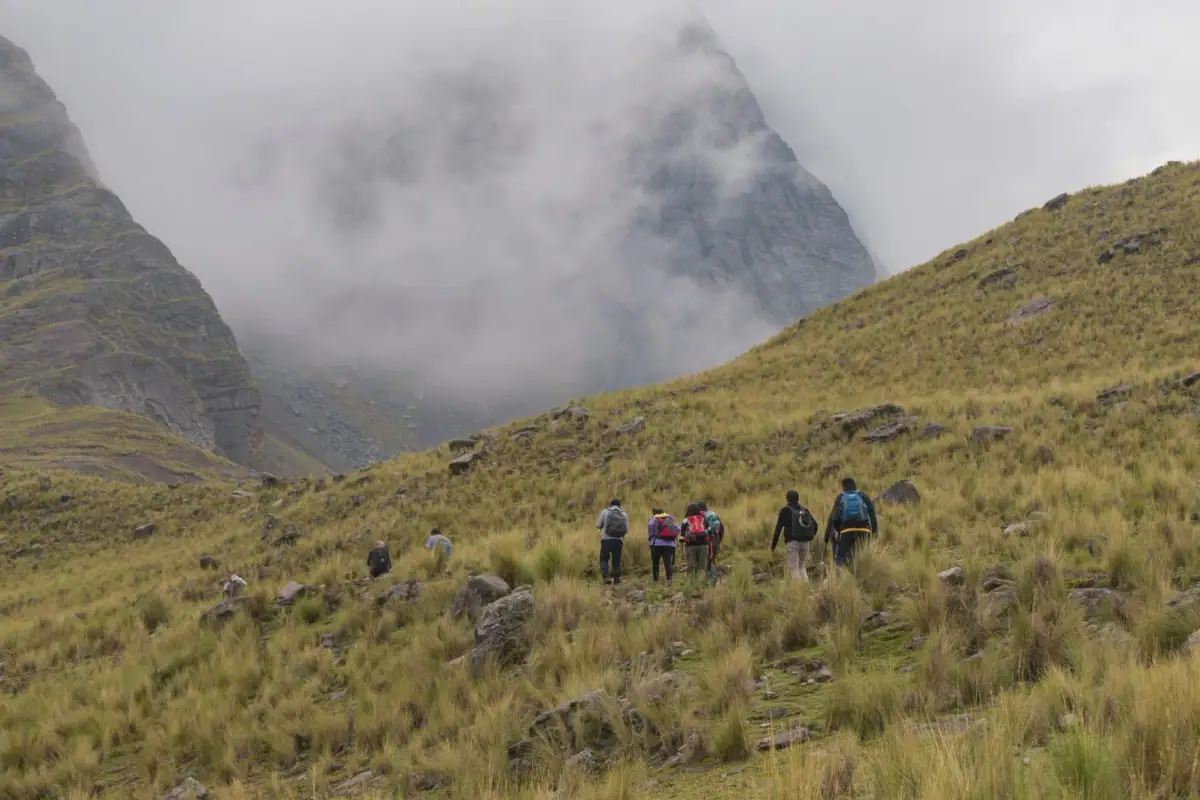
Peru is one of the great countries in the world for hiking and trekking. Its Andes hold some of the highest tropical mountains in the world, ancient glaciers, lagoons of unreal colors and trails that cross landscapes few places on Earth can match. From the famous Inca Trail to the little-known Huayhuash Circuit, here is an overview of the most beautiful Peruvian treks.
The Cordillera Blanca and Huaraz: a hikers’ paradise
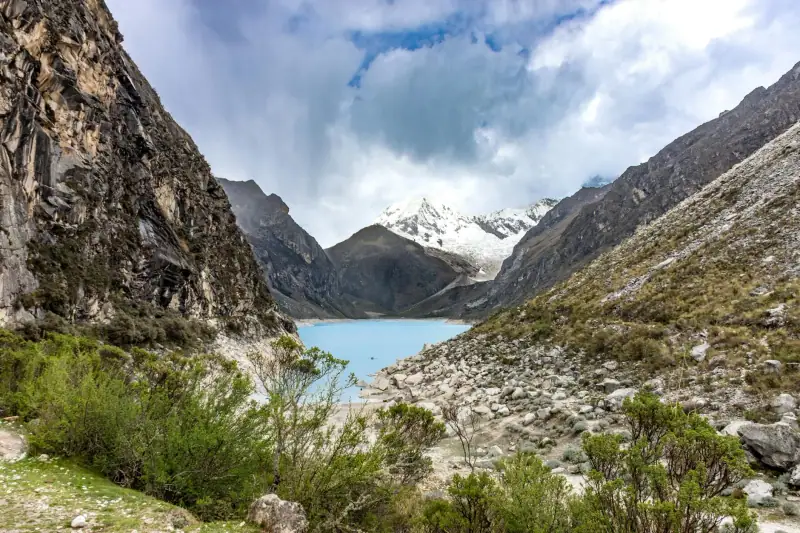
Huaraz, 400 km (249 mi) north of Lima, is the trekking capital of Peru. The Cordillera Blanca around it is the highest tropical mountain range in the world, with 27 peaks above 6,000 meters (19,685 ft). It is the essential destination for high-mountain enthusiasts.
Santa Cruz trek (4 days)
The most beautiful trek in South America according to many hikers.
This classic circuit of the Cordillera Blanca offers breathtaking landscapes: the sparkling glaciers of Chopicalqui (6,354 m / 20,846 ft) and Alpamayo (5,947 m / 19,511 ft), turquoise lagoons lined with totora, alpine valleys covered in Andean flowers.
| Distance | 46 km (29 mi) |
| Duration | 4 days / 3 nights |
| Max altitude | Punta Unión pass: 4,750 m (15,584 ft) |
| Difficulty | Moderate |
| Starting point | Cashapampa or Vaquería |
4-day program:
- Day 1: Cashapampa (2,900 m / 9,514 ft) → Llamacorral (3,850 m / 12,631 ft)
- Day 2: Llamacorral → Taullipampa (4,200 m / 13,780 ft) via the Punta Unión pass (4,750 m / 15,584 ft)
- Day 3: Taullipampa → Paria (3,900 m / 12,795 ft)
- Day 4: Paria → Vaquería or Cashapampa (return)
Logistics: Possible independently (free campsites, burros for optional porterage). Or with a Huaraz agency (200-350 USD, all-inclusive).
Laguna 69 (day hike)
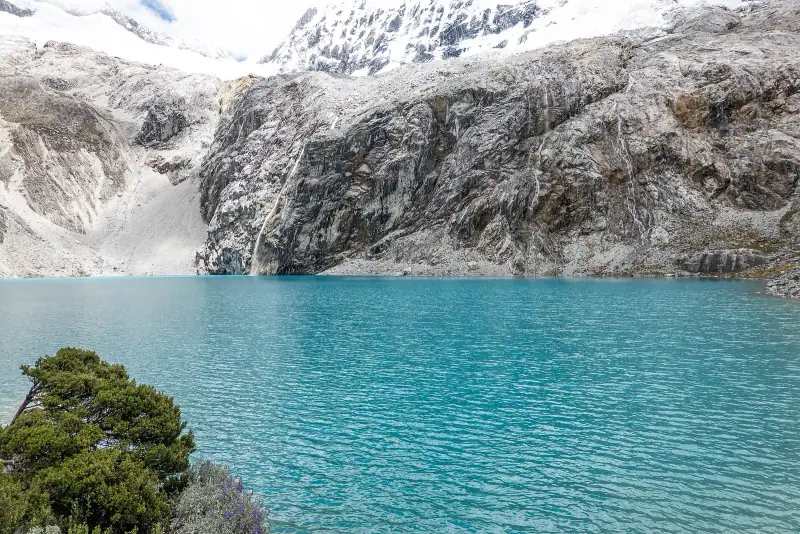
The most popular day hike in the Cordillera Blanca. From Huascarán National Park, 12 km (7.5 mi) round trip to Laguna 69, an azure lake surrounded by glaciers at 4,604 m (15,105 ft). Superb view of Artesonraju (the peak that inspired the Paramount Pictures logo).
Difficulty: Moderate (significant elevation gain). Duration: 5-6 h round trip. Access: Bus or taxi from Huaraz to Cebollapampa. According to an announcement in January 2026, access to Laguna 69 may be reserved for authorized agencies: check the current rules with Sernanp or a Huaraz agency.
Huayhuash Circuit (8-12 days)
For experienced hikers looking for the ultimate challenge. The Huayhuash is a smaller mountain range than the Cordillera Blanca but even wilder. Joe Simpson nearly died there (the book “Touching the Void”). The atmosphere is that of a wild mountain world, barely touched by tourism.
| Distance | 160 km (99 mi) |
| Duration | 8-12 days |
| Max altitude | 5,450 m (17,881 ft) |
| Difficulty | Very difficult |
| Access | Bus from Lima (8 h) |
Rainbow Mountain (Vinicunca) from Cusco
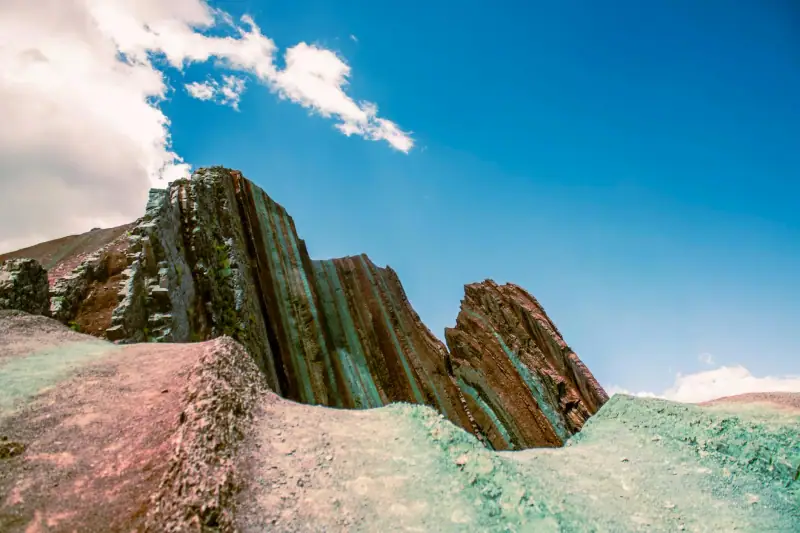
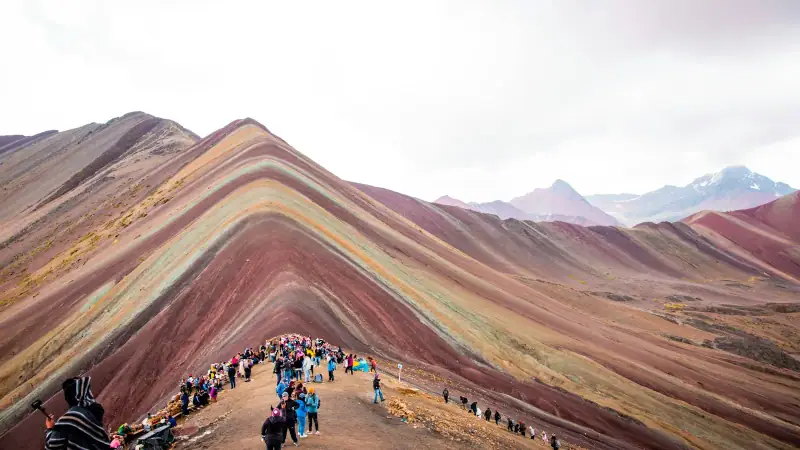
Discovered late by tourists (the eternal snows that covered it melted under the effect of global warming), Rainbow Mountain has become one of the most popular excursions from Cusco.
What you will see: Mountainsides streaked with red, ocher, yellow and green, created by natural mineral deposits (iron, chlorite, limonite…). At the high point (about 5,036 m / 16,522 ft), a 360° panorama of the Andes.
Logistics:
- Leave Cusco at 4 am by minibus
- Arrive at the trailhead around 6:30-7 am (altitude 4,300 m / 14,108 ft)
- 6 km (4 mi) round-trip hike (3-4 h)
- Back in Cusco around 5-6 pm
Tips:
- The starting altitude (4,300 m / 14,108 ft) can be hard going; take it slow and do this hike after some days in Cusco
- Bring warm clothes (it is 23 to 14 °F / -5 to -10 °C in the morning), a rain jacket, sunscreen
- Horses are available for 15-20 USD if you get tired along the way
- Price of the organized excursion: about 30 to 40 USD from Cusco (guide and transport included; the site entry fee, around 30 soles, is often extra)
Colca Canyon from Arequipa
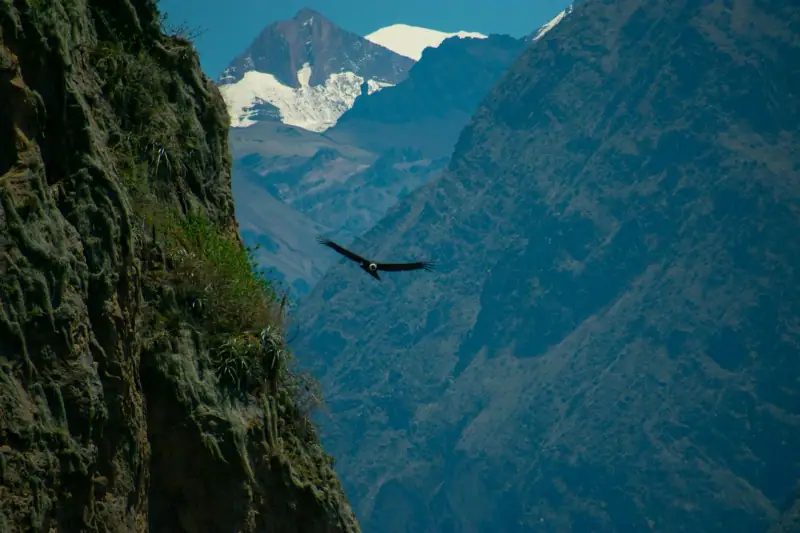
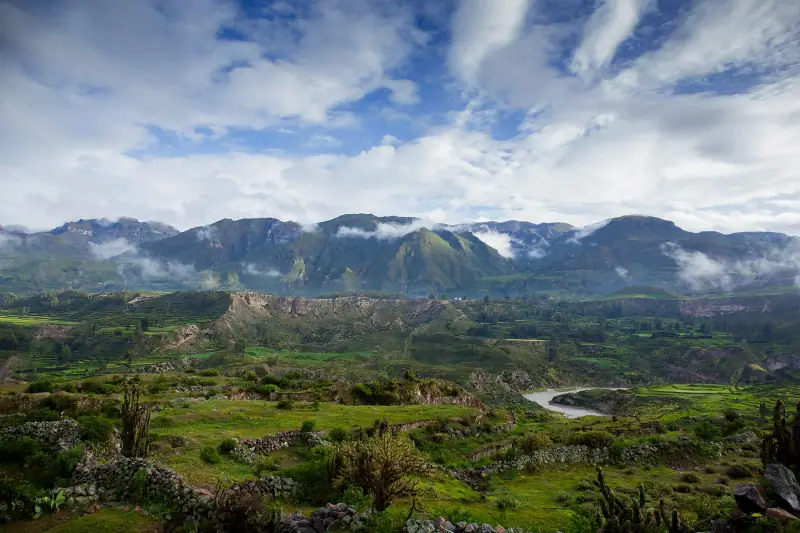
The Colca Canyon is one of the deepest canyons in the world (3,270 m / 10,728 ft deep, twice the Grand Canyon). It is also one of the best places in the world to watch Andean condors in flight.
Canyon-bottom hike (2 days)
The descent to the bottom of the canyon from Cabanaconde is a 2-day hike that lets you see the canyon from the inside.
| Distance | 20-30 km (12-19 mi) round trip |
| Duration | 2 days / 1 night |
| Difficulty | Moderate |
| Altitude | 1,200 m (3,937 ft) at the canyon bottom |
Program:
- Day 1: Cabanaconde (3,287 m / 10,784 ft) → Sangalle (oasis at the bottom, 2,150 m / 7,054 ft): 3 h descent
- Night at Sangalle in a lodge with a pool (a surprise oasis at the bottom of the canyon)
- Day 2: Sangalle → Cabanaconde: 3-4 h climb, demanding but spectacular
Cruz del Cóndor
The Cruz del Cóndor viewpoint is 2 hours by road from Arequipa. Every morning between 8 and 10 am, dozens of condors (the largest flying birds in the world, up to 3.3 m / 11 ft wingspan) glide on the thermals above the canyon. An unforgettable sight.
Access: On an organized excursion from Arequipa (30-50 USD) or by local bus.
Places to stay in Huaraz
Hotels and guesthouses for your trekking base in the Andes.
Other remarkable hikes
Choquequirao (5-8 days)
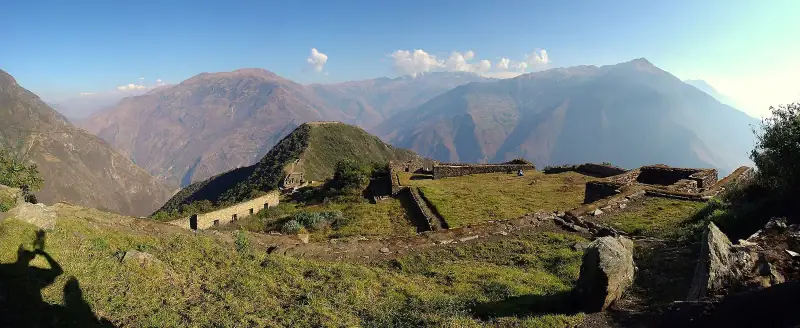
The Inca citadel that rivals Machu Picchu, accessible only on foot. 15 km (9 mi) round trip from Cachora with a descent and climb of 1,500 m (4,921 ft). Few tourists: pure adventure and archaeology.
Vilcabamba (6-8 days)
The Vilcabamba circuit links Huancacalle to the ruins of the last Inca refuge, the hidden city of Vitcos and Espíritu Pampa. A historic and physically demanding trek, for seasoned adventurers.
Salcantay (5 days)
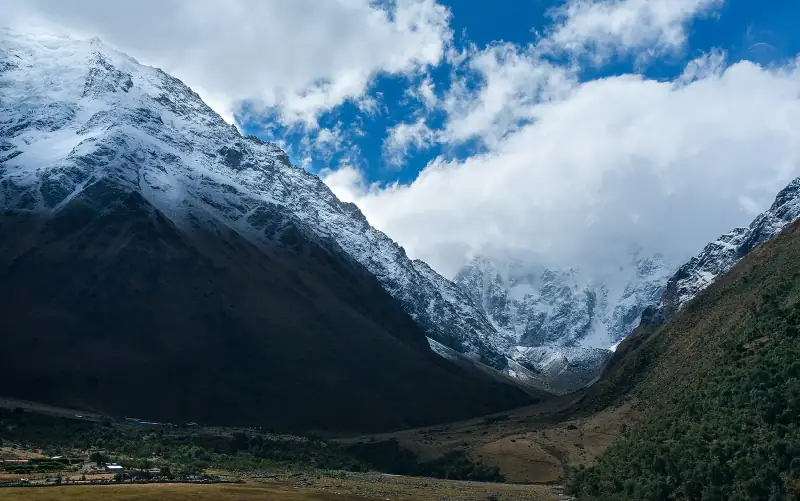
Described in detail in our article on the Machu Picchu trek, the Salkantay is the best alternative to the Inca Trail, passing beneath the glacier of the Salkantay volcano.
Practical tips for hiking in Peru
Altitude: Never underestimate it, and take it slow. For anything related to altitude, ask your doctor or a travel clinic, and see the official travel health pages (CDC in the US, TravelHealthPro in the UK).
Equipment:
- Waterproof hiking shoes (trails can be muddy even in the dry season)
- Telescoping trekking poles (recommended)
- Layered clothing (it can be 77 °F / 25 °C at noon and 23 °F / -5 °C at night)
- Light rain jacket (high-altitude storms arrive fast)
- SPF 50+ sun protection and UV400 sunglasses (UV at altitude is twice as intense)
Water and food:
- Always carry water (at least 2 liters / 2.1 qt per person)
- Purification: chlorine tablets or a Sawyer-type filter for mountain sources
- Energy snacks (cereal bars, dried fruit, chocolate)
Safety:
- Always tell the hotel or agency your itinerary and expected return time
- Huascarán National Park requires an entry fee (about 30 soles, or 8 USD, payable in cash at the entrance; check the current rate)
- Satellite phone or GPS beacon recommended for isolated treks
Peru is a world-class hiking destination, accessible to all fitness levels as long as you respect the altitude and prepare for it. Whether you are looking for an easy one-day trail or an epic 10-day trek in virgin mountains, Peru has what you need. Lace up your boots, breathe the pure Andean air, and let yourself be carried by landscapes that exist nowhere else on Earth.
Frequently asked questions
What is the most beautiful hike in Peru?
The Inca Trail to Machu Picchu is the most legendary. But the Santa Cruz in the Cordillera Blanca (Huaraz) is considered by many the most beautiful hike in South America for its glacier and turquoise lagoon landscapes.
Do you need a guide to hike in Peru?
The Inca Trail requires a licensed guide. For other treks, a guide is recommended (safety, orientation, logistics) but not mandatory in the Cordillera Blanca, where the trails are marked and huts are available.
What fitness level do you need to hike in Peru?
The main difficulty is altitude, not distance. Cusco is at 3,400 m (11,155 ft), Huaraz at 3,090 m (10,138 ft). For high-mountain treks (Santa Cruz at 4,750 m / 15,584 ft), good physical fitness is needed. For anything related to altitude, ask your doctor or a travel clinic, and see the official travel health pages (CDC in the US, TravelHealthPro in the UK).
What is the season for hiking in Peru?
The dry season (May to September) is the best for hiking in the Andes. Blue skies, dry trails, ideal conditions. From May to June and in September-October, there are fewer people than in July-August.
What is Rainbow Mountain in Peru?
Rainbow Mountain (Vinicunca, about 5,036 m / 16,522 ft) is a rainbow-colored mountain 3 hours from Cusco. Natural mineral pigments create bands of red, yellow, green and purple on the mountainside. Accessible on a day excursion from Cusco.
More Peru guides
Keep reading
Vinicunca Without a Tour from Cusco: Prices, Transport and Difficulty
Visit Rainbow Mountain from Cusco without a tour: bus, taxi, entry fee, real budget, altitude and season. A practical step-by-step guide.
Colca Canyon: Complete Guide to Visiting from Arequipa
How to visit the Colca Canyon from Arequipa: condors, trekking, Chivay, Cruz del Cóndor. Practical tips, budget and itineraries for 1 or 2 days.
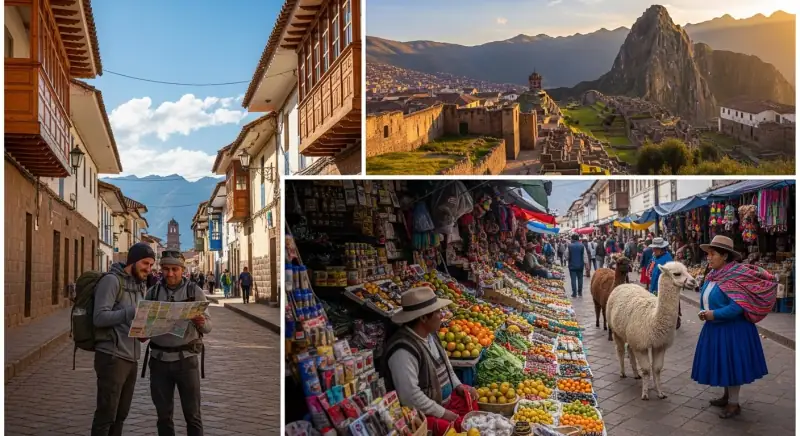
Peru Budget 2026: How Much Does a Trip to Peru Cost?
What budget for a trip to Peru? Accommodation, meals, transport, tourist sites: our complete guide with real 2026 figures.
Ready-made
Peru itineraries
7 days
Peru in 7 Days: The Ideal One-Week Itinerary
LimaCuscoAguas CalientesCusco
12 days
Peru Sierra Road Trip: 12 Days from Cusco to Huaraz
12-day Peruvian Sierra road trip: Cusco, Machu Picchu, Lake Titicaca, Arequipa, Colca, Huaraz. Complete itinerary with budget.
4 days
Lima, Paracas, Huacachina and Nazca in 4 Days by Bus: Doable Without a Car?
Lima, Paracas, Huacachina and Nazca in 4 days by bus: stages, km, real travel times, recommended departures and what to sacrifice to keep the pace.