Things to do
Wahiba desert in Oman: everything to know to visit the dunes
We may earn a commission when you book through links on this page, at no extra cost to you. We don't visit or try the places we cover: we summarize published sources. How we work
In short
- The Wahiba Sands (officially Sharqiyah Sands) are about 200 km (124 mi) southeast of Muscat, with Bidiyah as the main gateway.
- A 4x4 is essential to enter the desert; camps are reachable only by 4x4, or a guide can meet you on the paved road.
- Spend at least 1 night for sunset and sunrise; 2 nights let you explore more. Camp rates are indicative and should be checked with the camp.
- Lower tire pressure before entering the sand, keep speed on slopes and never stop mid-slope.
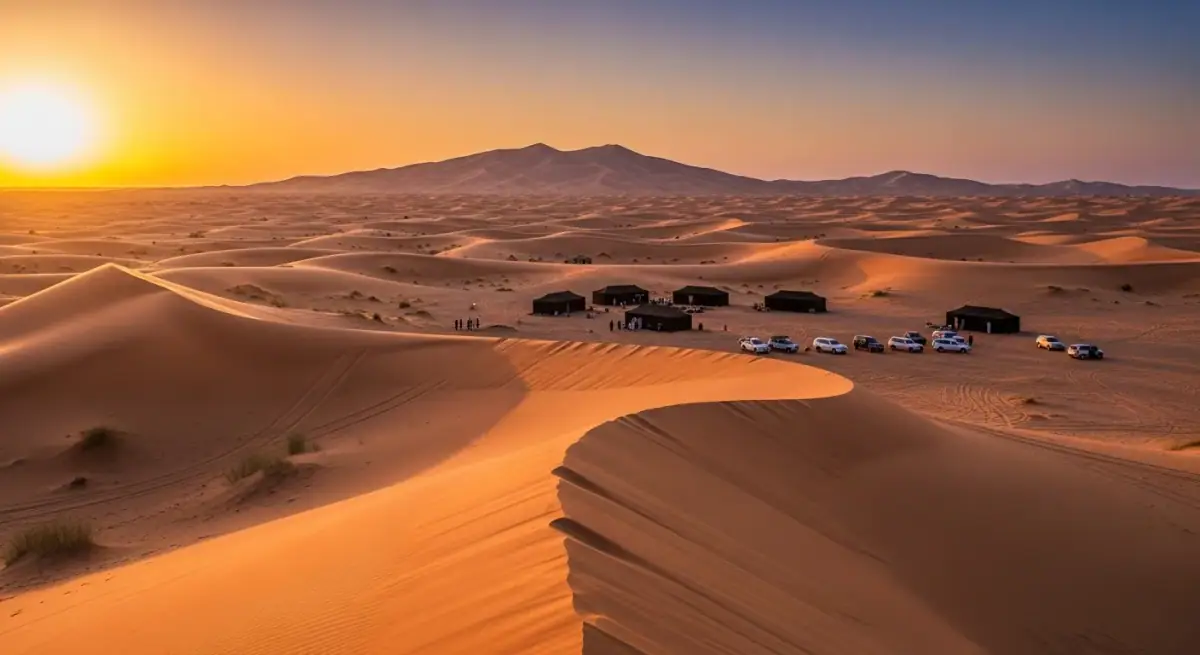
The Wahiba Sands desert is the quintessence of Oman. These dunes of red and ocher sand, some reaching 150 m (490 ft) high, extend over 12,500 km² (4,826 sq mi) in the Sharqiyah region. It is here that a trip to Oman takes on its full dimension: under the stars of the Arabian desert, far from any town, surrounded by an absolute silence broken only by wind in the dunes.
Why the Wahiba desert is unique
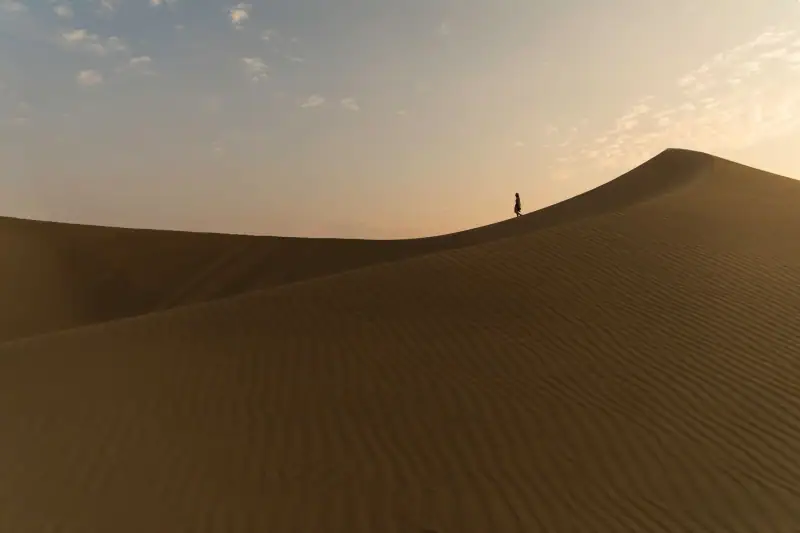
Several deserts exist in Arabia, but the Wahiba has a personality of its own. Its dunes are an especially photogenic red-orange due to the high iron content of the sand. They are varied: a few imposing big dunes in the middle of the desert, medium dunes more accessible at the edge, and flat zones between the reliefs where adapted plant and animal species survive remarkably.
The Wahiba is also inhabited. Bedouin families still live in the desert, with their camels, goats and preserved traditions. It is a living desert, not a museum.
How to get to the Wahiba Sands
From Muscat (200 km / 124 mi, 2 h 30 to 3 h): Take the Nizwa highway to Bidbid, then the Sur road (route 23) via Ibra, and turn off toward Bidiyah. The road is paved up to the desert entrance; check the route on a map before leaving.
From Nizwa (about 180 km / 112 mi, 2 h 30): Route via Bidbid, Ibra and then Bidiyah (check the route with your lodging). Mountain and plain scenery before arriving in the Sharqiyah.
Recommended starting point: The town of Bidiyah is the main gateway to the desert on the north side. Al Wafi and Muqal are other access points.
The Bedouin camps
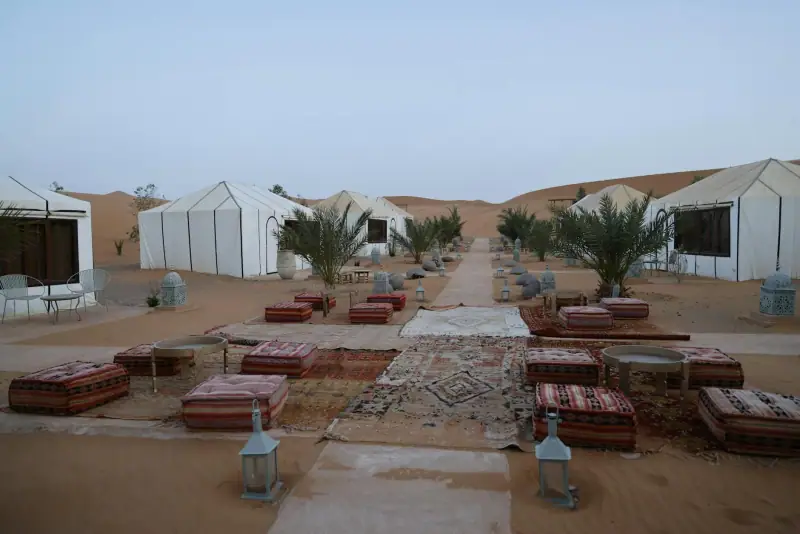
Sleeping in the desert is the central Wahiba experience. Dozens of camps are available, from ultra-basic to ultra-luxurious.
Budget camps (about €40-70 all-inclusive per person, about $46-81; indicative rate: check with the camp)
These family camps offer an authentic experience: a traditional tent (or simple room), a barbecue dinner of meat and rice, cardamom coffee, breakfast included, and a 4x4 excursion in the dunes.
Atmosphere: welcoming Omani families, traditional music in the evening, a breathtaking starry sky.
Mid-range camps (about €80-150 all-inclusive per person, about $93-175; indicative rate: check with the camp)
Glamping tents with comfortable beds, a clean shared bathroom, a more elaborate dinner, and included activities (camel ride, dune excursion, a starry night with a guide).
Luxury camps (from about €200 a night, about $230; indicative rate: check with the camp)
“Safari” tents with private bathroom, A/C, designer furniture, refined cuisine. Desert Nights Camp and Magic Camps are among the best known (check the camps for their current rates and availability).
Wahiba Sands camps and lodging
Book your night in the desert with free cancellation.
Driving a 4x4 in the dunes
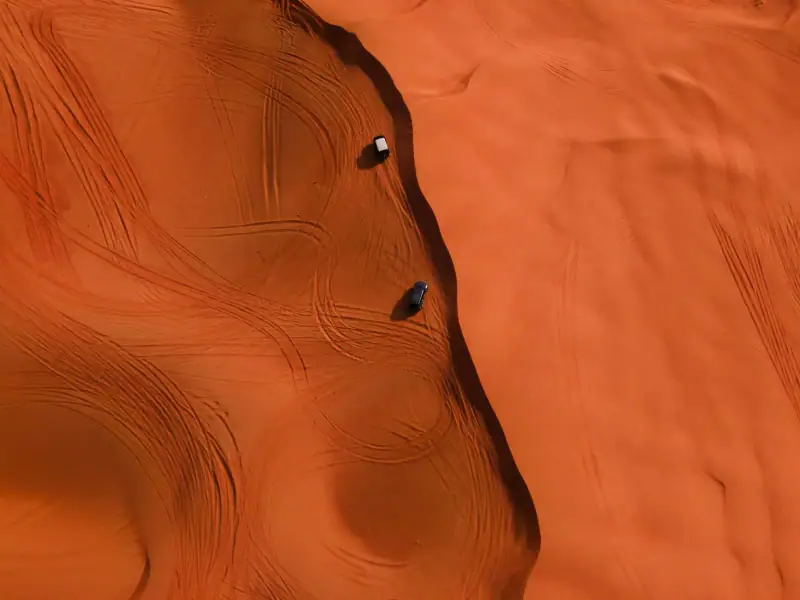
If you have a 4x4, driving in the desert is an experience in itself. Here are the essential rules:
Lower your tire pressure before entering the sand. Go from 2.5 bar to about 1.0 to 1.2 bar (36 psi to about 15 to 17 psi). This increases the contact area and the vehicle’s flotation on sand.
Basic rule: keep your speed and never stop in the middle of a sandy slope. Climb dunes with momentum, descend them slowly.
If you get stuck: do not spin the wheels (it digs in faster). Dig under the wheels, put compacted sand down, and set off gently. Other campers are always ready to help.
GPS tip: some passages are not obvious. Save your camp’s position before exploring.
The unmissable moments
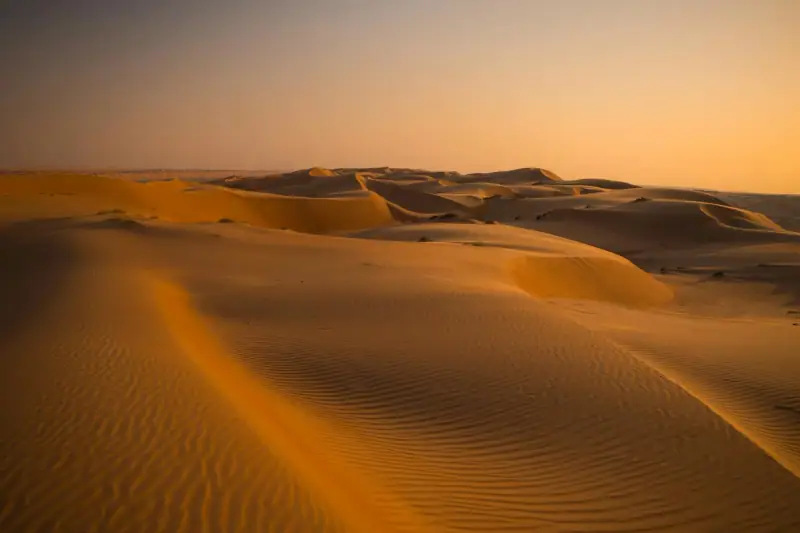
Sunset over the big dunes Climb the highest accessible dune 45 minutes before sunset. The low light turns the dunes into a painter’s canvas, with deep shadows sculpting the shapes of the sand. Every dune becomes an ephemeral masterpiece.
A night under the stars The Wahiba is far from any light pollution. On a clear night, the Milky Way is visible to the naked eye like a dense white ribbon above you. Sleep under the open sky if the weather allows (bring a blanket in winter; nights can drop to 12 to 15 °C / 54 to 59 °F in January).
Sunrise Wake up at 5:30 am to climb a dune before the first rays. The total silence of the desert at dawn is a powerful, meditative experience.
Meeting Bedouins The camp’s local guides can introduce you to Bedouin families. Always accept the cardamom coffee and dates offered; it is the strongest sign of hospitality in Omani culture.
Desert wildlife
The Wahiba is not just a landscape: it is a complex ecosystem home to adapted species.
- Dromedaries (Arabian camels): often roaming free in the desert, belonging to local Bedouins
- Fennec: the small desert fox is visible at night
- Lizards of many species, including the dhub (spiny-tailed lizard, edible for Bedouins)
- Scorpions: nocturnal, best not to go looking under stones
- Migratory birds: the Wahiba is an important migration stopover
Desert checklist
- 4x4 with tires in good condition (check before leaving)
- Plenty of water (at least 5 L / 1.3 gal per person for one night)
- Flashlight or headlamp
- Warm clothes (cold nights in winter)
- Sunscreen and sunglasses
- Backpack and shoes for walking in the dunes
- Camera or charged smartphone
- Power bank (camps rarely have power for charging)
Frequently asked questions
Where is the Wahiba Sands desert?
The Wahiba Sands desert (officially Sharqiyah Sands) is in the Sharqiyah region, about 200 km (124 mi) southeast of Muscat. The town of Bidiyah is the main gateway to the desert.
How long do you need to visit the Wahiba desert?
At least 1 night in the desert to enjoy sunset and sunrise. Two nights let you explore the dunes better and soak up the Bedouin atmosphere. A single day remains superficial.
Do you absolutely need a 4x4 to go into the Wahiba desert?
A 4x4 is essential to enter the desert. Camps are accessible only by 4x4. You can rent a 4x4 in Muscat or Nizwa, or reach the camp with a guide who picks you up on the paved road.
What is the difference between the Wahiba Sands and the Rub al Khali?
The Wahiba Sands (12,500 km² / 4,826 sq mi) are accessible, with camps and services. The Rub al Khali (Empty Quarter, 650,000 km² / 250,965 sq mi) is much larger, more inhospitable, partly in Yemen and Saudi Arabia. The Wahiba is perfect for a first trip to an Arabian desert.
Are the Bedouin camps in the Wahiba authentic?
Some camps offer a real Bedouin experience (local Omani families, traditional cooking, music). Others are more touristy. Ask your lodging in Muscat or Nizwa to recommend an authentic camp.
More Oman guides
Keep reading
The best hikes in Oman: wadis, mountains and desert
Guide to the best hikes in Oman: Jebel Akhdar, Wadi Nakhr, Jebel Shams and coastal trails. Levels, distances and practical tips.
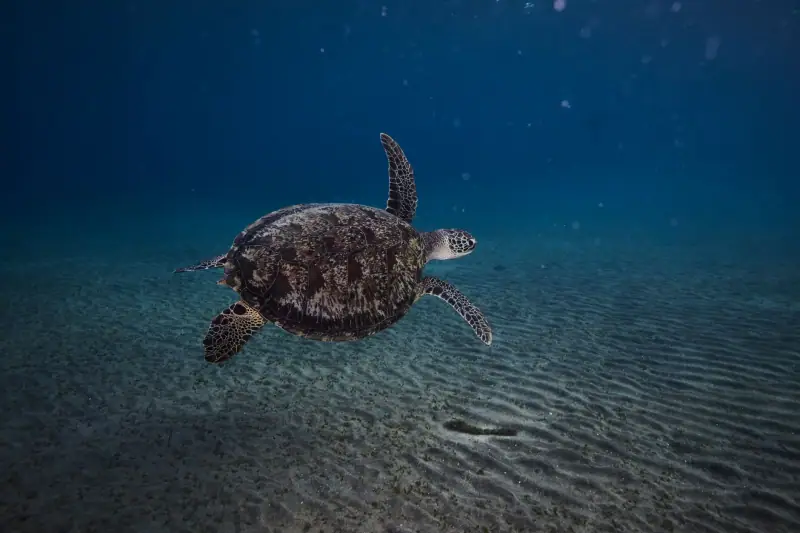
Watching turtles at Ras al Jinz: book ahead or on the spot?
Ras al Jinz turtles in Oman: do you need to book ahead, which season, night visit times, prices to check and tips for getting there.
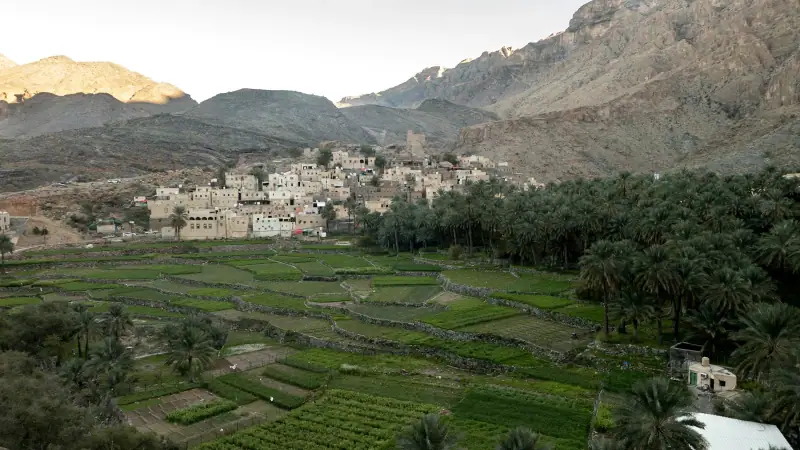
Visiting Jebel Akhdar: a complete guide to Oman's Green Mountain
Jebel Akhdar: Damask roses, hiking, perched villages and luxury resorts. A complete guide to visiting Oman's Green Mountain.
Ready-made
Oman itineraries
10 days
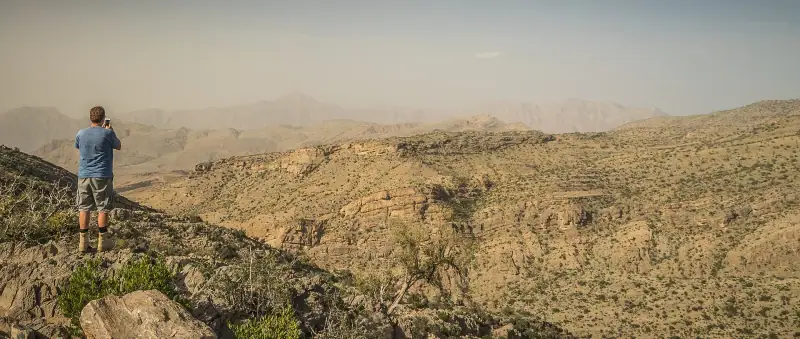
Oman road trip: a 10-day itinerary to explore the sultanate
MuscatNizwaJebel AkhdarWahiba desertSurSalalah
3 days
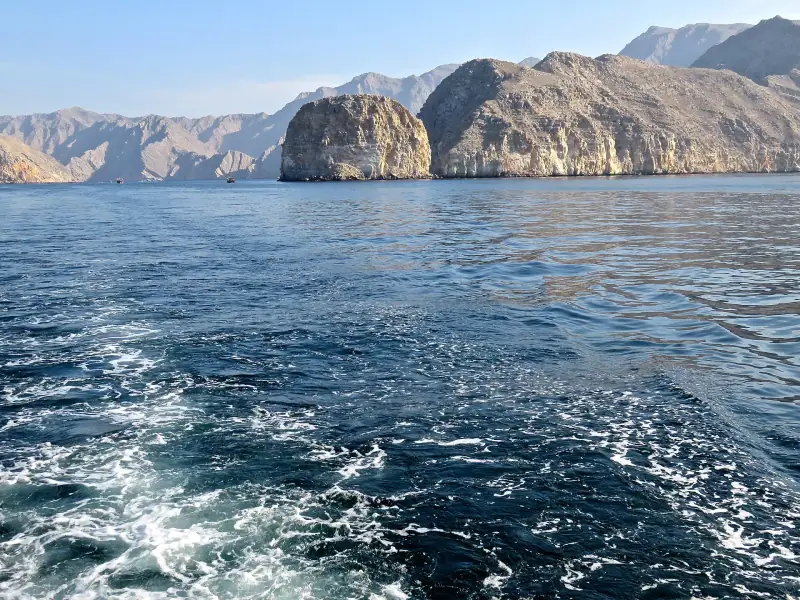
Musandam in 3 days: an itinerary through Oman's fjords
3-day Musandam itinerary: fjords, dolphins, dhow cruise and Khasab. All you need to plan a stay on Oman's enclave peninsula.
7 days