Where to stay
Where to stay in Khasab (Musandam): a lodging guide for Oman's fjords
We may earn a commission when you book through links on this page, at no extra cost to you. We don't visit or try the places we cover: we summarize published sources. How we work
In short
- Khasab is the only real town in Musandam, so it is the logical base; hotel supply is limited, so book ahead, especially October to March.
- Rates run about €25 to €50 (budget), €60 to €120 (mid-range) and €130 to €250 (upper) a night, roughly $29 to $290.
- A night aboard a dhow in a fjord costs generally €80 to €150 per person all-inclusive (about $93 to $175).
- Fly Muscat to Khasab (about 1 hour) to avoid the UAE land border; rental cars are no longer admitted into Musandam.
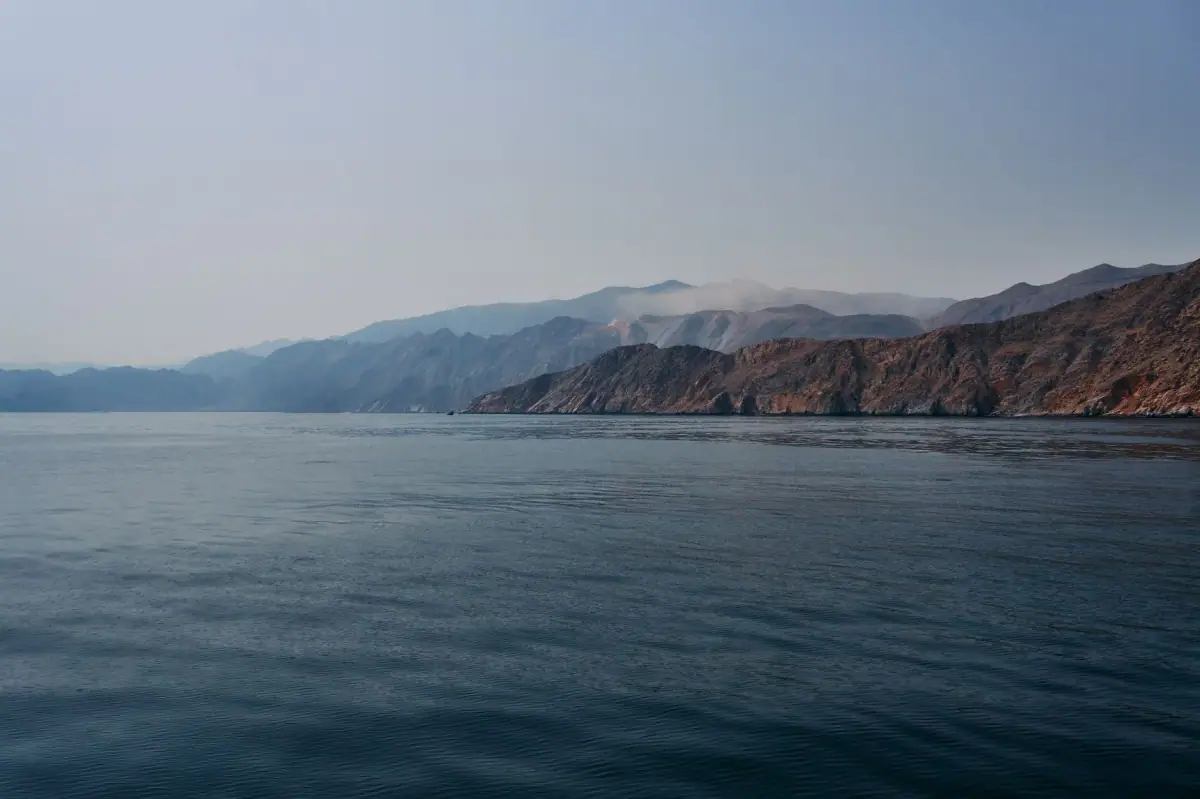
Khasab is one of the most surprising destinations in Oman, and one of the least known. Capital of the Musandam governorate, an enclave geographically separated from the rest of the Sultanate by United Arab Emirates territory, it offers a landscape radically different from the desert plains or oases of the interior. Here, sheer limestone cliffs plunge into a turquoise sea cut into winding fjords that Omanis call khors. The analogy with Norway comes naturally, even if the heat and tropical waters constantly remind you that you are on the Arabian Peninsula.
Staying in Khasab means choosing a slow pace, cruises along the fjords, dolphins leaping at the bow of the dhows and sunsets over the Jebel Harim mountains (about 2,000 m / 6,560 ft high). The tourist offering is more modest than in Muscat or Salalah, which preserves the authenticity of the place. But this discretion calls for some precautions: a limited number of hotels, necessary reservations, and logistics to plan carefully.
This guide helps you choose your lodging in Khasab, understand the town’s areas, and prepare your stay in this extraordinary enclave.
Why make Khasab your base in Musandam?
Khasab is the only real town in Musandam. This is where hotels, restaurants, cruise agencies and the port from which dhows depart are concentrated. To explore the region, Khasab is therefore the only logical base; there is no real viable alternative for most travelers.
The gateway to the Omani fjords. The khors (Khor ash Sham, Khor Najd, Khor Qida…) are accessible only by boat. Sleeping in Khasab lets you board a day or overnight cruise first thing in the morning, pick your operator directly on the quay and adjust your program to the weather.
Telegraph Island (Jazirat al Maqlab). This historic site, located in Khor ash Sham, is the former 19th-century British telegraph relay. The ruins are still visible from the dhow or on a short stop. Most cruises stop there.
Jebel Harim and the mountain villages. The road to Jebel Harim (about 35 to 45 km / 22 to 28 mi from Khasab, partly a track) crosses perched villages and spectacular gorges. A 4x4 is needed for the upper part; from Khasab, you can organize this excursion in a half day.
The dolphins of the Strait of Hormuz. Musandam is one of the areas of the Indian Ocean where bottlenose dolphins (Tursiops truncatus) are most visible. Morning cruises from Khasab almost systematically meet large groups.
A preserved enclave. Tourist flow remains limited in Musandam, partly because of the complex access. This relative discretion translates into an authentic experience: the markets are for locals, and the old town keeps its mud-brick fort and fishing atmosphere.
Areas to stay in Khasab
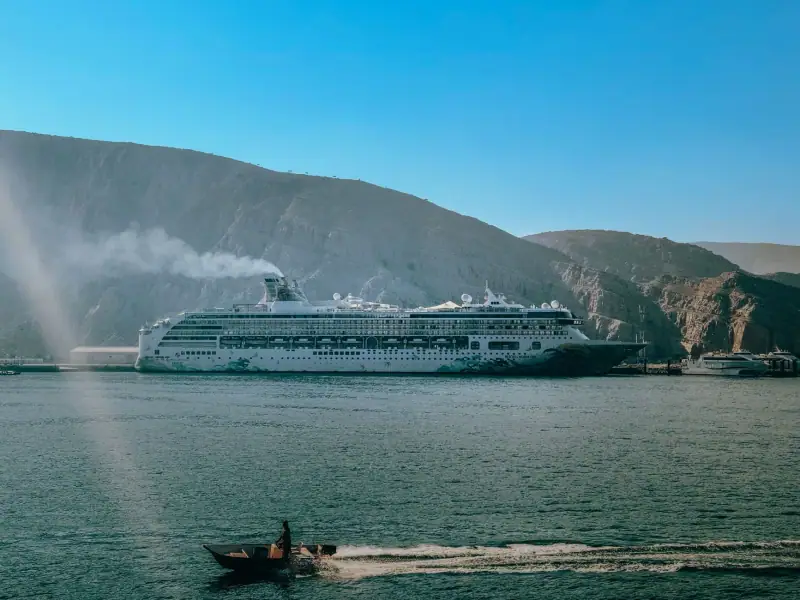
Khasab is a small town and its center is easy to grasp. Lodging is spread across a few distinct areas:
The town center and the corniche
The corniche runs along the fishing port and the dhow terminal. It is the lively heart of Khasab: shops, restaurants, markets, cruise agencies and a few cafés are concentrated here. Hotels in this area offer the most practical location: you walk out for the morning market, board directly at the port for your cruises and walk home after dinner.
Ideal for: travelers without a car, short stays (1 to 2 nights), discovering the local atmosphere, cruise departures.
The airport road and the northern outskirts
Several upscale hotels are along the road between the airport and the town center, a few kilometers from the port. These properties often have better facilities (pool, restaurant, parking, gardens), but need a vehicle or taxi to reach the dhow quay. Rates are often similar to the center.
Ideal for: travelers with a rental car, families, stays of 3+ nights.
The Khasab fort area
Khasab’s historic fort (17th century, restored) stands in the old center. A few guesthouses and bed-and-breakfasts are found in the surrounding lanes. This option is more private, with a stronger local atmosphere.
Ideal for: travelers seeking cultural immersion, independent travelers, lovers of traditional architecture.
Hotels in Khasab
Compare availability and book your lodging in Khasab (Musandam) with free cancellation.
Lodging by budget in Khasab
Lodging supply in Khasab is tighter than in big Omani cities. You will not find an international palace or a high-end beach resort, and that is precisely what preserves the authentic character of the place. On the other hand, the quality of existing properties is generally satisfactory for travelers who come here for nature rather than luxury.
Low budget (€25-50 a night, about $29-58)
In this price range, family guesthouses and small local hotels dominate. Rooms are air-conditioned, clean and functional. Some properties offer a simple breakfast (bread, eggs, cardamom tea). Do not expect a pool or a gourmet restaurant, but the welcome is often warm and the owners know the local cruise operators perfectly, a clear advantage for organizing your program.
Things to watch for: Hot water can be intermittent in the cheapest properties. Check recent reviews before booking.
Mid-range (€60-120 a night, about $70-140)
This is the best-represented category in Khasab. Local 3-4 star hotels offer spacious rooms, a pool (valuable outside the coolest months), a restaurant, reliable Wi-Fi and often a fine view of the mountains or the sea. Some directly organize dhow excursions for their guests, which simplifies logistics.
Good to know: Rates vary noticeably by season. In high season (October-March), mid-range hotels fill up fast, especially on weekends. Guests are mostly Emirati and Saudi on weekends, which creates demand peaks on Thursday evening and Friday.
Upper budget (€130-250 a night, about $150-290)
A few higher-comfort properties exist in Khasab, with larger rooms, an infinity pool or terraces overlooking the khors. These places remain affordable by international standards. If you come specifically for a quality stay and want to enjoy a refined setting after your excursion days, this is the right bracket.
Important: Unlike Muscat or Salalah, Khasab has no big beachfront resort. High-end lodging stands out for its indoor comfort rather than private sea access.
A night on a dhow: the unusual option
For travelers seeking a memorable experience, some local operators offer cruises with a night on board. The dhow is anchored in an isolated khor, sheltered from the winds, and you sleep on deck under the stars or in a rudimentary covered area. Meals are served on board (grilled fish, rice, vegetables). Comfort is spartan (thin mattresses, simple toilets), but the magic of the place more than compensates.
Prices generally range between €80 and €150 per person all-inclusive (meals, snorkeling gear) (about $93 to $175). This option is especially popular between November and February, when night temperatures are mild (18 to 24 °C / 64 to 75 °F).
Car rental in Khasab
A 4x4 is essential to explore Jebel Harim and Musandam's tracks. Compare rates.
Dhow cruises from Khasab: what to know
Dhow cruises are the centerpiece of any visit to Khasab. These wooden boats, used for centuries for trade and fishing in the Gulf of Oman, are now converted into excursion boats. Here are the main options:
Day cruise (half day or full day)
The most common format. On a half day (about 3 to 4 h), you run along the Khor ash Sham cliffs, see dolphins and stop at Telegraph Island. On a full day (6 to 8 h), you explore more khors, snorkel in crystal-clear coves and have lunch on board. Prices vary with the size of the dhow and exclusivity (private vs. shared).
For groups or families, renting a private dhow is often cheaper per person and much more pleasant. A medium-sized dhow (10 to 15 people) can generally be privatized for a reasonable cost in a group.
Sunset cruise
Late-afternoon outings let you watch the sunset over the Musandam cliffs. The orange colors on the brown-red limestone are especially striking in autumn and spring. Typical duration: 2 to 3 h.
Night on board
See the lodging section above. The night on board is often combined with the full day: you leave in the morning, explore the khors during the day, and spend the night anchored before returning the next morning. It is the Musandam experience par excellence.
What to do from Khasab
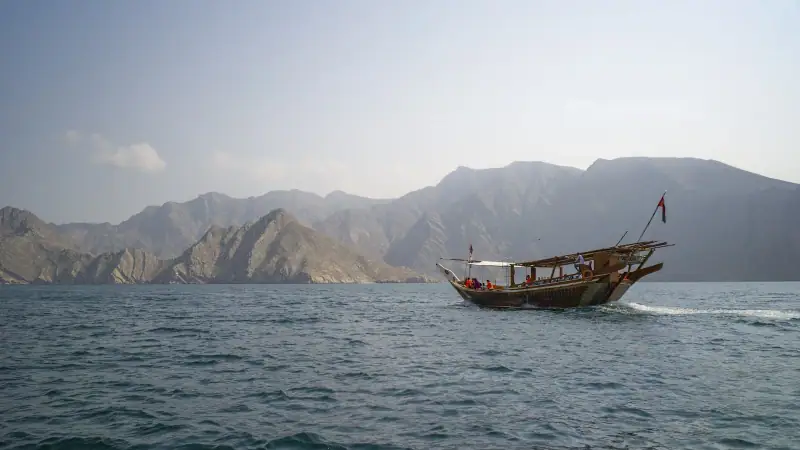
Staying in Khasab, you can organize several excursions without needing major travel:
The khors of Musandam (accessible by dhow). Khor ash Sham is the most spectacular fjord: 15 km (9 mi) long, framed by sheer limestone cliffs, with several isolated villages accessible only by boat. This is where Telegraph Island and the best snorkeling areas are found.
Jebel Harim (about 35 to 45 km / 22 to 28 mi). The road to this summit (about 2,000 m / 6,560 ft high) winds through high-mountain landscapes unusual on the Arabian Peninsula. In winter, the summits can get mist or frost. The upper track requires a reliable 4x4 and a full day.
The isolated village of Kumzar. This coastal village at sea level, ringed by mountains and accessible only by boat from Khasab (about 30 to 45 min by speedboat or 2 h to 2 h 30 by traditional dhow), speaks a unique dialect mixing Arabic, Persian and Hindi, a trace of centuries of maritime trade in the Gulf. A little-visited destination for curious travelers.
Diving and snorkeling in Khor Najd. Musandam’s waters hold remarkable marine biodiversity: tropical fish, rays, sometimes seasonal whale sharks. A few dive centers operate from Khasab.
Activities in Musandam
Dhow cruises, diving, hiking at Jebel Harim: book your excursions from Khasab.
Best time to stay in Khasab
October to April (high season). Ideal temperatures (20 to 30 °C / 68 to 86 °F by day, 15 to 22 °C / 59 to 72 °F at night), calm sea, fjords of an intense blue. It is the best period for dhow cruises, snorkeling and hiking at Jebel Harim. Weekends (Thursday evening to Friday) are busier because of regional tourism (Emiratis, Saudis). Book 2 to 3 weeks ahead in high season.
May and September. Higher temperatures (35 to 40 °C / 95 to 104 °F) but a calmer atmosphere. Hotels are less full and prices lower. Outings at sea remain pleasant early in the morning.
June to August. The hottest months, but Musandam’s altitude slightly softens the heatwave compared with the Omani plains. The sea can be rough in July-August (indirect monsoon winds). Outdoor activities should be booked early in the morning or in the evening.
How to get to Khasab
By plane. Oman Air operates direct flights from Muscat (MCT) to Khasab Airport (KHS). The trip takes about 1 h 05 to 1 h 15. It is the simplest and most comfortable solution to avoid the complexity of land borders.
By road from Muscat (via the UAE). The distance is about 540 to 570 km (335 to 354 mi) from Muscat, with a mandatory crossing of the United Arab Emirates (Ras al Khaimah). You will pass two border posts (Oman/UAE at Tibat, then UAE/Oman at Khasab). Allow 6 h 30 to 7 h of driving at minimum, plus border crossing times. Check entry rules for both countries with your government’s official travel advice. Note that rental cars are no longer admitted into Musandam: vehicle insurance holder status is required.
By road from Dibba (UAE side). If you arrive from the UAE (Dubai, Abu Dhabi), the road via Dibba (UAE) is shorter. From Dibba (UAE), you must pass the Tibat border post and drive another 155 to 165 km (96 to 103 mi) to Khasab (about 2 hours). The road is spectacular, winding through the peninsula’s mountains.
By ferry. A ferry service exists from the port on Oman’s Gulf of Oman side (check current timetables and boarding points on the Omani national company’s website). It is a romantic option that avoids the complexity of land borders, but departures are less frequent and the crossing is long. Check the booking conditions in advance.
Practical tips for staying in Khasab
Book your lodging early. Hotel supply is limited in Khasab. In high season (October-March) and especially on weekends, mid-range and high-end properties show full several weeks ahead. Do not leave booking to the last minute.
Arrange your cruises on arrival. Most dhow operators are grouped on the port quay or in town-center agencies. You can negotiate the rate directly on the spot, choose your boat and customize the route. Booking ahead online is possible but not always necessary outside weekends.
Bring cash. ATMs are available in Khasab, but in limited numbers. Small dhow operators and local restaurants often accept only cash in Omani rials (OMR).
Plan for a 4x4. To explore Jebel Harim and Musandam’s tracks, a 4x4 is essential. A few car rental agencies operate in Khasab; check availability in advance, especially in high season.
Dress. Khasab is a traditional Omani town. Light clothing is tolerated in tourist areas and on the dhows, but cover shoulders and knees in town, in markets and near the fort.
Phone network. 4G is available in the town center and on main roads. In the khors and on mountain tracks, coverage may be nil. Download your offline maps (Google Maps, Maps.me) with the Musandam region before you arrive. Check your carrier’s international plan or use a travel eSIM.
Drinking water. Tap water is generally not drinkable. Buy large bottles of water at the supermarket to limit plastic waste from small individual bottles.
Going further
Before booking your lodging in Khasab, see these complementary guides:
- Visiting Khasab (Musandam): a complete guide: fort, fjords, dolphins and isolated villages
- Oman road trip: the full itinerary: to fit Khasab into your national circuit
- Cheap hotels in Oman: tips for saving on lodging across the sultanate
- Complete Oman guide: budget, visa, transport, best time
Khasab and Musandam are among the most exotic escapes you can have on the Arabian Peninsula. This enclave with the look of a Norwegian fjord, yet bathed in tropical light and heat, rewards travelers who accept slightly more complex logistics. By choosing your lodging carefully, booking ahead and spending at least two nights there, you will have time to see dolphins leap at the bow of your dhow, look up at the Khor ash Sham cliffs and understand why sailors of all origins loved this forgotten corner of the world so much.
Frequently asked questions
Are there enough hotels in Khasab?
Lodging supply in Khasab is more limited than in big Omani cities such as Muscat or Salalah. You mainly find mid-range hotels, a few higher-comfort properties and guesthouses. Total capacity is small, so booking ahead is required, especially from October to March. Still, overall quality is good for a town of this size, and most properties include breakfast.
Can you sleep on a dhow in the Musandam fjords?
Yes, some local operators offer nights on traditional dhows anchored in the khors (fjords). This very immersive option lets you gaze at the stars far from lights and wake up among the cliffs. Comfort is rudimentary (mattress on deck, limited toilets), but the experience is unforgettable. Prices generally range between €80 and €150 per person all-inclusive (about $93 to $175). Book directly in Khasab or through specialist agencies.
Is Khasab accessible from Muscat without going through the UAE?
Khasab is an Omani enclave separated from the rest of the sultanate by United Arab Emirates territory. To reach Khasab by road from Muscat, you must cross the UAE (Ras al Khaimah), which means two border crossings; note that rental cars are no longer allowed into Musandam. The road distance is about 540 to 570 km (335 to 354 mi) from Muscat (allow 6 h 30 to 7 h of driving excluding border crossings). The alternative is the ferry from the port on Oman's Gulf of Oman side or Oman Air domestic flights from Muscat.
What is the best time to stay in Khasab?
October to April is the ideal period. Temperatures are mild (20 to 30 °C / 68 to 86 °F by day), the sea calm and the khors an intense blue. Summer (June to September) is hot but less extreme than on the sultanate's plains thanks to relative altitude and sea breeze. Avoid the monsoon (July-August) if you plan cruises, as the sea can be rough.
Do you need a special visa for Musandam?
Musandam is an integral part of the Sultanate of Oman. Entry rules depend on your passport. Check the official travel advice of your government before you book: travel.state.gov (US), GOV.UK (UK), travel.gc.ca (Canada), Smartraveller (Australia) (checked November 2026). If you arrive by road from the UAE, you must complete customs and immigration formalities at the border posts of both countries.
Can you see dolphins from Khasab?
Absolutely, and it is one of Musandam's great attractions. The waters of the Strait of Hormuz and the khors are home to many bottlenose dolphins (Tursiops truncatus). Most day or half-day dhow cruises run along the fjords and frequently meet groups of dolphins, sometimes in the hundreds. Early morning is generally the best time to see them.
More Oman guides
Keep reading
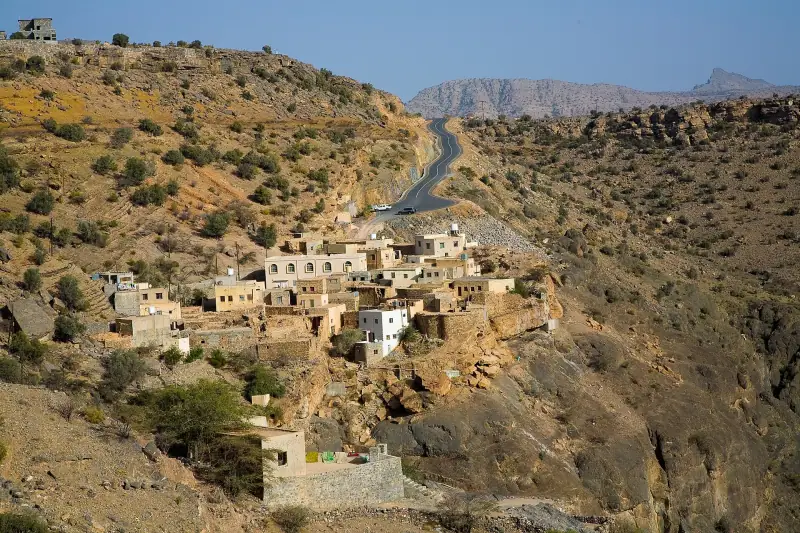
Where to stay in Jebel Akhdar: luxury resorts, guesthouses and mountain lodges
Where to stay in Jebel Akhdar? Cliffside 5-star resorts, guesthouses in perched villages and mountain lodges. Complete lodging guide.
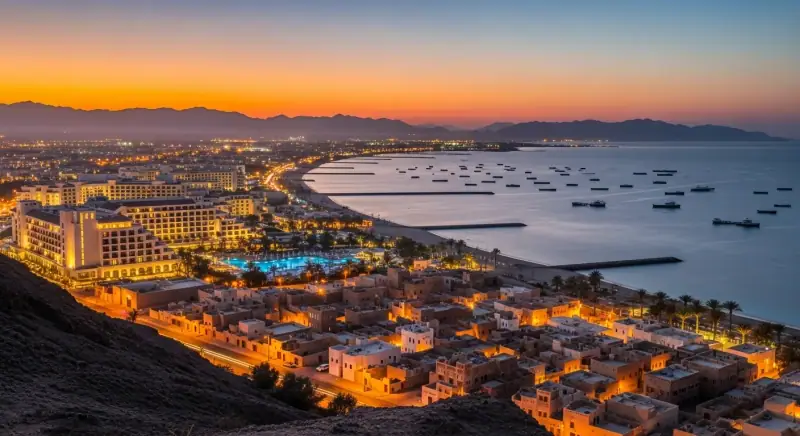
Where to stay in Muscat: the best areas and hotels
Where to stay in Muscat? A guide to the best areas, hotels and guesthouses for every budget in Oman's capital.
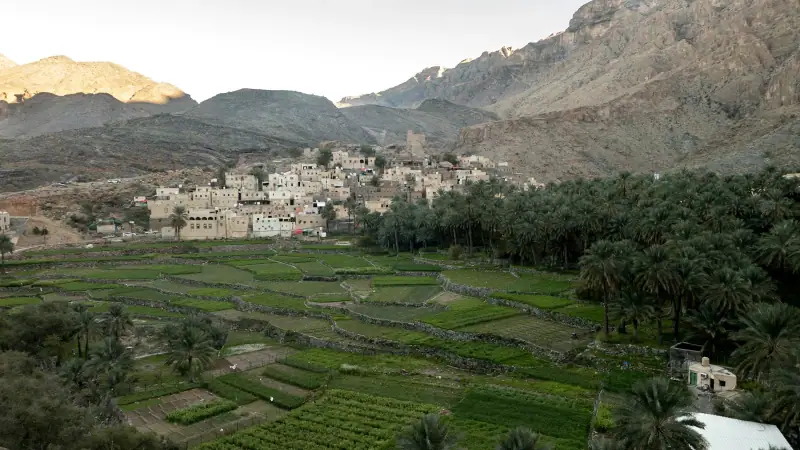
Visiting Jebel Akhdar: a complete guide to Oman's Green Mountain
Jebel Akhdar: Damask roses, hiking, perched villages and luxury resorts. A complete guide to visiting Oman's Green Mountain.
Ready-made
Oman itineraries
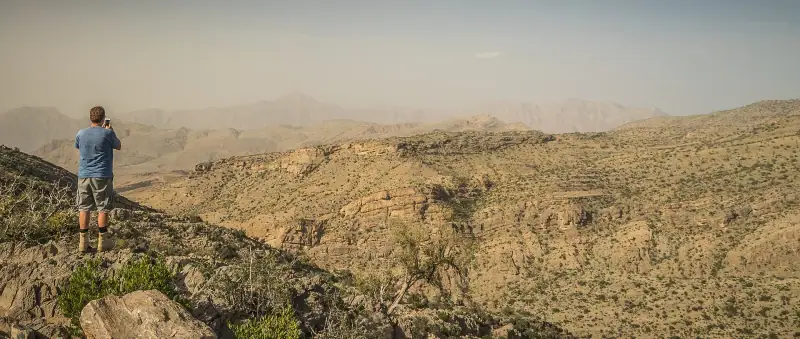
10 days
Oman road trip: a 10-day itinerary to explore the sultanate
MuscatNizwaJebel AkhdarWahiba desertSurSalalah
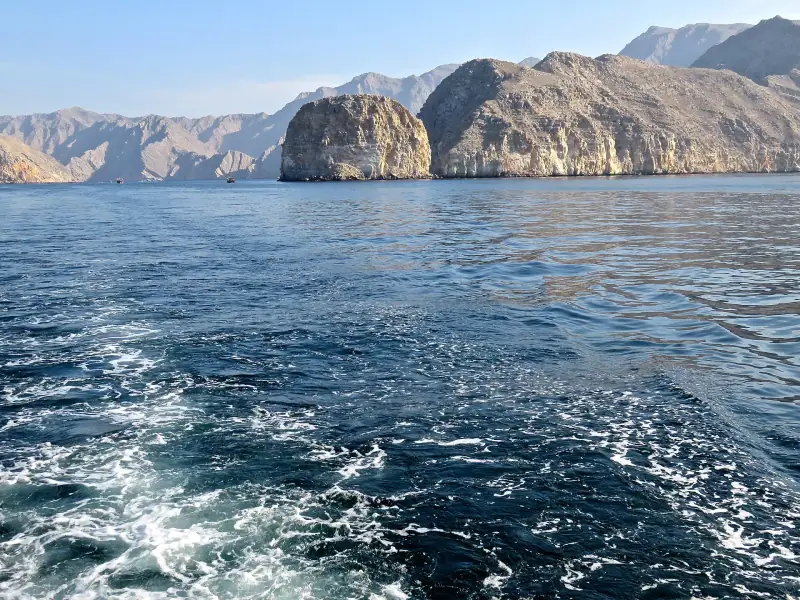
3 days
Musandam in 3 days: an itinerary through Oman's fjords
3-day Musandam itinerary: fjords, dolphins, dhow cruise and Khasab. All you need to plan a stay on Oman's enclave peninsula.
7 days