Where to stay
Where to Stay in Stavanger: The Best Areas and Hotels
We may earn a commission when you book through links on this page, at no extra cost to you. We don't visit or try the places we cover: we summarize published sources. How we work
In short
- The city center around Vågen, the old harbor, is the best base for a first stay: restaurants, museums and ferries are all within walking distance.
- Gamle Stavanger is the most charming area but has very few hotels, since most of its houses are private homes.
- Expect €80-150 (~$95-175) a night for a mid-range hotel and €25-50 (~$29-58) per person in a hostel.
- Book 2 to 3 months ahead for July and August, when Preikestolen hikers fill the beds.
Stavanger is a city that surprises you. As the oil capital of Norway, it could have been a cold, industrial place. Instead, it has preserved the largest group of white wooden houses in Northern Europe in its old quarter, developed an award-winning food scene and kept direct access to two of the most spectacular hikes in Norway: Preikestolen and Kjeragbolten. Where you stay in Stavanger depends on your priorities: historic charm, convenient transport, quick access to the fjords, or a tight budget.
The best areas to stay in Stavanger
Stavanger is a relatively compact city. The historic center, the harbor and the main sights are all within a 20 to 30 minute walk. The quieter residential areas are a few kilometers from the center.
Gamle Stavanger: the white jewel of the city
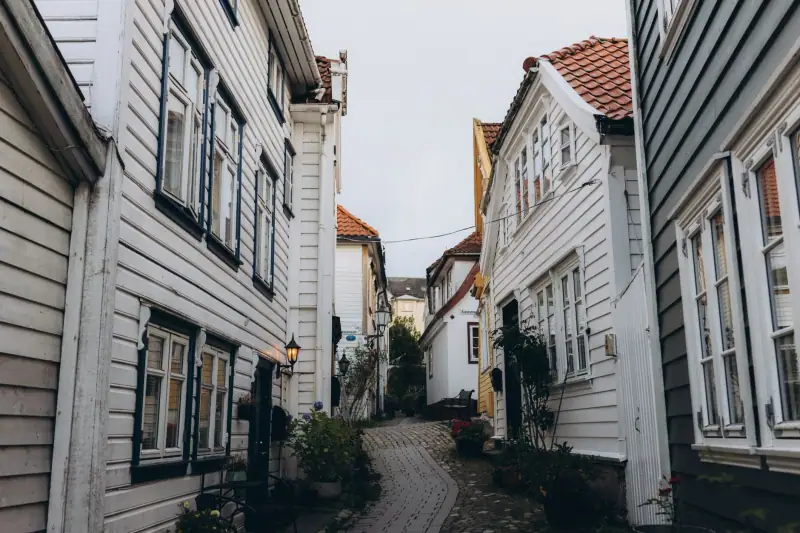
Gamle Stavanger (“Old Stavanger”) is the most photographed part of the city. Its roughly 170 white-painted wooden houses, mostly from the 18th and 19th centuries, form the largest group of preserved historic wooden houses in northern Scandinavia. Cobbled lanes, flower gardens and a lack of traffic make it feel like a bubble out of time, a short walk from the harbor.
Pros of Gamle Stavanger:
- A unique, very photogenic historic atmosphere
- Very quiet in the evening, away from the noise of the harbor bars
- 5 to 10 minutes on foot from the center and the restaurants
- Close to the Norwegian Petroleum Museum (Norsk Oljemuseum)
Cons:
- Very few hotels in the area itself (the houses are private homes)
- Some sloping streets (less convenient with heavy luggage)
Best for: architecture lovers, photographers, and travelers who want a memorable setting.
City center and Vågen (the old harbor): the most convenient area
The center of Stavanger is organized around Vågen, the old harbor, and the main street Kongsgata/Kirkegata. This is where most of the hotels, restaurants, bars and shops are. Stavanger Cathedral (12th century, the oldest cathedral in Norway still in regular use) and the Stavanger Torg market hall are a few minutes’ walk away.
Pros of the center:
- A large choice of hotels at every price
- Direct access to the ferries to Lysebotn, Tau and the islands
- All restaurants, bars and cafés within walking distance
- Bus and coach departures for Preikestolen
Cons:
- Can be noisy on weekends (active nightlife around the harbor)
- Higher prices than on the outskirts
Best for: a first stay, a short stopover, and hikers who want easy access to transport.
Hotels in Stavanger
Compare prices and availability across all of Stavanger's neighborhoods.
Storhaug: the trendy, affordable area
Storhaug lies east of the center, toward the Badedammen harbor. Long a working-class and port district, it has become the liveliest part of Stavanger, with art galleries, creative studios, independent cafés and converted industrial brick buildings. Apartments and rented rooms here are often cheaper than in the center.
Pros of Storhaug:
- A lively, authentic neighborhood
- Prices slightly lower than in the center
- A local feel, less touristy
- 15 to 20 minutes on foot from the historic center
Best for: curious travelers, fans of urban culture, and stays of a week or more.
Madla and Sola: on the outskirts, near the airport
The Madla area, west of Stavanger, and the municipality of Sola, near Stavanger Sola Airport, offer cheaper accommodation. If you have a car and your priority is budget, this is a good alternative. The Flybussen airport bus reaches the center in 30 to 40 minutes.
Best for: travelers with a car, short stopovers before or after a flight, and families looking for roomier apartments at lower prices.
Types of accommodation in Stavanger
High-end hotels (€150-300 / night, about $175-350)
Stavanger has several luxury hotels, mainly along the waterfront and in the historic center. Upscale properties generally offer polished Scandinavian design, restaurants using Rogaland produce, and privileged access to outdoor activities.
What you typically get:
- Fjord or Gamle Stavanger views from the upper-category rooms
- A spa and fitness room
- A fine-dining restaurant built around local seafood
- A concierge service to organize excursions to Preikestolen or Kjeragbolten
Mid-range hotels (€80-150 / night, about $95-175)
Most of Stavanger’s hotel supply falls in this range. You will find Scandinavian chain hotels (Scandic, Thon, Nordic Choice) well located in the center, with comfortable rooms and breakfast often included.
Strengths of this category:
- Good value for Stavanger
- A generous Norwegian breakfast usually included
- Reliable Wi-Fi, and paid parking often available nearby
- Staff used to hiking tourists who know the routes to Preikestolen
Hostels (€25-50 / person, about $29-58)
Stavanger has a few well-kept hostels, ideal for solo travelers and those on a small budget. They often offer dorms as well as private rooms, a shared kitchen and an international atmosphere.
Hostel perks:
- An equipped kitchen (essential given restaurant prices in Norway)
- Secure lockers for hiking gear
- Frequent group excursions to nearby hikes
- A good source of information on trail conditions
Apartment rentals
Rented apartments are an excellent option for families or groups. They let you cook your own meals, a considerable advantage in a city as expensive as Stavanger. The city center and Storhaug have the widest choice.
Average rental prices in Stavanger:
- Private room: €65-110 per night (about $75-130)
- Entire apartment (1 bedroom): €100-180 per night (about $115-210)
- Family apartment (2 to 3 bedrooms): €150-280 per night (about $175-325)
Car rental in Stavanger
Essential for Preikestolen, the Lysefjord and the Ryfylke region.
Tips for booking in Stavanger
Book early in summer. The hiking season (June to September) is the busiest period. Hikers come from all over Europe for Preikestolen, and city-center lodging is among the first to fill. For July and August, book at least 2 to 3 months ahead.
Mind the day of the week. Stavanger is a very active business city. On weekdays, hotels are often expensive because oil-sector executives fill them. On weekends, prices can drop by 20 to 40%. If your schedule is flexible, arrive on a Friday or Saturday.
Check the distance to the ferries. To reach Tau (the starting point for Preikestolen by ferry plus bus) or to head to the fjord islands, the Stavanger ferry terminal in the city center is the hub. Lodging within 10 minutes’ walk makes early-morning departures easier.
Parking in the center is expensive. If you arrive by car (ideal for exploring the region), note that parking in the center is paid and costly (check rates on the City of Stavanger website). Look for a hotel with parking included, or park on the outskirts and use the city buses.
Check hiking conditions. Preikestolen and Kjeragbolten are sometimes accessible outside the season (May and October remain doable), but the lodging around the trailheads is often closed. From Stavanger, you can do the round trip in a day in any season.
Stavanger as a base for hikes
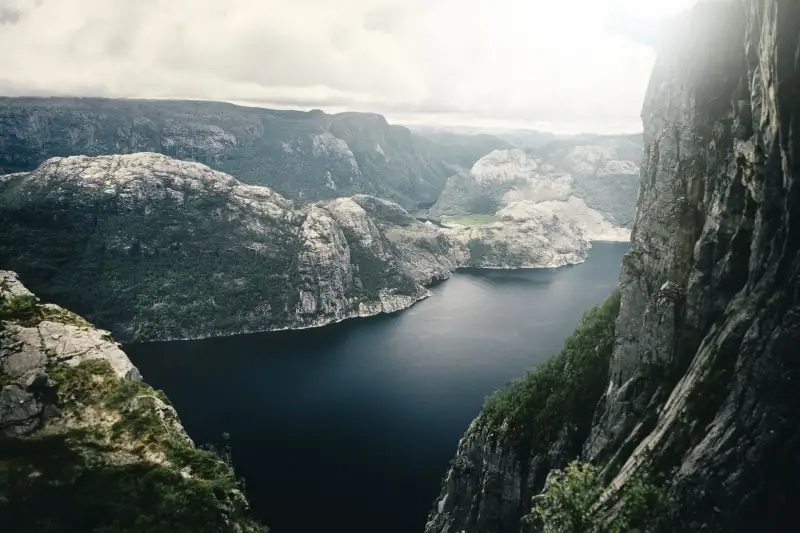
Stavanger is the best base for reaching the two signature hikes of Rogaland.
Preikestolen (Pulpit Rock)
The Preikestolen plateau, at about 604 m (1,980 ft) above the Lysefjord, is one of the most photographed natural sites in Norway. From Stavanger, you have two options:
- Ferry + bus from the Stavanger terminal to the trailhead (about 1 h 30 in total)
- Car: about 40 km (25 mi), through the Ryfast tunnel, which replaced the car ferry from Tau (about 1 hour)
The round-trip hike to Preikestolen is about 8 km (5 mi) with 350 m (1,150 ft) of elevation gain. Allow 2 h 30 to 3 h 30 each way, depending on your pace. Start early in the morning (before 8 am) to avoid the crowds and the traffic jams on the trail.
Kjeragbolten
Less accessible than Preikestolen but just as spectacular, Kjeragbolten is a boulder wedged in a crevice on the Kjerag plateau, whose summit reaches about 1,132 m (3,715 ft). Access is from Lysebotn, at the head of the fjord: you first drive to Lauvvik (about 1 hour from Stavanger), then take the car ferry to Lysebotn (about 2 h 30 crossing). The hike is more demanding (11 km / 7 mi round trip, 750-800 m / 2,460-2,625 ft of elevation gain) and requires either staying overnight in Lysebotn or leaving Stavanger very early.
For a day devoted to Kjeragbolten, it is generally more practical to stay a night there (a few rustic lodgings exist in Lysebotn in season) rather than start from Stavanger. Stavanger remains the logistical base for organizing the excursion, though.
Tours and hikes from Stavanger
Guided visits to Preikestolen, Lysefjord cruises, boat excursions.
Stavanger by season: what it means for lodging
Summer (June to August)
High season. Daylight is nearly constant (white nights around the solstice), the hiking trails are open and conditions are ideal for Preikestolen. Hotels are at their highest prices and occupancy. Be sure to book ahead.
Fall (September to October)
A good time to visit Stavanger without the summer crowds. The fall colors in the Lysefjord are spectacular. Preikestolen is still accessible (into October in dry conditions). Prices drop noticeably compared with July.
Winter (November to March)
Winter in Stavanger is mild for a Norwegian city (the country’s southwest coast benefits from the Atlantic influence). Little snow falls. The hiking trails are closed or not recommended. It is the ideal time to visit Stavanger on a reduced budget, enjoy the cathedral and the museums, and feel the city’s atmosphere without the tourists.
Spring (April to May)
A good compromise: the Preikestolen trails generally open in April or May depending on snow conditions. Prices are still reasonable and rooms are available. Recommended for those who want to combine hiking and cultural visits without the pressure of summer.
Eating and drinking in Stavanger from your lodging
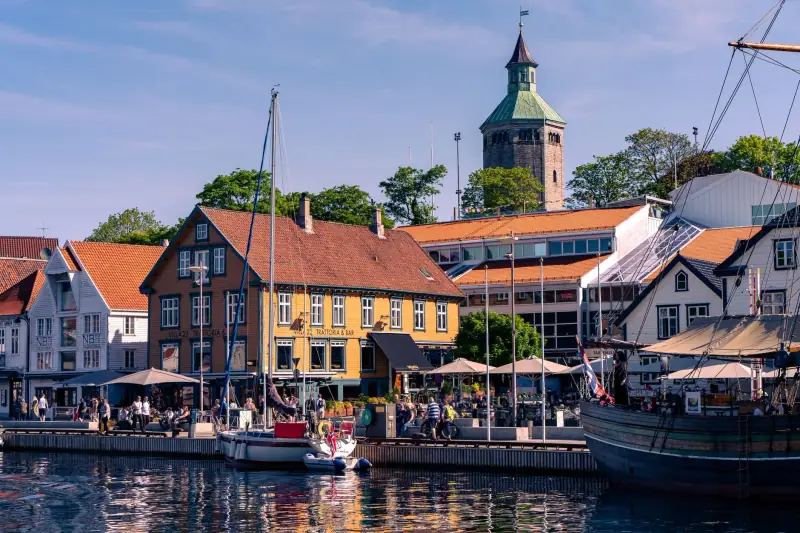
Stavanger is one of the best-known food cities in Norway. The Rogaland region produces some of the country’s best lamb, oysters and fish, and the city regularly hosts the Gladmat food festival, one of the largest in Northern Europe.
Whatever area you stay in, Øvre Holmegate (nicknamed “Fargegaten”, the colorful street) is worth a detour. Its facades painted in bright shades and its independent restaurants make it one of the most photogenic streets in Stavanger, two minutes from the center.
For Norwegian food, Stavanger offers one of the best introductions in the country: reindeer kebab from the food trucks at the harbor, wild salmon in the fine-dining restaurants, craft beer in the pubs of Storhaug. Fresh fish from Fisketorget, the harbor fish market, also lets you cook for yourself if you booked an apartment.
FAQ: Where to stay in Stavanger
How far is the airport from the center of Stavanger? Stavanger Sola Airport is about 14 km (9 mi) from the city center. The Flybussen bus links the two in 30 to 40 minutes. By taxi, allow about 30 to 40 minutes and 450-700 NOK (€40-65 / about $46-75); check the fare with the company before getting in.
Are there campgrounds in Stavanger? Yes, a few campgrounds exist on the outskirts, notably around Lake Stokkavannet a few kilometers from the center. It is not the best destination for an RV in the heart of the city, but the region offers many outdoor pitches once you head toward Ryfylke.
Can I reach Stavanger by ferry from Copenhagen or Harwich? No, there is no direct ferry to Copenhagen or Harwich from Stavanger. From the Risavika terminal, Fjord Line runs connections to Hirtshals (Denmark). This connection lets you arrive with a car, which is ideal for exploring the region.
To plan your stay in Stavanger and Norway in more depth, see our 7-day Norway guide and our guide to Preikestolen and Trolltunga.
Frequently asked questions
What is the best area to stay in Stavanger?
The city center around Vågen (the old harbor) is ideal for a first stay: everything is within walking distance, and restaurants and museums are close. Gamle Stavanger is more picturesque but has few hotels of its own.
Is accommodation in Stavanger expensive?
Yes. Stavanger is among the most expensive cities in Norway because of its oil economy. Expect 1,000-1,800 NOK (€90-165 / about $105-190) for a 3-star hotel, or 350-550 NOK (€30-50 / about $35-58) in a hostel. Prices drop noticeably outside the high season.
Do I need to book far ahead in Stavanger?
In summer (June to August), yes: the crowds of hikers heading to Preikestolen fill the accommodation. Book 2 to 3 months ahead. In the low season, 1 to 2 weeks is usually enough.
Can I do Preikestolen as a day trip from Stavanger?
Yes. Pulpit Rock (Preikestolen) is about 40 km (25 mi) from Stavanger. By car, allow 1 hour to the trailhead parking at Preikestolen Fjellstue, then about 2 hours of walking each way. Staying in Stavanger lets you go early in the morning and be back in the evening.
Is it better to stay in Stavanger or in Sandnes?
Stavanger remains the better choice for visitors: the sights (Gamle Stavanger, the Petroleum Museum, the cathedral), the restaurants and the ferries are all there. Sandnes, a neighboring town 15 km (9 mi) away, is cheaper but less well placed for sightseeing.
Are there unusual places to stay near Stavanger?
Yes. The region has renovated rorbuer (fishermen's cabins) on the islands of the Stavanger fjord archipelago, reached by ferry. There are also some glamping camps in the Lysefjord backcountry for a night with a fjord view.
More Norway guides
Keep reading

Where to Stay in Bergen: Best Neighborhoods and Hotels
Complete guide to where to stay in Bergen: historic Bryggen, the city center, Nordnes. Hotels, hostels and rentals for every budget.
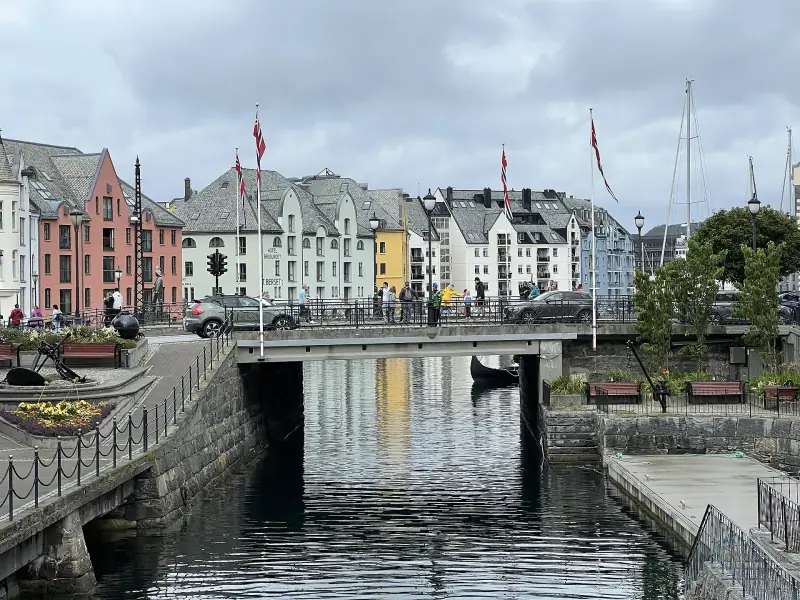
Where to Stay in Ålesund: Best Neighborhoods and Places to Stay
Where to stay in Ålesund: Art Nouveau center, Brosundet canal, hotels and hostels. A guide for every budget in western Norway.
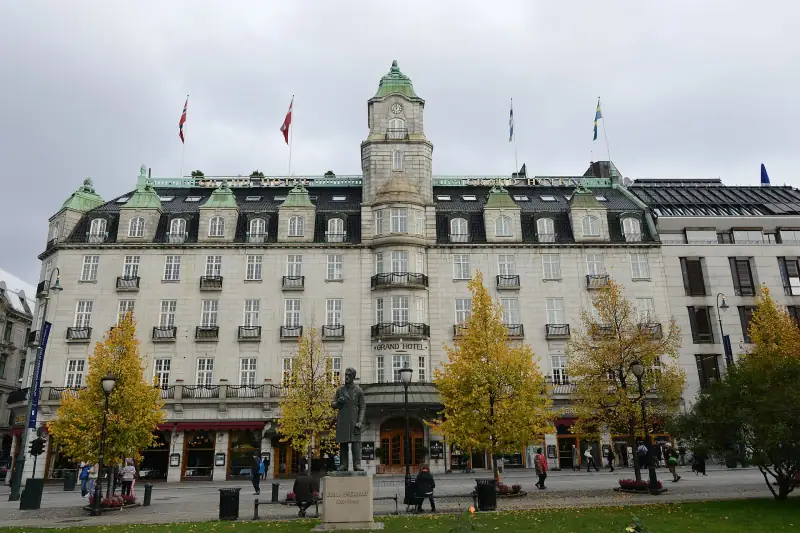
Where to Stay in Oslo: Best Neighborhoods and Places to Stay
Complete guide to where to stay in Oslo: Sentrum, Aker Brygge, Grünerløkka, Frogner, Grønland. Hotels, hostels and budget tips.
Ready-made
Norway itineraries

7 days
Norway in 7 Days: Complete Itinerary for Oslo, Bergen and the Fjords
OsloBergen
Can be adapted in the planner
Road Trip Through the Norwegian Fjords: Itinerary and Tips
Complete guide to a fjords road trip in Norway: scenic routes, Geirangerfjord, Nærøyfjord, stops and practical driving tips.
7 days
Lofoten and Tromsø in one week: doable or too ambitious?
Combining Lofoten and Tromsø in 7 days: real distances, travel times, a day-by-day plan and alternatives if the pace is too tight.