What to see
Visiting Baa Atoll: a complete guide to the UNESCO biosphere reserve
We may earn a commission when you book through links on this page, at no extra cost to you. We don't visit or try the places we cover: we summarize published sources. How we work
In short
- Baa Atoll became the Maldives' first UNESCO biosphere reserve in 2011; Hanifaru Bay is a protected snorkeling-only site (no scuba diving).
- Manta season runs roughly May to November, with a peak between July and October; whale sharks join the gathering, especially July to October.
- Dharavandhoo (airport DRV, 25-30 minutes from Malé) is the base for independent travelers; guesthouses cost €50-150 a night (about $58-175).
- A guesthouse stay runs about €600-1,200 per person for 5 nights, international flight excluded (about $695-1,390).
Baa Atoll is not an atoll like the others. While most Maldivian atolls compete with dream beaches and photogenic lagoons, Baa Atoll earned a distinction no other Maldivian atoll shares: the status of UNESCO Biosphere Reserve, awarded in 2011. This international recognition is not an honorary title; it recognizes extraordinarily rich marine biodiversity, supported by one of the best-preserved coral ecosystems in the Indian Ocean. At the heart of this atoll is Hanifaru Bay, a site that made Baa legendary worldwide: a shallow lagoon where dozens, sometimes hundreds of manta rays and whale sharks gather to feed in a natural spectacle absolutely unique in the world. Here is your complete guide to visiting Baa Atoll.
Baa Atoll, UNESCO biosphere reserve: why it is exceptional
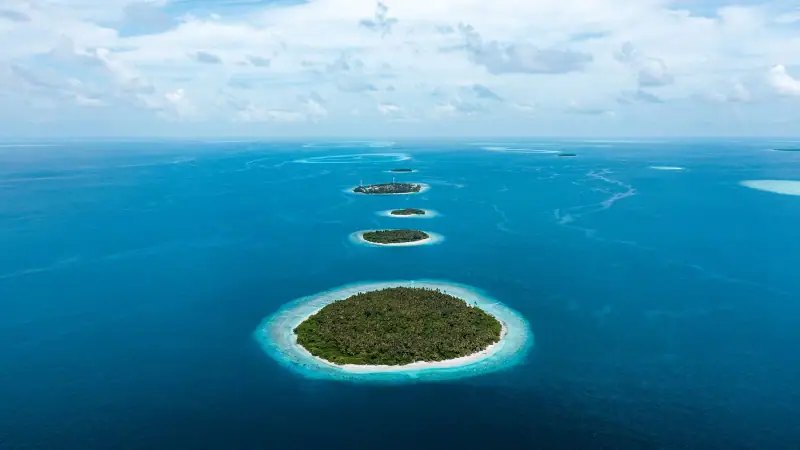
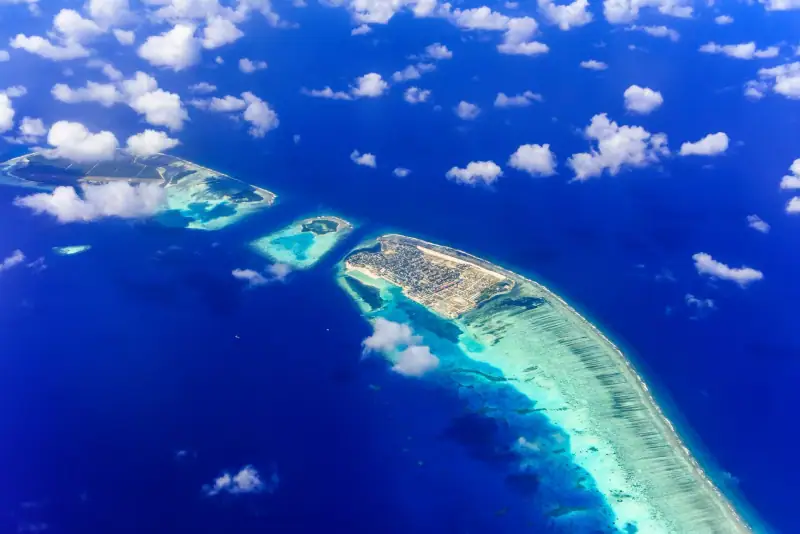
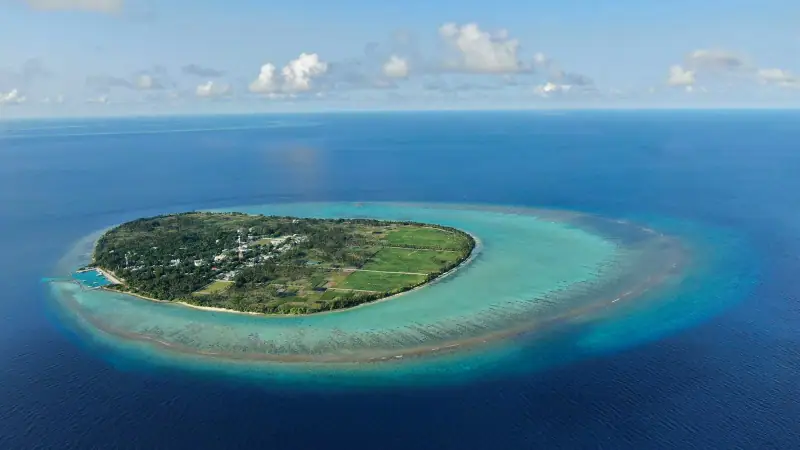
Baa Atoll (grouping the traditional atolls of South Maalhosmadulu and Goidhoo) is about 100 km (62 mi) north-northwest of Malé. It has about 75 islands, about thirteen of them inhabited. But what fundamentally sets Baa apart from its neighbors is the health of its coral reefs and the concentration of marine megafauna that results.
The Maldives’ first biosphere reserve
In 2011, UNESCO granted Baa Atoll the status of Biosphere Reserve, a first in the history of the Maldives. This classification commits local authorities to a program of active ecosystem protection, limiting human activities that could harm the reefs and marine wildlife. In practice, this means:
- Marine protected areas where fishing and motorized activities are strictly regulated
- Restrictions on the number of visitors at the most sensitive sites, notably Hanifaru Bay
- Monitoring programs for manta ray, whale shark and turtle populations
- Close collaboration between local communities, tourism operators and scientists
This protection framework has preserved ecosystems that tourist pressure and overfishing have damaged in other atolls. As a result, Baa’s reefs are among the most colorful and lively in the Maldives, with a diversity of soft and hard corals, fish and invertebrates that regularly exceeds what is found elsewhere in the archipelago.
An exceptional ecosystem
Baa Atoll benefits from a geography favorable to concentrating marine life. Currents crossing the channels bring nutrient-rich water, feeding food chains that support large populations of predators and filter feeders. Coral reefs in excellent condition serve as nurseries for dozens of fish species. Seagrass beds shelter green turtles in significant numbers. And at the top of this ecological pyramid, manta rays and whale sharks come seasonally to feed in a spectacle that visitors from around the world come to watch.
Hanifaru Bay excursions and diving in Baa Atoll
Book your excursions with certified guides to watch manta rays safely.
Hanifaru Bay: sanctuary of manta rays and whale sharks
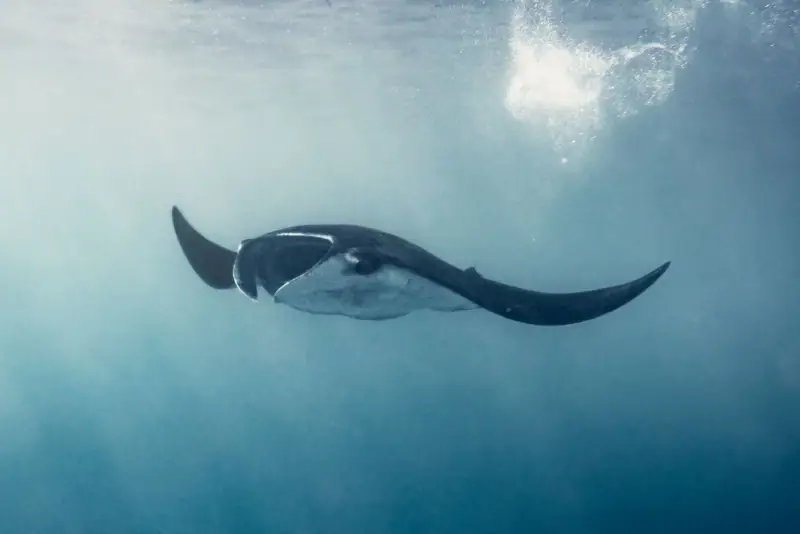
Hanifaru Bay is the jewel of Baa Atoll, and one of the most extraordinary snorkeling experiences on the planet. This shallow bay, nestled in the atoll’s lagoon, is the stage for a rare natural phenomenon: massive aggregations of oceanic manta rays that come to feed on the plankton suspended in these particularly rich waters.
Why do mantas gather here?
During the southwest monsoon season (generally May to November), winds and currents bring cold water loaded with phytoplankton and zooplankton directly into Hanifaru Bay. The bay’s geography creates a natural funnel effect that concentrates this suspended food. Manta rays, which can reach a wingspan of 5 to 7 meters (16-23 ft), exploit this richness, unfurling their cephalic fins like funnels to swallow phenomenal volumes of plankton by filtering the water.
At peak concentrations (typically in August and September), it is not rare to see several dozen manta rays moving at the same time in the bay. Whale sharks (Rhincodon typus), the largest fish in the world, sometimes join the gathering, exploiting the same plankton concentrations with their enormous open mouths. Watching an 8 to 10 meter (26-33 ft) whale shark while snorkeling a few meters away is a lifelong experience.
Access rules and respect for the site
Hanifaru Bay was classified as a marine protected area in 2009, then integrated into the UNESCO Biosphere Reserve in 2011. Strict rules govern visits:
- Scuba diving is prohibited in the bay to avoid disturbing the mantas’ feeding behavior. Only snorkeling is allowed.
- The number of visitors per session is limited: local rangers manage rotations to avoid overcrowding in the water. Book well ahead in high season.
- Touching manta rays or whale sharks is forbidden: an absolute rule for the animals’ welfare and visitors’ safety. Manta rays have delicate skin covered with a protective film that human hands can damage.
- Biodegradable sunscreen only: chemical sunscreens contain molecules harmful to corals. Be sure to choose zinc-oxide or titanium-dioxide products.
How to organize your visit to Hanifaru Bay
Hanifaru Bay excursions leave mainly from the island of Dharavandhoo, the atoll’s main inhabited island accessible to independent travelers. Guesthouse operators organize daily boat outings to the bay, generally in the morning when light conditions are best for snorkeling.
Excursion length: allow a full half day, including the boat ride, the briefing, one to two snorkeling sessions in the bay (depending on conditions and the mantas’ presence), and the return.
Indicative price: excursions organized from Dharavandhoo generally run between €50 and 100 per person (about $58-116) depending on the operator and the services included. Check that the price includes snorkeling gear (mask, fins, light wetsuit) and the entrance fee to the protected area.
To deepen your snorkeling practice in the Maldives, see our complete guide to snorkeling in the Maldives.
Scuba diving in Baa Atoll
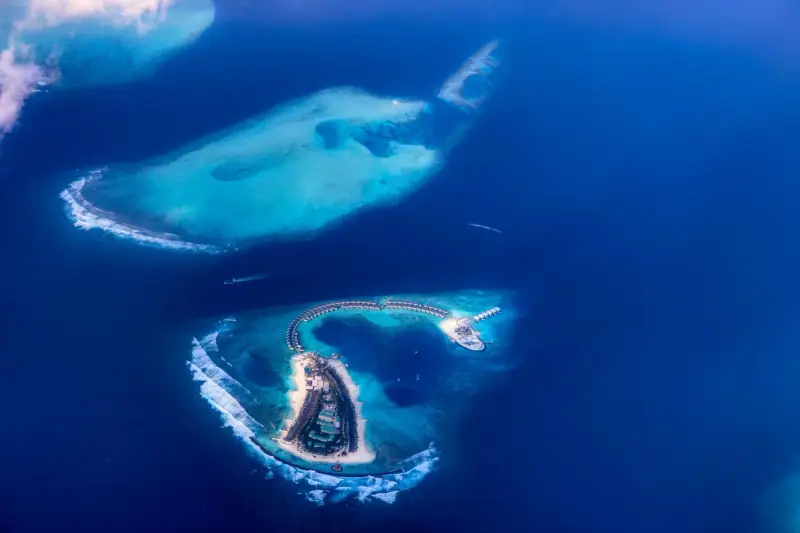
While Hanifaru Bay is reserved for snorkeling, Baa Atoll offers certified divers sites of extraordinary richness. The atoll’s channels, thilas and outer reefs are among the best dive spots in the Maldives.
Types of dive sites in Baa
Thilas (shoals): these submerged coral plateaus, typical of Maldivian geography, are covered with multicolored soft corals and host dense wildlife. Gorgonians, sponges and table corals create spectacular relief from 10-15 meters (33-50 ft) deep. Baa’s thilas stand out for the exceptional condition of their corals, spared by the coral bleaching that has affected other regions of the Maldives.
Channels: currents crossing the atoll’s channels concentrate nutrients and attract impressive pelagic wildlife. Gray sharks, whitetip reef sharks, schools of tuna, giant trevally and barracuda are regular visitors to these channels. Drift diving in Baa’s channels, carried by the current, offers breathtaking encounters.
Coral gardens: the atoll’s shallow reefs, protected by the UNESCO reserve, feature extraordinarily lively coral gardens. Clownfish in their anemones, lionfish slowly patrolling the reef, turtles dozing between two corals: diving in these gardens is ideal for divers of all levels.
Levels and certifications required
Most of Baa Atoll’s dive sites are accessible to level 1 divers (OW Diver or equivalent). Some channels with strong currents are recommended for level 2 divers with experience in currents. Dive centers based in Dharavandhoo and in the atoll’s resorts run supervised dives suited to all levels.
To prepare your diving stay in the Maldives, read our guide to diving in the Maldives.
Accommodation in Baa Atoll
Resorts and guesthouses with direct access to the atoll's best excursions.
The inhabited islands of Baa Atoll
Baa Atoll has about thirteen inhabited islands, each with its own personality and assets for the traveler.
Dharavandhoo: the gateway for independent travelers
Dharavandhoo is the main island for travelers who want to explore Baa Atoll without going through a resort. It has a domestic airport (IATA code: DRV) with regular flights from Velana Airport in Malé, making it the most practical access point to the atoll for independent travelers.
The island has several guesthouses of decent to good quality, restaurants serving Maldivian and international cuisine, and above all excursion operators specialized in Hanifaru Bay outings. The beach for tourists (Bikini Beach) is accessible and pleasant. The local community is used to international travelers, and the general atmosphere is relaxed and welcoming.
Dharavandhoo is ideal for travelers who want to combine local authenticity (life in an inhabited Maldivian village), a reasonable budget and access to the atoll’s underwater wonders.
Eydhafushi: the administrative capital
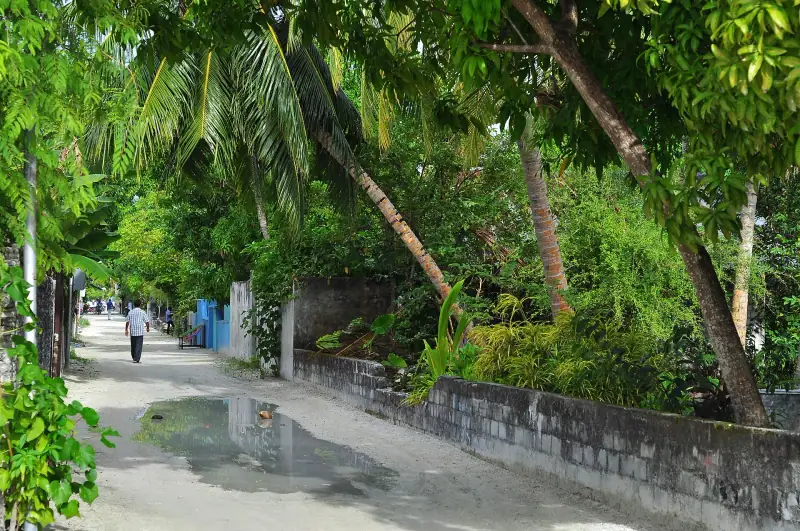
Eydhafushi is the main town of Baa Atoll, the largest inhabited island in the atoll. It is an essentially residential and administrative island, less touristy than Dharavandhoo, but offers complete immersion in daily Maldivian life. It has the local market, lively tea houses and the atmosphere of a small island town.
Travelers who stop there appreciate the total authenticity of the place, away from tourist circuits. Hanifaru Bay is reachable from Eydhafushi but there are fewer excursion operators than in Dharavandhoo.
Uninhabited islands: beach escapes
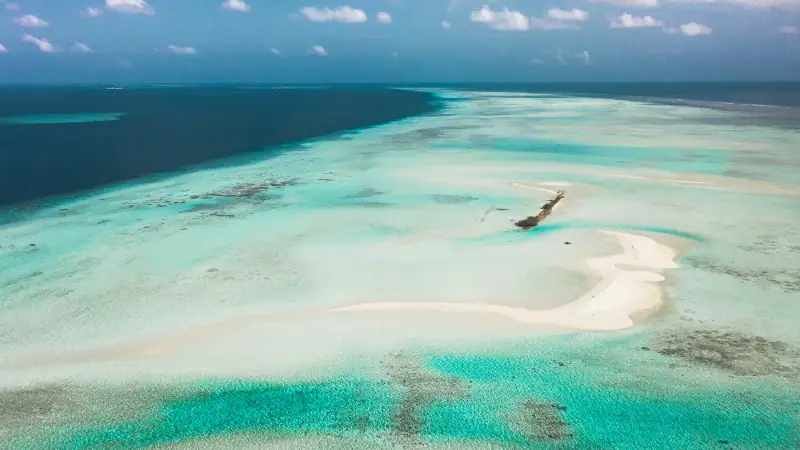
Baa Atoll has many deserted (uninhabited) islands reachable on excursions. These islands are the paradise of the idyllic Maldivian beach: white sand, palm trees, translucent lagoon, zero infrastructure. Dharavandhoo operators organize picnic excursions to these deserted islands, perfect for a day of absolute idleness after a morning of intense snorkeling.
These island-hopping excursions generally combine a deserted island for lunch and swimming with a snorkeling session on a reef or an outing to Hanifaru Bay.
To learn more about circuits between islands, see our island-hopping guide for the Maldives.
Where to stay in Baa Atoll
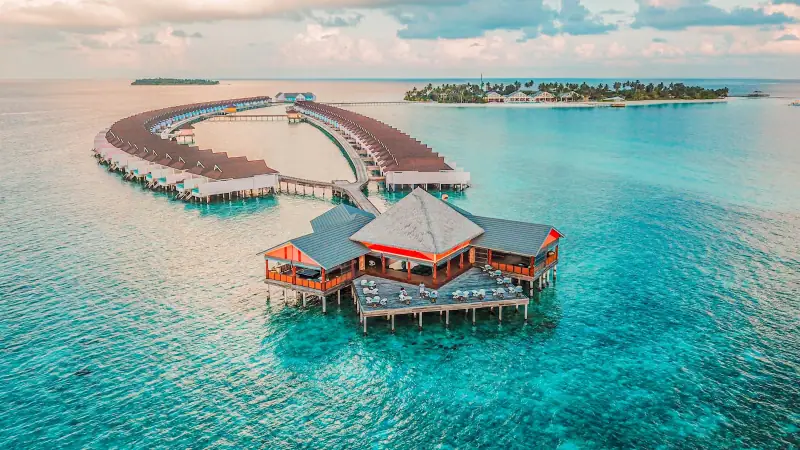
Baa Atoll offers an unusual accommodation spectrum for the Maldives: some of the world’s most luxurious resorts coexist with very accessible local guesthouses. This wide spectrum makes it a possible destination for different budgets.
Baa Atoll’s luxury resorts
Baa Atoll is home to some of the world’s most renowned hotel properties. These resorts occupy entire private islands and offer a very high-level all-inclusive experience, notably with overwater villas and seaplane access from Malé.
Four Seasons at Landaa Giraavaru: this property is regularly cited among the best resorts in the Maldives. Located on the island of Landaa Giraavaru, it offers beach villas and overwater villas with exceptional amenities. It has a manta ray conservation program in partnership with the Maldivian Manta Ray Project, with the possibility of accompanying scientists during their research on the atoll’s mantas.
Soneva Fushi: a pioneer of eco-luxury in the Maldives, Soneva Fushi occupies the island of Kunfunadhoo. This resort is famous for its villas in the vegetation, its serious environmental policy (fresh water production, solar energy, zero waste policy), and its access to some of the atoll’s best snorkeling and diving spots. Transfers are by seaplane or speedboat from Malé.
Indicative budget for these resorts: from €1,000-1,500 a night in low season for the entry categories (about $1,160-1,740). Allow €2,000 to 5,000 and more for overwater villas in high season (about $2,320-5,800). These rates generally include meals and some activities.
Dharavandhoo guesthouses: the accessible alternative
For travelers who want to experience Baa Atoll without spending a fortune, Dharavandhoo’s guesthouses offer an excellent compromise. You get:
- The same access to Hanifaru Bay via local excursion operators
- The same spectacular dive and snorkeling sites
- Immersion in authentic local Maldivian life
- A much more manageable budget
Indicative rates for Dharavandhoo guesthouses:
- Economy room (air conditioning, private bathroom): €50-80 a night (about $58-93)
- Mid-range room with sea or pool view: €80-150 a night (about $93-175)
- Suite or superior room in a premium guesthouse: €150-250 a night (about $175-290)
These prices remain very competitive by Maldivian standards and generally include transfers from Dharavandhoo airport.
Flights to the Maldives
Find the best flight deals to Velana International Airport (Malé) to start your adventure in Baa Atoll.
How to get to Baa Atoll from Malé
Baa Atoll is about 100 km (62 mi) north-northwest of Velana International Airport in Malé. Several transport options are available, depending on your budget and accommodation.
The domestic flight to Dharavandhoo
The most practical and affordable option for independent travelers is the domestic flight to Dharavandhoo Airport (IATA: DRV). Flights run regularly between Velana Airport in Malé and Dharavandhoo, with a flight time of about 25-30 minutes.
- Advantage: the most practical, fast and economical way to reach the atoll for travelers staying in guesthouses.
- Tip: book your domestic flights in advance, especially in high season (July-October). Seats fill up quickly on these small routes.
The seaplane transfer
Baa Atoll’s luxury resorts (Four Seasons Landaa Giraavaru, Soneva Fushi, etc.) organize seaplane transfers from the seaplane base at Velana Airport. This mode of transport, operated mainly by Trans Maldivian Airways, offers an exceptional aerial view over the Maldivian atolls and lagoons.
- Duration: about 25-35 minutes of flight depending on the destination in the atoll.
- Limitation: seaplanes fly only in daytime (no night flights). If your international flight arrives in the evening, you will need to spend the first night in Malé or Hulhumalé before joining the atoll the next morning.
- Cost: generally included in the resort package or billed separately at high rates (several hundred euros per trip depending on the season).
From Malé: a few logistical tips
Whatever transport option you choose to Baa Atoll, here are the essentials for your transit in Malé:
Velana International Airport is on the island of Hulhulé, not to be confused with Hulhumalé, the adjacent artificial residential island linked by a causeway and then a bridge to Malé. Depending on your arrival time and your connection to Baa Atoll, you may need a night in Malé or Hulhumalé. Our guide to Malé’s highlights helps you organize your transit in the capital.
When to visit Baa Atoll
The choice of period depends above all on your main priority: manta rays, or a perfectly calm sea for the beach.
May to November: manta season
This is the period for Hanifaru Bay. The southwest monsoon generates plankton-rich water and manta gatherings. The peak is generally between July and October, with the year’s largest concentrations.
Advantages: Hanifaru Bay is at its most magical, with the chance to see dozens of mantas at once. Diving is also excellent, with abundant pelagic wildlife in the channels.
Drawbacks: the monsoon brings rain episodes and a sometimes rough sea. Visibility can be reduced on some days in the most plankton-rich areas (but it is precisely this plankton that attracts the mantas). High season (July-October) is also the busiest for bookings.
December to April: dry season
The dry season offers more stable weather, a calmer sea and maximum underwater visibility. Diving and snorkeling on the reefs are spectacular, with exceptional water clarity.
Advantage: calm sea, blue sky, ideal conditions for non-divers and families with children.
Drawback: manta gatherings at Hanifaru Bay are less certain, even though mantas remain present in the atoll all year and can be seen on dives and snorkeling over the reefs.
To choose the best time according to your priorities, see our guide to the best time to visit the Maldives.
Budget for a stay in Baa Atoll
Baa Atoll can be visited on very different budgets, depending on whether you choose Dharavandhoo’s guesthouses or luxury resorts.
Guesthouse option in Dharavandhoo
| Item | Indicative budget |
|---|---|
| Accommodation (per night) | €50-150 (~$58-175) |
| Domestic flight Malé ↔ Dharavandhoo (round trip) | €80-150 (~$93-175) |
| Hanifaru Bay excursion | €50-100 (~$58-116) |
| Dive (per dive, with equipment) | €60-90 (~$70-104) |
| Meals (per day) | €20-40 (~$23-46) |
| Island-hopping excursion | €40-80 (~$46-93) |
Indicative total budget for 5 nights (international flight excluded): €600-1,200 per person, all included (about $695-1,390).
Luxury resort option
Baa Atoll’s high-end resorts generally start at €1,000-1,500 a night (about $1,160-1,740) in an entry-level room, with a half-board or all-inclusive package. Allow €2,000 to 5,000 and beyond for overwater villas in high season (about $2,320-5,800). Seaplane transfers (€200-400 per person round trip depending on destination, about $232-465) come on top.
To compare budget options in the Maldives, see our complete guide to the Maldives budget.
Practical tips for Baa Atoll
Book Hanifaru Bay in advance: in high season (July-October), places for Hanifaru Bay sessions are limited and in high demand. Plan your excursion as soon as you arrive in Dharavandhoo, or even before you leave home if your operator allows.
Biodegradable sunscreen only: the rule is strictly enforced by the marine protected area’s rangers. Some operators hand it out, but it is better to bring your own tube to be sure.
Snorkeling suit: a light lycra suit is recommended for Hanifaru Bay sessions. It protects against sunburn during snorkeling (sometimes long) and offers minimal protection against any accidental contact with jellyfish.
Internet connection: 4G from Maldivian operators (Dhiraagu, Ooredoo) covers Dharavandhoo properly. A local SIM bought at Malé airport (€5-10, about $6-12) is the most economical way to stay connected. You can also check your carrier’s international plan or use a travel eSIM.
Money: bring cash (Maldivian rufiyaa or US dollars) for local expenses (tea houses, small shops). Guesthouses and excursion operators generally accept bank cards, but small establishments prefer cash.
Respecting the rules in the protected area: the UNESCO reserve’s rules are seriously enforced. Never touch corals, rays or sharks, do not use chemical sunscreen, respect authorized navigation areas. These rules exist to protect the extraordinary natural heritage you come to see.
Combining Baa Atoll with other islands
Baa Atoll fits well into a multi-destination circuit in the Maldives, combining several atolls for a varied experience.
- Malé: the capital is the unavoidable transit point. A day or two exploring the golden mosque, the fish market and the city’s atmosphere before flying to Baa is an excellent introduction to the Maldives.
- Maafushi: the most touristy local island in the Maldives, in South Malé Atoll. A very good base for budget travelers who want a taste of the guesthouse atmosphere before or after Baa Atoll.
- Ari Atoll: the other big diving atoll of the Maldives, more easily accessible from Malé. Known for its whale sharks at Maamigili (South Ari Atoll) and its many dive sites.
- Island-hopping circuit: if you have more than a week, a circuit combining Malé, Baa Atoll and Ari Atoll lets you discover different facets of the Maldives. See our island-hopping guide for the Maldives to organize your circuit.
Boat rental and private transfers in the Maldives
Organize your transfers between atolls and your excursions with verified local providers.
Baa Atoll is a destination that on its own justifies the trip to the Maldives. Hanifaru Bay and its manta rays offer a snorkeling experience that exists nowhere else on Earth. The UNESCO reserve’s preserved reefs give divers conditions rarely matched in the archipelago. And the coexistence of accessible guesthouses in Dharavandhoo and ultra-luxurious resorts on private islands makes it a destination that adapts to almost every budget. Visiting Baa Atoll means understanding why the Maldives are not just photos of overwater jetties: it is above all a marine ecosystem of extraordinary richness, and Baa is its sanctuary.
Frequently asked questions
How do you get to Baa Atoll from Malé?
Baa Atoll is reached by domestic flight to Dharavandhoo Airport (IATA code: DRV), with flights from Velana Airport in Malé in about 25-30 minutes. The atoll's luxury resorts also offer seaplane transfers, spectacular but more expensive. Dharavandhoo guesthouses often organize airport transfers.
When is the best time to see manta rays at Hanifaru Bay?
The manta season at Hanifaru Bay generally runs from May to November, with a peak between July and October. It is the southwest monsoon that brings the plankton-rich waters on which mantas and whale sharks feed. Outside this period, gatherings remain possible but less certain.
Is Baa Atoll accessible without a luxury resort budget?
Yes, the island of Dharavandhoo has several guesthouses accessible to travelers on a reasonable budget. You will find accommodation between €50 and 150 a night (about $58-175), with access to Hanifaru Bay excursions and the atoll's dive sites. It is a much cheaper alternative to private resorts, while enjoying the same underwater wonders.
Can you scuba dive at Hanifaru Bay?
Scuba diving has been banned at Hanifaru Bay since it was classified as a marine protected area, to preserve the natural behavior of the manta rays. Only snorkeling is allowed, with a limited number of visitors per session. This rule aims to protect manta aggregations. For diving, many other exceptional sites in Baa Atoll host sharks, rays and colorful corals.
What are the best resorts in Baa Atoll?
Baa Atoll is home to some of the world's most renowned resorts, including Four Seasons at Landaa Giraavaru and Soneva Fushi on Kunfunadhoo island, regularly ranked among the best in the world. These properties offer overwater villas and privileged access to excursions in the atoll. Plan budgets from €1,000 a night (about $1,160) for these exceptional addresses.
How much time should you plan for Baa Atoll?
A minimum of 3 nights is recommended to enjoy the essentials: a Hanifaru Bay excursion, one or two dive or snorkeling sessions, and discovering local life in Dharavandhoo. To fully enjoy the dive sites and the atoll's different islands, 5 to 7 nights are ideal.
Are there whale sharks in Baa Atoll?
Yes, whale sharks visit Hanifaru Bay and Baa Atoll's waters, particularly between July and October. They often share the same waters as manta rays, attracted by the same plankton concentrations. Seeing a whale shark while snorkeling at Hanifaru Bay is one of the most striking natural experiences in the Maldives.
More Maldives guides
Keep reading
Visiting Ari Atoll: a complete guide to the whale shark paradise
Ari Atoll, Maldives: whale sharks year-round, Maaya Thila, Dhigurah and guesthouses. Complete 2026 guide to this exceptional atoll.
Visiting Addu Atoll: a complete guide to the Maldivian end of the world
Addu Atoll, Maldives: diving the British Loyalty wreck, a unique causeway, Addu City and preserved nature. Complete 2026 guide to the southernmost atoll.
Visiting Addu City: a complete guide to the atoll at the end of the world
Addu City, Maldives: British history, diving the British Loyalty wreck, unique coral causeways, local culture and preserved nature. 2026 guide.
Ready-made
Maldives itineraries
10 days
Maldives in 10 days: a complete itinerary to explore the atolls
10-day Maldives itinerary: Malé, Hulhumalé, Maafushi, Thulusdhoo and Ari Atoll. Day-by-day plan with transport, budgets and practical tips.
7 days
Maldives in 7 days: the ideal full-week itinerary
Complete itinerary to visit the Maldives in 7 days: Malé, Maafushi, island hopping and resort option. Day-by-day plan with practical tips.
5 days
Maldives in 5 days without a seaplane: a realistic local-island itinerary
MaafushiThulusdhoo