What to see
Visiting Addu Atoll: a complete guide to the Maldivian end of the world
We may earn a commission when you book through links on this page, at no extra cost to you. We don't visit or try the places we cover: we summarize published sources. How we work
In short
- Addu Atoll lies about 540 km (335 mi) south of Malé; the main access is a domestic flight of about 1 h 35 to 1 h 45 to Gan Airport (GAN).
- A paved Link Road joins Gan, Feydhoo, Maradhoo and Hithadhoo, so you can cycle or ride between islands.
- The British Loyalty wreck (about 134 m / 440 ft, 30-33 m / 100-108 ft deep) is the headline dive; Advanced Open Water is the level required.
- Budget for 5 nights, flights excluded: about €400-800 per person (about $465-930); plan at least 4 to 5 nights.
At the end of the Maldivian archipelago, some 540 km (335 mi) south of Malé and a stone’s throw from the equator, Addu Atoll exists in a dimension of its own. Where most visitors imagine the Maldives as a string of overwater-villa resorts and flawless beaches, Addu offers a radically different experience: an island town linked by a causeway unique in the whole archipelago, a legendary wreck among the best in the Indian Ocean, dive sites still little visited, and a local authenticity that the northern atolls lost long ago. Here is your complete guide to visiting Addu Atoll.
Addu Atoll, the Maldivian end of the world: geography and particularities
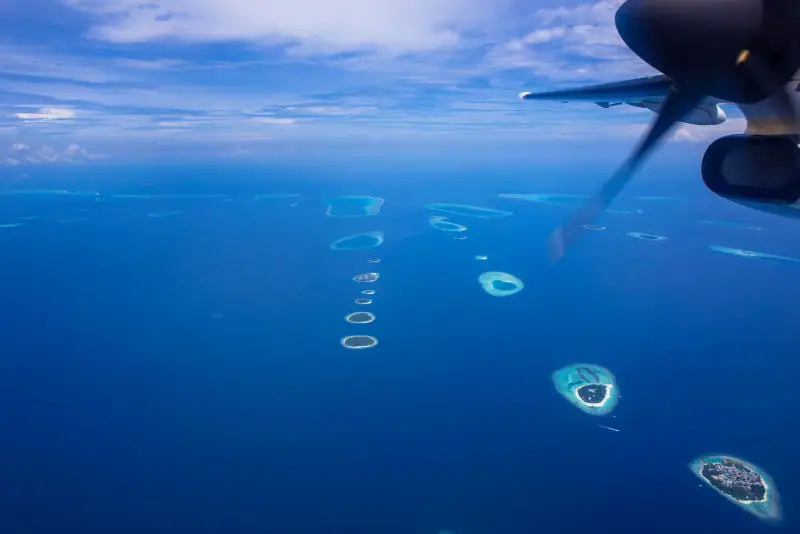
Addu Atoll, administratively known as Seenu Atoll, is the southernmost atoll of the Maldives. It lies at only about 0.6 degrees south latitude, that is, barely a few kilometers from the equator line, in the southern hemisphere. With Fuvahmulah, it is one of only two Maldivian atolls south of the equator. This extreme geographic position gives it a distinct character in the archipelago, climatically, biologically and culturally.
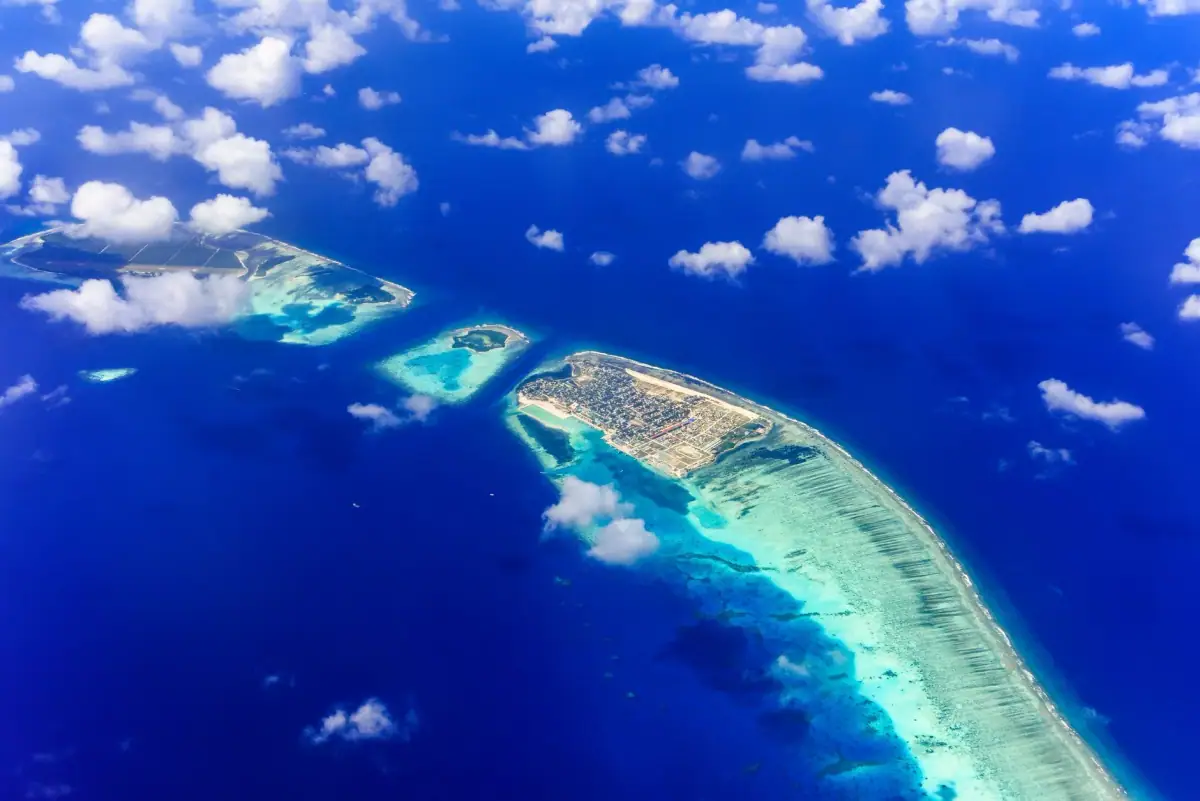
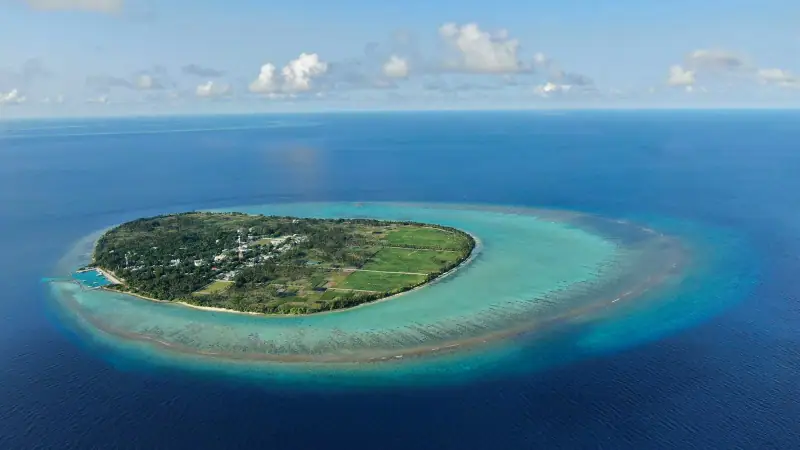
The atoll forms an almost circular coral ring, with a sizable inner lagoon. It has several inhabited islands and many deserted ones, coral reefs in excellent condition and channels where currents rich in marine life rush through.
The Link Road: infrastructure unique in the Maldives
What immediately sets Addu Atoll apart from all other Maldivian atolls is a continuous paved causeway, the Link Road, linking several inhabited islands. This road connects by land the islands of Gan, Feydhoo, Maradhoo, Maradhoo-Feydhoo and Hithadhoo, the most populated island and the atoll’s main town.
This setup is almost unique in the Maldivian archipelago, where travel between islands is normally exclusively by boat. The Link Road lets you move by bike, motorbike or car between the islands in a few minutes, discover the atoll independently, and gain access to a continuous local life that contrasts sharply with the isolation of private-island resorts.
Addu City, the second city of the Maldives
The islands linked by the Link Road together form Addu City, the second-largest urban area in the Maldives by population after Malé. With its tens of thousands of residents spread over several islands, Addu City has its own identity, distinct from the capital: a local Maldivian accent different from the Malé dialect, a preserved island culture, and tangible local pride.
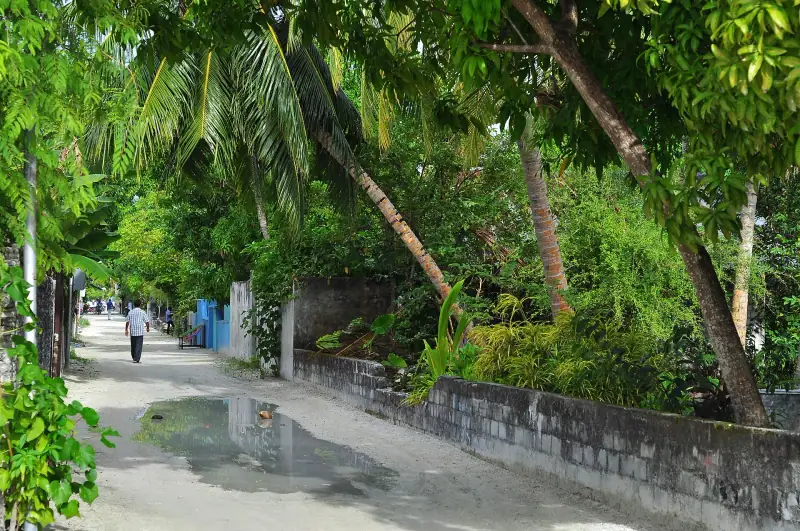
The city has modern infrastructure: hospitals, schools, shops, restaurants, markets. It is the only city in the Maldives where you can walk or cycle along several kilometers of coast, cross several inhabited islands and observe the daily life of Maldivians far from the usual tourist circuits.
To explore the atoll’s main town in more detail, see our guide to visiting Addu City.
Accommodation in Addu Atoll
Local guesthouses and resorts on the Addu islands, for every budget.
The British Loyalty wreck: Addu’s signature dive
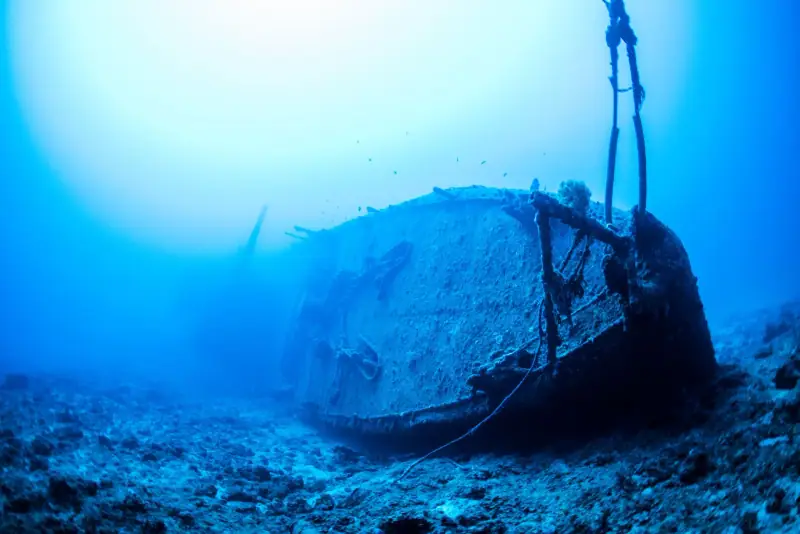
If Addu Atoll is famous in the diving world, it is first thanks to the British Loyalty, a wreck that ranks among the best wreck dives in the Indian Ocean.
History of the wreck
The British Loyalty is a British tanker that took part in Allied logistical support in the Indian Ocean during the Second World War. The port of Gan, in Addu Atoll, then housed a major British naval base (Royal Naval Air Station Addu Atoll), which played a strategic role in the Southeast Asian theater of operations.
The ship was torpedoed by the German submarine U-183 in March 1944, causing serious damage, then deliberately scuttled on January 15, 1946, after the war in Addu lagoon, where it has rested since, lying on the bottom at about 30 to 33 meters (100-108 ft) deep. The hull, about 134 meters (440 ft) long, is intact in broad outline, offering divers a complete and accessible wreck dive.
What you will see on the British Loyalty
Decades after its sinking, the British Loyalty has become a living artificial reef of great biological richness. The hull is covered with multicolored soft corals (red, orange, purple) that make it a spectacular natural painting, especially when you light the surfaces with a dive torch.
The wildlife colonizing the wreck is diverse and generous:
- Giant moray eels nestled in the portholes and hull cavities
- Lionfish lounging in corners, to be watched from a distance for their visual interest
- Schools of fish (fusiliers, sunfish perch, damselfish) moving between the structures
- Reef sharks (whitetip, blacktip) that regularly patrol around the wreck
- Green turtles that frequent the immediate surroundings of the site
Visibility around the British Loyalty is generally good to excellent in the dry season, offering clear views of the whole hull from the surface.
Level required and dive conditions
The British Loyalty is accessible to certified level 2 or Advanced Open Water divers because of its maximum depth (bottom at 33 m / 108 ft). Some shallower parts (upper deck at around 20-25 m / 65-80 ft) may be accessible to level 1 divers with supervision, at the local dive center’s discretion.
Currents in Addu lagoon are generally moderate, but can vary with the tides. Local dive centers run wreck outings taking the day’s conditions into account.
Diving excursions in Addu Atoll
Dive the British Loyalty and the atoll's best sites with certified instructors.
Other dive and snorkeling sites in Addu Atoll
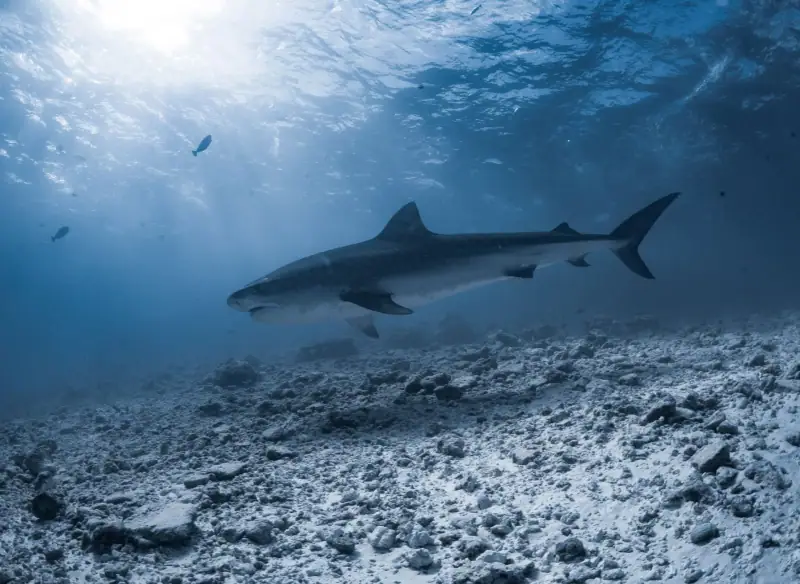
Addu Atoll is not just the British Loyalty wreck. Its coral reefs, channels and underwater gardens offer a rich playground for divers and snorkeling fans alike.
The channels and coral reefs
Addu Atoll’s channels are top-quality dive spots for pelagic wildlife fans. The currents crossing these channels bring cool, nutrient-rich water that attracts impressive wildlife: gray sharks, schools of tuna, giant trevally and stingrays are not rare. Drift diving in Addu’s channels, carried by a moderate current, is an experience experienced divers particularly enjoy.
The atoll’s coral reefs, relatively little visited compared with the big sites of the northern atolls, have corals in generally good condition. Reef life there is abundant and varied: turtles, fish of every color, stingrays camouflaging in the sand, and impressive sponges. The fact that the atoll is far from the big tourist concentrations explains the relative preservation of its ecosystems.
Snorkeling sites accessible from the Link Road
A particularity of Addu for snorkeling: several sites are accessible directly from the shore of the Link Road islands, on foot or by bike. No boat is needed for every snorkeling session, a rare freedom in the Maldives. These roadside (or rather coast-path) spots offer encounters with local wildlife in a fully independent setting.
For a broader look at snorkeling best practices in the Maldives, see our guide to snorkeling in the Maldives.
Diving near the equator: biological specifics
Addu Atoll’s near-equatorial position gives it interesting biological characteristics. The waters there are slightly different from those of the northern atolls, with species that reach the northern or southern limit of their geographic distribution here. Some divers mention more diverse pelagic wildlife in Addu’s channels, with encounters sometimes rare in the rest of the archipelago.
The proximity of Fuvahmulah (Gnaviyani Atoll), renowned for its tiger sharks and hammerhead sharks, makes it a natural complement for divers who want to maximize big-wildlife encounters during their stay in the far south of the Maldives.
To prepare your diving stay, read our guide to diving in the Maldives.
Nature and discovery in Addu Atoll
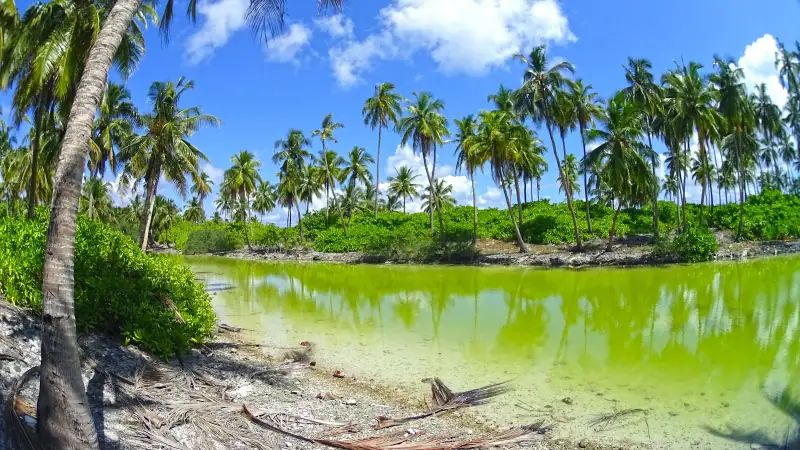
Beyond diving, Addu Atoll offers surface discovery experiences that few other Maldivian atolls can match.
Exploring the Link Road by bike
The Link Road is arguably Addu’s most emblematic and original activity. Renting a bike for the day (local providers offer rentals at reasonable prices) and riding the kilometers of causeway linking the inhabited islands is a memorable experience.
Along the road, you pass through villages, small shops, mosques, schools: all Maldivian daily life in its authentic version. The view of the inner lagoon on one side and the outer ocean on the other creates constantly changing panoramas. Spontaneous stops at local tea houses for tea and short eats (small local fried snacks) are part of the experience.
Mangroves and inland vegetation
Addu Atoll has mangrove areas and more developed land vegetation than most Maldivian atolls. This land ecological diversity, due to the larger area of the inhabited islands and their relative geological age, is a striking contrast with the tiny sandy islets of the tourist atolls of the north.
Informal paths let you explore these vegetated areas, watch local and migratory birds, and escape the beach and lagoon for a few hours for a more continental nature experience.
The heritage of RAF Gan
Gan island houses the atoll’s main airport (Gan International Airport), a former British military base. Present since the Second World War as the Royal Naval Air Station Addu Atoll (1942-1945), the base was then taken over by the Royal Air Force as RAF Gan from 1957 until April 1, 1976, when it was handed over to the Maldives, deeply marking local history. Architectural remains of this period (buildings, hangars, infrastructure) are still visible on Gan island, forming an original historical heritage for a Maldivian atoll.
Gan’s atmosphere differs from the other islands of the atoll: more orderly, with wide roads inherited from the British period, dense vegetation and solid buildings that stand out from the vernacular fabric of the other islands.
Flights to the Maldives and Addu
Compare flight offers to Malé (MLE) then the connection to Addu (GAN) to organize your trip.
Where to stay in Addu Atoll
Accommodation in Addu Atoll is very different from what the tourist atolls of the north offer. No big luxury resort chains on private islands here: the offer is dominated by local guesthouses and a few modest-sized hotels. To know which island to sleep on, see our comparison Gan, Feydhoo or Hithadhoo: where to stay in Addu City.
Local guesthouses on the Link Road
Most accommodation for independent travelers is on the Link Road islands, mainly Hithadhoo (the largest), Feydhoo and Gan. These local guesthouses offer:
- Air-conditioned rooms with private bathroom at very competitive rates (often €40-100 a night, about $45-115)
- The ability to move freely between islands on foot or by bike
- Direct access to local life: markets, tea houses, mosques, public beaches
- Services generally including breakfast and the option of half board
- Connections with local dive and excursion operators
Addu’s guesthouses are particularly suited to travelers looking for authentic immersion in Maldivian society, diving enthusiasts wanting easy access to the atoll’s sites, and travelers on a reasonable budget who still want to explore a wild Maldives.
Resorts and higher-category hotels
Addu Atoll also has a few mid-range to upper-category establishments, notably on Gan island and around it. These hotels offer fuller facilities (pool, restaurant, integrated dive center) in a more comfortable setting, while remaining well below the rates of the big resorts of the northern atolls.
For travelers who want comfort without sacrificing the destination’s authenticity, these establishments are an excellent compromise.
Recommended length of stay
A stay of at least 4 to 5 nights is recommended to fully enjoy Addu Atoll. This time allows you to:
- Do 2 to 3 dives, including the British Loyalty without fail
- Ride the Link Road by bike for at least a full day
- Explore Addu City and its different neighborhoods
- Take a boat excursion to deserted islands or to Fuvahmulah
- Settle into the local rhythm of life
How to get to Addu Atoll from Malé
Addu Atoll is linked to Malé by regular domestic flights, and remains accessible to organized travelers despite its position at the southern end of the archipelago.
The domestic flight to Gan (Gan International Airport)
The main option is the domestic flight to Gan International Airport (IATA code: GAN), on Gan island. Regular flights link Malé’s Velana Airport to Gan, with a flight time of about 1 h 35 to 1 h 45 depending on winds. The national airline Maldivian (formerly Island Aviation) operates these links; check the season’s schedules with it.
Practical tips:
- Book your domestic flights as early as possible, especially in high season, as the small planes serving these routes have limited capacity
- Check the schedules, as they can vary by season
- Gan Airport is well placed relative to the Link Road: guesthouses in Feydhoo or Hithadhoo are reachable in a few minutes by vehicle
From Colombo (Sri Lanka)
Gan has limited but existing international connections, notably from Colombo (Sri Lanka). This option can be interesting if you want to combine a stay in Sri Lanka and the southern Maldives, avoiding a transit through Malé.
From Fuvahmulah
For travelers combining Addu and Fuvahmulah, speedboat or domestic flight links are available. The two destinations are separated by about 50 km (31 mi) of open ocean; boat links depend on weather conditions and the availability of local providers.
When to visit Addu Atoll
Addu Atoll shares the general Maldives climate calendar, but its southern position gives it a few specifics.
December to April: dry season
The dry season (northeast monsoon) brings generally stable conditions, a calm sea and optimal underwater visibility. It is the ideal period for diving the British Loyalty wreck, with clear water and moderate currents.
- Excellent underwater visibility (20-30 m / 65-100 ft in good weather)
- Calm sea favorable to boat excursions
- Pleasant surface temperatures (27-30 °C / 81-86 °F)
May to November: southwest monsoon
The monsoon season brings rain episodes, a sometimes rough sea, and stronger currents in the channels. However, these currents are precisely what attracts pelagic wildlife: sharks, rays and pelagic fish are more present and active.
For divers looking for big wildlife rather than the perfect beach, the monsoon can actually be an interesting period in Addu, provided you accept conditions that are not always kind.
To choose the best period according to your priorities, see our guide to the best time to visit the Maldives.
Budget for a stay in Addu Atoll
Addu Atoll is one of the most financially accessible Maldivian destinations. The supply of local guesthouses and the absence of dominant high-end resorts keep prices at reasonable levels.
Indicative budget by item
| Item | Indicative budget |
|---|---|
| Domestic flight Malé ↔ Gan (round trip) | €150-250 (~$175-290) |
| Guesthouse accommodation (per night) | €40-100 (~$45-115) |
| Meals (per day, local cuisine + water) | €15-30 (~$17-35) |
| British Loyalty dive (per dive) | €50-80 (~$58-93) |
| Snorkeling / island-hopping excursion | €30-60 (~$35-70) |
| Bike rental (day) | €5-15 (~$6-17) |
Indicative total budget for 5 nights (international flight excluded): €400-800 per person (about $465-930) depending on the activities chosen. It is a very competitive budget by Maldivian standards.
To compare with the budgets of other atolls, see our guide to the Maldives budget.
Combining Addu Atoll in a Maldives circuit
Addu Atoll combines well with other destinations of the archipelago for a complete Maldives circuit.
The Addu + Fuvahmulah option (for divers)
The Addu + Fuvahmulah duo is the dream circuit for divers seeking exceptional wildlife. Fuvahmulah (Gnaviyani Atoll) is world-famous for its tiger sharks and hammerhead sharks, and its position close to Addu lets you combine the two in a single trip. Allow 3-4 nights in each destination to enjoy them fully.
The Addu + Malé + Maafushi option
For a more complete trip covering the north and south of the archipelago, a circuit combining Malé (1-2 transit nights), Maafushi (2-3 nights of classic guesthouse) and Addu (4-5 nights of local immersion) offers a varied panorama of the Maldives: beach and organized activities in the north, authenticity and wreck diving in the south.
Full island-hopping circuit
For travelers with more than two weeks, a multi-atoll circuit including Addu links the extreme points of the archipelago. See our guide to island hopping in the Maldives to organize a coherent circuit.
Excursions and transfers in the Maldives
Organize your excursions between atolls and your activities from Addu with local providers.
Practical tips for visiting Addu Atoll
Bring your diving or snorkeling gear: if you have your own mask and fins, that is ideal. Local guesthouses and dive centers rent equipment, but quality varies. Your own well-fitted mask will make a difference in fully enjoying the British Loyalty.
The Link Road is perfect for cycling: the causeway is paved and relatively flat. Bring a hat, biodegradable sunscreen and a water bottle; equatorial heat is severe between 10 am and 4 pm.
Biodegradable sunscreen: as everywhere in the Maldives, chemical sunscreens are harmful to corals. Opt for zinc-oxide-based products available in specialty shops. Some guesthouses sell them.
Local SIM: a local SIM (Dhiraagu or Ooredoo) bought at Malé airport works properly in Addu. 4G coverage is present on the inhabited islands, with a few less-served areas in the least populated parts. You can also check your carrier’s international plan or use a travel eSIM.
Dress: in Addu, as across the Maldives, light clothing is for designated beach areas. In villages and shared spaces, shoulders and knees must be covered out of respect for local traditions. Having a sarong or a light shirt in your bag is essential.
Local currency: the Maldivian rufiyaa (MVR) is the official currency. US dollars are widely accepted in tourist establishments. Bring cash for small purchases in tea houses and small local shops.
Local tea houses: tea houses are the heart of Maldivian social life. In Addu, they are numerous and authentic. A short stop to try short eats (fried tuna balls, local samosas, taro rösti) is a culinary experience worth having, at very low cost.
Addu Atoll is a destination that reconciles the Maldives with their own history and culture: far from the billionaire resorts that turned much of the archipelago into a manufactured dream setting, Addu remains a place where Maldivians have lived, worked and settled for centuries. Add a legendary wreck, preserved reefs, infrastructure unique in the whole archipelago and a financial accessibility rare in this corner of the Indian Ocean, and you get one of the most complete and authentic destinations in the Maldives. An atoll at the end of the world, in the literal sense as well as the best sense of the term.
Frequently asked questions
How do you get to Addu Atoll from Malé?
Addu Atoll is served by Gan International Airport (IATA code: GAN), with regular domestic flights from Velana Airport in Malé. Flight time is about 1 h 35 to 1 h 45 depending on winds and the operator. Limited international links, notably from Colombo (Sri Lanka), exist or have existed: check current flights with the airlines. The atoll is about 540 km (335 mi) south of Malé.
What is the British Loyalty wreck in the Maldives?
The British Loyalty is the wreck of a British tanker torpedoed during the Second World War and then scuttled after the war in Addu lagoon. It is one of the most famous dive sites in the Maldives, with a hull of about 134 meters (440 ft) lying at 30 to 33 meters (100-108 ft) deep. The wreck is colonized by abundant soft corals and attracts diverse marine life, notably sharks, moray eels and lionfish.
What is the geographic particularity of Addu Atoll?
Addu Atoll is the southernmost atoll of the Maldives, just below the equator, at about 0.6° south latitude. With Fuvahmulah, it is one of only two Maldivian atolls in the southern hemisphere. It is unique in the archipelago because several of its inhabited islands are linked by a paved road (the Link Road, or causeway), allowing you to travel by bike or motorbike between the islands of Gan, Feydhoo, Maradhoo and Hithadhoo, a configuration almost unique in the Maldives.
Is Addu Atoll suited to budget travelers?
Yes, Addu is an excellent destination for travelers on a limited budget. The atoll has a network of local guesthouses on the inhabited islands (notably Hithadhoo and Gan), much cheaper than the resorts of the northern atolls. Traveling by bike or motorbike between islands via the Link Road lets you explore the atoll at very low cost. Diving and snorkeling excursions remain affordable with local operators.
When is the best time to dive the British Loyalty wreck?
The dry season (December to April) generally offers the best visibility for diving the British Loyalty, with clear water and stable weather. The southwest monsoon (May to November) can bring stronger currents in some channels, but pelagic wildlife is then more abundant. Local dive centers run wreck outings all year, subject to acceptable weather.
Can you combine Addu Atoll and Fuvahmulah in one trip?
Yes, and it is even a highly recommended combination for divers. Fuvahmulah (Gnaviyani Atoll), an isolated atoll known for its tiger sharks and hammerhead sharks, is relatively close to Addu. Speedboat links exist between the two destinations, although sea conditions can vary by season. Check schedules and availability with local operators.
Are there beaches for swimming in Addu Atoll?
Yes, Addu Atoll has accessible beaches on several of its islands. Gan and the Link Road islands offer public beaches or designated swimming areas for tourists. Uninhabited islands nearby can also be reached on excursions from local guesthouses. The setting is less "postcard" than the northern atolls, but authenticity and tranquility largely make up for it.
More Maldives guides
Keep reading
Visiting Ari Atoll: a complete guide to the whale shark paradise
Ari Atoll, Maldives: whale sharks year-round, Maaya Thila, Dhigurah and guesthouses. Complete 2026 guide to this exceptional atoll.
Visiting Addu City: a complete guide to the atoll at the end of the world
Addu City, Maldives: British history, diving the British Loyalty wreck, unique coral causeways, local culture and preserved nature. 2026 guide.

Malé highlights: what to do and see in the capital of the Maldives
Top things to do and see in Malé, capital of the Maldives: mosques, markets, museums, restaurants and walking routes. A complete one-day guide.
Ready-made
Maldives itineraries
10 days
Maldives in 10 days: a complete itinerary to explore the atolls
10-day Maldives itinerary: Malé, Hulhumalé, Maafushi, Thulusdhoo and Ari Atoll. Day-by-day plan with transport, budgets and practical tips.
7 days
Maldives in 7 days: the ideal full-week itinerary
Complete itinerary to visit the Maldives in 7 days: Malé, Maafushi, island hopping and resort option. Day-by-day plan with practical tips.
5 days
Maldives in 5 days without a seaplane: a realistic local-island itinerary
MaafushiThulusdhoo