What to see
Visiting Kuala Lumpur: complete guide 2026
We may earn a commission when you book through links on this page, at no extra cost to you. We don't visit or try the places we cover: we summarize published sources. How we work
In short
- Two to three days cover the highlights (Petronas Towers, Batu Caves, Chinatown, Dataran Merdeka, Bukit Bintang); allow 4 to 5 days for museums, Bangsar, Chow Kit and day trips.
- The KLIA Ekspres takes 28 minutes from the airport to KL Sentral for 55 MYR (about $13).
- Petronas Towers Skybridge and observation deck: 89.90 MYR (about $21) for foreign adults; book online ahead.
- KL is warm all year (28-34 °C / 82-93 °F): the MRT, LRT and monorail cover most sights, and Grab handles night trips.
Kuala Lumpur is a megacity that surprises at every street corner. The capital of Malaysia combines ultramodern skyscrapers with ancient Buddhist temples, noisy, lively night markets with sleepy colonial districts, a food scene of a diversity rare in Southeast Asia and an efficient public transport network. Founded in the mid-19th century at the confluence of two rivers (which is literally what “Kuala Lumpur” means in Malay), the city has undergone a spectacular transformation in a few decades. This complete guide takes you through KL, from its iconic landmarks to its lesser-known neighborhoods, with all the tools to organize a successful stay.
The Petronas Towers and the KLCC area
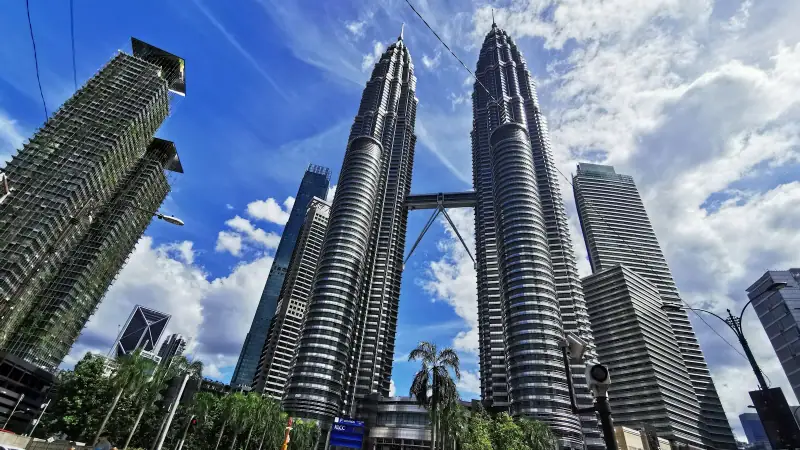
The Petronas Towers (Menara Kembar Petronas) are the symbol of Kuala Lumpur. Inaugurated on August 31, 1999, these twin 88-floor towers rise to 452 meters (1,483 ft) and were long the tallest in the world, a title they kept until 2004. Designed by the Argentine architect César Pelli, their silhouette inspired by Islamic motifs is recognizable among all others. Today surpassed by Merdeka 118 (678 m / 2,224 ft, inaugurated on January 10, 2024 and visible from everywhere in KL), they remain the highlight for most visitors.
The Skybridge and the observation deck
The glass bridge linking the two towers on the 41st and 42nd floors, the Skybridge, offers a dizzying view of the city and KLCC Park. Higher up, the observation deck on the 86th floor gives a 360° panoramic view of the KL skyline: on one side the urban forest of the new business districts, on the other the dense vegetation that still surrounds the city.
Practical information:
- Tickets: 89.90 MYR (about $21) for foreign adults, 37.90 MYR for children (3-12)
- Hours: Tuesday-Sunday 9 am-9 pm, closed Monday
- Online booking strongly recommended on the official site (petronas.com.my)
- Access: KLCC station on the Kelana Jaya LRT line
KLCC Park
Right at the foot of the towers, KLCC Park is one of the city’s green lungs. Its 20 hectares (50 acres) hold an artificial lake, a musical fountain lit in the evening, well-kept gardens and a children’s playground. It is the ideal place for the classic photo of the towers reflected in the water. It is best to come either early in the morning (before 8 am, golden light and few people) or at nightfall (the towers light up).
Aquaria KLCC
Under the Suria KLCC shopping mall, Aquaria KLCC is one of the most complete aquariums in Southeast Asia. Its 90-meter (295 ft) underwater tunnel lets you pass under sharks, rays and sea turtles. A pleasant stop if you travel with children.
Guided tours in Kuala Lumpur
KL city tours, Petronas Towers visit, Batu Caves and National Forest excursion with a local guide.
Batu Caves: KL’s Hindu shrine
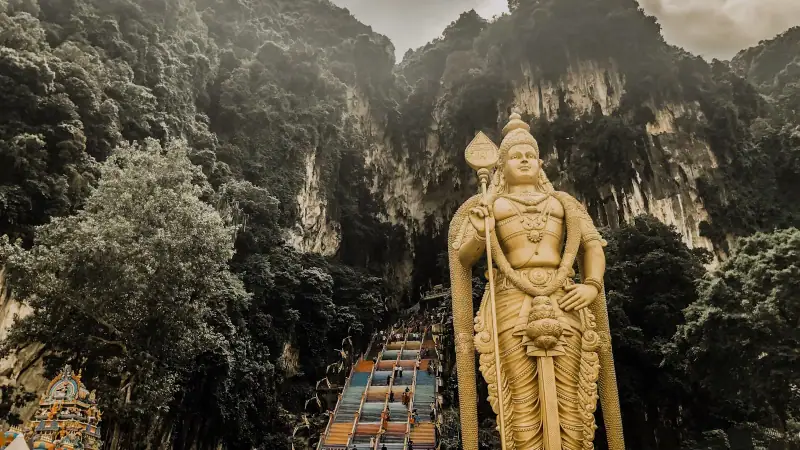
About 13 km (8 mi) north of central Kuala Lumpur, the Batu Caves are Malaysia’s most important Hindu religious site and one of the most spectacular natural attractions in Southeast Asia. A giant staircase of 272 rainbow-painted steps (multiple colors since 2018) climbs to the limestone caves that hold Hindu temples active for more than a century.
The Murugan statue
At the foot of the staircase stands the golden statue of Murugan (the Hindu god of war), 42.7 meters (140 ft) high, the tallest Murugan statue in the world. Its dazzling gold is visible from the road. The statue was built and inaugurated in 2006 after three years of work.
The caves and temples
At the top of the staircase, the Cathedral Cave is an open-air natural amphitheater more than 100 meters (328 ft) high, lit by light wells. Macaque monkeys (very used to tourists and sometimes thieving!) roam freely. Inside the caves, several temples dedicated to various Hindu deities are active and welcome thousands of devotees, particularly during the Thaipusam festival (January-February), when hundreds of thousands of pilgrims climb the steps carrying decorated kavadis.
Practical information:
- Free entry (except the Ramayana Caves museum: paid)
- Transport: KTM Komuter from KL Sentral, Batu Caves stop (about 30 min, 2 MYR)
- Hours: 6 am-9 pm, every day
- Dress: cover shoulders and knees out of respect (sarongs are available at the bottom)
- Tip: come before 9 am to avoid the heat and the group crowds
Hotels in Kuala Lumpur
From Chinatown guesthouses to the luxury hotels of Bukit Bintang and KLCC, compare the best places.
Dataran Merdeka and the historic center
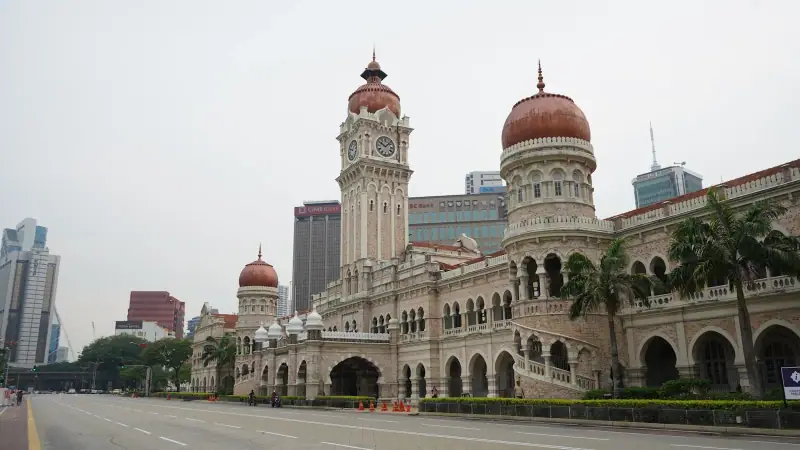
Dataran Merdeka (Independence Square)
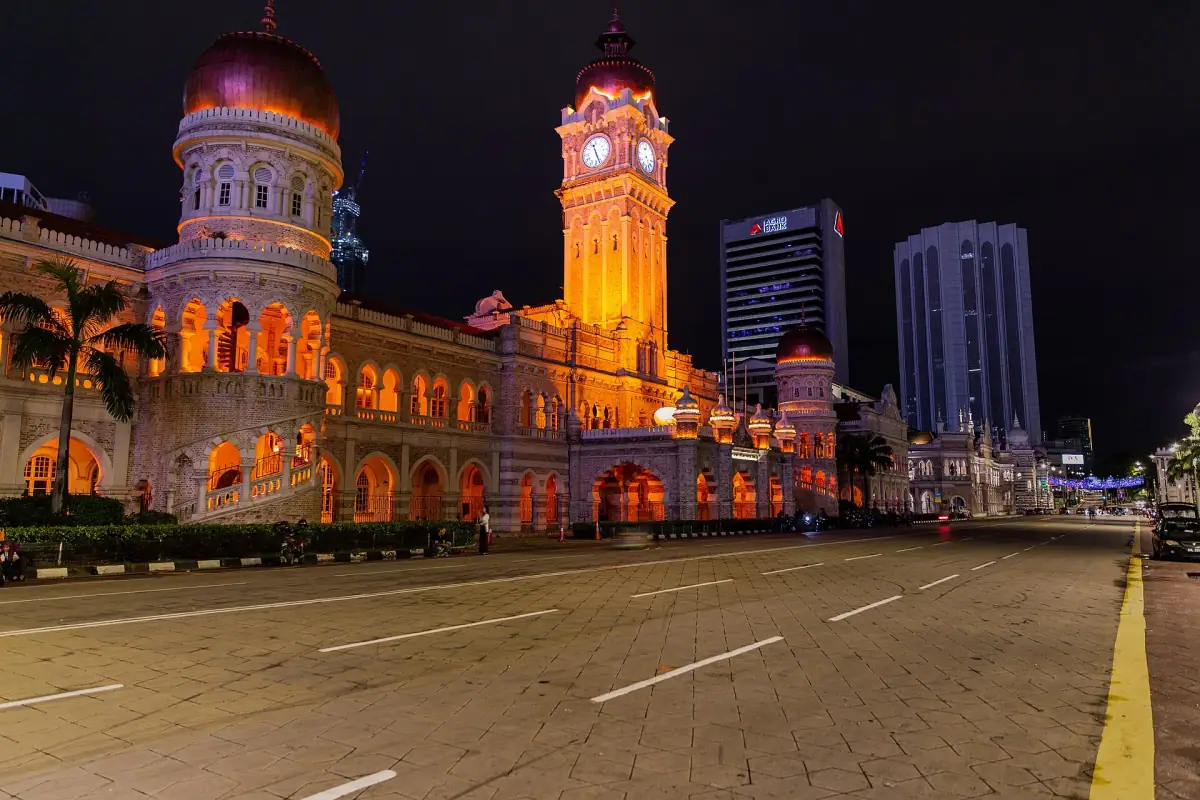
Dataran Merdeka is the square where Malaysia’s independence was proclaimed on August 31, 1957. In the middle of the esplanade stands Malaysia’s tallest flagpole (95 meters / 312 ft). All around, the buildings of the British colonial era, designed in a hybrid Moorish Revival style, form a remarkable architectural ensemble.
Buildings to admire:
- Sultan Abdul Samad Building (1897): a facade with copper domes and a clock, today the seat of the Ministry of Communications. It is the classic postcard of colonial KL.
- Royal Selangor Club (1884): an English club founded for colonial administrators, recognizable by its white wooden galleries
- Masjid Jamek: a Mughal-style mosque built in 1908-1909 (inaugurated on December 23, 1909) at the confluence of the Gombak and Klang rivers, the exact location of the first miners’ camps that founded the city
Chinatown (Petaling Street)
A few minutes’ walk from Dataran Merdeka, KL’s Chinatown is organized around the covered Petaling Street. The din of merchants, the smell of skewers and durian, T-shirts at negotiable prices, fake brand bags and sugarcane juice sellers: the atmosphere of this market is irresistibly lively. But Chinatown also holds quieter treasures: the Sze Ya Temple (KL’s oldest Taoist temple, founded in 1864 by the “founding father” Yap Ah Loy), the Sin Sze Si Ya Street Art Murals and the Jalan Petaling area that falls asleep around midnight to the sound of night kitchens.
What to see in Chinatown:
- Central Market (Pasar Seni): a former fish market turned into a crafts shopping center, ideal for souvenirs and local creations
- Masjid India and Jalan Masjid India: KL’s Indian quarter, with its spices, fabrics and sweets
- Brickfields (Little India): the Indian heart of KL, around KL Sentral station, with its temples, sari shops and Tamil restaurants
Food: eating in Kuala Lumpur
KL is one of Asia’s most exciting food capitals. The city reflects Malaysia’s diversity: Malay, Chinese (Hokkien, Cantonese, Teochew, Hakka), Indian (Tamil, mamak) and Peranakan (Sino-Malay) cuisines sit side by side in a profusion of flavors that no other capital in the region truly equals.
Dishes to try
- Nasi lemak: the Malaysian national dish. Rice steamed in coconut milk, served with sambal (chili paste), fried anchovies, peanuts, a hard-boiled egg and cucumber. Served in a banana leaf at the morning markets.
- Roti canai: flaky bread of Indian influence served with a lentil curry (dhal) or chicken curry. A breakfast staple at mamak restaurants (open 24 hours a day).
- Char kway teow: flat rice noodles stir-fried in a wok with shrimp, cockles, bean sprouts and dark soy sauce. The KL version differs slightly from Penang’s.
- Bak kut teh: pork broth with herbs and spices, a dish of Hokkien influence. The restaurants of Klang (a neighboring town) are known across the region for this dish.
- Cendol: an iced dessert with coconut milk, palm syrup and red beans.
Where to eat in KL
Hawker centers and kopitiam:
- Jalan Alor (Bukit Bintang): the street food street par excellence, lively from 6 pm to 3 am with dozens of stalls and outdoor restaurants
- Imbi Market: a discreet night market mostly used by locals, in the Bukit Bintang area
- Madras Lane: a Chinatown lane known for its curry laksa and Hokkien desserts, mornings only
- Restoran Yarl (Brickfields): a no-frills Sri Lankan Tamil restaurant, banana leaf and curry rice
For more on the food, see our complete guide to restaurants and places to eat in Kuala Lumpur and our article on street food in Malaysia.
Food tours in Kuala Lumpur
Discover KL's street food with a local guide: night markets, kopitiam, Malay, Chinese and Indian neighborhoods.
Bukit Bintang: shopping, nightlife and street food
Bukit Bintang is KL’s liveliest area for shopping, dining and nightlife. The main artery, Jalan Bukit Bintang, concentrates the city’s most luxurious malls (Pavilion KL, Starhill Gallery, Lot 10) and leads north to the legendary Jalan Alor, the hub of night street food.
Bukit Bintang’s shopping malls
Pavilion Kuala Lumpur is KL’s busiest mall, with its 450 shops over 7 floors, its restaurants, its grand atrium and the huge Bubbly Fountain at the entrance. Right next door, Lot 10 houses H&M over several floors and, in the basement, the Isetan Food Hall Lot 10, one of the best food halls in the city with Malaysian, Japanese and Western food counters.
For international brand shopping at reduced prices, the Sungei Wang Plaza and BB Plaza (slightly further down Jalan Bukit Bintang) offer clothes, electronic gadgets and accessories at very competitive prices, mostly used by locals.
Changkat Bukit Bintang: nightlife
A step from the shopping, Changkat Bukit Bintang is KL’s street of bars, restaurants and rooftops. Places for every budget sit side by side: beer bars for backpackers, cocktail bars with views of the towers, fusion restaurants and clubs that enliven the nights from Thursday to Saturday. The atmosphere is cosmopolitan and tolerant, and KL is one of the most open cities in Southeast Asia in this respect.
Nature in the city: parks and green spaces
Despite its urban density, Kuala Lumpur preserves several remarkable natural areas.
Bukit Nanas forest
The Bukit Nanas forest reserve (10 ha / 25 acres) is one of the oldest urban forest reserves in the world still in existence. It is in the middle of the city, a 10-minute walk from Chinatown. You hike on marked trails in primary rainforest, with macaques, monitor lizards and surprising birdlife, all with KL’s towers as a backdrop. The Menara KL telecommunications tower (421 m / 1,381 ft total height) stands in the middle of the reserve and offers a panoramic observation platform.
Perdana Botanical Garden (Taman Botani Perdana)
The Perdana Botanical Gardens (91 ha / 225 acres) are KL’s oldest public gardens, created in the British colonial era. They hold the Butterfly Park, the Deer Park, a lake, picnic areas and a wide variety of tropical plants. Entry to the gardens is free.
For a night outing 70 km (43 mi) from the city, our guide to seeing the Kuala Selangor fireflies from Kuala Lumpur details the route, the three sites and the fares.
Getting around Kuala Lumpur
KL has an efficient public transport network that covers the vast majority of tourist sites.
Main networks:
- MRT (Mass Rapid Transit): two lines cover the city center and suburbs; ideal to reach areas like Chow Kit or Pasar Seni from KLCC
- LRT (Light Rail Transit): two lines (Kelana Jaya and Ampang/Sri Petaling) cover KLCC, Masjid Jamek, Bangsar, Bukit Bintang (via Hang Tuah station)
- KL Monorail: links KL Sentral to Titiwangsa via Bukit Bintang, the most practical line for tourists
- RapidKL buses: a dense network with a hub at Pasar Seni; useful for areas poorly served by rail
- Grab: the essential ride-hailing app for night trips or out-of-the-way areas
Fares: An MRT/LRT trip generally costs between 1 and 4 MYR depending on distance. The MyRapid card (rechargeable card) lets you switch from one network to another and gives 10% off fares.
From KLIA: The KLIA Ekspres links the main airport to KL Sentral in 28 minutes for 55 MYR (about $13). From KLIA2 (AirAsia and low-cost airlines), the KLIA Transit makes the same stops with a few extra minutes.
Car rental in Kuala Lumpur
Explore Malaysia from KL with a rental car. Pick-up at KLIA airport or in the city center.
Where to stay in Kuala Lumpur
For an overview of the areas and places, see our complete guide to where to stay in Kuala Lumpur. Here are the main options:
KLCC area (luxury and comfort)
The area around the Petronas Towers is KL’s most upscale, with 5-star hotels of international brands. If you are looking for premium comfort, a view of the towers and a direct connection to the Suria KLCC mall, this is the ideal address, but the rates reflect the standing.
Bukit Bintang (mid-range, ideal for first-time visitors)
Bukit Bintang is the most practical area for a first stay: easy access by monorail, restaurants and shopping on foot, Jalan Alor for street food, and a very complete range of hotels at every budget. Mid-range boutique hotels there often offer the best value in KL.
Chinatown / Pudu (budget)
The guesthouses and budget hotels of Chinatown and the Pudu area offer unbeatable rates. The atmosphere is authentic, street food is a step away and Pasar Seni station gives access to the rest of the city. Ideal for travelers on a small budget.
Bangsar (residential, quiet)
Bangsar is KL’s upscale residential area, popular with expats and well-off families. It has good restaurants, trendy cafés and pleasant bars in a calmer setting than Bukit Bintang. 15 minutes by LRT from the center.
Practical information
Budget: KL is one of the cheapest Asian capitals for travelers. Expect 30-50 MYR (about $7-12) per meal in an ordinary restaurant, 5-15 MYR (about $1-3) for a street food meal, and 150-400 MYR (about $35-93) for a night in a mid-range hotel. Our Malaysia budget guide gives you all the details to plan your budget.
Currency: The Malaysian ringgit (MYR). Exchange rates vary, so check a current rate. International ATMs are very common throughout KL; preferably use those of the big banks (Maybank, CIMB, Hong Leong) to avoid extra fees. Some exchange offices in the center offer better rates than the airports.
Visa: Entry rules depend on your passport. Check the official travel advice of your government before you book: travel.state.gov (US), GOV.UK (UK), travel.gc.ca (Canada), Smartraveller (Australia) (checked November 2026). See also our visa and formalities guide.
Health: Ask your doctor or a travel clinic, and see the official travel health pages (CDC in the US, TravelHealthPro in the UK). Drink only bottled water. Malaysia has very good medical infrastructure in KL; private hospitals such as Pantai Hospital or Gleneagles KL are at international standards.
Internet: Local SIM cards can be bought at the airport (~40-60 MYR for 30 days of data) from Celcom, Digi or Maxis. Check your carrier’s international plan or use a travel eSIM as alternatives. Wi-Fi is available in all hotels, cafés and shopping malls.
Temperature: 28-34 °C (82-93 °F) all year. High humidity. Bring light clothing, sunscreen and a light rain jacket for late-afternoon tropical showers.
Kuala Lumpur is often the gateway to Malaysia before heading out to Penang, Langkawi or Borneo. To plan your complete route, see our 7-day itinerary in Malaysia, which starts and ends in KL and includes the best stops in the country.
Frequently asked questions
How many days should you plan to visit Kuala Lumpur?
Two to three days are enough to cover the highlights: Petronas Towers, Batu Caves, Chinatown, Dataran Merdeka and Bukit Bintang. Plan 4 to 5 days if you want to explore the museums, neighborhoods like Bangsar or Chow Kit, and make trips to the outskirts (Bukit Nanas forest, Putrajaya).
How do you get around Kuala Lumpur?
KL has an excellent public transport network: MRT, LRT, monorail and RapidKL buses. Most tourist sites are reachable without a car. The Grab app (ride-hailing) is ideal for night trips or for areas less well served. Expect 5 to 15 MYR (about $1-3) for a Grab within the city.
How do you get to the city center from KLIA airport?
The KLIA Ekspres is the fastest way: 28 minutes between KLIA and KL Sentral station (Kuala Lumpur), for 55 MYR (about $13) in 2026. Buses and taxis exist but are slower (1 h to 1 h 30 depending on traffic). From KLIA2 (low-cost airlines such as AirAsia), the KLIA Transit makes the same intermediate stops.
Is there an admission fee for the Petronas Towers?
Access to the Skybridge (the bridge between the two towers on levels 41-42) and the observation deck (level 86) is paid: 89.90 MYR (about $21) for foreign adults. Tickets are sold at the towers in the morning from 8:30 am, but booking online in advance is strongly advised to avoid waiting and be sure of a place.
Is Kuala Lumpur dangerous?
KL is a generally safe Asian capital for tourists. Stay alert in very busy areas (Chinatown, stations) for pickpockets, and avoid going out with ostentatious jewelry. The tourist areas (KLCC, Bukit Bintang, Chinatown) are lively and safe until late.
What is the best time to visit Kuala Lumpur?
KL can be visited all year, but May to July and December to February offer the most pleasant conditions (less rain). The monsoon (especially October-November) brings often short but intense rain in late afternoon. The heat is constant (28-34 °C / 82-93 °F) in any season, so bring light, breathable clothing.
Do you need a visa to enter Malaysia?
Entry rules depend on your passport. Check the official travel advice of your government before you book: travel.state.gov (US), GOV.UK (UK), travel.gc.ca (Canada), Smartraveller (Australia) (checked November 2026).
More Malaysia guides
Keep reading
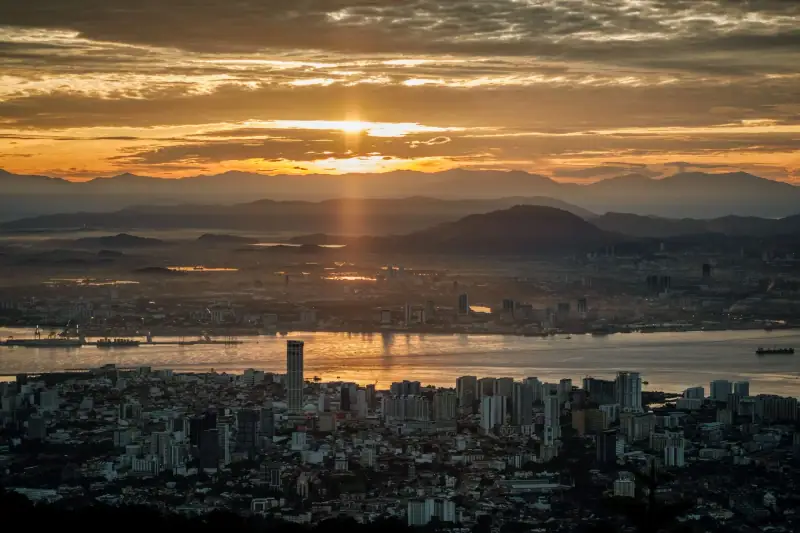
Penang Hill: funicular, hours, ticket prices and how to get up
Penang Hill from George Town: funicular hours, regular and express fares, bus 204, getting up on foot or by jeep, and the best time to avoid the queue.
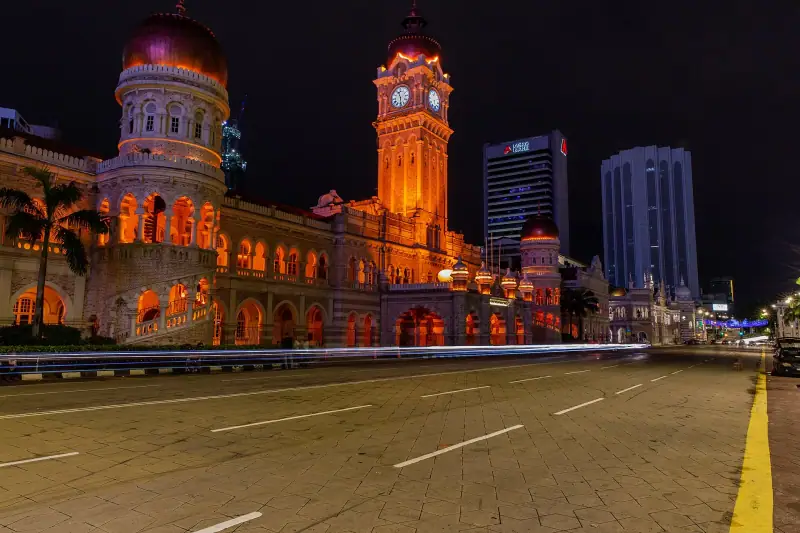
Kuala Lumpur top sights: 15 things to see and do
Kuala Lumpur's top sights: Petronas Towers, Batu Caves, Chinatown, street food and neighborhoods. Everything to see in KL in 2 to 4 days.
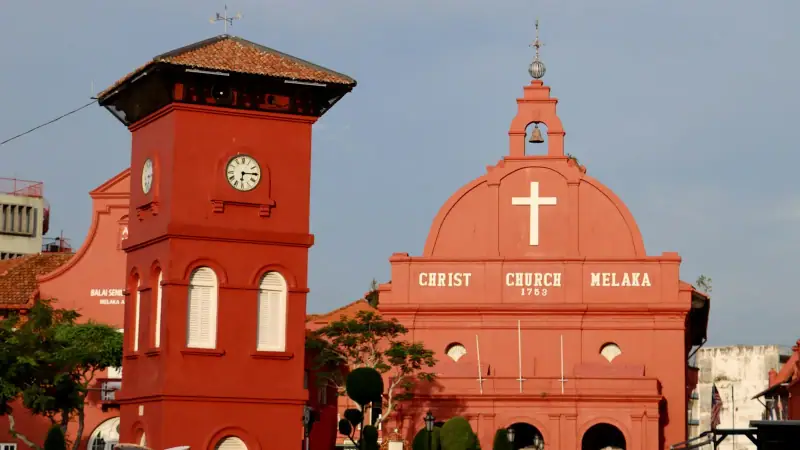
Visiting Malacca: complete guide to the UNESCO city 2026
Complete guide to visiting Malacca (Melaka): Red Square, Jonker Street, Peranakan culture, food and practical tips. Everything to know before you go.
Ready-made
Malaysia itineraries
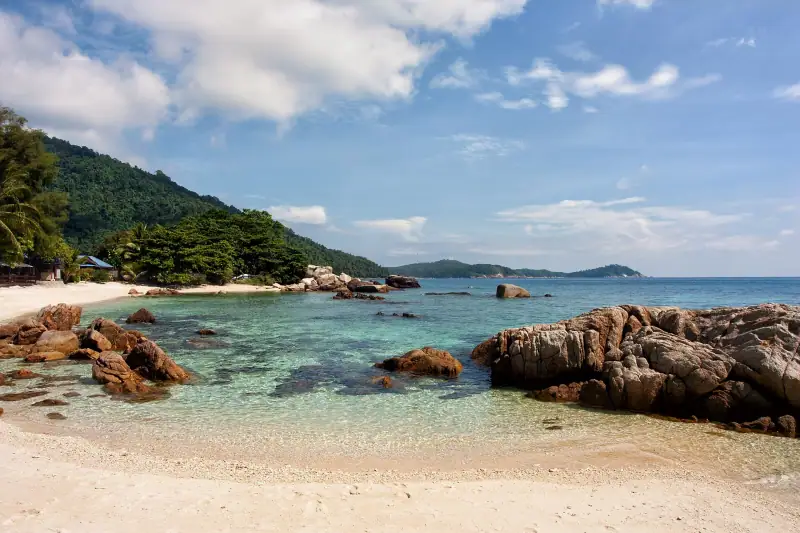
14 days
Malaysia's East Coast: Perhentian, Tioman, Redang and the eastern peninsula
Complete guide to Peninsular Malaysia's east coast: Perhentian, Redang, Tioman, Kota Bharu and Taman Negara. Diving, beaches and jungle. 10 to 14 days.
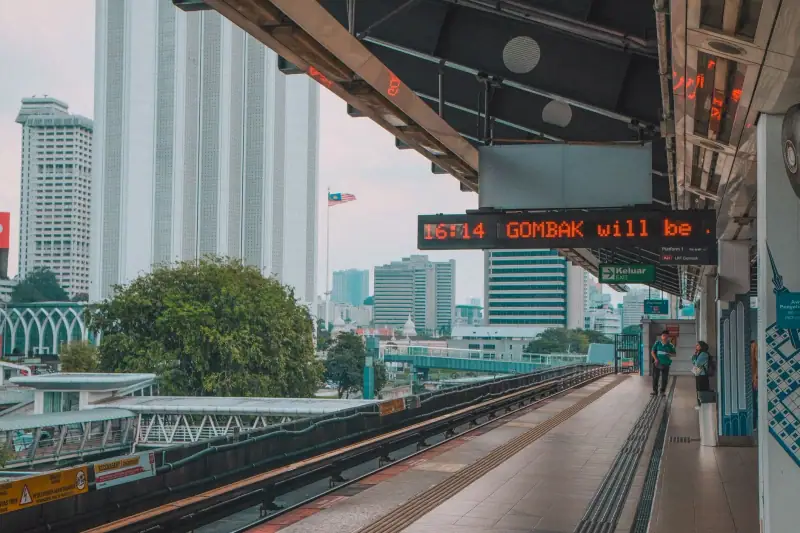
10 days
Malaysia in 10 days without a car: a train, bus and ferry itinerary
Kuala LumpurTanah Rata, Cameron HighlandsIpohGeorge Town, PenangLangkawi
14 days
Malaysia road trip: a complete 2 to 3 week itinerary
Malaysia road trip in 2 to 3 weeks: detailed route from KL to Penang, Langkawi, the Cameron Highlands, Malacca and Borneo, with transport and tips.