What to see
Kuala Lumpur top sights: 15 things to see and do
We may earn a commission when you book through links on this page, at no extra cost to you. We don't visit or try the places we cover: we summarize published sources. How we work
In short
- Two to three days cover KL's main sights; 4 days add secondary neighborhoods, museums and trips to Batu Caves and Putrajaya.
- The Petronas Towers Skybridge (41st floor) and Observation Deck (86th floor) cost about 80 MYR (about $19) and sell out: book online several days ahead.
- Batu Caves are 13 km (8 mi) north of KL, 30-40 minutes by KTM train or Grab.
- Metro (LRT, MRT, monorail) serves almost every sight; visit outdoor sites in the morning or evening because of the heat (around 32 °C / 90 °F).
Kuala Lumpur is a city that surprises and charms with its contrasts. Futuristic towers, ancient temples, colonial districts, open-air markets and exceptional food coexist in a small space. Here are 15 sights to help you make the most of your stay in the Malaysian capital.
Iconic landmarks
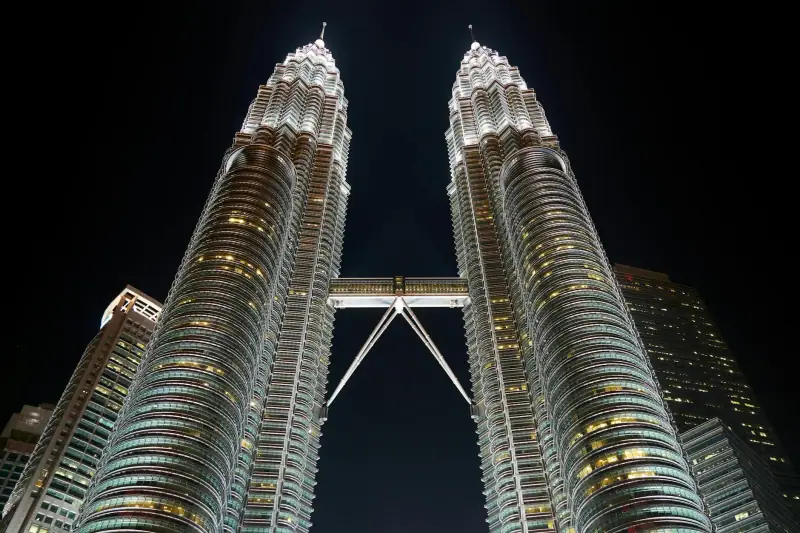
1. Petronas Towers: the icon of KL
The Petronas Towers (Menara Petronas) are the most recognized image of Malaysia in the world. These twin steel and glass towers, 452 meters (1,483 ft) tall with 88 floors, were the tallest in the world from 1998 to 2004. Designed by the Argentine architect César Pelli, they symbolize the Malaysian economic boom.
How to visit:
- The Skybridge (the bridge linking the two towers on the 41st floor) and the Observation Deck (86th floor) are open to tourists
- Tickets are sold at the towers (from 8:30 am) or online in advance. Booking is strongly recommended.
- Price: ~80 MYR (about $19) per adult (Skybridge + Observation Deck)
- Hours: 9 am-9 pm, closed on Mondays
- The official Petronas shop on the ground floor of Suria KLCC is open to everyone, free of charge
Photo tip: For the iconic photo of the two towers, stand in KLCC Park, preferably at dusk when the towers light up.
2. Batu Caves: the temple in the cave
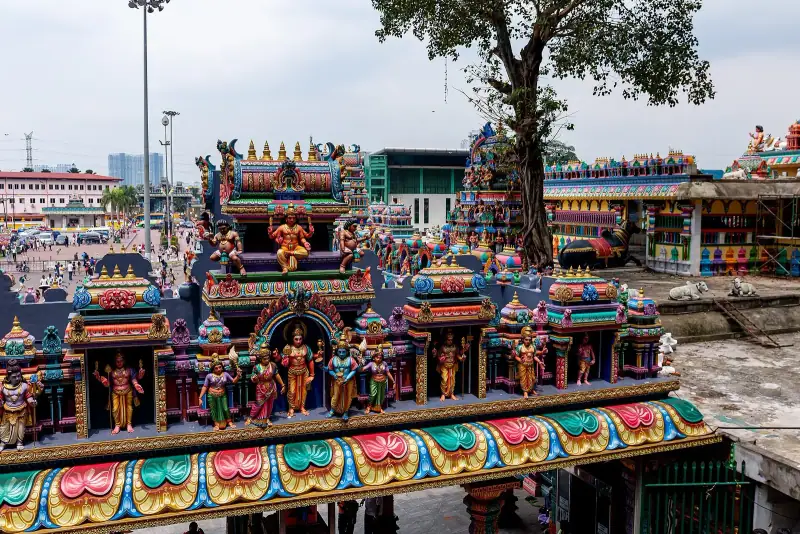
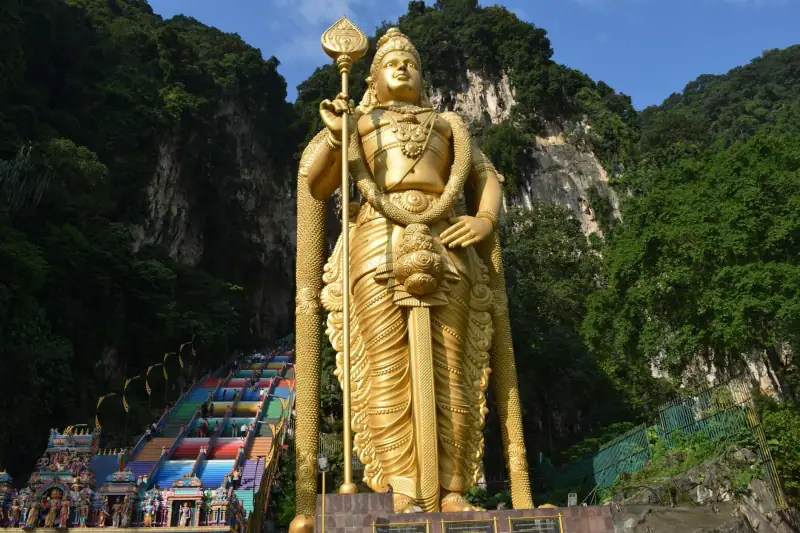
13 km (8 mi) north of KL, the Batu Caves are a complex of limestone caves housing Hindu temples. The golden statue of Murugan (42.7 m / 140 ft) in front of the 272 colorful steps is the most photographed symbol of this excursion. Climbing the steps is physical (especially in strong heat) but accessible to everyone.
The Cathedral Cave at the top houses several Hindu temples in a natural cavity 100 meters (328 ft) high. The natural light filtering through the opening creates a unique atmosphere.
Getting there: KTM Komuter from KL Sentral (Batu Caves station, about 30-35 min, under $1) or Grab (25-30 min, $14-17).
3. KL Tower: a 360° view of the city
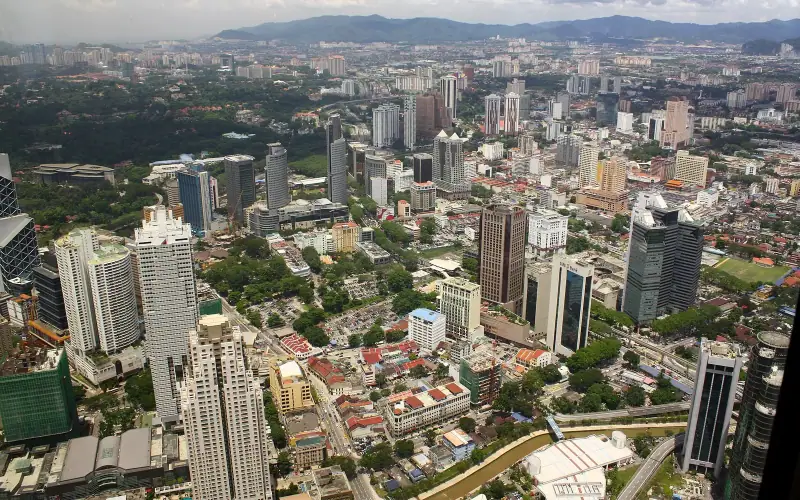
The KL Tower (Menara KL, 421 m / 1,381 ft) is less well known than the Petronas Towers but offers a 360° panoramic view of Kuala Lumpur from its observatory. From the KL Tower you also see the Petronas Towers themselves, from a different angle.
The Observation Deck (276 m / 906 ft) costs 52 MYR (about $12). The Sky Box (a glass cabin that juts out from the tower) is a thrill at 300 m (984 ft) high.
Neighborhoods to explore
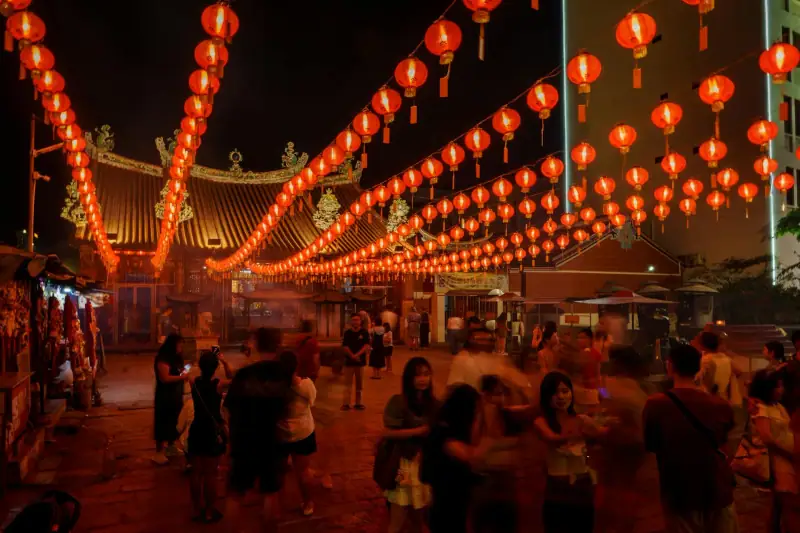
4. Chinatown (Petaling Street): the historic soul of KL
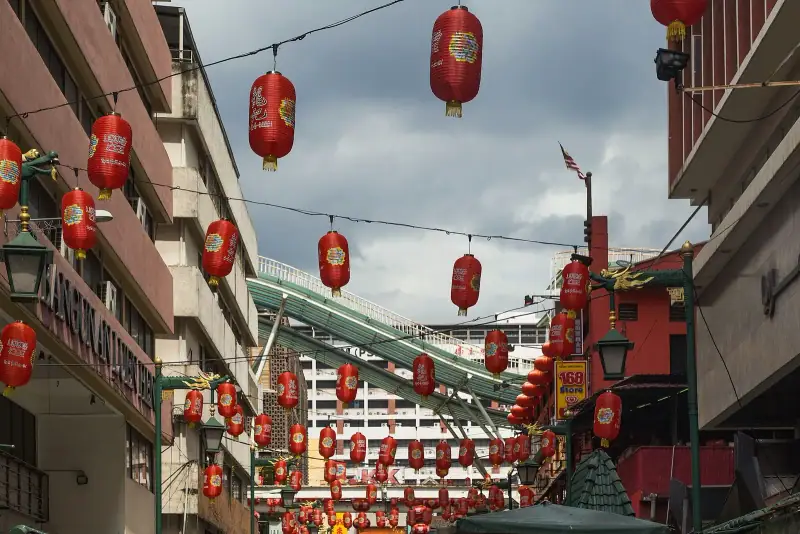
The Chinatown area, centered on Jalan Petaling (Petaling Street), is one of the liveliest and most authentic parts of KL. The covered street is full of stalls selling knockoffs, small restaurants, temples and kopitiam (local cafés).
What to see in Chinatown:
- Sin Sze Si Ya Temple (1864): KL’s oldest Taoist temple
- Central Market (Pasar Seni): KL’s largest arts and crafts center
- Jalan Hang Kasturi: a street art and crafts lane
- Yat Har and Old Town White Coffee: the best kopitiam for breakfast
5. Masjid Jamek and KL’s mosques
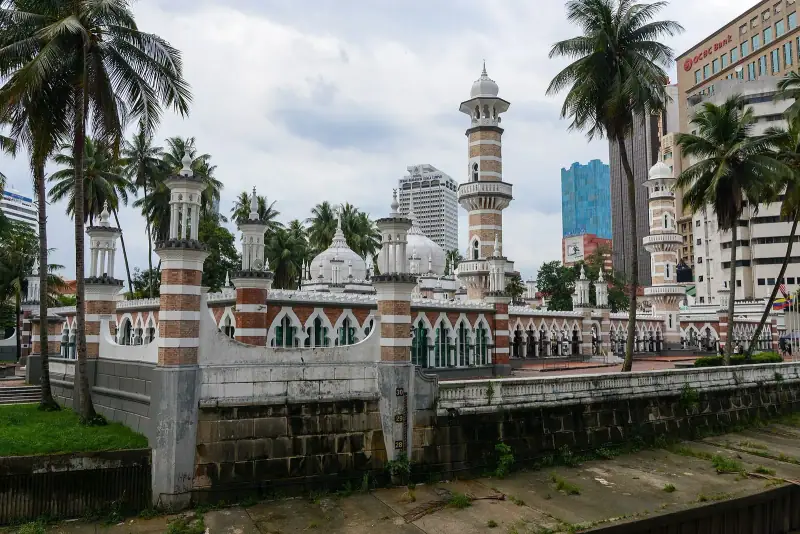
Masjid Jamek (1909) is KL’s oldest mosque, built at the confluence of the Klang and Gombak rivers. Its Indo-Saracenic architecture (an Indo-Islamic blend) is magnificent. Not far away, the Masjid Negara (National Mosque, 1965) is one of the largest in Southeast Asia.
6. Brickfields / Little India
Brickfields is KL’s Indian district. Colorful temples dedicated to Hindu deities, sari and gold jewelry shops, Tamil vegetarian restaurants, the smell of incense: a dive into Malaysian Indian culture.
7. Kampung Baru: the Malay village in central KL
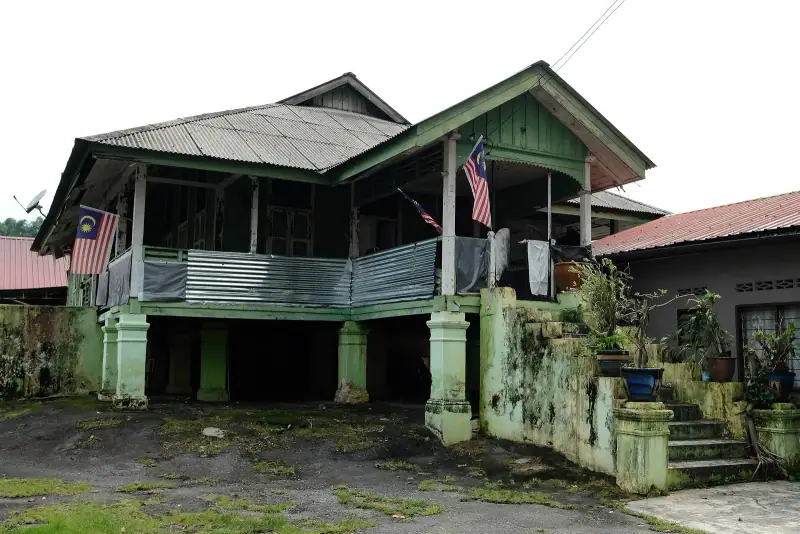
Kampung Baru (“new village” in Malay) is one of the last traditional Malay neighborhoods in central KL. Wooden stilt houses with flowering gardens coexist with the surrounding skyscrapers in a striking contrast. The weekend market is ideal for tasting nasi lemak and kueh (Malaysian cakes).
Street food
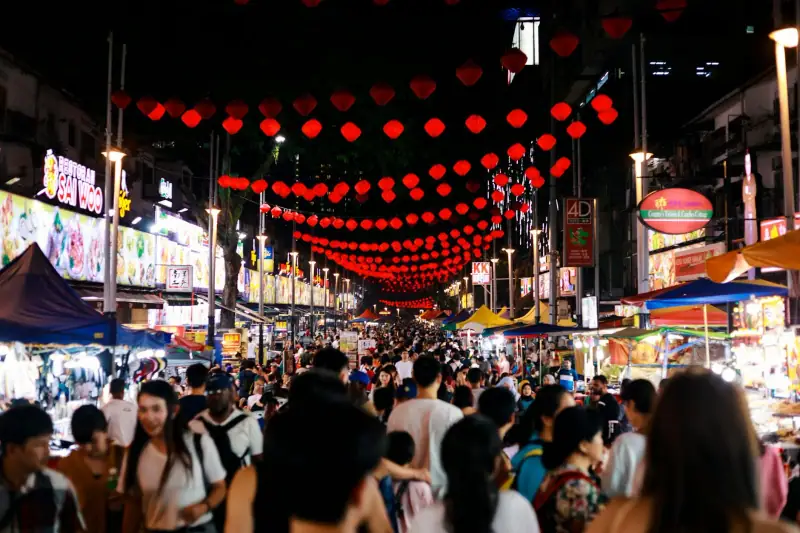
8. Jalan Alor: the street food street
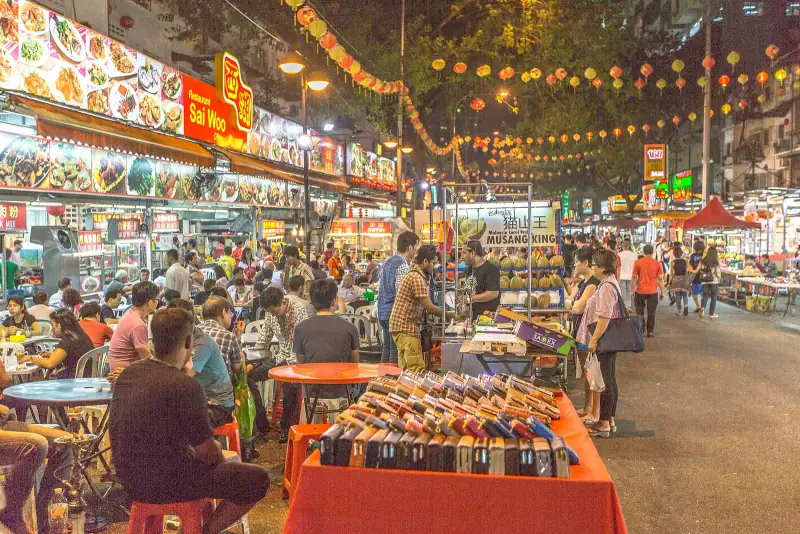
Jalan Alor (in the Bukit Bintang area) is KL’s street food street par excellence. In the evening, dozens of stalls set up their tables on the sidewalk and in the street. Char kway teow, fried frog legs, Malaysian-style tofu, fresh grilled seafood, dried mangoes… It is the most accessible food spectacle in the city.
9. Chow Kit Market: the locals’ market
The Chow Kit market is KL’s liveliest food and street food market. Packed in the morning, it offers an authentic look at Malaysian daily life: tropical vegetables, exotic fruits, fresh meat and fish, herbs. It is also one of the best places to try nasi lemak and bubur (rice porridge).
Parks and nature
10. Botanical gardens (Perdana Botanical Garden)
The Perdana Botanical Gardens are KL’s green lung. 91 hectares (225 acres) of parks, lakes and themed gardens (hibiscus garden, orchid garden, carnivorous plant garden). Entry is free. The Deer Park (free-roaming deer) is popular with children.
11. KLCC Park
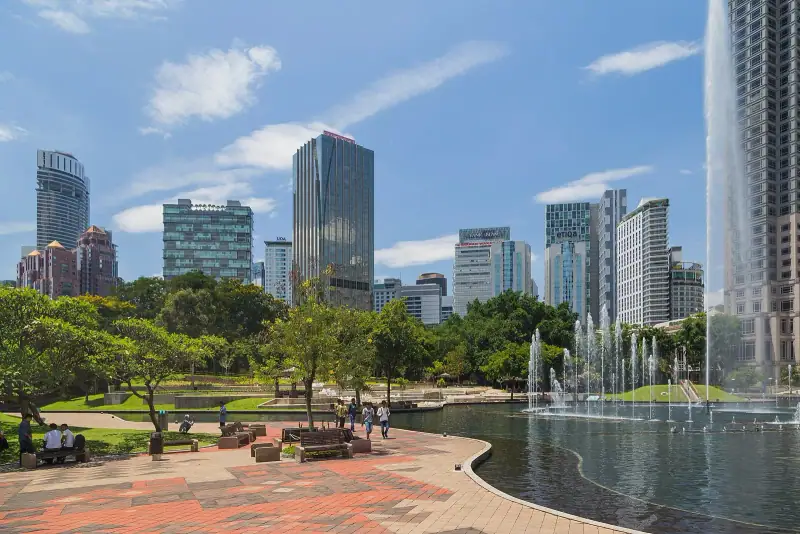
KLCC Park (8 hectares / 20 acres) is right at the foot of the Petronas Towers. A well-kept tropical garden with an artificial lake, musical fountains (a free night show) and an outdoor pool open to Mandarin Oriental guests. The view of the towers from the park is iconic.
Shopping
12. Suria KLCC and Pavilion: premium shopping
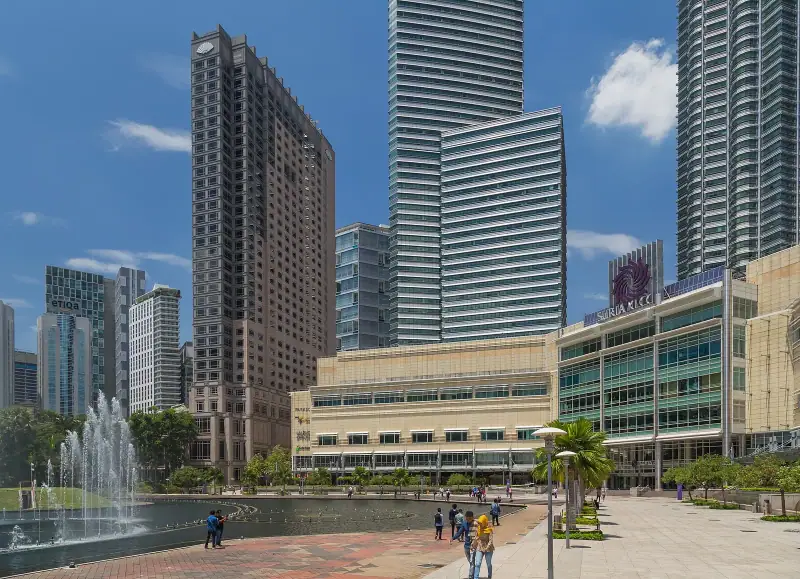
Kuala Lumpur is a shopping capital with some of the largest malls in Asia. Suria KLCC (at the foot of the Petronas Towers) houses luxury boutiques and international brands. Pavilion KL on Bukit Bintang is the most luxurious mall.
13. Central Market: Malaysian crafts
The Pasar Seni (Central Market) on Jalan Hang Kasturi offers authentic Malaysian crafts: batik, jewelry, wood carvings, ceramics. It is the best place for quality (non-fake) souvenirs.
Culture and history
14. National Museum (Muzium Negara)
The Muzium Negara traces Malaysia’s history from prehistory to independence (1957) and modern times. The collection covers Malay culture, royalty, prehistory and natural history. Entry 5 MYR (about $1). Essential for understanding the country’s historical context.
15. Merdeka Square: Independence Square
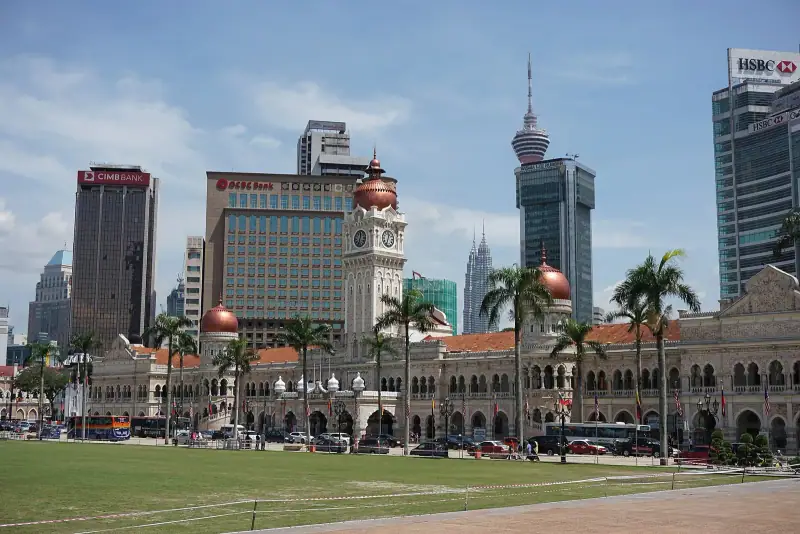
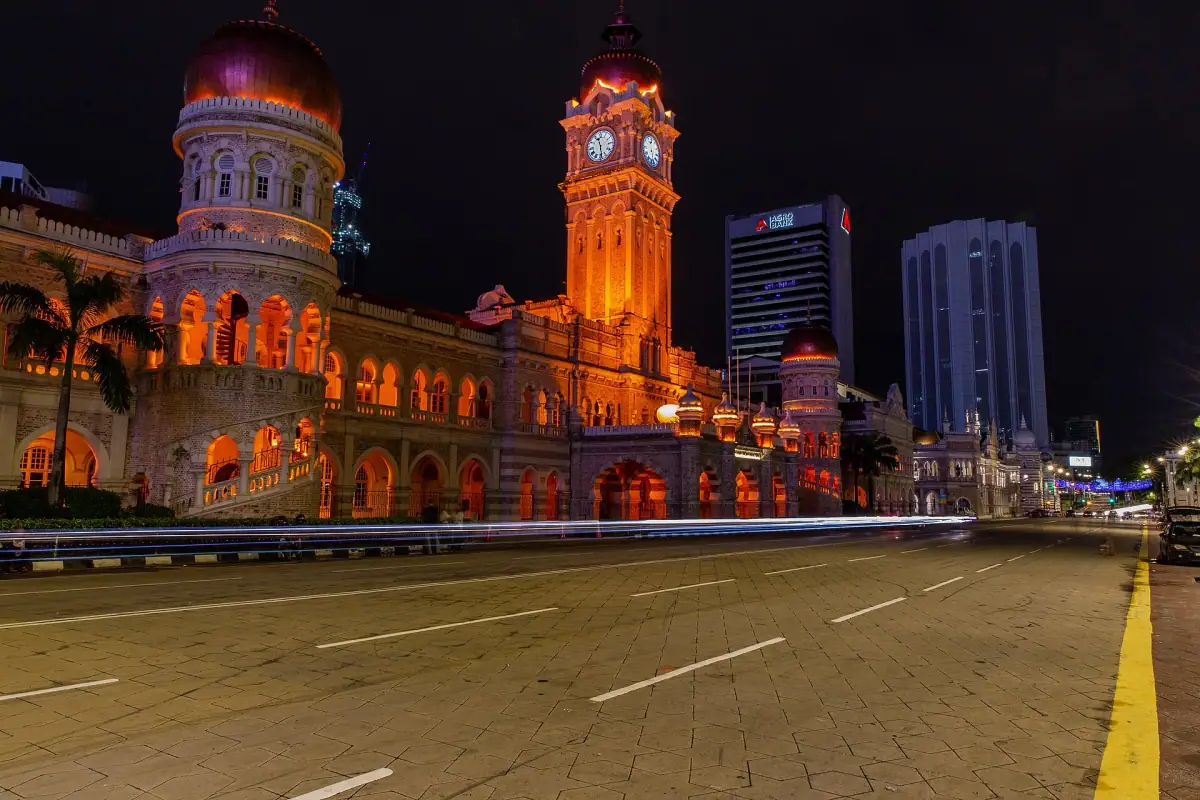
Merdeka Square (Freedom Square) is the symbolic heart of KL. This is where the British flag was lowered for the last time on August 31, 1957, at Malaysia’s independence. The 95-meter (312 ft) flagpole is one of the tallest in the world. The colonial buildings around the square (Sultan Abdul Samad Building, Royal Selangor Club) make a remarkable architectural setting.
Practical tips for visiting KL:
- The metro (LRT, MRT, monorail) serves almost all the highlights
- Download the Touch ‘n Go app to pay for transport without coins
- The heat (32 °C / 90 °F in the day) can be exhausting: visit outdoor sites in the morning or evening
- Drink plenty of water and wear sunscreen
See our guide to KL’s restaurants to complete your exploration of the capital.
Frequently asked questions
How many days should you plan to visit Kuala Lumpur?
Two to three days are ideal to cover KL's main highlights. 4 days allow a deeper exploration, including secondary neighborhoods, museums and trips to the outskirts (Batu Caves, Putrajaya).
Can you go to the top of the Petronas Towers?
Yes! The Skybridge (41st floor) and the Observation Deck (86th floor) are open to visitors. Tickets are limited and sell quickly, so book online several days ahead. Cost: 80 MYR (about $19) for the Observation Deck + Skybridge.
What is the best viewpoint to photograph the Petronas Towers?
KLCC Park (directly facing the towers) is ideal for head-on photos. The KLCC Park lake view gives an excellent reflection in the water. For a view from above from another building: the WOOBAR bar at the W Hotel or Bar 33 at the Traders Hotel offer a spectacular view of the towers.
Do you need a guide to visit Kuala Lumpur?
Not necessarily. KL is a city where you get around easily by public transport (metro, monorail) with navigation apps (Google Maps, Waze). A guided tour (walking tour, food tour) is recommended for Chinatown and the cultural neighborhoods to better understand the history.
Are the Batu Caves part of the city of Kuala Lumpur?
No, the Batu Caves are technically in Batu Caves, a separate town 13 km (8 mi) north of KL. But they are easily reached in 30-40 minutes from the center (KTM train or Grab) and are inseparable from any KL visit.
More Malaysia guides
Keep reading
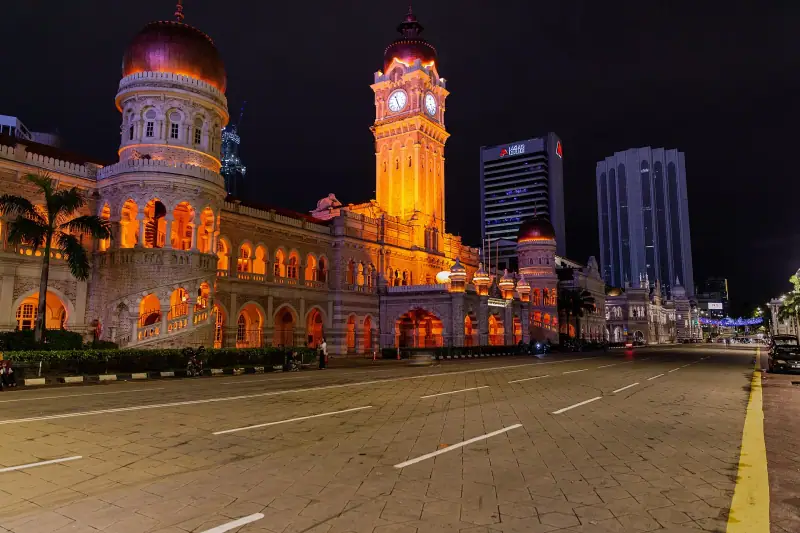
Visiting Kuala Lumpur: complete guide 2026
Complete guide to visiting Kuala Lumpur: Petronas Towers, Batu Caves, Chinatown, Bukit Bintang, street food and transport. All you need to know.
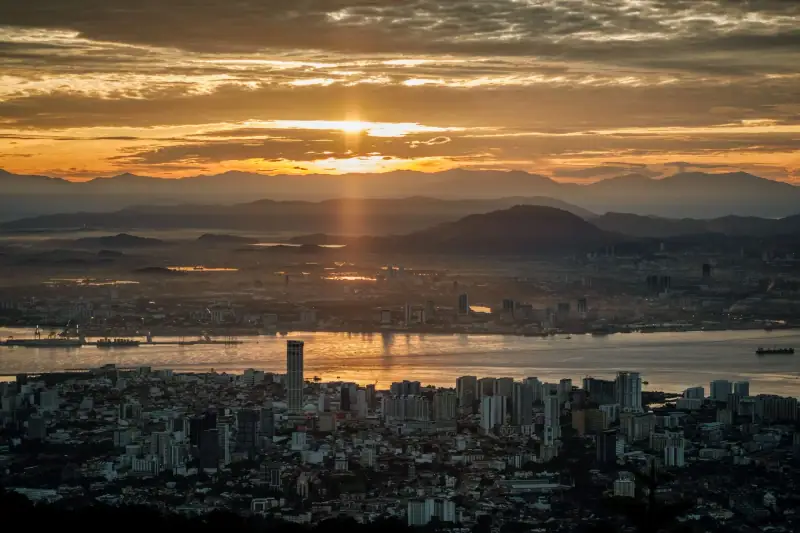
Penang Hill: funicular, hours, ticket prices and how to get up
Penang Hill from George Town: funicular hours, regular and express fares, bus 204, getting up on foot or by jeep, and the best time to avoid the queue.
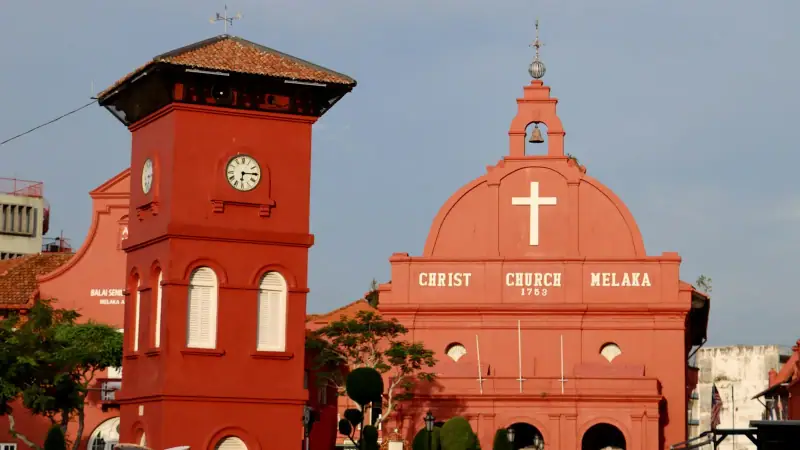
Visiting Malacca: complete guide to the UNESCO city 2026
Complete guide to visiting Malacca (Melaka): Red Square, Jonker Street, Peranakan culture, food and practical tips. Everything to know before you go.
Ready-made
Malaysia itineraries
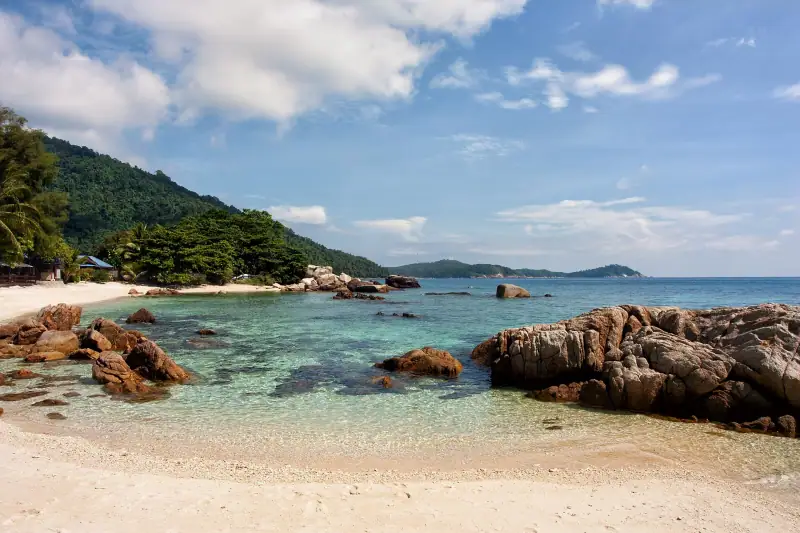
14 days
Malaysia's East Coast: Perhentian, Tioman, Redang and the eastern peninsula
Complete guide to Peninsular Malaysia's east coast: Perhentian, Redang, Tioman, Kota Bharu and Taman Negara. Diving, beaches and jungle. 10 to 14 days.
10 days
Malaysia in 10 days without a car: a train, bus and ferry itinerary
Kuala LumpurTanah Rata, Cameron HighlandsIpohGeorge Town, PenangLangkawi
14 days
Malaysia road trip: a complete 2 to 3 week itinerary
Malaysia road trip in 2 to 3 weeks: detailed route from KL to Penang, Langkawi, the Cameron Highlands, Malacca and Borneo, with transport and tips.