What to see
Visiting Penang (George Town): complete guide 2026
We may earn a commission when you book through links on this page, at no extra cost to you. We don't visit or try the places we cover: we summarize published sources. How we work
In short
- Two to three days cover George Town; allow 4 to 5 days to add Batu Ferringhi beaches, Penang Hill and Penang National Park.
- From Kuala Lumpur: flight about 50 min, bus about 4 h 30, or train to Butterworth then a 15-minute ferry to George Town for 1 MYR.
- Kek Lok Si is Malaysia's largest Buddhist temple; Penang Hill's funicular costs 30 MYR round trip for foreigners.
- George Town has been UNESCO-listed since 2008 and is widely considered Malaysia's street food capital.
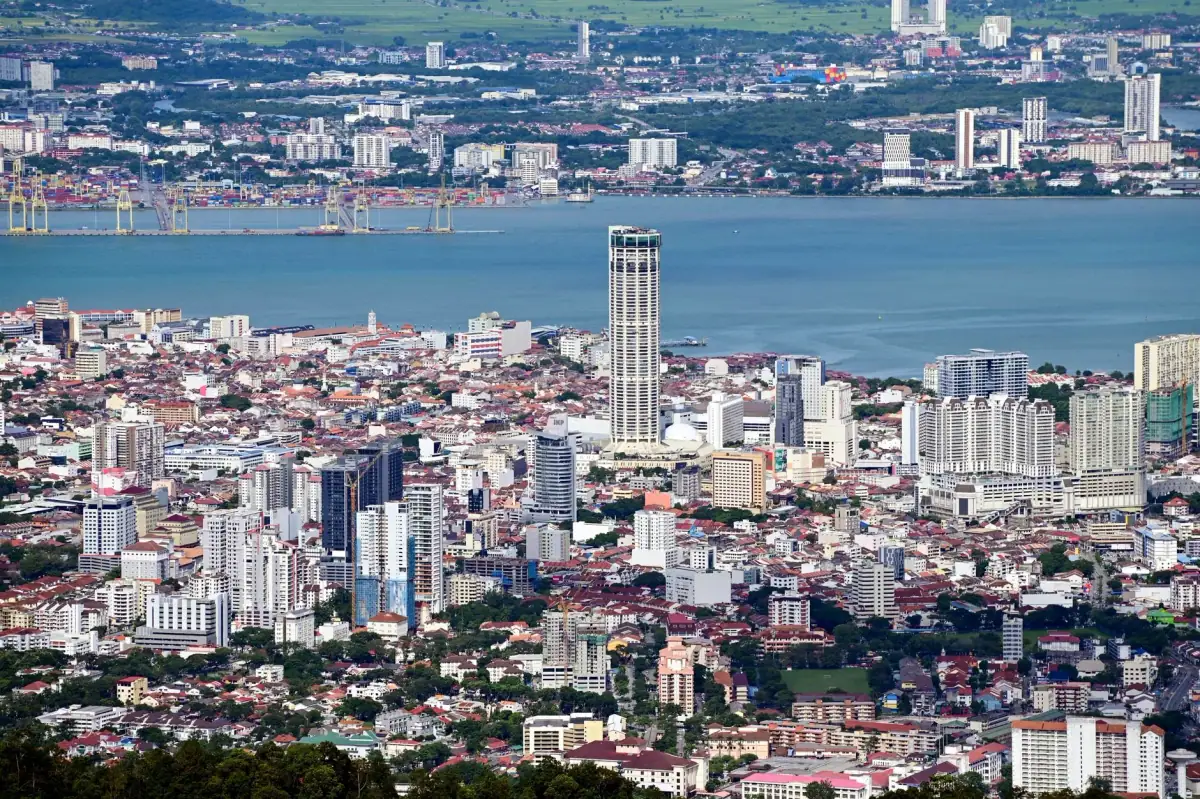
Penang is often nicknamed the “Pearl of the Orient”, and the nickname is deserved. An island of barely 293 km² (113 sq mi) off the northwest coast of the Malay Peninsula, it is home to one of the most fascinating cultural destinations in Southeast Asia. Its capital George Town, a UNESCO World Heritage site since 2008, packs into its lanes an extraordinary density of temples, Sino-colonial shophouses, world-famous street art and a food scene that many food lovers consider the best in Malaysia. This complete guide covers everything you need to visit Penang and get the most from your stay.
George Town: the UNESCO-listed old town
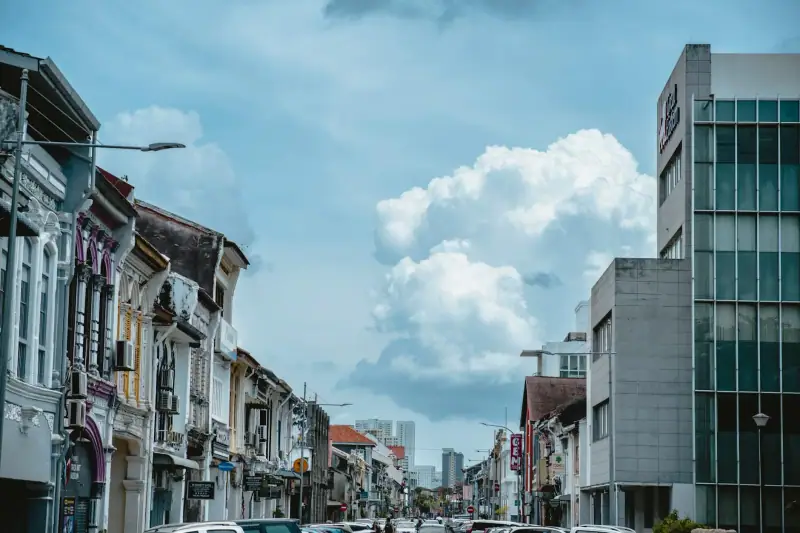
A unique architectural heritage
The historic heart of George Town is a maze of multi-story Sino-colonial shophouses built between the 18th and 20th centuries. These buildings, with a commercial ground floor and a residential upper floor, mix Chinese influences (ornamental roofs, colorful tiles), Malay ones (carved woodwork) and British ones (pillars, covered verandas). The juxtaposition of mosques, Buddhist temples, Hindu temples and Christian churches within a few hundred meters illustrates the multi-faith coexistence that has made the island rich.
Streets to see:
- Lebuh Armenian (Armenian Street): the most photographed street, with its murals and clan houses
- Love Lane: a narrow passage between antique shops and intimate guesthouses
- Jalan Masjid Kapitan Keling: the “Street of Harmony”, where the Kapitan Keling Mosque, the Sri Mahamariamman Temple and the Goddess of Mercy Temple (Kuan Yin Teng) follow one another
- Lebuh Chulia (Chulia Street): the backpackers’ street, lively all night
- Weld Quay and the Clan Jetties: a floating village on stilts, inhabited by Chinese clans since the 19th century
The Clan Jetties: a village on the water
The Clan Jetties (Chew Jetty, Tan Jetty, Lee Jetty, etc.) are villages on stilts built over the Strait of Malacca, inhabited for more than two centuries by Penang’s great Chinese families. Each jetty is dominated by its clan temple. Chew Jetty is the largest and most touristy, with its brightly painted wooden houses, souvenir sellers and village atmosphere. Arrive early in the morning to see the residents’ daily life before the crowds.
Guided tours of George Town
Street art walking tours, George Town food tours, temple and clan house visits with a local guide.
Penang’s street art: an open-air gallery
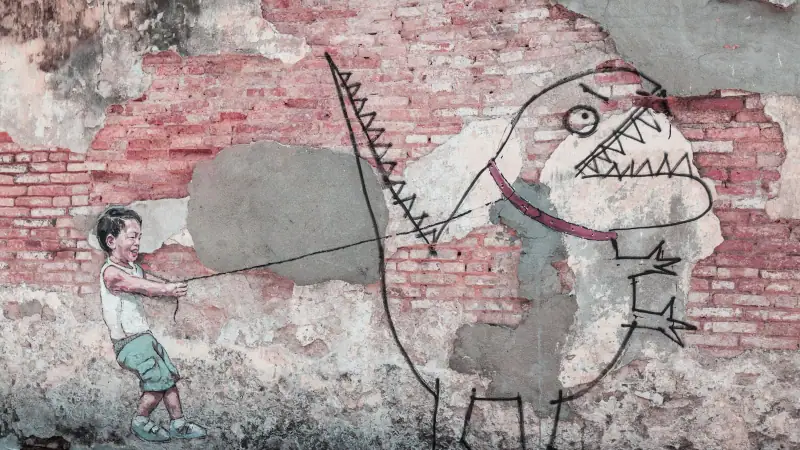
George Town’s street art has become one of Malaysia’s most viral attractions. In 2012, for the George Town festival, the artist Ernest Zacharevic created a series of steel and mural paintings that turned the walls of the old quarter into an open-air gallery. Since then, dozens of local and international artists have joined the movement.
Murals to see
Ernest Zacharevic (the originals, 2012):
- Boy on Bicycle: Armenian Street × Ah Quee Street: the most famous, a child on a real steel bicycle
- Little Children on a Bicycle: Armenian Street: two children on a bike, a few meters from the previous one
- Boy on Chair with Girl: Armenian Street: poetic acrobatics
- The Indian Man on Chair: Lebuh Chulia: a melancholic reading
Other notable murals:
- Marking Territorial Boundaries (cats playing with a ball of yarn): Lebuh Armenian
- Satu Malaysia (children of all ethnicities): Victoria Street
- Penang’s Last Trishaw Rider: Ah Quee Street
Practical tips for street art:
- Pick up the official mural map at the Penang tourist office (Penang Global Tourism, on Lebuh Light) or at most accommodation in the center
- Go early in the morning (before 9 am) to take photos without crowds
- Allow 2-3 hours to cover the essentials on foot
- The murals evolve: some disappear, others appear. Ask your accommodation about new ones
Temples and places of worship
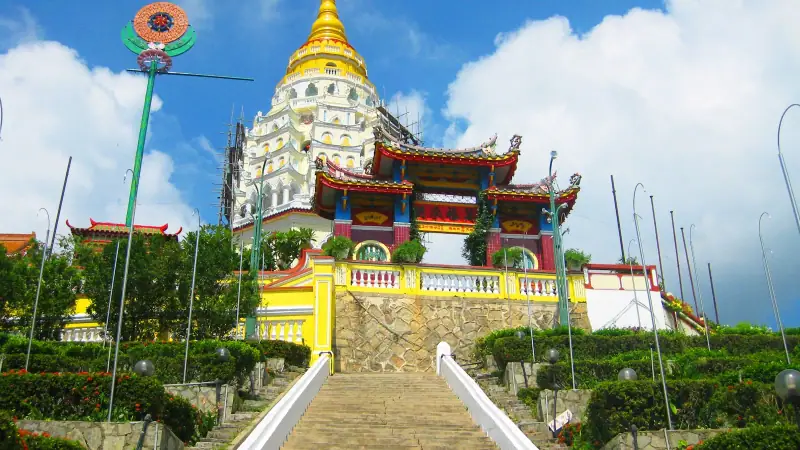
Kek Lok Si Temple: Malaysia’s largest Buddhist temple
Perched on the hills of Air Itam, Kek Lok Si is Malaysia’s largest Buddhist temple and one of the most impressive in Southeast Asia. Construction began in 1891 and has never really stopped: new pavilions and statues are still being added today. The 36-meter (118 ft) gilded bronze statue of Kuan Yin (the goddess of compassion) dominates the complex from its promontory. The Ban Po Thar Tower (the Pagoda of 10,000 Buddhas), a fusion of Thai, Burmese and Chinese styles, is the most emblematic architectural element.
Practical information:
- Hours: 8:30 am-5:30 pm (6 pm on weekends)
- Getting there: taxi or Grab from George Town (~15 min), or bus 201/203 from Weld Quay
- The funicular ride up to the Kuan Yin statue costs 2 MYR (about $0.50)
- Visit in the evening if you can: the pagoda is beautifully lit
Sri Mahamariamman Temple
The Sri Mahamariamman Temple on Jalan Masjid Kapitan Keling is Penang’s most important Tamil Hindu temple. The five-tier gopuram (entrance tower), carved with colorful deities, is an explosion of colors and symbols. The interior is just as impressive, with its decorated pillars and shrines dedicated to the various deities. The temple is especially lively during the Thaipusam festival (January-February), when thousands of devotees carry kavadis (metal structures) in procession toward KL’s Batu Caves.
Masjid Kapitan Keling
The Kapitan Keling Mosque (1801) is Penang’s largest and oldest mosque, founded by Indian Muslim merchants. Its Mughal architecture (white domes, minarets and vaulted arches) contrasts elegantly with the surrounding Chinese architecture. It is open to non-Muslim visitors outside prayer times (a dress covering shoulders and knees is required).
Hotels in Penang
From charming guesthouses in historic shophouses to luxury seafront hotels in Batu Ferringhi.
Penang’s food: Malaysia’s culinary capital
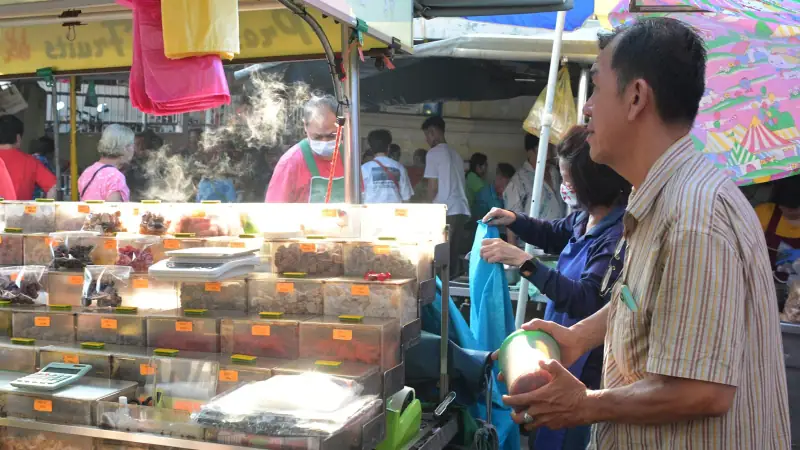
Penang is unanimously considered the street food capital of Malaysia, and many connoisseurs even say of Southeast Asia. The island’s cooking is the product of a unique mix of Hokkien and Teochew Chinese, Malay, Tamil Indian and Peranakan (Sino-Malay culture) influences. If you only come to Penang to eat, the trip will still have been well spent.
Penang’s essential dishes
- Char kway teow: Penang’s signature dish. Flat rice noodles stir-fried in a wok over high heat with shrimp, cockles, bean sprouts, scallions and dark soy sauce. The best is eaten at Red Garden Food Paradise (10-12 MYR).
- Assam laksa: rice noodle soup in a sour tamarind broth, flaked mackerel, pineapple, mint and ginger flower. Radically different from the laksa of Singapore or KL.
- Hokkien mee (prawn mee): an intense shrimp broth with noodles, a hard-boiled egg and rong (pork crisps). A local breakfast favorite.
- Cendol: an iced dessert made with coconut milk, palm syrup (gula melaka), red beans and green rice flour ribbons. The cendol on Penang Road is an institution.
- Nasi kandar: a Malay-Indian dish of basmati rice with chicken, mutton or seafood curry. Hameediyah (since 1907) is the most famous on the island.
Where to eat in Penang
Hawker centers (street food centers):
- Gurney Drive Hawker Centre: the largest, on the waterfront, ideal in the evening
- Red Garden Food Paradise: in central George Town, with a typical hawker atmosphere
- New Lane Hawker Centre (Lorong Baru): Penangites dine here with family, less touristy
- Lorong Selamat: known for the island’s best char kway teow (Char Koay Teow Lorong Selamat, closed Tuesday)
Cafés and restaurants:
- China House (on Beach Street): a cultural complex set in 3 historic shophouses with an art gallery, café, bakery and live bar
- Yen’s Kitchen: authentic Nyonya (Peranakan) cuisine
- Macallum Connoisseurs: a roastery café in a converted industrial building, Brooklyn vibes in Penang
Nature and beaches: getting out of George Town
Penang Hill (Bukit Bendera)
Penang Hill is the island’s highest point (833 m / 2,733 ft), reached in 5 minutes by the steepest funicular in Asia. At the top, you find a restored British colonial residence, several temples, a mosque and above all a 360° panoramic view of George Town, the Strait of Malacca and the mainland on a clear day. The temperature at the top is 5-8 °C (9-14 °F) cooler than in the city.
Practical information:
- Funicular from Jalan Air Itam: 30 MYR round trip for foreigners
- Hours: 6:30 am-11 pm, last departure around 10 pm
- Avoid weekends and public holidays (a 1-2 hour wait at the ticket office is possible)
- Many hiking trails from the base to the summit (2-3 h climb)
Batu Ferringhi: Penang’s main beach
16 km (10 mi) north of George Town, Batu Ferringhi is Penang’s beach resort, with a long golden sand beach lined with international hotels (Shangri-La, Rasa Sayang, Holiday Inn). The water is more turbid than at Langkawi or on the East Peninsula islands, but the beach is pleasant for swimming, water sports and dining by the sea.
The Batu Ferringhi night market (every evening from 7 pm) is one of the busiest night markets in Malaysia, ideal for souvenirs, clothes and street food.
Penang National Park
At the northwest tip of the island, Penang National Park (2,562 ha / 6,331 acres) is the smallest national park in the world by area. You reach it by bus from Weld Quay (bus 101, 1 h). The park holds isolated beaches reachable on foot or by boat: Monkey Beach (Pantai Kerachut, 45 min walk from the ranger post) is the most beautiful. You will come across macaques, monitor lizards and sea turtles that come to nest on the beach.
How to organize it: a 3-day itinerary in Penang
Day 1: historic George Town
Morning: Start early with the Clan Jetties (before the crowds). Continue with the “Street of Harmony” (Jalan Masjid Kapitan Keling) to admire the three places of worship side by side. Head up to Armenian Street for Ernest Zacharevic’s street art.
Afternoon: Late breakfast on Penang Road (cendol, Teochew chendul), then a walk along Lebuh Chulia and its antique shops. Visit the Penang Museum (1 MYR) for the island’s history.
Evening: Dinner at Red Garden or the New Lane Hawker Centre. Finish with a drink at China House.
Day 2: temples and hills
Morning: Funicular up to Penang Hill at opening time (6:30 am) to avoid the crowds and enjoy the morning view.
Afternoon: Come back down and head to Kek Lok Si Temple for the afternoon; allow 2-3 h. Dinner in the Air Itam area (asam laksa at the Air Itam market).
Evening: Back to George Town by Grab, a night walk on Gurney Drive and dinner at the Gurney Drive Hawker Centre.
Day 3: beaches and night market
Morning: Bus to Batu Ferringhi, swimming and relaxing on the beach.
Afternoon: Penang National Park or a hike to Monkey Beach (allow 4 h round trip).
Evening: Batu Ferringhi night market, then back to George Town for a last char kway teow.
Getting around Penang
Penang is an island connected to the mainland by two bridges (Penang Bridge, 13 km / 8 mi, and the Sultan Abdul Halim Mu’adzam Shah Bridge, 24 km / 15 mi) and by ferry from Butterworth.
On the island:
- Grab is the most practical option from George Town to reach Batu Ferringhi, Penang Hill or Kek Lok Si (very affordable fares, 5-15 MYR depending on destination)
- Rapid Penang bus: a cheap public bus network (1-4 MYR per trip) but irregular frequencies
- Bicycle or motorbike rental: ideal to explore George Town at your own pace (bikes from 15 MYR/day in guesthouses)
- Trishaw: Penang’s historic mode of transport, reserved for a few hundred meters in the touristy old quarter (negotiable fare, 20-30 MYR for a 30-minute tour)
From the mainland:
- Ferry from Butterworth: 1 MYR (about $0.23), every 20-30 min, goes directly to the George Town terminal
- Penang Bridge: open to cars, motorbikes, buses and taxis, but not to pedestrians or bicycles
Car rental in Penang
Explore the island at your own pace with a rental car. Pick-up at Penang airport (PEN) possible.
Where to stay in Penang
In George Town (recommended for a first stay)
Staying in the old quarter lets you explore the murals, temples and hawker centers on foot. Guesthouses and boutique hotels set in restored shophouses are an experience in themselves.
Options:
- Budget (from 30 MYR / about $7): Dorms in the backpacker guesthouses of Lebuh Chulia (Reggae Mansion, Ryokan Penang)
- Mid-range (150-400 MYR / about $35-93): Boutique hotels in restored shophouses (Seven Terraces, Muntri Mews, The Edison)
- Luxury (600+ MYR / about $140+): Eastern & Oriental Hotel (E&O, founded in 1885 by the Sarkies brothers, the same ones as Raffles in Singapore), Cheong Fatt Tze Mansion (the Blue Mansion, UNESCO-listed)
In Batu Ferringhi (for the beach)
The Batu Ferringhi hotel zone is dominated by international chains: Shangri-La Rasa Sayang (the benchmark address, 800+ MYR), Holiday Inn Resort, Bayview Beach. Ideal if you mainly come for the sea.
Practical information
Best time to visit Penang: The West Peninsula (including Penang) is most pleasant from November to March (dry season) and from May to July (short dry season). Avoid September-October (West Peninsula monsoon). Penang is relatively sheltered and can be visited all year.
Currency: Malaysian ringgit (MYR). Exchange rates vary, so check a current rate. ATMs are plentiful in George Town. Avoid exchange offices in very touristy areas (unfavorable rates).
Dress: Penang is a relaxed city, but cover shoulders and knees to enter mosques and temples. A light scarf in your bag is useful.
Internet: Local SIM cards can be bought at the airport (~40 MYR for 30 days of unlimited data with Celcom, Digi or Maxis). You can also check your carrier’s international plan or use a travel eSIM. Wi-Fi is available in all cafés and hotels.
Penang fits naturally into a 7-day itinerary in Malaysia or a road trip on the peninsula. For more on the food, see our guide to street food in Malaysia. And if you want to deepen the spiritual dimension of your trip, our guide to Malaysia’s temples will help you make sense of what you see.
Frequently asked questions
How many days should you plan to visit Penang?
Two to three days are enough to discover George Town and its highlights. Allow 4 to 5 days if you want to add the Batu Ferringhi beaches, a hike on Penang Hill and an excursion to Penang National Park.
How do you get to Penang from Kuala Lumpur?
By plane (50 min, from about €15 / $17 with AirAsia or Firefly) or by bus (4 h 30, from about €8 / $9). The train (KTM) serves Butterworth (on the mainland), from where a 15-minute ferry links George Town for 1 MYR (about $0.23). The plane is the most practical for travelers short on time.
Is George Town a UNESCO World Heritage site?
Yes! George Town has been UNESCO-listed since 2008, together with Malacca. The listing preserves the city's unique colonial architecture and living culture: Sino-colonial shophouses, temples, mosques and clan houses coexisting in a small space.
Where can you see Penang's street art?
The best-known murals are concentrated in old George Town, notably on Armenian Street (Lebuh Armenian), Love Lane and the lanes between the Weld Quay Clan Jetties. The most famous, 'Boy on Bicycle' by the Lithuanian artist Ernest Zacharevic, is at the corner of Armenian Street and Ah Quee Street. A free mural map is available in all hotels.
Are Penang's beaches worth the trip?
Batu Ferringhi is Penang's main beach: golden sand, luxury hotels and a lively atmosphere. The water is less crystal clear than at the islands of the East Peninsula or Langkawi, but the atmosphere is pleasant. For quieter beaches, head to Penang National Park or Monkey Beach (reachable on foot or by boat).
Is George Town dangerous?
George Town is one of the safest cities in Malaysia and Southeast Asia. Crime is low in tourist areas. Take the usual precautions: keep your bag in front of you in crowded markets and avoid very dark alleys at night. The city is pleasant to explore alone on foot, including for women.
More Malaysia guides
Keep reading
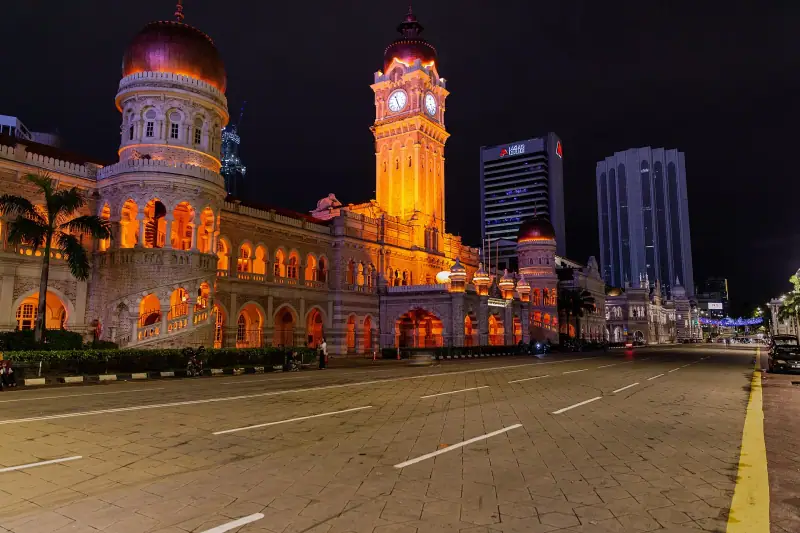
Visiting Kuala Lumpur: complete guide 2026
Complete guide to visiting Kuala Lumpur: Petronas Towers, Batu Caves, Chinatown, Bukit Bintang, street food and transport. All you need to know.
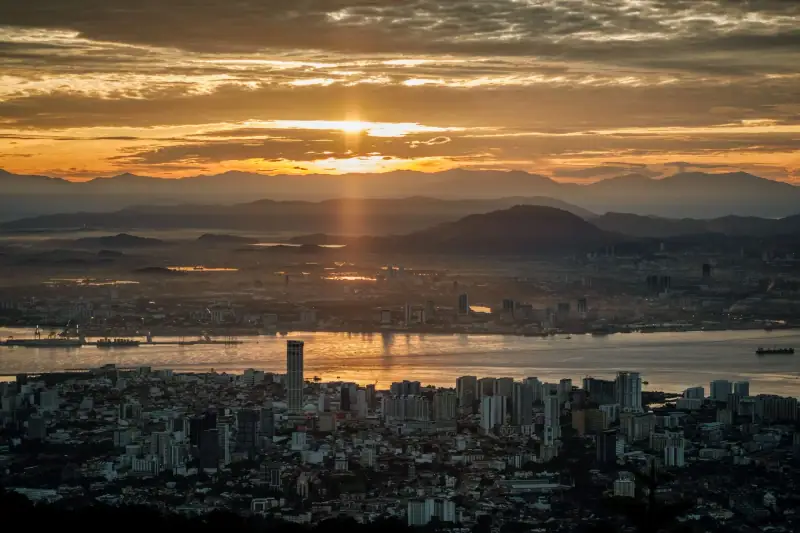
Penang Hill: funicular, hours, ticket prices and how to get up
Penang Hill from George Town: funicular hours, regular and express fares, bus 204, getting up on foot or by jeep, and the best time to avoid the queue.
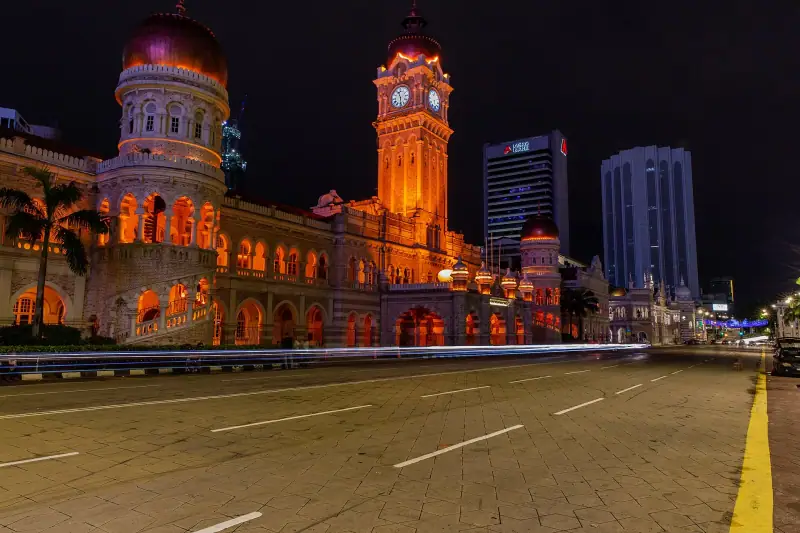
Kuala Lumpur top sights: 15 things to see and do
Kuala Lumpur's top sights: Petronas Towers, Batu Caves, Chinatown, street food and neighborhoods. Everything to see in KL in 2 to 4 days.
Ready-made
Malaysia itineraries
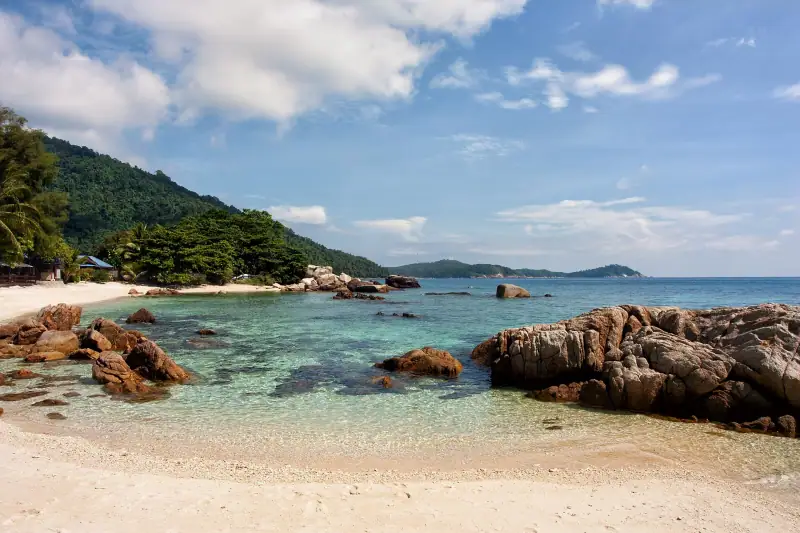
14 days
Malaysia's East Coast: Perhentian, Tioman, Redang and the eastern peninsula
Complete guide to Peninsular Malaysia's east coast: Perhentian, Redang, Tioman, Kota Bharu and Taman Negara. Diving, beaches and jungle. 10 to 14 days.
10 days
Malaysia in 10 days without a car: a train, bus and ferry itinerary
Kuala LumpurTanah Rata, Cameron HighlandsIpohGeorge Town, PenangLangkawi
14 days
Malaysia road trip: a complete 2 to 3 week itinerary
Malaysia road trip in 2 to 3 weeks: detailed route from KL to Penang, Langkawi, the Cameron Highlands, Malacca and Borneo, with transport and tips.