Itineraries
Malaysia's East Coast: Perhentian, Tioman, Redang and the eastern peninsula
We may earn a commission when you book through links on this page, at no extra cost to you. We don't visit or try the places we cover: we summarize published sources. How we work
Day by day: 10- to 14-day east coast route
- Days 1-2Taman Negara: canopy walk, Bukit Teresek, night boat trip
- Days 3-4Cherating beach village and Kuantan transit
- Days 5-7Perhentian or Redang islands: diving and snorkeling
- Days 8-9Kota Bharu: central market, old town, museums
- Days 10-12Tioman from Mersing: villages, trek to Juara, diving
- Days 13-14Bus from Mersing back to Kuala Lumpur
Weather through the year on this route
| Jan | Feb | Mar | Apr | May | Jun | Jul | Aug | Sep | Oct | Nov | Dec | |
|---|---|---|---|---|---|---|---|---|---|---|---|---|
| High °F (°C) | 8429 | 8630 | 8630 | 8630 | 8630 | 8530 | 8429 | 8429 | 8429 | 8429 | 8429 | 8429 |
| Low °F (°C) | 7323 | 7323 | 7524 | 7725 | 7926 | 7926 | 7725 | 7725 | 7725 | 7725 | 7625 | 7524 |
| Rain in (mm) | 4.8125 | 3.590 | 5.7145 | 7.3185 | 7.7195 | 6.2160 | 6.9175 | 8.2210 | 8.4215 | 10.2260 | 11.1285 | 8.6220 |
Normals 1991–2020 at George Town and Malacca: averages over 30 years, not a forecast. Source: NASA POWER (MERRA-2), grid of about 50 km. Figures computed by us in November 2026.
In short
- The east coast is hit by the northeast monsoon from mid-November to early March, when almost all island accommodation closes. The best months are May-June and September-October.
- From KL to the Perhentians: fly to Kota Bharu (about 1 h), bus to Kuala Besut (1 h 30 to 2 h), then a 30- to 40-minute speedboat.
- A suggested 10- to 14-day route runs Taman Negara, Cherating and Kuantan, Perhentian or Redang, Kota Bharu, then Tioman.
- Islands have no ATMs in places (none on Perhentian Kecil): bring enough ringgit in cash. Daily budget is about €45-65 (about $52-75) for backpackers.
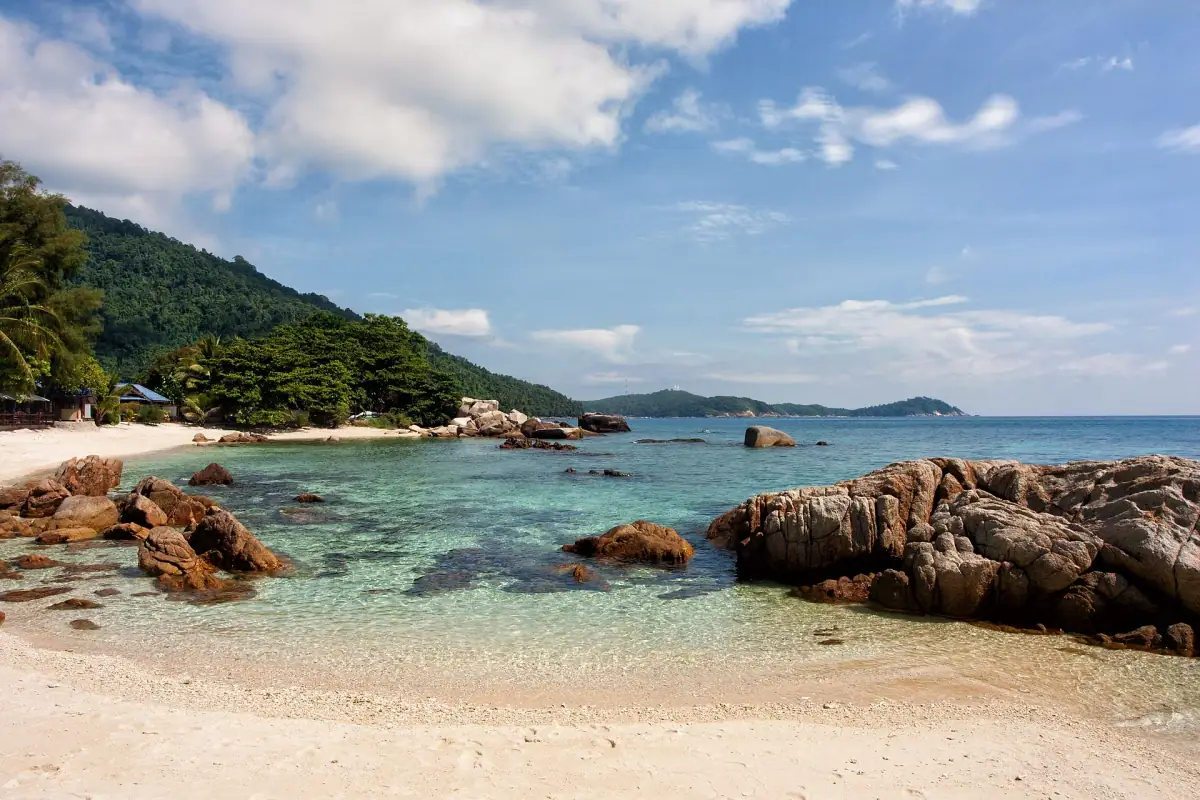
The East Peninsula of Malaysia is the discreet opposite of its western sister. Where the west coast glitters with skyscrapers, old colonial towns and night markets, the eastern coast unrolls a radically different face: strikingly clear turquoise water, islands covered in primary jungle, half-deserted beaches and a preserved traditional Malay culture. This is where Malaysia reveals its watery, natural side, far from the tourist crowds. The Perhentian Islands, Redang and Tioman are among the most renowned diving and snorkeling sites in Southeast Asia. The mainland coast has its own surprises: the border and crafts town of Kota Bharu, the fascinating primary jungle of Taman Negara and the wild beaches of Terengganu.
This guide covers a 10- to 14-day itinerary on the east coast. It complements our guide to the West Peninsula for a complete tour of the country.
The Perhentian Islands: Terengganu’s turquoise jewel
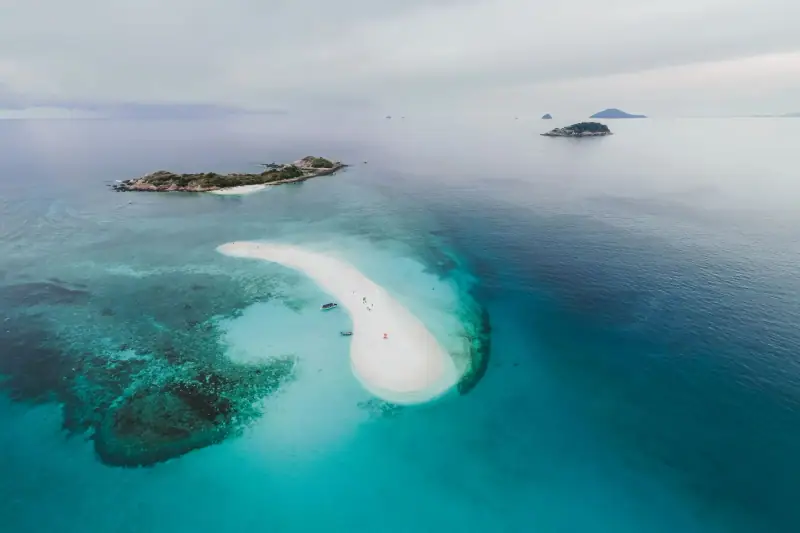
The Perhentian Islands (Pulau Perhentian) are one of Malaysia’s most photographed island destinations. Located about 21 km (13 mi) off the Kuala Besut jetty, in Terengganu state, they consist mainly of two islands: Perhentian Besar (the big one) and Perhentian Kecil (the small one).
Perhentian Besar: family beaches and calm waters
Perhentian Besar is the quieter of the two. Its main beaches, the bay of Teluk Pauh and Pantai Panjang on the east side, have calm waters, ideal for families with children. Underwater visibility is remarkable between May and October: green and hawksbill turtles, stingrays, schools of surgeonfish and branching corals are the usual companions of any snorkeling trip. Several PADI-certified dive centers offer boat trips, Open Water courses and discovery dives.
Accommodation on Besar covers a wide range, from wooden beach bungalows to small resorts with air conditioning and a deck over the water. There is no road or car on the island; you get around on foot along jungle paths or by water taxi between bays. This absence of motorized traffic is one of the island’s great strengths: at night, the silence is broken only by the sound of waves.
Perhentian Kecil: backpackers and diving
Perhentian Kecil is the favorite address of backpackers. Its atmosphere is livelier in the evening, notably at Long Beach (east side) where the beachfront restaurants, chill-out bars and exchanges between travelers from all over the world are concentrated. Coral Bay (west side), smaller and calmer, is ideal for snorkeling from the shore.
The small island also has several high-level dive spots: Shark Point, where blacktip sharks are regularly seen when scuba diving, and Temple of the Sea, known for its dense coral formations. Local dive centers offer multi-day packages at competitive rates.
How to get there: From Kuala Lumpur, the most efficient route is to fly to Kota Bharu (about 1 h), then take a bus or minivan to Kuala Besut (about 1 h 30 to 2 h), and finally a public speedboat to the islands (about 30 to 40 minutes). Direct overnight KL-Kuala Besut buses exist and save a hotel night, with a trip of about 7 to 8 h (for a late arrival, see where to stay in Kuala Besut before the ferry). From Kuala Besut, speedboats generally leave in the morning and afternoon depending on the season.
Our article on the Perhentian Islands details the snorkeling spots and recommended dive centers.
Accommodation on the Perhentian Islands and Redang
From beach bungalows to comfortable resorts: compare options with free cancellation for your east coast stay.
Redang Island: preserved corals and crystal-clear water
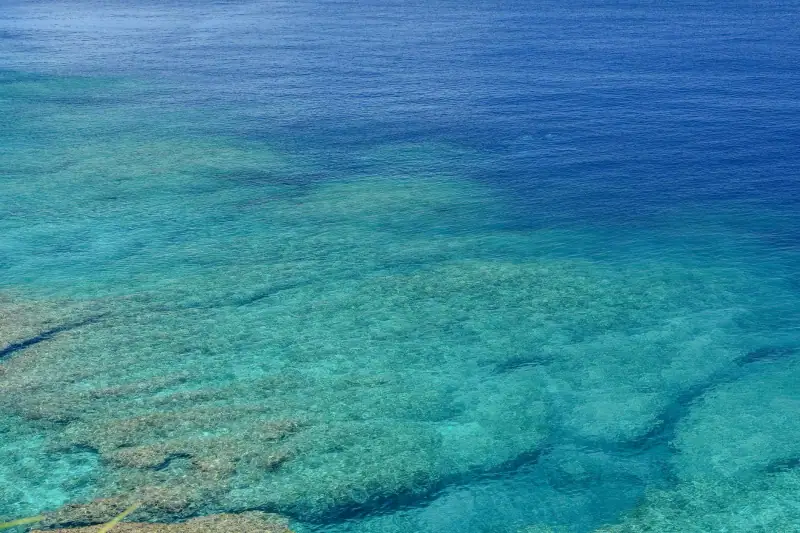
Redang Island (Pulau Redang) is, with the Perhentians, the other great diving and snorkeling address of Terengganu. Located about 25 to 30 km (16 to 19 mi) off the Merang jetty (not to be confused with Marang, another coastal village), it is slightly larger and more developed than the Perhentians, with several mid-range to upscale resorts.
Why Redang stands out
Redang’s reputation rests on its exceptionally rich seabed. The Marine Park Area around the island is strictly protected: fishing is banned there, which has allowed healthy coral reefs to rebuild. The waters are among the clearest in Malaysia, with visibility regularly reaching 20 to 30 meters (66 to 98 ft) in high season.
Pasir Panjang (the main beach, on the west side) is the island’s largest beach, with fine sand that stays soft underfoot even in mid-afternoon. The snorkeling spots are reachable directly from the shore or a few minutes by boat from the beach.
Resorts and all-inclusive packages
Unlike the Perhentians, which offer many independent places to stay, Redang is more structured around resorts that sell packages including accommodation, meals and snorkeling trips. This formula suits travelers who want a stay without organizing, but it makes backpacker stays more limited. If you prefer freedom, choose the Perhentians. If you want all-inclusive comfort in a preserved natural setting, Redang is an excellent choice.
Season: As with all the east coast islands, Redang is closed between mid-November and early March, and most resorts also close their doors in the off-season.
Tioman Island: jungle, diving and diversity
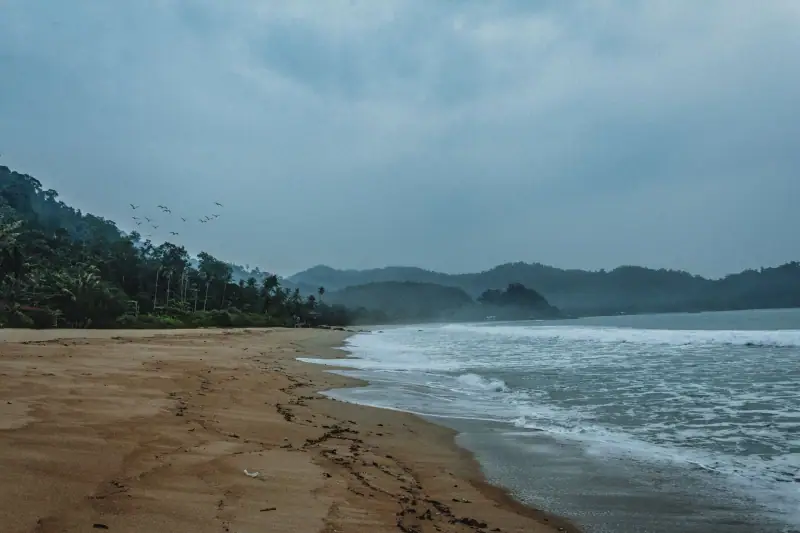
Tioman (Pulau Tioman) is the largest island on Malaysia’s east coast and one of the most spectacular: its two characteristic volcanic peaks, Batu Sirau and the Nenek Semukut ridge, make its profile from the sea one of the island’s most recognizable images. Ranked among the ten most beautiful islands in the world by Time magazine in 1970, Tioman has kept an authentic feel despite modest tourist infrastructure.
The island is in Pahang state, about 39 km (24 mi) from the coast, and is reached from the Mersing jetty (about 355 km / 221 mi from Kuala Lumpur, a 4 h to 4 h 30 drive). The express ferry crossing from Mersing takes about 1 h 30 to 2 h depending on the type of boat and weather conditions.
Tioman’s villages
Tioman has several small villages reachable only by sea or jungle trail. Tekek is the largest and has the island’s airport (small seasonal flights). Air Batang (ABC) and Salang are favorites of travelers looking for a quiet beach atmosphere with a few restaurants and dive centers. Juara, on the east coast (reached by a trek of about 2 h 30 to 3 h 30 through the jungle from Tekek, or by boat), is the wildest and most isolated beach, an ideal choice for those who want to get away from everything.
Diving and snorkeling in Tioman
Tioman offers a variety of underwater spots for all levels. Renggis Island (an islet near Tekek village) is a snorkeling classic from the shore. Tiger Reef and Bahara Rock are more technical dive spots appreciated for their reef sharks and coral formations. Night diving is also offered by several centers, with octopuses, nudibranchs and bamboo sharks to see.
Our article on visiting Tioman details the practical organization of the stay and the best spots.
Diving and snorkeling trips on the east coast
Guided trips to the Perhentians, Redang and Tioman: scuba diving, snorkeling, turtle and reef shark watching.
Kota Bharu: the traditional Malay capital of the north
Kota Bharu is the capital of Kelantan state, in the far northeast of Malaysia, about 45 km (28 mi) from the Thai border. It is one of the most conservative and authentically Malay cities of the peninsula, known for its colorful markets, traditional crafts and popular performing arts.
The central market and museums
The Kota Bharu central market (Pasar Besar Siti Khadijah), recognizable by its octagonal shape and its morning bustle, is one of Malaysia’s liveliest covered markets. The ground floor is devoted to fresh produce and fish, while the upper floor overflows with textiles, hand-painted batiks, sarongs and handmade souvenirs. The atmosphere is exclusively local in the morning, before tourists arrive.
Kota Bharu is also the center of the tradition of the wau bulan (the crescent-shaped moon kite), the wayang kulit (Malay shadow theater), the rebana (traditional percussion) and the gasing (giant spinning top game). These living traditions are sometimes visible at festivals or in local cultural centers, depending on when you visit.
Kota Bharu as a transit point
For travelers who arrive by plane in Kota Bharu before going down to the Terengganu islands (Perhentian, Redang), the town is a convenient transit point. It is nevertheless worth a night or half a day of exploration in its own right, for its old merchant quarter, its many Kelantanese restaurants and its atmosphere different from the rest of Malaysia.
Taman Negara: the oldest primary jungle in the world
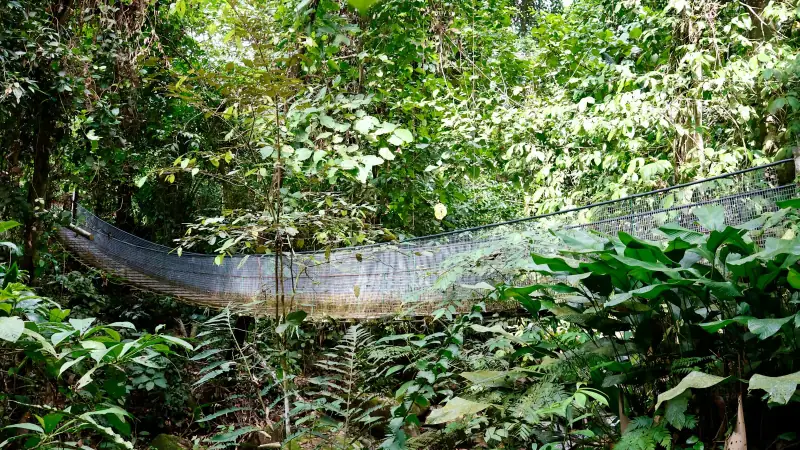
Taman Negara is Malaysia’s oldest national park and one of the oldest rainforest ecosystems on the planet; this jungle is estimated to be about 130 million years old, well before the Amazon’s. The park covers about 4,343 km² (1,677 sq mi) across three states (Pahang, Kelantan and Terengganu) and is one of the most striking natural experiences in Southeast Asia.
The Kuala Tahan gateway
The main entrance to the park is from Kuala Tahan, in Pahang state. To get there from Kuala Lumpur, allow about 4 h to 4 h 30 by bus or car to Jerantut, then about 2 h 30 to 3 h by motorboat on the Tembeling River from the Kuala Tembeling jetty (a village about 16 km / 10 mi from Jerantut). This boat trip, which runs along dense jungle banks and sometimes crosses moderate rapids, is a memorable experience in itself.
What to do in Taman Negara
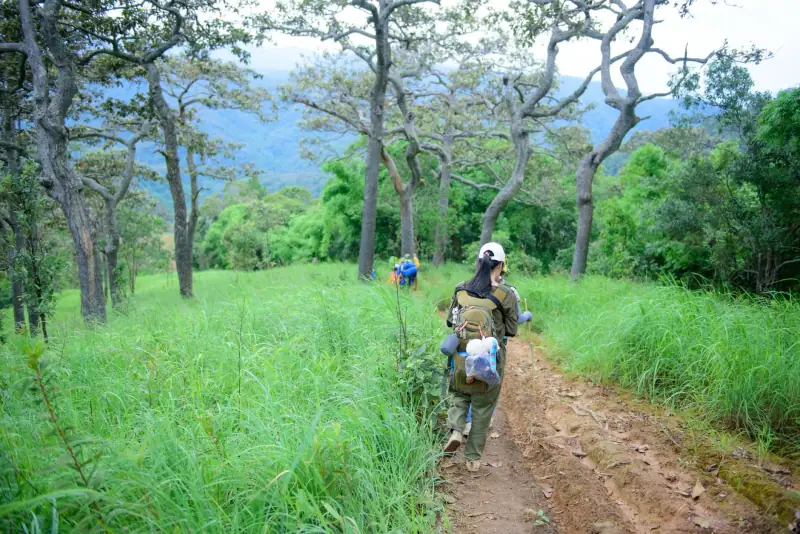
- The canopy walkway: Suspended about 40 meters (131 ft) up in the canopy, Taman Negara’s canopy walk is one of the longest forest walkways in the world. It lets you see the jungle from a unique perspective, at the level of century-old treetops, looking for tropical birds, monkeys and, with luck, a lingering nocturnal animal.
- Treks and hikes: Marked trails of varying difficulty cross the park. The trek to the summit of Bukit Teresek (334 m / 1,096 ft elevation, 2 h round trip from Kuala Tahan) offers a fine view of the canopy. Longer multi-day expeditions with a licensed guide are possible to reach more remote areas.
- The rapids: Rafting excursions on the rapids of the Tembeling River are organized from Kuala Tahan, an invigorating activity for adventurers of all levels.
- Wildlife: Taman Negara is home to Asian elephants (Elephas maximus indicus), Malayan tapirs, clouded leopards and several hundred bird species. Direct encounters are rare and unpredictable, but “salt licks” (natural mineral salt licking areas) allow night sightings of wild boar, deer and sometimes elephants from secure observation towers.
Recommended stay: Two to three nights in Kuala Tahan let you enjoy the canopy walk, a half-day trek and a night river excursion. Beyond 3 nights, a local guide is strongly advised to explore the deeper parts of the park.
Car rental for the east coast
A vehicle gives you the freedom to explore the mainland coast, Cherating, Kuantan and the access to island jetties at your own pace.
Suggested itinerary: 10 to 14 days on the east coast
Here is the most logical structure to explore the East Peninsula, taking into account transport and travel time from Kuala Lumpur.
Days 1-2: Taman Negara (option A, for jungle fans)
From KL, bus to Jerantut (about 4 h), then boat from the Kuala Tembeling jetty (~16 km / 10 mi from Jerantut) to Kuala Tahan (about 2 h 30 to 3 h). Two nights in the park: canopy walk on the morning of day 2, Bukit Teresek hike in the afternoon, night boat trip to see wildlife. Return by boat and bus to the coast.
Option B (if you prefer to start with the islands): head straight to Kuantan by bus from KL (about 3 h) and go up the coast to the north.
Days 3-4: Cherating and Kuantan
Cherating, a small beach resort about 47 km (29 mi) north of Kuantan, is the first beach village on the east coast. It is a peaceful stop, appreciated for its fine sand beach, moderate surf atmosphere and a few cheap guesthouses. Kuantan, the capital of Pahang, is mostly a transit hub (bus, car) for going further north.
Days 5-7: Perhentian Islands or Redang (3 nights minimum)
From Kuantan or from Kota Bharu by bus, reach the Kuala Besut jetty for the Perhentians, or the Merang jetty for Redang. Three nights minimum on the chosen island: diving or snorkeling morning and afternoon, sunsets on the beach, dinner by the water. The islands have no ATMs, so bring enough cash (ringgit) for the whole stay.
Days 8-9: Kota Bharu
From Kuala Besut, bus to Kota Bharu (about 1 h 30 to 2 h). One or two nights to explore the central market, the old merchant quarter, the crafts museums and taste Kelantanese cuisine, distinct from the rest of Malaysia with its spicier flavors and Thai influences.
Days 10-12: Tioman (from Mersing)
To visit Tioman, you have to head back south: Kota Bharu to Mersing by bus (a long trip, about 7 to 9 h changing in Kuala Lumpur or Johor Bahru depending on connections). Mersing is the boarding jetty for the express ferries to Tioman. Three nights on the island: one day per village (Tekek, ABC, Salang), a trek to Juara or a day of diving.
Logistics tip: if the itinerary seems too heavy on travel, choose EITHER Perhentian/Redang in the north OR Tioman in the south. Combining them involves long overland trips.
Days 13-14: Back to Kuala Lumpur
From Mersing, bus to KL (about 4 to 5 h). Last night in KL before the return flight.
Budget and practical information
Currency: Malaysian ringgit (MYR). Bring enough cash before leaving for the islands: there is no ATM on Perhentian Kecil or in the isolated villages of Tioman.
Indicative daily budget:
| Style | Per person / day | Over 10-14 days |
|---|---|---|
| Backpacker (basic bungalow, street food, public transport) | €45-65 (~$52-75) | €450-910 (~$520-1,055) |
| Mid-range (comfortable lodging, a few dives, restaurants) | €90-140 (~$105-160) | €900-1,960 (~$1,045-2,275) |
| All-inclusive resort (Redang, diving trips) | €160-280 (~$185-325) | €1,600-3,920 (~$1,855-4,545) |
International flights not included. Diving: plan €60-100 (about $70-115) per 2-dive session.
Health: Ask your doctor or a travel clinic, and see the official travel health pages (CDC in the US, TravelHealthPro in the UK). Travel insurance with medical repatriation is essential, especially for diving activities (check that diving is covered).
Season: The northeast monsoon hits the east coast between mid-November and early March. Almost all island accommodation closes during this period. The best season is May-June (before the summer boom) and September-October (after the big heat, just before the monsoon). In July-August, the islands are very busy with domestic and international tourists.
Inter-island transport: Public speedboats link Kuala Besut (for Perhentian) and Merang (for Redang) to the islands. Tickets are bought directly at the jetty on the morning of departure. No reservation needed outside high season, but arrive early in the morning for the first departures.
Mobile network: Basic on the Perhentians (Celcom works best), absent in remote parts of Tioman and in the Taman Negara jungle. Prepare to disconnect, often one of the best surprises of the trip. Check your carrier’s international plan or consider a travel eSIM before you go.
Accommodation: where to stay on the east coast
Perhentian Islands: The widest offer on the east coast in terms of diversity, from hostel dorms at €10 a night (about $12) to air-conditioned seafront bungalows at €60-100 a night (about $70-115). Book ahead if you travel in July-August. In the off-season (November to March), the island is closed.
Redang Island: Mainly resorts offering all-inclusive packages (night + meals + snorkeling). A few independent guesthouses exist but are fewer than on the Perhentians. Rates are slightly higher than on the Perhentians for comparable comfort.
Tioman Island: Each village offers its own accommodation, from simple beach chalets to small resorts. Salang village: ideal for divers (many dive shops). ABC village: peaceful atmosphere, good value. Juara village: the most isolated and authentic, with very few places to stay.
Kota Bharu: A wide choice of travelers’ hotels in the city center, at very affordable rates. The city is mostly a transit base, with no need for premium accommodation.
Taman Negara: Several options in Kuala Tahan, from camping to solid chalets with a fan or air conditioning. Booking ahead is recommended for weekends and Malaysian school holidays.
The East Peninsula of Malaysia is the less-visited and most authentic face of the country. Less crowded than the west coast, more of a change of scenery, it rewards travelers ready to accept a few extra hours of bus with some of the most beautiful waters in Asia. For a complete trip to Malaysia, combine this east route with the West Peninsula over 3 weeks, or extend to Borneo, Sabah and Sarawak for total immersion in this country’s fascinating diversity.
Frequently asked questions
What is the best time to visit the east coast of Peninsular Malaysia?
The east coast is subject to the northeast monsoon (November to early March), which closes almost all the islands and disrupts navigation. The dry season runs from April to October, with an ideal peak in May-June and September-October. Avoid the islands between mid-November and mid-March if you come for diving or the beach.
How do you reach the Perhentian Islands from Kuala Lumpur?
From Kuala Lumpur, there are two options: a flight to Kota Bharu (KBR, about 1 h with AirAsia or Malaysia Airlines), then about 1 h 30 to 2 h by bus to the Kuala Besut jetty, followed by a speedboat of about 30 to 40 minutes to the islands. Or the long-distance KL-Kuala Besut bus (about 7 to 8 h overnight). The speedboat from Kuala Besut is the only regular sea link to the Perhentians.
Are the Perhentian Islands and Redang suitable for families?
Perhentian Besar (the big island) is better suited to families, with beautiful calm beaches and varied accommodation. Perhentian Kecil (the small one) is geared toward backpackers and nightlife. Redang has several comfortable resorts and shallow waters perfect for children. Tioman, larger and more varied, suits families as well as solo divers.
Do you need to be a certified diver to enjoy the islands?
No. Most islands offer snorkeling trips that let you see turtles, colorful fish and corals without certification. Underwater visibility is excellent between April and October. For scuba diving, PADI Open Water courses are offered there on all the major islands, at competitive rates.
Can you combine the east and west coasts in one trip?
Yes, and it is even the most complete circuit for peninsular Malaysia. A 3-week trip can cover Kuala Lumpur, Malacca, Penang (west coast) and then switch via Kota Bharu or a domestic flight to the east coast for the islands. Avoid trying to do everything in under 14 days: the journeys and ferries take time. The bus or train ticket KL-Kota Bharu takes about 7 to 9 h.
What is the average budget for 10 days on the east coast?
Expect about €50-70 (about $58-80) per person per day in backpacker mode (basic bungalow, snorkeling, street food). On a comfort budget (all-inclusive resort on Redang, diving trips), plan €120-200 (about $140-230) per person per day. Diving is a major item: a two-dive outing generally costs between €60 and €100 (about $70-115). International flights are a separate cost.
More Malaysia guides
Keep reading

Malaysia travel budget: how much does a trip cost in 2026?
How much to budget for Malaysia? Accommodation, meals, transport and activities: every expense detailed to prepare your trip.
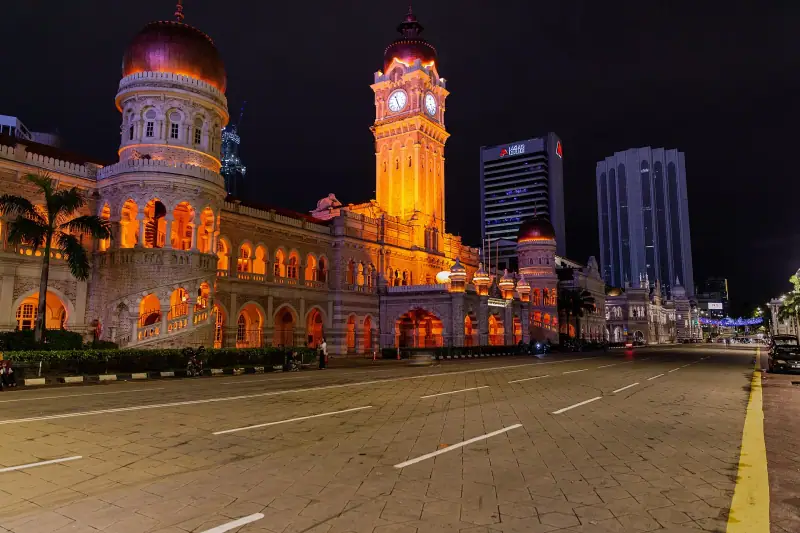
Visiting Kuala Lumpur: complete guide 2026
Complete guide to visiting Kuala Lumpur: Petronas Towers, Batu Caves, Chinatown, Bukit Bintang, street food and transport. All you need to know.
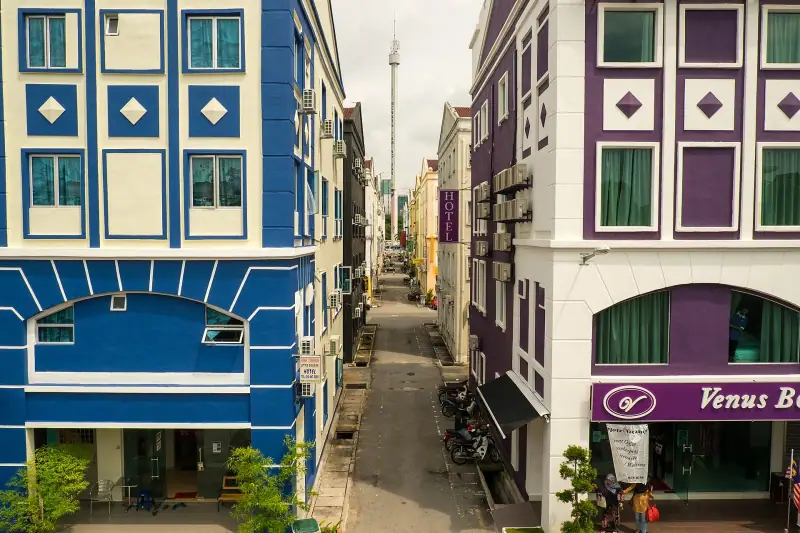
Where to stay in Malacca: a guide to the areas and best places to sleep
Where to stay in Malacca? Chinatown, Jonker Street, Dutch Square: a complete guide to areas, types of accommodation and practical tips for every budget.
Ready-made
Malaysia itineraries
10 days
Malaysia in 10 days without a car: a train, bus and ferry itinerary
Kuala LumpurTanah Rata, Cameron HighlandsIpohGeorge Town, PenangLangkawi

14 days
Malaysia road trip: a complete 2 to 3 week itinerary
Malaysia road trip in 2 to 3 weeks: detailed route from KL to Penang, Langkawi, the Cameron Highlands, Malacca and Borneo, with transport and tips.