What to see
Visiting Inari: a complete guide to the heart of Sámi Lapland
We may earn a commission when you book through links on this page, at no extra cost to you. We don't visit or try the places we cover: we summarize published sources. How we work
In short
- Inari is about 335 km (208 mi) north of Rovaniemi, 3 h 30 to 4 h by car; the nearest airport is Ivalo (IVL), 40 km (25 mi) south.
- The Siida museum is the Sámi national museum of Finland: about €15 (~$17) for adults, with 2 to 3 hours recommended.
- Aurora season runs from late August to early April, with January and February statistically the most active; Inari sits at 69°N.
- Inari is cheaper than Rovaniemi or Levi: accommodation about €80-150 a night (~$93-175) and about €400-700 (~$465-810) per person for a 3-day stay, transport excluded.
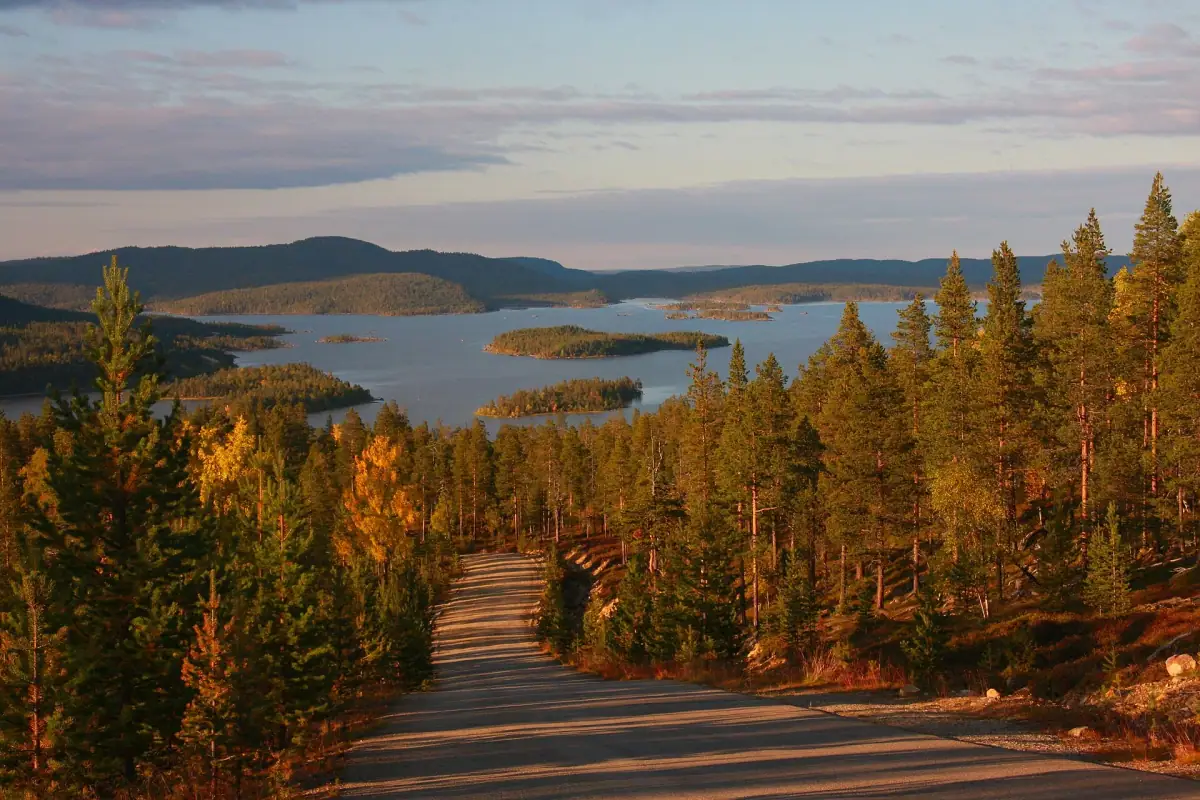
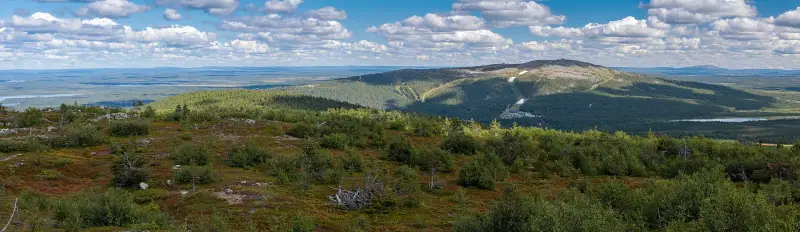
Inari is arguably the most authentic village in all of Finnish Lapland. Far from the bustle of Rovaniemi and the buzz of the ski resorts, this small town of 7,000 inhabitants, scattered over a huge territory, is home to the spiritual and cultural heart of the Sámi people. Bordered by the immense Lake Inarijärvi and surrounded by vast subarctic forests, Inari combines the majesty of Arctic landscapes with rare cultural richness.
Whether you come to chase the northern lights on the lake ice, dive into the thousand-year history of the Sámi people at the Siida museum, or simply lose yourself in the absolute silence of the Finnish tundra, Inari is a destination that leaves a lasting mark on those who discover it.
Inari: overview and location
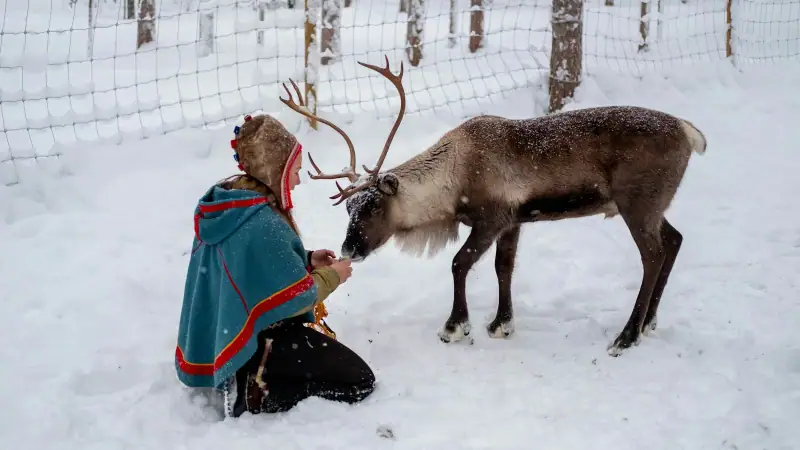
Inari (in Sámi: Aanaar) is the largest municipality in Finland by area, covering 17,331 km² (6,692 sq mi). Yet fewer than 7,000 people live there year-round, giving it one of the lowest population densities in Europe.
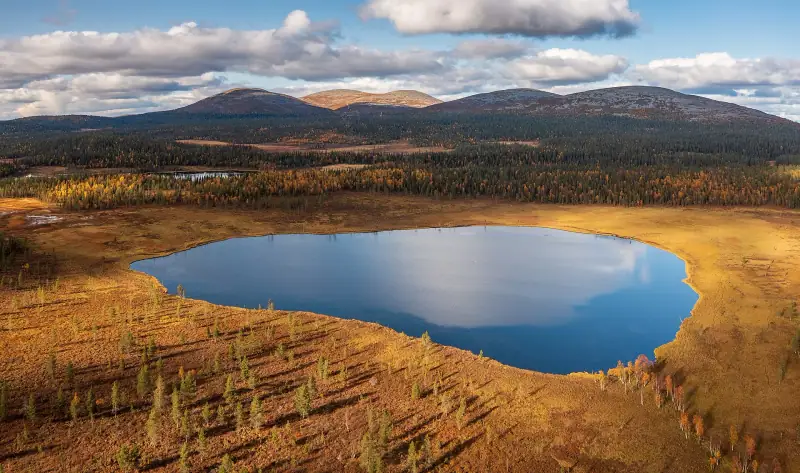
The main village, also called Inari, lies about 335 km (208 mi) north of Rovaniemi and 40 km (25 mi) north of Ivalo. It sits on the shore of Lake Inarijärvi, the third-largest lake in Finland, whose 1,000 islands and 3,300 km (2,050 mi) of shoreline form an ecosystem of exceptional biodiversity.
Inari’s geographic position, at 69°N, well beyond the Arctic Circle (66°N), brings spectacular natural phenomena: full polar night in December-January, midnight sun in June-July, and one of the highest frequencies of northern lights in Finland.
Inari is home to three distinct Sámi groups: the Inari Sámi (Aanaar sámit), the North Sámi (Davvisápmelaččat) and the Forest Sámi (Metsäsaamelaiset). The village is one of the few places in the world where three different Sámi languages are spoken daily, alongside Finnish.
Lake Inari (Inarijärvi): a giant of Arctic waters
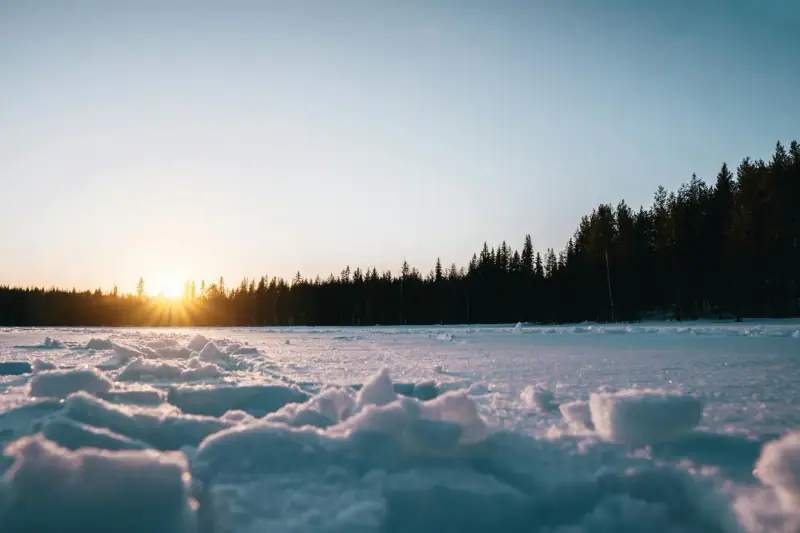
Lake Inari is the third-largest lake in Finland and one of the most impressive bodies of water in all of Arctic Europe. It covers 1,084 km² (419 sq mi) with a maximum depth of 92 meters (302 ft), and its crystal-clear waters hold large populations of trout, Arctic char, pike and whitefish.
In winter, the lake freezes completely between December and May. The ice, which sometimes reaches 80 cm (31 in) thick, allows ice fishing, snowmobile safaris and 360° panoramas of the polar sky, ideal for chasing the northern lights.
In summer, the lake comes back to life with cruise boats. Excursions let you sail to remote islands, explore centuries-old Orthodox hermitages and discover birdlife (sea eagles, Arctic loons, goldeneyes). The cruise to the sacred island of Ukko is especially popular.
Fishing on Lake Inari: fishing is one of Inari’s great traditions. Locals and visitors fish lake trout (järvitaimen) and Arctic char (nieriä) all year round. In winter, ice fishing is done with a simple auger and a light rod. Daily or weekly fishing permits are available from Siida or local agencies (about €10-20 a day, ~$12-23).
Activities in Inari: excursions and safaris
Lake cruise, aurora safari, ice fishing, snowmobiling: compare all the activities available around Inari.
The Siida museum: a window on Sámi culture
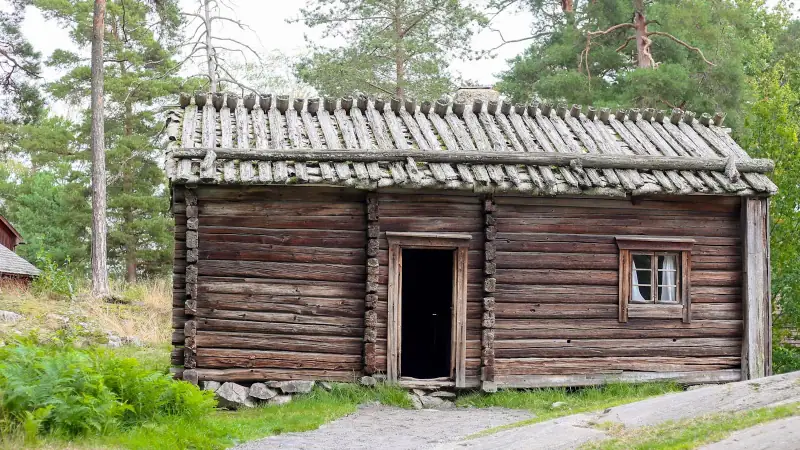
Siida is the national museum of the Sámi of Finland, and one of the most important cultural institutions in all of Lapland. Opened in 1998 and fully renovated in 2021, it combines an ethnographic museum on the Sámi people and an information center on the nature of northern Lapland.
The permanent collections
The museum is divided into two thematic wings:
Sámi history and culture: this section traces 10,000 years of Sámi presence in the Inari region, from the first hunter-fisher peoples of the ice age to contemporary communities. The exhibits present authentic objects (fishing tools, traditional gákti costumes, musical instruments, sleds), life-size models of seasonal camps and documentaries on daily life.
A particularly moving chapter recounts the forced assimilation policy (Finnicization) the Sámi endured in the 19th and 20th centuries, and the cultural revival that has followed since the 1970s.
Nature of the north: the second wing explores the particular ecosystem of northern Lapland (taiga, tundra, lake environment) through high-quality dioramas, mineral and botanical collections, and explanations of astronomical phenomena (northern lights, polar night, midnight sun).
Practical: Siida’s opening days and hours vary by season: check them on the museum’s website before you come. Price: about €15 adult (~$17), €5 child aged 6-15 (~$6), free under 6. Allow 2 to 3 hours for the full tour. The museum shop is an excellent place to buy authentic Sámi crafts (knives, jewelry, textiles).
The open-air park
In front of the museum stretches an open-air ethnographic park with reconstructed traditional Sámi structures: turf huts (goahti), fish drying racks, food caches on stilts. In summer, guides in traditional dress give craft demonstrations. It is an excellent complement to the indoor exhibition for understanding the daily life of the Inari Sámi over the centuries.
Inari’s essential activities
To fish around Inari, first see our guide to the fishing permit in Finnish Lapland.
Northern lights over the lake
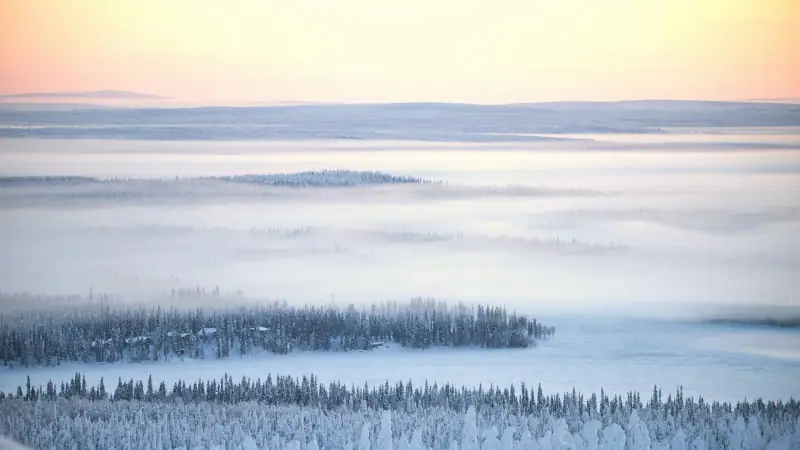
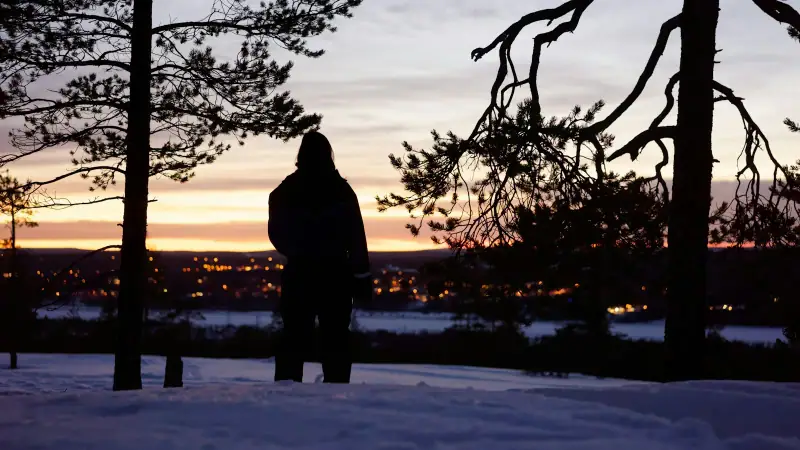
Inari is one of the most favorable northern lights viewing sites in Finland. Its high latitude (69°N), almost total absence of light pollution and the reflective surface of the frozen lake make it an exceptional place.
The aurora season runs from late August to early April. January and February nights are statistically the most favorable, with a high KP (magnetic activity index) and often clear skies. To improve your chances, download the Aurora Forecast app and move away from the few village lights; 500 meters (1,640 ft) from the center, you are already in near-total darkness.
Guided aurora safaris are run by local operators (Wilderness Hotel Inari, Inari Safaris): a snowmobile or minibus trip to the best spots, with a stop for hot coffee in a kota. Duration: 3 to 4 hours. Price: €90-130 per person (~$105-150).
To learn everything about this phenomenon, see our complete guide to the northern lights in Lapland.
Snowmobile safari
The Inari area offers hundreds of kilometers of marked snowmobile trails weaving through birch forests, tundra expanses and the lake shores. Guided safaris range from 2 hours (€80-100, ~$93-115) to a full day with lunch in a kota (€250-350, ~$290-405). The landscapes are even wilder than at Rovaniemi or Levi, and you can easily spend hours without passing a single house.
A particularly popular circuit crosses the Nellim peninsula to Lake Nellimöjärvi, with a view of the Lappish Fells on the horizon.
Ice fishing and summer fishing
Fishing is a local passion practiced all year long. In winter, on the ice of Lake Inari, experienced guides take you to the best spots for perch, trout and char. Jigging is particularly effective for catching trout of respectable size.
In summer, fly fishing in the rivers feeding the lake (Juutuanjoki, Ivalojoki) is renowned across Finland. Arctic char, Inari’s emblematic fish, is a prized catch for sport anglers.
Hiking and snowshoeing
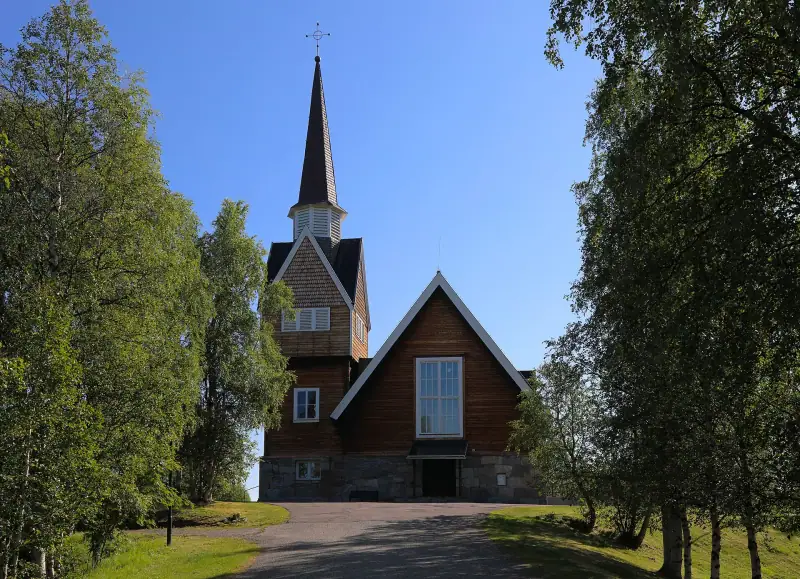
In winter, snowshoes let you explore the immediate surroundings of the village: forest paths, lake shores, hills with panoramas of the frozen islands. The hike to Pielpajärvi Wilderness Church (6 km / 3.7 mi from the village, reachable on skis or snowshoes) is a highlight; this 18th-century wooden chapel, lost in the forest, is a listed historic monument.
In summer, the hiking network extends for several hundred kilometers in Lemmenjoki National Park, the largest national park in Finland (2,855 km² / 1,102 sq mi), 50 km (31 mi) west of Inari. Routes of 2 to 7 days let you explore pristine river valleys, gold-panning sites and breeding grounds of rare birds.
Accommodation in Inari
Hotels, chalets and Arctic cabins: find the best options for sleeping in Inari and enjoying the lake and the aurora.
Where to stay in Inari
Despite the village’s small size, Inari has a varied range of accommodation, from comfortable youth hostels to luxury lakeside lodges.
Wilderness Hotel Inari
The village’s main hotel, right on the shore of Lake Inarijärvi. It offers classic hotel rooms, suites with lake views and Aurora Cabins, small wooden cabins with a partly glazed roof for watching the aurora from your bed. The hotel restaurant serves quality Lappish cuisine. The Wilderness Hotel also organizes most of the region’s Arctic activities.
Rates: double room €120-200/night (~$140-230). Aurora Cabin €250-400/night (~$290-465).
Holiday Village Inari
A complex of wooden chalets 2 km (1.2 mi) from the village center. The chalets, for 2 to 8 people, have a fully equipped kitchen, a private sauna and a deck with a view of the lake or forest. Ideal for families and groups of friends who want to cook their own fish caught in the lake.
Rates: 2-person chalet €90-160/night (~$105-185). Family chalet (4-6 people) €150-280/night (~$175-325).
Inari Camping and budget options
For tight budgets, Inari campground is open from June to October with pitches for tents and campers, as well as basic wooden cabins (€35-60/night, ~$41-70). Saariselkä Tunturi Resort, 40 km (25 mi) to the south, also offers cheaper options with easy access to Inari by car.
How to get to Inari
By air
Ivalo Airport (IVL) is the nearest, 40 km (25 mi) south of Inari. Finnair serves Ivalo from Helsinki (1 h 15) with several daily flights in season. In the high winter season, charter flights arrive from Stockholm and a few European capitals.
From Ivalo airport to Inari, take a taxi (€40-50, ~$46-58) or a local bus (Eskelisen Lapin Linjat, about €8, ~$9, 50 minutes).
By car from Rovaniemi
The most common route: route 4 (E75) heading north for about 335 km (208 mi). Allow 3 h 30 to 4 h of driving depending on conditions. The roads are well maintained, but make sure your car has winter tires (mandatory in Finland from November to March). The road passes through Sodankylä and Ivalo before reaching Inari, a magnificent drive in itself, through the pine and birch forests of the taiga.
Car rental at Ivalo airport
Compare car rental offers at Ivalo airport to reach Inari and explore northern Lapland freely.
By bus
Eskelisen Lapin Linjat runs daily connections between Rovaniemi and Inari, with a stop at Ivalo. In high season (December to March), allow 1 to 2 departures a day from Rovaniemi’s bus station. Duration: about 4 h 30. Booking recommended on the company’s website.
Food in Inari
Local specialties
Inari’s cuisine is even more local than the rest of Lapland’s. Reindeer (poro) is everywhere: reindeer steak pan-fried in butter, reindeer stew with lingonberries (poronkäristys), dried reindeer (kuivaliha). Lake Inari fish, such as Arctic char, lake trout (järvitaimen) and pike (hauki), are served smoked, grilled or in creamy Lappish soup.
A rare local specialty: siika (Inari whitefish), a delicate white-fleshed fish, often hot-smoked over alder and served with dill sauce and rye bread. Hard to find elsewhere, it is an authentic taste experience.
In summer, wild berries abound in the forests: cloudberry (lakka), lingonberry (puolukka), blueberry (mustikka). Locals pick them themselves and serve them as jams, in pies or with sour cream.
Restaurants in Inari
Café-restaurant Sarrit is inside the Siida museum grounds and serves quality Lappish cuisine in a modern setting with a lake view. Excellent whitefish soup and desserts with local berries. Open during museum hours.
Hotelli Kultahippu is in Ivalo (40 km / 25 mi) and offers one of the best tables in the region, with a menu mixing Lappish cuisine and Nordic influences. Worth it if you pass through Ivalo.
Wilderness Hotel Inari restaurant: the menu changes with the seasons and deliveries, with a fine selection of wines and Finnish craft beers. Warm atmosphere of wood and reindeer skins, lake view.
Inari in practice
When to go
| Period | Conditions | Best for |
|---|---|---|
| Dec-Jan | Polar night, deep cold (-20 to -35 °C / -4 to -31 °F), frequent aurora | Aurora chasers, lovers of winter silence |
| Feb-Mar | Light returns, temperatures still cold, abundant snow | Snowmobile, cross-country skiing, aurora, families |
| Apr-May | Ice melt, magical light, cheaper flights | Nature, photography, best value |
| Jun-Aug | Midnight sun, open lake, hiking | Fishing, cruises, Sámi culture, families |
| Sep-Oct | Ruska (autumn colors), first snows, first auroras | Hikers, photographers, lovers of calm |
See our guide to the best time to visit Lapland to refine your choice according to your priorities.
Budget to plan
Inari is noticeably cheaper than Rovaniemi or Levi, while offering an authentic experience hard to find elsewhere in Lapland.
| Item | Moderate budget | Comfort budget |
|---|---|---|
| Accommodation (per night) | €60-100 (~$70-115) | €150-300 (~$175-350) |
| Meals (per day) | €30-50 (~$35-58) | €60-100 (~$70-115) |
| Guided activities | €80-150/activity (~$93-175) | €150-350/activity (~$175-405) |
| Local transport | €15-30 (~$17-35) | €40-80 (~$46-93) |
For detailed advice, read our article on the budget for a stay in Lapland.
Phone and connectivity
Mobile coverage in Inari is decent in the village and on the main roads, but becomes nonexistent once you enter the forests or head out on excursions off the marked trails. Tell someone before any isolated outing and download offline maps (Maps.me, AllTrails) before leaving. For using your phone abroad, check your carrier’s international plan or consider a travel eSIM.
Language and local culture
Finnish and Inari Sámi are the two official languages of the village. English is commonly spoken in hotels, restaurants and the museum.
If you interact with members of the Sámi community, show respect and humility: their culture was long marginalized and they are rightly proud of their identity. Photographing people without consent at cultural events (joik, crafts) should be avoided. To learn more, read our article on Sámi culture in Lapland.
Inari in a Lapland itinerary
Inari fits naturally into a Finnish Lapland circuit. Here are some classic combinations:
Short circuit (5-7 days): Rovaniemi (2 days) → Saariselkä (1 day) → Inari (2 days) → return via Ivalo. This circuit combines the essentials (Santa Claus Village, Urho Kekkonen National Park) with Inari’s Sámi authenticity.
Full circuit (10-12 days): Rovaniemi → Levi → Saariselkä → Inari → Tromsø (Norway) → return. A grand tour of Scandinavian Lapland combining Finland and Norway, lake and fjords, Sámi culture and aurora.
To help you organize your stay, see our 7-day Lapland itinerary or our guide to the Lapland road trip.
Flights to Ivalo, the gateway to Inari
Compare flight offers to Ivalo Airport (IVL), 40 km (25 mi) from Inari.
Inari is one of those destinations unlike any other. Far from mass tourist circuits, this village on the shore of an immense lake embodies Lapland at its purest: intact nature, a living thousand-year culture, and that absolute silence that reminds you how big and beautiful the world can be. Whether you come for the northern lights dancing above the frozen lake, for the Sámi life stories at the Siida museum, or simply to catch an Arctic char at dawn on the ice, Inari will give you memories you will not soon forget.
Frequently asked questions
How do you get to Inari from Rovaniemi?
Inari is about 335 km (208 mi) north of Rovaniemi. By car, allow 3 h 30 to 4 h on route 4 (E75) heading north, then route 955. Matkahuolto buses serve Inari from Rovaniemi with 1 to 2 departures a day depending on the season; the trip takes about 4 h 30. The nearest airport is Ivalo (IVL), 40 km (25 mi) south, served from Helsinki by Finnair.
What is the Siida museum and is it worth the detour?
Siida is the national museum of the Sámi of Finland, on the shore of Lake Inari. It presents the history, culture, crafts and traditions of the Sámi people through high-quality permanent and temporary exhibits. It is absolutely worth the detour: it is one of the best-designed museums in all of Lapland, with models, authentic objects and explanations in Finnish, Sámi and English. Admission: about €15 (~$17) per adult.
What is the best time to visit Inari?
Each season has its charm in Inari. Winter (December to March) is ideal for the northern lights, snowmobiling and ice fishing. Spring (April-May) offers spectacular polar light and the ice melt. Summer (June-August) is the season of the midnight sun, hiking and lake cruises. Autumn (September-October) is perfect for 'ruska' (autumn colors) and the first auroras. The high tourist season is December-March.
Are there northern lights in Inari?
Yes, and Inari is one of the best places in Finland to see them. Its position at 69°N (beyond the Arctic Circle) and low light pollution make it a prime spot. The aurora season runs from late August to early April. January and February nights are statistically the most active. The frozen Lake Inari offers an exceptional 360° panorama for photographing them.
What budget should you plan for a stay in Inari?
Inari is more affordable than Rovaniemi or Levi. Expect €80-150 a night (~$93-175) for accommodation (from hostel to comfortable apartment). Meals in the village restaurants cost €15-30 per person (~$17-35). Guided activities (snowmobile, aurora safari, ice fishing) run from €60 to €200 per person (~$70-230) depending on length. A 3-day stay in Inari averages €400-700 per person (~$465-810), transport excluded.
Is Inari a good destination for families?
Yes, Inari is an excellent family destination. Siida is fascinating for children thanks to its dioramas and interactive exhibits. Lake Inari offers accessible activities (ice fishing, snowshoe walks). Reindeer farms nearby offer contact with the animals. In summer, the lake cruise boats suit all ages. The atmosphere is calm and distances stay short.
Can you visit Inari in summer?
Absolutely. Summer in Inari is magnificent: the midnight sun lights Lake Inari until 1 am, boats resume sailing among the lake's 1,000 islands, hikes through the forests and moorland are open, and trout and Arctic char fishing is in full swing. Summer is also the best time to meet the Sámi at their traditional gatherings and markets.
More Lapland guides
Keep reading
Visiting Levi: a complete guide to Lapland's ski resort
Complete guide to visiting Levi in Finnish Lapland: skiing, northern lights, activities, accommodation and practical tips for a successful stay.
Rovaniemi: what to see and do, the essentials
Rovaniemi must-sees: Arktikum museum, Santa Claus Village, Ounasvaara, restaurants and activities. Complete guide to Lapland's capital.
Visiting Kiruna: a complete guide to Sweden's Arctic city
Complete guide to visiting Kiruna: ICEHOTEL, LKAB mine, northern lights and Arctic activities in Swedish Lapland. Practical tips included.
Ready-made
Lapland itineraries
7 days
Lapland in 7 days: a complete one-week itinerary
RovaniemiSaariselkäRovaniemi
7 days
Rovaniemi and Tromsø in one week: is it doable? A realistic itinerary
RovaniemiKilpisjärviTromsø
14 days
Lapland road trip: a 10 to 14-day itinerary by car
RovaniemiSaariselkäInariKarasjokAltaTromsøKiruna