Things to do
Northern lights in Lapland: a complete guide to seeing them
We may earn a commission when you book through links on this page, at no extra cost to you. We don't visit or try the places we cover: we summarize published sources. How we work
In short
- The aurora season runs from late August to late March; June and July nights are too bright. March is the top pick: frequent auroras, clear skies, daylight.
- Nothing is guaranteed, but over 4 to 7 consecutive nights the chance of at least one aurora is estimated at 70-80%; look for a KP index of 3 or more.
- Move 15-20 km (9-12 mi) from a city's lights, or join a guided outing: about €60 (~$70) and often €100-150 (~$115-175) per person.
- Dress extremely warm for 2 to 3 hours outside at -20 °C (-4 °F), and keep some evenings free of activities.
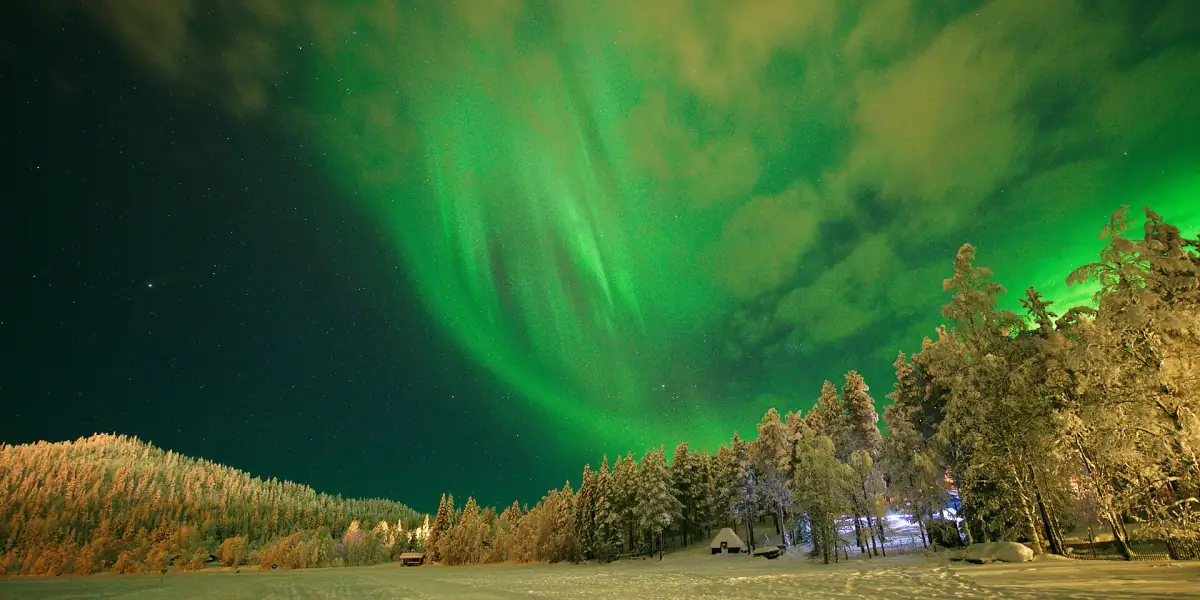
The northern lights are one of the most moving natural spectacles on the planet. This ballet of colored lights silently dancing in the night sky, green, violet, sometimes red, is for many visitors the main reason for their trip to Lapland. And for good reason: nothing really prepares you for the raw beauty of this cosmic phenomenon.
Here is a complete guide to maximizing your chances of seeing the northern lights in Lapland.
What are the northern lights?
The northern lights (Aurora Borealis) are created by the interaction between charged particles emitted by the Sun (solar wind) and the Earth’s atmosphere. The phenomenon occurs mainly in the auroral zones, elliptical belts around the Earth’s magnetic poles.
Lapland lies precisely in the most active auroral zone of the northern hemisphere, at about 65-70° north latitude, the ideal position for watching the phenomenon.
Why different colors?
- Green (most frequent): oxygen at 100-300 km (62-186 mi) altitude
- Red: oxygen above 300 km (186 mi)
- Blue / violet: nitrogen
- Pink: the low boundary of the aurora (nitrogen + oxygen)
When to see the northern lights in Lapland
To watch the northern lights, three conditions are needed:
- A night long and dark enough
- A clear sky (no clouds)
- Enough solar activity (KP index of 2-3 or more)
The aurora season
The aurora season in Lapland runs from late August to late March, the whole period when nights are long enough. In June-July, nights are too bright (the midnight sun phenomenon).
The best months:
- September-October: dark nights, high solar activity around the equinoxes, autumn foliage (ruska) for photos
- November-December: long nights, first auroras of the season, snow arriving
- January-February: polar night under way, frequent auroras but often cloudy
- March: the top pick: frequent auroras, clear skies, snowy landscape, daylight so you can enjoy activities too
The KP index: the aurora guide
The KP index measures geomagnetic activity from 0 to 9.
| KP | Visibility in Lapland |
|---|---|
| 0-1 | Very weak, hard to see |
| 2-3 | Good activity, visible |
| 4-5 | Excellent, visible from towns |
| 6+ | Exceptional aurora, very intense |
Check SpaceWeatherLive.com or the Aurora Service app to follow the KP index in real time.
The best spots to watch the aurora
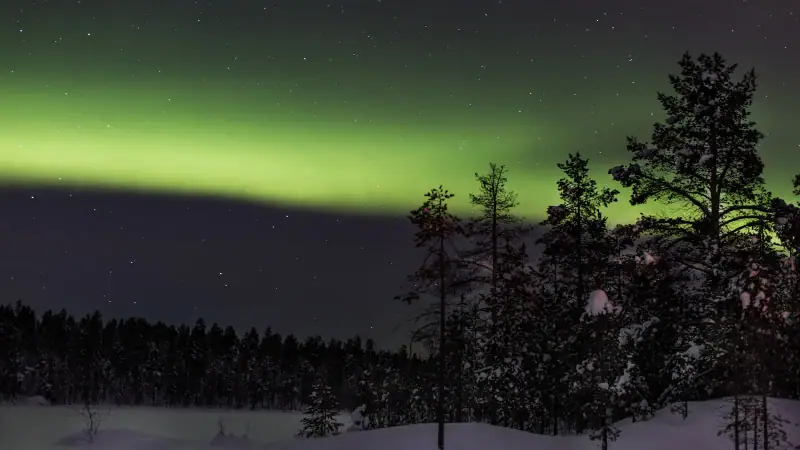
In Finnish Lapland
Saariselkä / Kakslauttanen: the Saariselkä region (68°N) is Finland’s most renowned place for the aurora. No light pollution, frequently clear skies, an open horizon over the tundra.
Inari: on the shores of Lake Inari, the aurora reflects in the dark waters of the lake (or on the ice in winter) for a double show.
Rovaniemi (surroundings): 10-15 km (6-9 mi) from the town center, open spots let you watch the aurora without the town’s light pollution.
In Norwegian Lapland
Alta: Alta is statistically one of the towns in Europe with the most aurora-friendly nights. Located inland (less cloudy than Tromsø), it is ideally positioned.
Tromsø: the city itself pollutes the sky, but local guides take tourists 50-100 km (31-62 mi) to clear-sky spots in real time.
Senja: the island of Senja, 2 hours from Tromsø, is one of Norway’s most photogenic spots: spectacular fjords + aurora.
In Swedish Lapland
Abisko (national park): Abisko is statistically the clearest place in Europe in winter, thanks to the microclimate created by Lake Torneträsk. The Aurora Sky Station, a chairlift going up to 900 m (2,950 ft), offers a clear view above the clouds.
How to watch the northern lights
On your own
If you have a car, you can chase the aurora yourself. Here is how:
- Download the apps: Aurora Service, Space Weather, Weather Underground (or equivalents; check availability)
- Check the KP index: wait for a KP of 3 or more
- Check the weather: look for clear-sky areas (clear sun icon)
- Move away from lights: 15-20 km (9-12 mi) from a town is enough
- Wait: the aurora can appear at any time between 6 pm and 4 am
- Dress warmly: you may wait outside for 2-3 hours
With a guide
Guided excursions (by minibus, snowmobile or on foot) have several advantages:
- The guide adapts the route in real time to the weather
- They can cover 100-200 km (62-124 mi) in the night to find a clear sky
- They explain the phenomenon and help you photograph it
- Equipment is supplied (suits, boots)
- Hot tea, a light meal and a friendly atmosphere included
Duration: generally 2 to 4 hours, often from 9 pm to 1 am. Price: from about €60 (~$70), and often €100 to €150 per person (~$115-175) depending on the package and place (check rates with operators).
Photographing the northern lights
With a DSLR or mirrorless camera
Recommended settings:
- Manual mode (M)
- ISO: 800-3200 (start at 1600)
- Aperture: f/2.8 or the widest possible
- Shutter speed: 2 to 15 seconds (adjust to intensity)
- Focus: infinity (∞) or manual on the stars
- Stabilization: a tripod is essential
- Format: RAW for post-processing
With a smartphone
Recent smartphones give excellent results in night mode. iPhone Pro, Samsung Galaxy S and Google Pixel deliver impressive results.
- Turn on automatic night mode
- Rest the phone on a stable surface or a mini tripod
- Do not move during the shot
Pro tip: the camera often sees better than the naked eye. Even if the aurora looks faint to the eye, a long-exposure photo can reveal intense colors.
The aurora igloo experience
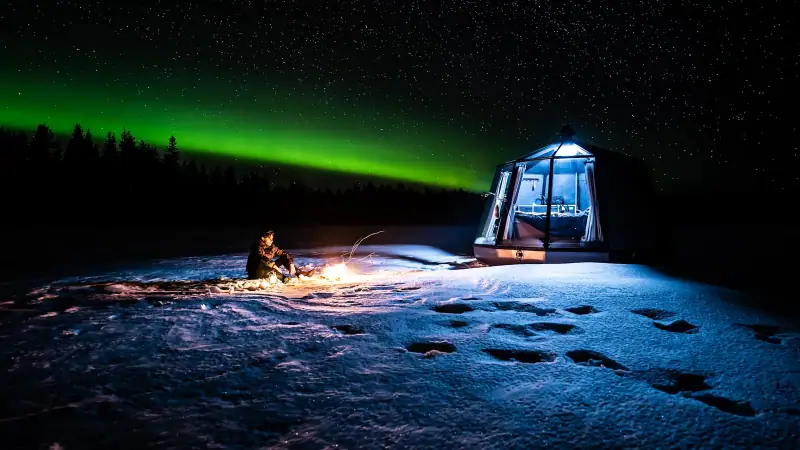
To experience the magic of the aurora from your bed, glass igloo accommodations are the ideal solution. Sleep in a comfortable bed while watching the aurora dance above you. See our guide to igloo hotels in Lapland.
Northern lights accommodation
Glass cabins and igloos to fall asleep under the aurora.
Practical tips
Plan several nights. With a single night, you depend entirely on the weather. With 4 to 7 nights, your chances of seeing at least one aurora exceed 70-80%.
Stay up after midnight. Auroras are more frequent around midnight (local time). The best auroras often occur between 11 pm and 2 am.
Do not overload your schedule. If you have a day packed with activities, you will be too tired to wait for the aurora in the evening. Keep a few evenings free.
Dress extremely warm. Waiting outside at -20 °C (-4 °F) for 2-3 hours is cold. Mittens, balaclava, extreme-cold boots and a heated suit are essential.
Put down your phone. Take time to simply watch the aurora dance, without trying to photograph everything. This show is experienced with the eyes and the heart, not only through a screen.
The northern lights are among those experiences that go beyond anything you imagined. You wait for them with the excitement of small children, and when they finally appear, you often stay silent, overwhelmed by something that feels like pure wonder.
Frequently asked questions
Are the northern lights guaranteed in Lapland?
No, the northern lights are never guaranteed because they depend on solar activity and weather conditions. However, in Lapland between September and March, over 4 to 7 consecutive nights, the probability of seeing at least one aurora is estimated at 70-80%. The longer you stay, the better your chances.
Which app should you use to forecast the northern lights?
Common apps include Aurora Service Pro, Space Weather (real-time KP index), My Aurora Forecast and Aurora (based on NASA data); check their availability in the App Store or Play Store. Look for a KP index of 3 or more for good activity in Lapland.
Can you see the northern lights from towns in Lapland?
Sometimes, yes, during very intense auroras (KP 5+). But for the best experience, you need to move away from city lights. At 10-15 km (6-9 mi) from a town like Rovaniemi, the difference is already significant. Local guides know where to go.
What color are the northern lights?
The most common color is green (caused by oxygen at 100-300 km / 62-186 mi altitude). Pink and red auroras (oxygen at higher altitude), blue and violet (nitrogen) and white are less common. Your smartphone camera often captures colors better than the naked eye.
How do you photograph the northern lights with a smartphone?
Use night mode or a manual mode with ISO 800-3200, maximum aperture and a shutter speed of 2-10 seconds. Rest your phone on a tripod or a stable surface. Most smartphones of the last five years (iPhone 13 and later, Samsung S21 and later) give excellent results in automatic night mode.
More Lapland guides
Keep reading
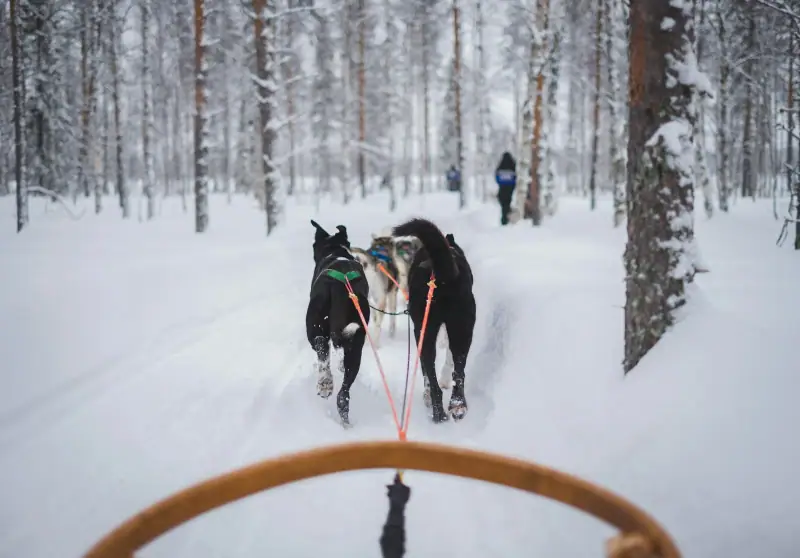
Dog sledding in Lapland: a complete guide to the experience
Dog sledding guide for Lapland: prices, operators, dog breeds and tips for the unforgettable experience of Arctic mushing.
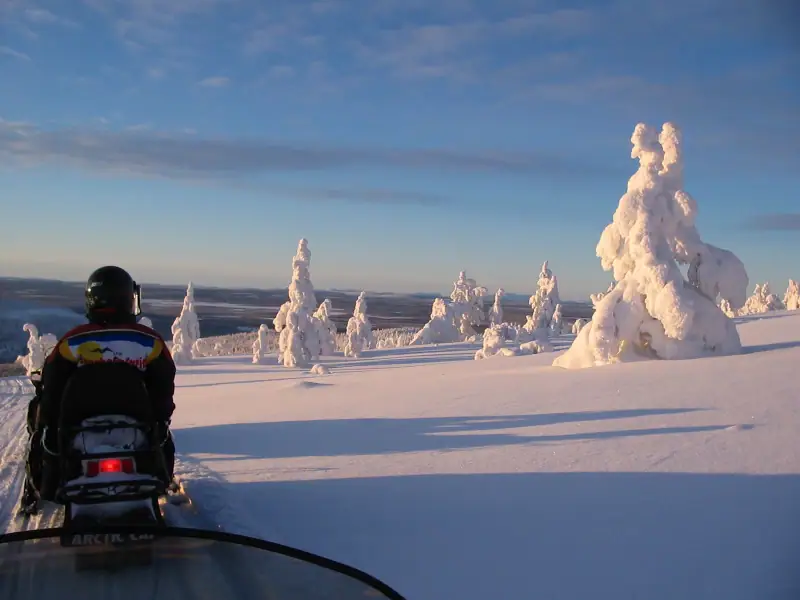
Snowmobiling with kids in Lapland: minimum age, sled and prices
Snowmobiling with children in Lapland: minimum age, sled or passenger seat, height rules, prices by age and alternatives for under-6s.
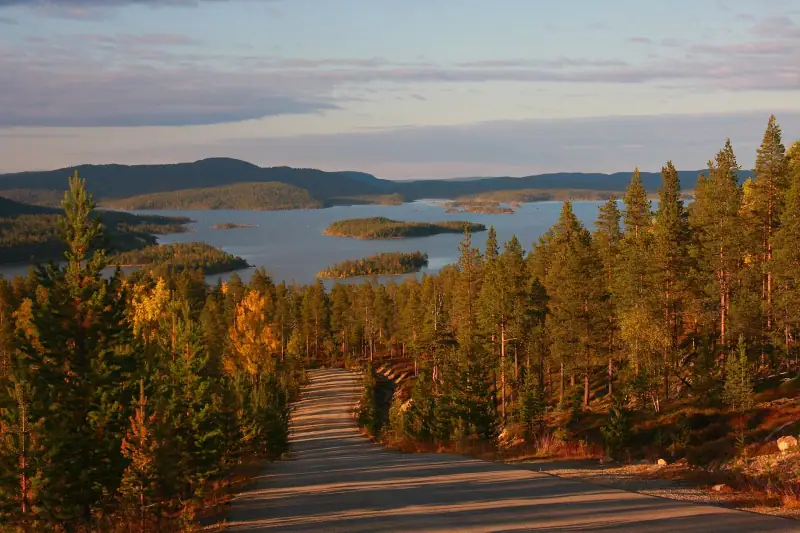
Visiting Inari: a complete guide to the heart of Sámi Lapland
Visiting Inari in Finnish Lapland: Lake Inari, Siida museum, northern lights and Arctic activities. Complete guide to plan your stay.
Ready-made
Lapland itineraries
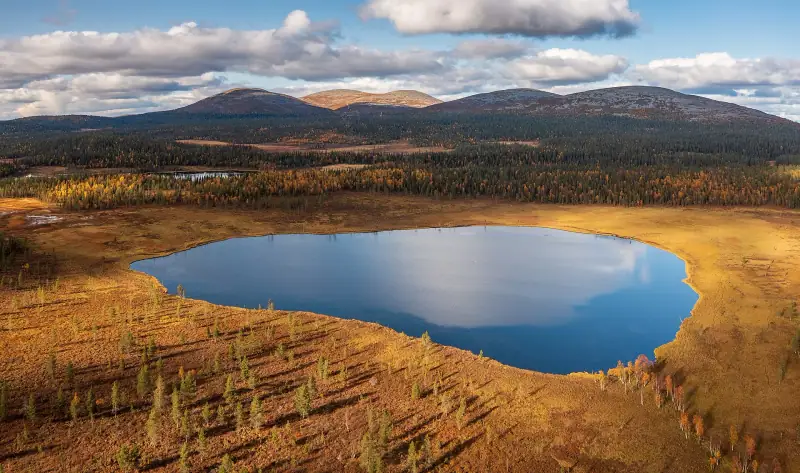
7 days
Lapland in 7 days: a complete one-week itinerary
RovaniemiSaariselkäRovaniemi
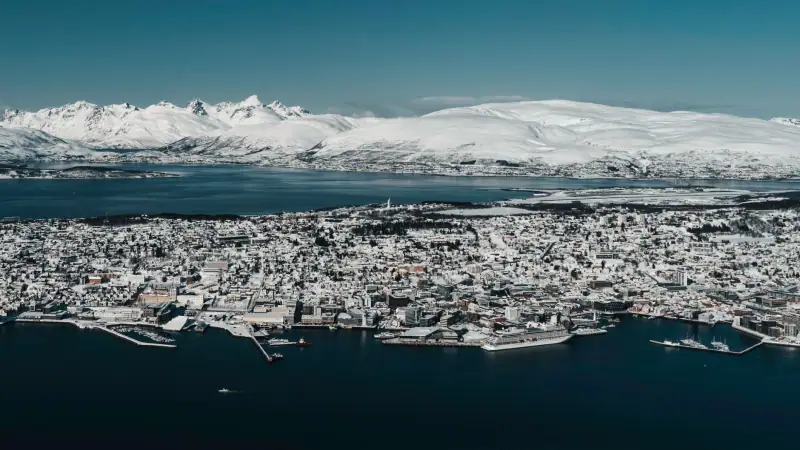
7 days
Rovaniemi and Tromsø in one week: is it doable? A realistic itinerary
RovaniemiKilpisjärviTromsø
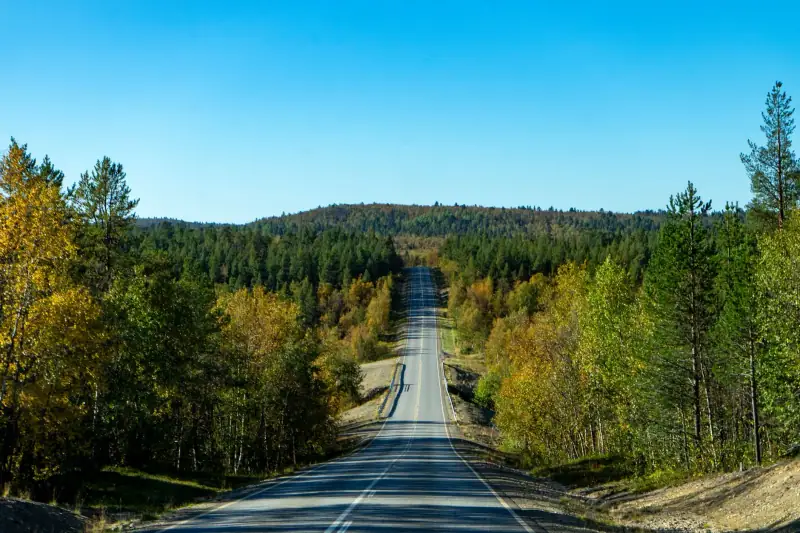
14 days
Lapland road trip: a 10 to 14-day itinerary by car
RovaniemiSaariselkäInariKarasjokAltaTromsøKiruna