Where to stay
Where to Stay in Pakse: Areas and Accommodation for Every Budget
We may earn a commission when you book through links on this page, at no extra cost to you. We don't visit or try the places we cover: we summarize published sources. How we work
In short
- The town center around Dao Heuang market is the most practical base; the Mekong waterfront is calmer and more pleasant for couples.
- Guesthouses start at €8 to 15 (about $9 to $17) for a clean air-conditioned double; mid-range (€25 to 60, about $29 to $70) often includes a pool.
- Plan at least 3 to 4 nights to see Wat Phou, the Bolaven Plateau and the 4,000 Islands; 5 to 6 nights is more comfortable.
- The airport (PKZ) is 3 to 4 km (2 to 2.5 mi) from the center; a tuk-tuk to the airport is quoted at $5 to $10.
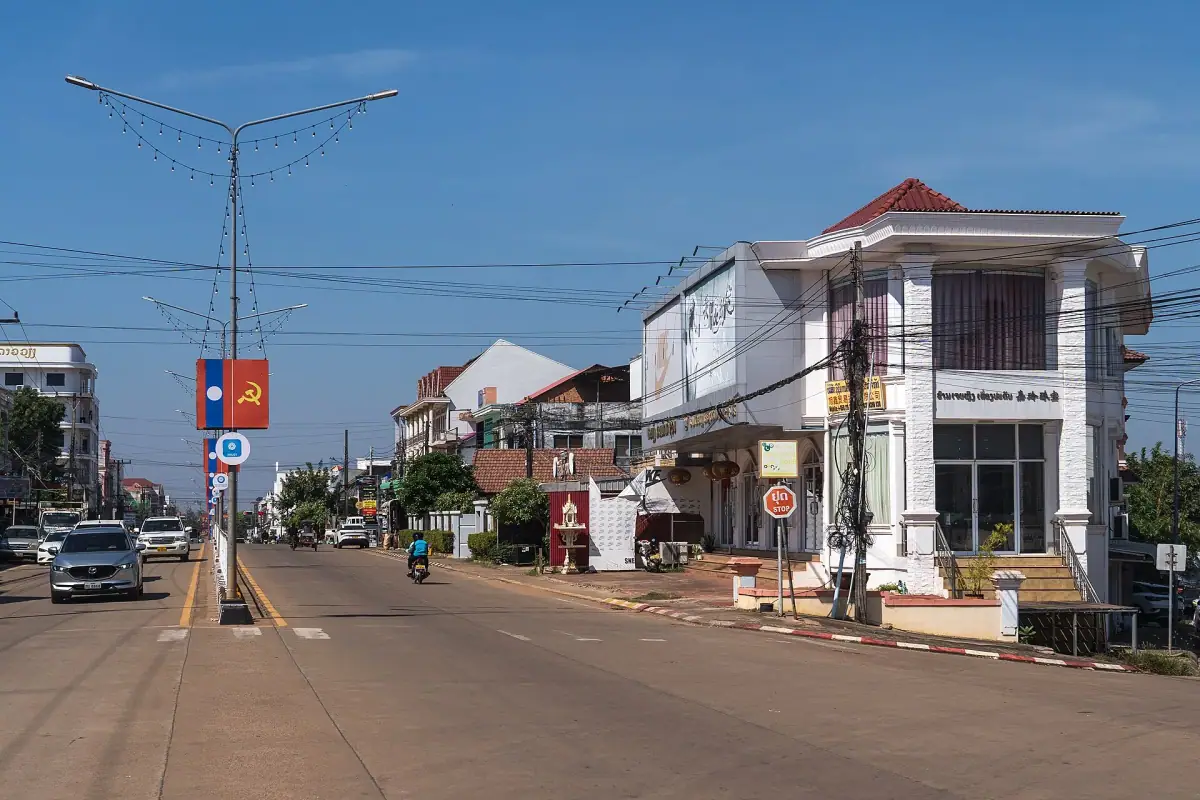
Pakse is not a postcard town. The capital of Champasak province, perched at the confluence of the Mekong and the Se Don, works first for its residents: markets buzzing from dawn, shopping avenues, motorbikes zigzagging between fruit stalls and travel agencies. But it is precisely this authenticity that makes Pakse a great base for exploring southern Laos: Wat Phou, the Bolaven Plateau, the 4,000 Islands. Choosing your lodging well here gives you a comfortable starting point for days of intense exploring.
Pakse’s neighborhoods
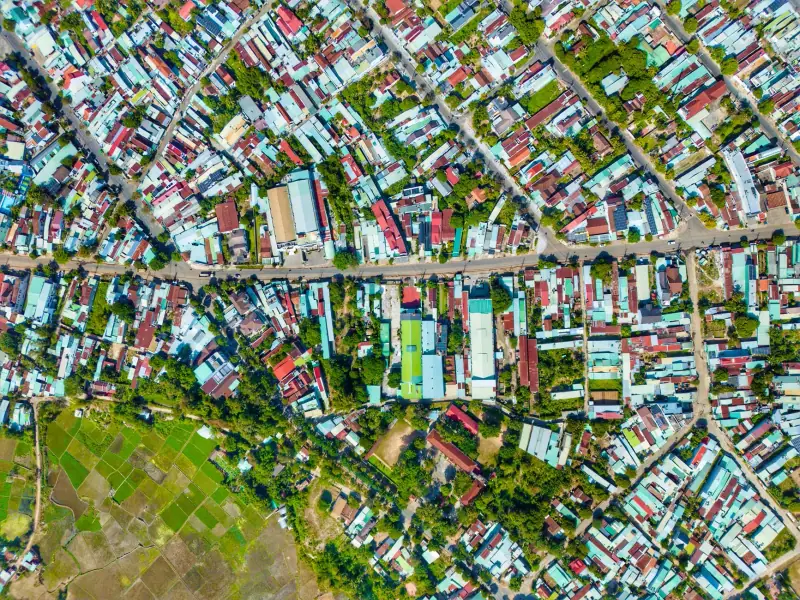
Pakse is a mid-sized town and easy to get to grips with. Its different neighborhoods each have their own character and suit different types of travelers.
The town center and market area
Pakse’s commercial heart is organized around Dao Heuang market, one of the largest covered markets in the country, and the cross streets that extend north and east. Most budget guesthouses and mid-range hotels are concentrated here, along with the motorbike and scooter rental agencies you need to explore the surroundings.
Advantages: maximum convenience, many street food stalls, travel agencies close at hand, easy access to transport.
Atmosphere: lively by day, calmer in the evening. The night market sets up along the Mekong in the evening.
Who it suits: travelers who value convenience and want to arrange excursions to Wat Phou, the Bolavens or the 4,000 Islands easily.
The Mekong waterfront
The quay running along the Mekong is the most pleasant address in Pakse. A few hotels and guesthouses have positioned themselves facing the river, with a view of the Thai bank opposite and spectacular sunsets over the water. In the evening, street vendors and pop-up restaurants set up along the waterfront.
Advantages: Mekong view, relaxed atmosphere, a pleasant evening breeze, ideal for riverside walks.
Minor drawback: slightly off-center from the lively downtown (10 minutes on foot or 5 minutes by tuk-tuk).
Who it suits: couples and travelers who want a bit of serenity after days of exploring.
The Route 13 and bus area
At the northern entrance to town, along Route 13, you find most of the bus and minivan terminals. The area has little charm but is practical if you arrive late in the evening or leave early in the morning. A few budget guesthouses have set up there for travelers in transit.
Advantages: a step from the bus departures for Vientiane, Don Det and Savannakhet.
Atmosphere: utilitarian. Choose it only for logistical convenience.
The residential area (south of the center)
South of Dao Heuang market, quieter residential streets stretch out, with a few new boutique hotels that have opened in recent years. This developing area offers lodging in a greener setting, 15 to 20 minutes on foot from the center.
Accommodation by budget in Pakse
Budget (€8 to 20 a night, about $9 to $23)
Pakse offers excellent value at the budget end. For €8 to 15 (about $9 to $17) you find clean double rooms with air conditioning and a private bathroom in well-kept guesthouses in the town center. Most include Wi-Fi and a basic breakfast on request.
What you get at this budget:
- A double room with air conditioning
- A private bathroom (hot water varies by place)
- Working Wi-Fi
- Access to a shared terrace or a guesthouse cafe
- Staff available to arrange motorbike rentals and excursions
The streets parallel to Dao Heuang market have many budget options. It is common to find spotless, welcoming rooms run by Lao families who know the surroundings well.
Mid-range (€25 to 60 a night, about $29 to $70)
This is the best-represented range in Pakse and the one with the best comfort for the price. For €30 to 55 (about $35 to $64) you get places with a pool, a restaurant and spacious rooms with air conditioning, a minibar and comfortable bedding.
The Champasak Palace Hotel is Pakse’s best-known historic address. Housed in the former residence of the Prince of Champasak, a white Khmer-style colonial building overlooking the Mekong, the hotel blends local history with contemporary comfort. The pool with a Mekong view and the panoramic terrace make it one of the most photographed places to stay in southern Laos.
For mid-range lodging on the river, several small family hotels have settled on the waterfront and offer simple but pleasant rooms at reasonable rates, with a view of the Mekong or the inner gardens.
Activities around Pakse
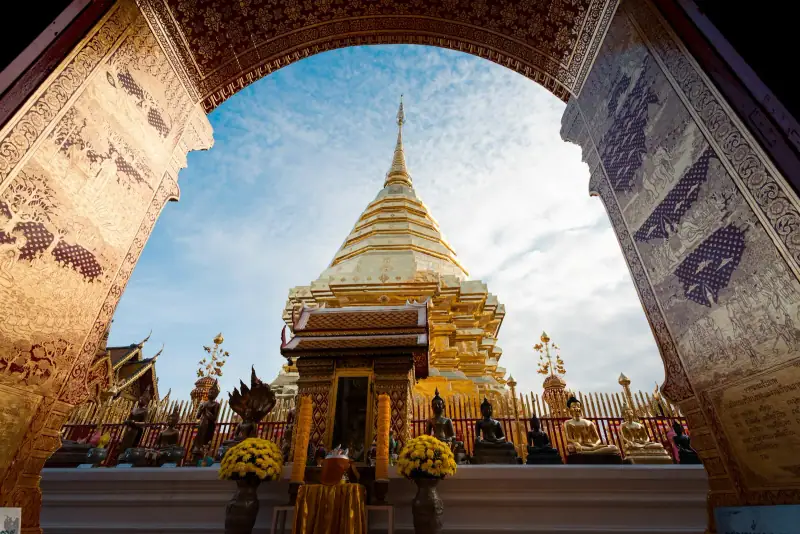
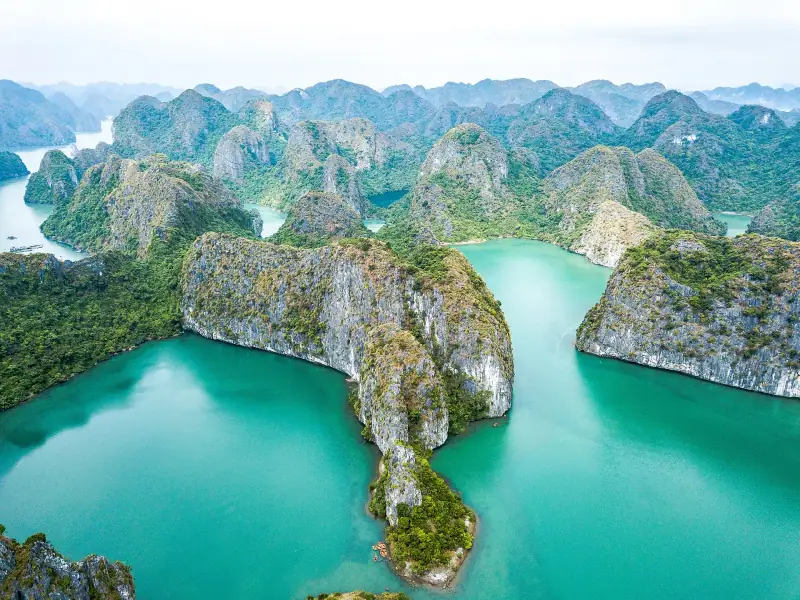
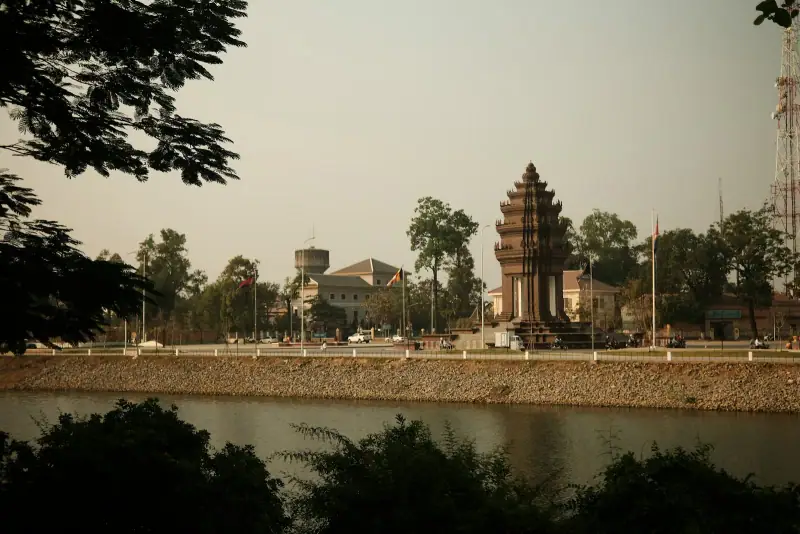
Wat Phou, the Bolaven Plateau, dugout canoe on the Mekong.
Luxury (€70 to 150 a night, about $80 to $175)
The luxury segment in Pakse remains modest compared with Luang Prabang or Vientiane, but a few places stand out. The best addresses generally combine a pool, spa, fine-dining restaurant and attentive service in a carefully designed setting, often a restored colonial house or a contemporary villa with a tropical garden.
At this budget you can also consider staying in Champasak itself (a village about 40 km / 25 mi away), where a few intimate lodges offer nights in a much more rural setting on the Mekong, a few kilometers from Wat Phou. The experience is different: more immersive, more authentic, but with less comfort.
The Champasak Palace Hotel: the landmark address
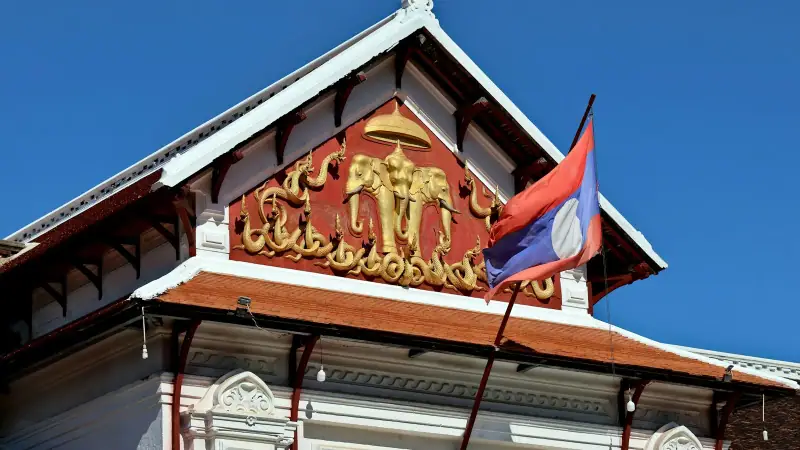
It deserves a closer look. The Champasak Palace Hotel is arguably the most distinctive hotel in southern Laos. Built in the 1960s as a royal residence for Prince Boun Oum of Champasak, this massive white building with Khmer-inspired architecture overlooks the Mekong from a slight rise.
After the Lao People’s Democratic Republic was established in 1975, the residence was placed under state control and used for Party meetings and to host dignitaries. It was only in 1995, after a negotiation with a Thai company, that it was converted into a hotel, gradually modernized while keeping its unique architectural character. Today it is the address every traveler photographs on arriving in Pakse.
What makes it unique:
- The history: sleeping in a former Khmer-style royal residence
- The view: a panorama of the Mekong and the Thai horizon from the terrace
- The pool: one of the largest in Pakse, with a river view
- The location: easy to reach from the airport and the town center
- The price: relatively affordable for a hotel of this historic standing
Note: upkeep is uneven. Some travelers report spotless rooms, others common areas in need of renovation. Read recent reviews before you book.
Getting around from your accommodation in Pakse
Pakse is a functional town, and well-located lodging makes it easy to arrange all your excursions.
Tuk-tuk: everywhere in the center, they are the most used means of transport for short trips. Always negotiate the price in advance: $1 to $3 for a trip in town, $5 to $10 for the airport.
Motorbike / scooter rental: essential for the Bolaven Plateau and Wat Phou. Many agencies in the center rent automatic or semi-automatic bikes at 80,000 to 130,000 kip a day (about €4 to 6, or $5 to $7). Your guesthouse can often arrange the rental directly.
Car rental with driver: for families or groups, or if you prefer not to drive the Bolavens’ mountain roads. Travel agencies in the center offer private-vehicle tours to Wat Phou, the plateau and the 4,000 Islands.
Buses and minivans: from the Route 13 terminals north of town, regular departures reach Vientiane (10 to 12 hours by overnight VIP bus), Savannakhet (4.5 to 5 hours), Don Det / 4,000 Islands (2.5 to 3 hours) and the Cambodian border.
Domestic flights: Pakse airport (PKZ) receives Lao Airlines flights from Vientiane (about 1 hour); connections with Bangkok vary by season, so check schedules with the airlines. The airport is 3 to 4 km (2 to 2.5 mi) from the town center.
Practical tips for your stay in Pakse
The heat: Pakse is in southern Laos, a hotter and drier climate zone than the north. Between March and May, temperatures can reach 38 to 40 °C (100 to 104 °F). Make sure your room has working air conditioning, and plan outings early in the morning and late in the afternoon.
Money: several ATMs are available in the town center (BCEL in particular, and other Lao banks). Budget guesthouses sometimes accept Thai baht or US dollars, but the Lao kip remains the official local currency.
Best time: November to February is ideal: mild temperatures (25 to 30 °C / 77 to 86 °F), clear skies, and roads passable for the Bolavens. Avoid June to September if you plan to take mountain roads, as rain can make them slippery.
Ideal length of stay: plan at least 3 to 4 nights in Pakse if you want to visit Wat Phou, spend a day on the Bolaven Plateau and make the round trip to the 4,000 Islands. Five to six nights is more comfortable if you want time to explore each site without rushing.
Online booking: the big booking platforms (Booking.com, Agoda) cover Pakse well. For very cheap guesthouses, booking directly on the spot is sometimes still the best option, since you can see the room before paying.
Pakse does not have the luminous grace of Luang Prabang or the buzz of Vang Vieng, but it has something rarer in Southeast Asia: an authenticity that does not put on a show for tourists. Settling in for a few days in this southern town means choosing the Laos that does not pose, the one that lives its life at its own quiet pace, between the passing river and the beckoning mountains.
To learn more about what Pakse and its surroundings have to offer, see the complete guide to Pakse. And if you plan to go down to the southern islands, the article on the 4,000 Islands gives all the details to organize that detour. Finally, to compare budget lodging across Laos, the guide to cheap hotels in Laos will be useful.
Frequently asked questions
What is the best area to stay in Pakse?
The town center around Dao Heuang market and the shopping streets is the most practical choice for travelers: everything is within tuk-tuk reach, motorbike rental agencies are plentiful and there is a wide choice of lodging. For a calmer, more charming atmosphere, the Mekong riverbank (the waterfront) is ideal.
Is Pakse expensive for accommodation?
No, Pakse remains very affordable. Guesthouses start at €8 to 15 (about $9 to $17) a night for a clean double with air conditioning. Mid-range (€30 to 60, about $35 to $70) offers very good comfort. Even the city's best-known hotel, the Champasak Palace Hotel, remains affordable by Western standards.
Can you find luxury accommodation in Pakse?
The luxury offer in Pakse is limited but a few upscale places exist. The Champasak Palace Hotel, housed in the former residence of the Prince of Champasak, is the most historic choice. Several boutique hotels with pools have appeared in recent years to serve a more demanding clientele.
Where should you stay to visit the Bolaven Plateau from Pakse?
Pakse is the ideal base for exploring the Bolaven Plateau. You can sleep in town and set out each morning by motorbike for a day on the plateau (about 50 km / 31 mi from Pakse to Paksong). Some travelers prefer to spend a night in Paksong or on the plateau, but lodging there is more basic. For comfort and convenience, stay in Pakse.
Is it better to stay in Pakse or Champasak to visit Wat Phou?
Both options make sense. Sleeping in Champasak (a village about 40 km / 25 mi from Pakse) lets you reach Wat Phou early in the morning before the groups and live in a bucolic setting on the Mekong. But Champasak has only a handful of very basic guesthouses. If comfort matters to you, sleep in Pakse and leave early in the morning for Wat Phou.
How do you get from the airport to the center of Pakse?
Pakse airport is about 3 km (2 mi) north or northwest of the town center. A tuk-tuk or taxi takes you to the center in 10 to 15 minutes for $2 to $5 depending on the negotiation. Some hotels offer a shuttle on request. There is no regular public transport between the airport and the center.
Do you need to book accommodation in Pakse in advance?
In low season (May to October), booking ahead is not essential. In high season (November to February) and during the Wat Phou Festival (February), it is better to book several days ahead, especially for mid-range lodging and the best guesthouses on the Mekong waterfront.
More Laos guides
Keep reading
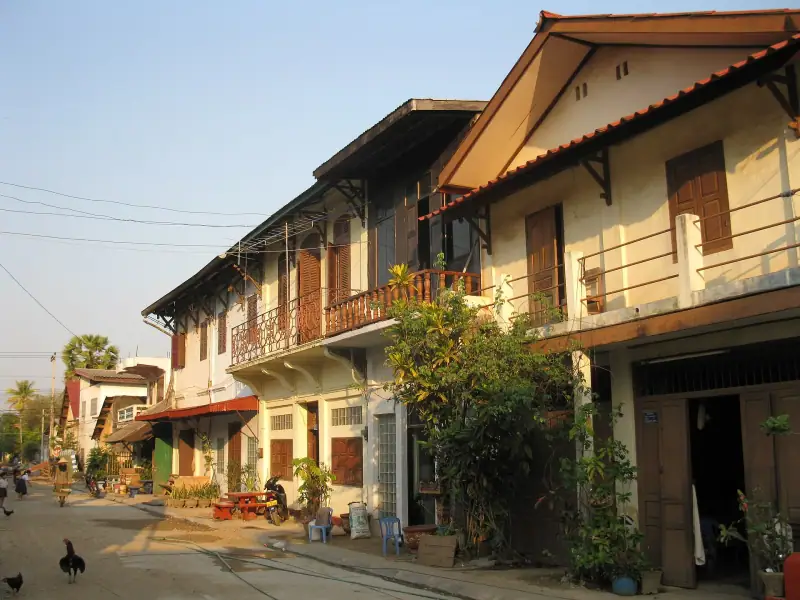
Where to Stay in Thakhek: Accommodation Guide for Every Budget
Where to stay in Thakhek: colonial guesthouses, Mekong riverside and lodging for the Loop. Areas, budgets and tips for central Laos.
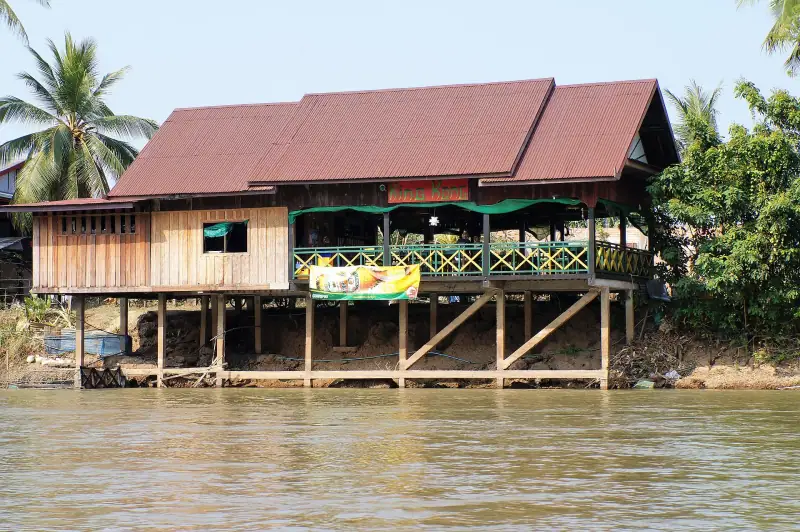
Where to Stay in the 4,000 Islands (Don Det): Accommodation Guide for Every Budget
Where to stay in Laos's 4,000 Islands: Don Det, Don Khon and Don Khong compared. Guesthouses, bungalows and eco-lodges on the Mekong, budgets and tips.
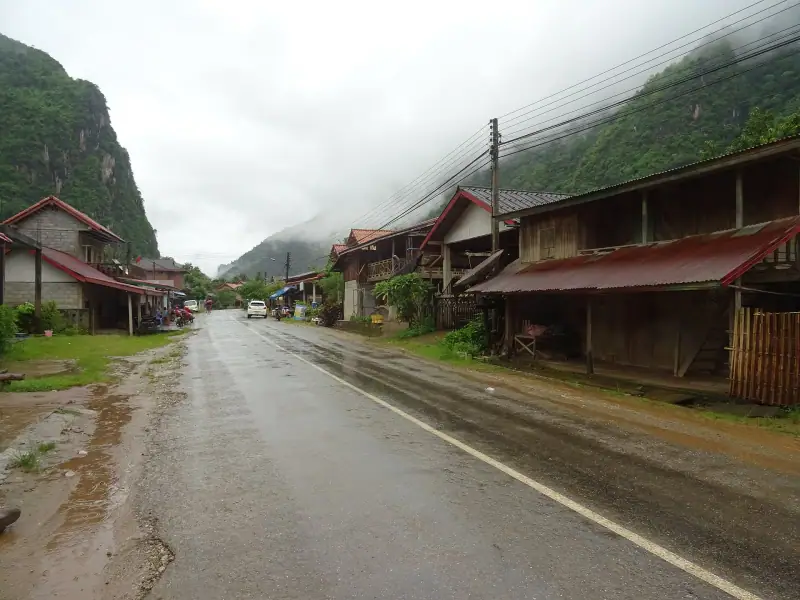
Where to Stay in Nong Khiaw: Accommodation Guide for Every Budget
Where to stay in Nong Khiaw: riverside guesthouses and eco-lodges. The two banks compared, budgets and tips for northern Laos.
Ready-made
Laos itineraries
7 days
Laos in 7 Days: A Complete Itinerary for an Unforgettable Week
VientianeVang ViengLuang Prabang
Can be adapted in the planner
3 days
The Thakhek Loop: Complete Guide to Laos's Motorbike Circuit
Kong LorLak Sao
10 days
Laos in 10 Days Without a Car: A Realistic Train and Bus Itinerary
VientianeVang ViengLuang PrabangNong Khiaw