Where to stay
Where to Stay in the 4,000 Islands (Don Det): Accommodation Guide for Every Budget
We may earn a commission when you book through links on this page, at no extra cost to you. We don't visit or try the places we cover: we summarize published sources. How we work
In short
- Don Det is the busiest, cheapest island with a backpacker feel; Don Khon is calmer and a bit pricier; Don Khong is the large, local, least touristy island.
- Expect $5 to $15 a night for basic guesthouses, $15 to $40 for riverside bungalows, and $40 to $100 for the few upscale eco-lodges, mostly on Don Khon.
- There is no ATM on Don Det or Don Khon: withdraw cash in Pakse first. Kip and US dollars are both accepted almost everywhere.
- High season is November to March; book 3 to 5 days ahead for the best riverside bungalows. From May to October prices drop 20 to 30%.
Si Phan Don, literally “four thousand islands” in Lao, is the name the Lao give to this extraordinary region of southern Laos where the Mekong, reaching about 10 km (6 mi) wide in the rainy season, breaks up into an archipelago of hundreds of islets, sandbanks and channels. In this maze of greenery and currents, three islands hold most of the tourist accommodation: Don Det, Don Khon and Don Khong.
Choosing where to sleep in the 4,000 Islands means first choosing between these three islands, which have very different atmospheres. It also means choosing a pace: this is a part of Laos that has made an art of the hammock, the Mekong sunset and the day with no fixed plan. This guide helps you choose according to your budget, your expectations and the length of your stay.
Don Det, Don Khon or Don Khong: which island to stay on?
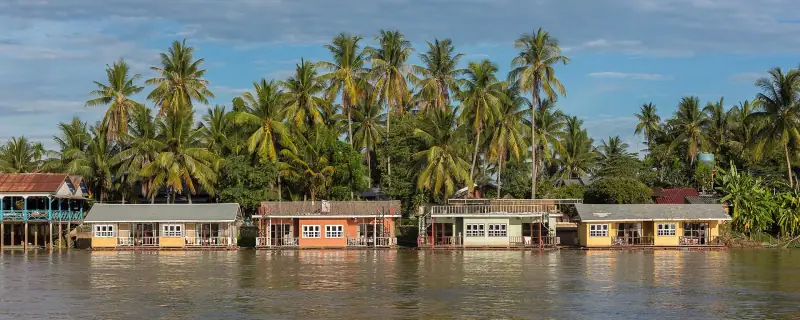
Before comparing types of accommodation and price ranges, it helps to understand the basic differences between the three main islands. This choice often matters more for the trip than your budget level does.
Don Det: the backpacker island
Don Det is the busiest of the 4,000 Islands and has the great majority of guesthouses, bungalows and cafes. It has developed a full budget-tourism infrastructure: dozens of family-run places line both banks of the island, most offering bamboo or wooden bungalows right over the Mekong.
The mood is relaxed, international and young. The “sunset bars” along the west bank, the cafes with hammocks facing the river, and the ease of renting a bike and circling the island in an hour give Don Det a laid-back end-of-the-world feel. The west bank of Don Det, facing the sunset, is generally considered the most sought-after spot.
Who it suits: solo travelers, couples on a small budget, backpackers, and anyone who wants a sociable atmosphere and to meet other travelers.
Don Khon: calm and quality
Don Khon is linked to Don Det by a bridge built in the French colonial era, a walk of a few minutes. Yet the atmosphere changes completely: Don Khon is quieter, has fewer travelers, and its accommodation is generally more spacious and better finished.
Don Khon is where you find access to the Li Phi falls (Tat Somphamit), one of the region’s key sights. The Irrawaddy dolphin viewing points, once a flagship attraction of Don Khon, no longer exist: the last individual of the Lao Mekong population died in 2022, and dolphin watching is no longer possible in the 4,000 Islands. Don Khon’s lodgings focus on blending into the landscape and on quality materials: individual bungalows overlooking the arms of the Mekong, shaded terraces and carefully prepared local food.
Who it suits: couples, travelers looking for peace and quiet, nature lovers, photographers, and anyone staying 3 nights or more.
Book your accommodation in the 4,000 Islands
Compare bungalows, guesthouses and eco-lodges on Don Det and Don Khon with free cancellation.
Don Khong: the big local island
Don Khong is the largest island in the region but also the least touristy of the three. It is mostly home to Lao families and has only a handful of places to stay: a few modest guesthouses and small roadside hotels. Staying here is above all an immersion in rural Laos, far from Don Det’s backpacker economy.
Don Khong is not linked to Don Det or Don Khon by road; you need a separate boat from Ban Nakasong or Muang Khong. Unless you have a specific reason to stay on Don Khong (cycling, community tourism, maximum quiet), most travelers prefer Don Det or Don Khon as a base.
Who it suits: travelers seeking full cultural immersion, cycle tourists, and anyone avoiding tourist crowds.
Accommodation by budget in the 4,000 Islands
Tight budget: $5 to $15 a night
The 4,000 Islands, and Don Det in particular, are known on the Southeast Asia travel circuit for their exceptionally cheap lodging. At this price you get family guesthouses with a simple room or a dorm: a bed with a mosquito net, a fan, and a bathroom that is often shared. A river view is not guaranteed, but some places right on the bank offer very basic bungalows at this price.
What makes this budget range worth it in the 4,000 Islands is less the lodging itself than the setting: the river a step away, a hammock on the shared terrace, and the chance to rent a bike for $2 a day to ride around the island. The lodging becomes a base, and the real action is outdoors.
What to expect: a functional room with a bed, mosquito net and fan, a shared or basic private bathroom, a family welcome, and a spot often close to the water.
Tips for this budget:
- Arrive in the morning to have a choice of several places; online booking is rare for these small businesses
- Check the condition of the mosquito net before accepting the room
- Pick the west bank of Don Det for sunsets at no extra cost
- Ask whether coffee or breakfast is included or available there
Mid-range: $15 to $40 a night
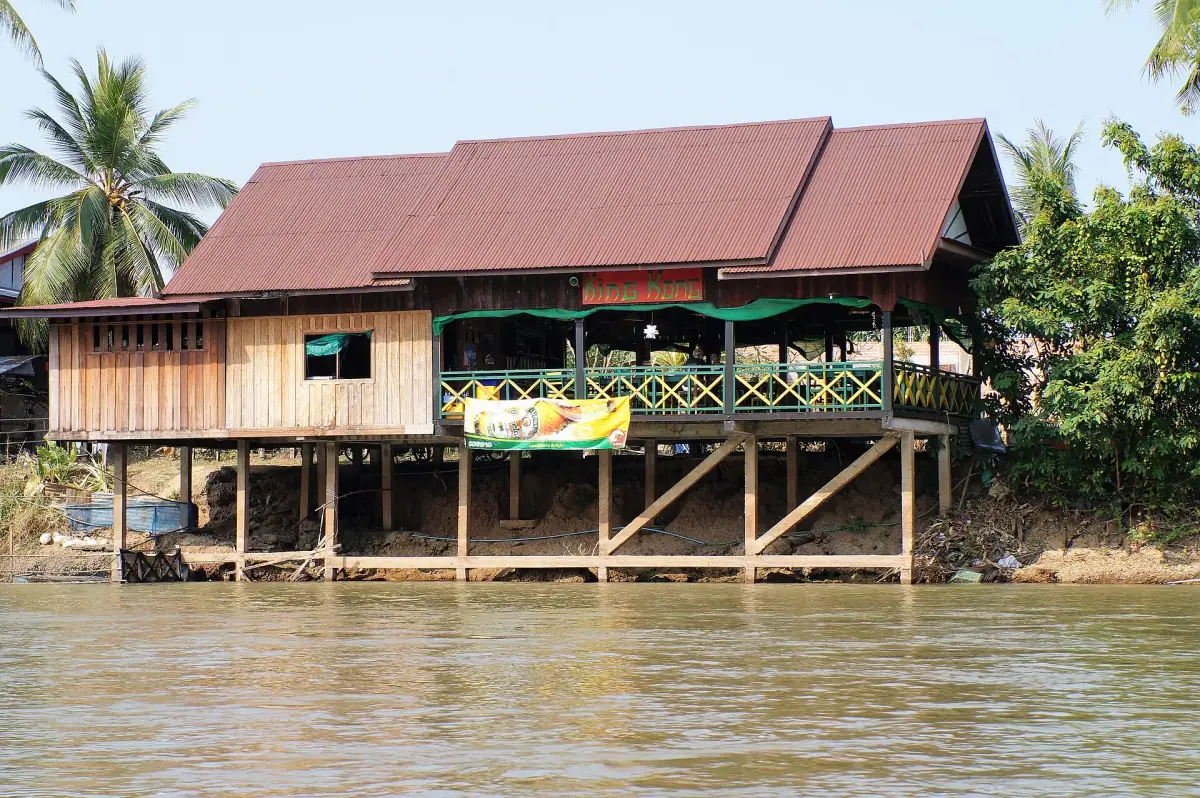
This is the segment that offers the best value in the 4,000 Islands. For $15 to $40 you get wooden or bamboo bungalows with a private terrace, an en-suite bathroom, hot or warm water and, most often, a direct view of the Mekong. This is the typical stilt bungalow over the river, the classic postcard of the 4,000 Islands.
At this budget, Don Khon offers particularly interesting options: roomier bungalows, often surrounded by dense vegetation, with a higher level of comfort than Don Det’s guesthouses. Mid-range places generally also have an on-site restaurant serving decent local food and a few Western dishes.
What to expect: a private bungalow with a terrace or balcony, a river view in many cases, a private bathroom, hot water, a fan or air conditioning, limited Wi-Fi, and a restaurant or cafe.
Activities in the 4,000 Islands
Li Phi falls, kayak trips on the Mekong, sunsets and guided visits of the 4,000 Islands.
Upscale: $40 to $100 a night
The upscale offer in the 4,000 Islands is limited but it exists, mainly on Don Khon. Places in this range offer large individual bungalows, often in solid wood and bamboo with care given to design and local materials, panoramic terraces over the Mekong or its side channels, quality bedding and a restaurant serving more elaborate local cooking.
What sets upscale lodging in the 4,000 Islands apart from the luxury found in Southeast Asia’s beach resorts is its resolutely rustic character and how well it blends into the landscape: no pool, no spa, no unlimited internet, but carefully chosen materials, attentive service, and spots that feel like the heart of the Lao river jungle.
What to expect: a large private bungalow with a terrace over the river, local wood furniture, comfortable bedding, hot water, a good restaurant on the premises, personal service, and a location that is often secluded and quiet.
Where to stay on Don Det
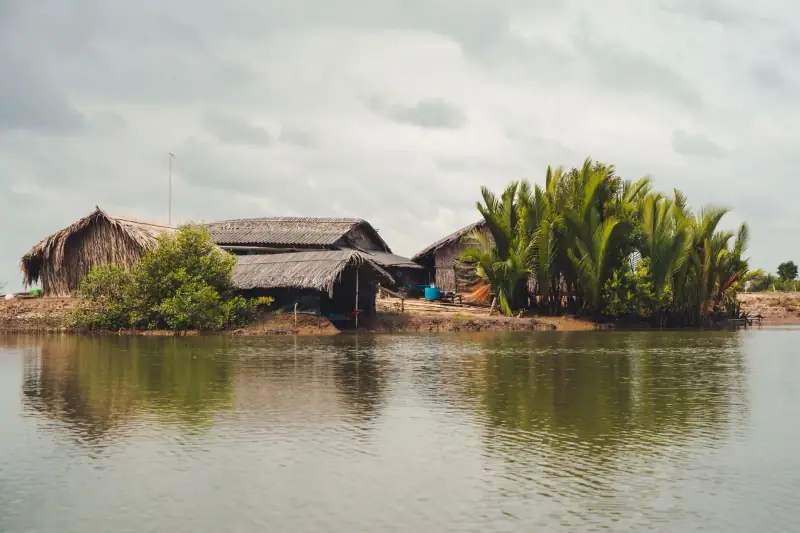
The west bank: sunsets and sunset-bar atmosphere
The west bank of Don Det faces due west over the Mekong, which makes it the best area to watch sunsets from your terrace or from one of the cafes that have taken over this shore. It is also the busiest bank, where the “sunset bars” cluster (a few plastic chairs and an acoustic guitar once evening falls), along with cafes serving fresh fruit juice and shakes, and the guesthouses in highest demand in high season.
For travelers who want to enjoy Don Det’s social side to the full, meeting other travelers and spending quiet evenings over a Beerlao by the river, the west bank is the right choice.
The east bank: quiet and river connection
The east bank of Don Det, facing the arm of the Mekong that separates it from Don Khon, is a little less busy than the west bank. You find family guesthouses at the water’s edge, more discreet and sometimes cheaper. The atmosphere is more local, less geared to backpacker socializing, and the landscape on this side, with the French colonial bridge visible in the distance and Don Khon’s vegetation opposite, is different but just as beautiful.
Tip: if you stay on the east bank of Don Det, you can easily cross the bridge to Don Khon (a few minutes on foot or by bike) to reach the Li Phi falls and the ruins of the French colonial railway station.
Flights to Laos
Compare flights to Vientiane or Pakse to reach southern Laos easily.
When to book and how to plan your arrival
Getting to the 4,000 Islands from Pakse
Almost all travelers reach the 4,000 Islands from Pakse, the main city of southern Laos, reachable by plane from Vientiane or Luang Prabang, or by bus from neighboring Vietnam and Cambodia. From Pakse, the trip to the Ban Nakasong landing takes about 3 to 4 hours by shared minibus (only about 2 hours by private car); travel agencies in Pakse sell these tickets easily.
From Ban Nakasong, motorboats cross to Don Det (5 to 10 minutes) or Don Khon. The last boat usually leaves in the late afternoon, so ask your accommodation about times if you arrive late.
Important tip: arrive on the island with enough cash (kip or dollars). There is no ATM on Don Det or Don Khon. Withdraw money in Pakse before you leave.
High season: book riverside spots ahead
From November to March, and especially in December and January, Don Det receives a significant flow of travelers. Bungalows directly on the Mekong on Don Det’s west bank, and Don Khon’s eco-lodges, can be full. Booking 3 to 5 days ahead is recommended for these sought-after spots. For more modest guesthouses, walking in usually remains possible even in high season.
Low season: low prices and quiet islands
From May to October, the rainy season transforms the 4,000 Islands: the Mekong rises, swallowing some sandbanks, and tropical showers water the islands every late afternoon. Accommodation prices drop 20 to 30% compared with high season, and the islands take on a very local feel with few tourists.
It is an excellent time for travelers who like intense greenery, the sound of rain on thatched roofs and meeting local people in a much less crowded setting.
Practical tips for your stay
Electricity and connectivity
Electricity is available on Don Det and Don Khon but outages happen, especially in the evening in some of the smaller guesthouses. A power bank is strongly recommended. Wi-Fi is available in most accommodation but speeds are low, generally 1 to 3 Mbps. For a more reliable connection, a Lao SIM card with a 4G plan (bought in Pakse or Vientiane) works well on the islands. You can also check your carrier’s international plan or use a travel eSIM.
Getting around the islands
The bicycle is the best way to get around the 4,000 Islands. All guesthouses rent them (about $1 to $2 a day). Don Det and Don Khon are small enough to ride around in under an hour, which makes it easy to reach the Li Phi falls, the ruins of the French colonial railway station and the different riverbanks depending on the time of day and your mood.
Motor boats can take you to isolated sandy beaches or little-visited arms of the Mekong; guesthouses generally organize these trips or can point you to local boatmen.
Recommended length of stay
Don Det works by slowing you down: travelers who plan one night often stay two or three. The minimum to really enjoy it, which means visiting the Li Phi falls, riding around both islands and catching at least one sunset over the Mekong, is 2 nights. Travelers looking for deep relaxation and hammock time give it 3 to 5 days.
Vehicle rental in Laos
Rent a car or scooter in Pakse to reach the 4,000 Islands at your own pace.
What the 4,000 Islands offer that no other destination can replace
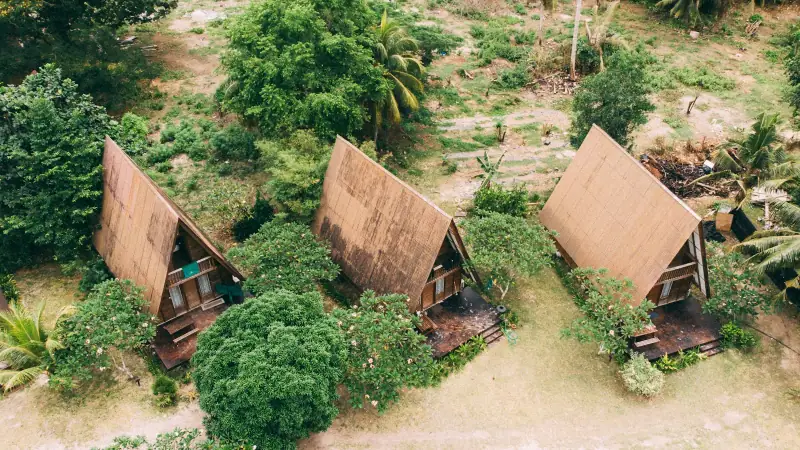
Sleeping in the 4,000 Islands means sleeping in a geography that exists nowhere else in Southeast Asia. At this precise spot in Laos, the Mekong stops looking like an ordinary river and becomes something else: a liquid maze between banks covered in palms and dense vegetation, where fishermen’s dugout canoes glide silently at dawn and where Irrawaddy dolphins once surfaced, a species classed as critically endangered by the IUCN, whose last Lao population disappeared in 2022.
Lodging in the 4,000 Islands is not a hotel in the usual sense. It is a bamboo bungalow with a view of the water, a terrace over the river, a hammock swaying in the evening breeze. The comfort is simple but the location is irreplaceable. That is exactly what makes the 4,000 Islands one of the most memorable stops on a trip to Laos: not the facilities, but the feeling of being perched at the edge of a world apart, where Lao time flows at the pace of the Mekong.
Whether you choose Don Det for its collective energy and shared sunsets, Don Khon for its serenity and intimate eco-lodges, or Don Khong for total cultural immersion far from the tourist circuits, the 4,000 Islands will find a way to keep you longer than planned.
Frequently asked questions
How much does a night in the 4,000 Islands cost?
The 4,000 Islands (Si Phan Don) are among the cheapest destinations in Laos. A dorm bed or basic room in a family guesthouse on Don Det can be negotiated for $5 to $10 a night. A double room with a private bathroom and a fan generally costs $10 to $20. Riverside bungalows with a panoramic terrace run $25 to $50. The limited upscale offer can reach $80 to $100 in the premium eco-lodges of Don Khon.
Don Det or Don Khon: which island should you stay on?
Don Det is the busiest island, with the densest choice of accommodation, the lowest prices and the strongest backpacker atmosphere. Don Khon, a few minutes away across a French colonial bridge, is calmer, slightly more expensive, and has a few better eco-lodges. For sociable travelers on a budget, choose Don Det. For quiet and more comfortable lodging, choose Don Khon.
Do you need to book ahead to stay in the 4,000 Islands?
In low season (May to October), walking in is almost always possible: the islands are quiet and guesthouses are rarely full. In high season (November to March), especially over the Christmas and February holidays, it is wise to book 3 to 5 days ahead for the best-placed riverside bungalows. Lao New Year (Pi Mai, mid-April) can also be busier.
Can you pay by card in the 4,000 Islands?
No, the 4,000 Islands run almost entirely on cash. There is no ATM on Don Det or Don Khon. Withdraw cash in Pakse before taking the boat, and bring enough to cover your whole stay (accommodation, meals, bike rental, entry to sights). Lao kip and US dollars are both accepted in nearly all places.
What is the best time of year to stay in the 4,000 Islands?
High season runs from November to March: clear skies, pleasant heat (28 to 33 °C / 82 to 91 °F) and a lower Mekong that exposes sandbanks and river channels to explore. The rainy season (May to October) brings daily showers but turns the islands green, with very few tourists. Avoid April: the heat is intense (38 to 40 °C / 100 to 104 °F) and the Mekong starts to rise.
How do you get to the 4,000 Islands from Pakse?
From Pakse, shared minibuses and transfers organized by travel agencies reach the village of Ban Nakasong (the main landing for Don Det and Don Khon) in about 3 to 4 hours by shared minibus (2 hours by private car). The boat crossing from Ban Nakasong to Don Det takes 5 to 10 minutes. Some agencies offer direct transfers with pickup at your accommodation in Pakse.
Are there electricity and Wi-Fi on Don Det?
Electricity is available on Don Det and Don Khon, but some places have evening or night outages. Wi-Fi is available in most guesthouses and cafes, but speeds are usually limited to 1 to 3 Mbps. For a more reliable connection, a Lao SIM card with a 4G plan (available in Pakse) works well on Don Det. Do not rely on a stable connection for remote work.
More Laos guides
Keep reading
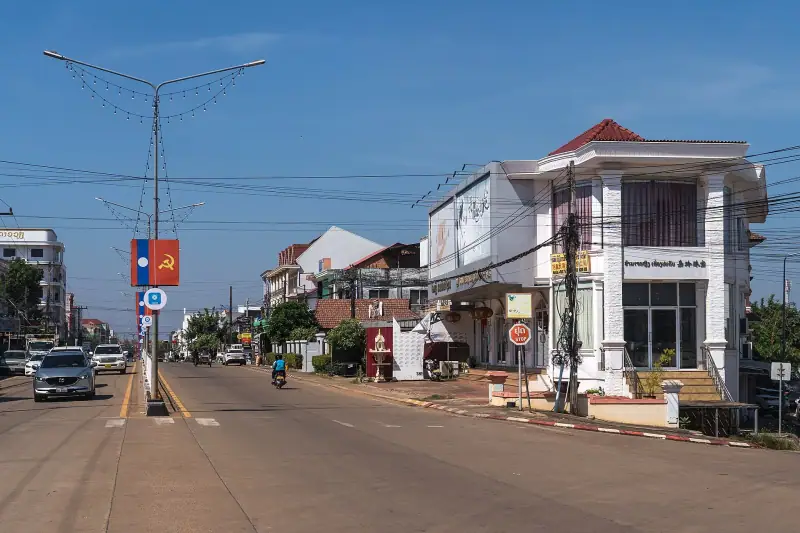
Where to Stay in Pakse: Areas and Accommodation for Every Budget
Choosing where to stay in Pakse, gateway to southern Laos. Areas, recommended hotels and practical tips for your exploration base.
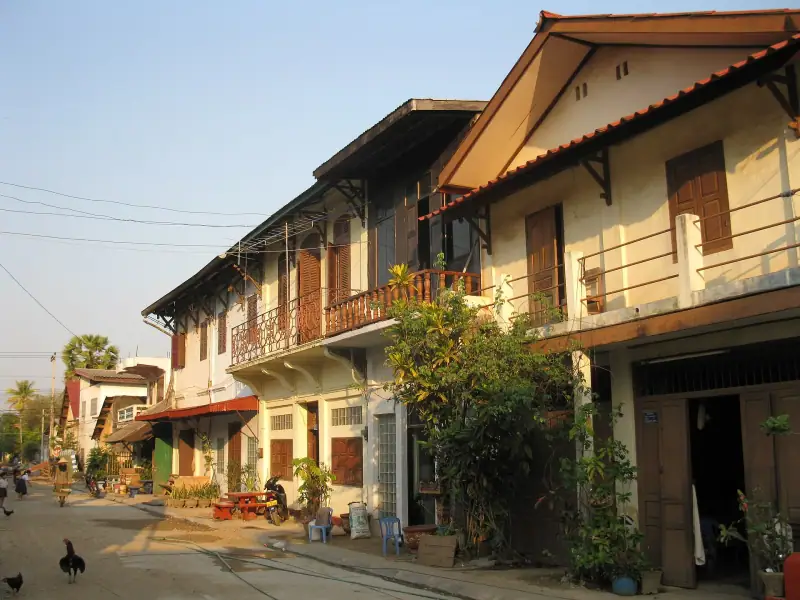
Where to Stay in Thakhek: Accommodation Guide for Every Budget
Where to stay in Thakhek: colonial guesthouses, Mekong riverside and lodging for the Loop. Areas, budgets and tips for central Laos.
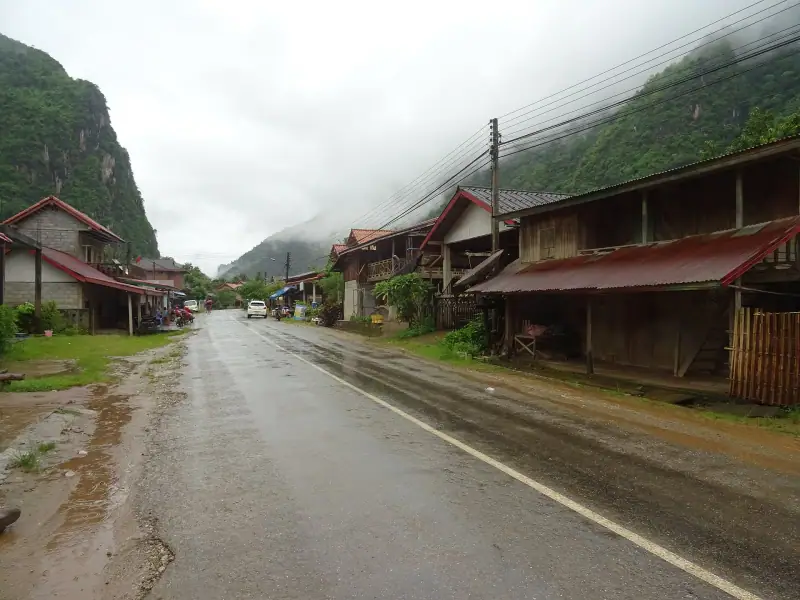
Where to Stay in Nong Khiaw: Accommodation Guide for Every Budget
Where to stay in Nong Khiaw: riverside guesthouses and eco-lodges. The two banks compared, budgets and tips for northern Laos.
Ready-made
Laos itineraries
7 days
Laos in 7 Days: A Complete Itinerary for an Unforgettable Week
VientianeVang ViengLuang Prabang
Can be adapted in the planner
3 days
The Thakhek Loop: Complete Guide to Laos's Motorbike Circuit
Kong LorLak Sao
10 days
Laos in 10 Days Without a Car: A Realistic Train and Bus Itinerary
VientianeVang ViengLuang PrabangNong Khiaw