Where to stay
Where to stay in Diani Beach: which area and which type of hotel

We may earn a commission when you book through links on this page, at no extra cost to you. We don't visit or try the places we cover: we summarize published sources. How we work
In short
- Diani is a long coastal strip with three rough zones: the north (quieter, residential), the center (restaurants, shops, water sports) and the south (wilder, more isolated).
- Choose between big all-inclusive hotels, residences and apartments, or small charming places; the type of lodging shapes the stay as much as the area.
- Tides are strong: at low tide the sea can retreat far behind the reef, so a pool is a useful complement to a sea view.
- Book several months ahead for peak holiday periods and the year-end holidays; the long rains usually fall between April and June.
Diani Beach is Kenya’s best-known beach resort. South of Mombasa, a long strip of pale sand stretches out facing the Indian Ocean, lined with coconut palms, tropical gardens and lagoons protected by a coral reef. Many travelers end their trip here after the dusty tracks of safari. But the beach extends over several kilometers, and the atmosphere changes noticeably from one end to the other: choosing the right area is as important as choosing the hotel.
This guide helps you understand the resort’s geography, compare types of lodging and avoid classic mistakes, like booking a “sea view” room without thinking about tides. For an overview of the whole country, first read our guide to where to stay in Kenya. For activities there, see our Diani Beach guide.
Understanding Diani Beach’s geography
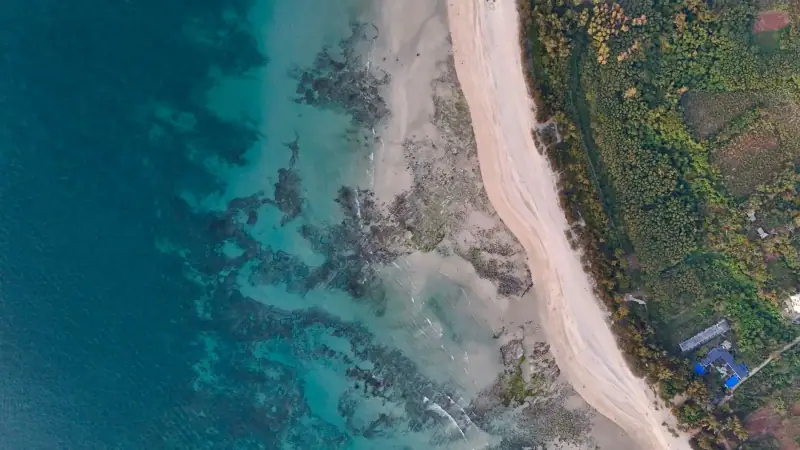
The resort is not a compact village but a long coastal ribbon. The main road runs parallel to the sea, some distance from the shore, and lodgings line up between this road and the beach. There are roughly three zones, although their limits remain blurry.
- The north, on the side where you arrive from Mombasa: more residential, with villas, apartments and a few older hotels. The atmosphere is rather quiet.
- The center: this is where restaurants, souvenir shops, water-sports centers and most of the big hotels are concentrated. There is more activity, in the evening as well as by day.
- The south, toward the Ukunda airstrip and beyond: wilder, with large estates, charming lodges and wider, less busy beaches.
One practical detail matters a lot: distances look short on a map, but people rarely walk from one area to another. The most common local means of transport are tuk-tuks, taxis and motorbike taxis; ask the price before getting in and, preferably, have your lodging call a driver in the evening.
Central Diani: activity and services
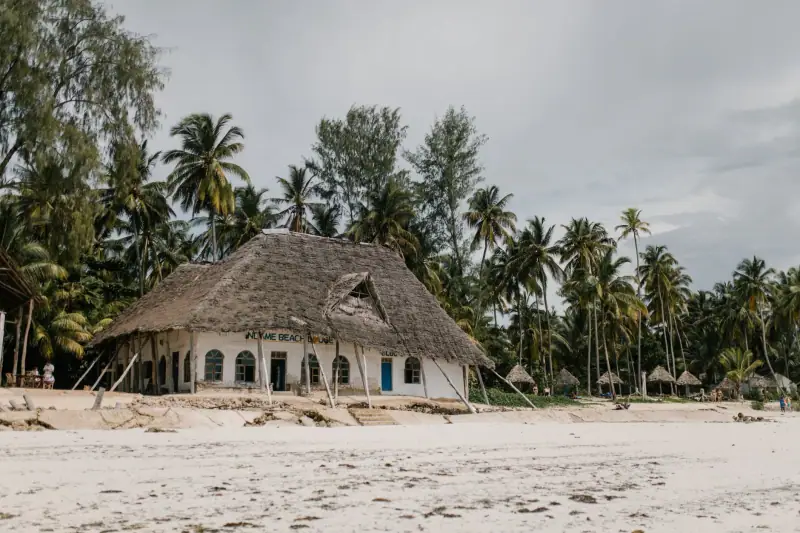
Sleeping in the center of the resort means choosing convenience. Nearby you find beach restaurants, supermarkets, currency exchange offices, equipment rental shops and excursion agencies. You can do without a car and organize your days locally, without long trips.
This area suits:
- travelers who like going out to dinner and moving around;
- short stays, where you want everything close by;
- those who do water sports (kitesurfing, diving, paddleboarding) and want a practical starting point;
- solo travelers, who prefer a lively area.
Its drawback is the crowds: the beach is busier, with more street vendors and commercial activity. If you are looking for absolute calm, look elsewhere. Also check the exact distance between the room and the sand: some so-called “beach” properties are actually on the other side of a road or path.
Stays in Diani Beach
Compare hotels, residences and small places according to your dates and budget.
North and south: calm, space and nature
The outlying areas appeal to those who want to enjoy the sea without the crowds. In the north, lodging is often villas and rental apartments, well suited to families or groups of friends who want to cook and move around at their own pace. You often need a vehicle or taxis to go out to dinner.
In the south, the coast becomes wilder. You find large wooded estates, charming lodges and long, little-visited beaches. The vegetation is dense, and it is not unusual to come across monkeys in the gardens. This part of the coast also shelters a coastal forest where the Angolan colobus (black-and-white colobus) lives, an emblematic monkey of the region, which can be seen on guided visits.
These areas suit:
- couples looking for romance and peace;
- families who prefer a garden and a calmer beach;
- travelers who plan to stay mostly at their lodging, at the pool and on the sand.
In return, you will depend more on your lodging for meals and transport. Check whether a shuttle or transfer service is offered, and ask how often it runs in the evening.
All-inclusive hotel, residence or small place: which to choose?
The type of lodging shapes the stay as much as the area. Three main families share the coast.
Big all-inclusive hotels
They offer several restaurants, pools, entertainment, kids’ clubs and often direct beach access. These are the simplest choices for a week of relaxation without organizing anything. The drawback is that you easily stay within the hotel walls. Check what the plan actually includes: local or imported drinks, water activities, excursions, beach towels.
Residences and apartments
They offer more independence and suit long stays or families. A fitted kitchen lets you shop at the market or supermarket and limit the meal budget. Check the services: cleaning staff, security, a generator in case of power cuts, mosquito nets.
Small charming places
Bandas, cottages, guesthouses and small family lodges: they offer a more personal welcome, a more intimate setting and often careful cooking, sometimes Swahili-inspired. Their small capacity means booking early in high season. Read recent reviews before choosing, as the level of upkeep varies from one property to another.
To compare possible budgets, rely on our guide to the budget for Kenya: lodging is generally the first spending item, ahead of meals and excursions.
Tides, reef and pool: the sea-view trap
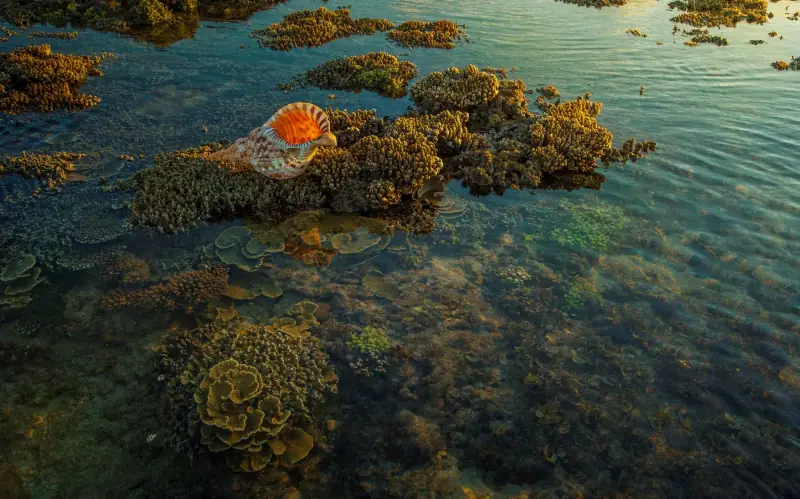
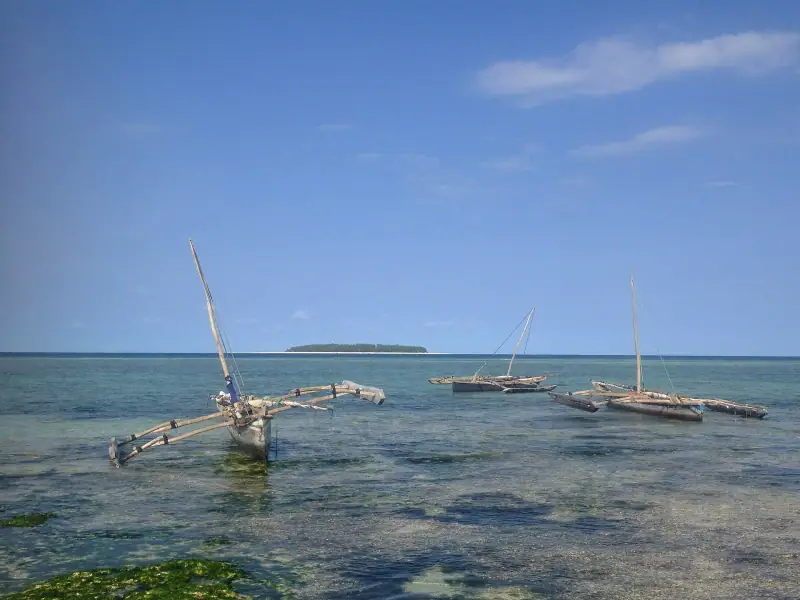
This is the element most often underestimated by travelers discovering the Kenyan coast. The coral reef that protects Diani’s lagoons causes very pronounced tides: at high tide, the water rises to the sand and swimming is pleasant. At low tide, the sea can retreat very far, revealing a wide bed of sand and coral, difficult to walk on.
A few tips:
- Check the tide times before planning your swims; your lodging or the water-sports centers know them.
- Choose lodging with a pool: it makes up for the times when the sea is too low to swim.
- Wear water shoes if you walk on the reef area, to avoid sea urchins and sharp coral.
- Do not walk on the coral: it is fragile and vulnerable.
Depending on the seasons and winds, seaweed can also wash up on some stretches of beach. This varies from year to year and from area to area; ask your lodging for recent news before arriving.
When to book lodging in Diani?
The coast’s climate is hot all year, with a long-rains season generally between April and June and a shorter rainy period at the end of the year. To choose your dates, see our guide on the best time to go to Kenya.
On rates, high season corresponds to peak holiday periods and the year-end holidays. For these periods, book several months ahead: small places fill up quickly and prices climb. Off season, many properties offer discounts, and some close for a few weeks for maintenance. Always check that the lodging is open on your dates.
If you combine the beach with a safari, leave a margin between the return flight from the park and your arrival on the coast. Our 10-day Kenya itinerary shows how to link a bush circuit and then a few days by the sea.
How to reach Diani Beach
From Nairobi, the fastest remains the plane: domestic flights reach Mombasa, and some serve the Ukunda airstrip, very close to the beach. The train between Nairobi and Mombasa is also an option some travelers like, but you then need an extra road trip to the south of Mombasa.
From Mombasa, the resort is to the south, about thirty kilometers (19 mi) away. The journey depends on traffic and on the crossing of the channel south of the city, which you cross either by the Likoni ferry, often jammed, or by the more recent bypass roads. Ask your lodging which option it recommends depending on your arrival time.
Booking a private transfer is the calmest solution on arrival, especially after a long flight. If you prefer to drive, the lodging sometimes offers a rental service, but driving there takes attention (driving on the left, variable road condition). Do not forget to check the entry requirements for Kenya before departure. Entry rules depend on your passport: check the official travel advice of your government before you book, travel.state.gov (US), GOV.UK (UK), travel.gc.ca (Canada), Smartraveller (Australia) (checked November 2026).
Excursions from your lodging
Once settled in, you will want to vary your beach days. From Diani, several outings are possible: dolphin watching and snorkeling off the south coast, a visit to a coastal forest, a ride on a dhow (traditional sailboat) or a day in the hinterland. Boat trips depend a lot on the weather and sea conditions; choose operators that respect wildlife and limit the number of boats around the animals.
You can book these excursions in advance, or wait until you arrive to judge the weather. In any case, ask what is included (equipment, meals, entry fees) and the real length of the outing.
Excursions around Diani Beach
Boat trips, snorkeling and visits: browse the activities offered on the coast.
Tips for booking without unpleasant surprises
Before confirming a reservation, a few simple checks avoid most disappointments.
- Read recent reviews. A property can change manager or level of upkeep within a few years. Comments from the last few months are the most reliable.
- Check the distance to the beach and the type of access: direct, by a path, or across the road.
- Look at the cancellation policy. Conditions vary a lot between flexible rates and non-refundable offers.
- Check the essential equipment: air conditioning or fan, mosquito net, hot water, a generator in case of power cuts.
- Ask about taxes or extra fees charged locally, depending on the property.
- Think about travel insurance, notably to cover repatriation or a health problem.
- Tell them your arrival time: the welcome is smoother and the transfer better organized.
Finally, a mosquito net and repellent are practical basics. For health advice, ask your doctor or a travel clinic and see the official travel health pages (CDC in the US, TravelHealthPro in the UK). A successful trip to Diani rests on few things: an area that suits you, a lodging whose recent reviews you have read, and a little margin in your calendar.
Quick decision guide: three questions
If you are still hesitating, ask yourself three questions. Do you want activity in the evening or calm? Do you prefer to organize everything locally or leave it all to the hotel? Do you plan to swim every day, or will the pool be enough on some low-tide days? Your answers will naturally steer you toward the center, the north or the south, and toward the hotel, residence or small place that suits your trip.
Frequently asked questions
What is the best area to stay in Diani Beach?
It depends on your style of stay. The center of the beach concentrates restaurants, shops and activity, the north is quieter and residential, the south is wilder and more isolated. Families and couples looking for peace often prefer the outlying areas, sociable travelers the center.
Should you choose an all-inclusive hotel in Diani?
It is practical if you want to organize nothing and enjoy the pool and the beach. On the other hand, you will go out less to discover local restaurants. Half board or a simple breakfast plan leaves more freedom and lets you taste Swahili cooking.
How do you get from Mombasa airport to Diani Beach?
The simplest is to book a private transfer through your lodging. Some travelers also take a domestic flight to the Ukunda airstrip, very close to the beach. Allow a time margin, as the road journey time varies with traffic and the crossing south of Mombasa.
Can you always swim at Diani?
Not always. The tide strongly shapes the landscape: at low tide, the sea retreats far behind the reef and swimming is limited to certain spots. Check the tide times and choose lodging that also has a pool.
What is the best period for a stay in Diani?
The coast is pleasant in the dry season, generally from the end of the year to early spring, then again in summer. The heavy rains generally fall between April and June, when many properties scale back or lower their rates.
Is it safe to walk on Diani beach?
Kenyan beach resorts are generally visited without difficulty, but street vendors can be insistent. A polite, firm refusal is usually enough. Avoid leaving your belongings unattended on the sand and do not walk alone on isolated stretches after dark.
Can you combine Diani Beach with a safari?
Yes, it is the classic pattern of a trip to Kenya: a few days of safari in the parks, then a break on the coast. The plane is the fastest way to reach the coast from Nairobi or from a park.
More Kenya guides
Keep reading

Late arrival in Nairobi (JKIA): where to sleep the first night before a safari
Landing in Nairobi at night with a safari the next day? Hotel near JKIA or in Karen: transfer, late check-in, travel time and tips to choose well.

Where to stay in Nairobi: which neighborhood before or after a safari
Where to stay in Nairobi? Karen, Westlands, Kilimani, downtown or near the airport: neighborhoods compared, safety, transport and booking tips.

Where to stay in Kenya: lodges, safari camps and beach hotels
Where to stay in Kenya? Safari lodges and camps, Nairobi hotels, Diani and Lamu beaches: types of lodging, areas to choose and tips to book well.
Ready-made
Kenya itineraries
7 days
Kenya in 7 days: Naivasha, Nakuru and the Masai Mara without rushing
NairobiNaivashaMasai MaraNairobi

10 days
Kenya in 10 days: Nairobi, Amboseli, Masai Mara and Diani Beach
A day-by-day 10-day Kenya itinerary: Nairobi, Amboseli facing Kilimanjaro, a Masai Mara safari, then relaxing on Diani Beach. Budget and tips.