What to see
Visiting Jerash: Complete Guide to the Greco-Roman City
We may earn a commission when you book through links on this page, at no extra cost to you. We don't visit or try the places we cover: we summarize published sources. How we work
In short
- Jerash is about 45-50 km (28-31 mi) north of Amman; allow 3 to 4 hours for the essentials, or a half day for archaeology fans.
- Entry costs 10 JOD (about €12 / $14) and is included in the Jordan Pass; the site opens at 8 am and tour buses arrive from 9:30-10 am.
- Key sights: Hadrian's Arch (129 AD), the Oval Forum, the Cardo Maximus, the South Theater and the Temple of Artemis.
- The Jerash Festival usually runs in July-August; avoid Fridays and holidays, busy with Jordanian families.
Jerash is one of the best-preserved Roman cities in the world, rightly nicknamed the “Pompeii of the Middle East”. Only 50 km (31 mi) north of Amman, this exceptional archaeological site has intact colonnades, a unique oval forum and two theaters still used for performances. A day in Jerash is a journey back in time of two millennia.
Jerash, the city of a thousand columns
Three thousand years of history
Jerash’s history begins well before the Romans. Traces of Neolithic and Bronze Age occupation have been found on the site. In the 4th century BC, Alexander the Great passed through the region, and the city took the Greek name Gerasa. It truly enters history in the 1st century BC when Pompey incorporated the region into the Roman Empire.
Under Roman rule, between the 1st and 3rd centuries AD, Jerash reached its peak. A member of the Decapolis, the league of ten great Greco-Roman cities of the region, it grew rich from the caravan trade passing between Arabia and the Mediterranean. The population then reached 15,000 to 20,000. The city had an oval forum, two temples, public baths, theaters, a hippodrome and a network of paved streets.
After a slow decline following the Persian and Arab invasions of the 7th century, a violent earthquake in 749 AD devastated the city. It fell into oblivion for centuries. Only in the 19th century did archaeologists begin to uncover it from the sands of time. Today, digs continue and reveal new structures every year.
What makes Jerash unique
Unlike Pompeii, buried under the ash of Vesuvius, Jerash was gradually abandoned. Medieval buildings were layered over the Roman ones, but the Roman urban fabric remained astonishingly legible. The main streets, the forum, the temples and the theaters are visible in their continuity, an archaeological rarity worldwide.
The site covers about 800,000 m² (about 200 acres), of which only 15% has been excavated. The rest still sleeps underground.
The top sights
1. Hadrian’s Arch: the triumphal gate
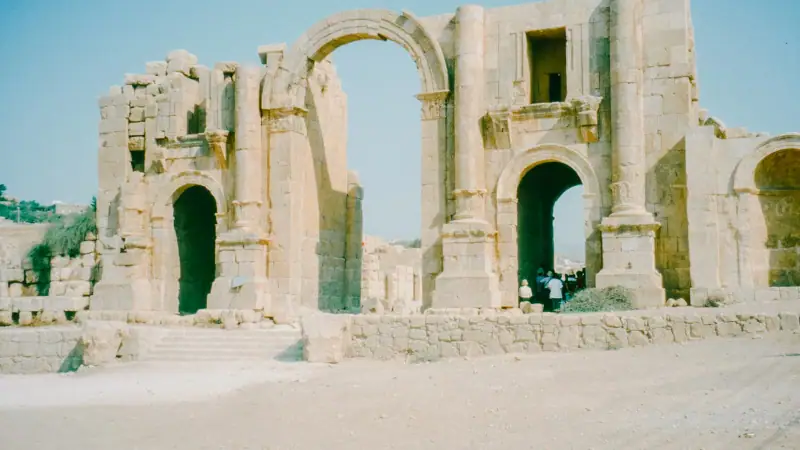
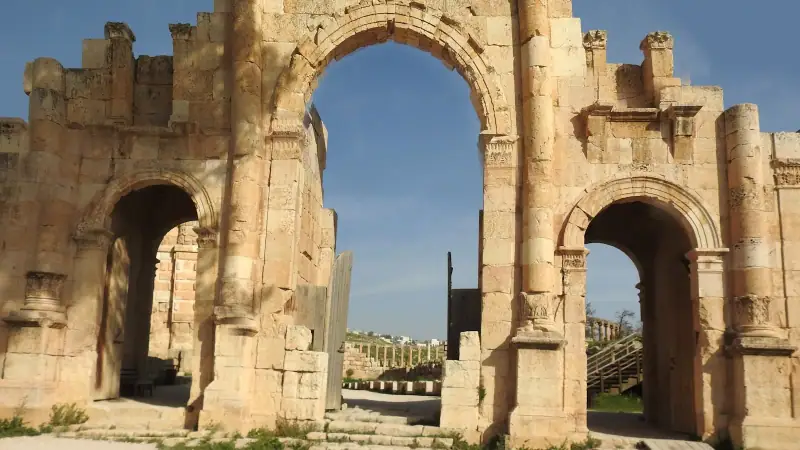
Hadrian’s Arch is the first monument you meet when arriving at the site. At 22 meters (72 ft) high, it was erected in 129 AD in honor of Emperor Hadrian’s visit to Jerash. At the time, the arch was meant to mark the southern limit of the city, but the urban extension project it was supposed to inaugurate was never carried out, so the arch stayed isolated, like a door leading nowhere.
Its monumental proportions, its carved details (Corinthian pilasters, acanthus) and its state of preservation make it one of the most impressive architectural works in Jordan. Morning or evening light gives it exceptional golden tones for photography.
2. The Hippodrome
Between the arch and the main entrance lies the Jerash hippodrome, 245 meters (804 ft) long. This stadium could hold up to 15,000 spectators for chariot races. Re-enactments of chariot races and gladiator fights were offered there, which can be fun for families, to be taken for what they are. Ask there: it is not confirmed whether they still take place.
Guided tours of Jerash and Amman
Guided visits, excursions from Amman, combined Jerash + Ajloun.
3. The Oval Forum: the heart of the city
The Oval Forum (Oval Plaza) is the symbol of Jerash and one of the best-preserved ancient public spaces in the world. This elliptical Ionic plaza, 90 by 80 meters (295 by 262 ft), is surrounded by a colonnade of 56 Ionic columns that stands almost entirely. In the center, a Diocletian column marks the focal point.
This forum served as the city’s main public square. It linked the north-south road (the Cardo Maximus) with the east-west road, in a sophisticated urban composition. The slight orientation of the ellipse, not perpendicular to the streets, allowed an elegant transition between two different axes. A tour de force of Roman urban engineering.
In the morning, when low light passes through the columns and casts their long shadows on the paving, the Oval Forum is strikingly beautiful.
4. The Cardo Maximus: the street of columns
From the Oval Forum, the Cardo Maximus runs north for 800 meters (2,625 ft). It is the backbone of the ancient city. This paved avenue was lined with Corinthian columns, covered porticoes, shops, fountains and public buildings.
Walking along this Cardo, eyes half-closed in the sun, with the columns outlined against the blue sky, is one of the most evocative experiences in Jordan. The ruts left by Roman cart wheels are still visible in the limestone.
Halfway along the Cardo, the tetrapylon plaza marks the crossing with the Decumanus. Four ornamental monuments marked its corners; one is partly reconstructed.
5. The Temple of Zeus
On the hill east of the Oval Forum, the Temple of Zeus overlooked the city. Built in the 1st century AD, it is dedicated to the supreme god of the Greek pantheon, identified with Jupiter by the Romans. Although less complete than the Temple of Artemis, its elevated position offers a panorama over the whole site, notably a plunging view of the Oval Forum, ideal for photos.
6. The South Theater
The South Theater is the larger of Jerash’s two theaters. Built under Emperor Domitian (late 1st century), it could seat 3,000 to 5,000 spectators in its 32 rows of seats cut into the hill. The stage (scaenae frons), partly restored, gives an idea of the monumental height of this architectural backdrop.
The theater is still used today for the Jerash Festival in July-August. Even outside the festival, the acoustics are remarkable: test them by clapping your hands at the center of the orchestra.
Car rental in Jordan
To explore Jerash, Ajloun and northern Jordan at your own pace.
7. The Temple of Artemis: the jewel of the site
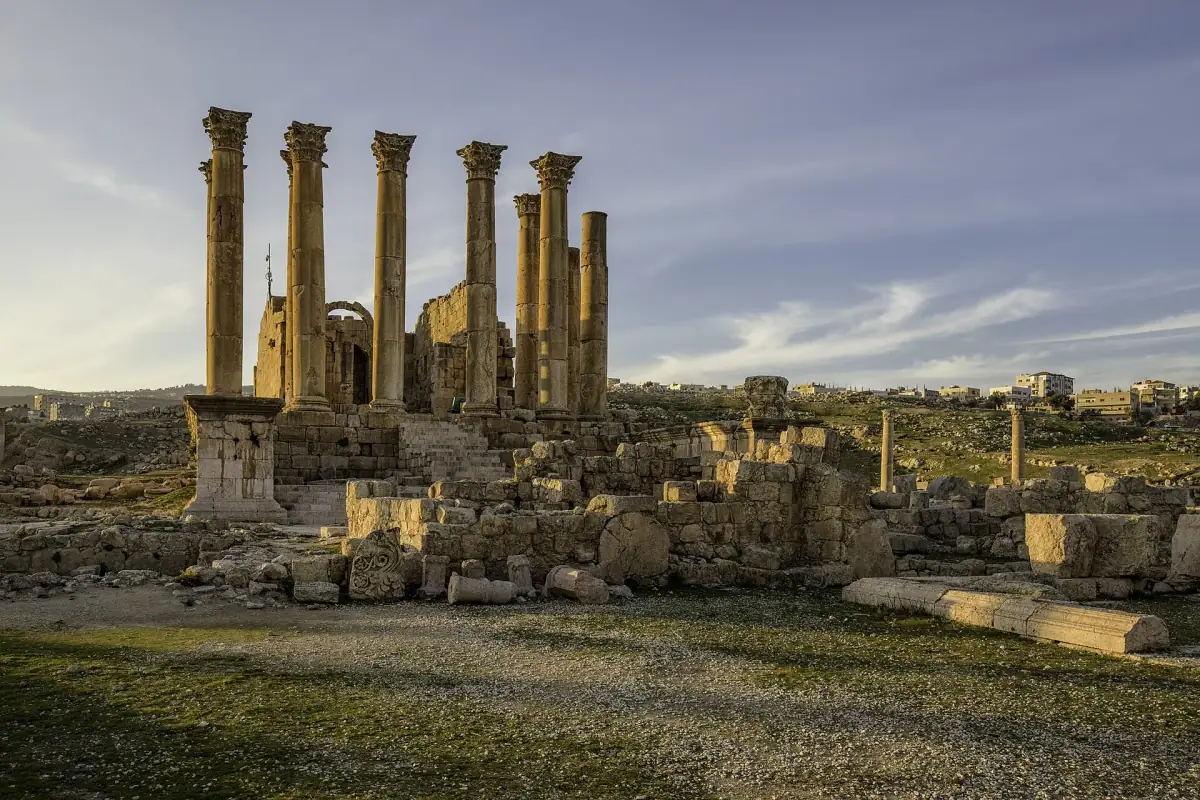
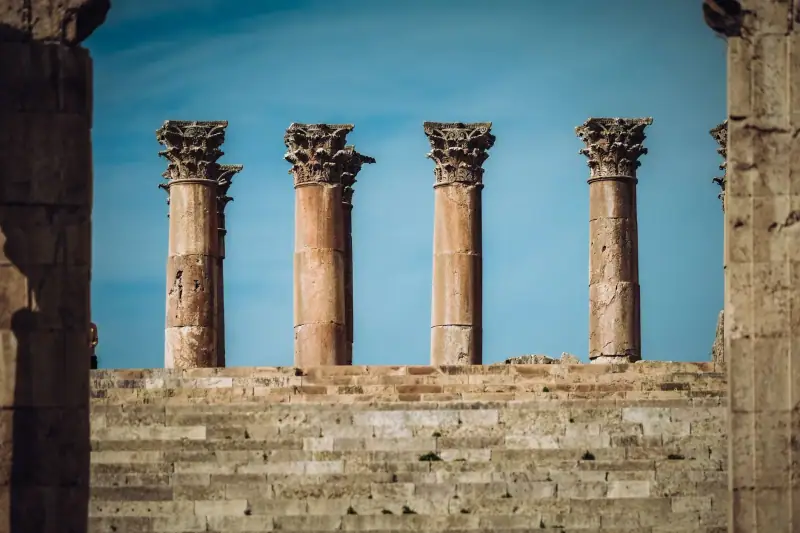
The Temple of Artemis is Jerash’s most impressive monument for its proportions. Dedicated to the city’s patron goddess, it was built in the 2nd century AD in a monumental cult complex. Eleven Corinthian columns 12 meters (39 ft) high are still standing, their finely carved capitals defying erosion for two millennia.
Archaeologists have noted that the columns sway slightly in the wind, a structural ingenuity of the Roman builders that made the columns resistant to earthquakes by letting them “breathe”. Slip a knife between the base and the shaft of a column and you will see the slight movement.
Climb to the upper terrace of the temple to overlook the whole site.
8. The North Theater and the Nymphaeum
The smaller North Theater (1,600 seats) was probably used for city council meetings (bouleuterion) rather than for shows. It is remarkably well preserved.
Near it, the Nymphaeum, a monumental public fountain dedicated to the nymphs, testifies to the importance of water in Roman public life. Carved dolphins adorned its basins.
9. The Byzantine churches
Between the 4th and 6th centuries, Christian Jerash was covered with about fifteen churches. Digs have uncovered several of them with exceptional mosaics. The Church of Saints Cosmas and Damian (530 AD) has one of the finest mosaics of scenes of daily life. These mosaics illustrate the transition between Roman and Byzantine Jerash.
Organizing your visit
Recommended itinerary (4 hours)
From the main entrance:
- Hadrian’s Arch + hippodrome (20 min)
- Descent to the Oval Forum (20 min)
- Temple of Zeus with panoramic view (15 min)
- South Theater: acoustics and photos (20 min)
- Cardo Maximus to the north (30 min walking + stops)
- Temple of Artemis: climb to the terrace (30 min)
- North Theater + Nymphaeum (20 min)
- Return via the west Decumanus (20 min)
- Jerash Archaeological Museum near the entrance (15 min)
Total: 3 h 30 to 4 h of active visiting, plus water and photo breaks.
Possible combinations from Amman
Jerash alone (half day): Leave Amman at 8 am, Jerash 9 am-1 pm, back in Amman for lunch. Ideal at the start or end of a stay.
Jerash + Ajloun Castle (full day): Jerash in the morning (9 am-1 pm), lunch in Ajloun, medieval castle in the afternoon (2-5 pm). By car, the two sites are 30 km (19 mi) apart.
Jerash + Baptism of Christ (day): For travelers interested in Christian sites, combine Jerash in the morning and Bethany Beyond the Jordan in the afternoon. A less obvious itinerary but possible by car.
Hotels in Amman
An ideal base for visiting Jerash as a day trip from the capital.
Practical tips
Tickets and the Jordan Pass
The Jerash entry ticket costs 10 JOD (about €12 / $14). If you also visit Petra, the Jordan Pass (from 70 JOD) includes Jerash and Petra for free along with many other sites, and it pays for itself very quickly.
Buy your Jordan Pass online before arriving in Jordan on the official site. Whether it also covers the entry visa fee depends on your passport and the minimum stay: check the official Jordan Pass site and your government’s travel advice before buying (checked November 2026).
Finding your way around the site
The site is not very well signposted. Pick up a map at the entrance (available free). A guide at the site (or an app such as offline Google Maps with the site’s points of interest) helps identify the structures. The official guides (available at the entrance, 30-40 JOD for 2-3 hours) greatly enrich the visit with historical explanations.
What to bring
- Sturdy closed shoes: the Roman paving is irregular, and the climbs to the temples are steep.
- Plenty of water: 1.5 to 2 liters (about 50-68 oz) minimum, especially in summer. Few refill points on the site.
- Sun protection: the site is exposed, with little shade.
- A wide-angle lens for the columns and the Oval Forum.
- Earplugs if re-enactments are scheduled at the hippodrome during your visit (Roman trumpets): ask at the entrance.
When to arrive
Arrive early in the morning (opening at 8 am) to get the light and avoid tour groups. Buses arrive from 9:30-10 am. In summer, the heat becomes hard after 11 am, so plan your visit for first thing.
The Jerash Festival
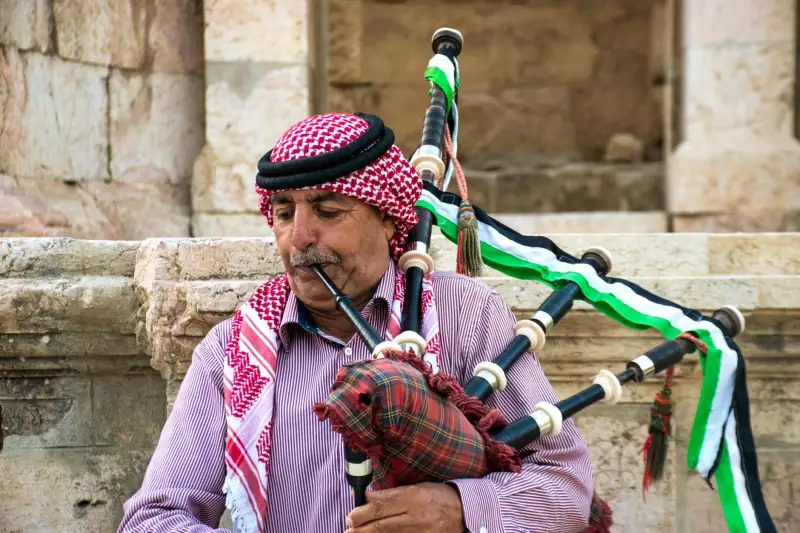
Every summer (usually in July-August), the Jerash Festival for Culture and Arts turns the site into an international stage. Music, dance and theater performances are given in the two ancient theaters, one of the few festivals in the world where performances take place in an archaeological monument still standing after 2,000 years.
Jordanian, Arab and international artists follow one another for two weeks. Tickets are affordable (5-15 JOD) and attending a concert in the South Theater, under the stars, is unforgettable.
Fitting Jerash into your Jordan itinerary
Jerash is almost always visited as an excursion from Amman. It fits naturally at the start of a stay (first or second day) before heading south to Petra and Wadi Rum. See our 7-day Jordan guide for a complete itinerary that places Jerash in an optimized logistical circuit.
For your base in Amman, the top sights of the capital will complement your Jerash day with an evening in the Weibdeh or Rainbow Street neighborhood.
If a road trip appeals to you more than day excursions, our guide to the road trip in Jordan gives you all the logistical details to link Jerash, Petra and Wadi Rum by car in 10 days.
Jerash is not just one more archaeological site. It is a rare chance to walk on the same paving stones as Roman legionaries, Arab merchants and Byzantine pilgrims. In a country dominated by the magic of Petra and the mystery of Wadi Rum, Jerash adds a further historical dimension that greatly enriches any trip to Jordan. Do not miss it.
Frequently asked questions
How do you get to Jerash from Amman?
From Amman, minibuses (service taxis) leave regularly from the Tabarbour north terminal (30-40 minutes, ~1 JOD). By rental car, it is 45 km (28 mi) on Route 35 north, under an hour. A private taxi from central Amman costs 25-35 JOD round trip with waiting time on site.
How long does it take to visit Jerash?
Allow 3 to 4 hours to see the essentials of the site at your own pace: Hadrian's Arch, the Oval Forum, the Cardo Maximus, the two theaters and the temples. If you are passionate about Roman archaeology, a whole half day is not too much.
What is the entry price for Jerash?
The entry ticket costs 10 JOD per person (about €12 / $14). Jordan Pass holders get free entry to Jerash, a notable advantage if you also visit Petra during your stay.
What is the best time to visit Jerash?
Spring (March-May) and autumn (September-November) are ideal: mild temperatures (15-25 °C / 59-77 °F) and beautiful light for photos. In summer (June-August), the Jerash Festival brings the site to life at night, but temperatures exceed 35 °C (95 °F) by day. Avoid Fridays and holidays, which are very busy with Jordanian families.
Can you combine Jerash and Amman in one day?
Yes, it is the classic formula. Leave Amman early in the morning (7-8 am), visit Jerash from 9 am to 1 pm, then return to Amman for the afternoon. You can add Ajloun Castle (30 minutes from Jerash) if you have a vehicle. This combination is ideal to optimize your first day in Jordan.
Are there restaurants in Jerash?
A few cafes and food stands are near the main entrance of the site. For a real meal, the Lebanese House restaurant (on the main road before the entrance) serves good Jordanian food at reasonable prices. The best option is to bring a picnic from Amman to eat on the site.
More Jordan guides
Keep reading
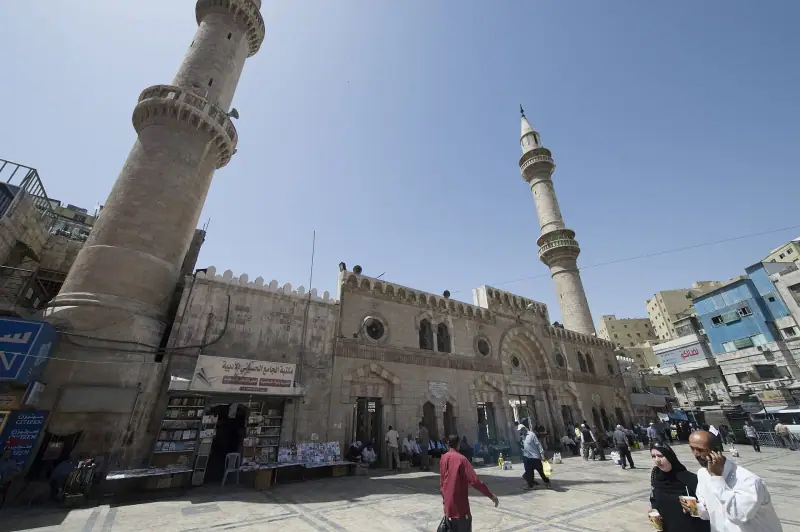
Amman Top Sights: What Not to Miss
The top sights of Amman: Citadel, Roman Theater, Rainbow Street, museums and neighborhoods. All you need to see in Jordan's capital.
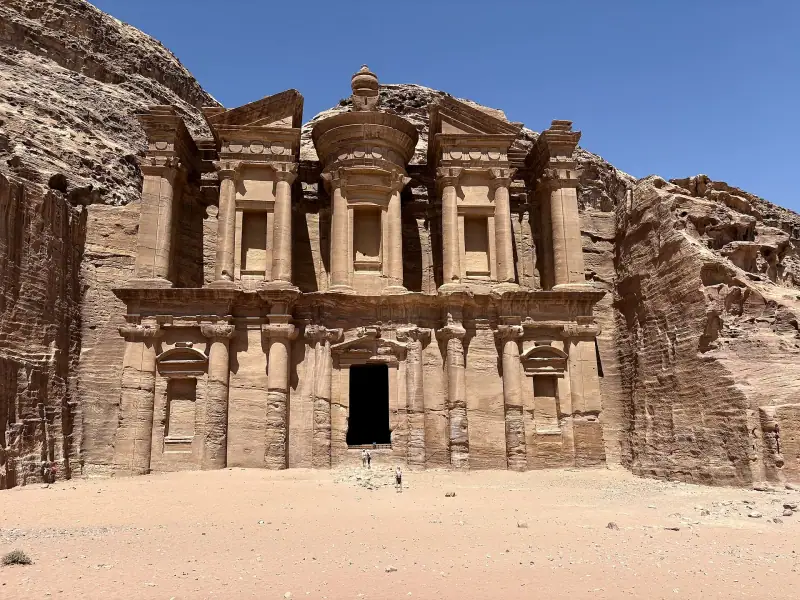
Petra Top Sights: What Not to Miss
The top sights of Petra: the Treasury, the Monastery, the Royal Tombs and the Siq. A guide to visiting Petra in 1, 2 or 3 days.
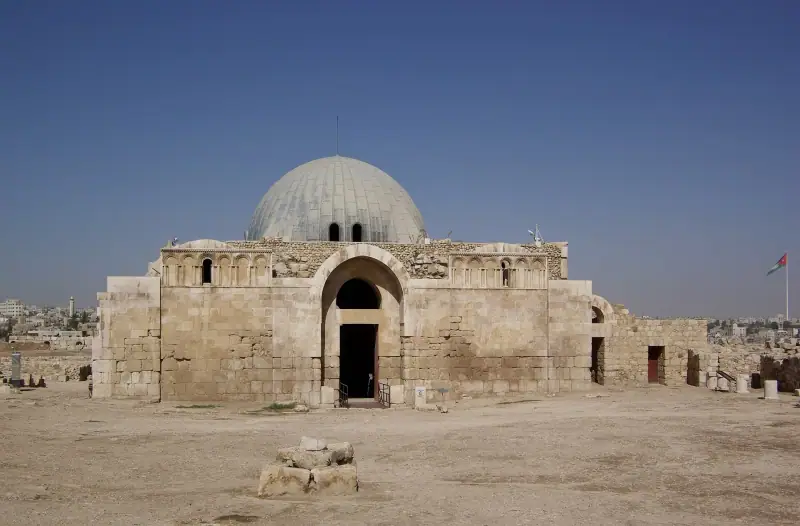
Visiting Amman: Complete Guide to Jordan's Capital
Everything to know to visit Amman: Citadel, Roman Theater, neighborhoods to explore, food, lodging and practical tips.
Ready-made
Jordan itineraries
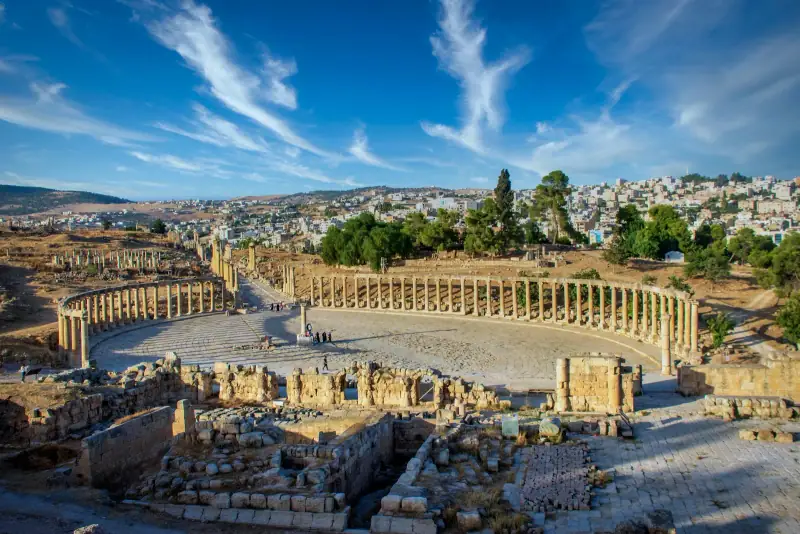
3 days
Northern Jordan Road Trip: Amman, Jerash and Ajloun
A complete northern Jordan road trip: Amman, the Roman city of Jerash, Ajloun Castle and Umm Qais in 3 to 4 days.
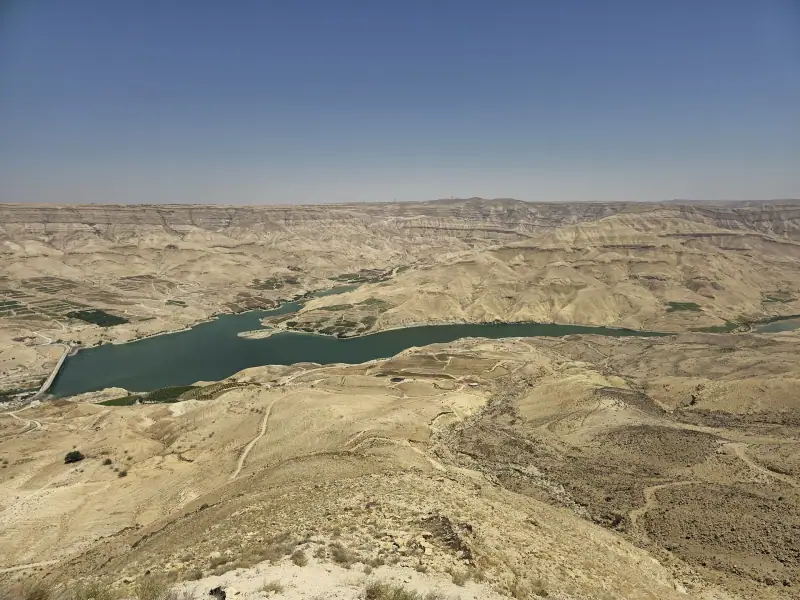
10 days
Road Trip in Jordan: The Self-Drive Guide
Plan your Jordan road trip: King's Highway, Desert Highway, Wadi Rum and Aqaba. Itinerary, driving tips and rental car basics.
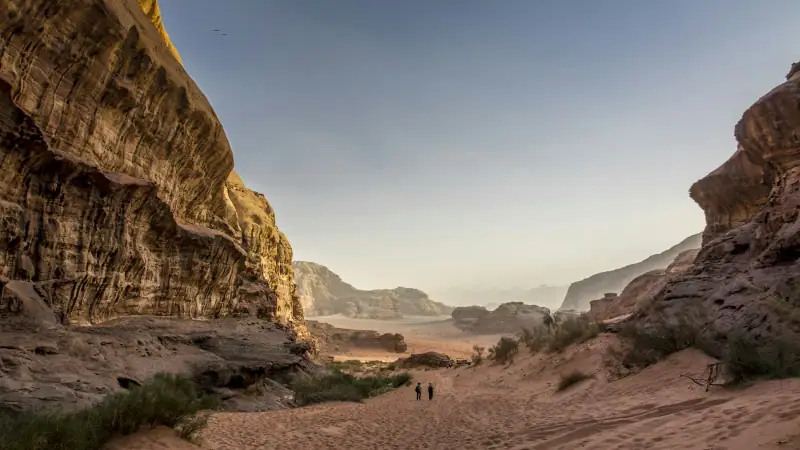
5 days
Jordan in 5 Days Without a Car: A Realistic Bus and Taxi Itinerary
Jordan in 5 days without a car: Amman, Petra, Wadi Rum and Aqaba by JETT bus, minibus and taxi. Distances, travel times, schedules and a realistic budget.