What to see
Visiting Aqaba: Complete Guide to Jordan's Red Sea City
We may earn a commission when you book through links on this page, at no extra cost to you. We don't visit or try the places we cover: we summarize published sources. How we work
In short
- Aqaba is Jordan's only seaport, with beaches, a marine park and some of the best diving in the region; visibility often exceeds 20 m (66 ft).
- From Amman: JETT bus about 4 hours, a 45-minute flight to King Hussein airport, or about 330 km (205 mi) by car on the Desert Highway (4 to 5 hours).
- Best months are October to April (20-28 °C / 68-82 °F); summer exceeds 40 °C (104 °F).
- Wadi Rum is about 65 km (40 mi) away and Petra about 125 km (78 mi); a ferry links Aqaba to Nuweiba in Egypt (1 h 30 to 3 h).
Aqaba is Jordan’s only window onto the sea. Nestled at the northern tip of the Gulf of Aqaba, between the Wadi Rum desert and the turquoise waters of the Red Sea, this port city is both a thousand-year-old historic crossroads and a modern seaside resort. Divers from around the world, backpackers heading to Egypt and Jordanian travelers enjoying their country’s only coastline all meet here.
Aqaba, Jordan’s only seaport
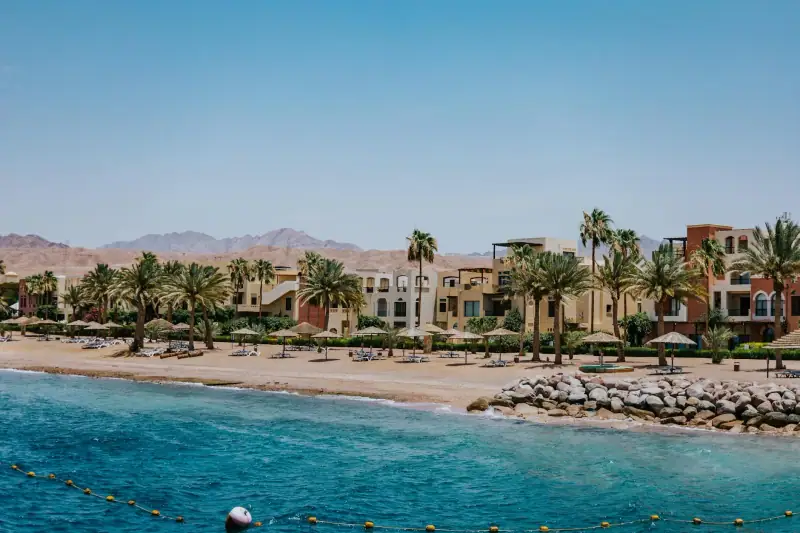
A crossroads of four countries
Aqaba’s geography is unique in the world: from the city’s corniche you can see the coasts of four countries at once: Jordan, Israel (Eilat, a few kilometers away), Saudi Arabia and Egypt (Taba). This gulf, hemmed in between desert cliffs and the Sinai, forms a narrow arm of the Red Sea, both a coral sea and a trade route since antiquity.
The Gulf of Aqaba enjoys a privileged position: sheltered from the north winds by the Wadi Rum and Arabah massifs, its waters stay calm and remarkably clear. Underwater visibility often exceeds 20 meters (66 ft), making it one of the best diving sites in the world.
A city in full transformation
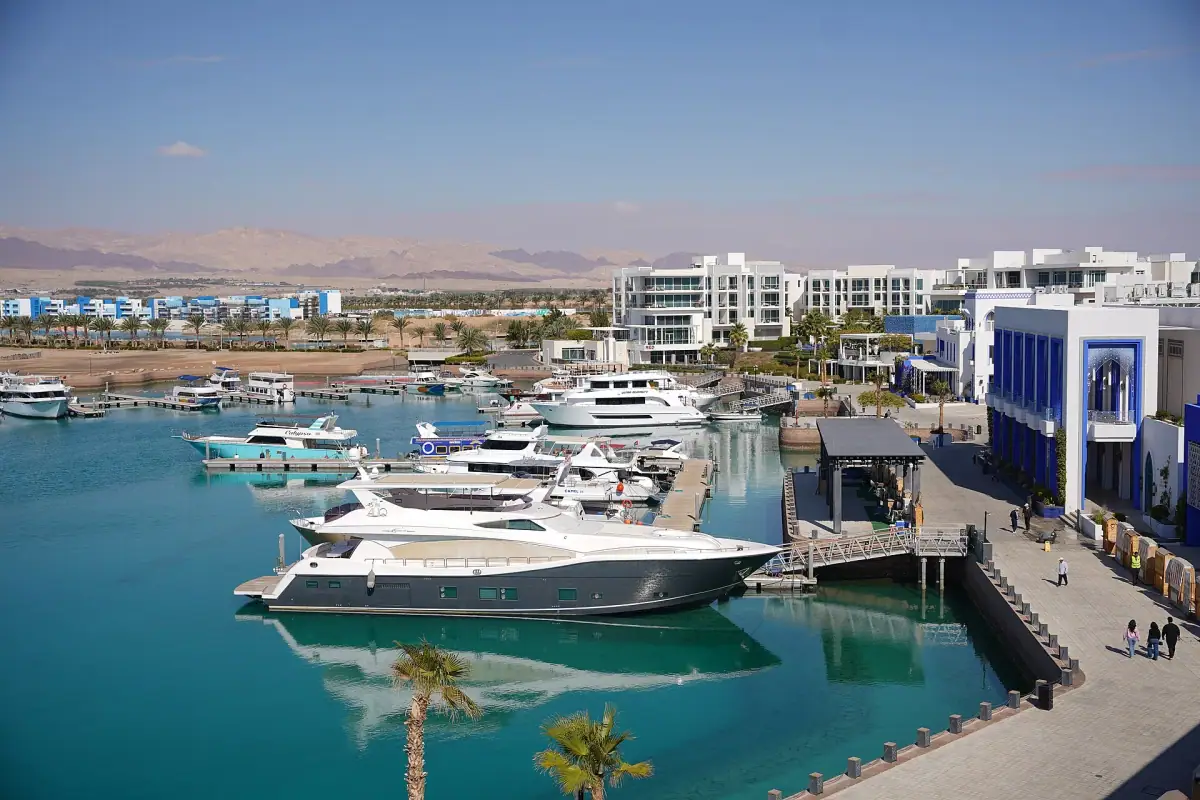
Aqaba is not just an industrial port. Since the creation of the Aqaba Special Economic Zone (ASEZA) in 2001, the city has changed rapidly. New hotels, beach resorts and a redeveloped waterfront have made Aqaba a tourist destination in its own right. The population of about 200,000 mixes merchants, fishermen, industry professionals and Jordanian families coming to relax by the sea.
The free-zone status gives the city a particular atmosphere: prices of some goods (alcohol, electronics, fuel) are lower than elsewhere in Jordan, and a certain freedom of tone contrasts with the more conservative northern cities.
Hotels in Aqaba
From budget rooms to beach resorts with private Red Sea access.
History and heritage of Aqaba
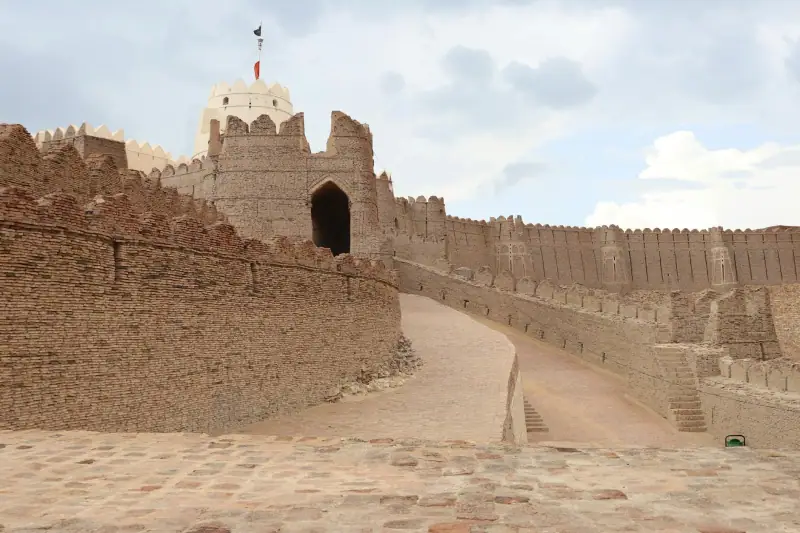
Ayla, the ancestor of Aqaba
Aqaba’s history goes back more than 6,000 years. The site has been occupied continuously since prehistory because of its strategic position at the crossroads of the trade routes linking Arabia, Egypt, Syria and Mesopotamia. In antiquity, the city was called Ayla (or Elath in the Hebrew Bible); it is from this port that King Solomon is said to have fitted out his fleets.
Archaeological digs in the historic city center have uncovered the remains of the ancient Islamic city of Ayla, founded in the 7th-8th centuries. It is one of the first planned Islamic cities in the region, built on a quadrangular plan with a large central mosque.
Aqaba Fort
The city’s emblematic monument is Aqaba Fort (also called the Mamluk castle in guidebooks, although its current form is largely Ottoman). Its exact origin is disputed, and no 12th-century Crusader material has been identified on the site. The most visible Mamluk structure was built in the 16th century under Sultan Al-Ashraf Qansuh al-Ghuri (1501-1516), with Ottoman work under Murad III (1587). It then served as a checkpoint on the trade and hajj routes. The entrance is through a gate decorated with an Arabic inscription above a pair of heraldic lions, a Mamluk symbol.
The fort was the scene of a famous episode of the First World War: on July 6, 1917, Lawrence of Arabia took part, with Sherif Nasir and Auda Abu Tayi at the head of the Arab forces, in a surprise overland attack that bypassed the Ottoman defenses facing the sea. This victory opened the road north and became one of the great feats of the Arab Revolt.
Inside the fort, a small museum space traces the history of the city and the Arab Revolt. The entrance is modest and hours vary by season.
Aqaba Archaeological Museum
A short walk from the fort, in a former Ottoman house, the Aqaba Archaeological Museum gathers finds from local digs: pottery, coins, jewelry and everyday objects covering six millennia of history. The pieces from ancient Islamic Ayla are particularly interesting. This small museum, often neglected by tourists in a hurry to reach the sea, offers in one hour a valuable context for the city.
Beaches and water activities
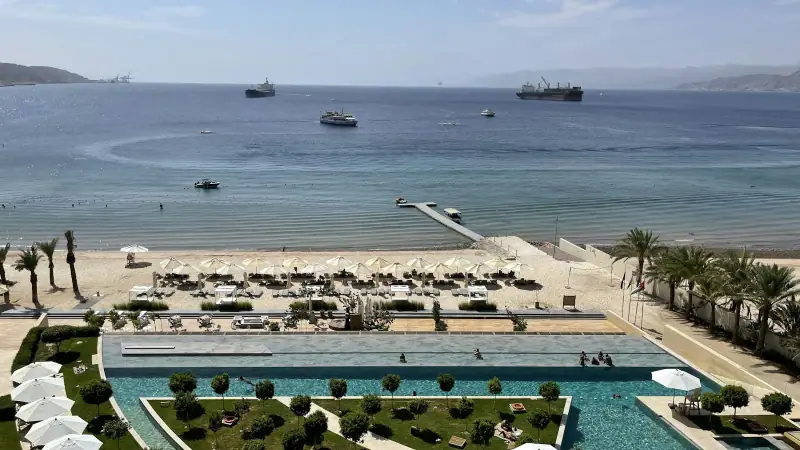
Aqaba’s beaches
Aqaba’s coastline stretches about twenty kilometers (12 mi) in total. The beaches are of two types:
Public beaches are mainly in the city center and toward the north. Access is free but facilities are basic. These beaches are used by Jordanian families, which gives an authentic local atmosphere, but dress norms are more conservative.
Private beaches of the big hotels and beach resorts (located mostly north of the city, between Aqaba and the Israeli border) offer loungers, juice bars, water sports equipment and paid access, or access reserved for hotel guests. This is the preferred option for travelers wanting a comfortable seaside. The resorts south of the city (toward Saudi Arabia) have a wilder setting.
South Beach and the more remote areas further south, reachable by car or boat, let you reach less-visited spots with coral reefs reaching the surface, ideal for snorkeling straight from the shore.
Diving and snorkeling
Aqaba is one of the world’s great scuba diving destinations, thanks to:
- Coral reefs in excellent health, protected by the Aqaba Marine Park
- Exceptional visibility (often 20-30 meters / 66-98 ft)
- Extraordinary marine life: eagle rays, turtles, nudibranchs, moray eels, lionfish and hundreds of tropical species
- Accessible wrecks, including the famous Cedar Pride, a Lebanese cargo ship deliberately sunk in 1985 to create an artificial reef, now covered with coral and marine life
For non-divers, snorkeling in the shallow waters of the marine park (notably around the southern coral site) is remarkable. Bring a mask and snorkel and enter from the beach: the corals sometimes begin only a few meters from the shore.
Our guide to diving in Aqaba details the best sites, dive centers, prices and tips for all levels.
Aqaba tours and activities
Diving, snorkeling, glass-bottom boat, Wadi Rum excursion from Aqaba.
Other water activities
Beyond diving, Aqaba offers a full range of water activities:
- Glass-bottom boat: boats with glass bottoms let you watch the corals without getting wet, perfect for children and non-swimmers. One to two-hour trips leave regularly from the port.
- Kitesurfing and windsurfing: steady north winds in the afternoon make Aqaba a well-known spot for these sports. Schools offer beginner lessons.
- Stand-up paddleboarding and sea kayaking: quiet activities to explore the coast at your own pace.
- Water skiing and wakeboarding: available at some hotel resorts.
Getting your bearings in the city
The corniche and the city center
Aqaba’s corniche is the lively heart of the city. This boulevard along the sea is lined with cafes, restaurants, shops and strollers at all hours. In the evening, families and young people gather there to enjoy the sea breeze. This is where Aqaba’s pulse beats.
Beyond the corniche, the city center is organized around the souk (traditional market) and the main shopping street. You find everything: spices, dates, textiles, souvenirs, phone shops and pharmacies. The fish souk, active early in the morning, is worth a detour to see the fishermen unload their catch.
The northern hotel district
The big concentration of upscale hotels, beach resorts and international restaurants is north of the city, between the center and the Israeli border. This is where most foreign tourists stay, in a more organized and English-speaking environment.
How to reach Aqaba and get around
From Amman
- JETT bus: national company with comfortable buses, daily services from Amman (Abdali station), about 4 hours. Booking recommended online or at the ticket counter.
- Plane: Royal Jordanian links Amman Queen Alia to King Hussein airport in Aqaba. A 45-minute flight, useful to save time but more expensive.
- Rental car: the Desert Highway is direct, well maintained and offers grand arid landscapes. Allow 4 to 5 hours depending on traffic. It is the best option if you plan to continue to Petra or Wadi Rum.
From Wadi Rum
Aqaba is about 65 km (40 mi) southwest of Rum village. By shared taxi or car, the trip takes 45 minutes to 1 hour. Many travelers combine Wadi Rum (1-2 nights in a desert camp) and Aqaba (2-3 nights by the sea) at the end of a circuit.
Getting around Aqaba
The city is relatively compact. The city center can be covered on foot. For the beaches north and south, taxis or tuk-tuks (short distances) are available at all hours. Bikes are sometimes available to rent at some hotels.
Car rental in Aqaba
Ideal for combining Aqaba, Wadi Rum and Petra at your own pace.
Where to eat in Aqaba
Aqaba’s food is marked by the sea: fresh fish and seafood restaurants are everywhere along the corniche and in the souk. Grilled fish, hammour (grouper), Red Sea shrimp and grilled calamari are the local specialties.
For traditional Jordanian cooking (mansaf, maqluba, falafel, hummus), the popular restaurants of the city center and around the souk often offer the best value. The Jordanian breakfast served in local eateries (ful medames, hummus, white cheese, za’atar, flatbread and tea) is an experience worth trying.
The big hotels on the northern corniche have international restaurants, useful if you want varied cuisine or a more formal setting. Bars and restaurants serving alcohol are more common in Aqaba than elsewhere in Jordan, because of the free-zone status.
See our guide to Jordanian cuisine for a full overview of the specialties to be sure to try during your stay.
Practical: weather and best time
Aqaba has a desert climate tempered by the nearby sea. The city is sunny almost all year.
| Period | Temperatures | Sea | Ideal for |
|---|---|---|---|
| November – March | 15-22 °C (59-72 °F) | 21-24 °C (70-75 °F) | Hiking, sightseeing, diving |
| April – May | 25-30 °C (77-86 °F) | 24-26 °C (75-79 °F) | Snorkeling, beach, activities |
| June – September | 35-42 °C (95-108 °F) | 26-29 °C (79-84 °F) | Sea and hotel interiors only |
| October | 28-33 °C (82-91 °F) | 26-27 °C (79-81 °F) | Excellent compromise |
The best time to visit Aqaba is autumn (October-November) and spring (March-May): bearable temperatures, a sea still warm after summer, active marine life and few tourists compared with the December-January peak.
Summer is not recommended for travelers unused to strong heat: 40 °C (104 °F) in the shade is common. If you come in summer, concentrate your sea activities early in the morning and late in the afternoon.
Excursions from Aqaba
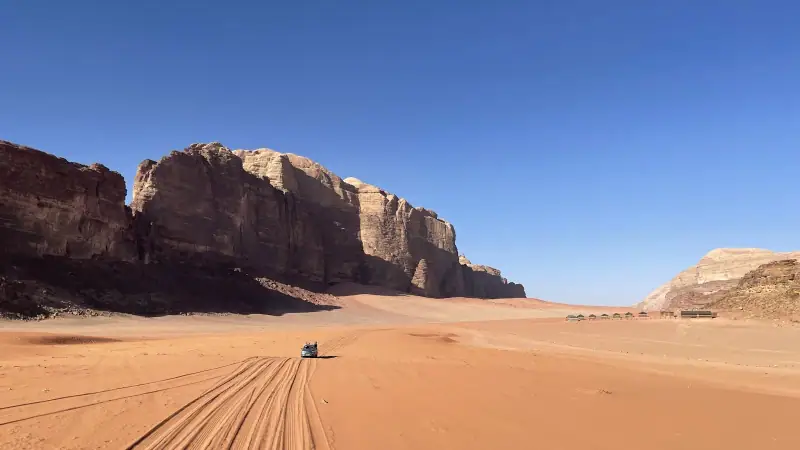
Wadi Rum (65 km / 40 mi)
The Wadi Rum desert is Aqaba’s natural complement. Less than an hour away by road, this landscape of red sand and sandstone cliffs can be explored on foot, by 4x4 or by camel. A night in a desert camp under the stars is an unforgettable experience. Our complete guide to the Wadi Rum desert gives you all the logistical details.
Petra (125 km / 78 mi)
The rose-red city can be visited as a day trip from Aqaba (about 2 hours from the north of the city), but ideally give it 2 days, with a night nearby, to enjoy Petra by Night and the less-visited trails. Our guide to Petra’s top sights details the main sights.
The crossing to Egypt
The ferry to Nuweiba (Sinai, Egypt) is a popular option for those who want to combine Jordan and Egypt. The crossing takes from about 1 h 30 to 3 hours depending on the vessel (schedules to confirm with AB Maritime). From Nuweiba, Sharm el-Sheikh is 2 hours by road and the interior of the Sinai (St. Catherine, Mount Sinai) is reachable in a few hours.
Practical tips for your stay
Budget
Aqaba is slightly cheaper than Amman for mid-range lodging. Seaside fish restaurants are affordable. Water activities (diving, boat trips) make up the main part of the budget. Allow €50-90 (~$58-105) per person per day for a comfortable trip, excluding diving.
Language and communication
English is widely spoken in tourist areas, hotels and restaurants. Dive club staff often speak English. A few words of Arabic (shukran for thank you, marhaba for hello) are always appreciated.
Internet connection
4G coverage is good throughout the city. Jordanian SIM cards are easy to buy at the airport or in the phone shops of the city center (Zain, Orange or Umniah); you can also check your carrier’s international plan or use a travel eSIM. Wi-Fi is available in nearly all lodgings.
Safety
Aqaba is a safe city for travelers. No special precautions are needed beyond the usual common sense. Keep hydrated (bottled water is essential in summer), use sun protection and never walk or swim on the corals (fragile and sometimes stinging).
For diving, make sure your travel insurance covers diving accidents (including hyperbaric chamber treatment). The Aqaba clinic has decent medical facilities for common situations.
Aqaba in your Jordan itinerary
Aqaba naturally comes at the end of the classic Jordan circuit: Amman → Jerash → Petra → Wadi Rum → Aqaba. This north-to-south progression makes arriving at the sea a final reward. See our 7-day Jordan itinerary guide for an optimized plan with distances and recommended lengths of stay.
For a stay focused on the south of the country, the road trip in Jordan gives you a circuit structure with Petra, Wadi Rum and Aqaba as anchor points.
Aqaba is not just a sunny beach at the end of Jordan. It is a city of character, rich in 6,000 years of history, open to four countries and blessed with one of the most beautiful seas in the world. Whether you come to dive, to rest after an intense circuit, or simply to watch the sun set over the Red Sea, Aqaba keeps all its promises.
Frequently asked questions
How do you get to Aqaba from Amman?
From Amman there are several options: JETT bus (about 4 hours, tickets to book in advance; check the departure station and times with JETT), a flight from Queen Alia airport to King Hussein airport in Aqaba (45 minutes), or a rental car via the Desert Highway (about 330 km / 205 mi, 4 to 5 hours depending on traffic). The bus remains the cheapest option.
What is the best time to visit Aqaba?
October to April offer ideal conditions: mild temperatures between 20 and 28 °C (68 and 82 °F), and a sea pleasant for swimming and diving. Summer (June-August) is scorching, with temperatures above 40 °C (104 °F). Spring (March-April) is especially pleasant, with a calm sea and active marine life.
Do you need a special visa to enter Aqaba?
Aqaba is part of the Aqaba Special Economic Zone (ASEZA), which has its own entry arrangements. Whether you qualify, and under which conditions (point of entry, registration with ASEZA within a set time, fees), depends on your passport and on how you enter Jordan. Check the current conditions with ASEZA and your government's official travel advice before you book: travel.state.gov (US), GOV.UK (UK), travel.gc.ca (Canada), Smartraveller (Australia) (checked November 2026).
What are the sights not to miss in Aqaba?
Aqaba Fort (Mamluk-Ottoman castle, mainly 16th century), the Archaeological Museum, the corniche and the beaches north and south of the city, and the marine park for diving and snorkeling on the coral reefs. Wadi Rum, 65 km (40 mi) away, can be visited on a day trip.
Is diving in Aqaba good compared with other destinations?
Excellent. The Gulf of Aqaba has remarkable marine biodiversity with preserved coral reefs, visibility often above 20 meters (66 ft) and waters less crowded than Sharm el-Sheikh or Hurghada. Wrecks such as the Cedar Pride offer memorable dives. The season runs almost all year.
Can you take the ferry from Aqaba to Egypt?
Yes. A ferry links Aqaba to Nuweiba (Egypt), operated by AB Maritime. The crossing takes from about 1 h 30 (fast ferry) to 3 hours depending on the vessel, and schedules change by season: check with the company before planning your trip. It is a popular option for travelers combining Jordan and Egypt (Sinai, Luxor). Book your ticket in advance, especially in high season.
Is Aqaba suitable for travelers with children?
Absolutely. Aqaba is one of the most pleasant family destinations in Jordan. Public and private beaches, water activities accessible to all ages (glass-bottom boats, snorkeling in shallow water), a lively waterfront and mild winter temperatures make it an ideal destination for families.
More Jordan guides
Keep reading
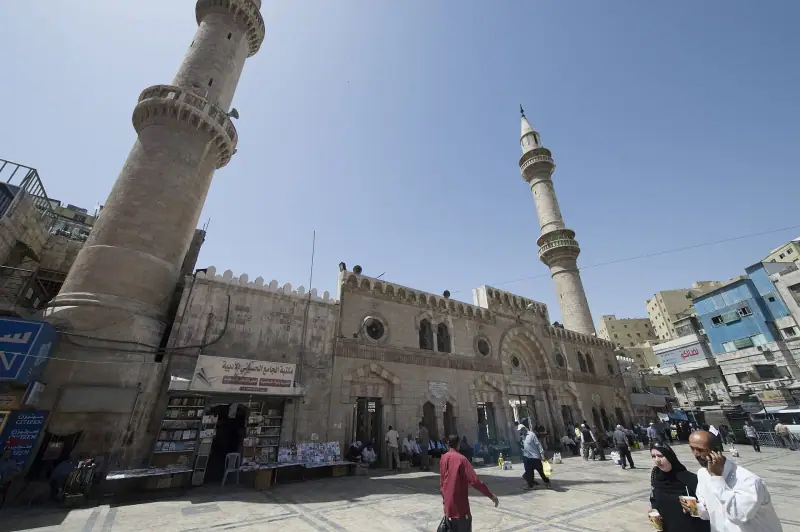
Amman Top Sights: What Not to Miss
The top sights of Amman: Citadel, Roman Theater, Rainbow Street, museums and neighborhoods. All you need to see in Jordan's capital.
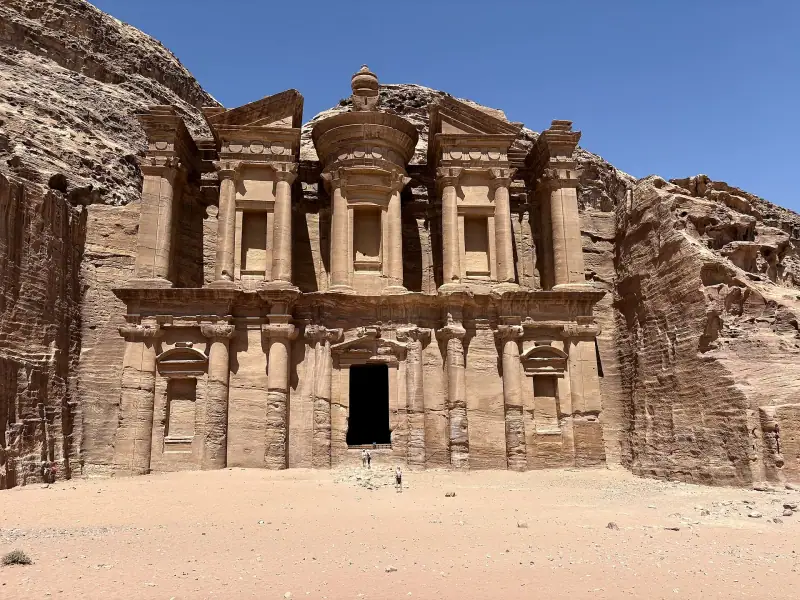
Petra Top Sights: What Not to Miss
The top sights of Petra: the Treasury, the Monastery, the Royal Tombs and the Siq. A guide to visiting Petra in 1, 2 or 3 days.
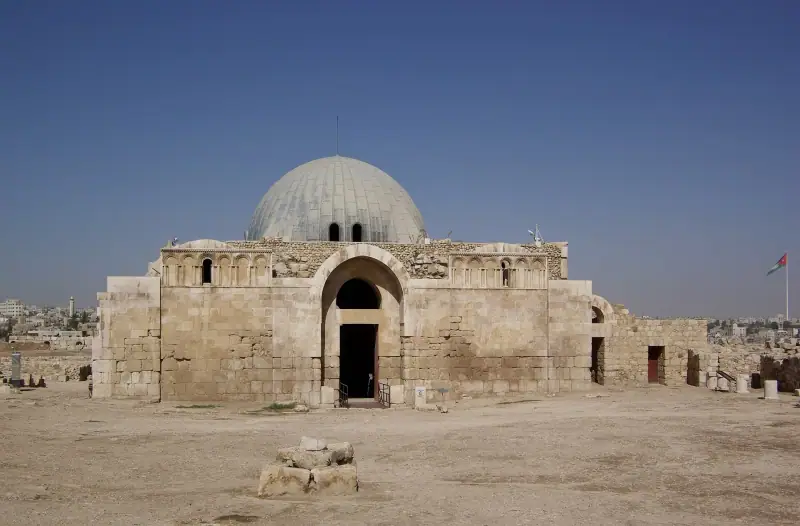
Visiting Amman: Complete Guide to Jordan's Capital
Everything to know to visit Amman: Citadel, Roman Theater, neighborhoods to explore, food, lodging and practical tips.
Ready-made
Jordan itineraries
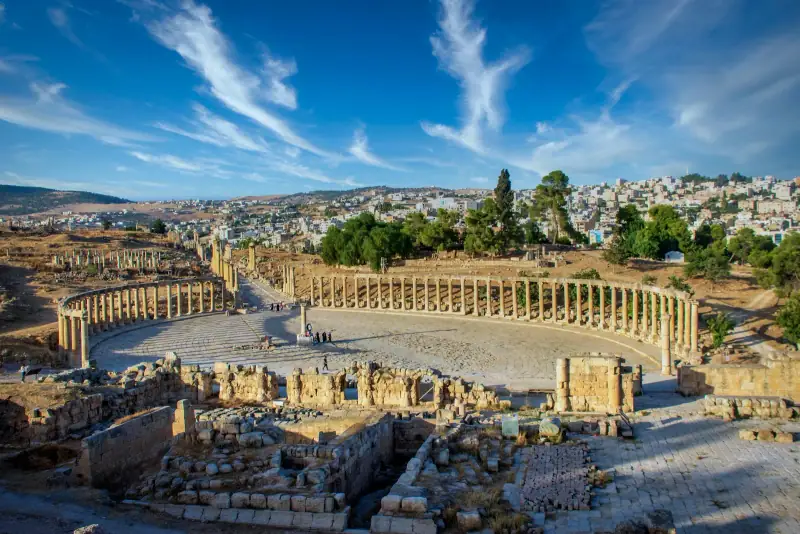
3 days
Northern Jordan Road Trip: Amman, Jerash and Ajloun
A complete northern Jordan road trip: Amman, the Roman city of Jerash, Ajloun Castle and Umm Qais in 3 to 4 days.
10 days
Road Trip in Jordan: The Self-Drive Guide
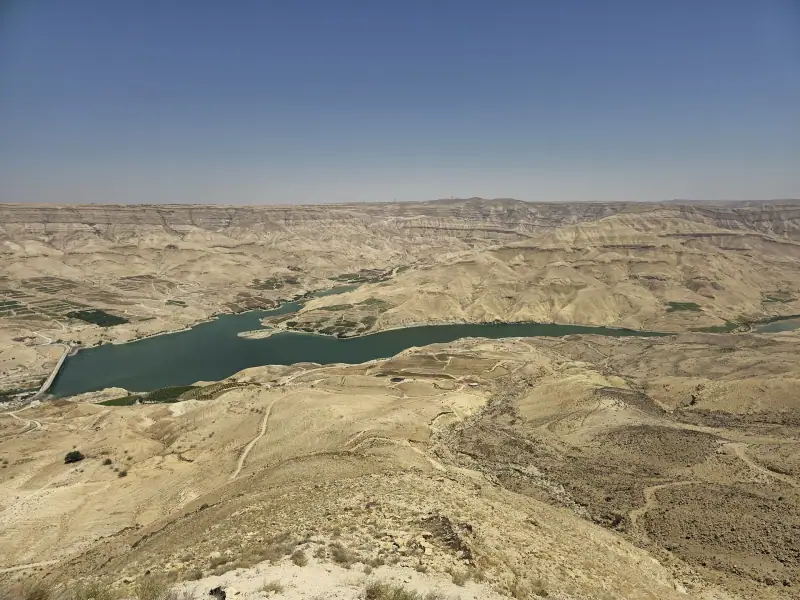
Plan your Jordan road trip: King's Highway, Desert Highway, Wadi Rum and Aqaba. Itinerary, driving tips and rental car basics.
5 days
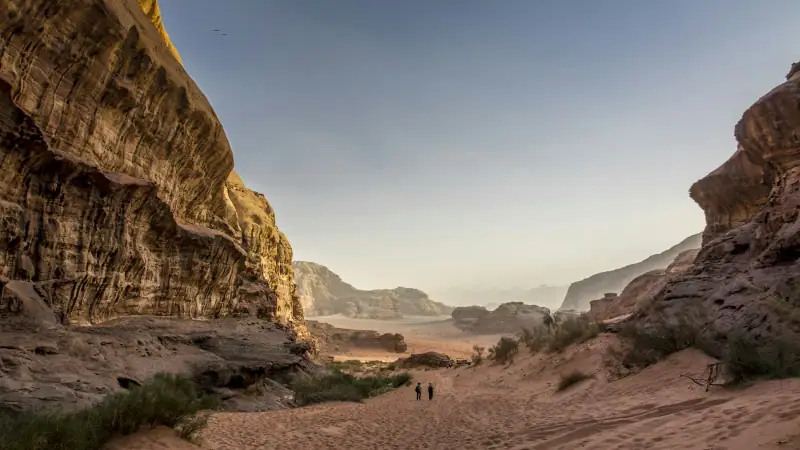
Jordan in 5 Days Without a Car: A Realistic Bus and Taxi Itinerary
Jordan in 5 days without a car: Amman, Petra, Wadi Rum and Aqaba by JETT bus, minibus and taxi. Distances, travel times, schedules and a realistic budget.