What to see
Visiting Ayia Napa: A Complete Guide to Cyprus's Beach Resort
We may earn a commission when you book through links on this page, at no extra cost to you. We don't visit or try the places we cover: we summarize published sources. How we work
In short
- Nissi Beach is the flagship beach (3 km / 2 mi west of the center); Makronissos, to the west, is the calm alternative.
- Cape Greco National Forest Park, 9 km (5.6 mi) east, has sea caves, a 13 km (8 mi) trail network and some of the clearest water in Cyprus.
- The monastery in the town center is free to enter all year; the underwater museum (MUSAN) is reached on diving, snorkeling or boat trips (about €25 to 50, ~$29 to 58).
- June and September are the best months; many hotels and restaurants close from October to April.
Ayia Napa. The name instantly evokes two very different images depending on the traveler: for some, it is the Mediterranean’s party capital, a destination of sleepless nights and electronic beaches; for others, it is one of the most spectacular coasts in Cyprus, with its insolently blue water, wild rocky cape and medieval monastery hidden among the hotels. Both are right.
Ayia Napa is a town that plays both roles perfectly: an impeccable family beach resort in the morning, the epicenter of Mediterranean partying at night. This guide helps you enjoy the best of both faces of this unique resort on Cyprus’s east coast.
Ayia Napa’s beaches: the essence of the destination
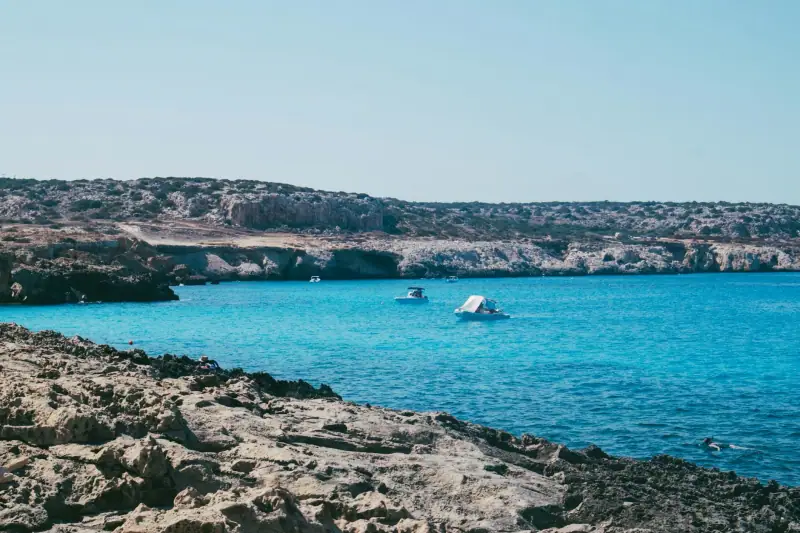
Ayia Napa’s reputation rests first on its beaches, and that reputation is justified. The coast around the resort has some of the finest sand and most translucent water in the whole eastern Mediterranean.
Nissi Beach: the iconic beach
Nissi Beach is Ayia Napa’s flagship beach, 3 km (2 mi) west of the town center. Its name comes from the Greek nisi (small island), because a rocky islet reachable on foot at low tide separates two arms of beach, creating a unique configuration that makes the place famous.
What makes Nissi Beach exceptional:
- Very fine white sand, almost coral-like, that does not burn your feet even in midsummer
- Intense turquoise water, shallow for 50 to 100 meters (165 to 330 ft) before dropping off
- Exceptional clarity that lets you see the bottom several meters down
- The islet reachable on foot: wade through 20 meters (65 ft) of thigh-deep water to a rock with a panoramic view of both beaches
In July and August, Nissi Beach gets very busy: music, beach bars, water sports. In June and September, the atmosphere is more relaxed and the service just as good. For peace, arrive before 9 am or after 5 pm.
Makronissos Beach: the calm alternative
Two km (1.2 mi) west of Nissi Beach, Makronissos is a succession of small fine-sand coves separated by rocks. Less busy, it attracts families with young children (gradual entry into the water, sandy bottom) and travelers who want a little calm without giving up the quality of the sand and water.
A coastal path runs along the coves for 2 km (1.2 mi), ideal for a morning walk before a swim.
Sandy Bay and the central beaches
East of Ayia Napa’s center, Sandy Bay is the beach closest to the resort: 15 minutes’ walk from the central square. More urbanized than Nissi, it is handy for a quick swim. The beaches of Limanaki (the harbor) and Pantachou follow along the coastal promenade.
Hotels in Ayia Napa
From beach hotels to family residences, find the ideal accommodation for your stay in Ayia Napa.
Ayia Napa Monastery: the hidden medieval treasure
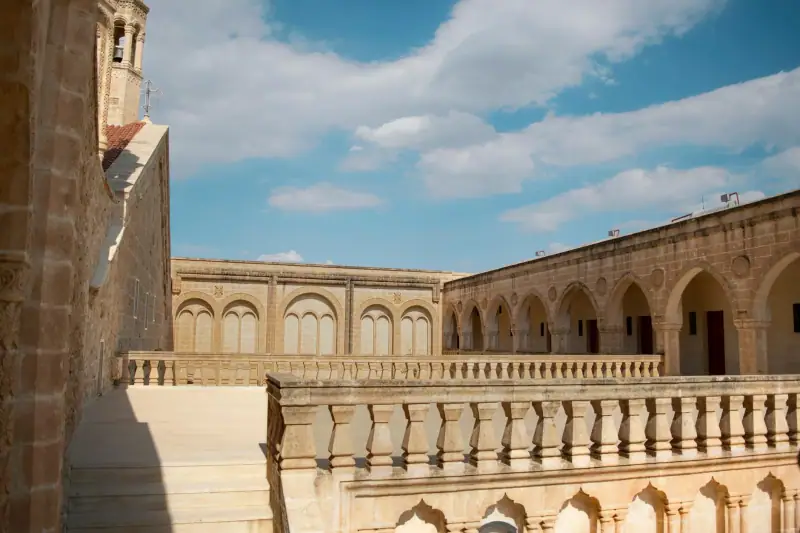
In the middle of the beach resort, where you would least expect it, stands one of the best-preserved medieval monuments in Cyprus: Ayia Napa Monastery (Ágios Napaíos), built from the 15th century by the Venetians around a natural cave where a miraculous icon of the Virgin is said to have been discovered.
The monastery is surrounded by a perfectly intact enclosure wall, behind which the frenzy of the resort suddenly seems far away. Inside you find:
- The underground church carved into the rock: the oldest part of the site, a natural cave turned into a chapel where the miraculous icon was found (12th to 14th century depending on the sources). The atmosphere is striking: dim light, coolness and an unusual silence for a beach resort.
- The main church of the 16th century, with Byzantine frescoes in a remarkable state of preservation.
- The muscat fountain (Nymph Fountain): a 16th-century octagonal basin carved from a single stone, still in perfect condition, fed with fresh water from springs in the mountains.
- The gardens: bougainvillea, orange trees and fig trees shade the courtyard, a green haven that contrasts with the dry surroundings.
Practical information: free entry, open all year. Modest dress required (shoulders and knees covered). The monastery is steps from the resort’s central square, so you can’t miss it.
Cape Greco: wild nature 10 minutes away
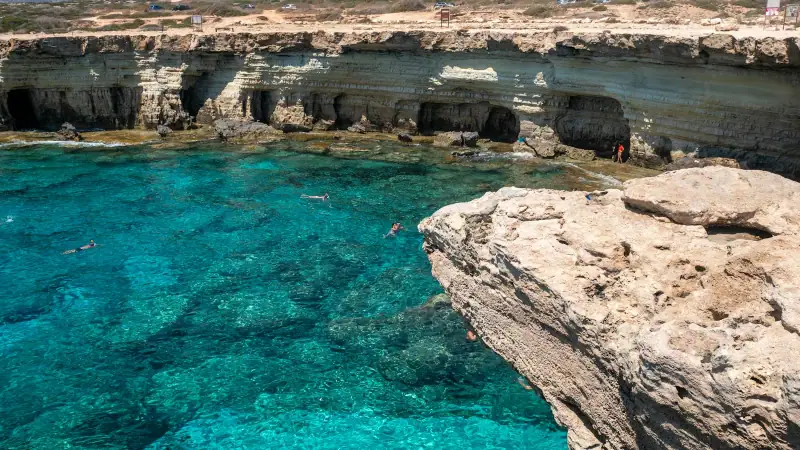
Cape Greco National Park (Kavo Greko) is the big natural surprise of the Ayia Napa area. Only 9 km (5.6 mi) east of the resort, this limestone headland jutting into the sea marks the easternmost point of Cyprus’s southeast coast, and it is one of the most spectacular sites on the island.
Cliffs and sea caves
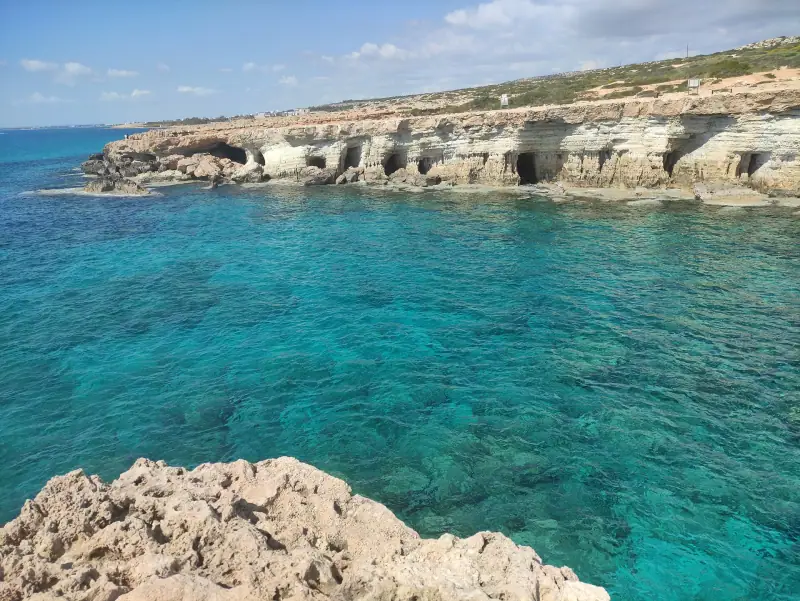
Cape Greco’s shoreline is a succession of white limestone cliffs, hollowed by the sea into caves and natural arches, some of which can be reached by kayak or by swimming. The best known:
- The Sea Caves (5 km / 3 mi from Ayia Napa, before the cape): marine cavities reached from a parking lot, with narrow passages where the sea rushes in roaring. Some can be visited by kayak from the neighboring beaches.
- The natural bridge (Love Bridge): an arch of limestone plunging into the turquoise sea, near the Sea Caves, reached from the coastal path. One of the most photographed spots in Cyprus.
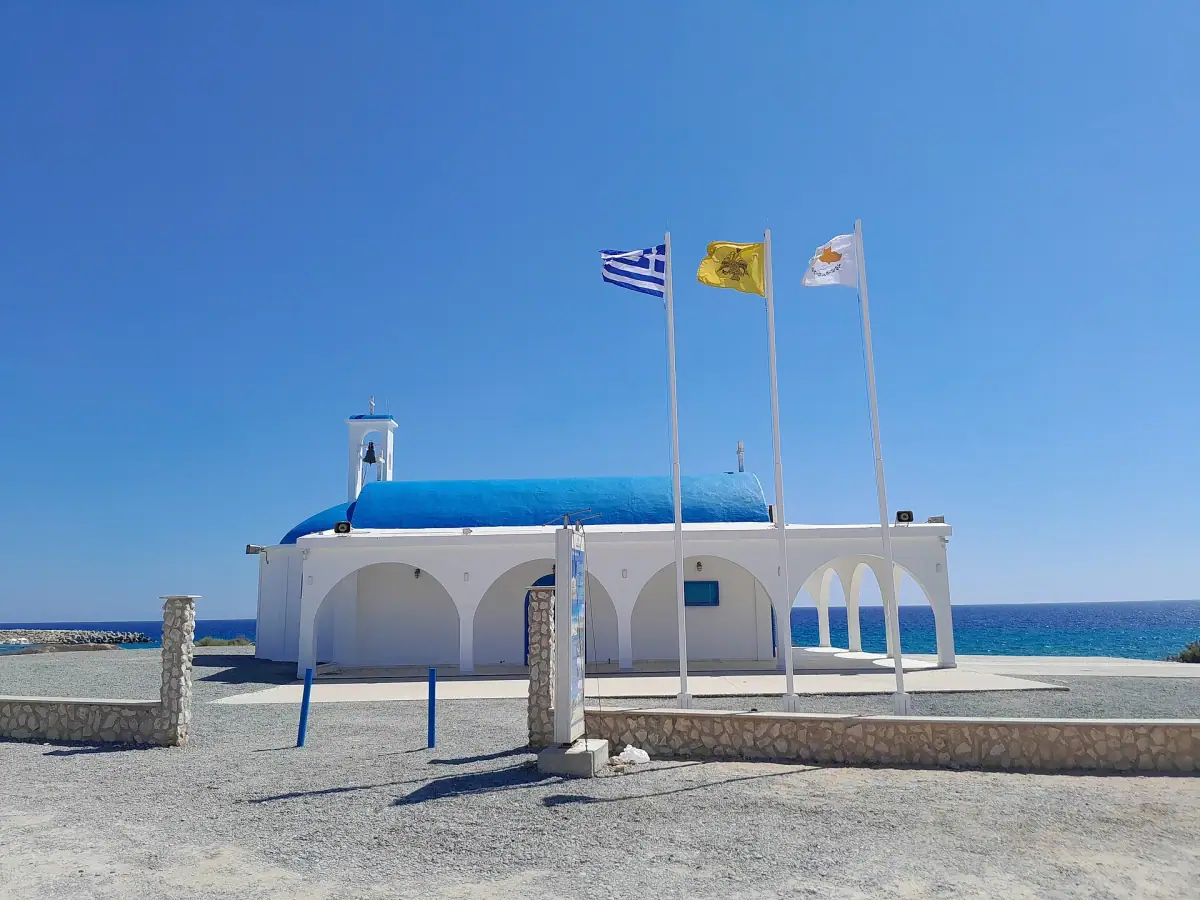
- The Agioi Anargyroi chapel on the headland: a tiny white stone chapel perched on the cliff edge, with a 360° view of the sea on one side and Famagusta Bay on the other. The sunset from this point is exceptional.
Hiking at Cape Greco
The park has a network of marked trails totaling 13 km (8 mi) running along the cliffs and through fragrant scrubland (thyme, sage, rockrose). The main coastal trail (5 km / 3 mi round trip from the parking lot) is suitable for all levels and combines sea views with wild Mediterranean vegetation.
Tip: set out early in the morning (before 9 am) to get the low light on the white cliffs and avoid the midday heat. Bring water: the cape is exposed with little shade.
Diving and snorkeling at Cape Greco
The waters of Cape Greco are among the clearest in Cyprus: visibility up to 25 to 30 meters (80 to 100 ft). The seabed varies between 3 and 30 meters (10 to 100 ft) depending on the site, with rich Mediterranean wildlife: groupers, octopus, scorpionfish, and sea turtles (Caretta caretta), frequent in summer.
Several Ayia Napa dive centers run trips to Cape Greco, including underwater caves that can only be reached by diving.
Activities and excursions in Ayia Napa
Sea kayaking, diving at Cape Greco, RIB boat trips: book your activities online.
The Underwater Museum: MUSAN
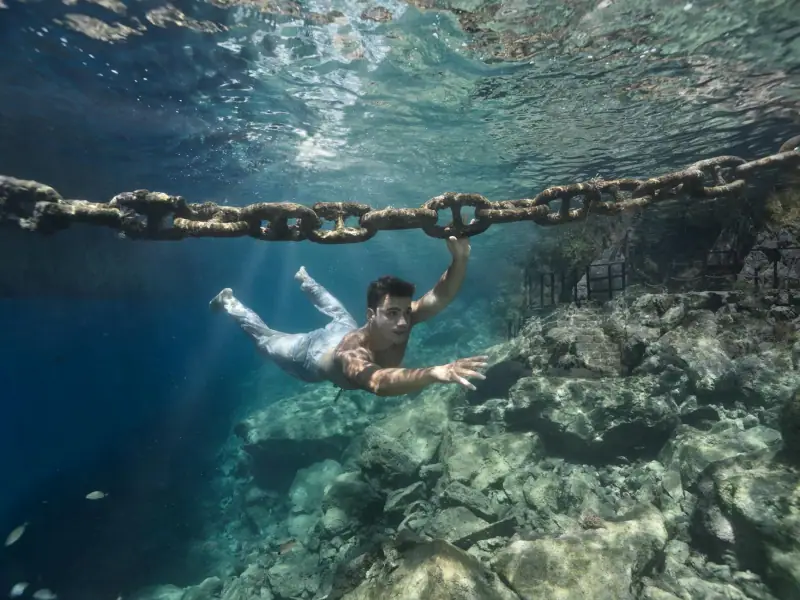
Opened in 2021, MUSAN (Museum of Underwater Sculpture Ayia Napa) is one of the most original art projects in Cyprus and one of the few underwater museums in the Mediterranean. Located 8 meters (26 ft) deep off Ayia Napa, it brings together 93 monumental concrete sculptures by the artist Jason deCaires Taylor.
The most remarkable works:
- The Crossing: an overloaded boat with 13 figures, a memorial to migrants drowned in the Mediterranean
- The Nest: an assembly of tables, chairs and household objects overgrown with marine life
- The Collector of Dreams: a seated figure surrounded by lanterns inhabited by fish
The sculptures are designed to be gradually colonized by corals and sponges, making the museum a living work in constant transformation. Visitors can explore it diving, snorkeling or from a glass-bottom boat.
Access: Ayia Napa’s dive centers and boat excursion operators all offer MUSAN trips (allow €25 to 50, ~$29 to 58, depending on the package).
Activities and water sports
Ayia Napa is the water-sports capital of Cyprus. Beach activities are plentiful:
From Nissi Beach and the other beaches
- Parasailing: an aerial view of the coast and turquoise water (~€40, ~$46)
- Jet ski: marked circuits around the Nissi islet (~€50 / 30 min, ~$58)
- Banana boat, inflatable sofa, towed tube: ideal for families
- Sea kayak: free rental or guided trip to the Sea Caves (from €15/h, ~$17)
- Pedal boats and stand-up paddleboards: for a calm exploration of the Nissi lagoon
Boat excursions
From Ayia Napa harbor, several operators offer:
- Cape Greco RIB boat (half day, ~€40 to 50, ~$46 to 58): visit to the sea caves, snorkeling in clear water, stop at Konnos Bay
- Catamaran Sunset Cruise (~€35, ~$41): a tour of the coast at sunset with a drink on board
- Lazy Days Cruise (full day, ~€60 to 70, ~$70 to 81): catamaran with lunch, snorkeling and a stop at Protaras
WaterWorld Waterpark
Two km (1.2 mi) from the center, WaterWorld Waterpark is the largest water park in the eastern Mediterranean themed on Greek mythology. With 25 slides and attractions (some among the tallest in Europe), several areas reserved for children and a wave pool, it fills a full day for families.
Admission: adults ~€35 (~$41), children 3 to 12 ~€25 (~$29). Open May to October.
Car rental in Ayia Napa
Essential for exploring Cape Greco, reaching Protaras and ranging out to Larnaca and Nicosia.
Ayia Napa’s nightlife
It is impossible to talk about Ayia Napa without mentioning its nightlife, which has built the resort’s international reputation since the 1990s. Ayia Napa remains one of the Mediterranean’s best-known clubbing destinations, with a concentration of large international clubs on the “Strip,” the town center’s main avenue.
The music scene: mainly house, techno and commercial. Clubs such as Castle Club, Guru Club and Soho reach capacities of 2,000 to 5,000 people and regularly host international DJs.
The calendar: the nightlife season runs essentially from mid-June to mid-September. Parties start late (after midnight) and end at dawn.
For non-clubbers: Ayia Napa’s nightlife is not limited to nightclubs. The bars on the central square offer a more accessible atmosphere, restaurants serve until 11 pm and the harbor-promenade “bar crawl” is a pleasant in-between.
Tip if you want to avoid the party: hotels farthest from the center and the “Strip” (notably toward Nissi Beach, 3 km / 2 mi away) are practically soundproofed from the nightlife.
Food in Ayia Napa
Food is not Ayia Napa’s strong point, as its restaurant scene is largely geared to mass tourism. That said, a few places are worth the detour.
Authentic Cypriot tavernas
Away from the center and the main roads, several tavernas serve honest Cypriot cooking:
- Meze (15 to 20 small plates of local specialties) is the typical meal for discovering the island’s cuisine: hummus, tahini, grilled halloumi, kolokasi (fried taro), souvlaki, kleftiko (lamb braised with herbs), loukaniko (Cypriot sausage)
- Halloumi: Cyprus’s signature cheese, to enjoy grilled as a starter or melted in a pita sandwich
- Fresh fish in the harbor restaurants: groupers, sea bream, squid
Cafés and breakfast
The cafés on the central square serve hearty breakfasts from 8 am: eggs, halloumi, olives, pita bread and Cypriot coffee (strong, made in a Turkish-style pot).
Meal budget in Ayia Napa
Prices are higher than in Larnaca or Nicosia, because of the heavy concentration of tourists:
- Simple meal in a taverna: €15 to 25 per person (~$17 to 29)
- Full meze: €20 to 30 per person (~$23 to 35)
- Upscale beach restaurant: €40 to 60 (~$46 to 70)
To save money, shop at the local supermarket (open even on Sundays) and have lunch on a terrace rather than on the beachfront.
A 3-day Ayia Napa itinerary
Day 1: Arrival and beaches
Morning: arrive, settle into the hotel, first swim at the nearest beach. If you are at Nissi Beach, go when it opens (9 am) to enjoy the still-empty sand.
Afternoon: visit Ayia Napa Monastery (30 minutes, free, welcome air conditioning). Stroll around the central square and the harbor. Snorkeling or kayaking from Sandy Bay.
Evening: dinner in a taverna on the central square, then an evening as you like (harbor bar or nightclub depending on your style).
Day 2: Cape Greco and the sea
Morning: leave at 8 am for Cape Greco. Hike the coastal path (2 to 3 hours), stop at the Agioi Anargyroi chapel for the panorama.
Midday: swimming and snorkeling in the coves of Cape Greco (access from the Konnos Bay and Cape Greco parking lots).
Afternoon: return to Ayia Napa. RIB boat or kayak trip to the Sea Caves (departures from the harbor, 2 to 5 pm). Late afternoon at Nissi Beach.
Evening: sunset from the harbor jetty, fresh fish dinner at the harbor restaurant.
Day 3: Protaras and MUSAN
Morning: excursion to Protaras (10 km / 6 mi north): Fig Tree Bay and its legendary water (arrive early for empty sand). Stroll through the village of Protaras, quieter than Ayia Napa.
Afternoon: MUSAN trip by snorkeling or glass-bottom boat (2 hours, departures early in the afternoon from Ayia Napa harbor).
Evening: free evening. The last night in Ayia Napa is often given over to nightlife or a final stroll along the harbor promenade at sunset.
Practical information
How to get to Ayia Napa
By air: Larnaca Airport (LCA) is the nearest, about 45 km (28 mi) away (35 to 40 min by taxi, ~€55, ~$64). Paphos Airport (PFO) is about 190 km (118 mi) away (nearly 2 hours by car, €150 to 200 by taxi, ~$175 to 230).
Bus from Larnaca: the Intercity Larnaca-Ayia Napa bus runs every hour in season (less often off season), journey 50 to 70 minutes, about €4 to 5 (~$5 to 6). It stops at Larnaca Airport on some services.
Bus from Limassol: direct Intercity bus, about 2 h 30, ~€7 (~$8).
Getting around Ayia Napa
On foot: the center, the harbor, the monastery and Sandy Bay are reachable on foot from most hotels (2 km / 1.2 mi radius).
Tourist buses: seasonal shuttles (routes 101/102) link the center, Nissi Beach, Makronissos and Cape Greco in summer (€1.50 per trip, ~$1.75).
Rental car: recommended for Cape Greco in depth, Protaras, and trips to Larnaca or Nicosia. Allow €25 to 40 a day (~$29 to 46). Reminder: you drive on the left in Cyprus.
Electric bike: rental is available in the resort (several shops near the center), ideal for Cape Greco (10 km / 6 mi of partly marked coastal track).
Budget in Ayia Napa
Ayia Napa is the most expensive resort in Cyprus in high season:
| Item | Budget | Comfort |
|---|---|---|
| Accommodation (night) | €60-90 (~$70-105) | €120-200 (~$140-230) |
| Meals (per day) | €25-35 (~$29-41) | €50-80 (~$58-93) |
| Local transport | €5-15 (~$6-17) | €20-40 (~$23-46) |
| Activities | €20-40 (~$23-46) | €60-120 (~$70-140) |
| Total / day | €110-180 (~$128-210) | €250-440 (~$290-510) |
For an overview of prices in Cyprus and tips for controlling your budget, see the Cyprus budget guide.
Ayia Napa in your Cyprus trip
Ayia Napa is generally paired with Protaras (10 km / 6 mi) to make up the east coast region, with two different atmospheres: Ayia Napa for partying and big beaches, Protaras for a calmer, more family-oriented stay. Many travelers combine the two over a week.
From Ayia Napa, reaching Larnaca takes 45 minutes by car, an ideal day trip for the Church of St. Lazarus, the salt lake and the flamingos. For a longer stay, the Cyprus road trip article offers a 7 to 10-day itinerary that includes Ayia Napa, Larnaca, Limassol and Paphos.
To choose the best time for your visit and know whether the beaches will be at their best, see the guide to the best time to visit Cyprus.
Ayia Napa is a destination that polarizes: you either love it or run from it. But if you come at the right time, June or September, outside the nightlife peaks, you will discover a beach resort on an incredible coast, with beaches that alone justify the trip.
Frequently asked questions
Is Ayia Napa suitable for families or only for partygoers?
Ayia Napa suits families very well, especially outside July-August. Beaches such as Nissi Beach, Cape Greco, WaterWorld and the underwater museum make it an ideal destination for children. The nightlife reputation mostly concerns the town center and the nightclubs, well separated from the residential areas and family hotels.
What is the best beach in Ayia Napa?
Nissi Beach is the most emblematic: white sand, shallow turquoise water, good atmosphere. For more calm, Makronissos Beach (to the west) is less busy. Fig Tree Bay in Protaras, 10 km (6 mi) north, is often cited among the most beautiful beaches in the Mediterranean for the quality of its water.
When should you go to Ayia Napa?
June and September are the best periods: warm sea (24 to 26 °C / 75 to 79 °F), reliable sun, fewer people than July-August. July and August offer the best beach conditions but it is the high season for nightlife, with big crowds. May is pleasant for visiting Cape Greco. Winter is quiet: most accommodation and restaurants close from October to April.
How do you get to Ayia Napa from Larnaca Airport?
Larnaca Airport (LCA) is about 45 km (28 mi) from Ayia Napa. The Intercity bus links the two in about 50 to 70 minutes for €4 to 5 (~$5 to 6). A taxi costs €50 to 60 (~$58 to 70) and takes 35 to 40 minutes. Renting a car at the airport is the best option if you plan to explore the area and Cape Greco.
Is Cape Greco really worth the detour from Ayia Napa?
Absolutely. Cape Greco National Park is one of the finest natural sites in Cyprus: limestone cliffs sculpted by the sea, coastal hiking trails, sea caves you can swim into, and spectacular sunsets from the Agioi Anargyroi chapel. Less than 10 km (6 mi) from Ayia Napa, it makes a half day of hiking or cycling in wild Mediterranean scenery.
Are there things to see in Ayia Napa apart from the beaches?
Yes. The medieval monastery is an architectural gem right in the town center. The underwater museum (Sculpture Park) offshore is unique in the Mediterranean. Cape Greco offers hiking and diving. And the Thalassa Museum (museum of the sea) traces the maritime history of Cyprus. Finally, the craft market on the central square brightens summer evenings.
Do you need a car in Ayia Napa?
For Ayia Napa alone, a car is not essential: the main beaches are reachable on foot or by tourist bus. A car is, however, very useful for exploring Cape Greco in depth, reaching Protaras, visiting Larnaca (45 km / 28 mi) and ranging along the east coast. In Cyprus you drive on the left; roads are well maintained.
More Cyprus guides
Keep reading
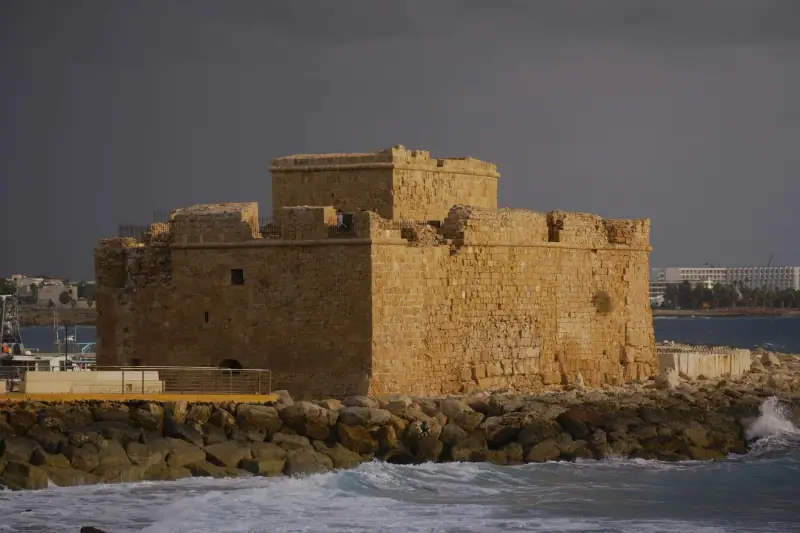
Visiting Paphos: A Complete Guide to the City of Aphrodite
Visit Paphos: UNESCO Roman mosaics, Tombs of the Kings, the harbor castle, Aphrodite's Rock, Coral Bay and the Akamas. A complete guide.
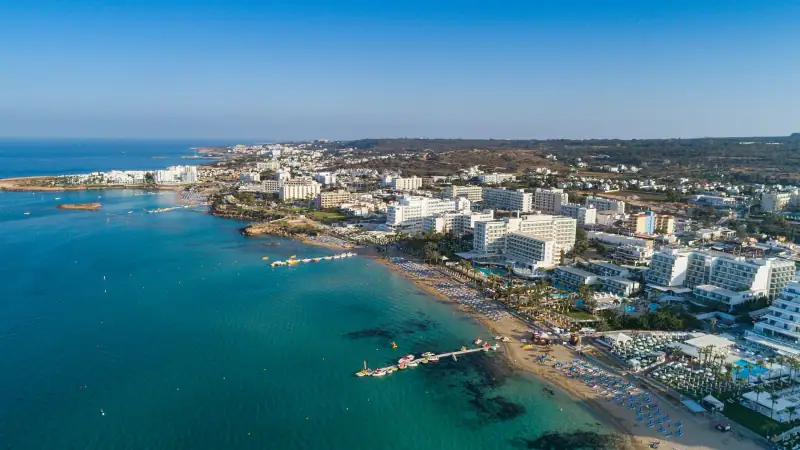
Visiting Protaras: A Complete Guide to Cyprus's Family Resort
Complete guide to Protaras: Fig Tree Bay, Cape Greco, beaches, diving, activities and practical information for Cyprus's east coast.
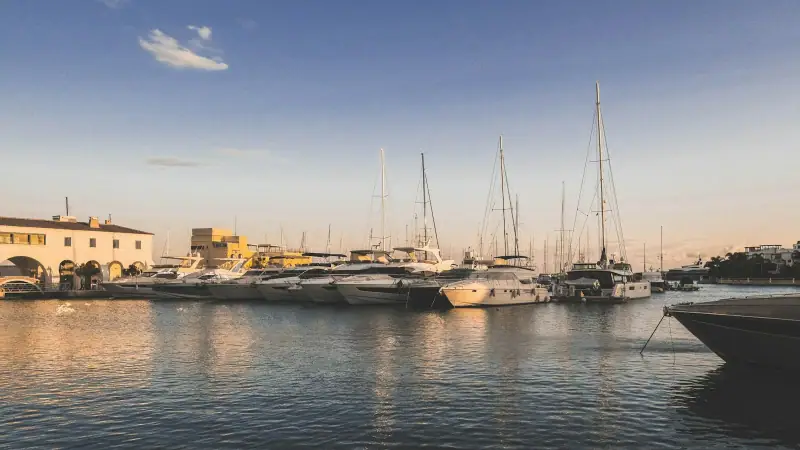
Visiting Limassol: A Complete Guide to Cyprus's Second City
Everything you need to visit Limassol: medieval castle, old town, marina, beaches, wine and food. A complete guide with a 2-day itinerary.
Ready-made
Cyprus itineraries
5 days
Cyprus in 5 Days Without a Car: A Realistic Bus Itinerary
LarnacaLimassol
7 days
Cyprus in 7 Days: A Complete Day-by-Day Itinerary
Cyprus 7-day itinerary: the best plan for a full week. From Paphos to Ayia Napa via Limassol, Nicosia and the Troodos, day by day.
Cyprus Road Trip: The Complete Itinerary Around the Island
Drive around Cyprus in 10 to 14 days. Complete itinerary, essential stops and practical tips for an unforgettable road trip.