What to see
Visiting Manuel Antonio: a complete guide to the national park and beaches
We may earn a commission when you book through links on this page, at no extra cost to you. We don't visit or try the places we cover: we summarize published sources. How we work
In short
- The national park is closed on Tuesdays and daily entry is limited: book your ticket online on the SINAC site, days ahead in high season. It usually opens 7 am to 4 pm.
- From San José it is about 155-165 km (96-103 mi), 3 h to 3 h 30 by car on Route 27 then Route 34. A standard vehicle is enough.
- Plan two to three days: one for the park (arrive at opening), one for the beaches and water activities, and a half day around.
- Quepos (about 7 km / 4 mi from the park) suits nightlife and budgets; the Manuel Antonio hillside suits ocean views and quiet.
On Costa Rica’s central Pacific coast, where tropical jungle drops straight into a turquoise sea, Manuel Antonio has become one of the country’s most emblematic destinations. This little corner of paradise, at once a national park, a charming village and a beach resort, packs in everything people come to Costa Rica for: monkeys leaping from tree to tree a few meters from you, sloths hanging in the canopy, white-sand beaches framed by volcanic rocks, and breathtaking biodiversity. Here is the complete guide to getting the most out of Manuel Antonio.
Manuel Antonio National Park
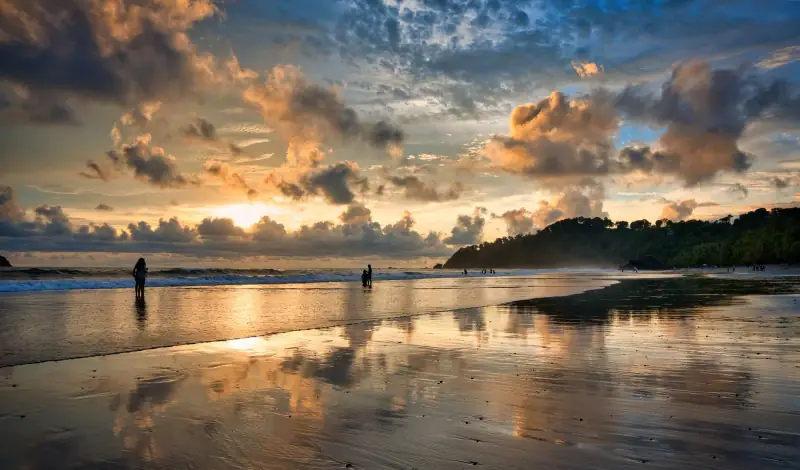
Manuel Antonio National Park is one of Costa Rica’s natural jewels. Although it is one of the smallest national parks in the country (about 1,983 hectares / 4,900 acres of land), it regularly ranks among the most visited, which shows its exceptional appeal but also explains the need for advance booking.
What awaits visitors in the park
The park protects a mosaic of remarkable habitats: primary rainforest, mangroves, coastal lagoons, coral reefs and several unspoiled beaches. This diversity of ecosystems in a compact space explains the richness of its wildlife. In a single morning in the park, it is not unusual to see dozens of different animal species.
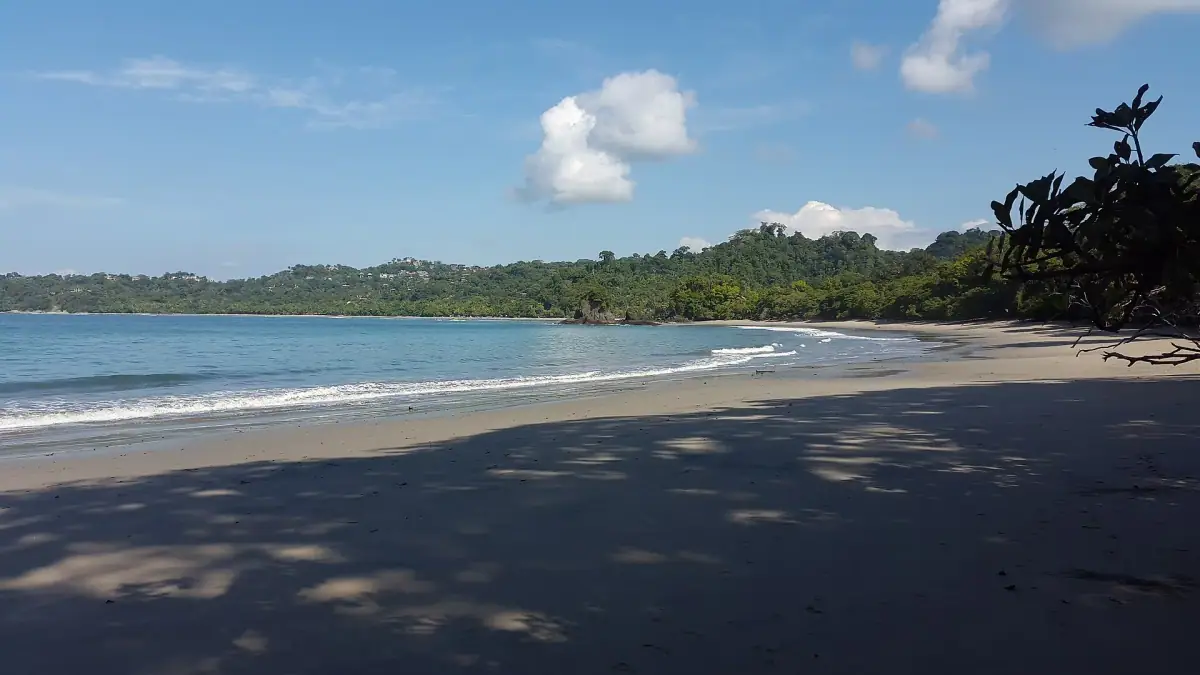
The beaches inside the park are among the most beautiful in Costa Rica. Playa Manuel Antonio, with its white sand and generally calm water, is the main and busiest beach. Playa Espadilla Sur has a wilder atmosphere and is often less crowded. Playa Puerto Escondido and Playa Playita, more remote and reachable only at low tide or by kayak, reward patient walkers with almost total solitude.
Hours, tickets and access
The park is closed on Tuesdays, a crucial point for your planning. From Wednesday to Monday it is generally open from 7 am to 4 pm (check the last entry time with SINAC). Daily entry is limited, and tickets are booked online on the official website of SINAC (the National System of Conservation Areas). In high season, slots sometimes sell out several days ahead.
Indicative price: non-residents pay an entrance fee per person (check the current rate on the official website, as prices change regularly).
Getting to the park: the main entrance is at the end of Manuel Antonio’s main road, past the village. Paid parking is available outside. On foot from the center of Manuel Antonio village, allow about 10 to 15 minutes.
Guided tours in Manuel Antonio National Park
Guided visits with naturalist guides to spot the park's wildlife.
The park’s trails
The trail network in Manuel Antonio park is well developed and accessible to most visitors:
- Sendero Principal: the main trail linking the entrance to the beaches through the forest. This is where wildlife is easiest to spot in the early morning.
- Sendero Perezoso (sloth trail): a secondary trail that climbs into the forest and offers good chances of seeing three-toed sloths in the trees.
- Sendero Playa Espadilla Sur: runs along the beach on the forest side, pleasant for walking and watching seabirds.
- Sendero Congo: a more demanding loop that goes deep into the primary forest, recommended with a guide.
Tip: arrive at opening at 7 am. Wildlife is more active in the cool morning hours, and the park is still quiet. After 10-11 am, groups arrive in large numbers and the noise lowers your chances of sightings.
Wildlife watching: monkeys, sloths and birds
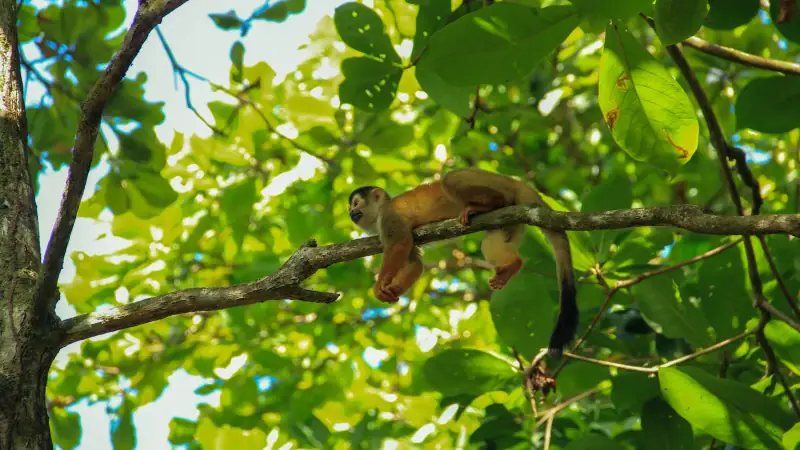
Manuel Antonio is probably the best place in Costa Rica to see wildlife in its natural habitat without excessive effort. Here are the species you are very likely to meet.
Monkeys
Two monkey species share the park’s forest:
The white-faced capuchin (Cebus imitator) is the most visible and boldest. These intelligent monkeys, organized in family groups, move at human height in the trees along the trails. They are used to visitors, which makes them easy to watch. Important: never feed them. Human food alters their natural behavior and health, and they can bite or scratch.
The squirrel monkey (Saimiri oerstedii, locally called mono titi) is a species endemic to Costa Rica’s Pacific coast and northwest Panama, listed as endangered. Much smaller and shyer than the capuchin, it moves in large groups through the canopy. Seeing one is a special experience.
Sloths
Two sloth species live in the area:
The three-toed sloth (Bradypus variegatus) is more active during the day and so easier to see. Look for it in Cecropia trees, its favorite plant. It comes down from its tree about once a week to urinate and defecate at the foot of the trunk.
The two-toed sloth (Choloepus hoffmanni) is nocturnal and harder to find by day; it sleeps curled in a ball in the leaves or in a tree hollow.
A naturalist guide will know how to spot these animals, which an untrained eye easily mistakes for coconuts or knots in the branches.
Birds
More than 350 bird species have been recorded in the park and its immediate surroundings. The most spectacular:
- Scarlet macaw (Ara macao): giant parrots with scarlet plumage that fly over the park and nest in tall trees. Their presence is an attraction in itself.
- Keel-billed toucan: its huge multicolored bill is unmistakable.
- Kingfishers and other coastal birds: seen near the coastal lagoon.
- Herons and ibises: present in large numbers in the mangrove areas.
Car rental for Manuel Antonio
Ideal for exploring the Pacific coast and the Quepos area at your own pace.
Manuel Antonio and Quepos beaches
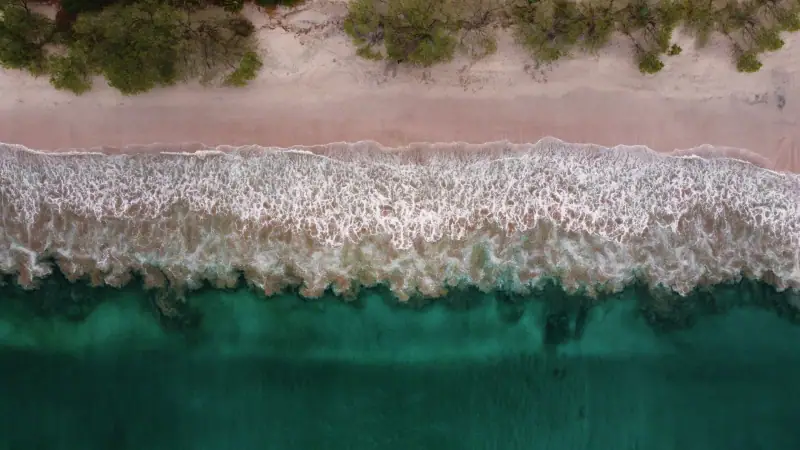
Beaches inside the national park
Playa Manuel Antonio is the star of the park. Its very fine white sand, generally calm water (perfect for swimming) and tree-framed setting make it one of the most beautiful beaches in Costa Rica. It is busy though, especially in high season. Arrive early to find a spot under the trees.
Playa Espadilla Sur is reached from the main trail. Less sheltered than Playa Manuel Antonio, its waves can be stronger, which makes it less suited to swimming but nicer for walking and contemplation.
Playa Puerto Escondido is the wildest and least known. It is reachable only at low tide via a rocky passage at the far end of Playa Manuel Antonio. Check tide times before venturing there so you do not get stuck.
Beaches outside the park
Playa Espadilla (or Playa Espadilla Norte) is right in front of Manuel Antonio village, outside the park. It is longer, free to enter (no entrance fee), with a few sunbed rentals and small beachfront restaurants. The waves can be significant: perfect for surfing, less so for toddlers.
Playa Biesanz is a quiet little cove reached on foot from Manuel Antonio village, often overlooked by tourists. It is sheltered by a rocky headland and offers decent snorkeling conditions in the dry season.
Activities in Manuel Antonio
For a day trip about an hour to the south, see our guide to the Nauyaca waterfalls on foot, by 4x4 or on horseback.
Water activities
The waters off the Manuel Antonio coast offer several popular water activities:
Snorkeling and diving: the rocky reefs around the park shelter interesting marine life. Visibility is best in the dry season (December-April). Boat trips with snorkeling gear generally leave from the port of Quepos.
Sea kayaking: exploring the park’s coves and cliffs by kayak is a unique experience. Playa Biesanz and the coves around the park suit this activity well. Rentals are available from local operators.
Sport fishing: Quepos is internationally known as one of Costa Rica’s best big-game fishing spots. The port of Quepos is the departure point for many offshore fishing trips (marlin, sailfish, tuna). Several charter boats operate from the port.
Surfing: Playa Espadilla (north) is the area’s main surf spot. Waves are steady but can be powerful for beginners. Surf lessons are offered by several local schools.
Activities in the forest
Guided hikes: beyond the national park, the hills around Manuel Antonio offer fine hiking trails with views of the ocean and the jungle. Certified independent guides offer half-day or full-day outings.
Night walks: guided outings in the forest after sunset let you see nocturnal species: poison dart frogs, geckos, tarantulas, opossums and glowing insects. A very different experience from daytime visits.
Río Savegre trip: about 15-20 km (9-12 mi) south of Quepos, the Savegre valley is one of the richest areas for biodiversity on Costa Rica’s Pacific side, with excellent birdwatching in a very well-preserved forest.
Quepos: the town worth discovering
Often reduced to a simple stop on the way to the park, Quepos deserves more than a quick stop. About 7 km (4 mi) from the national park, this lively small town is the center of life in the area.
Local life in Quepos
The Quepos market (Mercado Municipal) is the most authentic place in town. Local tropical fruit (mamón chino, cas, nance), fresh vegetables, local fast-food counters: it is the ideal place to feel the pulse of everyday Costa Rican life away from tourist areas.
The Quepos waterfront has gradually turned into a pleasant promenade with seafood restaurants and bars. The fishing port and the excursion port are there, and it is pleasant to watch the fishing boats come back in the late afternoon.
Food in Quepos
Quepos’ food scene offers a wide variety of restaurants at all prices. The sodas (informal local restaurants) downtown serve casados and daily specials at accessible prices. Street vendors sell agua de pipa (fresh coconut water) and sweet churros, popular at the end of the day.
For fresh seafood (tuna, sea bream, mahi-mahi), several waterfront restaurants cook the catch of the day in simple and tasty preparations. Costa Rican ceviche (less acidic than the Peruvian version, with cilantro and lime) is well worth trying.
Be sure to try gallo pinto for breakfast in one of the market sodas. This mix of rice and black beans sautéed with cumin, cilantro and Lizano sauce is the quintessential national dish.
See our guide to Costa Rican cuisine to learn more about the country’s flavors.
Where to stay in Manuel Antonio and Quepos
The accommodation offer is one of the most varied in Costa Rica. Between Quepos and the park, a succession of hotels, lodges and villas cling to the green hills with often spectacular ocean views.
Accommodation with ocean views (Manuel Antonio hills)
The road linking Quepos to the national park runs along hills with extraordinary panoramas of the Pacific and the jungle. Upscale lodgings and boutique hotels are plentiful, with infinity pools and terraces facing the ocean. Prices can be high but the experience is exceptional.
Budget options in Quepos
Downtown Quepos has hostels and guesthouses at accessible prices. This option is practical for travelers by bus or without a car, since public transport between Quepos and the park runs regularly. Allow roughly 20 to 40 minutes on foot or 10 minutes by bus or taxi from Quepos to the park entrance.
Camping
Camping is not allowed inside the national park: visits are daytime only and tents, hammocks and stoves are prohibited. To sleep near the park, choose accommodation in Quepos or Manuel Antonio; check current rules with SINAC.
For a full overview of available accommodation, see our Manuel Antonio accommodation guide.
Places to stay in Manuel Antonio and Quepos
Lodges with ocean views, boutique hotels and hostels for every budget.
How to get to Manuel Antonio
By car from San José
The road from San José is well signposted and in good condition for most of the trip. From San José, take Route 27 (Autopista Próspero Fernández) toward the Pacific coast in the direction of Jacó, then Route 34 (Costanera Sur) south toward Quepos. The total trip is about 155-165 km (96-103 mi) to Quepos, taking 3 h to 3 h 30 in normal conditions.
A standard vehicle is enough: the road is fully paved and in good condition. A 4x4 is not necessary, unlike some other destinations such as Monteverde.
By bus from San José
Bus companies (for example Transportes Morales or Tracopa; check the departure terminal with them) run direct buses from San José to Quepos, with a stop at the park entrance on some services. The trip takes about 3 h 30 to 4 h. It is the cheapest option, but check schedules in advance, as departures are limited.
By shared shuttle
Shared private shuttles link Manuel Antonio daily with San José, La Fortuna, Monteverde, Tamarindo and Puerto Viejo. These shuttles are comfortable, quick and convenient, and can be booked through local travel agencies. It is often the best compromise for travelers who do not rent a car.
By plane
Quepos airport (La Managua, code XQP) receives domestic flights from San José’s Juan Santamaría airport. Sansa Airlines operates this route; check schedules and other destinations with the airline. The flight takes about 30 minutes, versus 3 h 30 by car, a welcome comfort for a short trip.
Manuel Antonio in your Costa Rica itinerary
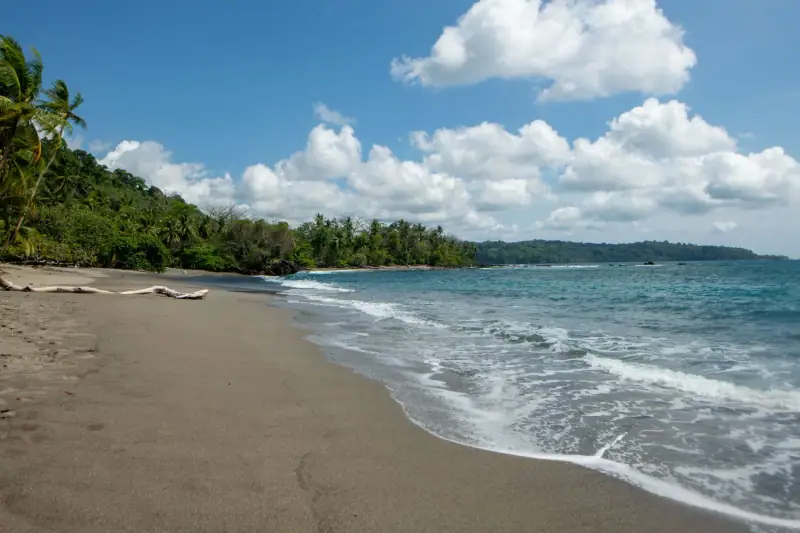
Manuel Antonio fits well into several types of circuit.
Classic 10-day circuit
Costa Rica’s most popular circuit combines San José (1 day), then La Fortuna/Arenal (2-3 days), Monteverde (2 days), Manuel Antonio (2-3 days), and back to San José. From Monteverde, the descent to the Pacific coast and Manuel Antonio takes about 3 to 4 hours depending on the route chosen. See our complete Costa Rica road trip guide.
Short getaway from San José
Manuel Antonio is perfect for a 3-4 day getaway from San José. Three hours away by road, it offers a striking contrast with the capital: jungle, beaches and wildlife within reach of a long weekend.
Pacific coast combination
If the Pacific coast appeals to you, combine Manuel Antonio with Dominical (about 45 km / 28 mi south) and Uvita (about 60 km / 37 mi south), wilder and less crowded, which round out the experience well. Our guide to Costa Rica’s beaches gives an overview of all the options.
Practical tips for visiting Manuel Antonio
Book your park tickets early. This is tip number one. The park sells out several days ahead in high season. Do not count on buying tickets at the entrance gate.
Closed on Tuesdays. Plan your visit around this weekly closure.
Protect your belongings at the beach. The park’s capuchin monkeys are skilled thieves. Never leave bags or food unattended, even for a few minutes. A sealed plastic bag or a well-closed backpack is advised.
Protect yourself from the sun. The heat in Manuel Antonio can be intense all year. Water-resistant sunscreen, a hat and regular hydration are essential.
Light hiking shoes. On the park trails, light closed shoes (trail-runner type) are better than flip-flops, as roots and wet rocks can be slippery.
Local cash (colones). Bring cash for small providers, market sodas and local transport. ATMs in Quepos generally work well.
Weather: the central Pacific coast is drier than the Caribbean coast. In the dry season (December-April), days are generally sunny and nights cool. In the rainy season, showers are often brief and intense in the afternoon, leaving mornings clear, ideal for the park.
Manuel Antonio is one of those places that justify a trip to Costa Rica on their own. Where the forest meets the ocean, where a monkey watches you out of the corner of its eye while you read, where a sloth dozes six meters (20 ft) above your head: this everyday magic, open to everyone, is what makes Manuel Antonio an unforgettable destination. Pura Vida.
To plan your full itinerary, see our Costa Rica road trip guide and our selection of the most beautiful beaches.
Frequently asked questions
Do you need to book ahead for Manuel Antonio National Park?
Yes, absolutely. Park entry is limited to a set number of visitors per day and you must book your ticket online before your visit, especially in high season (December-April and July-August). Tickets sometimes sell out several days ahead at peak times. The park is also closed on Tuesdays.
How do you get to Manuel Antonio from San José?
Allow about 3 h to 3 h 30 by car from San José (about 155-165 km / 96-103 mi to Quepos). The main road goes via Route 27 (Autopista Próspero Fernández) to the Pacific coast as far as Jacó, then Route 34 (Costanera Sur) south to Quepos. Direct buses (Transportes Morales, Tracopa: check the departure terminal) link San José to Quepos in about 3 h 30 to 4 h. Shared shuttles are also available from the main tourist towns.
What is the best time to visit Manuel Antonio?
The dry season (December to April) offers the best weather for the beaches and the park. January to March is ideal: sun, calm sea, active wildlife. July and August remain pleasant despite some showers. Avoid September-October, the rainiest months. In high season, book accommodation and park tickets several weeks ahead.
Can you see monkeys and sloths in Manuel Antonio?
Yes, Manuel Antonio is one of the best places in Costa Rica to see wildlife in its natural habitat. White-faced capuchin monkeys and squirrel monkeys (titis, an endangered species) are very present in the park. Three-toed sloths can be seen in the trees along the trails. A naturalist guide will multiply your chances of sightings. Do not feed the animals.
Quepos or Manuel Antonio: where to stay?
Quepos is the lively town with restaurants, bars, a market and practical services (about 7 km / 4 mi from the park). Manuel Antonio (the beach-resort village) is on the road between Quepos and the park, with hotels often offering ocean views from the hills. For beaches and a quiet atmosphere, choose Manuel Antonio. For nightlife and budget, Quepos is more practical.
How long should you plan in Manuel Antonio?
Two to three days is ideal. One day for the national park (arrive at opening for wildlife), one day for the Quepos beaches and water activities, and a half day to explore the surroundings. If you love beaches and nature, three full days are easily justified.
More Costa Rica guides
Keep reading
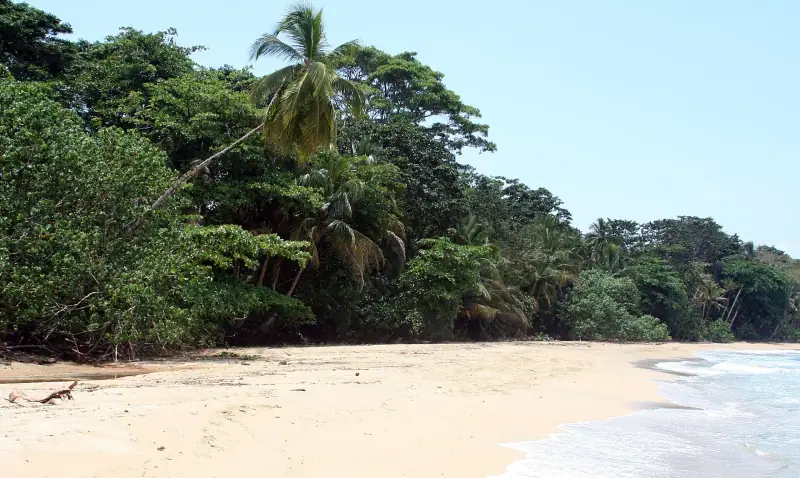
Visiting Puerto Viejo: a complete guide to Costa Rica's Caribbean coast
Everything about visiting Puerto Viejo de Talamanca: beaches, surf, Afro-Caribbean culture, Manzanillo, Cahuita and practical tips.
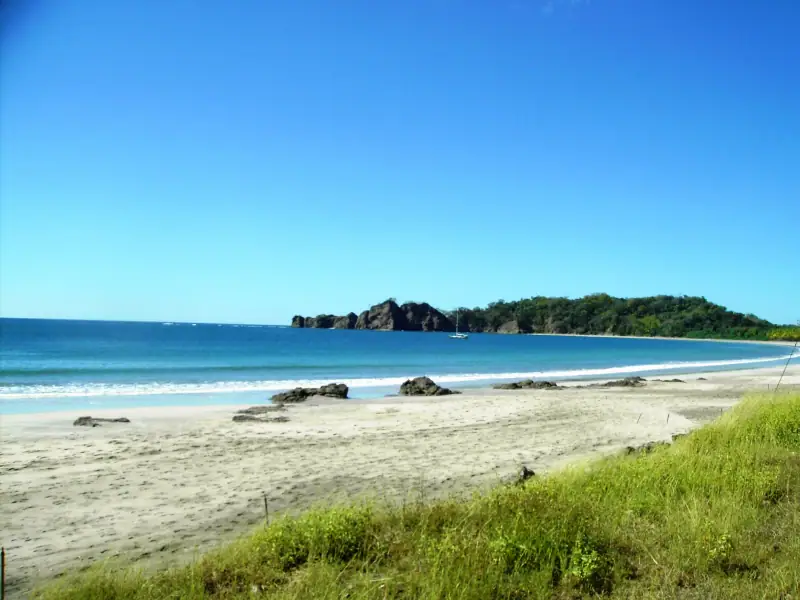
Visiting Guanacaste: a complete guide to Costa Rica's northern Pacific
Complete Guanacaste guide: beaches, volcanoes, national parks, surf, sea turtles and Pura Vida. Everything you need to plan your stay.
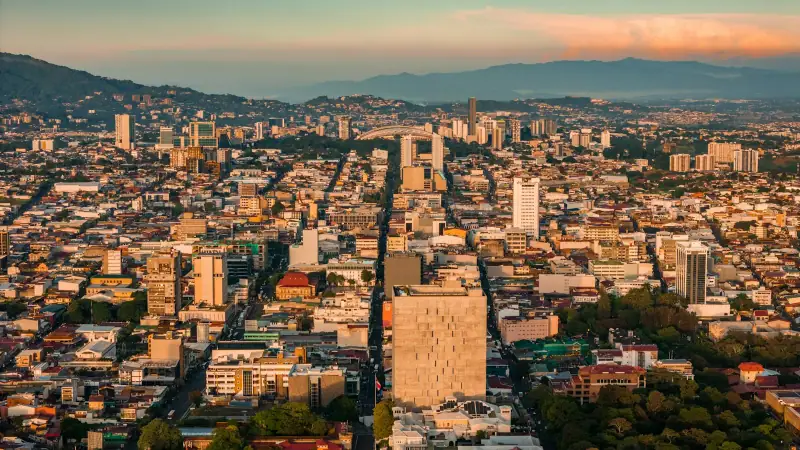
San José, Costa Rica: the capital's top sights
What to see in San José: museums, neighborhoods, markets and food in Costa Rica's capital. A guide to spending 1 to 3 days there.
Ready-made
Costa Rica itineraries
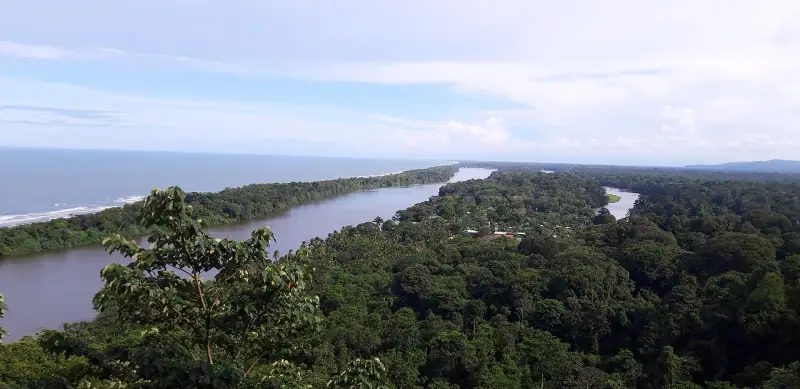
10 days
Costa Rica in 10 days: an itinerary from the Caribbean to the volcanoes
TortugueroPuerto ViejoLa FortunaMonteverde
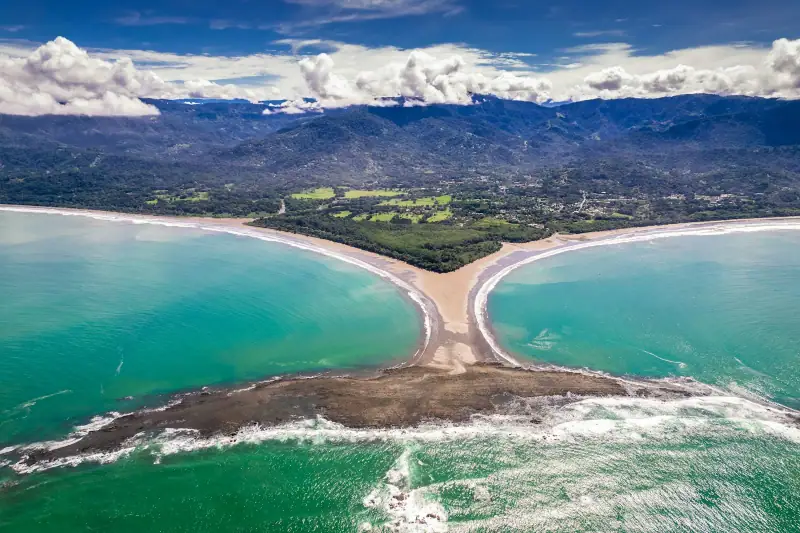
14 days
Costa Rica road trip: the grand tour in 2 weeks
14-day Costa Rica road trip by 4x4: from volcanoes to beaches, Caribbean to Pacific. Full itinerary with road tips and where to stay.
10 days
Costa Rica in 10 days without a car: a realistic shuttle and bus itinerary
San JoséLa FortunaMonteverdeManuel AntonioSan José