What to see
Visiting Brava: Complete Guide to Cape Verde's Island of Flowers
We may earn a commission when you book through links on this page, at no extra cost to you. We don't visit or try the places we cover: we summarize published sources. How we work
In short
- Brava has no airport: the only way in is the ferry from São Filipe on Fogo, about one hour to the port of Furna, with limited schedules.
- The island covers about 64 km² (25 sq mi), with a high point of about 976 m (3,202 ft) and a wetter microclimate that makes it green and flowery.
- Accommodation is limited to a few family guesthouses, mostly in Nova Sintra; many travelers make it a day trip from Fogo.
- Carry enough cash and keep a spare day in your plans, since ferries can be canceled in rough seas.
At the far end of the Cape Verde archipelago lies an island that few travelers reach and that those who have visited it talk about with quiet fervor. Brava, the smallest of Cape Verde’s inhabited islands, has no airport, no white-sand beaches and no international resort. What it does have is rare in the archipelago: lush, deep-green vegetation, colorful houses clinging to the mountainside, a silence filled with wind and morna, and that end-of-the-world atmosphere that belongs to islands chosen only by dedicated travelers.
Brava is the island of flowers, Ilha das Flores, a nickname that says it all. In an archipelago dominated by black volcanic rock, ocher sand and dry wind, Brava is a generous anomaly: its slopes are covered with bougainvillea, hibiscus, oleander and fruit trees nourished by the humid trade winds. It is an island apart, reachable only by sea from Fogo, which takes effort to reach and amply rewards it.
Brava in brief
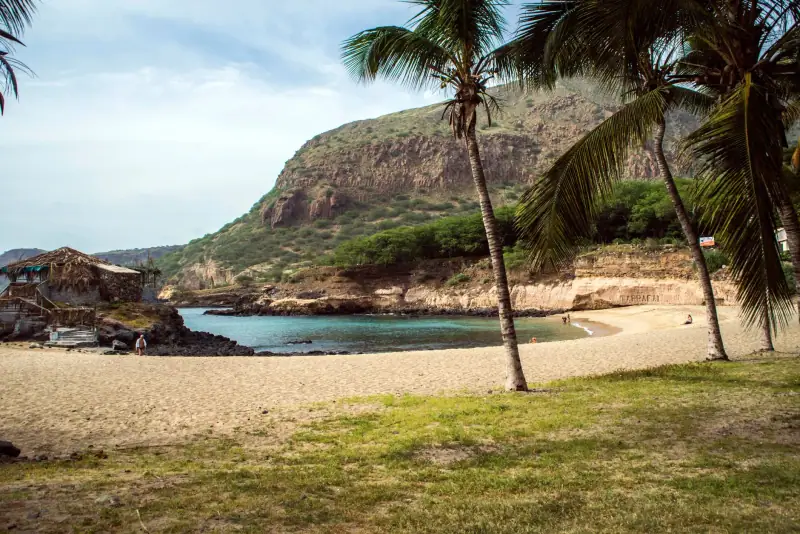
Brava is the ninth-largest island of Cape Verde, and the smallest inhabited island of the archipelago, with an area of about 64 km² (25 sq mi). It belongs to the Sotavento islands (Leeward Islands) in the south of the archipelago, and lies about 20 km (12 mi) southwest of Fogo, to which it is geologically and culturally close.
The terrain. Brava is an entirely volcanic island, young on the geological scale, with steep cliffs, eroded calderas and green ridges. Its highest point, Fontainhas, rises to about 976 meters (3,202 ft). The terrain is so steep that winding roads are the norm, and some inland villages can be reached only on foot or by 4x4.
The population. Brava has about 5,000 to 6,000 residents, but its diaspora community in the United States, notably in New Bedford and Providence, in Massachusetts and Rhode Island, is far larger. The island has historically seen heavy emigration to the United States, tied to the 19th-century American whaling industry, which recruited Cape Verdean sailors. This American diaspora has deeply marked local culture, traditions and even the architecture of some houses in Nova Sintra.
The atmosphere. On Brava, the pace of life is that of remote islands: slow, contemplative, rooted in farming cycles and community exchange. The island lives from agriculture (vegetables, coffee, sugarcane), fishing and remittances from the diaspora. Tourism is almost nonexistent, which is exactly what makes it so endearing.
Flights to Cape Verde
Compare flights to Praia or Fogo, the required starting point for reaching Brava.
How to get to Brava
This is the first question to settle, and the most decisive. Brava has no airport. An airfield project once existed, but the island has remained accessible only by sea, which contributes to its isolation and preservation.
The ferry from São Filipe (Fogo)
The only practical way to reach Brava is the ferry from São Filipe, the main town on the island of Fogo. The crossing to the port of Furna, Brava’s small coastal port, generally takes about one hour in good sea conditions.
Service is provided by companies such as Cabo Verde Fast Ferry or other local operators, but schedules are limited (often one or two rotations a day), and crossings can be canceled or postponed in rough seas, which is not unusual in this corner of the South Atlantic. It is strongly advised to check up-to-date schedules with your guesthouse or directly with the shipping companies, and not to plan a tight connection after a crossing from Brava.
Getting to Fogo
To reach São Filipe (Fogo), you can:
- Take a domestic flight from Praia (Santiago island), with TACV or other inter-island operators. Flight time is about 30 minutes.
- Arrive directly on Fogo on a seasonal European charter flight.
- From Praia, a ferry also reaches Fogo, but the crossing is long.
Getting around the island
On Brava, transport is reduced to the essentials: a few local taxis, aluguers (shared transport) linking the main villages at variable times, and walking on the trails. Renting a vehicle remains difficult on the island, since rental cars are rare and often unavailable. The most common solution is to arrange a local driver from Furna or Nova Sintra, who knows the roads and the difficult passages.
Nova Sintra, the flowered capital
Nova Sintra is the capital of Brava, perched at about 520 meters (1,710 ft) of altitude in the heart of the island. Its name pays homage to Sintra, a coastal town in Portugal famous for its romantic atmosphere and its palaces surrounded by greenery, a topographically fitting choice, since Nova Sintra enjoys the same humid microclimate as the heights of Sintra.
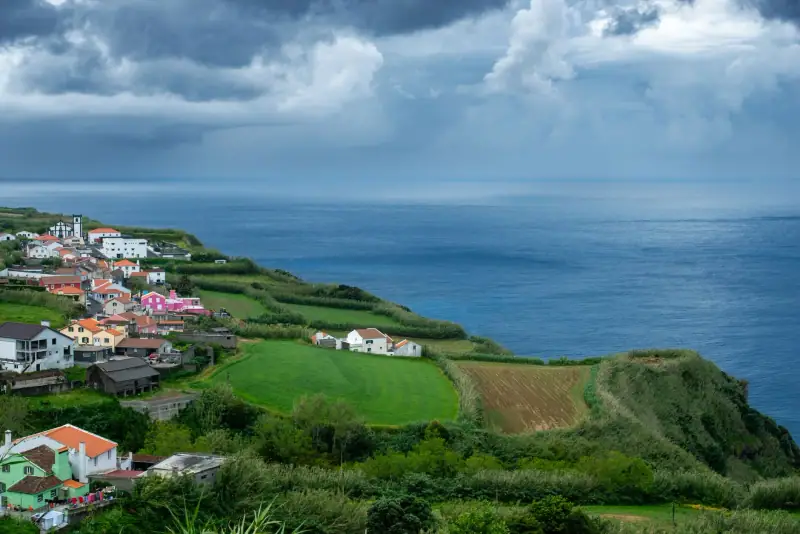
The town is small, a few thousand residents at most, but surprisingly lively for such an isolated island. The colorful houses, painted sky blue, ocher yellow, coral pink or colonial white, line narrow lanes paved in calçada, creating a townscape of great aesthetic coherence. Gardens and courtyards overflow with flowers and greenery, giving the town a particular softness.
The central square (praça) is Nova Sintra’s social heart: a space shaded by centuries-old trees and surrounded by colonial buildings, where residents gather at the end of the day. This is where you best hear the music rising from neighboring houses and the conversations in Cape Verdean Creole, and where you sense the island’s rhythm of life.
The church of Nossa Senhora do Monte overlooks the town from above. Built in the 18th century and remodeled several times since, it remains an architectural and spiritual landmark for residents. The climb to the church already offers a remarkable panorama over Nova Sintra’s rooftops and the surrounding valleys.
Traces of the American diaspora. Strolling through Nova Sintra, you sometimes spot houses whose architecture shows a North American influence: sash windows, wooden verandas, interior decoration imported from the United States. These influences reflect the historic ties between Brava and the Cape Verdean community in New England, which go back to the 19th century.
Brava’s landscapes: the island of flowers in pictures
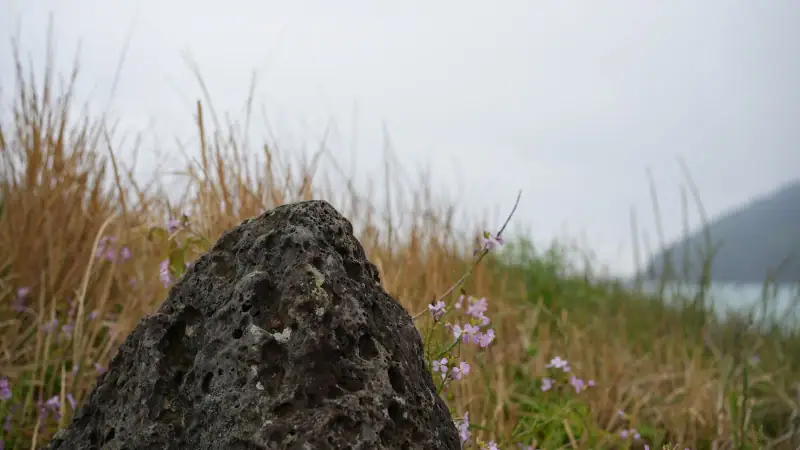
What strikes you on arrival at Brava is the contrast with flat, arid islands like Sal or Boa Vista. Here, everything is vertical, green and alive.
Vegetation. Brava’s slopes are covered with vegetation that the Atlantic trade winds regularly moisten. Bougainvillea, hibiscus, aloes, prickly pears, jacarandas, oleanders, and a quantity of endemic or introduced plants carpet the landscape. At certain times of year, especially after the rainy season, colors literally explode across the island’s slopes.
Viewpoints. Brava is an island made of viewpoints. The roads and trails winding along its ridges offer constant panoramas over the Atlantic, over Fogo to the northeast (with its volcano silhouetted on the horizon), and over the deep valleys running down to the sea. Several scenic stops reachable from Nova Sintra let you take in the whole island and the endless ocean at a glance.
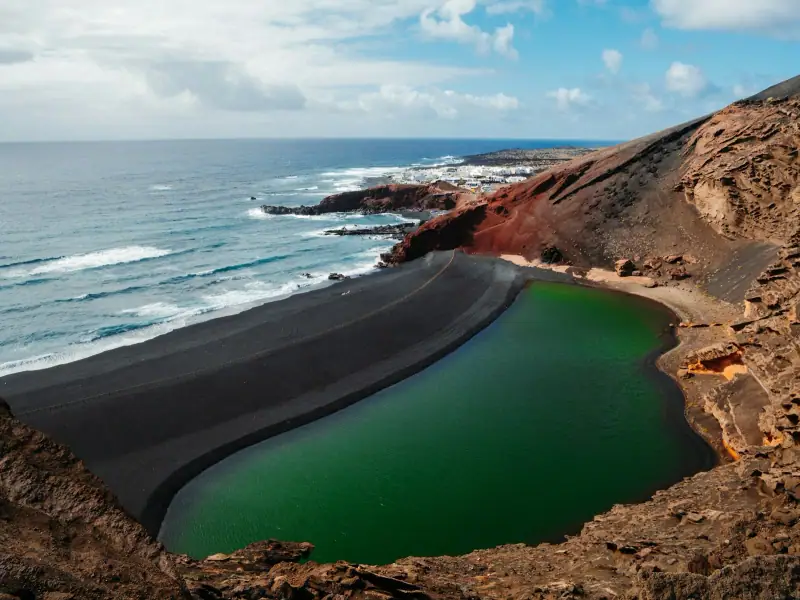
Coastal cliffs. Brava’s coast is mostly rocky and jagged: steep cliffs drop straight into the Atlantic, with no beach or with tiny coves of pebbles and black volcanic sand. It is not a swimming island in the classic sense, but the wild beauty of its coasts is undeniable.
Furna and the port. The coastal village of Furna, where the ferry from Fogo docks, is the only real point of contact between Brava and the rest of the world. This small fishing port, overlooked by towering cliffs, is a striking arrival in itself: the boat slips into a natural notch between the rocks, and Brava gradually reveals itself as you approach the quay.
Excursions on Brava and Fogo
Guided hikes, cultural visits, discovering the island of flowers. Book your activities from Fogo or once you are there.
Hikes and trails on Brava
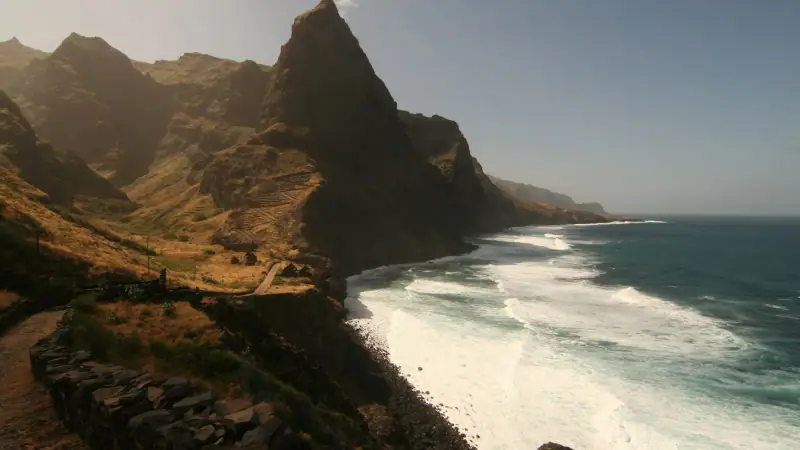
Brava is an island made for hiking. Its rugged terrain, deep valleys and calçada paths between villages make ideal ground for walkers looking for total immersion in Cape Verdean nature.
Calçada paths. As on Santo Antão and São Nicolau, Brava keeps a network of traditional hand-paved trails that linked villages before roads arrived. These paths run along farming terraces planted with corn, beans, banana trees and sugarcane, cross shaded ravines, and pass isolated houses whose residents will always greet you with surprise and kindness.
Fontainhas, the village most often mentioned in Brava hiking accounts, is perched on a ridge at about 970 meters (3,180 ft) of altitude. The path up from Nova Sintra is one of the island’s signature routes: it crosses green mountain landscapes with constant views of the valleys and the sea. The village itself, with its houses clinging to the edge of the void, is one of the most photographed on the island.
The descent to Furna. The trail that goes down from Nova Sintra to the port of Furna, across the island’s steep slopes, is a classic hike of about 2 to 3 hours depending on pace. The descent is gradual, with spectacular views of the port and the Atlantic.
With a guide. Brava’s paths are often poorly marked, and some high-altitude sections can be tricky. Hiring a local guide or driver-companion (easily arranged through your guesthouse in Nova Sintra) is advised to explore with peace of mind. Local guides also know the best viewpoints, the local plants and the history of the villages you pass through.
Culture and diaspora: Brava’s deep soul
Brava is an island rich in history and Creole culture. It has helped shape Cape Verdean identity in ways that go far beyond its size.
Morna, the music of exile
Morna, the melancholy musical genre that embodies Cape Verdean saudade, is inseparable from Brava. The island is sometimes presented as one of the cradles of morna, with historic musical figures from the island. This music of exile and nostalgia resonates especially strongly on Brava, an island of departure for generations of Cape Verdeans who left for North America or Europe to survive.
On festival evenings in the villages, or during the patron-saint celebrations that punctuate the local calendar, live music (morna, coladeira, and sometimes batuque) brings residents together in moments of intense sharing. A lucky traveler who is on Brava during one of these festivals will keep a lasting memory.
The New England diaspora
In the 19th century, American whalers leaving from New Bedford (Massachusetts) recruited sailors in the Cape Verde islands, notably on Brava, which was known for the quality of its seamen. Generations of Brava men thus left the island for the open sea, gradually settling in New England’s fishing ports. This founding migration created a now well-established Cape Verdean diaspora in the United States, which maintains strong ties with the island of origin.
This history still shows in local culture: English words slipped into Creole, houses with architecture inspired by the United States, sometimes anglicized family names, and a particular relationship to mobility and exile that runs through conversations.
Places to stay on Brava and Fogo
Guesthouses and bed-and-breakfasts in Nova Sintra, or hotels in São Filipe (Fogo) to combine the two islands.
Food on Brava
Brava’s cooking is Cape Verdean cuisine in its most authentic version and the one most tied to local products.
Cachupa. Cape Verde’s national dish, a dense stew of corn, beans, legumes and meat or fish, is the soul of Brava’s food. Brava’s cachupa benefits from fresh vegetables grown in the island’s terraced gardens: green beans, cassava, yams, sweet potatoes. A cachupa rica made with island produce is a complete, comforting meal.
Fresh fish. Small-scale fishing supplies Brava’s kitchens with the catch of the day: tuna, grouper, swordfish, and small fish grilled over embers that you eat with your fingers at the edge of Furna’s harbor. Simple, direct, delicious.
Mountain vegetables. The cool microclimate of Brava allows the growing of vegetables rarely found on the flat islands: tomatoes, peppers, cabbage, onions, all grown by hand on the dry-stone terraces of the island’s slopes.
Artisanal grogue. Sugarcane spirit is produced on the island on a small scale. Brava’s grogue, little known outside the island, is often of remarkable quality for those who know where to find it. Ask your host or the owner of the local café.
Brava coffee. As on São Nicolau and Fogo, Brava grows coffee in its humid uplands. The local coffee, roasted by hand and served in Nova Sintra’s small cafés, is a real pleasure.
Where to stay on Brava
Accommodation on Brava is minimal but genuine. Don’t expect a large hotel or elaborate tourist infrastructure; that is simply not what the island offers, and that is precisely its charm.
In Nova Sintra, a few family guesthouses offer simple, clean rooms, often with meals included or available on request. The hosts are generally mines of information about the island, its paths and its people. Book ahead, especially between November and April, since few rooms are available.
In Furna (the port), a few modest lodgings exist for travelers arriving too late to go up to Nova Sintra the same evening.
The option of a day trip from Fogo is also valid: the morning ferry from São Filipe gets you to Furna in mid-morning, lets you visit Nova Sintra and its surroundings, and take a ferry back in the late afternoon. This option is more common than staying a night on the island.
Practical information for visiting Brava
Currency. The Cape Verdean escudo (CVE) is the local currency. Brava has few or no reliable ATMs, so bring plenty of cash from São Filipe or Praia. Most transactions on the island are in cash.
Language. Brava Creole (close to Fogo’s) and Portuguese; English is rarely spoken outside the diaspora context. A few words of Portuguese or Creole are much appreciated.
Health. Brava has a health post, but in a serious emergency, transfer to Fogo and then Praia is necessary. Travel insurance with repatriation cover is essential.
Connectivity. Internet is available in Nova Sintra (Cape Verdean mobile network), but slow and sometimes unstable. Be prepared to be more present and less connected; it is one of Brava’s unexpected pleasures.
Ferry and weather. Crossings can be canceled without notice in heavy swell. Never plan a tight connection from Brava. Always keep a spare day in your schedule.
Entry requirements. Cape Verde has entry formalities that depend on your passport. Check the official Cape Verde government site before you book. See our guide to entry formalities for Cape Verde for more information.
Car rental on Fogo
To combine Fogo and Brava, a rental car on the island of Fogo gives you complete freedom to explore São Filipe and its surroundings.
A 3-day itinerary on Brava
Day 1: Arrival at Furna and discovering Nova Sintra
Arrive on the ferry from São Filipe (Fogo). First contact with Furna: the harbor tucked between cliffs, the fishermen, the humid, salt-laden air. Take a local taxi up to Nova Sintra (about 15 to 20 minutes on winding road). Settle into your guesthouse. Afternoon: explore the town on foot, including the central square, the Nossa Senhora do Monte church, the flowered lanes and the colorful houses. Sunset from the heights. Dinner with a home-cooked cachupa at the guesthouse.
Day 2: Hike to Fontainhas and the ridges
Early start for the hike to Fontainhas, a village perched on the edge of the ridges. Climb through terraced gardens, flowers and views of the Atlantic. Picnic in the village. Return by another trail, with a detour to a viewpoint over the cliffs. End the day in Nova Sintra: local coffee, and music in a bar on the square if you are lucky.
Day 3: Descent to Furna and return
Quiet morning in Nova Sintra: market if it is a market day, coffee, and shopping for artisanal grogue and local coffee. Walk down to Furna on the trail (2 to 3 hours), an exhilarating finale with plunging views of the port and the ocean. Afternoon ferry back to São Filipe (Fogo).
Brava is an island you visit not for its infrastructure but for what it is: an Atlantic end of the world, green and melancholy, where morna echoes in the evening among the flowered houses and time slows until you find the essentials again. For travelers looking for Cape Verde far from beach resorts and hotel complexes, Brava may be the most honest island in the archipelago.
To round out your trip, see our guide to the neighboring island of Fogo, our article on São Filipe, and our tips for island hopping in Cape Verde.
Frequently asked questions
How do you get to Brava?
There is no direct flight to Brava, because the island has no airport. You first need to reach the island of Fogo (São Filipe), from Praia or on a seasonal charter flight, and then take the ferry to Brava. The ferry crossing from São Filipe to the port of Furna takes about one hour. Ferry schedules are limited and can be disrupted by weather: get up-to-date information from Cabo Verde Fast Ferry or from local guesthouses.
Is Brava suitable for families and non-athletic travelers?
Brava is a mountainous island with winding roads and steep terrain, which can make getting around more physical than you might expect. That said, Nova Sintra is accessible and pleasant to explore on foot, and some cliff viewpoints can be reached by car with a local guide. The terrain and isolation make Brava better suited to independent, curious travelers who are comfortable with the unexpected than to families looking for conventional tourist infrastructure.
When is the best time to visit Brava?
Brava has a wetter microclimate than the other Cape Verde islands, because its relief catches the trade winds. The dry period (November to June) offers the best conditions for getting around, hiking and enjoying the views. The rainy season (July to October) makes the island bloom spectacularly, fully justifying its nickname "island of flowers," but some paths can become slippery. December to March is generally considered the climatic high season.
Are there hotels on Brava?
Accommodation on Brava is very limited and small-scale: a few family guesthouses in Nova Sintra and the coastal villages offer simple but clean rooms, often with home-cooked meals. There is no large hotel or resort on the island. Booking ahead is advised, especially between November and April. Many travelers choose a day trip from Fogo rather than a night on the island.
Can you visit Brava as a day trip from Fogo?
Yes, and it is the most common option. From São Filipe on Fogo, the morning ferry gets you to Furna in mid-morning, lets you visit Nova Sintra, a few viewpoints and villages, then take the ferry back in the late afternoon. One day is enough for an overview of the island, although a night there lets you explore at a slower pace and spend more time with the locals.
Why is Brava called the "island of flowers"?
Brava owes its nickname to its exceptionally lush vegetation for an arid archipelago like Cape Verde. The island's altitude and orientation facing the trade winds create a humid microclimate that favors abundant flora: bougainvillea, hibiscus, jacaranda, oleander and many species of euphorbia and wild fig cover the island's slopes. During the rainy season and just after (September to November), the floral display is especially striking.
Is Brava dangerous to visit?
Brava is a very safe island, like the rest of the Cape Verde archipelago. The main difficulty is not safety but isolation: in case of a serious medical problem, transfer to Fogo and then to Praia or Europe takes time. Travel insurance covering medical repatriation is therefore essential. Mountain roads are winding and sometimes narrow, so drive carefully or rely on a local driver.
More Cape Verde guides
Keep reading
Visit Boa Vista: Complete Guide to the Island of Dunes
Everything to know about visiting Boa Vista, Cape Verde: beaches, dunes, sea turtles, kitesurfing, where to stay and how to get there.

Visiting Fogo Island: Complete Guide to Cape Verde's Volcano
Guide to visiting Fogo in Cape Verde: Pico do Fogo, Chã das Caldeiras, São Filipe, volcanic wine, hikes and practical information.
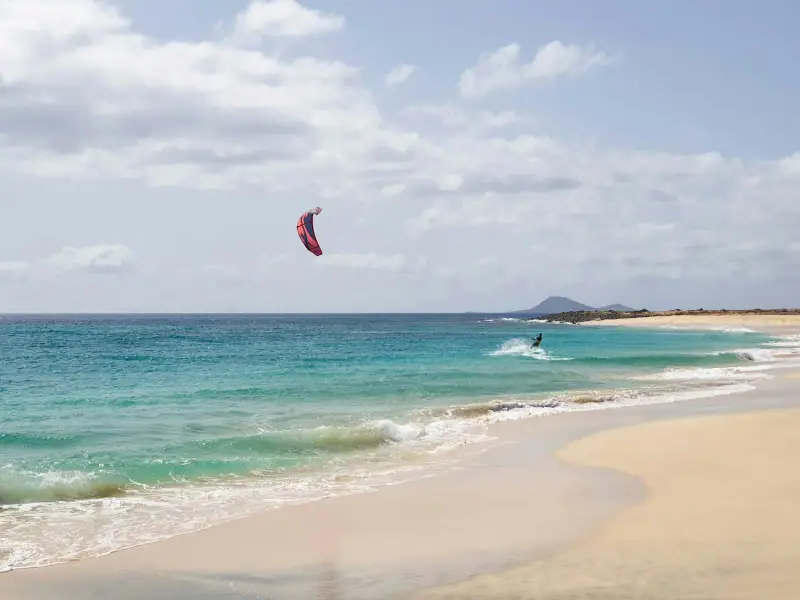
Visiting Sal Island: complete guide to the kitesurfing capital
Everything you need to visit Sal in Cape Verde: Santa Maria, Pedra de Lume, Buracona, beaches, kitesurfing, where to stay and how to get there.
Ready-made
Cape Verde itineraries
4 days
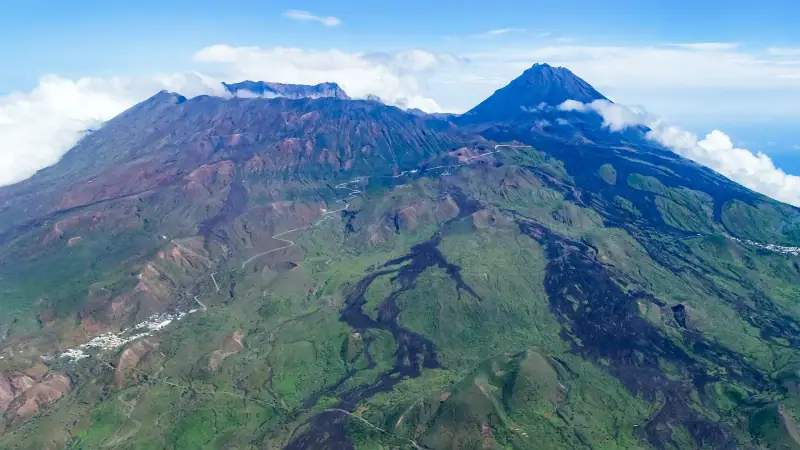
Fogo Island: complete 3-4 day itinerary (volcano, São Filipe, wine)
Detailed itinerary for 3 to 4 days on Fogo: Pico do Fogo climb, São Filipe, Chã das Caldeiras, volcanic wine and fishing villages.
7 days
Cape Verde in 7 days: the perfect week itinerary
Cape Verde in 7 days: day-by-day plans for a great week on Sal, Santiago or São Vicente, with a detailed schedule and practical tips.
Can be adapted in the planner
14 days
Island Hopping in Cape Verde: A Guide to Visiting Several Islands
SalSantiagoSão VicenteSanto Antão