Where to stay
Where to stay in Rennes: neighborhoods and types of accommodation
We may earn a commission when you book through links on this page, at no extra cost to you. We don't visit or try the places we cover: we summarize published sources. How we work
In short
- The historic center, around place du Parlement, place des Lices and place Sainte-Anne, is the simplest base for a first stay: everything is on foot and the metro is close.
- The station area is the most practical for train travelers and often cheaper; Thabor and Saint-Hélier are calmer; the university districts suit small budgets.
- Rennes has two metro lines (A and B) crossing in the center, and the high-speed line reaches Paris in about an hour and a half.
- Book a few weeks ahead for a normal weekend, several months for big events such as the Transmusicales in early December.
Rennes is the forgotten city of Breton trips, and yet it is one of the most practical bases in the region: TGV station, metro, compact center, cultural life all year round and accommodation often more affordable than on the coast in summer. The difficulty lies rather in the choice. Between the half-timbered lanes of the historic center, the area around the station, the residential neighborhoods around Thabor and the banks of the Vilaine, the atmosphere changes from one neighborhood to the next, and so does the noise.
This guide complements the general article on where to stay in Brittany by focusing on the Breton capital. It goes through the neighborhoods, the types of accommodation, the periods when prices climb and a few tips for booking well. If you are also preparing your visits, the guide to visiting Rennes covers the essentials.
How to choose your neighborhood in Rennes
Rennes is a mid-sized city: you cross the center on foot in about twenty minutes, and the metro links the main hubs. The choice of neighborhood therefore depends less on distance than on atmosphere and how you travel. Four criteria help you decide:
- The rhythm of your stay. For a cultural weekend with evenings out, the historic center is the obvious choice. For a stopover between two trains, the station area is unbeatable.
- Your sensitivity to noise. The old town is the liveliest, especially in the evening during the university term. Residential areas offer calmer nights.
- Your means of transport. Without a car, stay near a metro station or the train station. With a car, check the parking arrangements without fail.
- Your budget. Accommodation in the historic heart is generally more expensive than on the near outskirts. For an overview of the costs of a stay, see the budget for Brittany.
More good news: Rennes’ metro has two lines (A and B) that cross in the center, which makes most neighborhoods reachable in a few minutes. For transport across the region, see the guide to getting around Brittany.
The historic center: half-timbered houses, squares and terraces
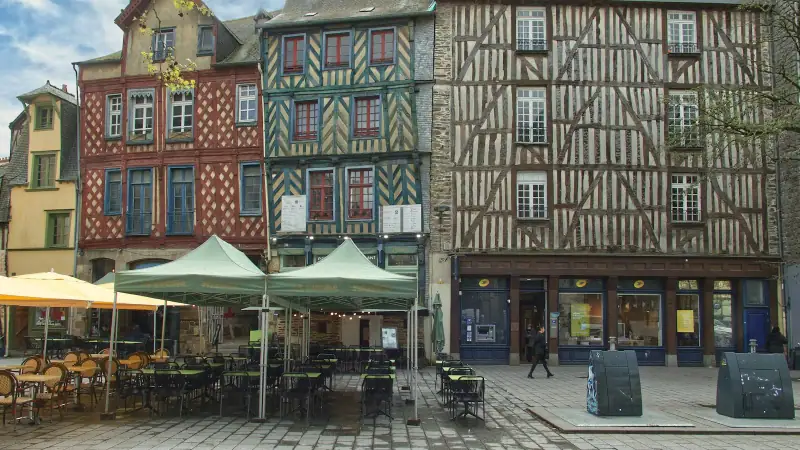
The historic center is the obvious choice for a first stay. It gathers the half-timbered lanes, place du Parlement de Bretagne, the cathedral, the covered market and place des Lices, where the big Saturday morning market is held. It has the highest concentration of restaurants, crêperies, bars and shops in the city.
The strengths of the heart of town
Sleeping here lets you do everything on foot, from breakfast to the last night walk. You are close to the monuments, museums and terraces, and need no transport to go out in the evening. The accommodation is varied: small hotels in old buildings, renovated chain hotels, furnished apartments and a few guesthouses. Since many buildings are old, rooms are sometimes compact and not all have an elevator: if you travel with big suitcases or reduced mobility, check this before booking.
Points to watch
The area around rue Saint-Michel, nicknamed the “rue de la Soif” (thirst street), and place Sainte-Anne concentrates the bars and attracts many students and night owls, especially from Thursday to Saturday. If you are a light sleeper, avoid street-facing rooms right nearby, or choose a room on the courtyard side. By contrast, the streets next to the cathedral and the Lices, set slightly back, are noticeably calmer. For parking, car access to the heart of town is limited: favor accommodation with a car park or near a park-and-ride.
Who is it for?
The historic center suits couples, heritage lovers, travelers without a car and anyone who wants to enjoy the city in the evening. It is less suited to families with young children who go to bed early, unless you find a room set back.
Stay in Rennes' historic center
Charming hotels, apartments and rooms near the Parliament and the Lices: compare offers for your dates.
The station area: practical and well connected
South of the center, the station area has been deeply transformed in recent years. Around the TGV station are recent buildings, offices, shops and the Champs Libres, a large cultural complex that brings together the Museum of Brittany, the Espace des sciences and the library. It is not the most picturesque neighborhood, but it is probably the most practical.
An ideal starting point
Here, you arrive by train and are at the hotel in a few minutes. The station is a crossroads: from Rennes, the high-speed line reaches Paris in about an hour and a half, and regional trains serve Saint-Malo, Vannes, Quimper or Brest. The metro serves the station and reaches the center in a few minutes; on foot, allow a good fifteen minutes to the old town.
Chain hotels and good value
This is the area with the most chain hotels, with standardized rooms, long reception hours and good comfort for business travelers and families alike. Rates there are often lower than in the old center, which makes it a good choice for a short stay or a stopover before an early departure.
The limits
In the evening, the atmosphere is calmer and more functional than in the old town: no half-timbering under the window, but buildings and avenues. For dinner and nights out, plan to reach the center on foot or by metro.
Thabor, Saint-Hélier and the residential neighborhoods
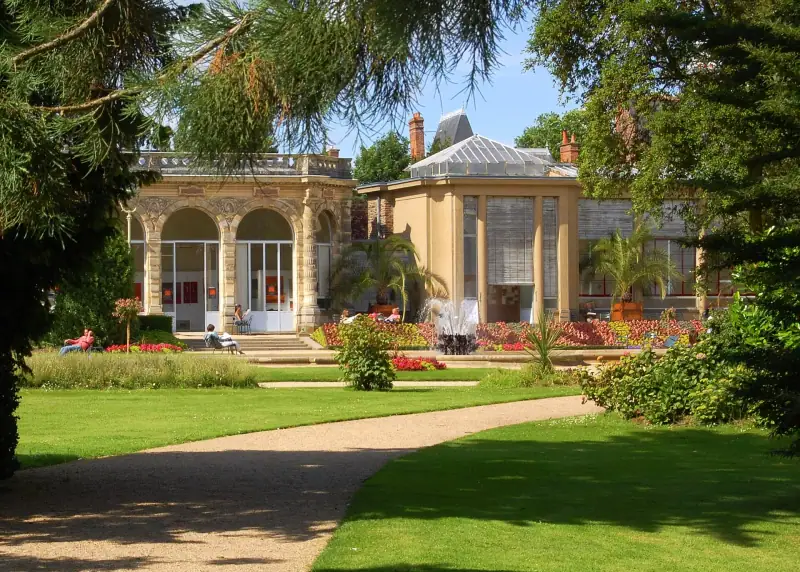
East of the center, Thabor Park structures an elegant residential neighborhood, with fine stone façades and quiet streets. The Thabor is one of the finest public gardens in western France, and staying nearby lets you start the day with a morning walk, away from the bustle of the center.
A peaceful setting a few steps from everything
The neighboring Saint-Hélier district, between the center and the station, offers a good compromise: calmer than the historic center, better served than the outskirts, and a short distance on foot or by metro from the old town. It has mostly apartments, guesthouses and a few mid-sized hotels.
Who is it for?
This area appeals to travelers who want to sleep peacefully, to stays of several days and to visitors returning to Rennes who already know the center. Restaurants and shops are fewer than near the Lices, but the center is never far.
The banks of the Vilaine and the canal: a greener Rennes
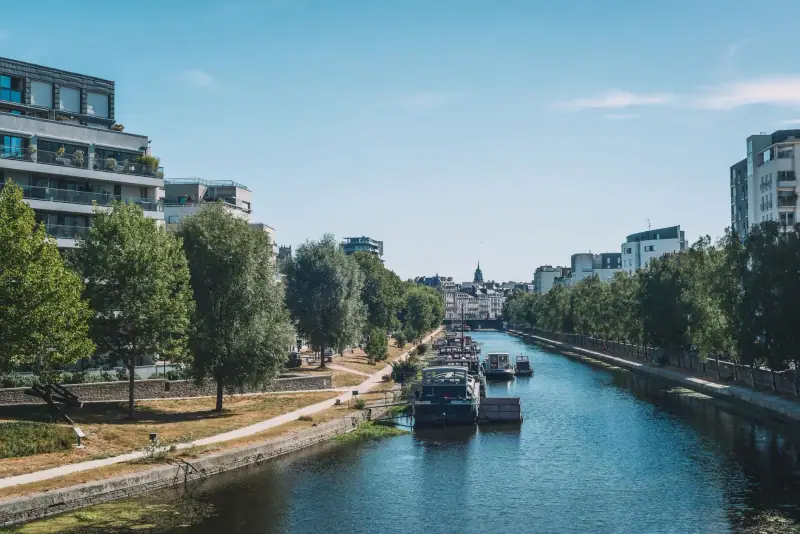
The Vilaine crosses Rennes from east to west, and the Ille-et-Rance canal joins it from the north. The quays have been laid out as promenades for walking, running and cycling. Sleeping near the water shows another face of the city: airier, calmer, with quick access to riverside paths.
Why choose this area?
It is a relevant choice for cycling fans, for families who want space and for visitors who prefer walks to shopping. The accommodation is more varied in size: residences, apartments, small hotels. Check the real distance to the metro or the center: depending on the spot, allow from a few minutes to a good quarter of an hour on foot.
Points to check
Some stretches are very pleasant by day but poorly lit in the evening: check recent reviews and the exact location before booking if you come home late.
Quiet places to stay in Rennes
Apartments, residences and hotels near the Thabor or the banks of the Vilaine: compare offers for a peaceful stay.
Villejean, Beaulieu and the outskirts: for small budgets
Beyond the center, the big university districts such as Villejean or Beaulieu hold residences, budget hotels and apartments. They are linked to the center by metro or bus. Expect a trip of a few minutes for Villejean, longer depending on the station for the other areas; check the network map before booking.
The advantage is price: outside the heart of town, rates often fall noticeably. The drawback is obvious: you lose the atmosphere of the center and depend on transport for evenings out. Also check the last metro times if you plan to come home late. These areas suit tight budgets, business stays and long-stay visitors.
What type of accommodation to choose in Rennes?
Beyond the neighborhood, the type of accommodation completely changes the experience. Here are the main options and their uses.
Hotel: simplicity and services
The hotel remains the most common option. It offers a reception desk, optional breakfast and the flexibility of a single night. In Rennes, there are hotels of every category: chain hotels near the station, charming establishments in the old center, more elegant addresses around the squares of the center. It is the right choice for a weekend, a business trip or a stopover.
Apartments and furnished rentals
For three nights or more, an apartment lets you cook, do laundry and enjoy more space. It is often cheaper for a family or a group of friends. In return, check the arrival conditions (key handover, hours) and the parking. In the old center, some buildings have no elevator.
Guesthouses
Fewer in the heart of town than on the outskirts, guesthouses bring a personal welcome and a homemade breakfast, with useful local tips for outings. They are found mostly in residential neighborhoods and the near suburbs, which suits those with a car or who accept a few metro stops.
Hostels and budget accommodation
Since Rennes is a student city, budget options are well represented: hostels, residences, budget hotels. They suit solo travelers, groups and young people. Compare reviews for cleanliness, soundproofing and proximity to the metro.
Aparthotels
Tourist and hotel residences offer equipped studios with services, a very practical formula for a week or a long business stay. They are often near the station or on the near outskirts, with good access to transport.
When to book and when do prices rise?
Rennes is a city of conferences, trade fairs and cultural events. Some periods push rates up and fill the hotels of the center:
- The university start in September, when families and students flock in.
- The Transmusicales, a contemporary music festival held in early December that draws a large public.
- Summer festivals, such as Les Tombées de la Nuit, which animate the city and can push demand up.
- Long weekends and sporting or professional events.
Outside these periods, the city is generally more accessible, with lower rates in summer, when student life quiets down, and in winter outside events. To choose your dates, see the guide on when to go to Brittany. Also think about comparing a weekday stay with a weekend: business hotels often offer better prices on weekends.
Visits and excursions from Rennes
Guided tour of the historic center, a walk in Brocéliande or a day at Mont-Saint-Michel: once your accommodation is booked, compare activities.
Tips for choosing well
- Check the exact location. An address “in Rennes” can be on the outskirts: open the map and find the nearest metro station.
- Read recent reviews on noise. It is the most frequent weak point of rooms in the city center, especially near lively streets.
- Ask for a courtyard-side room if you sleep around rue Saint-Michel or place Sainte-Anne.
- Look at the cancellation conditions. Free cancellation gives you time to compare when your dates are still uncertain.
- Plan for parking. If you come by car, choose accommodation with a car park or find a park-and-ride on the outskirts.
- Combine city and excursions. Rennes is a good starting point for Saint-Malo, Mont-Saint-Michel or the Brocéliande forest; the 7-day road trip in Brittany gives you ideas to extend the adventure.
- Think about local food. Whatever the neighborhood, you will easily find galettes and crêpes to try; read the guide to crêpes and galettes in Brittany to know what to order.
Our selection by profile
| Profile | Recommended neighborhood | Why |
|---|---|---|
| First stay, cultural weekend | Historic center | Everything on foot, atmosphere and heritage |
| Train stopover, late arrival or early departure | Station area | Station and metro at the door |
| Quiet stay, couple | Thabor and Saint-Hélier | Calm streets, park nearby |
| Family, cycling fans | Banks of the Vilaine and the canal | Space, walks, greenery |
| Small budget, long stay | Villejean, Beaulieu, outskirts | Lower rates, metro |
Book your accommodation in Rennes
Once you have chosen your neighborhood, compare the hotels, apartments and rooms available for your dates, with free cancellation on many offers.
In short
For a first stay, sleep in the historic center: you enjoy everything on foot, with the city at your fingertips. If you travel by train, on a tight budget or for a simple stopover, the station area is the most practical. For a peaceful stay, turn to the Thabor, Saint-Hélier or the banks of the Vilaine. Finally, the university districts and the outskirts welcome small budgets. In every case, book early during events, read the reviews on noise and keep the station in mind: from Rennes, all of Brittany is within reach by train.
Frequently asked questions
What is the best area to stay in Rennes for a first visit?
The historic center, around place du Parlement, place des Lices and place Sainte-Anne, remains the simplest choice: everything is on foot, restaurants are at the door and the metro is close. If you have a tighter budget or an early train the next day, the station area is an excellent alternative, a few stops or a short walk from the heart of town.
Where should you stay in Rennes for quiet?
The residential areas around Thabor Park, or along the Vilaine and the canal, are markedly quieter than the surroundings of rue Saint-Michel. In the center, ask for a room on the courtyard side or on upper floors: evenings from Thursday to Saturday can be lively in streets popular with students.
Do you need a car to stay in Rennes?
No. The city is served by a metro, bus and public bike network, and the center is explored on foot. A car is only useful for excursions outside town, such as the Brocéliande forest or Mont-Saint-Michel Bay. If you rent one, check the parking at your accommodation: it is often paid and limited in the city center.
When should you book accommodation in Rennes?
Rennes is a city of conferences, events and festivals, and the September university start also fills hotels. Book a few weeks ahead for a normal weekend, and several months ahead for big events such as the Transmusicales in early December. In summer, the city is calmer and rates sometimes lower than in Saint-Malo.
Is Rennes a good base for exploring Brittany?
Yes, thanks to its station: Saint-Malo, Vannes, Quimper and Brest are reachable by train, and the Brocéliande forest or Vitré can be reached by car or regional transport. Sleeping in Rennes is often cheaper than on the coast in high season, which makes it an economical base for a stay of a day or two inland.
What are the budget options for sleeping in Rennes?
Chain hotels near the station, hostels, apartments and guesthouses on the near outskirts, or aparthotels for stays of several nights. Rates vary strongly by date: compare several dates when you can, because a weekend with no event often costs less than a weekday during a conference.
More Brittany guides
Keep reading
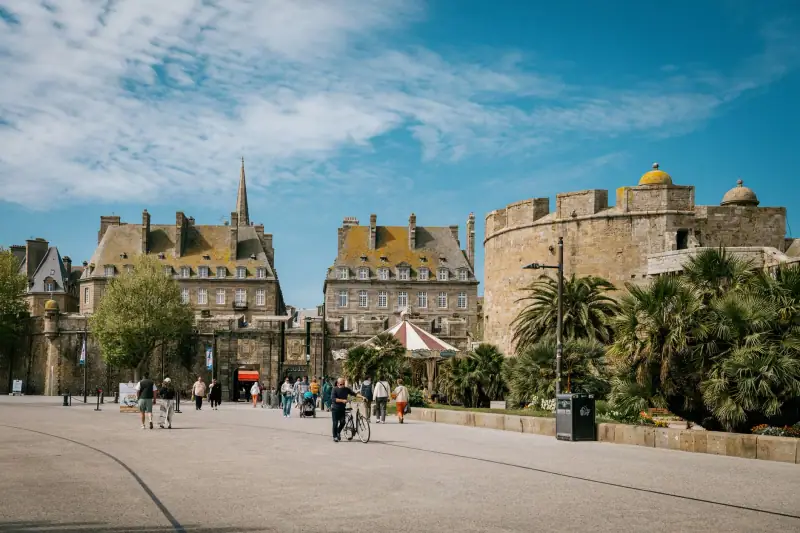
Where to stay in Saint-Malo: neighborhoods and types of accommodation
Where to stay in Saint-Malo? Intra-muros, Sillon, Paramé, Saint-Servan, Rothéneuf: compare areas and types of lodging for your budget and stay.
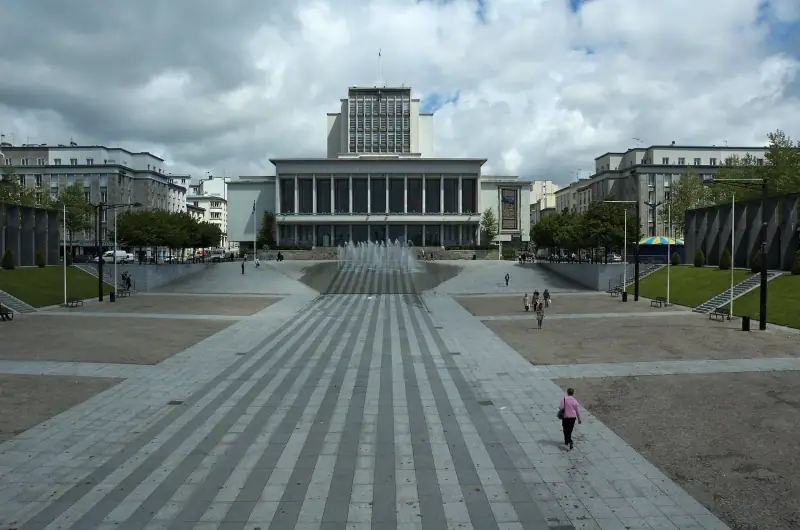
Where to stay in Brest: neighborhoods and types of accommodation
Where to stay in Brest? City center, Recouvrance, Capucins, Saint-Martin, Moulin Blanc or the station: compare areas and lodging types for your budget.
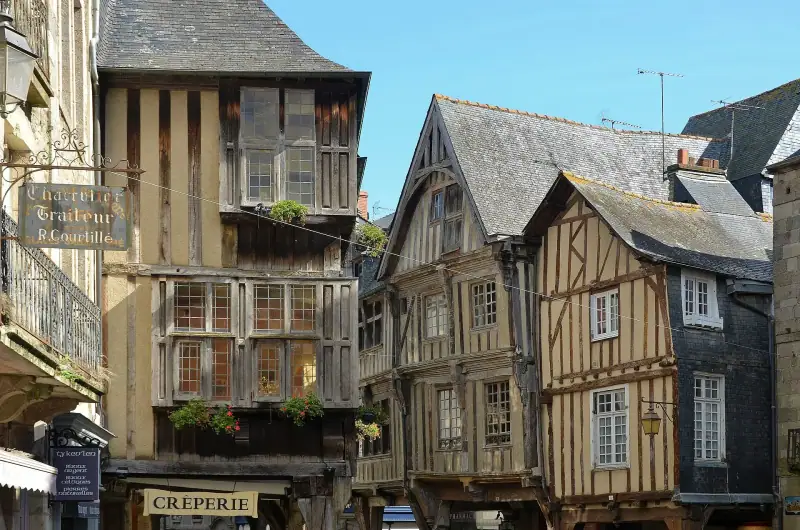
Where to stay in Dinan: neighborhoods and types of accommodation
Where to stay in Dinan? Medieval center, Rance port, station, Léhon or Lanvallay: compare areas and types of lodging for your budget and stay.
Ready-made
Brittany itineraries
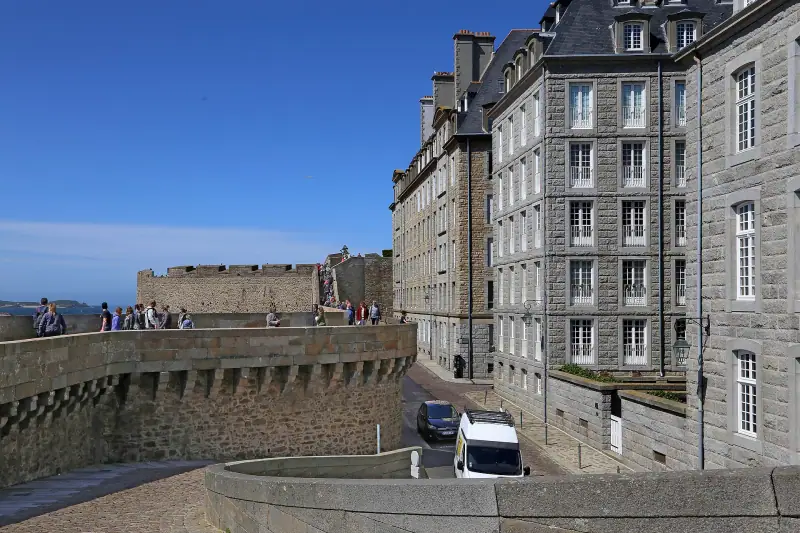
3 days
3 days in Saint-Malo, Cancale and Dinan: an Emerald Coast itinerary
A 3-day itinerary in northern Brittany: Saint-Malo's ramparts, Cancale's oysters, Dinan's medieval lanes. Daily plan, tides, transport and budget.
7 days
One week in Brittany without a car: a day-by-day itinerary by train and bus
RennesSaint-MaloQuimperVannes
7 days
Brittany road trip in 7 days: from Saint-Malo to the Gulf of Morbihan
A 7-day coastal road trip in Brittany: Saint-Malo, Pink Granite Coast, Crozon peninsula, Quimper, Carnac and Vannes. Stops, distances, budget and tips.