What to see
Visit Jajce: Complete Guide to the Medieval Town and Its Waterfalls
We may earn a commission when you book through links on this page, at no extra cost to you. We don't visit or try the places we cover: we summarize published sources. How we work
In short
- One well-organized day covers the Pliva waterfall, the fortress, the St. Luke catacombs, the old town and the lakes; allow 2 days for swimming, kayaking and a slower pace.
- The Pliva waterfall is about 21 m (69 ft) high and falls in the middle of town. The viewpoint is free and spring has the strongest flow.
- Fortress entry is 5 BAM (about $3). The walk up takes 10 to 15 minutes from the center.
- Jajce is about 70 km (43 mi) from Banja Luka and about 150 km (93 mi) from Sarajevo, with a bus of 3 h to 3 h 30 (18 to 25 BAM).
There are places in Bosnia that seem to have sprung from a medieval dream, and Jajce is the perfect example. Perched on a rocky spur at the confluence of the Vrbas and the Pliva, the town has a 14th-century fortress, a preserved Ottoman old town and, above all, a rare phenomenon: a waterfall that drops in the middle of town, where the Pliva river flows into the Vrbas. This guide takes you through all the secrets of Jajce, former capital of the medieval Kingdom of Bosnia.
The Pliva waterfall: the living heart of Jajce
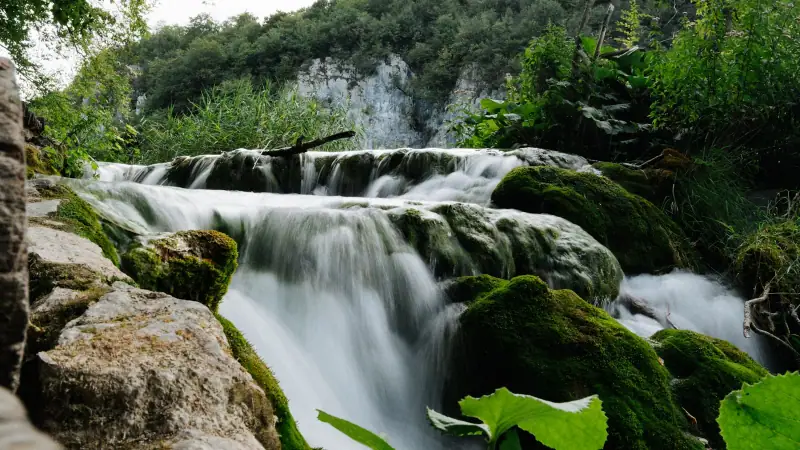
This is the image that comes up as soon as you search for Jajce online: a 21-meter (69 ft) waterfall, about 20 meters (66 ft) wide, cascading right in the middle of the town. The Pliva waterfall (Plivski Slap) is one of the few urban waterfalls in Europe, and it is striking in every season.
The geological formation is exceptional: the Pliva river flows over a limestone plateau before suddenly plunging into the Vrbas canyon. Tufa deposits (porous limestone) have shaped a natural amphitheater-like ledge, making the fall especially photogenic with its slightly concave shape.
The best way to see the waterfall
From the town’s main street (Ulica Svetog Luke), a free viewpoint gives the classic view of the falls. For a more immersive perspective, follow the path along the Vrbas down to the foot of the fall: the immersion is total, the noise of the water deafening and the spray refreshing in summer.
The best photo moment? Early morning, when low light turns the water emerald green and few visitors are around. Spring (April-May) has the most impressive flow.
Entry: The view from the viewpoint is free. The path below is open to all.
Tours and guided visits in Bosnia
Discover Jajce, the Pliva waterfall and the wonders of central Bosnia with a local guide.
Jajce fortress: sentinel of the kings of Bosnia
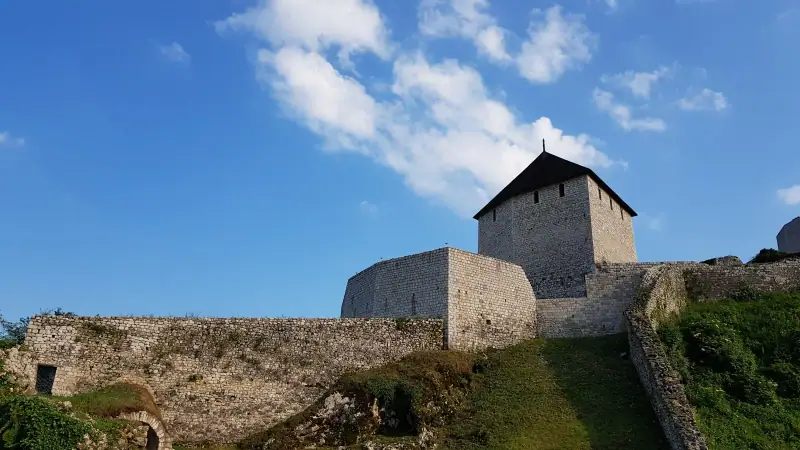
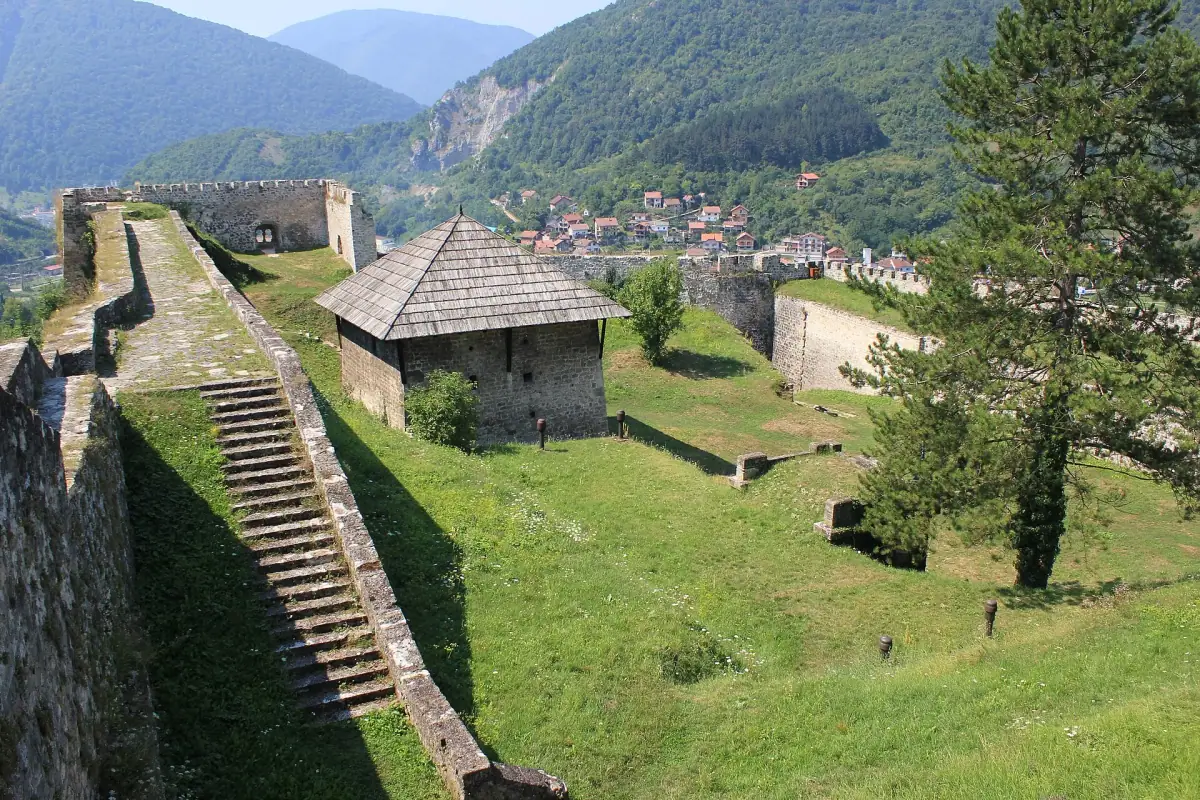
Overlooking the town from a rocky promontory at 470 meters (1,540 ft) altitude, Jajce fortress (Jajačka tvrđava) is one of the best-preserved medieval castles in the Balkans. It was the official residence of the kings of medieval Bosnia, notably the last king, Stjepan Tomašević, who fled the town for Ključ in 1463 after the fall of Bobovac. Captured at Ključ after a four-day siege, he was then brought to Jajce, where he was executed on May 25, 1463.
Timeline of the fortress
- 14th century: First fortifications built under the Hrvatinić family
- Mid-15th century to 1463: Residence of the kings of Bosnia, the town’s glory period
- 1463: Taken by the Ottomans under Mehmed II the Conqueror
- 16th-17th centuries: Strengthened by the Ottomans, with towers and ramparts added
- 1878: Incorporated into the Austro-Hungarian Empire, consolidation works
- 2003-2015: Partial restoration funded by the EU
What you see today
The climb to the fortress takes 10 to 15 minutes from the center on a paved path. Once inside the enclosure, the intact ramparts give a 360° panoramic view of the old town, the Vrbas-Pliva confluence, the lakes in the background and the surrounding wooded hills. In clear weather, the sight is striking.
Inside the walls you can still make out the foundations of the old royal church, the medieval cisterns cut into the rock and the remains of the royal quarters. Information panels (in Bosnian and English) tell the history of the place.
Entry: 5 BAM (about $3). Open daily, 9 am to 7 pm in summer and 9 am to 4 pm in winter (check the rate with the tourist office).
The St. Luke catacombs: a medieval mystery
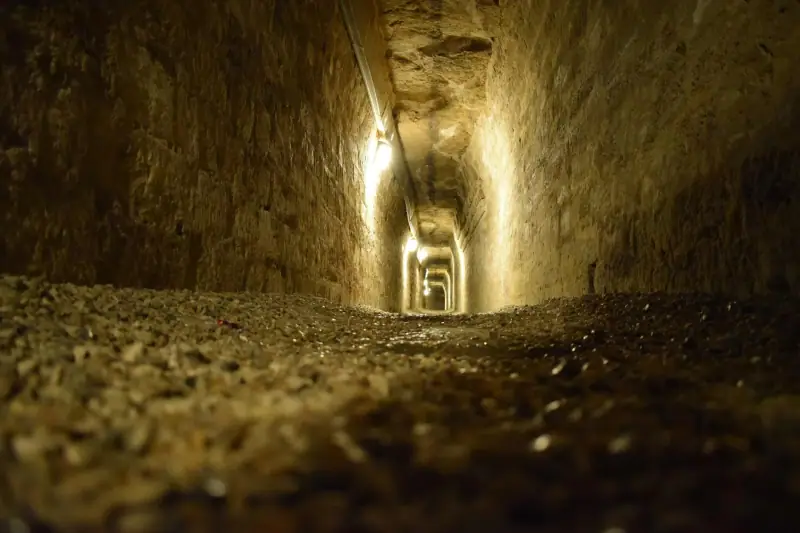
Beneath Jajce’s old town lies a network of medieval crypts and galleries: the St. Luke catacombs (Katakomba sv. Luke). Dating from the late 14th and early 15th centuries, they were ordered by Hrvoje Vukčić Hrvatinić, the founder of Jajce, as an underground chapel and family burial place. They are said to have served as a burial space for notables of the royal court.
Access is from the St. Luke tower (Kula sv. Luke), one of the few intact medieval buildings in the town. The main crypt, cut into the rock, keeps remarkable decoration: carved ornaments, reliefs of crosses and Latin inscriptions, and a timeless atmosphere that contrasts strikingly with the bustle of the street above.
Practical: A visit with a local guide is recommended, as signage there is limited. Ask the local tourist office about hours and the fare (about 5 BAM); a combined ticket with the fortress may be offered there.
Hotels and guesthouses in Jajce
Family guesthouses, apartments and hotels by the lake or in the old town.
The Ottoman old town and the museums
Jajce’s old town (Stari grad) is a distillation of preserved Ottoman and medieval architecture: narrow cobbled streets, typical timber upper-floor houses (čardaci), public fountains and 16th-century mosques. Despite the destruction of the conflict in the 1990s, a significant part of the historic urban fabric has been restored.
The AVNOJ Museum
One of the most singular museums in Bosnia is devoted to a major historical event: in November 1943, in this very town, the Yugoslav partisans held the second session of the AVNOJ (Anti-Fascist Council for the National Liberation of Yugoslavia). This is where the future socialist Yugoslavia laid its political and constitutional foundations.
The museum retraces the episode with period documents, photographs and personal objects of the delegates. To understand 20th-century Yugoslavia and Bosnia, it is an instructive stop, even if the place is little visited by foreign tourists.
Entry: 4 BAM. Closed Monday.
The St. Luke tower and church
The St. Luke tower (Kula sv. Luke, 15th century) is one of the most photographed monuments of the old town. Linked to the catacombs, it marks the entrance to the historic quarter. Nearby, the Church of St. Mary (Crkva sv. Marije), whose bell tower is the St. Luke tower, was turned into a mosque in 1528 under the Ottomans and is today returned to Catholic worship, illustrating the cultural layers stacked up in Jajce over the centuries.
The Pliva lakes: nature and serenity
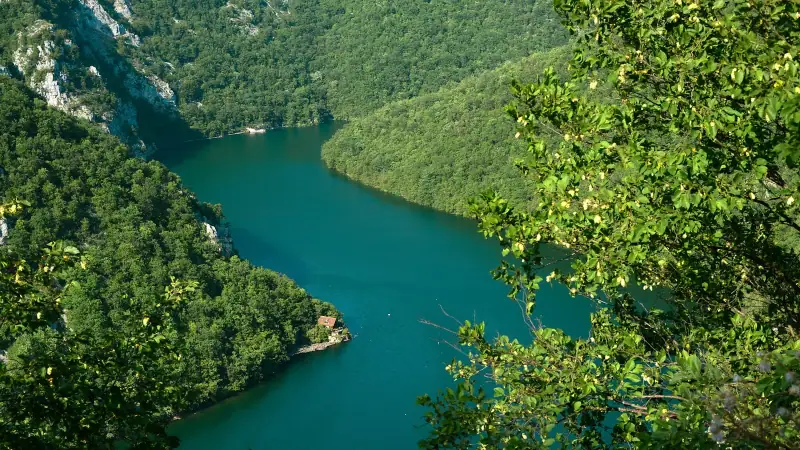
Two kilometers (1.2 mi) from the town center, the Pliva lakes (Plivska jezera) form a picture of peaceful beauty. The large lake (Veliko Plivsko jezero, 3.3 km / 2 mi long) is surrounded by dense forest and a road that circles it in an hour on foot or by bike. The small lake (Malo Plivsko jezero) is the setting for an attraction almost unique in Europe: watermills on stilts.
The stilt mills: a unique curiosity
About 20 medieval watermills stand on stilts at the edge of the small Pliva lake, in a perfect line that recalls a floating village. These mills, some still working, once ground grain for the region’s farmers. Now listed as cultural heritage of Bosnia and Herzegovina, they are among the most photographed sites in the country and make an unusual scene.
Morning light, when mist rises from the lake and the mills are reflected in the calm water, is especially magical.
Swimming, kayaking and picnics
In summer, the large lake becomes a family leisure spot: swimming from grassy banks and natural jetties, and pedal boats, kayaks and rowboats to rent from local operators (10-20 BAM per hour). Shaded picnic areas line the shores, and a few konobas (local taverns) serve open-air grills.
For walkers, the trail around the large lake (about 8 km / 5 mi, flat) is open to all and offers varied views of the lakes and the oak and beech forest.
Car rental in Bosnia
Explore Jajce, the Pliva lakes and northwest Bosnia freely with a rental vehicle.
Food in Jajce
Jajce is a small town, but its food scene faithfully reflects generous traditional Bosnian cooking. Here is what to try.
Must-try dishes
- Ćevapi in lepinja bread: Bosnian grilled sausages with puffy bread and raw onions are the omnipresent street snack. In Jajce, ćevapčići (a slightly thinner version) are often served with kajmak (thick, lightly fermented cream).
- Jagnjetina s ražnja: Spit-roasted lamb, prepared on big occasions or in country restaurants by the lake. Tender, lightly smoky, best with a tomato and red onion salad.
- Pita with cheese or spinach: Pita (a filled flaky pastry) is a breakfast and snack staple. Buy it from a local baker for a few BAM.
- Salata od graha: White bean salad with garlic, oil and parsley, fresh and inexpensive.
- Bosnian coffee (bosanska kafa): Served in a copper džezva with a cube of rahat lokum sugar, the coffee ritual is as unchanging here as in Sarajevo or Mostar.
Where to eat in Jajce
- Near the small Pliva lake: several restaurants serve grills and local trout, with a view of the mills (check opening hours off-season).
- Old town: small konobas offer traditional Bosnian cooking at low prices.
- Local market stalls (Pijaca): for breakfast, the market stalls sell fresh pita, white cheese and seasonal vegetables at unbeatable prices.
What to do in Jajce: things not to miss
In two sentences: in Jajce, put first the Pliva waterfall, the climb to the fortress, the St. Luke catacombs and half a day at the Pliva lakes with their stilt mills. The whole center is walkable; only the lakes need a bit of driving or cycling.
| What to do in Jajce | Suggested time | Where | Best for |
|---|---|---|---|
| See the Pliva waterfall (viewpoint, then the path below) | 45 min | Town center | Everyone |
| Climb to the fortress and walk the ramparts | 1 h to 1 h 30 | Above the old town | Photographers, history fans |
| Visit the St. Luke catacombs | 30 min | Old town | Curious travelers, families with older children |
| AVNOJ Museum (history of Yugoslavia) | 45 min | Center | 20th-century history fans |
| Stilt mills on the small Pliva lake | 1 h | Between the two lakes | Photographers |
| Swimming, kayaking or pedal boat on the large lake | 2 to 3 h | Large Pliva lake | Families, active travelers |
| Fishing on the Pliva and the lakes | Half day | River and lakes | Anglers |
What to do in Jajce in one day
Start with the waterfall early in the morning, before the groups. Then climb to the fortress and come down via the St. Luke tower for the catacombs. Have lunch in the old town, then spend the afternoon at the lakes: mills first (softer light late in the day), swimming or kayaking afterward.
What to do in Jajce if it rains
Keep the AVNOJ museum and the catacombs for rainy hours, then a Bosnian coffee break on a covered terrace. The waterfall is spectacular in the rain, too, with a stronger flow. On the road, the neighboring town of Travnik combines well with Jajce in one day.
What to do in Jajce in the evening
The town is quiet after dark: a walk in the old town, a grilled meal and a last coffee. To stay overnight in town, compare the neighborhoods in our guide on where to stay in Jajce.
When to visit Jajce
Spring (April-May): The best period, hands down. The waterfalls are at their peak level, the green nature is spectacular, and temperatures range between 12 and 22 °C (54-72 °F). Tourist numbers are still moderate.
Summer (June-August): Pleasant for the lakes (swimming, kayaking), but hotter (25-33 °C / 77-91 °F) and busier in July-August. Go early in the morning for the historic sites before the crowds.
Fall (September-October): An excellent compromise: the forests around the lakes turn golden, temperatures are ideal for walking, and crowds drop sharply.
Winter (November-March): Jajce under snow is superb, but little is open. Best for determined travelers who love winter atmospheres.
To choose the best period for your whole trip, see our guide to the best time to visit Bosnia.
How to fit Jajce into your itinerary
Jajce is ideally placed to fit into several types of circuits.
Sarajevo to Jajce to Banja Luka (2-3 days)
The Sarajevo-Jajce road (2 h 45 to 3 h 15 by car) runs through central Bosnia and crosses landscapes of valleys and dense forest. From Jajce, continuing to Banja Luka (1 h 15) lets you cover the northwest of the country in a smooth sequence. See our Banja Luka guide for the next stops.
Loop road trip from Sarajevo (7 days)
A classic itinerary: Sarajevo (2 days), Travnik (half day), Jajce (1 day), Banja Luka (1 day), back to Sarajevo via the M17. This circuit covers central Bosnia, the Krajina and the northwest without backtracking. Find the details in our Bosnia road trip.
Getaway from Sarajevo (weekend)
Jajce also works as a day trip or weekend from Sarajevo. Leave early in the morning by bus, visit the waterfall, the fortress and the lakes, then return in the evening. Our 7-day Bosnia itinerary includes Jajce as a highlight of the week.
Flights to Bosnia
Compare prices to reach Sarajevo, your natural gateway for visiting Jajce and central Bosnia.
Budget and logistics in Jajce
Jajce is one of the cheapest towns in Bosnia for travelers. Here are a few budget benchmarks:
| Item | Indicative price |
|---|---|
| Guesthouse | 40-70 BAM (€20-35 / $23-41) a night |
| 3-star hotel | 70-110 BAM (€35-55 / $41-64) a night |
| Restaurant meal | 10-20 BAM (€5-10 / $6-12) per person |
| Ćevapi (portion) | 6-10 BAM (€3-5 / $3.50-6) |
| Bosnian coffee | 1.50-2 BAM |
| Fortress entry | 5 BAM (€2.50 / ~$3) |
| Kayak (1 h) | 10-15 BAM (€5-8 / $6-9) |
| Bus Sarajevo to Jajce | 18-25 BAM (€9-13 / $10-15) |
For a full budget overview of your trip, see our Bosnia budget guide.
How to get to Jajce
From Sarajevo: Bus from the bus station, 3 h to 3 h 30, several departures a day. Fare: 18-25 BAM.
From Banja Luka: Bus or car, about 1 h 15. This is the most frequent link for travelers doing the northwest.
From Travnik: about 1 h to 1 h 15 by car (45 to 68 km / 28 to 42 mi depending on the route). The two towns can be visited together in a well-organized day.
By car: The M5 links Sarajevo directly to Jajce via Travnik. The road is well maintained and crosses remarkable mountain scenery.
No train station: Jajce has no direct rail service from Sarajevo. The bus remains the most practical transport.
Final thoughts
Jajce is one of those Bosnian towns that leave a lasting mark on a traveler’s memory. Its waterfall in the middle of town, its medieval fortress overlooking the confluence of two rivers, its stilt mills reflected in the Pliva lake and its Ottoman lanes form an ensemble of rare richness for a town of 7,000 to 12,000 inhabitants. A former capital of the kings of Bosnia and a silent witness to the birth of socialist Yugoslavia, it carries the history of the Balkans with quiet dignity, and is well worth the detour.
Sources
Frequently asked questions
How long does it take to visit Jajce?
A well-organized day lets you see the essentials: the Pliva waterfall, the fortress, the old town and the lakes. To enjoy the Pliva lakes, take a kayak outing and wander without hurrying, allow 2 days. Jajce also works very well as a one-night stop on a Bosnia road trip.
How do you get to Jajce from Sarajevo?
By bus from Sarajevo bus station, the trip takes about 3 h to 3 h 30, at a fare that varies a lot by booking channel (roughly €10 to 25, or $12 to 29, to be checked). By car via the M5/M17, allow 2 h 45 to 3 h 15. Jajce is much closer to Banja Luka (about 70 km / 43 mi, 1 h to 1 h 15) than to Sarajevo.
Can you swim in the Pliva lakes at Jajce?
Yes, especially in the large Pliva lake (Veliko Plivsko jezero). In summer, locals and tourists swim from natural jetties and grassy beaches. The water is cool and very clean. The small lake is more for kayaks and pedal boats.
Is Jajce suitable for families with children?
Absolutely. The waterfalls are easy to reach on foot, children love the Pliva lakes for swimming and pedal boats, and the fortress is a great invitation to explore. The town is small, safe and without heavy traffic in the old town.
When is the best season to visit Jajce?
Spring (April-May) is ideal: the waterfalls are at peak flow thanks to rain and snowmelt, temperatures are mild and the vegetation bursts with green. Summer is pleasant for the lakes. Avoid July-August if you like quiet, as the site is busier.
Is Jajce part of the classic tourist itineraries?
It is sometimes missing from very short circuits (Sarajevo-Mostar-Konjic), but it features in most loop road trips of 7 days or more. If you have a car or are flexible, Jajce is a must-stop for anyone interested in medieval Bosnia.
What can you do in Jajce in one day?
Pliva waterfall in the morning, fortress and St. Luke catacombs late morning, lunch in the old town, then the Pliva lakes and the stilt mills in the afternoon, with swimming or kayaking on the large lake.
What can you do in Jajce when it rains?
Visit the AVNOJ museum and the St. Luke catacombs, have a Bosnian coffee under cover, and go see the Pliva waterfall: its flow is stronger after rain.
More Bosnia and Herzegovina guides
Keep reading
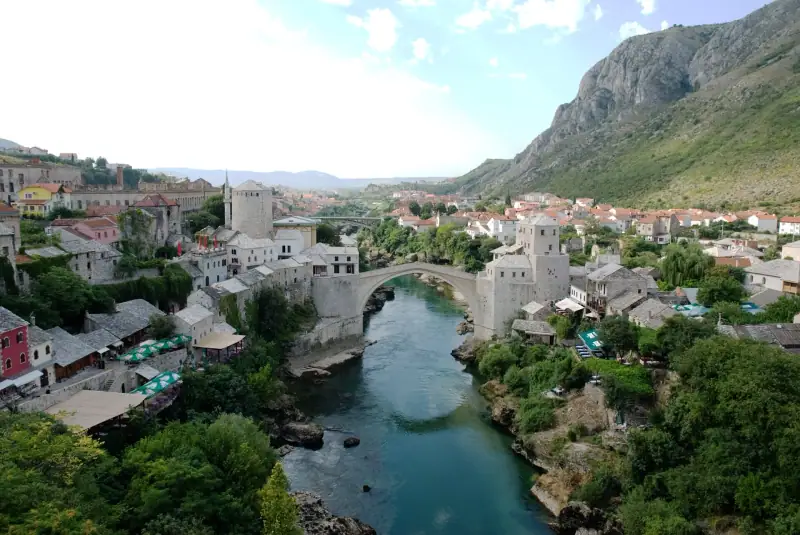
Visit Mostar: Complete Guide to the Pearl of Herzegovina
Everything to visit Mostar: Stari Most, Ottoman old town, day trips to Blagaj and Kravice, where to stay, budget and practical tips. 2026 guide.
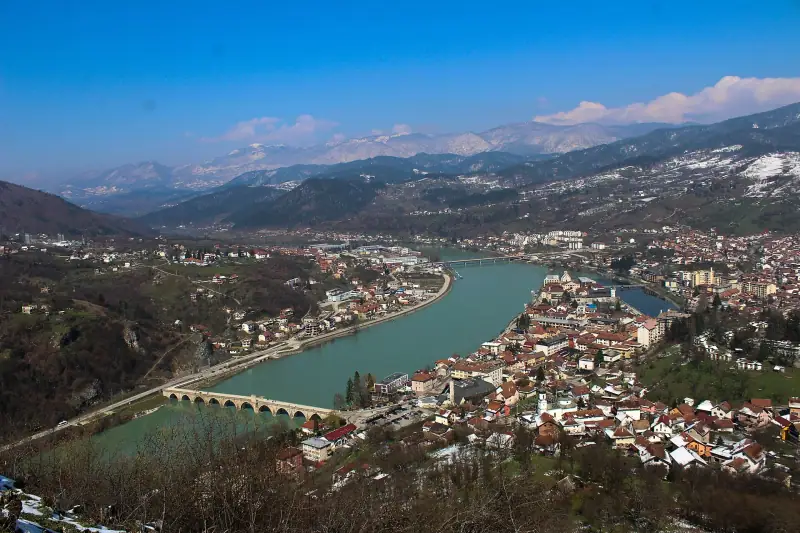
Višegrad: Visiting the Bridge on the Drina from Sarajevo, With or Without a Car
Mehmed Paša Sokolović Bridge in Višegrad: getting there from Sarajevo by car, bus or tour, visit length, free entry, Andrićgrad and practical tips.
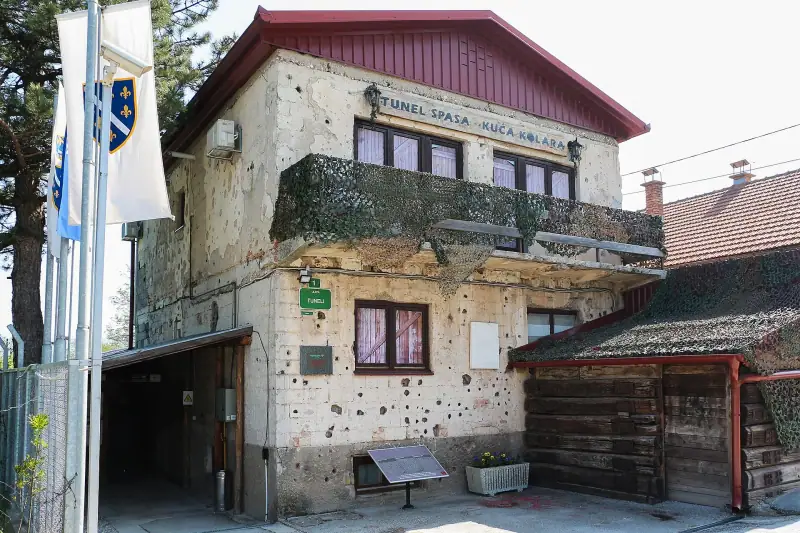
Sarajevo Tunnel of Hope: Hours, Prices and Getting There Without a Car
Visiting the Tunnel of Hope in Sarajevo: summer and winter hours, cash entry price, tram and bus from the center, visit length and tips.
Ready-made
Bosnia and Herzegovina itineraries
3 days
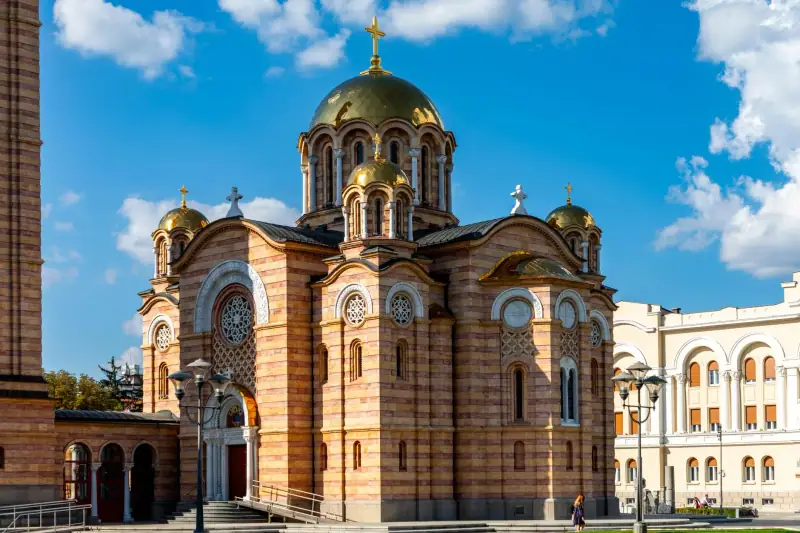
Northwest Bosnia: Banja Luka, Jajce and Una National Park
JajceBanja Luka
5 days
14 days
Bosnia and Herzegovina Road Trip: A 10 to 14 Day Itinerary by Car
Road trip through Bosnia and Herzegovina in 10 to 14 days: Sarajevo, Mostar, the Una, Sutjeska and Trebinje. The full itinerary to see it all.