Itineraries
Northwest Bosnia: Banja Luka, Jajce and Una National Park
We may earn a commission when you book through links on this page, at no extra cost to you. We don't visit or try the places we cover: we summarize published sources. How we work
Day by day
- Day 1Sarajevo to Jajce: Pliva waterfall, fortress, catacombs, Pliva mills
- Day 2Jajce to Banja Luka: Kastel Fortress, Ferhadija mosque, Gospodska street, Vrbas
- Day 3Banja Luka to Bihać and Štrbački Buk, then return to Sarajevo
Where to sleep
- Jajce1 night
- Banja Luka1 night
Weather through the year on this route
| Jan | Feb | Mar | Apr | May | Jun | Jul | Aug | Sep | Oct | Nov | Dec | |
|---|---|---|---|---|---|---|---|---|---|---|---|---|
| High °F (°C) | 394 | 436 | 5412 | 6317 | 7021 | 7926 | 8429 | 8630 | 7323 | 6418 | 5211 | 415 |
| Low °F (°C) | 27-3 | 27-3 | 341 | 415 | 5010 | 5714 | 6116 | 6116 | 5211 | 457 | 362 | 28-2 |
| Rain in (mm) | 2.460 | 2.255 | 2.460 | 2.665 | 3.385 | 3.385 | 2.870 | 2.665 | 3.590 | 3.180 | 3.180 | 2.870 |
Normals 1991–2020 at Banja Luka: averages over 30 years, not a forecast. Source: NASA POWER (MERRA-2), grid of about 50 km. Figures computed by us in November 2026.
In short
- Three days by car from Sarajevo cover Jajce (1 night), Banja Luka (1 night) and a segment of Una National Park (Bihać, Štrbački Buk).
- A car is practically essential: buses between Banja Luka, Jajce and Bihać are infrequent and do not serve the natural sites.
- Rafting season on the Una runs April to October; April-May has the liveliest water, June-September is lower and warmer.
- Budget about €150 to 250 (about $175 to 290) per person over 3 days for two travelers, excluding the rental car.
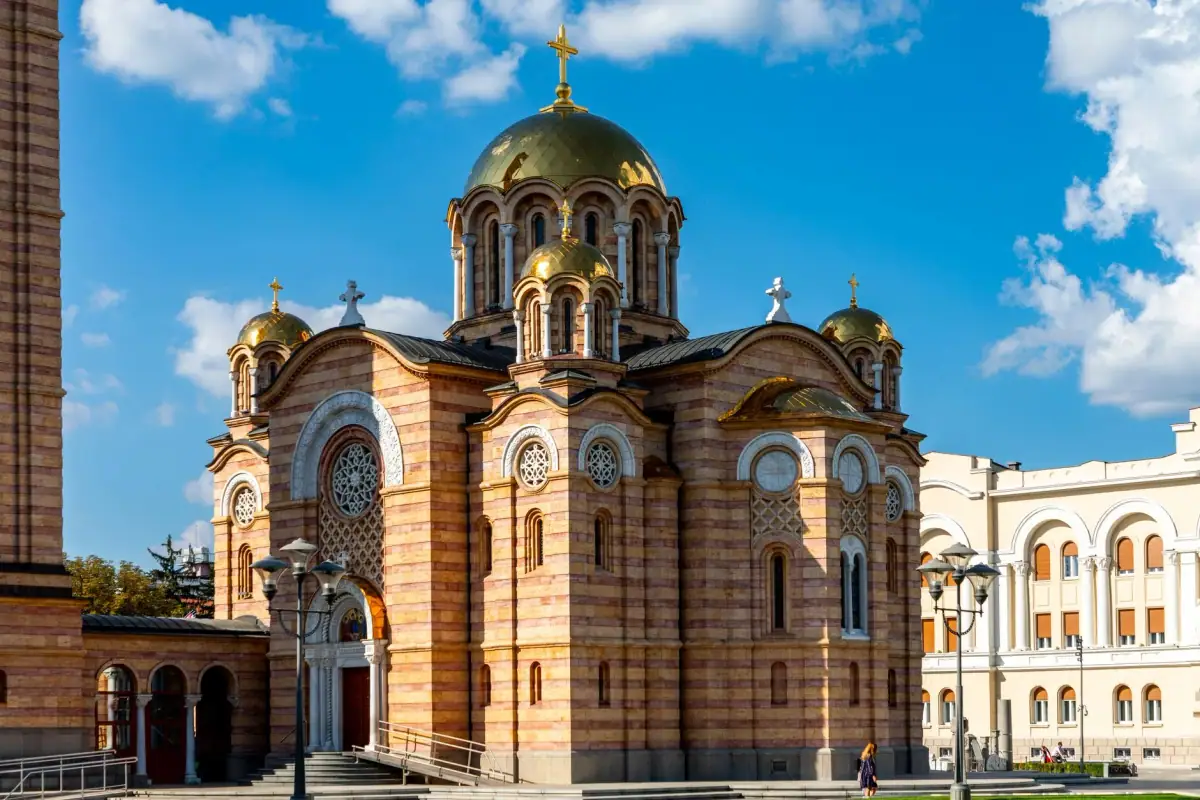
Northwest Bosnia is the least touristy region of the country, and that is precisely what makes it one of the most endearing. There is no flow of coaches between Sarajevo and Mostar here, no bridge photographed a million times a year. Instead: a regional capital with surprising energy on the banks of the Vrbas, a medieval town whose waterfall drops in the middle of the city, and one of the most beautiful wild rivers in the Balkans. Banja Luka, Jajce and Una National Park: this triangle makes a trip into a deep, still-intact Bosnia, where the curious traveler is always welcome.
Banja Luka: the overlooked capital
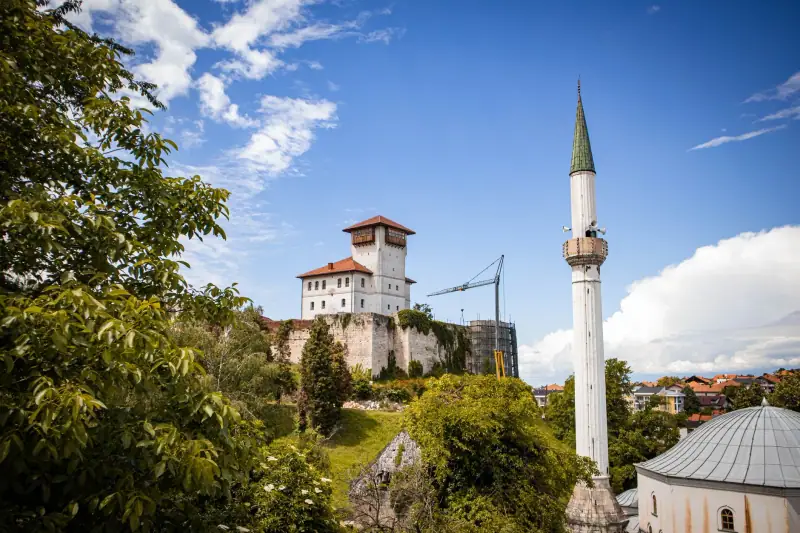
Banja Luka is the second-largest city in Bosnia and Herzegovina and the administrative capital of Republika Srpska. With about 185,000 inhabitants (municipality, 2013 census), it is a lively student city with a fine promenade along the Vrbas and a cultural scene livelier than you would expect.
The hurried traveler who passes through the center without stopping would miss something essential: Banja Luka carries, perhaps more than any other Bosnian city, the complex weight of recent history. And that is precisely why it deserves a visit.
Kastel Fortress
Built on the banks of the Vrbas, Kastel Fortress is Banja Luka’s emblematic monument. Its origins go back to Roman times, with excavations revealing remains from the 2nd to 4th centuries AD, but most of the walls visible today date from the Ottoman period, in the 16th and 17th centuries. The fortress was later redeveloped by the Austrians in the 19th century.
Today the site is pleasantly landscaped: the fortress’s inner park hosts concerts in summer, open-air cafés have settled in, and the ramparts give a fine view of the Vrbas canyon downstream. Access is open and free. It is the perfect spot for an evening stroll, when the low light of the setting sun gilds the old stones and the city’s students fill the terraces.
The Ferhadija mosque: a symbol of reconstruction
The Ferhat Pasha Mosque (Ferhadija), built in 1579 with the war funds of the Ottoman conqueror Ferhad Pasha Sokolović, was one of the most beautiful classical Ottoman-style mosques of the 16th century in the Balkans. It was deliberately destroyed in 1993 during the war, its materials sent to dumps and used as fill, the site turned into a parking lot; about 35,000 fragments were later recovered to allow the reconstruction. The reconstruction, begun in the 2000s with international and local funds, was completed in 2016 after remarkable stone-by-stone reassembly work. The reopening of the Ferhadija is now considered one of the strongest symbols of post-war reconciliation in Bosnia and Herzegovina.
Visited from the large inner courtyard, the mosque is peaceful and bright, with its white walls and sober arabesques. Non-Muslim visitors are welcome outside prayer times, provided they take off their shoes and cover their shoulders.
Trg Krajine and city life
Banja Luka’s central square, Trg Krajine (Krajina Square), is the beating heart of local life. Café terraces, a flower market, students, families out for a walk: the atmosphere is warm and unpretentious. From this square, the pedestrian Gospodska street stretches for several hundred meters: shops, restaurants, bars, bookstores. This is where you will understand that Banja Luka is first of all a city of ordinary people living their lives, well before being a tourist site.
Hotels in Banja Luka
Banja Luka is an ideal base for exploring northwest Bosnia. The city center holds most of the hotels, within walking distance of Kastel Fortress and Trg Krajine.
The Vrbas: rafting in the city
The Vrbas river runs through Banja Luka, creating a series of rapids just upstream of the city center. Its spectacular limestone canyon, with walls reaching up to 300 meters (985 ft), stretches about 30 km (19 mi) south of the city, forming one of the most beautiful river landscapes in the Balkans. It is one of the few places in the world where you can do whitewater rafting a few minutes’ walk from the heart of a regional capital.
Local agencies offer kayak or raft descents on the Vrbas throughout the summer season. The class II to III rapids suit a wide audience, including beginners accompanied by a guide. Our article on rafting on the Una gives useful benchmarks for choosing your level of difficulty.
Jajce: the medieval town with waterfalls
About 72 km (45 mi) southeast of Banja Luka (about 1 h 10 to 1 h 15 by road), Jajce is one of the most spectacular towns in Bosnia, and one of the least visited. That is an injustice this article aims to help repair.
The Pliva waterfall: one of a kind
What makes Jajce unique in Europe is its urban waterfall. The Pliva river, after crossing the Pliva lakes upstream, plunges 20 to 22 meters (66 to 72 ft) into the Vrbas river right in the middle of town, surrounded by houses, gardens, old Ottoman walls and the medieval fortress overlooking it all from the hill. The waterfall (Buk Plive) can be seen from a viewing terrace just opposite, a few steps from the main road. Access is free, it is lit at night, and its roar fills the whole town.
In spring, when the water is high, the waterfall is particularly powerful. In summer the flow is weaker but the atmosphere around it is lively: game tables, local honey sellers, strollers lingering to watch the water fall.
The medieval fortress and old town
Jajce was the last capital of the medieval Kingdom of Bosnia, which fell to the Ottomans in 1463, but the town itself held out until 1527, when it was finally taken by the Ottomans after more than six decades of resistance. The fortress overlooking the town from the hill is its most emblematic remnant. The climb takes about twenty minutes on foot from the center; the ruins of the ramparts and towers give a 360° view of the Pliva-Vrbas confluence and the green countryside around.
Jajce’s old town, at the foot of the fortress, keeps several well-preserved Ottoman buildings: a 16th-century mosque, a tower-minaret that is one of the oldest in Bosnia, and the remains of a medieval church. All of it in a small area that is easily covered on foot in 2 to 3 hours.
The royal catacombs
Just below the fortress, cut into the rock, the Jajce catacombs are one of the most mysterious monuments in Bosnia. Dating from the 15th century, they are said to have served as the burial place of the last kings of Bosnia, although historians still debate their precise use (tomb, shrine, ceremonial hall?). The interior, carved right into the rock, is decorated with heraldic reliefs, human figures, coats of arms and floral motifs, typical of medieval Bosnian iconography. Nearby stands the tower-minaret of the former St. Luke church, one of the oldest Christian buildings in the town, turned into a mosque in Ottoman times. Access to the catacombs is generally possible with a local guide available there.
The Pliva mills
About 5 km (3 mi) west of the center of Jajce, on the shores of the Pliva lakes, stands one of the best-preserved sets of watermills in the Balkans. About twenty small wooden structures, set on stilts at the water’s edge, form a picturesque line typical of rural Ottoman Bosnian architecture. Some mills are still in working order; local families still use them from time to time to grind flour. A walk around the Pliva lakes in late-day light is one of the gentlest moments in the region.
Tours and guided visits in northwest Bosnia
Local guides offer day circuits from Sarajevo or Banja Luka to explore Jajce, the Pliva lakes and the region's authentic villages.
Una National Park: the wild river
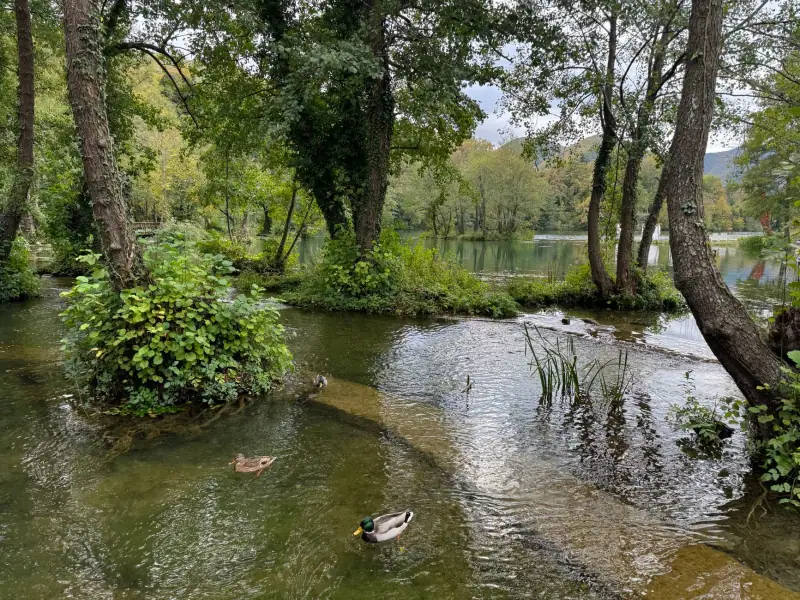
At the far northwest of Bosnia, on the border with Croatia, the Una river stretches for about a hundred kilometers through a setting of absolute purity. Una National Park, created in 2008, protects the most spectacular stretches of this river, whose water is so clear that you can see the bottom several meters down even in the current.
Bihać: the gateway town
Bihać is the main town of the region, about 154 km (96 mi) northwest of Banja Luka (about 2 h 35 to 2 h 45 by road). It is the natural starting point for exploring Una National Park. The town itself deserves a short stop: a 16th-century Ottoman tower overlooks the historic center, and the walk along the Una river through the center of town is very pleasant.
Bihać has a decent hotel network, with hostels aimed at travelers who come for rafting and more comfortable family hotels for recovery nights after a day on the water.
Štrbački Buk: the great Una waterfall
Štrbački Buk is the great fall of the Una, about 30 km (19 mi) upstream of Bihać, on the Bosnian side of the border with Croatia. The water, split into multiple arms, cascades over an impressive width, creating constant mist and a low roar that can be heard from afar. It is one of the most photographed waterfalls in the Balkans, and an essential stop in the national park.
Access is by a narrow road from the village of Kulen Vakuf, then a short walk on a marked path. In high season, small roadside restaurants and local honey sellers set up along the way.
Rafting on the Una
The Una is a world-class rafting river. Rapids range from class I (very calm, suitable for children) to class IV-V on the most technical upstream stretches. The Martin Brod to Kulen Vakuf section, rated II-III, is most famous for its spectacular travertine waterfalls and suits a wide audience.
Most rafting agencies in the region offer trips on the class II-III stretches, suited to beginners accompanied by a guide. A typical 2 to 3 hour run includes all equipment (life jacket, helmet, wetsuit if needed), a guide and return transport from the end point.
Our dedicated guide to rafting on the Una details the stretches, the recommended agencies and the rates charged to help you organize your trip.
Martin Brod and the park’s waterfalls
In the heart of the national park, the village of Martin Brod is surrounded by a series of small waterfalls and potholes where the Una river forms natural turquoise pools. It is one of the most secret and most beautiful places in the park: hard to reach (the road from Bihać takes about 1 hour depending on the road surface), it still draws few tourists and keeps a feeling of exploration.
Car rental in Bosnia and Herzegovina
A car is essential to explore northwest Bosnia. Banja Luka, Jajce, Štrbački Buk and Martin Brod are not linked by any practical public transport. Compare rates to travel at your own pace.
3-day itinerary in northwest Bosnia
Here is a loop itinerary from Sarajevo, perfectly doable with a rental car. Distances and travel times are approximate.
Day 1: Sarajevo to Jajce
Leave Sarajevo early in the morning. The road goes through the Bosna valley and climbs toward the reliefs of the center-north of the country (about 135 km / 84 mi, 2 h 15 to 2 h 30). Arrive in Jajce in mid-morning to enjoy the sights before the few groups of visitors.
Program: the Pliva waterfall on arrival, climb to the medieval fortress, visit the royal catacombs, lunch in the town center (traditional Bosnian cooking: pita, ćevapi, grills). Afternoon: the Pliva mills and a walk around the lakes. Night in Jajce, where a few family guesthouses and hotels offer comfortable rooms at very affordable rates. See our complete guide to Jajce to prepare this stage.
Day 2: Jajce to Banja Luka
A trip of about 70-72 km (43-45 mi), 1 h 10 to 1 h 15 by road. Arrive in Banja Luka late morning. The day’s program: Kastel Fortress and a walk on the ramparts, the Ferhadija mosque, shopping and a coffee break on pedestrian Gospodska street, a walk along the Vrbas downstream of the city. Late in the day, if you like thrills, a 2-hour kayak or raft run on the Vrbas rapids upstream of the city can be arranged locally.
Night in Banja Luka. Our complete guide to Banja Luka will give you good addresses for sleeping and eating. The cost of living is slightly higher than in Sarajevo or Mostar, but remains very affordable by European comparison.
Day 3: Banja Luka to Una park and back to Sarajevo
Leave early from Banja Luka for Bihać (about 154 km / 96 mi, 2 h 35 to 2 h 45 by road). Stop in Bihać for a short walk, then head to Štrbački Buk (30 km / 19 mi upstream, about 40 minutes). A light lunch by the water, then, depending on your time and wishes: a direct return to Sarajevo via Bihać and the national road (about 285 km / 177 mi, 4 h 45 to 5 h on mountain roads), or an extension via Martin Brod if you want to go farther into the national park. Our article on the Bosnia road trip fits this region into a larger circuit.
When to visit northwest Bosnia
Spring (April-May): The ideal season for nature. The Jajce waterfall is at maximum flow, the Una is powerful and magnificent, the vegetation in the national park is an intense green. Temperatures stay cool (10-20 °C / 50-68 °F) but the days are long. Perfect for more challenging rafting.
Summer (June-August): The local high tourist season. The Una’s water drops but stays good for recreational rafting and swimming. Days are hot (25-32 °C / 77-90 °F), nights mild. Banja Luka comes alive with festivals and open-air events. Book accommodation ahead in July-August.
Fall (September-October): An excellent, less crowded period. The forests around the Pliva lakes turn gold and red, and the light is magnificent for photography. Temperatures stay pleasant until mid-October.
Winter (November-March): The region is little visited. Jajce under snow is a rare but beautiful sight. Banja Luka runs all year. The Una park is closed to rafting, but the winter landscapes around Martin Brod and Štrbački Buk have their own austere beauty.
Budget and logistics
Northwest Bosnia is one of the cheapest destinations in the Balkans for Western travelers.
| Item | Indicative budget |
|---|---|
| Night in a guesthouse (Jajce / Bihać) | 40-70 BAM (€20-35 / $23-41) |
| Night in a hotel (Banja Luka) | 80-150 BAM (€40-75 / $46-87) |
| Lunch (local restaurant) | 15-25 BAM (€7-12 / $8-14) |
| Una rafting (2-3 h, equipment included) | 50-80 BAM (€25-40 / $29-46) |
| Fuel (Sarajevo to Banja Luka route) | ~30-40 BAM one way |
| Kastel Fortress entry, Banja Luka | Free |
Over 3 days with a rental car, budget €150-250 (about $175-290) per person for two travelers, all included (accommodation, meals, activities), excluding the vehicle rental.
For an overall Bosnia budget, see our complete budget guide.
Flights to Sarajevo or Banja Luka
Sarajevo is the main gateway for exploring Bosnia, about 135 km (84 mi) from Jajce and 190-195 km (118-121 mi) from Banja Luka. Compare flights to find the best option.
Getting around the region
By car: This is the only way to really explore the region at your own pace. Roads are in good condition between Sarajevo, Jajce, Banja Luka and Bihać. Secondary roads to Martin Brod or the isolated sites of Una park can be narrow and partly unpaved, so use a vehicle with at least normal ground clearance.
By bus: Intercity lines link Sarajevo to Banja Luka (several departures a day, about 3 hours) and Sarajevo to Jajce (less frequent, about 2 hours). Between Banja Luka and Bihać there are also daily connections. But to get from Jajce to the Pliva mills, or from Bihać to Štrbački Buk, you will need a local taxi or a car.
From Zagreb (Croatia): Bihać is about 156 km (97 mi) from Zagreb via the Maljevac border crossing (about 2 h 20 to 2 h 30 via the A1 south of Zagreb), an option for travelers arriving from Croatia. The border is open 24 hours a day; expect waits of 30 to 90 minutes depending on the season (external border of the Schengen area, with entry and exit checks).
Final thoughts
Northwest Bosnia is an invitation to slow down and look beyond the marked circuits. Here the Jajce waterfall roars in a silence that crowds do not yet interrupt, the Una rapids carry water of absolute transparency, and the people of Banja Luka will welcome you with the same quiet warmth as everywhere in Bosnia. It is a region to build at your own pace, car parked, map spread on the hood, ready to stop wherever the road turns beautiful. Northwest Bosnia is yours.
Frequently asked questions
Is northwest Bosnia easy to visit without a car?
A car is almost essential in this region: buses between Banja Luka, Jajce and Bihać exist but are infrequent and do not serve the natural sites (Una, the Jajce mills, etc.). Rent a car in Sarajevo or Banja Luka to make the most of the region.
How long does it take to visit northwest Bosnia?
Allow at least 3 days to cover Jajce, Banja Luka and a segment of Una National Park. With 5 days, you can combine this region with Sarajevo as the start and end point, which makes a full circuit of central and northwest Bosnia.
Can you go rafting on the Una with the family?
Yes, depending on the stretch. The calm stretches downstream of Bihać suit families with children from about 6-8 years old. The more challenging stretches around Štrbački Buk and upstream are for adults and teenagers with experience. Local rafting agencies grade the stretches by difficulty and supply all the equipment.
Is Sarajevo a good base for exploring the northwest?
Sarajevo can serve as a base for Jajce (about 135 km / 84 mi, 2 h 15 to 2 h 30 by road), but Banja Luka and the Una are farther (190-195 km / 118-121 mi to Banja Luka). For this region, it is better either to sleep there directly (Banja Luka or Bihać) or to do a one-way circuit from Sarajevo with 2-3 nights in the region.
Can you visit the Ferhadija mosque in Banja Luka?
Yes, the Ferhadija mosque (Ferhat Pasha Džamija) is open to visitors outside prayer times. It was rebuilt identically after its destruction in 1993 and reopened in 2016; its reconstruction is one of the symbols of reconciliation in Bosnia and Herzegovina. Cover your shoulders and remove your shoes at the entrance.
When is the best time for rafting on the Una?
The rafting season runs from April to October. The water is liveliest in April-May (snowmelt), ideal for thrill seekers. From June to September, the water is lower but warmer, perfect for a pleasant experience. July-August is the high tourist season with the widest choice of agencies.
More Bosnia and Herzegovina guides
Keep reading
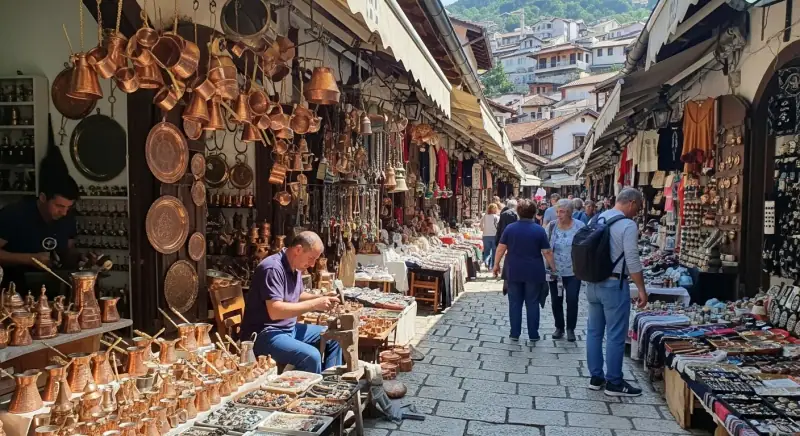
Bosnia Travel Budget: How Much Should You Plan for a Trip?
Everything about the budget for traveling in Bosnia and Herzegovina: accommodation, meals, transport, activities. Estimates by travel style.
Visit Mostar: Complete Guide to the Pearl of Herzegovina
Everything to visit Mostar: Stari Most, Ottoman old town, day trips to Blagaj and Kravice, where to stay, budget and practical tips. 2026 guide.
Višegrad: Visiting the Bridge on the Drina from Sarajevo, With or Without a Car
Mehmed Paša Sokolović Bridge in Višegrad: getting there from Sarajevo by car, bus or tour, visit length, free entry, Andrićgrad and practical tips.
Ready-made
Bosnia and Herzegovina itineraries
5 days
14 days
Bosnia and Herzegovina Road Trip: A 10 to 14 Day Itinerary by Car
Road trip through Bosnia and Herzegovina in 10 to 14 days: Sarajevo, Mostar, the Una, Sutjeska and Trebinje. The full itinerary to see it all.