Things to do
Hiking the Camí de Cavalls in Menorca without an agency: stages, cost, difficulty
We may earn a commission when you book through links on this page, at no extra cost to you. We don't visit or try the places we cover: we summarize published sources. How we work
In short
- The Camí de Cavalls is 185 km (115 mi) long, in 20 numbered stages, with free and open access and official waymarking (GR 223); no agency is needed.
- Groups of 25 or more walkers (8 cyclists or riders) must get authorization from the Consell Insular de Menorca.
- Rules: dogs on a leash, no fire, no tent on beaches; bring plenty of water and check temporary closures on the official site before you go.
- Easiest first stages are in the southwest around Ciutadella (stages 11 and 12); the north (stages 3 to 9) is wilder and more isolated.
The Camí de Cavalls is the trail that runs all the way around Menorca along the coast, and you can walk it without an agency, for free. You just need to choose your stages, plan for water and organize your return.
In short: 185 km (115 mi), 20 numbered stages, free and open access, official waymarking (reference GR 223). No agency is needed: choose one or two stages a day, bring plenty of water, follow the rules (dogs on a leash, no fire, no tents on beaches) and check temporary closures on the official site before you set out.
Camí de Cavalls: how many kilometers and stages?
The historic route measures 185 km (115 mi) around the island and is split into 20 stages (“trams” in Catalan), numbered 1 to 20. It is a loop: you can start anywhere and walk it in whichever direction you like, all at once or in pieces over several stays. The official start of each stage is marked by a sign, all renewed in 2026, showing mobile coverage, protected natural areas, points of interest and a QR code linking to the official site.
Here is the official list of the 20 stages, counterclockwise from Mahón:
| No. | Stage | Area |
|---|---|---|
| 1 | Mahón – es Grau | East |
| 2 | Es Grau – Favàritx | Northeast |
| 3 | Favàritx – Arenal d’en Castell | North |
| 4 | Arenal d’en Castell – Cala Tirant | North |
| 5 | Cala Tirant – Binimel·là | North |
| 6 | Binimel·là – Els Alocs | North |
| 7 | Els Alocs – Algaiarens | Northwest |
| 8 | Algaiarens – Cala Morell | Northwest |
| 9 | Cala Morell – Punta Nati | Northwest |
| 10 | Punta Nati – Ciutadella | West |
| 11 | Ciutadella – Cap d’Artrutx | Southwest |
| 12 | Cap d’Artrutx – Cala en Turqueta | Southwest |
| 13 | Cala en Turqueta – Cala Galdana | South |
| 14 | Cala Galdana – Sant Tomàs | South |
| 15 | Sant Tomàs – Son Bou | South |
| 16 | Son Bou – Cala en Porter | South |
| 17 | Cala en Porter – Binissafúller | Southeast |
| 18 | Binissafúller – Punta Prima | Southeast |
| 19 | Punta Prima – Cala de Sant Esteve | Southeast |
| 20 | Cala de Sant Esteve – Mahón | East |
Hiking the Camí de Cavalls without an agency: the real cost
The trail itself costs nothing: no ticket, no reservation, no permit for an individual walker or a small group. Groups of 25 or more walkers (or 8 cyclists or riders) must request authorization from the Consell Insular de Menorca, which can set conditions and a deposit.
Your budget therefore comes down to three items:
- Lodging: a single base (Mahón, Ciutadella or the south coast) is enough if you walk by the day. See our guide to where to stay in Menorca.
- Getting back to the car or hotel: a stage is one way. Plan a bus, a taxi or a rental car to return.
- Gear and water, detailed below.
Fines for breaking the trail rules range from €60 to €150,000 (about $70 to $174,000) depending on severity: do not take the bans lightly.
Which stage to choose for your level?
For an easy first stage
The southwest, around Ciutadella, Cap d’Artrutx and Cala en Turqueta (stages 11 and 12), is the most classic: turquoise coves, pine groves and a wide trail. Ciutadella, the natural starting point, is covered in our Ciutadella guide.
For the wild side
The north (stages 3 to 9, from Arenal d’en Castell to Cala Morell) is more isolated, windier and less busy. The coast there is red and rocky, with little shade. You need to start early and carry plenty of water.
For a walk around Mahón
Stages 1, 2 and 20 start from the capital and head toward es Grau and the s’Albufera des Grau natural park: ideal if you sleep in Mahón. See visiting Mahón to prepare your base.
For the south coast and its beaches
Stages 13 to 16 (Cala Galdana, Sant Tomàs, Son Bou, Cala en Porter) link several big beaches and are easy to reach by transport. They are the most practical for coming back without a car.
Difficulty: what to expect
The Camí de Cavalls is not a mountain hike: the elevation gain is modest and the trail stays close to the sea. The difficulty comes from elsewhere:
- Heat and lack of shade: in July-August, start at daybreak.
- Terrain: polished limestone rock, sand, roots, sometimes narrow passages. Shoes with good grip are enough, no need for boots.
- Water: the official site advises carrying plenty of water and does not mention water points along the route. Set out with a full supply.
- Isolation: in the north and west, you can walk for a long time without meeting anyone.
As for the season, spring and fall are more comfortable than summer for walking. Our general advice is in best time to go to the Balearic Islands.
Rules to know: dogs, bikes, bivouac, fire
The rules come from the Camí de Cavalls special plan and Law 13/2000:
- Dogs: allowed on a leash, identified and with a collar and tag. Stricter in s’Albufera des Grau and on beaches (see also traveling to the Balearic Islands with a dog).
- Bikes: standard bikes are allowed, as are electric-assist bikes (motor cut off at 25 km/h / 15.5 mph, 0.5 kW maximum). Other motor vehicles are forbidden. Walkers always have priority.
- Riders: they share the trail, walkers keep priority, except on narrow bridges designed for horses.
- Tent: forbidden on beaches.
- Bivouac without a tent: generally tolerated, not in dunes or on sensitive vegetation, without fire or stove.
- Fire and barbecue: forbidden outside the designated recreation areas, to prevent wildfires.
- Gates: always close gates behind you.
What to pack for a day stage
Water, a picnic, a hat, sunscreen, a light windbreaker and a charged phone. Bring a plastic bag for your trash: the official site asks you to take everything back.
How to organize the logistics without an agency
- Choose a base: Mahón for the east, Ciutadella for the west and southwest. Our 7-day Menorca itinerary shows how to fit it into a stay.
- Plan the return: look at the island’s bus timetables or plan a taxi, because many stages end at a cove with no immediate transport.
- Check the closure notices on the official site: in 2026, a section of stage 5 was closed for rockfall risk, then reopened, and a detour was reported in Ciutadella.
- Tell someone your route on the isolated stages of the north.
A comfortable base in Menorca
Compare places to stay in Mahón or Ciutadella to branch out onto the trail stages.
See places to stay in Menorca Compare on Booking.comUseful excursions if you do not want to plan everything
If you prefer a guided day outing (boat, kayak, guided walk), you can compare them without any commitment.
Activities in Menorca
Guided walks, sea outings and day excursions to book ahead.
See activities in MenorcaFor a longer, mountain version in Mallorca, read hiking the GR221 without an agency. For the rest of the island, see visiting Menorca.
Sources
Frequently asked questions
Does the Camí de Cavalls cost anything?
No, access to the trail is free and open. The only costs are those of your stay: lodging, transport between stages and meals. Groups of 25 or more walkers (8 cyclists or riders) must, however, get authorization from the Consell Insular de Menorca.
Do you need an agency to do the Camí de Cavalls?
No. The trail is waymarked and split into 20 official stages, each with a start sign and a QR code linking to the official site. An agency is only justified if you want luggage transport and lodging all organized for a full crossing.
Can you sleep on the trail or camp?
Tents are forbidden on beaches. Bivouacking without a tent is generally tolerated, but not in dunes or on fragile vegetation, and without fire or stove. In s'Albufera des Grau park, groups of up to 24 people must notify the park administration. The simplest approach is still to sleep in a town or village and come back to the trail.
Can you hike with a dog?
Yes, provided it is on a leash, identified and wearing a collar with a tag. Rules are stricter in s'Albufera des Grau and on beaches.
How many stages should you do per day?
Most hikers do one or two a day. The trail is split into 20 numbered stages, which lets you string them over several days or walk just one stage a day and come back by bus or car.
What should you do if there is a problem on the trail?
Call 112, the European emergency number. Bring plenty of water and keep your phone charged: some stretches are isolated, and the official site reports temporary closures (rockfall, detour) to check before you set out.
More Balearic Islands guides
Keep reading
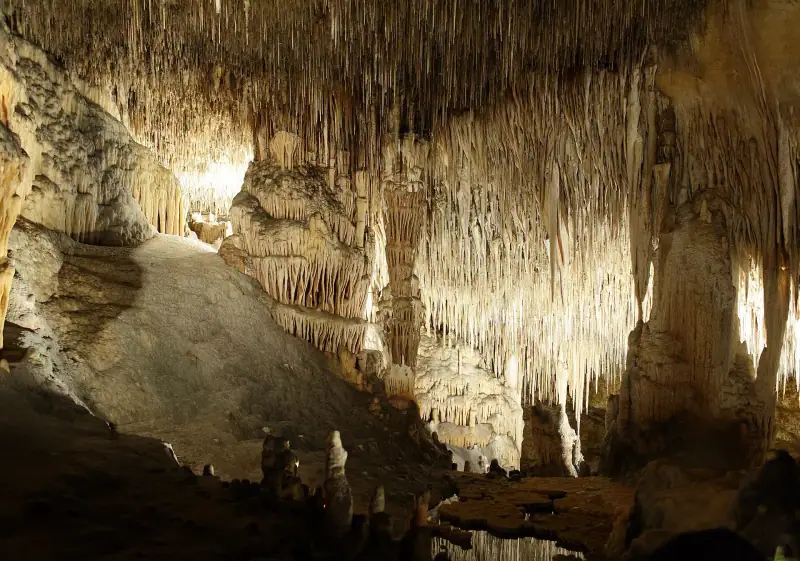
Caves of Drach in Mallorca: book ahead or buy on site?
Cuevas del Drach in Porto Cristo: do you need to book ahead, what hours, what price, which time slot to pick and how to avoid summer crowds.
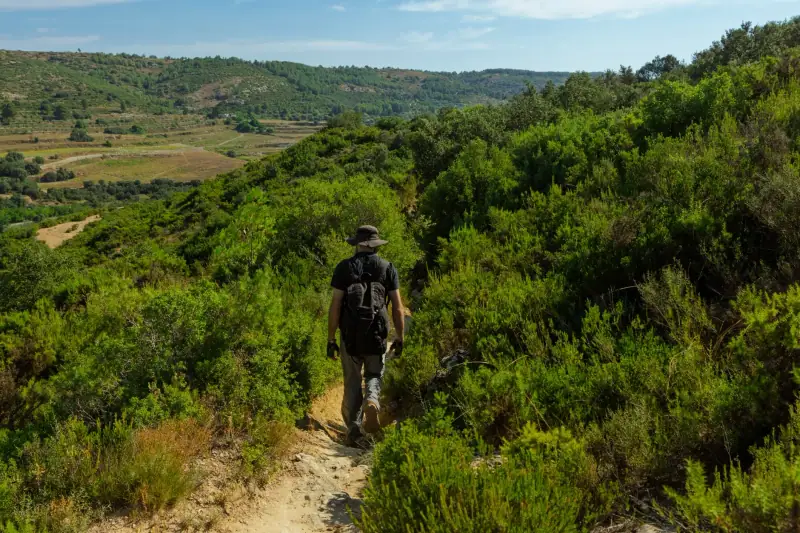
Hiking in Mallorca: the best trails of the Serra de Tramuntana
The best hikes in Mallorca's Serra de Tramuntana. Levels, durations, access and practical tips for hikers of all abilities.
Visiting Formentera: a complete guide to the pearl of the Balearic Islands
Formentera, the smallest Balearic island: Ses Illetes beaches, La Mola plateau, salt flats, Sant Francesc village. A complete guide.
Ready-made
Balearic Islands itineraries
5 days
3 days
Formentera in 3 days: a complete itinerary, beaches and practical tips
Discover Formentera in 3 days: the best beaches, Illetes, La Mola, the salt lagoons. Day-by-day itinerary, transport and places to stay.
7 days
Mallorca in 7 days: a complete itinerary to discover the island
7-day Mallorca itinerary: Palma, Serra de Tramuntana, wild coves, picturesque villages. A practical day-by-day guide for a perfect road trip.