Plan your trip
Tides in Zanzibar: when to swim in Paje, Jambiani and Nungwi
We may earn a commission when you book through links on this page, at no extra cost to you. We don't visit or try the places we cover: we summarize published sources. How we work
In short
- On Zanzibar's east coast (Paje, Jambiani, Bwejuu) the lagoon almost empties at low tide, so swimming works only in two windows a day around high tide.
- Tides are semi-diurnal: two highs and two lows a day, shifting about 45 to 50 minutes later each day. Check a current tide table for your dates.
- Nungwi is swimmable almost all day; Kendwa is in between, with a narrower beach at low tide but water that stays swimmable longer than Paje or Jambiani.
- Check tides with Tide Times, Windy, tide-forecast.com or the printed table at your hotel reception, and wear water shoes on the exposed lagoon.
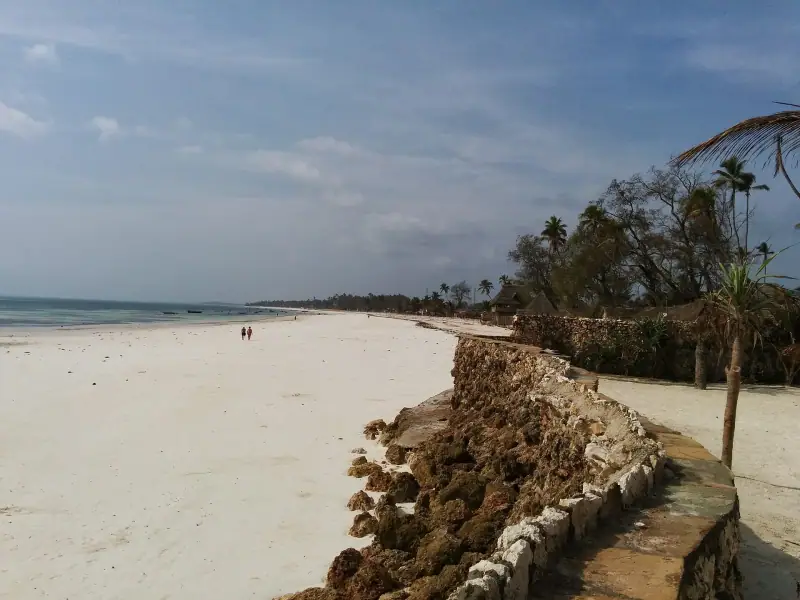
First morning in Jambiani, you wake up to a view of turquoise sea as far as you can see. Two hours later, when you finally head down to the beach, all that is left is a stretch of wet sand and seaweed almost a kilometer (0.6 mi) wide, with the sea reduced to a thin blue line on the horizon. This is not an unusual tide or a local incident: it is daily life along Zanzibar’s entire east coast, and nobody warns travelers before they leave.
The tide is not a detail in Zanzibar: it literally determines the hours you can swim, snorkel or kitesurf. This guide explains why, gives typical times by area and the right habits so you don’t plan a beach day at the wrong moment.
Why the tide changes everything in Zanzibar
Zanzibar sits in the Indian Ocean off the coast of Tanzania, an area where the tidal range is especially large: up to 3 to 4 meters (10 to 13 ft) between high and low tide, compared with barely 20 to 30 cm (8 to 12 in) in the Mediterranean.
On the island’s east coast (Paje, Jambiani, Bwejuu, part of Michamvi), this range combines with local geography: a vast shallow lagoon, protected from the open sea by a coral barrier 1 to 2 km (0.6 to 1.2 mi) from shore. The result: at low tide the water pulls back almost entirely inside the lagoon, revealing a landscape of sand, leftover pools and seaweed farms worked by local women. Often only a few centimeters of water remain, impossible to swim in.
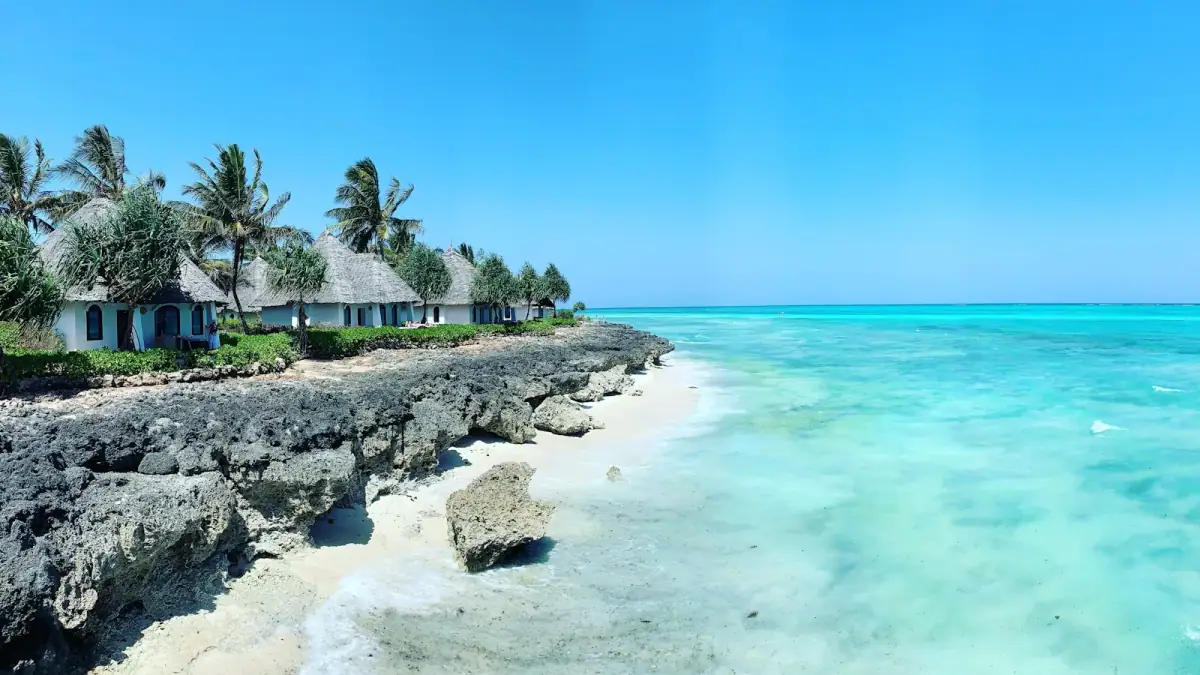
At high tide, the same beach is covered by turquoise water several meters deep, good for swimming and snorkeling near the shore.
The tide rhythm: two highs, two lows a day
Zanzibar follows a semi-diurnal tide: two high tides and two low tides follow one another in a little over 24 hours, with an interval of about 6 h 12 min between each slack water. In practice, in a single day you go through:
- A high tide (comfortable swimming)
- A low tide (swimming impossible or very limited on the east coast)
- Another high tide
- Another low tide
Because the times shift by about 45 to 50 minutes each day, a low tide at noon today will fall around 12:45-1 pm the next day. That means there is no fixed time that holds all week: you need a current tide table for the exact dates of your stay.
In practice, the comfortable swimming window lasts about 3 to 4 hours on either side of each high tide, so two windows a day, usually several hours apart.
Paje and Jambiani: the tide that surprises most
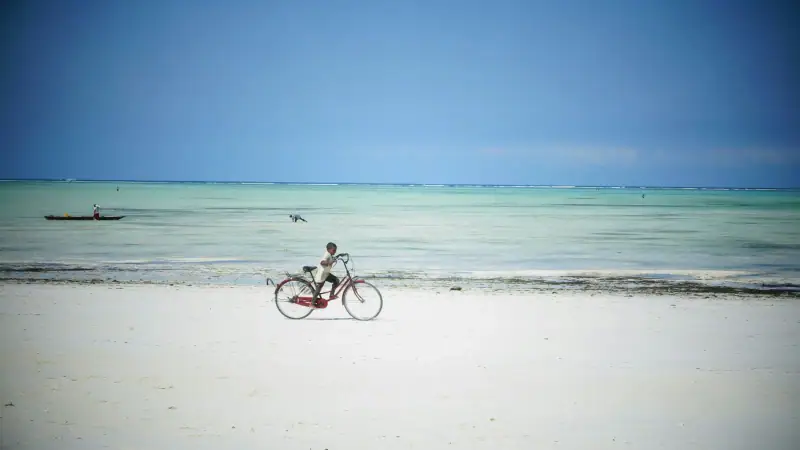
This stretch of the east coast is where the gap between high and low tide shows most. The shallow lagoon can empty over impressive distances.
| Window | What you see | Possible activities |
|---|---|---|
| High tide (±2 h) | Deep water up to the edge, full turquoise lagoon | Swimming, snorkeling near shore, paddleboarding |
| Mid-tide (rising or falling) | Intermediate level, currents sometimes noticeable | Kitesurfing (window preferred by schools), wading |
| Low tide (±2 h) | Lagoon almost dry, sand and seaweed visible over 500 m to 1.5 km (1,640 ft to 0.9 mi) | Walking on the lagoon, watching seaweed farms, reef-walking fishing with locals |
Many travelers discover this phenomenon on day one when they arrive on the east coast of Zanzibar, between Paje and Jambiani, and worry needlessly about a beach “without a sea.” It is simply the normal cycle, to build into the day’s plan rather than endure.
For water-sports fans, the tide even becomes a criterion for choosing time slots: our guide to kitesurfing in Paje details the tide-and-wind combinations schools look for by skill level, with mid-tide often giving the best compromise between water depth and rideability.
Nungwi and Kendwa: swimming (almost) all day
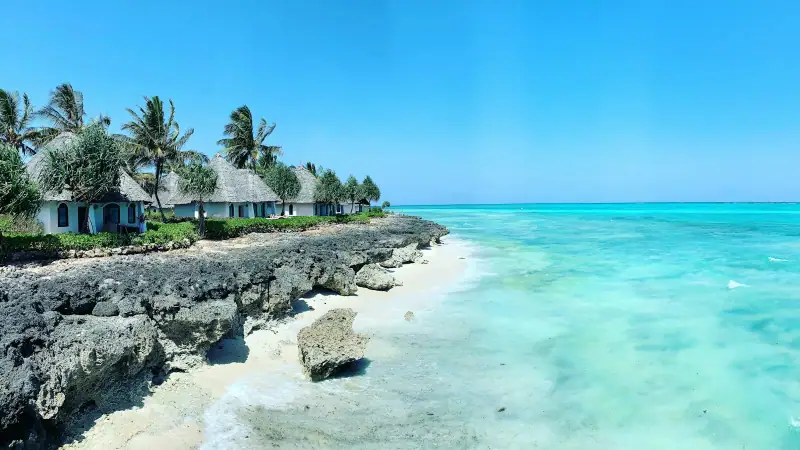
Opposite the east coast, the island’s northern tip has a different bathymetry: the bottom drops off faster near shore and the shallow lagoon, protected by the distant reef, is much less extensive.
- Nungwi is known across the traveler community for swimming possible at almost any hour, whatever the tide. It is one of the arguments that comes up most often in comparisons of the island’s beach destinations.
- Kendwa is in between: the beach narrows noticeably at low tide and a strip of sand may appear, but the water stays swimmable longer during the day than in Paje or Jambiani.
This difference largely explains why some travelers, especially families with children or people who want to swim without a schedule, choose the north over the east. Our Nungwi vs Paje comparison details the other criteria (atmosphere, prices, activities) to weigh when deciding.
How to check tide times before planning your day
No complicated calculation needed: several free tools give reliable forecasts for Zanzibar. The tide also decides access to The Rock restaurant: on foot at low tide, by boat at high tide.
- Mobile apps: Tide Times or Windy (built-in tides tab) let you pick a point near your accommodation (Paje, Jambiani, Nungwi, Stone Town) and show the times for the next 7 days.
- Websites: tide-forecast.com and worldtides.info offer detailed tables, usable offline once the page is loaded beforehand (handy if the hotel Wi-Fi is unreliable; see our guide to the SIM card and internet in Zanzibar for staying connected during your trip).
- At hotel reception: nearly every east-coast property posts a printed monthly tide table, updated each month. It is often the simplest and most reliable source there.
The habit to adopt on arrival: ask for or check the tide table for your whole stay, and schedule boat excursions (snorkeling, Safari Blue, dhow trips) and free swimming time around it, rather than deciding on the spot.
Walking on the lagoon at low tide: useful precautions
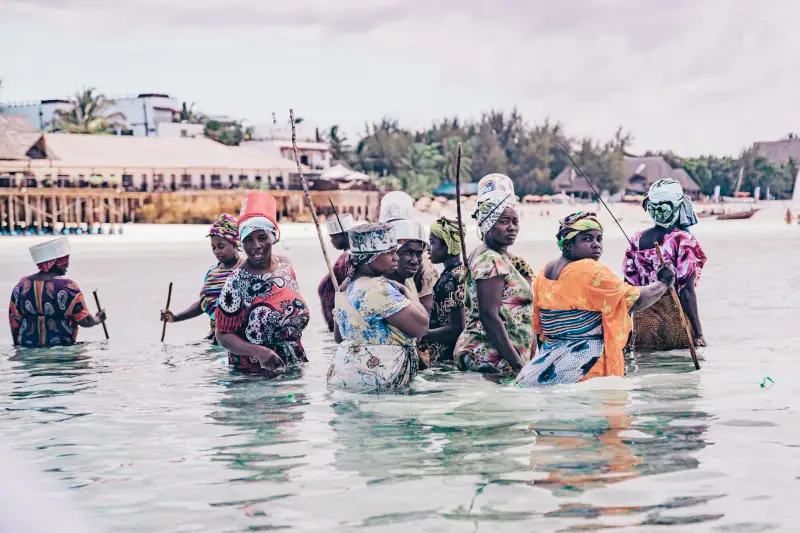
The lagoon exposed at low tide is not a problem: it is even a fairly unique experience, especially for watching the women who farm seaweed a few hundred meters from shore. A few simple precautions let you enjoy it without bad surprises:
- Wear water shoes: the bottom has sea urchins, some sharp coral and occasionally stonefish, whose sting is painful.
- Watch the rising-tide time before going far out: the tide can come back faster than expected in the areas farthest from shore, especially with an onshore wind.
- Avoid walking directly on live coral, visible in places: beyond the fragility of the ecosystem, some can cause cuts.
- Bring water and sun protection, as walking on the lagoon exposes you to the sun longer than a regular swim.
These precautions also apply to fans of snorkeling in Zanzibar: in Paje and Jambiani, most boat trips to the deeper coral areas are timed around high tide, to guarantee water that is clear and deep enough.
Summary
- Zanzibar has a semi-diurnal tide, with two high tides and two low tides a day, shifting about 45 minutes each following day.
- On the east coast (Paje, Jambiani, Bwejuu), the lagoon almost entirely empties at low tide: expect two comfortable swimming windows a day, around each high tide.
- Nungwi stays swimmable almost all day thanks to a different seabed layout; Kendwa offers a middle ground.
- Check a tide table (Tide Times app, Windy, or the table posted at hotel reception) on day one to plan swimming, snorkeling and excursions.
- At low tide, walking on the lagoon is an experience in itself: water shoes recommended, and keep an eye on the rising tide.
Once you have the times in hand, the tide stops being a constraint: it becomes a simple reference point, like sunrise, for organizing beach days without bad surprises.
Frequently asked questions
Why can't you swim at low tide in Paje and Jambiani?
Zanzibar's east coast is lined with a vast shallow lagoon, protected by a coral barrier about 1 to 2 km (0.6 to 1.2 mi) from shore. At low tide the water pulls back almost entirely inside this lagoon: only a few centimeters of water remain over sand and seaweed, not enough to swim. You have to wait for the tide to rise, generally 2 to 3 hours before and after high tide, to get swimmable depth again.
How long does low tide last in Zanzibar?
Zanzibar has a semi-diurnal tide: two high tides and two low tides every 24 hours, about 6 h 12 min apart. The window when the water is too low to swim generally lasts 3 to 4 hours around each low tide, which leaves two comfortable swimming windows of 3 to 4 hours each during the day, centered on the high tides.
Where can you swim in Zanzibar whatever the tide?
Nungwi, at the island's northern tip, is known for a much smaller tidal range than the east coast: swimming stays possible almost all day. Kendwa, right next door, is in between, with a beach that narrows at low tide but water that stays swimmable longer than in Paje or Jambiani.
Which app should you use for Zanzibar tide times?
The Tide Times and Windy apps (tides tab) and the tide-forecast.com site give reliable forecasts for Zanzibar if you pick the nearest point (Paje, Jambiani, Nungwi or Stone Town depending on your area). Most east-coast hotels and guesthouses also post the month's tide table at reception: ask for it as soon as you arrive.
Is it dangerous to walk on the lagoon at low tide?
The lagoon exposed at low tide is generally safe to walk on, but water shoes are a good idea: the bottom has sea urchins, some sharp coral and a few stonefish. Also watch for the returning tide, which can rise faster than expected in the areas farthest from shore: never go far from the edge without keeping an eye on the rising-tide time.
Does kitesurfing in Paje also depend on the tide?
Yes, the tide affects the usable areas and the difficulty level, in addition to the wind. Some windows (mid-rising or mid-falling tide) are preferred by kitesurf schools to have both enough water and steady wind. Our dedicated guide to kitesurfing in Paje details the best tide-and-wind combinations by skill level.
More Zanzibar guides
Keep reading

Best time to visit Zanzibar: when to go
The best time to visit Zanzibar for your activities: dry seasons, rains, temperatures and month-by-month advice.
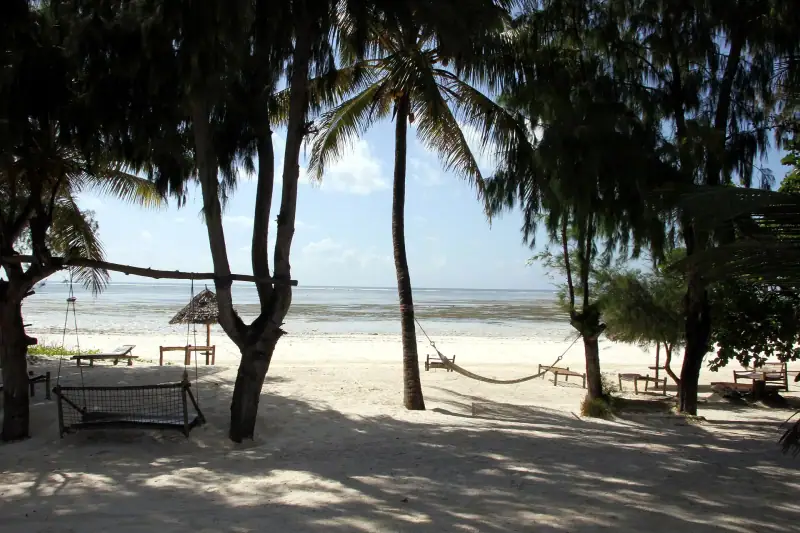
Where to Stay in Bwejuu, Zanzibar: Village, Beach and East Coast Hotels
Bwejuu, between Paje and Michamvi: which lodging to pick, what it costs, which beach, and how to handle the tides, cash and transport without a car.
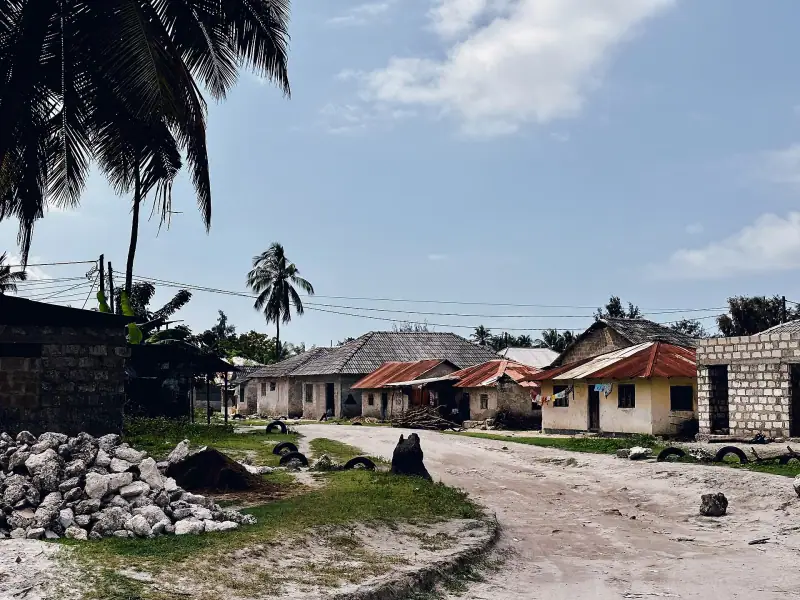
Where to Stay in Matemwe: The Best Lodging Near Mnemba Atoll
Where to stay in Matemwe, Zanzibar: dive lodges, charming bungalows, guesthouses. Areas, budget and tips for the northeast coast.
Ready-made
Zanzibar itineraries
5 days
Zanzibar in 5 Days Without a Car: A Realistic Itinerary With Transport
Zanzibar in 5 days without a car: Stone Town, Nungwi and Paje with distances, travel times, taxi and daladala prices, and pitfalls to avoid.
10 days
Zanzibar Island Tour: Complete 10 to 14-Day Itinerary
Stone TownNungwi and KendwaMatemwePaje and JambianiStone Town
3 days
Zanzibar's East Coast: A Complete Guide to Paje and Jambiani
Paje, Jambiani, kitesurfing and Swahili villages: a guide to Zanzibar's east coast, with beaches, dramatic tides and authentic village life.