What to see
Visiting Taipei: a complete guide to Taiwan's capital
We may earn a commission when you book through links on this page, at no extra cost to you. We don't visit or try the places we cover: we summarize published sources. How we work
In short
- Allow 4 to 5 days for the essentials; 6 to 7 days if you add Jiufen, Yehliu or the Beitou hot springs.
- The MRT is clean, punctual and signed in English; fares run NT$20 to 65, and the rechargeable EasyCard works on buses, YouBike and in 7-Eleven stores.
- Taoyuan Airport (TPE) is 40 km (25 mi) from the city; the airport MRT line to Taipei Main Station takes about 35 minutes for NT$160.
- Best months are October to December; avoid July-August (heavy heat, typhoons).
Taipei is a city that surprises and charms for the long run. The capital of a distinctive island, it combines ultramodern skyscrapers with alleys lined by centuries-old temples, one of the richest food scenes in Asia and green parks where locals practice tai chi at sunrise. The first stop of almost every trip to Taiwan, Taipei deserves much more than a layover. Here is the complete guide to exploring the capital at your own pace.
Why visit Taipei?
Taipei is not a capital like the others. Wedged between forested mountains and crossed by the Danshui River, the city developed while preserving a close relationship with nature. Twenty minutes by subway from the center, you can find yourself on hiking trails or facing the ocean.
What sets Taipei apart from other big Asian cities:
- An exceptional quality of life: cleanliness, safety, the legendary hospitality of the Taiwanese
- Incomparable food: the city is often ranked among the best culinary destinations in the world
- A living street culture: night markets, busy temples, cafes hidden in old apartments
- Easy transport: the MRT subway is one of the most efficient and best signposted in English in Asia
- Exceptional excursions nearby: Jiufen, Yehliu, the Beitou hot springs, all reachable in a day
For an overview of the island before diving into the capital, our complete guide to Taiwan gives you the context.
Taipei 101 and the Xinyi district
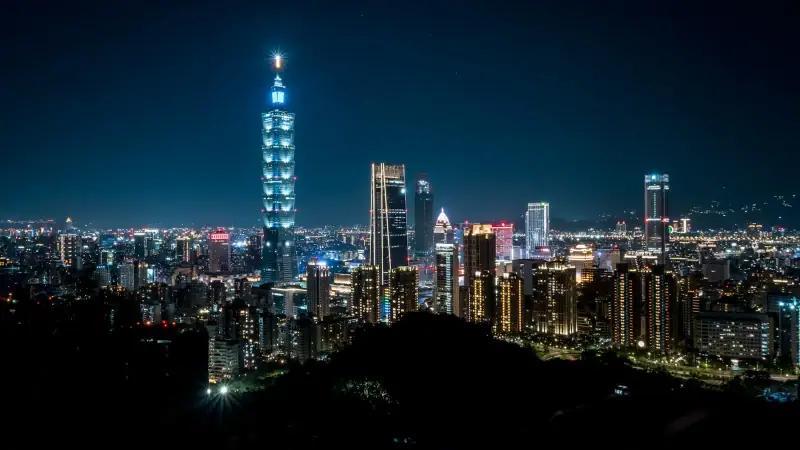
Taipei 101 tower
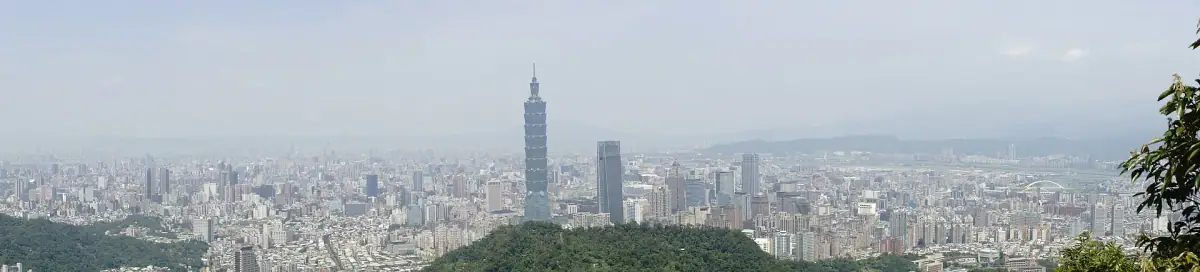
The symbol of Taipei, Taipei 101 dominates the city skyline at 508 meters (1,667 ft). For a long time the tallest building in the world (a record held from 2004 to 2010, surpassed by the Burj Khalifa), it remains one of the most impressive in Asia for its stylized bamboo architecture and its central earthquake-damping system visible from inside.
The indoor observatory (89th floor) offers a 360-degree panorama over the whole Taipei basin, the mountains that encircle it and, in clear weather, the ocean in the distance. The outdoor observatory (91st floor) lets you step out without glass. The ride up in the pressurized elevator from the 5th floor takes only 37 seconds, a world speed record when it was built.
Practical information: hours and access conditions (the observatory entrance may have moved in 2026) should be checked on the official website before your visit. Observatory fare: about NT$600 (about US$20). Getting there: Taipei 101/World Trade Center MRT station (Red Line, Tamsui-Xinyi).
The Xinyi district
Around the tower lies the Xinyi district, Taipei’s most modern and upscale area. Luxury malls (Taipei 101 Mall, Breeze Xinyi, Shin Kong Mitsukoshi) stand alongside rooftop terraces and fine-dining restaurants. In the evening, the bars of the surrounding towers offer striking views of the city lights.
Where to stay in Taipei
Hotels, boutique hotels and hostels in every neighborhood of the capital.
Old Taipei: Wanhua and Dadaocheng
Longshan Temple (Wanhua)
Longshan Temple is the oldest and most revered in Taipei. Founded in 1738 by immigrants from Fujian, it has been rebuilt several times after earthquakes and bombings, but it keeps an authentic, living atmosphere. Dedicated to Guanyin, the goddess of mercy, it is visited every day by hundreds of worshippers who burn incense, recite prayers and consult oracles.
Come preferably early in the morning (before 9 am) or in the evening to observe Taiwanese devotion in a less touristy atmosphere. The architecture (curved roofs, carved dragons, vermilion columns) is a model of the Fujian style of southern China.
Getting there: Longshan Temple MRT station (Blue Line). Free entry, open 6 am to 10 pm.
Dadaocheng and the alleys of Dihua Street
About a twenty-minute walk or two subway stops north of Wanhua, the Dadaocheng district is one of the few preserved historic neighborhoods in Taipei. The main street, Dihua Street, is lined with early 20th-century Sino-Baroque buildings (ornate facades, covered arcades) that today house traditional herbalists, fabric merchants, refined tea shops and trendy cafes.
Dadaocheng is especially lively before Lunar New Year, when the street turns into a giant market where Taiwanese families stock up for the festivities. It is also the best place in Taipei to buy quality tea directly from producers.
Taipei’s night markets
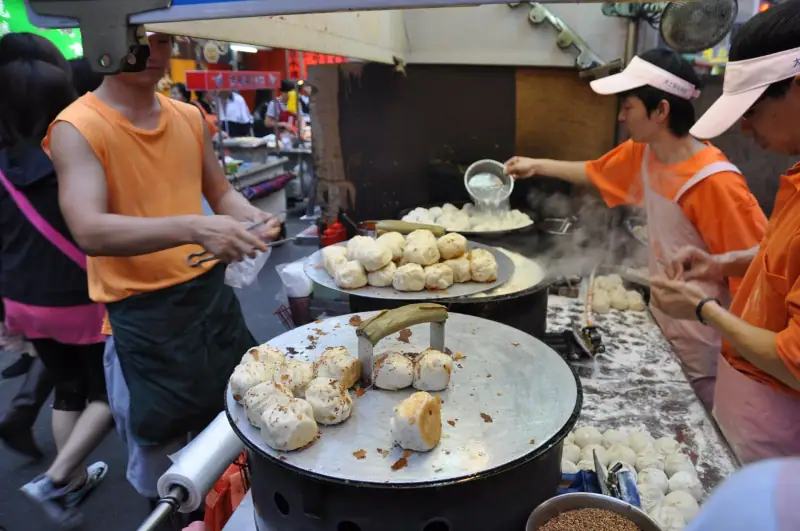
Night markets are the soul of Taiwanese cooking. In Taipei, every district has its own, and each has its specialty. For a full panorama of the island’s food, read our dedicated article on Taiwan’s food scene.
Shilin Night Market
The largest and most touristy of Taiwan’s night markets, Shilin spreads over several streets and alleys in northern Taipei. You can find everything: stinky tofu (fried fermented tofu), giant fried chicken (ji pa, a whole cutlet), oyster vermicelli, bubble milk tea, bao (filled steamed buns), and endless sweet and savory snacks.
The market has two zones: the outdoor surface zone (open-air street food) and the underground level (more than 500 stalls in a vast covered space). Prices are very affordable: allow NT$50 to 150 per dish (about US$1.60 to 4.90).
Getting there: Jiantan MRT station (Red Line). Open about 4 pm to midnight, until 1 am on weekends.
Raohe Street Night Market
Smaller and more local than Shilin, Raohe Street market is often cited by Taiwanese as their favorite. It stretches 600 meters (2,000 ft) from Ciyou Temple to the north entrance gate and offers a tighter but more authentic selection: the Black Pepper Bun stall (hú jiāo bǐng), which bakes filled buns in a clay oven, is an institution known across the island.
Getting there: Songshan MRT station (Green Line). Open every day from 5 pm to midnight.
Tours and activities in Taipei
Street food tours, guided temple visits and excursions from Taipei.
Ximending: Taipei’s Harajuku
The Ximending district, in the west of the city, is the center of Taipei’s youth culture: alternative fashion, manga, cosplay, cinemas, tattoo artists, Korean and Japanese streetwear shops, Taiwanese crepe stands and themed cafes. The atmosphere is electric, especially in the evening and on weekends.
The Red House (Ximen Red House), a red octagonal building from the Japanese era (1908), has become a cultural and creative center housing independent Taiwanese designer shops, a gallery and welcoming gay bars. Ximending is Taipei’s most open and tolerant district, and one of the most visible LGBTQ+ areas in Asia.
Getting there: Ximen MRT station (Blue and Green Lines).
The Da’an district: temples, cafes and parks
Da’an Forest Park
In Taipei’s most sought-after residential district, Da’an Forest Park is the capital’s green lung. Its 26 hectares (64 acres) of dense greenery host dozens of locals every morning for tai chi, jogging and meditation.
The park also has an open-air amphitheater where free concerts and cultural events are held regularly. A central pond attracts herons and turtles. In the evening, fireflies appear among the trees in summer, a rare sight in a capital.
Getting there: Da’an Park MRT station (Red Line).
Xingtian Temple
Dedicated to Guan Yu, the god of war and commerce, Xingtian Temple is one of the most visited in Taipei by Taiwanese worshippers. Unlike Longshan, it is less touristy and more authentic in its daily devotion. Businessmen and entrepreneurs regularly come to pray to Guan Yu for the prosperity of their businesses.
Volunteers offer purification ceremonies (a light exorcism of bad energies) free of charge to visitors who come forward respectfully.
Getting there: Xingtian Temple MRT station (Orange Line / Zhonghe-Xinlu Line, O09). Open 4 am to 10:30 pm. Free.
Taipei’s museums
National Palace Museum
One of the largest art museums in the world, the National Palace Museum holds the most important collection of classical Chinese art in the world: nearly 700,000 pieces from the imperial collection of the Forbidden City, taken to Taiwan in 1949. Song porcelain, Han bronzes, Tang calligraphy, jade sculptures, Song and Ming paintings: the collection is breathtaking.
It is impossible to see everything in one visit. Focus on the most iconic pieces: the Jadeite Cabbage, a miniature vegetable carved from a single two-toned stone, and the Meat-Shaped Stone, a piece of jasper depicting a slice of braised pork with striking realism. These two pieces draw long lines.
Practical information: open Tuesday to Sunday from 9 am to 5 pm. Closed Monday. Fare: NT$350 (about US$12). Getting there: red bus 30 from Shilin MRT station, or taxi.
Taipei Fine Arts Museum (TFAM)
More accessible in the city center, the Taipei Fine Arts Museum (TFAM) presents modern and contemporary Taiwanese art in a Japanese Metabolist-style building opened in 1983. Temporary exhibitions are often of excellent quality and feature Taiwanese and international artists.
Getting there: Yuanshan MRT station (Red Line). Closed Monday. Fare: NT$30 (about US$1), some temporary exhibitions extra.
Flights to Taipei
Compare direct and connecting flights to Taoyuan International Airport (TPE).
Excursions from Taipei
Jiufen and Jinguashi (1 day)
About 35 to 40 kilometers (22 to 25 mi) northeast of Taipei, the village of Jiufen clings to cliffs plunging into the Pacific Ocean. Its stepped alleys, traditional teahouses with red lanterns and local snack stalls give it a unique atmosphere, magical at nightfall.
Jiufen is often associated with the aesthetic of Hayao Miyazaki’s film Spirited Away, even though the director has denied any direct link. The fairy-tale, slightly mysterious atmosphere of its night alleys, between kitchen steam and the reflections of gold on the sea, makes the comparison understandable.
Combine it with a visit to the neighboring village of Jinguashi (a former Japanese colonial gold mine converted into an ecomuseum). Our full article on visiting Jiufen gives you all the details.
Getting there: bus 1062 from Zhongxiao Fuxing MRT station (Blue Line), about 1 h 30.
Yehliu Geopark
About forty kilometers (25 mi) north of downtown on Taiwan’s north coast facing the Pacific Ocean, Yehliu Geopark is a rocky cape with extraordinary geological formations. Centuries of marine and wind erosion have sculpted stone mushrooms, honeycomb hollows and human-like silhouettes, including the famous Queen’s Head, the island’s tourist icon.
The walk through the park takes about 1 h 30. Go preferably in the morning (opens at 8 am) to avoid the crowds of tourist coaches.
Getting there: bus from the Ximen bus station or from Zhongxiao Fuxing MRT station, about 1 hour.
Beitou hot springs
One of the geological features of the Taipei region is the presence of hydrothermal springs a few kilometers from downtown. The Beitou district, to the north, is built around these sulfur- and mineral-rich springs.
Several public bathhouses (Japanese-style onsen, a legacy of colonization) let you soak in hot water at 37 to 43 °C (99 to 109 °F). The Xinbeitou Hot Spring Museum, in a colonial-era villa, traces the history of these baths. Beitou Park itself is crossed by a river whose water steams constantly.
Getting there: MRT Red Line to Xinbeitou (change at Beitou); the park’s public entrances are free.
Getting around Taipei
The MRT subway: six main lines cover the whole city and nearby suburbs (Danshui, Xinbeitou, Beitou). Clean, air-conditioned, punctual and very well signposted in English. Fare: NT$20 to 65 (about US$0.65 to 2.10) depending on distance.
The EasyCard: a rechargeable smart card (NT$100 deposit, NT$100 initial credit), it works on buses, YouBike, licensed taxis and in 7-Eleven stores. The MRT offers a progressive rebate based on monthly use (system in place since 2020). Essential.
YouBike bikes: available throughout the city (more than 1,600 stations in 2025), these shared bikes are perfect for exploring the flat neighborhoods along the river. First half hour at NT$10 with the EasyCard.
Buses: dense and cheap, but less intuitive for foreigners. Useful for reaching the National Palace Museum and outlying sites not served by the subway.
Taxis: plentiful, inexpensive and honest. Uber also works very well in Taipei.
Where to stay in Taipei
Zhongzheng / Main Station: a practical area for arrivals and departures, with a concentration of guesthouses and mid-range hotels. Direct access to the HSR station, Songshan Airport (shuttle) and the MRT.
Da’an: an upscale residential district with fine boutique hotels, cafes and restaurants. Ideal for exploring on foot. Slightly more expensive.
Zhongshan: a shopping district north of the center, well served, with a good variety of mid-range hotels. Close to Dadaocheng.
Xinyi: views of Taipei 101 from the hotels in the tower. A modern, upscale setting. On a tighter budget, the surroundings are cheaper.
Indicative budget:
- Hostel dorm: NT$450-800 (about US$15-26)
- Budget/mid-range double room: NT$1,500-3,000 (about US$49-100)
- 4-star comfort hotel: NT$3,500-7,000 (about US$115-230)
For detailed neighborhood advice, read our guide where to stay in Taipei.
Budget for visiting Taipei
| Item | Tight budget | Comfort |
|---|---|---|
| Accommodation | NT$500-900/night | NT$2,500-5,000/night |
| Meals (3/day) | NT$250-400 | NT$600-1,200 |
| Local transport | NT$50-100/day | NT$100-200/day |
| Activities/museums | NT$100-400/day | NT$400-1,000/day |
| Daily total | ~NT$900 (~US$29) | ~NT$3,500 (~US$115) |
For complete budget planning, see our article on the travel budget for Taiwan.
Practical information for Taipei
Airport: Taoyuan International Airport (TPE), 40 km (25 mi) to the west, is the main international hub. The MRT airport train to Taipei Main Station takes about 35 minutes (NT$160, about US$5). A second airport, Songshan (TSA), is in the city center (direct subway access) and mainly serves domestic flights and connections to Japan, Korea and Hong Kong.
Connectivity: Taiwanese SIM cards (Chunghwa Telecom, Taiwan Mobile, Far EasTone) are available on arrival at the airport. A 5G card with 30 days of unlimited data costs about NT$600-900 (about US$20-29). Recommended for navigation, translation and transport apps. Alternatively, check your carrier’s international plan or use a travel eSIM.
Language: Mandarin is the official language. English is understood in tourist areas, hotels, museums and by most people under 40. MRT signs are consistently bilingual. In night markets and street restaurants, the language barrier is handled with a smile and photos of the menu.
Health: ask your doctor or a travel clinic, and see the official travel health pages (CDC in the US, TravelHealthPro in the UK). Consider travel insurance covering medical care and repatriation. Pharmacies (green sign with a red cross) are plentiful and well stocked.
Currency: the New Taiwan dollar (NT$ or TWD). Exchange rates change, so check the current rate before you go. ATMs are available everywhere (7-Eleven in particular). Credit cards are accepted in hotels and restaurants, but cash remains essential for night markets.
Suggested 4-day itinerary in Taipei
Day 1: Discovering old Taipei: morning at Longshan Temple and a walk through the Wanhua district. Lunch on the spot (dumplings and noodle soup in a local eatery). Afternoon in Dadaocheng and Dihua Street (tea, herbs, architecture). Evening at the Raohe night market.
Day 2: Modernity and culture: morning at Taipei 101 (observatory for the morning panorama). Lunch in the Xinyi district. Afternoon at the National Palace Museum (allow 3 to 4 hours). Evening at the Shilin night market.
Day 3: Excursion to Jiufen: a full day in Jiufen and Jinguashi (leave in the morning, return late in the evening to enjoy the night atmosphere of the lanterns). Dinner in a teahouse with a view of the bay.
Day 4: Neighborhoods and parks: morning at Da’an Forest Park and Xingtian Temple. Afternoon in Ximending. Beitou hot springs in the late afternoon (train + subway, 45 minutes from the center). Free evening in Da’an’s cafes.
Car rental in Taipei
To explore the Taipei area and northern Taiwan at your own pace.
Taipei is an ideal gateway for understanding Taiwan, but also a destination in its own right that deserves several days of exploration. Between the night markets whose smell and warmth will stay with you, the temples where daily devotion shares space with tourists in a natural coexistence, and the panoramas over a city that is never done reinventing itself, the Taiwanese capital is one of those places where you quickly see why travelers who spend a week there would have liked to plan a month. To learn about the rest of the island, see the must-sees in Taipei and our full Taiwan tour itinerary.
Frequently asked questions
How many days do you need to visit Taipei?
Allow 4 to 5 days to see the essentials: Taipei 101, the night markets, the main temples, the Ximending district and a few nearby excursions. If you want to explore Jiufen, Yehliu or the Beitou hot springs, plan 6 to 7 days.
What are the must-see neighborhoods in Taipei?
Da'an for cafes and temples, Ximending for shopping and youth culture, Zhongshan for shopping and galleries, Xinyi for Taipei 101 and upscale malls, and Shilin for Taiwan's most famous night market.
How do you get around Taipei?
The Taipei MRT subway is excellent: 6 main lines, clean, punctual and English-friendly. A ticket costs NT$20 to 65 depending on distance. The EasyCard (rechargeable, NT$100 deposit) gives a 20% discount on the subway and works on buses, YouBike and in 7-Eleven stores.
Is Taipei an expensive destination?
Taipei is reasonable compared with other Asian capitals. Allow NT$800 to 1,500 (about US$26 to 49) a day as a budget traveler (dorm, street food, public transport) and NT$3,000 to 6,000 (about US$100 to 195) for comfort (3-4 star hotel, restaurants, activities).
What is the best season to visit Taipei?
October to December is the best period: pleasant temperatures (18 to 25 °C / 64 to 77 °F), less rain than in spring, before the big heat. Avoid July-August (heavy heat, typhoons). March-April is lovely but rainy. January-February is cool but festive with Chinese New Year.
What can you see around Taipei on a day trip?
Jiufen and its golden alleys on the cliffs, Yehliu Geopark and its spectacular rock formations, the Beitou hot springs reachable by subway, and Danshui (Tamsui) on the river estuary. All of these are easy day trips from Taipei.
Is Taipei safe for travelers?
Taipei is one of the safest capitals in Asia. Crime is very low, residents are welcoming and honest, and the transport system is well signposted in English. It is a destination accessible solo, as a couple or with family.
More Taiwan guides
Keep reading
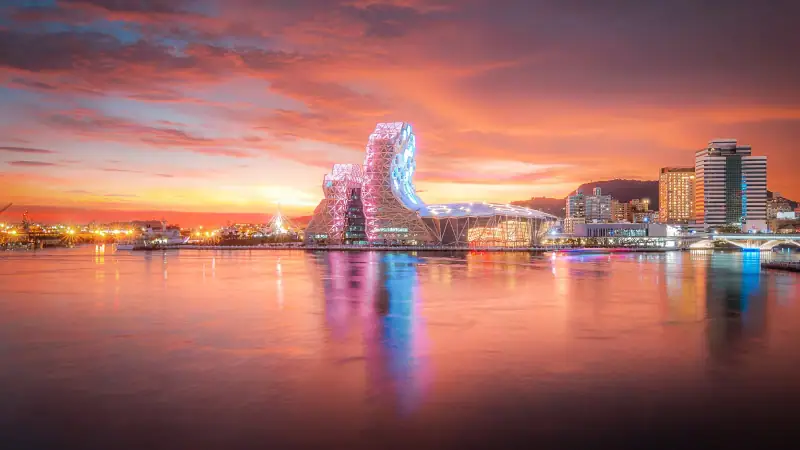
Visiting Kaohsiung: a complete guide to the southern metropolis
Everything to visit Kaohsiung: Pier-2, Lotus Pond, Cijin, night markets, transport and practical tips for southern Taiwan's gem.
Visiting Hualien: a complete guide to the gateway to Taroko
Everything you need to visit Hualien: Taroko, Qixingtan Beach, Dongdamen night market, rafting, Amis culture and practical tips for eastern Taiwan.
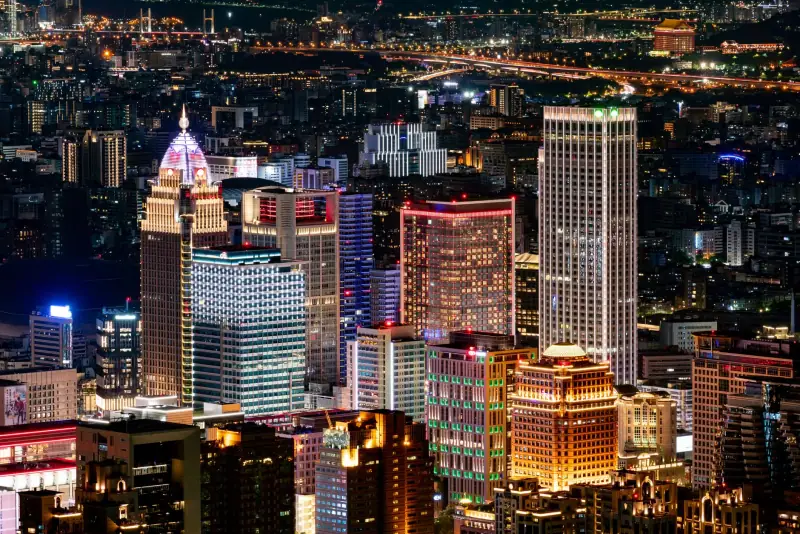
Taipei must-sees: the 15 sights not to miss
Taipei's top sights: Taipei 101, Longshan Temple, the National Palace Museum, night markets and trendy districts. A full sightseeing guide.
Ready-made
Taiwan itineraries
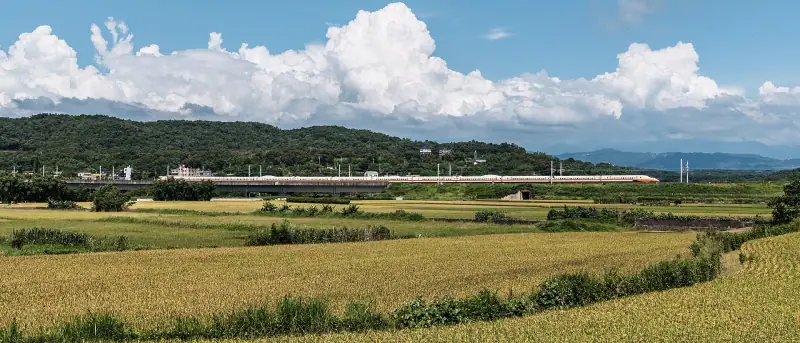
10 days
Taiwan in 10 days without a car: train and HSR itinerary, stops and travel times
TaipeiSun Moon LakeTainanKaohsiungKentingHualien
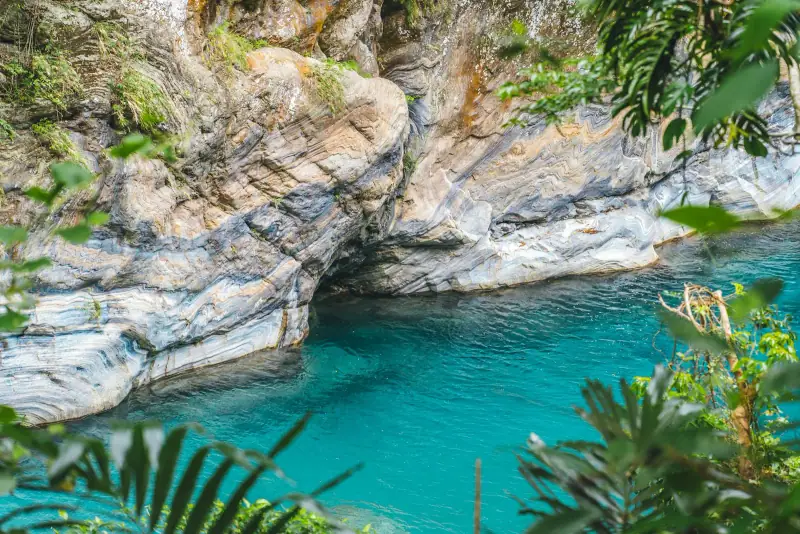
5 days
Eastern Taiwan road trip: the Pacific coast and Taroko Gorge
A complete guide to a road trip in eastern Taiwan: Taroko Gorge, Hualien, the Rift Valley, Highway 11 and Taitung in 5 to 7 days.
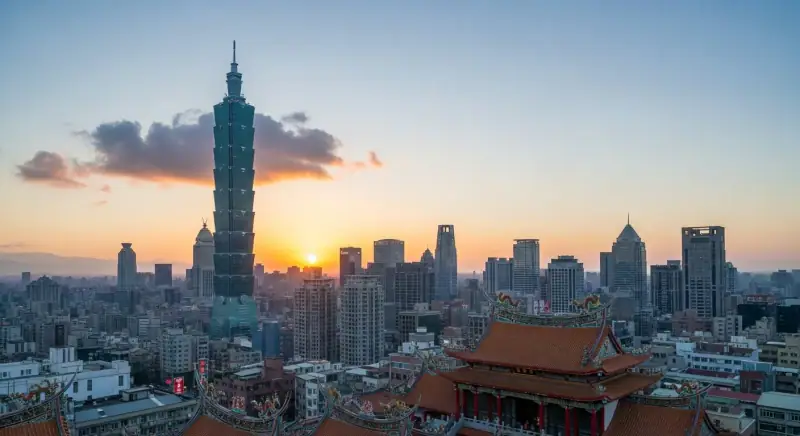
7 days
Taiwan in 7 days: the perfect itinerary for a first trip
TaipeiHualienSun Moon LakeTainan