What to see
Visiting Olbia: A Complete Guide to the Gateway to the Costa Smeralda
We may earn a commission when you book through links on this page, at no extra cost to you. We don't visit or try the places we cover: we summarize published sources. How we work
In short
- One day covers the centro storico, San Simplicio basilica and the archaeological museum; Olbia is also a base for 5 to 7 days across the Gallura and the Costa Smeralda.
- The airport (OLB) is 4 km (2.5 mi) from the center: the ARST bus costs €1.30 (about $1.50) and takes 15 minutes; a taxi costs €15 to 20 (about $17 to 23).
- Pittulongu beach is 8 km (5 mi) north and reachable by bus (line 3, 20 minutes, €1.30); Costa Smeralda beaches are 30 to 45 minutes away by car.
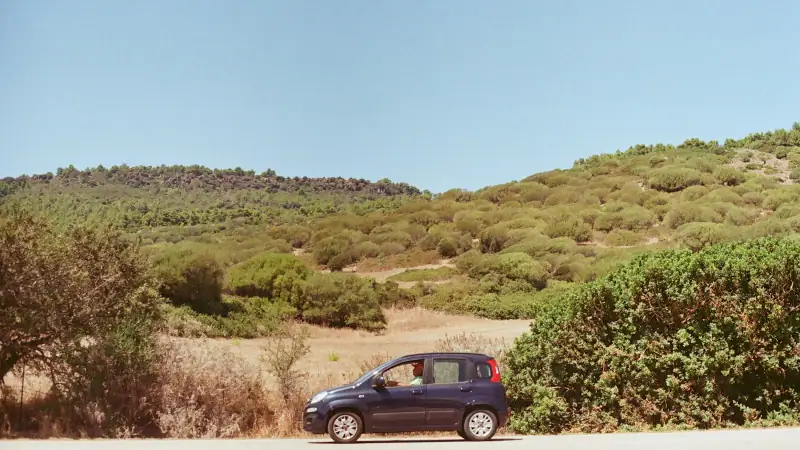
- A car is almost essential for the beaches and villages of the Gallura; for La Maddalena, drive to Palau and take the 15 to 20-minute ferry.
Olbia is the town that most travelers pass through without stopping. After landing at Costa Smeralda airport, they head straight for Porto Cervo or the beaches of the Gallura, treating Olbia as a mere entry gate. A mistake. With its 60,000 inhabitants, Olbia is the most dynamic town in northern Sardinia, a port city with deeply rooted Phoenician and Roman origins, an authentic and lively centro storico, and an archaeological museum full of treasures buried for two millennia. And it is surrounded by some of the island’s most beautiful beaches, with the Costa Smeralda and its unreal turquoise waters as a backdrop. Here is why you should take the time to really discover it.
Olbia’s centro storico: between history and local life
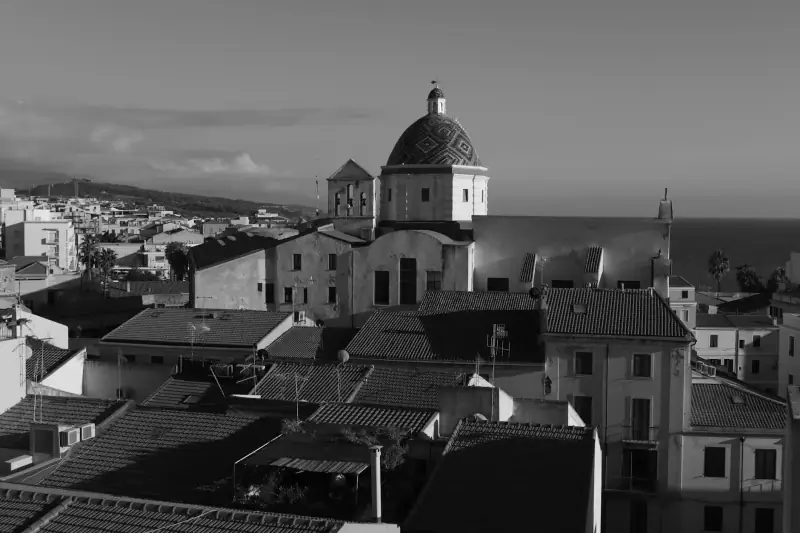
Olbia’s historic center does not have the magnificence of Alghero or the prestige of Cagliari, but it has a raw authenticity that gives it all its character. Unlike the tourist resorts of the Costa Smeralda, here you meet residents doing their shopping at the market, espresso bars frequented by the neighborhood’s older residents and trattorias with no menu translated into English.
Corso Umberto: the main artery
Corso Umberto I is the beating heart of Olbia. This long pedestrian boulevard links the railway station to Piazza Margherita, lined with shops, bars and restaurants. In the evening, the passeggiata, that Italian tradition of the evening stroll, fills the corso with an elegant crowd going back and forth between the terraces. Piazza Margherita, with its palm trees and café terraces, is the ideal place to sip an Aperol Spritz before dinner.
Piazza Regina Elena and the old quarter
Behind Corso Umberto stretch the lanes of the old quarter, with its gray granite houses characteristic of the Gallura. Piazza Regina Elena is surrounded by early 20th-century buildings and hosts the weekly market on Wednesday and Saturday mornings, where local producers sell sheep’s milk cheeses, wild boar cured meats, scrub honey and marinated olives.
Via delle Terme and Via Torino keep some fine facades from the Savoyard period (18th-19th century), witnesses to the time when Olbia, then renamed Terranova Pausania, was the main trading town of northern Sardinia.
Guided tours and excursions from Olbia
City tours, boat trips to La Maddalena, snorkeling outings and hikes in the Gallura.
San Simplicio Basilica: the finest Romanesque in Sardinia
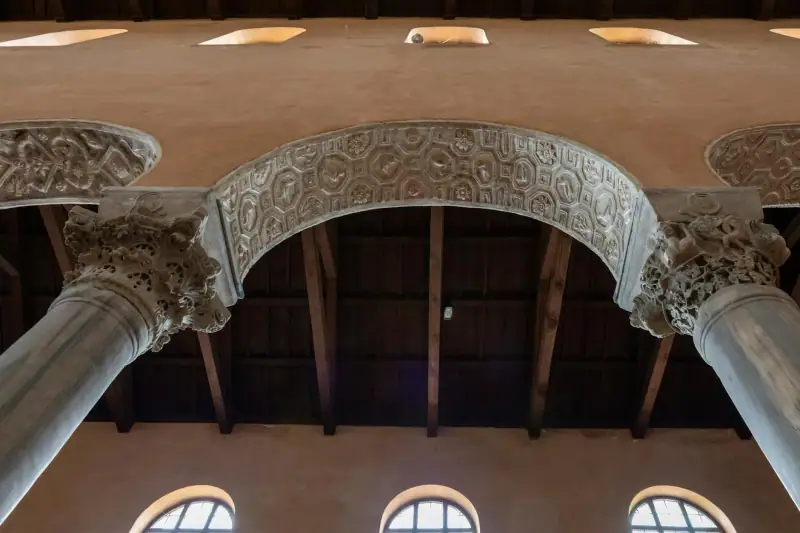
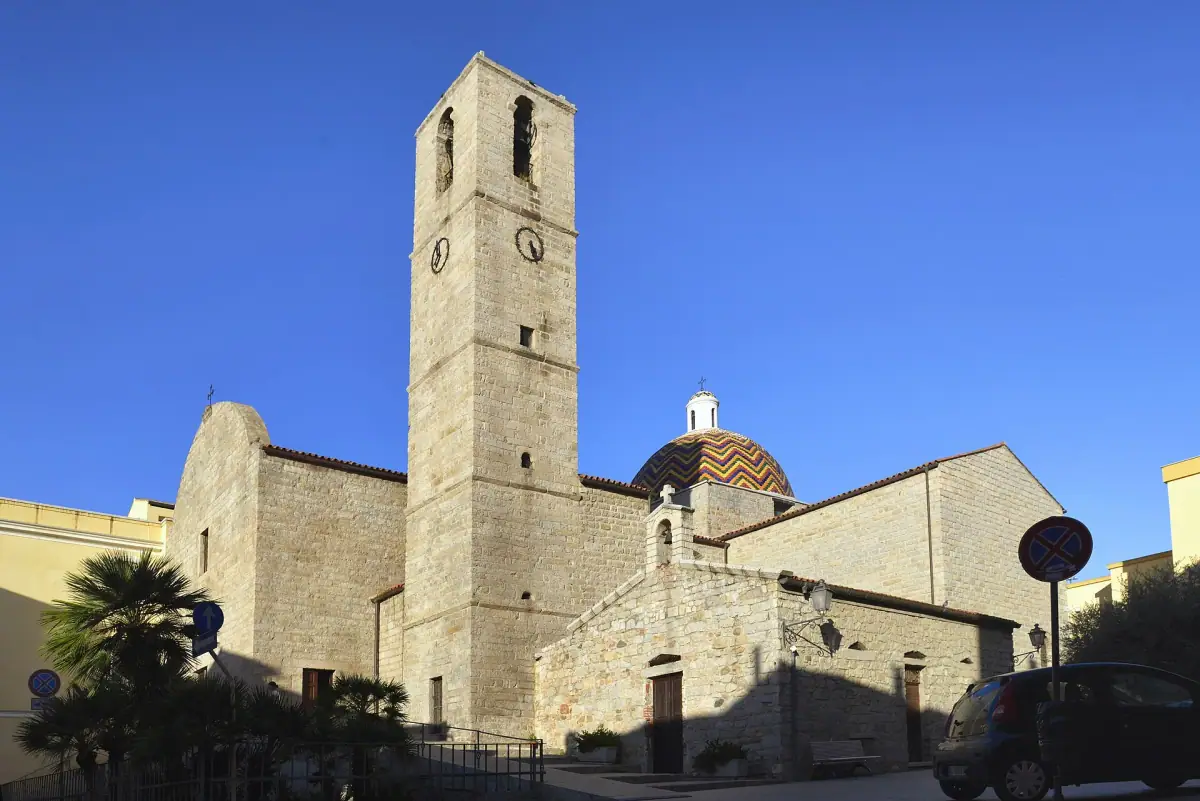
The Basilica di San Simplicio is undoubtedly Olbia’s most remarkable monument, and one of the most important in the whole north of the island. Classified as a national monument, this Romanesque church in gray granite stands over Piazza San Simplicio, a step from the centro storico.
A thousand-year-old building
Built between the 11th and 12th centuries, San Simplicio is the purest example of the Sardinian Romanesque style: a sober facade in cyclopean granite blocks, three naves separated by columns with carved capitals, a semicircular apse pierced by small round-arched openings. The total absence of ornament (no bell tower, no rose window, no painted decoration) gives it an almost pre-Romanesque austerity of striking beauty.
The church is dedicated to Saint Simplicius, bishop of Olbia martyred in the 4th century and patron saint of the town. It was built on the ruins of a 5th-century early Christian sanctuary, itself built on an older place of worship: layers of history pile up on this site, occupied continuously since Antiquity.
The interior and its treasures
Inside, the atmosphere is hushed and dark, lit only by the small Romanesque windows and votive candles. Granite columns alternate with pillars reused from older Roman buildings (spolia); look for the differences in size and shape, evidence of the salvaged materials. The floor is paved with medieval tombstones with half-erased inscriptions.
In the left nave, a 4th-century early Christian sarcophagus shows biblical scenes carved in bas-relief (Noah’s Ark, Moses striking the rock, Daniel in the lions’ den) of remarkable quality for late-antique Sardinia.
Festa di San Simplicio (May 12-17): Olbia’s biggest traditional festival. Horse cavalcades in Sardinian costume, processions, concerts of launeddas (the Sardinian triple pipe) and a craft market. If you pass through Olbia at this time, do not miss it.
The Olbia Archaeological Museum: the Roman wrecks
The Museo Archeologico di Olbia is housed in a modern glass-and-steel building on the artificial island of the port. This museum holds one of the most fascinating collections in Sardinia, centered on an extraordinary discovery: twenty-four wrecks of Roman ships found on the bottom of the Gulf of Olbia.
The discovery of the twenty-four wrecks
In 1999, during port expansion work, bulldozers uncovered the remains of twenty-four Roman ships sunk in the 4th-5th century AD. Some still carried their cargo of ceramics, amphorae, tools and sailors’ personal belongings. The most likely hypothesis: these ships were sunk by the Vandals during their conquest of Sardinia in 456 AD, or by a violent storm. It is one of the most important groups of ancient wrecks in the whole Mediterranean.
The collections
The museum presents:
- Reconstructed hulls of two ships (a merchant ship and a war liburna), with the original fragments consolidated
- Thousands of objects from the wrecks: wine and olive oil amphorae, bronze oil lamps, African sigillata tableware, lead anchors, shipboard tools, coins
- Models of the ships and of the Roman port of Olbia (then called Olbia Portu)
- A section devoted to the Nuraghe Riu Mulinu (5 km / 3 mi from Olbia), with Nuragic objects from the 2nd millennium BC
The visit is explained by panels in Italian, Sardinian, English and German. Allow 1 h 30 to 2 h to see everything.
Practical information: Free admission according to recent official sources. Open Tuesday to Saturday, mainly in the morning (about 8 am to 1 pm, sometimes also in the afternoon); hours vary, so check before you come. Closed Monday.
Hotels in Olbia
From a boutique hotel in the centro storico to a beach hotel at Pittulongu, find the best lodging.
Beaches around Olbia: an exceptional coastline
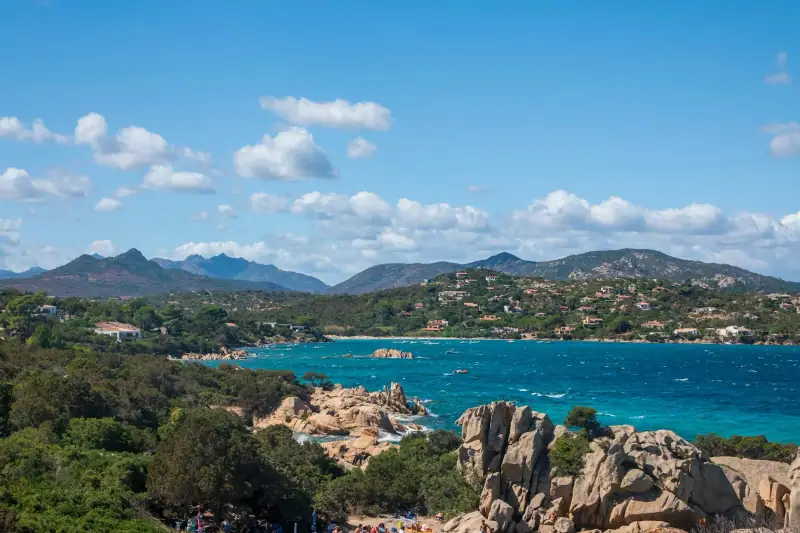
Olbia’s great strength as a base is its geographic position: less than 20 km (12 mi) from the town center, you find some of the most beautiful beaches in northern Sardinia. And an hour’s drive away, the Costa Smeralda awaits.
Beaches in the Gulf of Olbia
Pittulongu: 8 km (5 mi) north of Olbia, it is the town’s urban beach par excellence. A long arc of very fine white sand, shallow water of a luminous turquoise, and sand dunes behind which juniper and mastic grow. Beach clubs (lidi) offer loungers and umbrellas (€15 to 20 a day, about $17 to 23), but half the beach is free access. By bus from the center of Olbia (line 3, 20 minutes, €1.30 / $1.50) or by car (easy parking outside August).
Lido del Sole: The beach closest to the center (5 km / 3 mi), in a residential district. Less spectacular than Pittulongu, but practical for a quick swim. Calm, shallow water, ideal for families with young children.
Porto Istana: 10 km (6 mi) south of Olbia, this large beach is less known to tourists but loved by locals. The Porto Istana lagoon, almost closed off by a strip of sand, creates calm water of absolute clarity. Fish visible to the naked eye. Parking (paid in summer), a few rowboats for rent.
Beaches of Cugnana Bay
Bados: A small cove 15 km (9 mi) north of Olbia, in Cugnana Bay. White sand, crystal-clear water, access by car (parking), a few rocks for snorkeling. Very popular with divers, visibility sometimes above 20 m (65 ft).
Cugnana Verde: At the back of the bay of the same name, two quiet coves with water calm as a mirror. Cugnana Bay is sheltered from north winds by the Capo Figari promontory, ideal on mistral days.
Costa Smeralda beaches (30-45 min)
In less than an hour’s drive from Olbia, you reach the emblematic beaches of the Costa Smeralda: Capriccioli, Liscia Ruja, Cala di Volpe, Pevero. To understand what Sardinia’s most mythical coast has to offer, see our guide Where to stay on the Costa Smeralda.
Golfo Aranci: the seaside little sister (15 km / 9 mi)
Fifteen km (9 mi) north of Olbia, Golfo Aranci (the Gulf of Oranges, although there are no orange trees here, only spurge and mastic) is a seaside town whose gentle way of life contrasts with the bustle of the Costa Smeralda. The historic fishing village, with its pastel-colored houses, is extended by a palm-lined waterfront with gelaterie and bars.
Capo Figari: the wild promontory
Overlooking Golfo Aranci at 342 m (1,122 ft), Capo Figari is one of the most spectacular natural sites in northern Sardinia. A regional nature reserve, it shelters Eleonora’s falcons, Sardinian mouflon (Ovis aries musimon) and rare griffon vultures (reintroduced in 2021). A 7 km (4 mi) hiking trail (starting from the Golfo Aranci waterfront) climbs to the cape’s lighthouse, with dizzying views of the coast and, in clear weather, of Corsica 83 km (52 mi) away. Allow 3 hours round trip, moderate level.
Golfo Aranci beaches
Spiaggia Bianca: The village’s main beach, fine white sand, shallow turquoise water, very busy but well kept. Loungers available or free access on a section.
Sos Aranzos: A small rocky cove north of the village, reachable on foot or by kayak, ideal for snorkeling. Posidonia, sea urchins and multicolored fish abound.
Car rental at Olbia airport
Compare the prices of all rental companies at Costa Smeralda airport and book at the best rate.
Olbia as a base: the essential excursions
Olbia’s geographic position makes it the best base in the north for reaching the whole Gallura.
The La Maddalena archipelago (1 h 30)
The star excursion from Olbia. From Palau (about 40 km / 25 mi, 40 minutes by road), the ferry to La Maddalena takes 15 to 20 minutes. The archipelago has 62 islands and islets, seven of them inhabited. La Maddalena and Caprera (linked by a bridge) are the two main ones. Caprera holds the Garibaldi house-museum, home of the hero of Italian unification, who died here in 1882. The waters between the islands, tinted pink by the granite and turquoise by the shallow depth, are among the most beautiful in the Mediterranean. Boat excursions from Palau or La Maddalena tour the most beautiful coves.
To understand the whole road network and the distances, our road trip in Sardinia will give you a complete picture of how to organize your stay.
Santa Teresa di Gallura and Capo Testa (65 km / 40 mi)
At the far north of Sardinia, Capo Testa is an extraordinary natural site: a chaos of granite sculpted by the wind into anthropomorphic shapes, overlooking a sea where Sardinia faces Corsica, about 11 km (7 mi) away. The village of Santa Teresa di Gallura is typical of the Gallura, with gray granite houses and a pleasantly restful end-of-the-world atmosphere. Rena Bianca beach, directly reachable from the village center, is stunningly beautiful.
The nuraghi of the Gallura
The region around Olbia is dotted with Nuragic remains. The Nuraghe Riu Mulinu (5 km / 3 mi from Olbia) is reachable by car and has a well-preserved nuraghe tower with its original entrance corridor. The Arzachena Nuragic complex (30 km / 19 mi) includes several sites, among them the Tomba dei Giganti Li Muri and the Necropoli di Li Muri, megalithic necropolises of the 4th millennium BC. To learn all about this exceptional heritage, see our article on the nuraghi of Sardinia.
Food in Olbia: between the land and sea of the Gallura
Gallura cooking is a remarkable synthesis of the pastoral traditions of the interior and the marine resources of the coast. In Olbia, you will be spoiled for choice.
Gallura specialties
Zuppa gallurese: The emblematic dish of the whole region. It is a kind of bread lasagna (pane carasau soaked in meat broth), layered with fresh cheese (casizolu or young pecorino), covered with broth and baked until golden. Simple, generous, comforting. Found in almost all the trattorias of the old town.
Porcetto arrosto (roast suckling pig): Sardinian suckling pig, roasted over embers on myrtle branches and served with scrub herbs, is a great classic of Sardinian celebrations. In Olbia, some trattorias offer it on weekends by prior order.
Aragoste e frutti di mare: Olbia is an active port, so the freshness of the seafood is guaranteed. Spiny lobsters (aragoste), sea urchins (ricci di mare, January to April), clams (vongole) and mussels (cozze) from the Calich lagoon are essential.
Formaggi di Gallura: The region produces several excellent sheep’s cheeses. Canestrato gallurese (a pressed cheese aged in a basket) and young or aged pecorino sardo are enjoyed with Gallura scrub honey (miele di corbezzolo, slightly bitter), a combination you will find nowhere else.
Where to eat in Olbia
The addresses below are indicative: their current opening could not be confirmed, so check before you book.
- Trattoria Il Vecchio Mulino (Via delle Terme): The local institution for zuppa gallurese and homemade pasta. Simple setting, honest prices (€25 to 35 per person, about $29 to 41).
- Ristorante Vecchia Olbia (Piazza San Simplicio): Seafood cooking with a view of the basilica. Local tuna carpaccio, aragoste, sea urchin pasta.
- Ristorante Zio Nicola (Via Garibaldi): A small, warm dining room, authentic Sardinian cooking, set menus of the day at €15 to 20 (about $17 to 23).
- Mercato Civico (Corso Umberto): Olbia’s covered market, in the morning. Cheeses, cured meats, fresh fish, Sardinian pastries.
Getting around Olbia and the surroundings
From the airport
Olbia Costa Smeralda Airport (OLB) is 4 km (2.5 mi) from the town center. An ARST bus (line to the center, €1.30 / $1.50, 15 minutes) links the airport to the railway station. Taxis charge €15 to 20 (about $17 to 23) for the center. Shuttles and private transfers to Porto Cervo and the Costa Smeralda are offered by many agencies (€30 to 60 per person, about $35 to 70, depending on destination).
Within Olbia
Olbia’s centro storico can be done entirely on foot (30 minutes to cross it all). For the Pittulongu and Golfo Aranci beaches, the ARST bus is an economical option. E-bikes are available for rent (about €25 a day, about $29).
Toward the Costa Smeralda and the Gallura
A car remains the most practical way. The SS125 links Olbia to Porto Cervo (30 km / 19 mi, 35 minutes), San Teodoro (30 km / 19 mi south) and Palau (about 40 km / 25 mi north). The SS127 heads toward Sassari (120 km / 75 mi, 1 h 45). Avoid the roads in August between 10 am and 2 pm: traffic jams toward Porto Cervo and the Costa Smeralda can double journey times.
Olbia in practice
Budget
| Item | Indicative price |
|---|---|
| Lodging (double) | €60-180/night (~$70-210) |
| Restaurant meal | €20-45/person (~$23-52) |
| Bus airport to center | €1.30 (~$1.50) |
| Car rental (day) | €35-70/day (~$41-81) |
| Archaeological museum | free (to be checked) |
| Private beach entry | €15-20/day (~$17-23) |
Essential information
- Airport: Olbia Costa Smeralda (OLB), 4 km (2.5 mi) from the center.
- Ferry: Olbia’s port is one of the busiest in Sardinia, with daily connections to Genoa, Livorno and Civitavecchia (Tirrenia, Moby Lines, GNV). The Genoa-Olbia crossing takes about 10 to 13 hours.
- Language: Italian and Sardinian (Gallurese dialect in the region). English is understood in tourist areas.
- Currency: Euro. Many ATMs on Corso Umberto and at banks.
- Connectivity: WiFi is available in most hotels and cafés of the centro storico. Decent 4G/5G coverage across the town.
Olbia with family
Olbia is a destination particularly suited to families: the Pittulongu and Lido del Sole beaches have shallow water perfect for young children, the archaeological museum offers workshops for children (by advance reservation, in Italian), and the town is small enough to be explored on foot without tiring the little ones. For broader tips on family vacations in Sardinia, see our guide Sardinia with family.
Flights to Olbia
Compare flights to Olbia Costa Smeralda Airport (OLB) and find the best fares.
The Gallura hinterland: an unusual Sardinia
Beyond the beaches and the coastline, the Gallura offers a little-known and fascinating hinterland, only 20 to 30 km (12 to 19 mi) from Olbia.
Arzachena and its megaliths
The town of Arzachena (25 km / 16 mi northwest) is the center of the Gallura’s prehistoric heritage. Within a 10 km (6 mi) radius, there are six megalithic sites from the 4th to the 2nd millennium BC: the Li Muri necropolis (funerary circles), the Tomba dei Giganti Coddu Ecchju (with its 4 m / 13 ft standing stele), the Nuraghe Albucciu and its surroundings. Half a day is enough to visit two or three.
Lake Liscia and the Gallura gorges
Thirty km (19 mi) west of Olbia, the artificial Lake Liscia offers a panorama of unexpected softness in this granite landscape: hills covered with Mediterranean scrub reflected in calm water. The gorges of the Rio Liscia, upstream of the lake, are a hiking site frequented by locals but unknown to foreign tourists.
Olbia is thus much more than a simple stopover. It is a town in its own right, with its own history, flavors, monuments and residents who have the quiet pride of those who live in one of the most beautiful places in the world without needing to shout it from the rooftops. Take the time to linger there for a day, two if possible. Northern Sardinia will only be richer for it.
Frequently asked questions
How many days do you need to visit Olbia?
One day is enough to explore the centro storico, San Simplicio basilica and the archaeological museum. But Olbia is above all an ideal base for 5 to 7 days across the Gallura and toward the Costa Smeralda. Take the chance to visit Porto Cervo, the La Maddalena archipelago and the beaches of Golfo Aranci.
Which airport serves Olbia?
Olbia Costa Smeralda Airport (OLB) is very busy in July-August, with many connections in summer. Book your flights ahead to avoid high-season price increases.
Do you absolutely need to rent a car in Olbia?
Almost essential if you want to explore the beaches and villages of the Gallura. Olbia's centro storico can be reached on foot from the central hotels. But to reach the Costa Smeralda, the La Maddalena archipelago or the wild beaches, a car remains the most practical way. Ferries and ARST buses cover some connections, but with restrictive timetables.
What are the most beautiful beaches near Olbia?
Within 20 km (12 mi): Pittulongu (white sand, turquoise water, reachable by bus), Lido del Sole (long urban beach), Porto Istana (wild setting in the gulf), Bados and Cugnana (calm coves at the back of a bay). For the emblematic Costa Smeralda beaches (Capriccioli, Pevero, Liscia Ruja), allow 30 to 45 minutes by road.
How do I get to the La Maddalena archipelago from Olbia?
From Olbia, get to Palau (40 km / 25 mi northwest) by car or ARST bus, then take the Delcomar or Enermar ferry to La Maddalena (15 to 20-minute crossing, departures every 30 minutes in season). Full-day boat excursions leave directly from Palau or Santa Teresa di Gallura and include several islands of the archipelago.
What is the best time to visit Olbia?
May-June and September are the ideal months: pleasant temperatures (25 to 28 °C / 77 to 82 °F), sea already warm (20 to 23 °C / 68 to 73 °F), moderate crowds and reasonable prices. In July-August the town and beaches are packed and prices soar (hotel prices double or triple). Winter (November-March) is quiet, mild and cheap, perfect for culture and hiking, but many coastal lodgings close.
More Sardinia guides
Keep reading
Cagliari Highlights: What to See and Do in Sardinia's Capital
The highlights of Cagliari: Castello, Poetto, museums, markets, food. A complete guide to visiting the capital of Sardinia in 2 days.
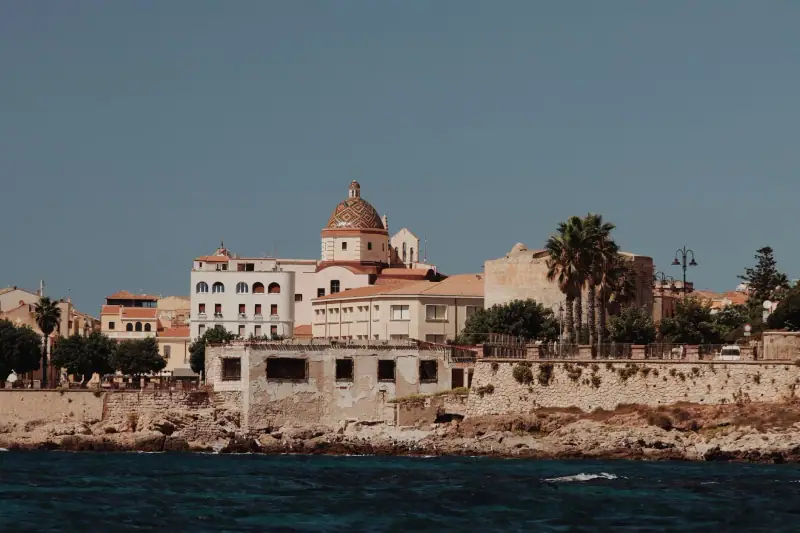
Visiting Alghero: A Complete Guide to Sardinia's Catalan Pearl
Visiting Alghero: Catalan old town, Neptune's Grotto, beaches. A 2026 practical guide to the pearl of northwest Sardinia.
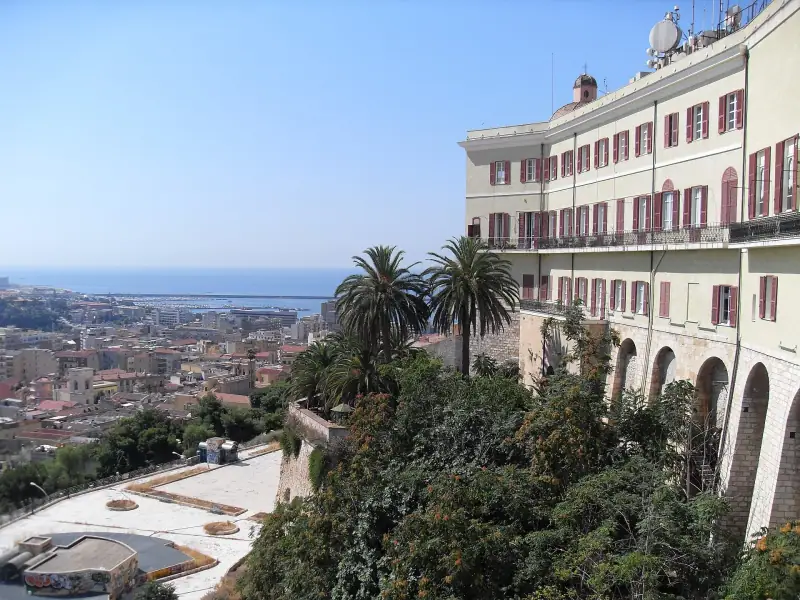
Visiting Cagliari: A Complete Guide to Sardinia's Capital
A complete guide to visiting Cagliari in 2026: neighborhoods, Castello, Poetto beach, museums, food, hotels, transport and practical tips.
Ready-made
Sardinia itineraries
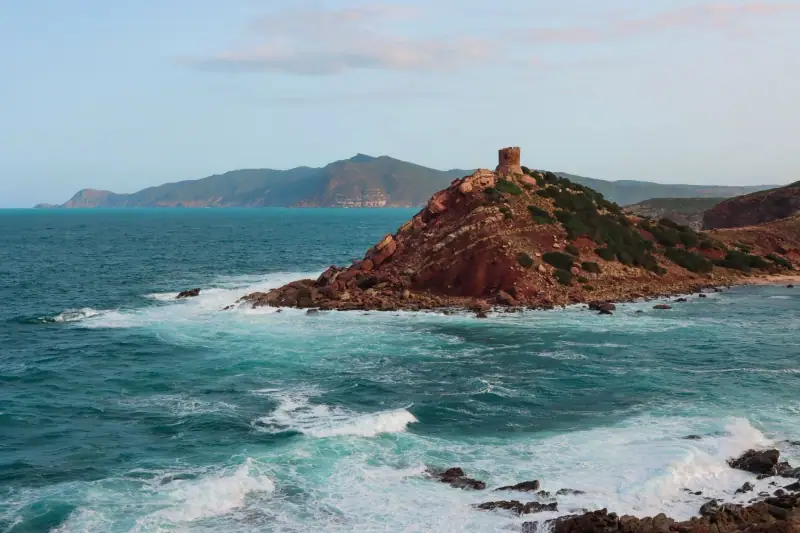
14 days
Sardinia Road Trip: The Complete Island Loop in 10-14 Days
Plan your Sardinia road trip: a complete 10 to 14 day itinerary, scenic roads, essential stops and driving tips.
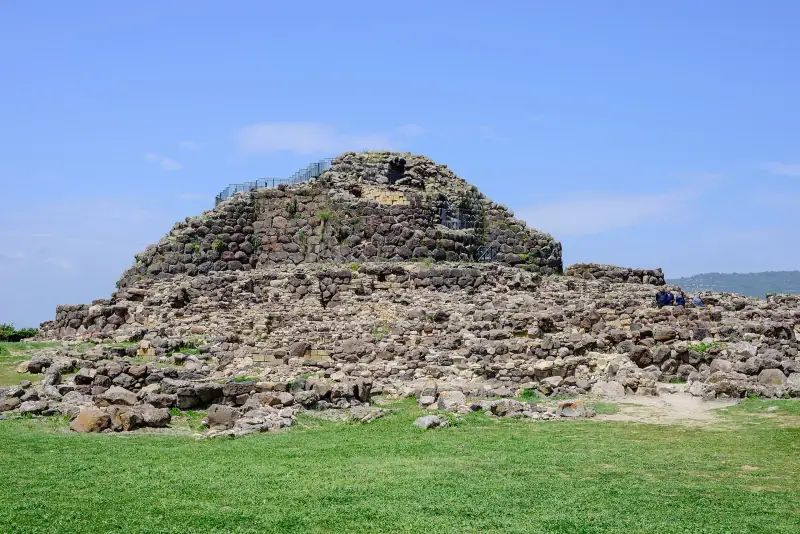
7 days
Sardinia in 7 Days: A Complete Itinerary for an Unforgettable Week
7-day Sardinia itinerary: Cagliari, Chia, Ogliastra, nuraghi and Costa Smeralda. A day-by-day plan with practical tips.
5 days
Sardinia in 5 Days by Car: A Realistic Itinerary (Distances and Drive Times)
PalauCastelsardoAlghero