Plan your trip
Swimming with whales in Réunion: season, prices and 2026 rules
We may earn a commission when you book through links on this page, at no extra cost to you. We don't visit or try the places we cover: we summarize published sources. How we work
In short
- Humpback whale season runs June to October, peaking July to September; guided water entries are allowed from July 1 to September 30.
- Free swimming and diving with whales are banned. Guided entries are limited to 7 people in the water (guides included) and 30 minutes.
- Boat watching costs about €40 to €75 (about $46 to $87) per person; guided water entries run up to €150 (about $175).
- Look for the O²CR label, keep boats 100 m (330 ft) away, and book 3 to 5 days ahead in August and September.
Every year between June and October, humpback whales leave the icy waters of Antarctica to give birth and mate in the warm waters of Réunion. The spectacle draws thousands of visitors, along with its share of confusion: what does the law really say about swimming with whales, what budget should you plan, and how do you tell a serious operator from a trip that racks up violations without saying so? Here is what to know before booking a trip in 2026.
When to see whales in Réunion: the exact season
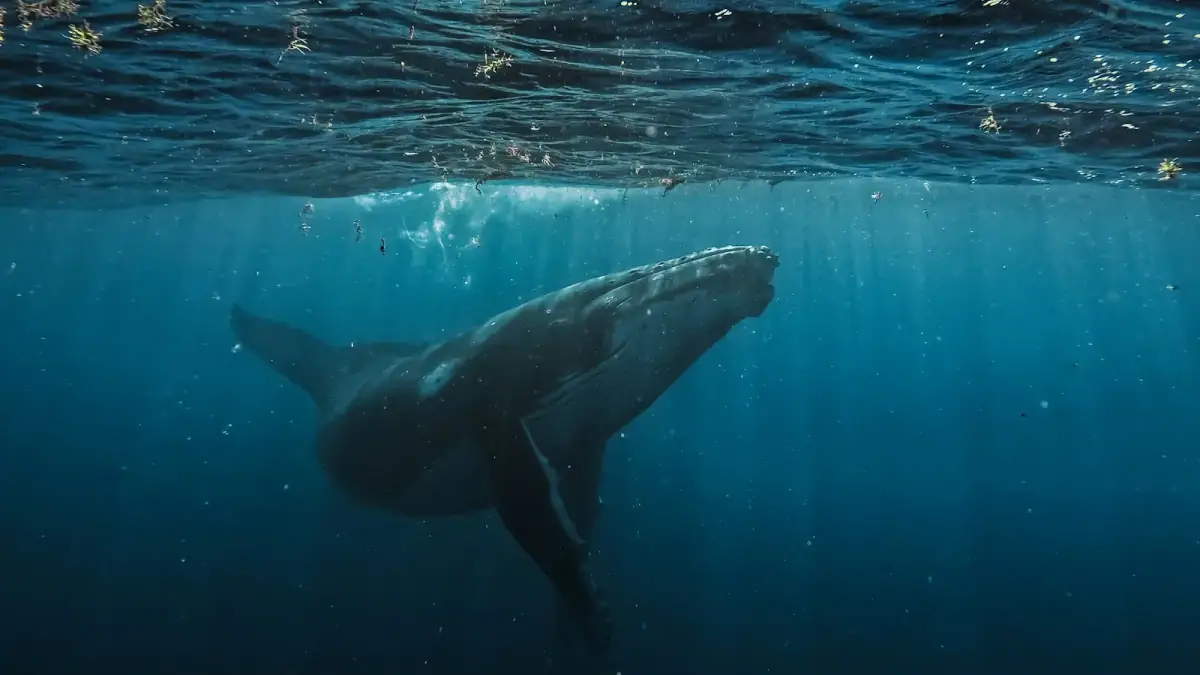
Humpback whales (Megaptera novaeangliae) are present in Réunion’s waters from June to October, peaking between July and September. During this window females give birth and males sing to attract mates, an acoustic phenomenon you can sometimes hear while diving, even several hundred meters away.
Under the rules, the period for whale watching and guided water entries is set from July 1 to September 30, dates that can be adjusted from year to year by prefectural order based on field observations. Outside this window, whales may still be present in June and October, but organized trips are rarer and water entries are generally not offered.
The odds of seeing whales vary from one trip to the next: no serious professional can guarantee an encounter, since the sea is a natural environment. August and September statistically offer the best chances, when mothers travel with their calves near the coast.
2026 regulations: what is allowed and what is not
Réunion applies one of the strictest regulations in the Indian Ocean for whale watching, set by prefectural order no. 944 of June 4, 2025, amended by order no. 1098 of June 27, 2025. Three points to remember before booking anything:
Free swimming and diving are banned
Jumping in on your own to swim with a whale, or scuba diving near an animal, is an offense. Checks happen and penalties can be heavy. Any water entry must go through an approved operator who supervises the group.
Guided water entries are strictly limited
When an operator is allowed to put people in the water, the rule is clear: 7 people maximum in the water, guides included, for a maximum of 30 minutes. Hours are regulated too: watching and approach at sea are possible from 9 am to 4 pm (6 pm for low-carbon-propulsion vessels), and water entries only between 9 am and 1 pm.
Approach distances are regulated
- 100 meters (330 ft) minimum between the boat and the whale
- 3 boats maximum allowed at the same time around one individual or group
- Reduced speed in the approach zone
Labeled whale trips from Saint-Gilles
Guided watching by operators that follow the cetacean approach charter.
How to recognize a serious operator: the O²CR label
With more and more operators, a label exists to identify professionals committed to responsible watching: the O²CR (Observation Certifiée Responsable des Cétacés, certified responsible cetacean watching). Labeled businesses commit to:
- Respect the regulated approach distances and speeds
- Train their skippers and guides to read whale behavior (signs of stress, fleeing, aggression)
- Limit the number of trips and boats around the same animal
- Inform passengers about cetacean biology and the right behavior
Before booking, one simple habit: ask the operator whether it is O²CR-labeled or follows Réunion’s cetacean approach charter. A serious professional answers without hesitation and usually posts the information on its website or booking page. Be wary of offers that promise a “guaranteed swim” or that mention no time limit in the water: it is often a sign of a business that does not follow the rules.
How much a whale trip costs in Réunion
The budget depends on the format you choose:
| Type of trip | Indicative price |
|---|---|
| Boat watching (no water entry), 1 h 30 to 2 h | €40 to €75 (~$46 to $87) / person |
| Combined watching + free snorkeling trip | €60 to €90 (~$70 to $105) / person |
| Guided water entry with fins, mask and snorkel provided | €100 to €150 (~$115 to $175) / person |
| Private or semi-private trip (small group) | €150 and up (~$175+) / person |
Children generally get a reduced rate from age 3 or 4, with a minimum age often set at 8 to 10 for the water entry. Some operators offer a “re-book” guarantee: if no whale is seen, a second trip is free. Check this condition before paying, as it varies widely between operators. To place this expense in your overall trip budget, our Réunion budget guide details the other costs to plan for.
Where trips leave from: which port to pick
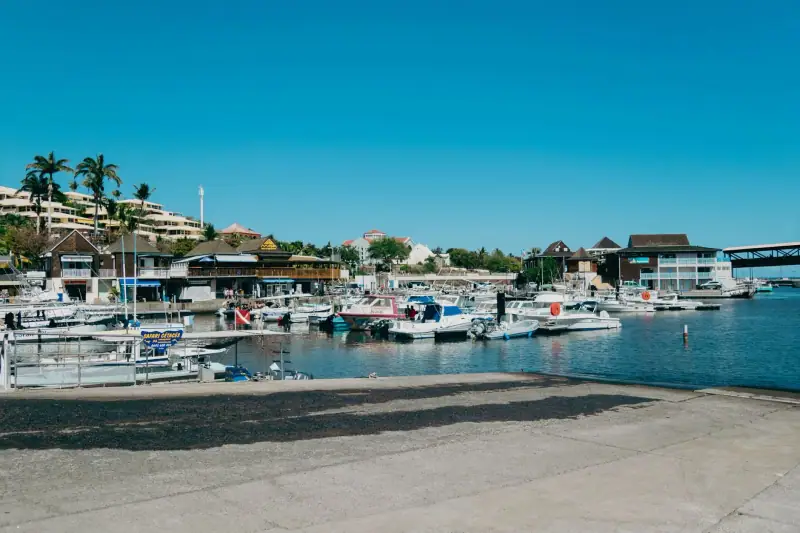
Nearly all whale trips leave from the west coast, which is more sheltered and calmer than the east or south of the island:
- Saint-Gilles-les-Bains: the busiest port, the largest concentration of labeled operators, frequent departures in high season
- Saint-Leu: also has several operators, often very calm seas
- Saint-Pierre (south): a few trips, but rougher seas, and trips sometimes canceled in strong wind
If you are staying on the west side, our west coast guide and our west vs. south comparison help you choose your base according to your priorities.
What to do if the sea is too rough on the day
The Indian Ocean can turn rough quickly, especially late in the season (September to October). If the swell exceeds the safety thresholds set by the operator, the trip is postponed or canceled. That is a good sign rather than a problem: it means the operator follows safety rules rather than taking risks to keep its schedule. Most operators offer a free rebooking to another slot the same week, but rarely a full refund for a last-minute cancellation by the customer. Read the cancellation terms before paying, especially if you book an all-inclusive package in advance.
Our advice for organizing your trip
- Book early in high season. In August and September, labeled operators’ slots fill several days ahead, especially on weekends and during school vacations.
- Choose a weekday morning trip. The sea is often calmer early in the morning, and there are fewer boats.
- Build some slack into your schedule. Do not schedule your return flight on the same day as a whale trip: if the trip is postponed because of weather, you risk missing the activity.
- Check the operator’s insurance and look for a label or an explicit mention of the cetacean approach charter.
For your whole stay, see our guide to the best times to visit Réunion, which cross-checks whale season with the island’s other weather criteria (hiking, diving, beaches).
Frequently asked questions
When is whale season in Réunion?
Humpback whale season runs from June to October, peaking between July and September. The whales travel up from the cold waters of Antarctica to breed and give birth in the island's warm waters. Guided water entries are allowed from July 1 to September 30.
Can you swim freely with whales in Réunion?
No. Free swimming and diving with whales are prohibited and are an offense. Only guided water entries run by an approved operator are allowed, with a maximum of 7 people in the water (guides included) and a limit of 30 minutes per trip.
How much does a whale-watching trip cost in Réunion?
Plan on €40 to €75 (about $46 to $87) per person for a boat trip of about 1 h 30 to 2 hours. Trips with a guided water entry run by a labeled operator cost more, up to €130 to €150 (about $150 to $175) per person, gear and guiding included.
How do I recognize an approved whale-watching operator?
Look for the O²CR label (Observation Certifiée Responsable des Cétacés, certified responsible cetacean watching), issued by the local authorities. Labeled operators follow the approach charter: minimum distance, reduced speed, a limited number of boats around the same animal, and crew trained in responsible watching.
What are the distance rules around whales in Réunion?
The minimum distance between a boat and a whale is 100 meters (330 ft). A maximum of 3 boats is allowed at the same time around one individual or group. Watching at sea is permitted from 9 am to 4 pm (6 pm for low-carbon-propulsion vessels), and water entries only from 9 am to 1 pm.
Where do whale-watching trips leave from in Réunion?
Nearly all trips leave from ports on the west coast: Saint-Gilles-les-Bains (the busiest), Saint-Leu and, to a lesser extent, Saint-Pierre in the south. The west coast, sheltered by the island's relief, has calmer seas and most of the labeled operators.
Do I need to book a whale trip in Réunion in advance?
Yes, strongly recommended. In high season (August to September), labeled operators' slots fill several days ahead, especially on weekends and during school vacations. Book at least 3 to 5 days ahead, more for guided water entries.
More Réunion guides
Keep reading
Best time to visit Réunion: a month-by-month guide
When to go to Réunion? Seasons, weather, cyclones, hiking and beaches: our month-by-month guide to choosing the best time to visit.

Cirque de Mafate: A Complete Guide to Réunion's Only Road-Free Cirque
Cirque de Mafate: multi-day hikes, access, villages (îlets), places to stay and practical tips for Réunion's only cirque with no road.

Maïdo at sunrise: when to leave, the road and the fog risk
Watching sunrise at Maïdo: when to leave from Saint-Gilles or Saint-Paul, the forest road, the cold, fog and a plan B if the view is socked in.
Ready-made
Réunion itineraries

3 days
3 Days in Cilaos: A Weekend Hiking Itinerary in the Highlands
What to do in Cilaos in 3 days? Hikes, thermal baths, lentils and local wine. A full weekend itinerary for the cirque.
14 days
Réunion Road Trip: A 2-Week Driving Itinerary
The best 14-day road trip itinerary in Réunion: coasts, cirques, the volcano and Creole villages. Full guide with stops, places to stay and tips.

8 days
Réunion in 8 Days with Kids: Stops, Miles and a Realistic Pace
Saint-Gilles-les-BainsCilaosSaint-Pierre