Plan your trip
Best time to visit Réunion: a month-by-month guide
We may earn a commission when you book through links on this page, at no extra cost to you. We don't visit or try the places we cover: we summarize published sources. How we work
In short
- The dry season, April to November (mainly May to October), is generally the best: cooler, little rain on the west coast and almost no cyclone risk.
- July and August are peak season: book cars, gîtes and hotels several months ahead.
- Cyclone season runs November to April, with most direct hits between December and March; February is the riskiest month.
- For hiking pick June to September; for lower prices, March to April or October to November.
Choosing the right time to visit Réunion is a key part of planning your trip. The island has marked climate contrasts between its different coasts and between the shoreline and the highlands. Beautiful weather in Saint-Gilles can coexist with heavy rain in Hell-Bourg, only 40 km (25 mi) away.
This detailed guide helps you pick the best time for your priorities: beaches, hiking, the volcano, budget or avoiding crowds.
Réunion’s two seasons
Réunion is a Southern Hemisphere island, subject to the trade-wind regime of the Indian Ocean. It has two main seasons, which are the opposite of the Northern Hemisphere seasons.
The cool, dry season (May to October)
The cool season is the austral winter. It is the peak tourist season and the most popular time to travel.
Characteristics:
- Coastal temperatures: 20 to 26 °C (68 to 79 °F) by day, 15 to 18 °C (59 to 64 °F) at night
- At altitude (cirques): 10 to 18 °C (50 to 64 °F) by day, 5 to 10 °C (41 to 50 °F) at night
- Rainfall: rare on the west coast and the south coast
- Steady trade winds bringing pleasant coolness
- Sea: trade-wind swell on the east coast, calm sea in the west lagoon
- Cyclone risk: practically nil
Highlights of the cool season:
- Hiking in the cirques (dry trails, clear panoramas)
- Scuba diving (excellent visibility up to 30 m / 100 ft)
- Surfing at Saint-Leu (steady swell)
- Climbing the Piton de la Fournaise (when it is not erupting)
- Watching endemic birds in the Bébour-Bélouve forests
The hot, humid season (November to April)
The hot season is the austral summer. It is the low tourist season, with more attractive prices.
Characteristics:
- Coastal temperatures: 26 to 32 °C (79 to 90 °F) by day, 22 to 24 °C (72 to 75 °F) at night
- High humidity (70 to 85%)
- Frequent rain, especially on the east coast and at altitude
- Warm sea (26 to 28 °C / 79 to 82 °F), great for diving
- Risk of cyclones and tropical storms (December to March)
Highlights of the hot season:
- Swimming and snorkeling in warm water
- Volcanic activity is often higher
- Lush vegetation and swollen waterfalls
- Lower hotel rates and airfares
- Festive atmosphere (end-of-year holidays, the Dipavali festival)
Month-by-month guide
January: hot but festive
January is the hottest month and one of the wettest. Temperatures reach 30 to 32 °C (86 to 90 °F) on the coast. Cyclone season is at its peak. However, if the island is not directly threatened by a cyclone, the weather is often beautiful on the west coast and the beaches are delightful.
Pros: Low prices, very warm sea, relaxed mood after the holidays. Cons: Heat, humidity, cyclone risk, some trails closed. Best for: Beach and diving fans on a limited budget, flexible vacationers.
February: maximum cyclone risk
February is statistically the riskiest month for cyclones. The heat remains intense. It is not the ideal time to visit, unless you have exceptionally low prices and great flexibility.
March: end of the wet season
March gradually marks the end of the wet season. Rain starts to thin out on the west coast and the sun returns more often. The sea is still very warm (27 °C / 81 °F). A good compromise between low prices and decent weather.
April: the ideal transition
April is one of the best months to visit Réunion. The cyclone risk is almost nil, the sea is still warm (26 °C / 79 °F), rain recedes and prices are not yet at their high-season peak. The vegetation is a vivid green after the summer rains.
May: the dry season settles in
May sees the dry season settle in for good. Skies clear and the trade winds bring pleasant coolness. It is the start of the best period for cirque hiking. Tourist numbers begin to rise.
Recommended activities: Start of the big hikes, excellent diving, surfing at Saint-Leu.
June: good weather returns
June offers an excellent compromise: near-guaranteed good weather on the west coast, pleasant temperatures (23 to 26 °C / 73 to 79 °F), still reasonable crowds and mid-range prices. It is an excellent month for hiking and outdoor activities.
Stays in Réunion
Book ahead for high season, especially in July and August.
July and August: peak season
July and August are the busiest months, matching the French summer school vacations. Book everything several months ahead: rental cars, cirque gîtes and seaside hotels fill up very quickly.
The weather is generally excellent, with near-guaranteed sunshine on the west coast. Temperatures are perfect for hiking (20 to 24 °C / 68 to 75 °F by day). The sea is a bit cooler (23 to 24 °C / 73 to 75 °F) but snorkeling is still excellent.
Downsides: Crowds at tourist sites, prices at their maximum, cars sometimes impossible to find.
September: almost as good as summer
September offers practically the same conditions as August, with fewer people and slightly lower prices. Hikers still get excellent conditions. An excellent month for a trip.
October: end of the good season
October gradually brings the first rains back to the east coast and the highlands. The west coast stays sunny. Prices drop and crowds thin out. Ideal for a stay focused on beaches and the lagoon.
November: summer returns
November brings back heat and humidity. Cyclone season officially resumes on November 15. Cirque hikes remain possible but the chance of rain increases. The sea gradually warms up.
December: Christmas in the tropics
December is the Christmas and New Year period. The island is dressed in colorful decorations and the mood is festive. Prices soar during the holidays. The heat is back (28 to 30 °C / 82 to 86 °F) and the first heavy rains are possible. Book very early if you want to spend the holidays in Réunion.
Monthly climate table (west coast shoreline)
| Month | Max. temp. | Sea temp. | Sunshine | Rain | Cyclone risk |
|---|---|---|---|---|---|
| January | 30 °C / 86 °F | 28 °C / 82 °F | ★★★ | ★★★★ | ★★★★ |
| February | 31 °C / 88 °F | 28 °C / 82 °F | ★★★ | ★★★★ | ★★★★★ |
| March | 30 °C / 86 °F | 27 °C / 81 °F | ★★★ | ★★★★ | ★★★ |
| April | 28 °C / 82 °F | 26 °C / 79 °F | ★★★★ | ★★ | ★ |
| May | 26 °C / 79 °F | 25 °C / 77 °F | ★★★★ | ★ | ★ |
| June | 24 °C / 75 °F | 24 °C / 75 °F | ★★★★★ | ★ | ★ |
| July | 23 °C / 73 °F | 23 °C / 73 °F | ★★★★★ | ★ | ★ |
| August | 23 °C / 73 °F | 23 °C / 73 °F | ★★★★★ | ★ | ★ |
| September | 24 °C / 75 °F | 23 °C / 73 °F | ★★★★★ | ★ | ★ |
| October | 26 °C / 79 °F | 24 °C / 75 °F | ★★★★ | ★★ | ★ |
| November | 28 °C / 82 °F | 26 °C / 79 °F | ★★★★ | ★★★ | ★★ |
| December | 30 °C / 86 °F | 27 °C / 81 °F | ★★★ | ★★★★ | ★★★ |
Our recommendation by type of trip
For hikers: June, July, August or September. Trails are dry, visibility in the cirques is at its best and the weather is stable.
For beaches and diving: May to October for ideal conditions. For warmer water, go for March to April or October to November.
For tight budgets: March to April or October to November offer the best value: good weather and mid-range prices.
For families: July and August for the best conditions, but book very far ahead.
To see an eruption: There is no preferred season for the volcano. Stay informed through the Piton de la Fournaise Volcano Observatory website.
Cyclones: what to know
Réunion is exposed to tropical cyclones of the Indian Ocean between November and April. Each year, two to five cyclonic systems pass through the area, but only a fraction of them hit the island directly.
When a cyclone alert is issued, the authorities trigger a multi-level system (Vigilance, Pre-alert, Alert 1 and Alert 2). The population is used to these procedures and the safety instructions are well rehearsed. As a tourist, it is important to:
- Follow the instructions of local authorities
- Stay in your lodging and off the road
- Keep water and food supplies for 48 hours
- Keep your phone charged and turn on weather alerts
Nearly all direct cyclone hits on the island occur between December and March. Avoiding this period significantly reduces the risk, without eliminating it completely.
Réunion is not a one-season destination: every period has its charms and drawbacks. For the vast majority of travelers looking for good weather, hiking and beaches, the dry season from May to October remains the best option. But do not overlook the shoulder months: April and November are often splendid and less crowded.
Frequently asked questions
What is the best season to visit Réunion?
The dry season from April to November is generally considered the best time. Temperatures are cooler (22 to 26 °C / 72 to 79 °F on the coast), rain is rare on the west coast and the cyclone risk is almost nil. July and August are the busiest peak season.
Are there cyclones in Réunion?
Yes, cyclone season runs from November to April. Direct cyclone hits on the island are rare (a few per decade), but tropical storms can disrupt trips. The riskiest period is January to March.
Can you swim in Réunion all year?
Yes. In the west-coast lagoon swimming is possible all year, with a shark net on some beaches. Water temperature ranges from 23 °C (73 °F) in July and August to 28 °C (82 °F) in January to March. Unprotected beaches are discouraged because of the shark risk.
When is the best time for big hikes in Réunion?
The dry season (May to October) is ideal for hiking. Trails are less muddy, visibility in the cirques is better and the chance of rain is lower. Crossing Mafate and climbing the Piton de la Fournaise are especially recommended in June to September.
When should I go to see a Piton de la Fournaise eruption?
The Piton de la Fournaise erupts 3 to 4 times a year on average, with no fixed calendar. Periods of intense activity are unpredictable, but permanent monitoring of the volcano allows alerts within hours. An eruption can be seen at any time of year.
More Réunion guides
Keep reading
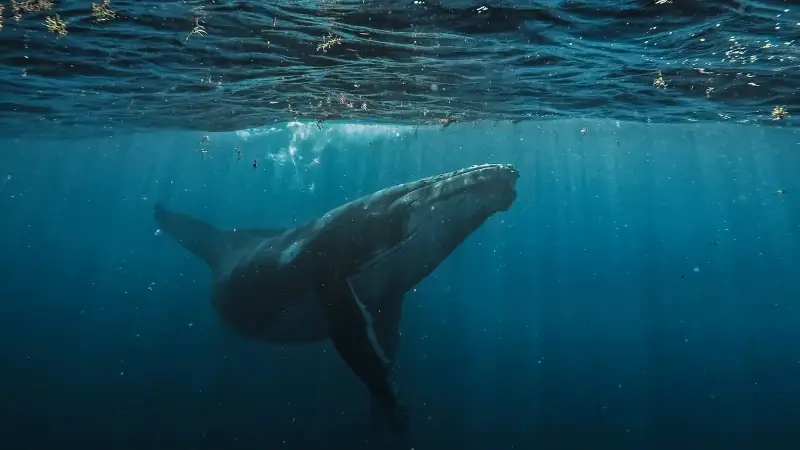
Swimming with whales in Réunion: season, prices and 2026 rules
Watching and entering the water with humpback whales in Réunion: 2026 season dates, trip prices, regulations and pitfalls to avoid.
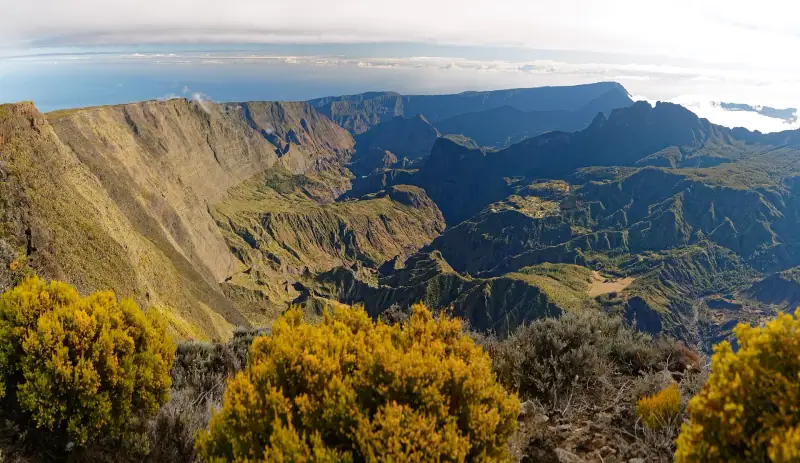
Cirque de Mafate: A Complete Guide to Réunion's Only Road-Free Cirque
Cirque de Mafate: multi-day hikes, access, villages (îlets), places to stay and practical tips for Réunion's only cirque with no road.
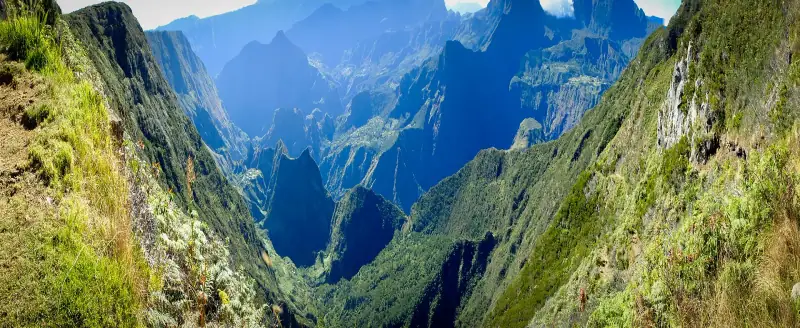
Maïdo at sunrise: when to leave, the road and the fog risk
Watching sunrise at Maïdo: when to leave from Saint-Gilles or Saint-Paul, the forest road, the cold, fog and a plan B if the view is socked in.
Ready-made
Réunion itineraries
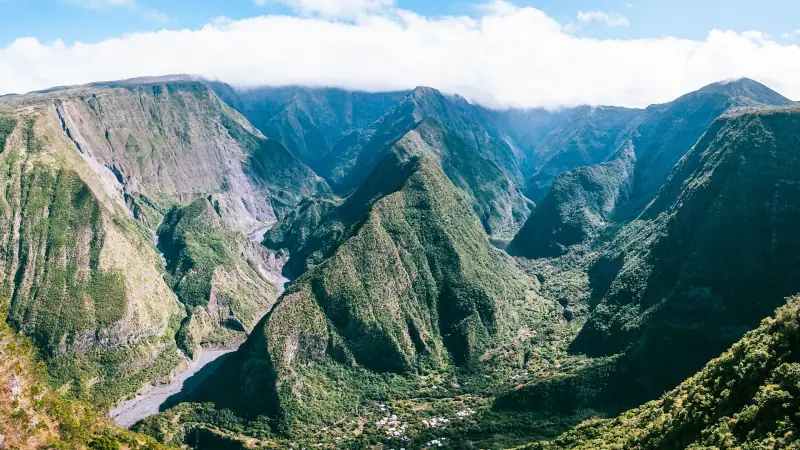
3 days
3 Days in Cilaos: A Weekend Hiking Itinerary in the Highlands
What to do in Cilaos in 3 days? Hikes, thermal baths, lentils and local wine. A full weekend itinerary for the cirque.
14 days
Réunion Road Trip: A 2-Week Driving Itinerary
The best 14-day road trip itinerary in Réunion: coasts, cirques, the volcano and Creole villages. Full guide with stops, places to stay and tips.
8 days
Réunion in 8 Days with Kids: Stops, Miles and a Realistic Pace
Saint-Gilles-les-BainsCilaosSaint-Pierre