What to see
Visiting Bari: a complete guide to the capital of Puglia
We may earn a commission when you book through links on this page, at no extra cost to you. We don't visit or try the places we cover: we summarize published sources. How we work
In short
- Two days is ideal: Bari Vecchia on day one, then the Borgo Murattiano, the market and the waterfront on day two.
- The Basilica of San Nicola is free to enter; the Castello Svevo costs about €3-5 (~$3-6).
- The Festa di San Nicola runs May 7-9; book lodging several months ahead for that week.
- Polignano a Mare is 37-38 km (23 mi) away, Alberobello about 63 km (39 mi) and Matera 65 km (40 mi).
Gateway to Puglia, a metropolis of 320,000 people on the Adriatic, Bari is both a transit city and a destination in its own right. Its white old quarter packed around the Basilica of San Nicola, its ocher façades swept by the sea breeze, its women shaping orecchiette on doorsteps and its markets of boiled octopus make a picture of authentic, living southern Italy. Here is everything you need to know to visit Bari and make the most of it.
Bari Vecchia: the medieval heart of the city
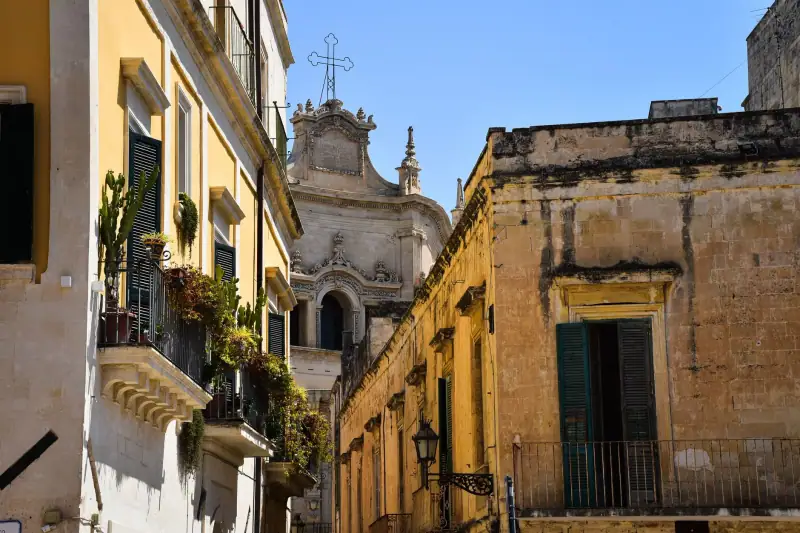
Bari Vecchia, the old town, is an island of white limestone wedged between the port and the Adriatic Sea, closed in on itself like an ancient fortress. Its maze of narrow lanes (carrugi) is typical of old Mediterranean cities, designed to confuse invaders and keep cool through scorching summers.
A living neighborhood, not a set
What strikes you right away in Bari Vecchia is how lived-in it is. Unlike many Italian historic centers that feel like open-air museums, Bari’s old town is still home to real residents: nuns hanging laundry on lines strung between façades, children playing soccer in tiny squares, old men playing cards in front of half-open doors.
Neighborhood life centers on the Via Arco Basso, the Piazza Ferrarese and the alleys leading to the basilica. It is here, in passages where two people can barely pass each other, that Bari shows its true face: noisy, warm, slightly chaotic and absolutely unforgettable.
The Basilica di San Nicola
The Basilica of San Nicola is Bari’s most important monument, and one of the first great Romanesque basilicas built in southern Italy. Begun in 1087 to house the relics of Saint Nicholas (the future Santa Claus), brought back from Myra by Bari merchants on a raiding expedition, it was completed in its main structure around 1197.
Its sober Trani limestone façade, broken by blind arcades and flanked by two squat towers, is a masterpiece of Romanesque balance and restraint. The three-nave interior holds a 12th-century episcopal throne (one of the finest in Italy), a 13th-century marble ciborium and a particularly venerated Byzantine icon of Saint Nicholas.
The crypt, where the saint’s relics lie, is a pilgrimage site for Orthodox and Catholic Christians alike: every year thousands of Greek, Russian, Serbian and Romanian believers travel to Bari to pray. It is a striking reminder that the city has always been a crossroads between East and West.
Free entry (the crypt is open a few hours a day, with times varying according to services).
The Cathedral of San Sabino
A few minutes’ walk from the Basilica of San Nicola, the Cattedrale di San Sabino (Duomo di Bari) is often overlooked by hurried visitors, wrongly. Built from 1170 on the ruins of a Byzantine cathedral destroyed by William I of Sicily, it has a Romanesque façade of pure lines and a bare, serene interior.
Worth noting: among the treasures tied to the cathedral, the Exultet of Bari is a remarkable illuminated liturgical parchment scroll (10th-13th century), used at the Easter Vigil. The celebrant unrolled it from the top of the ambo so the faithful could follow the illuminations, rather than an iconostasis. The surviving copies are now kept at the Archivio Capitolare and the Museo Diocesano di Bari. A unique piece in Western Christianity.
Guided tours of Bari
Discover Bari Vecchia and its secrets with a local guide: Basilica of San Nicola, culinary traditions and the authentic neighborhood life of the old town.
The Castello Svevo
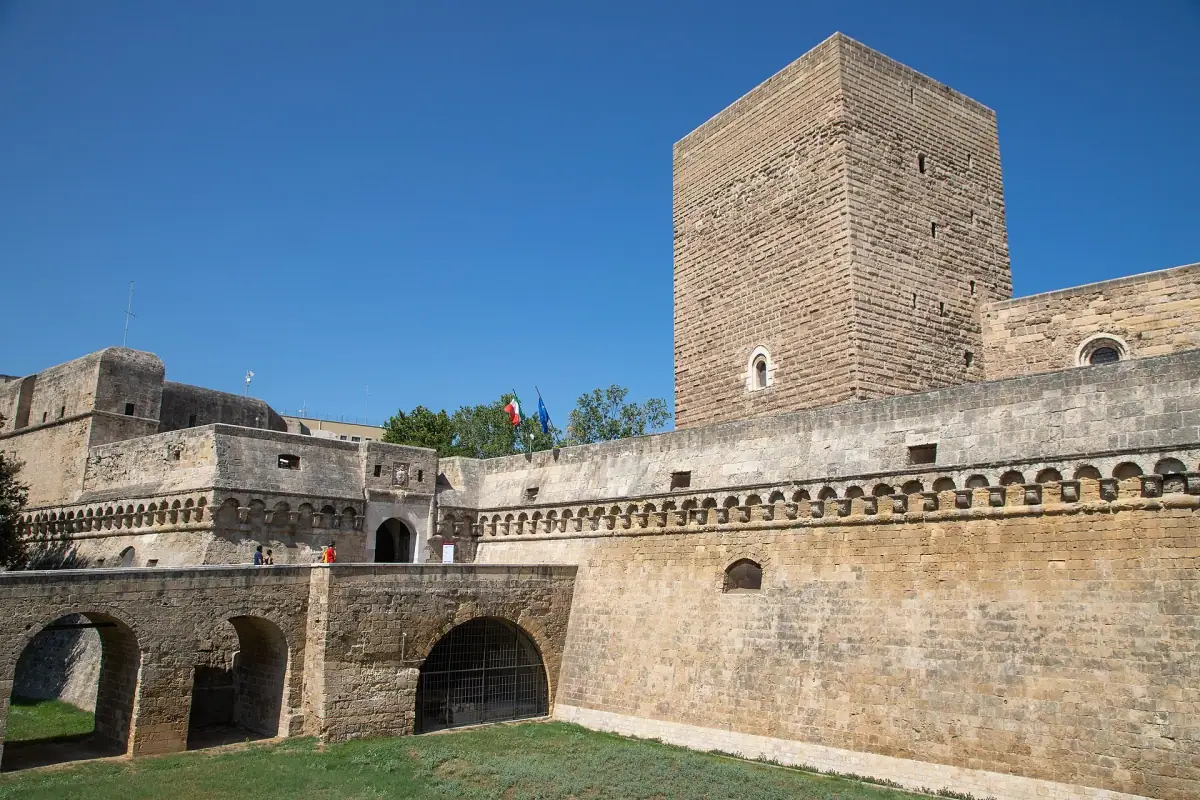
Overlooking the port since the 12th century, the Swabian Castle (Castello Svevo di Bari) is one of southern Italy’s great Norman-Swabian fortresses. Built on Norman foundations by Roger II of Sicily in the 12th century, it was heavily reworked by Frederick II of Hohenstaufen in the 13th century, then by Isabella of Aragon in the early 16th century (from 1501).
The castle once housed the court of Bona Sforza, queen of Poland and duchess of Bari in the 16th century, one of the most influential women of the Italian Renaissance. Today state-owned, it hosts temporary exhibitions and a permanent museum on the history of Puglia (casts of capitals, architectural surveys, decorative fragments). Admission is charged (about €3-5, or ~$3-6).
Food: the flavors of Bari
Bari’s cuisine is among the most characteristic in Puglia, rooted in a popular, peasant tradition that makes the most of a few excellent products.
Orecchiette: Bari’s little ears
The Via Arco Basso, which locals often call the via delle orecchiette, is the most photographed street in Bari Vecchia. Dozens of nonne barisane (Bari grandmothers, in the popular sense) work in front of their doors from morning until lunchtime, kneading kilos of durum wheat semolina by hand, cutting orecchiette with a knife and drying them on wooden boards covered with white linen.
The scene has become a tourist attraction, but the practice is real: these women have been doing it for decades, and many sell their output directly to passersby (expect about €3-5, or ~$3-6, for 500 g of fresh pasta). Orecchiette are traditionally cooked alle cime di rapa (bitter turnip greens, garlic, anchovies and extra-virgin olive oil) or simply al pomodoro (tomato sauce).
Seafood and the polpo alla barese
Bari is above all a port city, and its relationship with the sea runs through its cooking. The fish market, on the port, is active every morning and offers an impressive selection of Adriatic fish and shellfish. You will find ricci di mare (sea urchins) to eat fresh on the spot, and polpi (octopus) that fishermen beat against the harbor rocks to tenderize them, a practice still regularly seen.
The polpo alla barese (octopus in tomato sauce) is an emblematic main course, served in the popular trattorias of Bari Vecchia. It is also eaten boiled and cold (octopus salad) at the port’s street food stalls.
Pane e pomodoro
The essence of Bari home cooking: a slice of toasted bread, the famous pane pugliese with open crumb and thick crust, rubbed with half a ripe tomato, drizzled with olive oil and sprinkled with a pinch of salt. Simple, perfect, and the best snack in the region when the tomatoes and oil are good.
Food tours in Bari
Fish market, fresh orecchiette, octopus at the port and Bari Vecchia street food: discover the flavors of the city with a local food guide.
Where to eat in Bari
Good trattorias are most concentrated in Bari Vecchia and on the waterfront (Lungomare Nazario Sauro). Some general pointers:
- In Bari Vecchia: family restaurants around the Basilica of San Nicola and in the adjacent lanes often offer full menus for €20-25 (~$23-29) per person. Beware of places clearly aimed at tourists with laminated photos outside the door; choose places where the Baresi themselves eat lunch.
- Around the Mercato Centrale: a few tavola calda (hot buffet delis) serve quick, authentic meals for under €10 (~$12).
- On the lungomare: the atmosphere is more touristy but the fish is often good, especially for evening meals facing the sea.
The waterfront and beaches of Bari
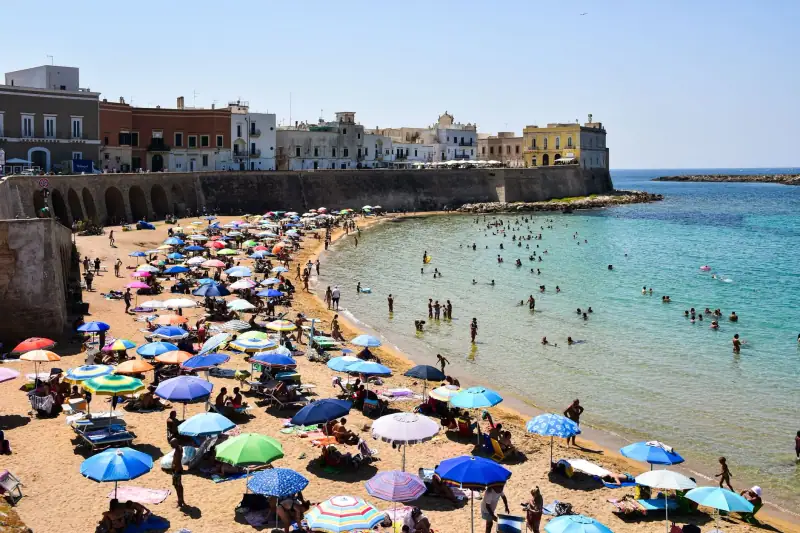
The Lungomare Imperatore Augusto and the Lungomare Nazario Sauro form a seafront boulevard of about 2 km (1.2 mi) running from the fishing port to the Madonnella district. It is the Baresi’s classic late-afternoon walk: families with strollers, couples, groups of friends, joggers. The whole city seems to meet there for the passeggiata.
Pane e Pomodoro (urban beach)
Pane e Pomodoro beach is Bari’s main urban beach, reached by bus from the center in about 6-15 minutes (lines 12, 42 or B). Gray-brown sand, shallow Adriatic water, a few beach bars: it is functional and popular, used mostly by Baresi wanting a quick swim after work. For nicer beaches, it is better to travel.
Beaches nearby
- Polignano a Mare (37-38 km / 23 mi south): limestone cliffs plunging into turquoise water make it one of the most photographed views in Italy. Our guide to Polignano a Mare details all the beaches and coves you can reach.
- Torre a Mare (about 13 km / 8 mi southeast): a small marina with a few pebble and sand beaches, far less crowded than Polignano.
- San Giorgio (about 4 km / 2.5 mi southeast): a coastal district on Bari’s outskirts, with a flat, sandy shore, often less crowded than the beaches toward Polignano.
The Borgo Murattiano: 19th-century Bari
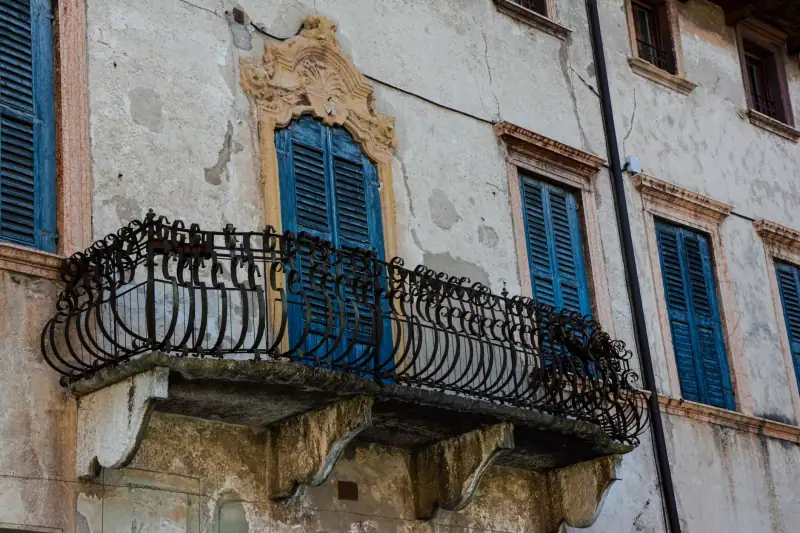
The Borgo Murattiano is the 19th-century district built on the orders of Joachim Murat (king of Naples, brother-in-law of Napoleon) from 1813 on a regular grid plan. Its checkerboard layout, wide tree-lined avenues and bourgeois buildings contrast sharply with the labyrinth of Bari Vecchia.
Most of the hotels, restaurants, shops and institutions of the modern city are here. Via Sparano da Bari is the main shopping street, pedestrian and lively, leading from the station to the lungomare. Corso Cavour and Via Andrea da Bari offer interesting Liberty-style architecture for urbanism fans.
The Teatro Petruzzelli, destroyed by arson in 1991 and fully restored in 2009, is Italy’s fourth-largest theater by size (after La Scala, the San Carlo in Naples and La Fenice in Venice). Its neo-Baroque façade on Piazza Cavour is one of modern Bari’s architectural landmarks. Opera, ballet and cultural events are programmed there all year.
Lodging in Bari
Well-located hotels in the Borgo Murattiano, B&Bs in Bari Vecchia and aparthotels near the station for exploring Puglia.
Getting to Bari
By air
Bari Karol Wojtyła Airport (BRI) is served by several airlines from European cities, depending on the season. Check routes and fares at the time of booking; booking ahead usually gets more competitive prices.
From Italian airports
- Bari airport BRI: linked to the city center by Autobus Tempesta (about 30 min, €5 / ~$6) or by taxi (15-20 min, €25-35 / ~$29-41). Shuttles also run from several hotels.
- Brindisi airport BDS (115-120 km / 71-75 mi southeast): reachable in 1 h 10 to 1 h 15 by car, or by train via Taranto (2 h to 2 h 30).
- Naples airport NAP (260 km / 162 mi to the west): reachable in about 3 h by car via the A3 and A14, or 3 h 30 to 4 h by train.
Getting around from Bari
Bari is Puglia’s transport hub. From the central station, Trenitalia trains run regularly to:
- Lecce: 1 h 20 to 1 h 45
- Taranto: about 1 h
- Foggia: 1 h 15 to 1 h 30
The FSE (Ferrovie Sud-Est) company runs regional lines to Alberobello (about 1 h 40) and Martina Franca, useful for exploring the Itria Valley (Ostuni is served by Trenitalia, not FSE).
When to visit Bari
Spring and fall: the best seasons
April to June and September to October are the most pleasant periods. Temperatures run between 18 and 26 °C (64-79 °F), the Mediterranean light is ideal for photographing the white lanes of Bari Vecchia, and street life is authentic without the summer tourist crowds. It is also the best season to combine a visit to Bari with beach days at Polignano a Mare.
May: the Feast of Saint Nicholas
If you can choose your dates, May 7-9 is especially remarkable. The Festa di San Nicola is one of the most impressive religious events in southern Italy: fishermen carry the saint’s effigy in procession on their boats, a solemn Mass gathers thousands of worshippers in the basilica, and fireworks light up the port in the evening. The popular, sincere atmosphere of this festival is unforgettable, but lodging must be booked several months ahead.
Summer: heat and festivals
In July and August in Bari, the heat can exceed 35 °C (95 °F) at midday. The city stays lively in the evening (the Baresi really do live at night in summer), and several cultural festivals take place on the lungomare. On the other hand, some of the traditional shops in Bari Vecchia close for the Ferragosto fortnight (around August 15). Beaches nearby are packed.
Winter: Bari the local way
From November to March, Bari is cool (10-14 °C / 50-57 °F), rainy at times, and far less touristy. It is a chance to live the city with the Baresi: lively food markets, intense café life, very reasonable lodging prices. The Basilica of San Nicola takes on a special light on winter days.
Day trips from Bari
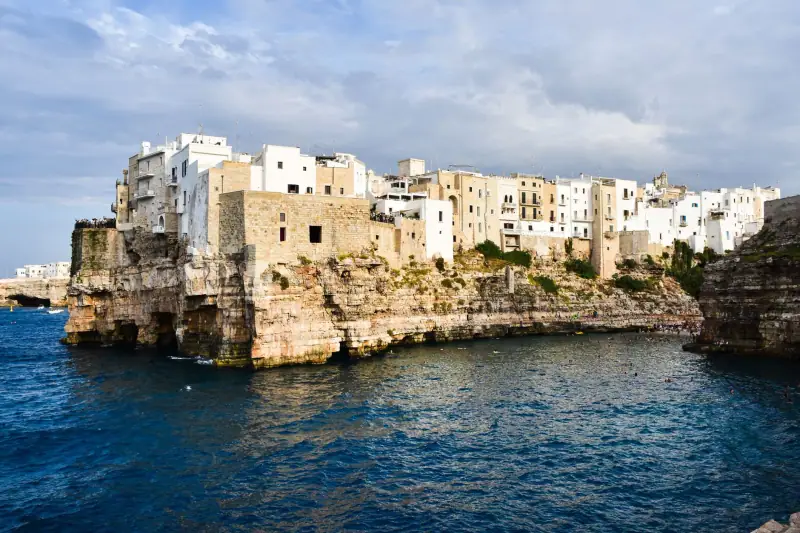
Bari is the ideal base for exploring Puglia and beyond.
Polignano a Mare (37-38 km / 23 mi)
Limestone cliffs, turquoise coves, an old town perched above the sea: Polignano a Mare is 35-45 minutes from Bari by car or train. Our complete guide to Polignano a Mare gives you all the details to plan your visit.
Alberobello and the Itria Valley (~63 km / 39 mi)
The UNESCO World Heritage town of trulli is best visited as a half-day trip from Bari, or a full day if combined with Locorotondo, Cisternino or Martina Franca. See our guide to the Itria Valley.
Matera (65 km / 40 mi)
Although technically in Basilicata, Matera is about 1 hour from Bari by car via the SS96. The city of the Sassi (cave dwellings carved into the rock) is the most spectacular day trip from Bari. Our guide to Matera details the two rioni of the Sassi and the upper town.
Castel del Monte (55-58 km / 34-36 mi)
Built by Frederick II of Hohenstaufen around 1240, Castel del Monte is one of Italy’s most mysterious and most photographed castles (it appears on the Italian 1-cent euro coin). Its perfect octagonal shape, overlooking the Murgia hills at 540 m (1,770 ft), is an unexpected sight in this farming landscape. It is a UNESCO World Heritage site. Reachable by car in about 55-60 minutes from Bari.
Bari in practice
Sample budget
| Expense | Average budget |
|---|---|
| B&B in the center | €60-130 (~$70-150) / night |
| 3-star hotel in the Borgo Murattiano | €70-150 (~$81-175) / night |
| Restaurant (dinner menu) | €18-30 (~$21-35) / person |
| Street food (orecchiette, octopus) | €3-8 (~$3-9) |
| Coffee / granita | €1.50-2.50 (~$1.75-2.90) |
| Castello Svevo entry | €3-5 (~$3-6) |
| Airport-center bus | €5 (~$6) |
| Bari-Polignano train | €3-5 (~$3-6) |
Practical information
- Airport: Bari Karol Wojtyła (BRI), about 8-10 km (5-6 mi) from the center
- Main station: Bari Centrale, in the heart of the Borgo Murattiano
- Distance from Lecce: 150 km (93 mi), 1 h 40 by car or 1 h 20 to 1 h 45 by train
- Distance from Matera: 65 km (40 mi), 1 h by car
- Distance from Alberobello: ~63 km (39 mi), 60-65 minutes by car
- Tourist office: Piazza Ferrarese (Bari Vecchia)
- Emergencies: 118 (ambulance), 112 (European number), Policlinico di Bari (Via Orabona)
Practical tips
- Visit Bari Vecchia in the morning, between 8 and 11 am, to see the nonne shaping orecchiette and the fishermen coming back to port with their catch
- In the evening, stay on the lungomare: the Bari passeggiata is a show in itself, lively until midnight even on weekdays
- Avoid driving in Bari Vecchia: the lanes are often closed to cars and parking is difficult throughout the city. Use the parking lots around Piazza Libertà or the Castello Svevo
- Watch your belongings in the very busy lanes of the market and in the tourist areas of Bari Vecchia
- Book lodging ahead for the Festa di San Nicola (early May) and for July and August
Bari is not the most polished city in Puglia, nor the most picturesque in the postcard sense, but it is one of the most real. In its white lanes where women have been kneading dough since dawn, in its espresso bars where the Baresi shout across to each other, in its markets of wriggling octopus and its sunsets over the Adriatic, it offers something more polished destinations no longer give: the feeling of a city that truly lives, for itself first and for its visitors second. See also our article on where to stay in Bari to choose the best neighborhood for your budget.
Sources
Frequently asked questions
How long do you need to visit Bari?
Two days is ideal for exploring Bari without rushing: the first for Bari Vecchia (Basilica of San Nicola, cathedral, Swabian Castle, the orecchiette street), the second for the Borgo Murattiano, the market, the waterfront and the shops. In a single day you can see the essentials, but you miss the evening atmosphere and the real rhythm of the city.
Is Bari dangerous for tourists?
Bari long had a bad reputation, which is largely outdated today. The old town (Bari Vecchia) is busy with both tourists and locals, and can be visited without worry by day and in the lively alleys in the evening. As in any large city, it is wise not to show valuables and to stay alert in quieter areas at night.
How do you get from Bari to Alberobello?
By FSE train (Ferrovie Sud-Est), the Bari-Alberobello trip takes about 1 h 40 to 2 h depending on the train (a few direct, others with a change); check times on the FSE website. By car, allow about 60-65 minutes via the SS172, the most direct road through the Itria Valley (about 63 km / 39 mi). It is the most flexible way to explore from Bari.
What is the best neighborhood to stay in Bari?
The Borgo Murattiano (the 19th-century district with its grid of streets) is ideal for its central position, lively neighborhood life and well-placed hotels. Bari Vecchia has more atmosphere but fewer places to stay. For the best value, the streets around the station (Via Capruzzi, Via Crisanzio) have many practical B&Bs.
When is the Feast of Saint Nicholas in Bari?
The patron saint festival of San Nicola takes place every year from May 7 to 9. It is one of the biggest religious celebrations in southern Italy: a sea procession with the saint's effigy, a solemn Mass in the basilica, fireworks on the waterfront and events across the city. Lodging should be booked several months ahead for this period.
Can you swim in Bari itself?
Bari has a few urban beaches (notably toward Pane e Pomodoro, about 2-3 km / 1-2 mi from the center), but the region's best beaches are a few kilometers away. Polignano a Mare (37-38 km / 23 mi) with its limestone cliffs is 35-45 minutes away by car or train. Torre a Mare and San Giorgio are even closer (10-15 km / 6-9 mi).
More Puglia guides
Keep reading
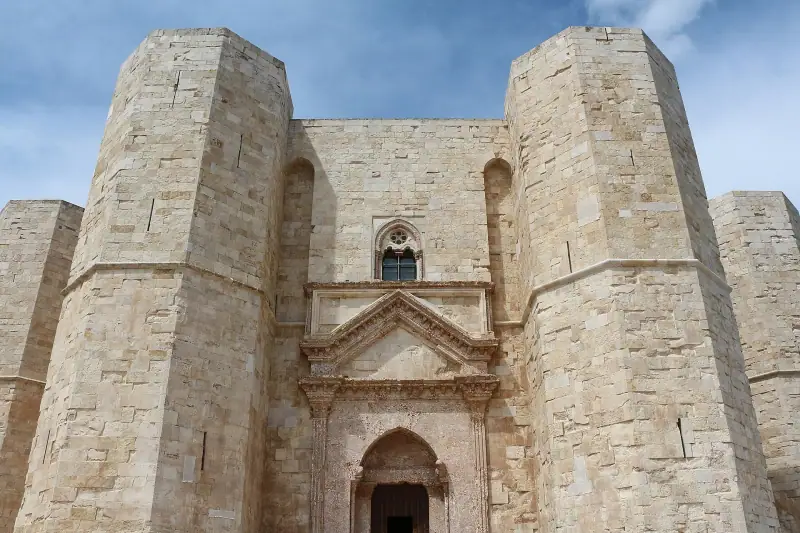
Castel del Monte: hours, prices and how to get there from Bari without a car
Castel del Monte from Bari: hours, ticket price, train and bus or car, visit length and the best time to avoid crowds. A practical guide.
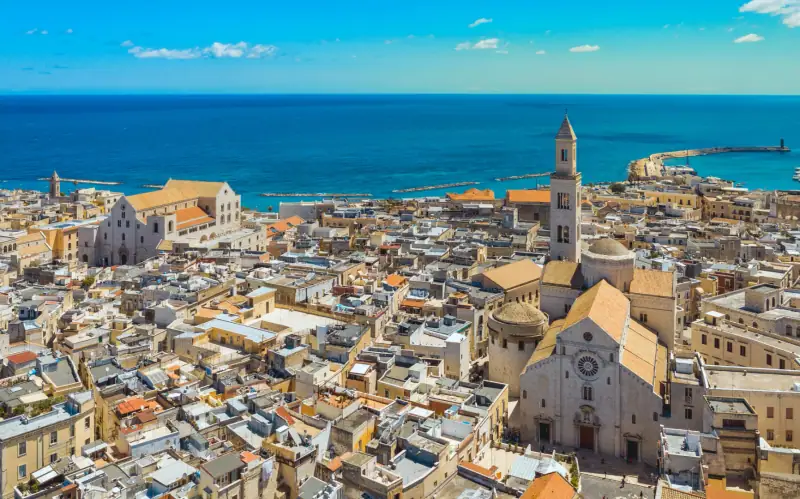
Bari Must-Sees: What to See and Do in the Capital of Puglia
What to see in Bari: the Basilica of San Nicola, Bari Vecchia, the lungomare and the best experiences in Puglia's capital.
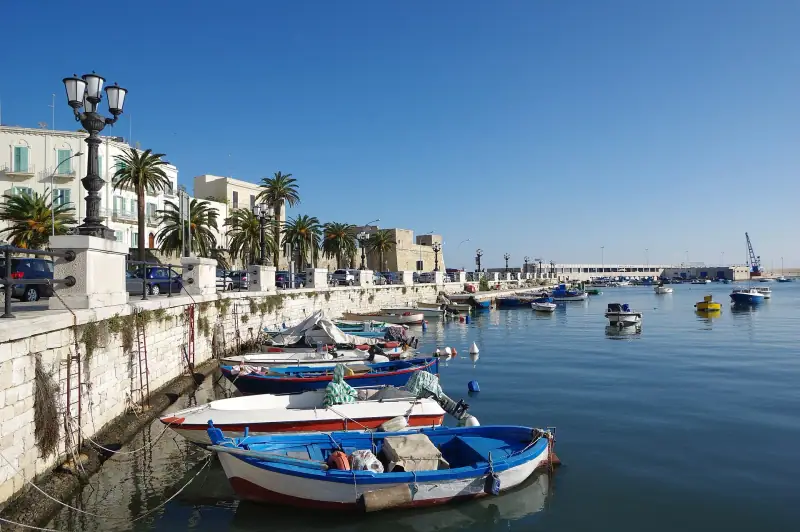
Bari and its surroundings: what to see and do in the area
Guide to the Bari area: Polignano a Mare, Castel del Monte, Trani, Matera, Gravina. Highlights, itineraries, food and practical tips.
Ready-made
Puglia itineraries
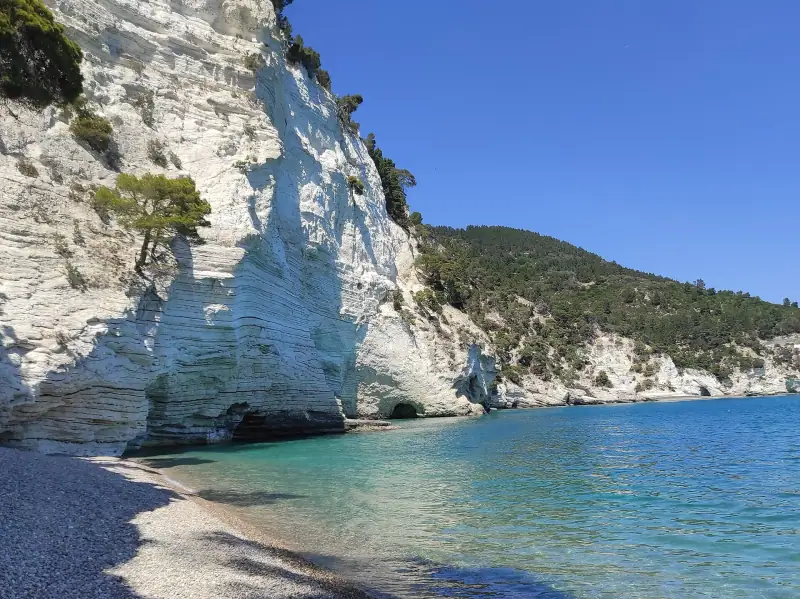
4 days
Gargano in 4 Days: A Complete Itinerary for the Promontory
4-day Gargano itinerary: Vieste, Peschici, Foresta Umbra, Monte Sant'Angelo, sea caves and wild beaches. Day-by-day plan with practical tips.
Can be adapted in the planner
3 days
3 days in Salento: a complete itinerary through Lecce, Gallipoli and the secret coves
3 days in Salento: baroque Lecce, turquoise beaches, Gallipoli and Otranto. Detailed plan with transport and accommodation tips.
8 days
Puglia in 8 Days With Kids: Itinerary, Stops and a Relaxed Pace
Itria ValleyGallipoli