Itineraries
Gargano in 4 Days: A Complete Itinerary for the Promontory
We may earn a commission when you book through links on this page, at no extra cost to you. We don't visit or try the places we cover: we summarize published sources. How we work
Day by day
- Day 1Arrival in Vieste: old town, faraglione, sunset
- Day 2Beaches south of Vieste, boat trip to the sea caves
- Day 3Foresta Umbra and Monte Sant'Angelo
- Day 4Peschici, Rodi Garganico and the drive back
Where to sleep
- Vieste3 nights
Opens the trip planner with these stops and nights already filled in. Add a stop, drop one or change the nights.
In short
- Base yourself in Vieste for 4 days: old town and faraglione, beaches and sea caves, Foresta Umbra and Monte Sant'Angelo, then Peschici and Rodi Garganico. About 200 km (125 mi) of driving in the Gargano.
- A car is essential: the mountain roads to hilltop villages and wild beaches have little or no public transport.
- Best months are June and September; July and August bring crowded roads and much higher lodging prices.
- Budget for 4 days: about €400 (~$465) for a budget trip, €700 (~$810) mid-range, €1,200 (~$1,390) comfort.
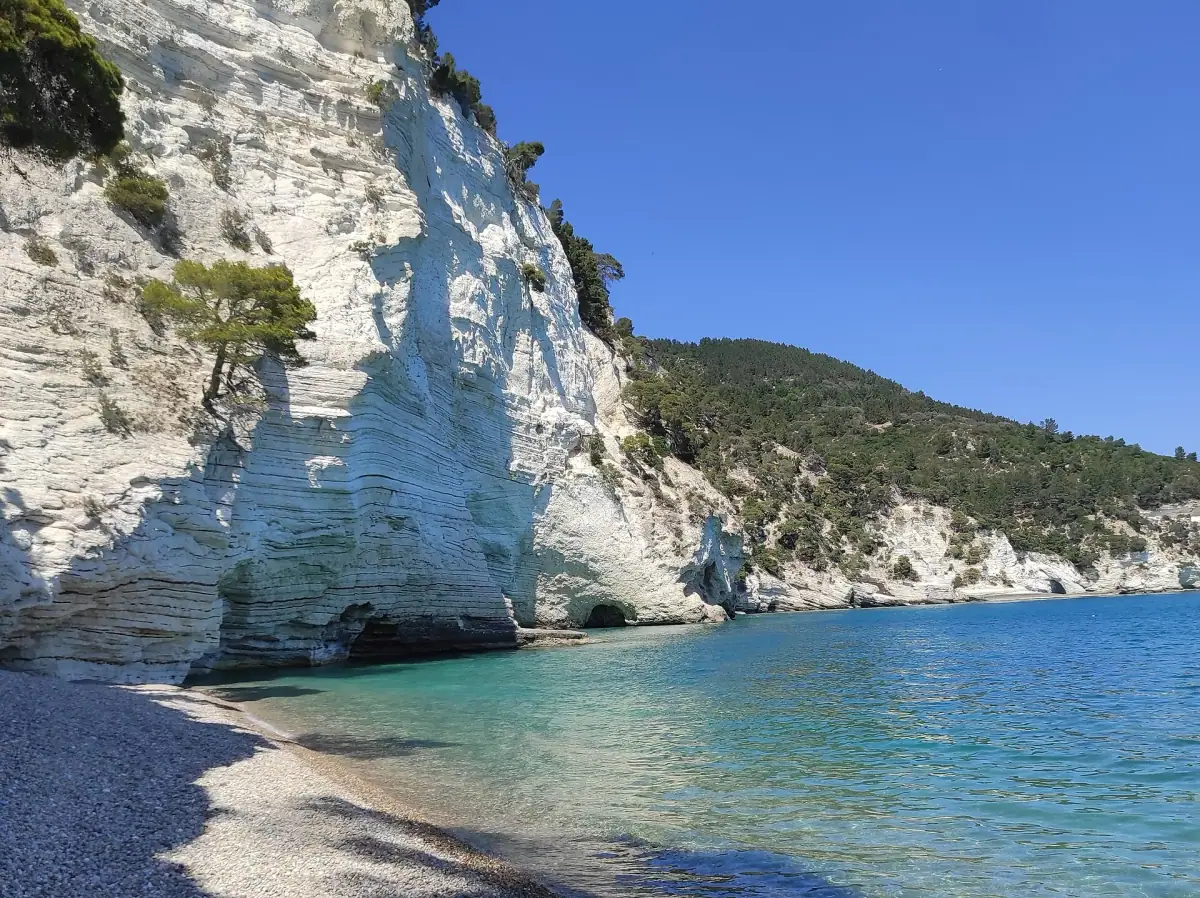
The Gargano is often overlooked in favor of Salento on a trip to Puglia, and that is a mistake. This limestone promontory jutting into the Adriatic like a spur holds some of Italy’s most spectacular landscapes: 50 m (164 ft) white cliffs plunging into a turquoise sea, hilltop villages clinging to the rocks, primeval forest, and wild beaches with no road access. Here is a 4-day itinerary to see the essentials.
Itinerary overview
Day 1: Arrive in Vieste, with the old town, the faraglione and sunset
Day 2: Wild beaches and a boat trip to the sea caves
Day 3: Foresta Umbra and Monte Sant’Angelo
Day 4: Peschici, Rodi Garganico and the drive back
Total distance: about 200 km (125 mi) in the Gargano
Recommended base: Vieste (the biggest town, best choice of lodging)
Road type: narrow mountain roads with steep grades, so drive carefully
The Gargano promontory at a glance: location, size and terrain
What is the Gargano promontory? It is the spur of Italy’s “boot”: a large limestone mass jutting into the Adriatic Sea, in northern Puglia, in the province of Foggia. According to Gargano National Park, the park covers about 121,000 hectares (about 299,000 acres, or nearly 1,200 km² / 463 sq mi), and its highest point, Monte Calvo, reaches 1,056 m (3,465 ft). The promontory is said to have been an island before joining the mainland, which explains the richness of its natural habitats.
To get your bearings before you drive:
| Landmark | What to know |
|---|---|
| South side | Manfredonia, the big town at the foot of the promontory, departure point for the Tremiti Islands |
| Eastern tip | Vieste, the best base for day trips |
| North coast | Peschici and Rodi Garganico, quieter |
| Heart of the promontory | Foresta Umbra, then Monte Sant’Angelo inland |
| From Bari | about 2 h 30 by road to Vieste |
Why the Gargano is unlike the rest of Puglia
Here there is no endless plain of olive trees and no low, sandy coast: the terrain climbs quickly, cliffs drop into the sea and forest covers the interior. Distances are therefore deceptive. A few dozen kilometers of winding road take well over an hour, which is why this 4-day itinerary limits the number of stops per day.
If you are unsure how much time to give the promontory, the complete Gargano guide covers each town, and the Gargano hikes will help you choose your trails.
Day 1: Arrive in Vieste, the pearl of the Gargano
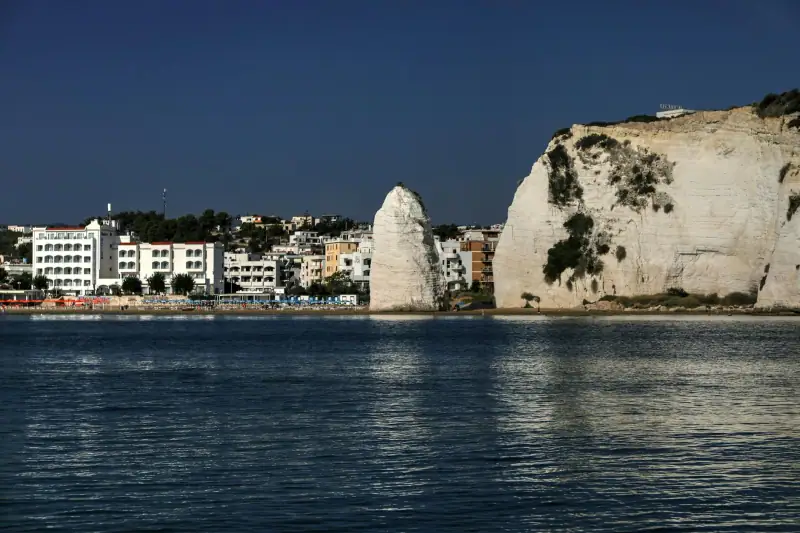
From Bari (2 h 30 by road), enter the Gargano via Foggia and then head up to the coast. The first sight of Vieste from the corniche road is enough to see why the town is nicknamed the “pearl of the Gargano”: a spur of white limestone with a medieval village perched on top, surrounded by cliffs and beaches at its feet.
Afternoon: exploring Vieste Alta
Settle into your lodging, then walk up into the old town. Vieste’s medieval quarter is a maze of white alleys, arches and flowered terraces. Don’t look for a map, just get lost.
Highlights of Vieste Alta:
- Cattedrale di Santa Maria Assunta (12th century): plain and majestic, with a Romanesque crypt cut into the rock
- La Chianca Amara: the stone slab on which, according to legend, the Turks beheaded 5,000 inhabitants during the sack of 1554
- Panoramic terraces: several viewpoints look out over the sea on both sides of the promontory, and the late-afternoon light is extraordinary
Evening: the faraglione and aperitivo
The Faraglione di Vieste is the emblematic image of the Gargano: a huge white rock 25 m (82 ft) tall rising from the sea right at the foot of the cliffs. The best view is from Pizzomunno beach (Spiaggia del Castello), where the golden evening light lights up the limestone.
Have dinner in the historic center: Gargano cooking differs from the rest of Puglia, with Adriatic fish, shellfish, and the Altamura bread you find everywhere. A good trattoria on the lungomare will serve orecchiette al ragù di carne and the grilled fish of the day.
Car rental in Bari or Foggia
Essential for exploring the Gargano. Compare offers in advance for the best rates.
Day 2: Wild beaches and a trip by sea
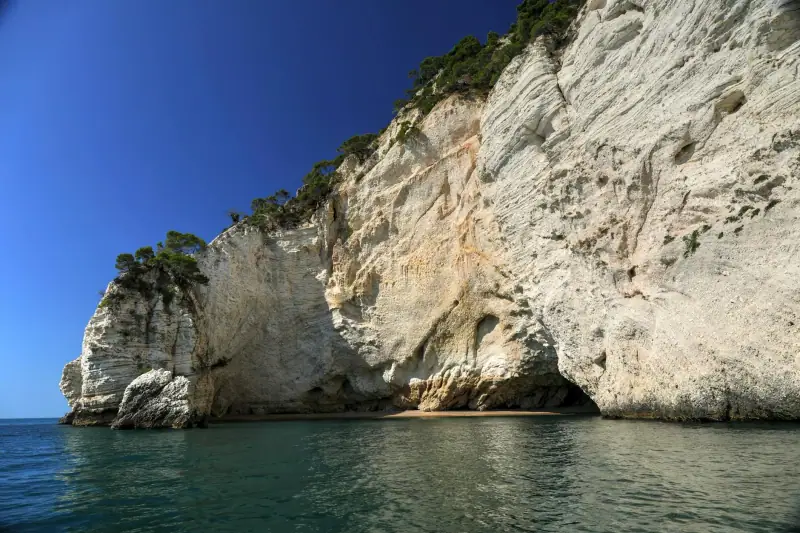
The Gargano has the most spectacular beaches in Puglia. Unlike Salento (white sand and shallow water), the Gargano’s beaches are coves tucked between white cliffs, with intensely deep blue water.
Morning: the beaches south of Vieste
Take the coastal road toward Mattinata (SP53). Within a few kilometers you will find a string of some of the most beautiful beaches in Italy (Baia delle Zagare, in the municipality of Mattinata, is about 25 km / 16 mi from Vieste):
- Spiaggia di Pugnochiuso: a large pebble beach in a natural gulf surrounded by forest. Crystal-clear water, ideal for snorkeling.
- Cala Lunga: a cove reached on foot (15-minute walk from the parking lot). Emerald-green water, no commercial facilities.
- Baia delle Zagare: the most photogenic beach in the Gargano. Monumental faraglioni frame a turquoise bay. The Baia delle Zagare hotel (perched on top of the cliff) offers boat trips.
North of Vieste, toward Peschici, you will also find Baia di Sfinale, Baia San Felice and Baia di Manaccora.
The guide to the most beautiful beaches in Puglia covers each beach with access and practical tips.
Afternoon: boat trip to the sea caves
This is the Gargano’s must-do activity. From Vieste harbor, shared boats (about €20-25, or $23-29, per person) follow the coast for 2 to 3 hours and enter the sea caves cut into the limestone cliffs.
The most impressive caves:
- Grotta Smeralda: refracted water turns an unreal emerald green at midday
- Grotta del Diavolo: low entrance (passed by rowing), large inner chamber with a bright ceiling
- Grotta della Campana: stalactite formations and limestone concretions
Boats usually leave at 9:30 am and 3 pm from the tourist harbor. Book the day before in high season. The tour lasts 2 h 30 to 3 h.
Gargano excursions and activities
Boat tours, cave excursions, snorkeling and guided hikes.
Option: a trip to the Tremiti Islands
If you have time, the Tremiti Islands (San Domino, San Nicola, Capraia) deserve a full day. The fast-boat crossing from Vieste takes 1 h 15 to 2 h depending on the service. Prices, schedules and booking are covered in the guide to Tremiti Islands trips from Vieste.
San Domino is the main island, with its pine woods, coves and hiking trails. San Nicola has an 11th-century Benedictine monastery and a medieval fortress. The waters around the islands are a protected marine reserve, and snorkeling and diving there are exceptional.
Summer services are frequent (several departures a day from Vieste, Peschici, Rodi Garganico and Manfredonia). Off-season, check the schedules because crossings are much less frequent.
Day 3: Foresta Umbra and Monte Sant’Angelo
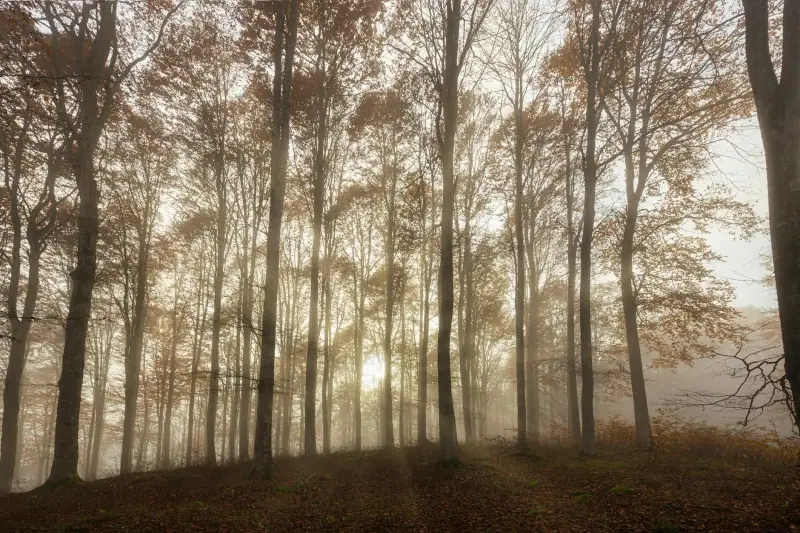
The Gargano is not only coastal. Its mountainous heart hides two remarkable sites: Foresta Umbra, a primeval forest thousands of years old, and Monte Sant’Angelo, a major Christian pilgrimage site.
Morning: Foresta Umbra
Foresta Umbra (“shady forest”) is an ancient forest of beech, oak and yew covering 10,000 hectares (about 24,700 acres) in the heart of the promontory. It is part of Gargano National Park and has been a UNESCO World Heritage site since 2017.
How to visit:
- The Centro Visitatori (on the Foresta Umbra road, SP52bis, near the junction with the SS528) is the ideal starting point, with an exhibit on the fauna and flora and the start of several marked trails
- Sentiero dei Cervi (2 h, easy): a loop trail through the beech woods, where you may spot deer in the clearings at dawn or dusk
- Lago di Umbra: a small lake tucked into the forest, exceptionally green in spring
The forest shelters varied wildlife: deer (the Gargano has 3,000), foxes, wild boar, black woodpeckers and several rare species of wild orchids on the ground.
The article on hiking in the Gargano covers all the national park’s trails with difficulty levels.
Places to stay in the Gargano
Hotels, B&Bs and masserie between Vieste, Peschici and Monte Sant'Angelo.
Afternoon: Monte Sant’Angelo
Monte Sant’Angelo is a medieval village perched at 800 m (2,625 ft) that draws millions of pilgrims every year. The reason: the Cave of the Archangel Michael, where the archangel is said to have appeared to the bishop of Siponto in AD 490. This sanctuary is the oldest Catholic place of worship dedicated to Saint Michael in the West, and a UNESCO World Heritage site.
Visiting the sanctuary (open every day, hours vary by season: check with the sanctuary before you go):
- You go down a staircase of 86 steps to the natural cave carved into the rock
- The Angevin Gothic structure dates from the 13th century; the statue of Saint Michael, by Andrea Sansovino, dates from 1507 (16th century)
- Entry is free but proper dress is required (shoulders covered, no shorts)
Beyond the sanctuary, Monte Sant’Angelo is worth a walk through its medieval lanes. The Castel Sant’Angelo (on the access road) offers a panoramic view over the Gargano. Monte Sant’Angelo’s Jewish cemetery is one of the oldest in Italy.
Day 4: Peschici, Rodi Garganico and the drive back
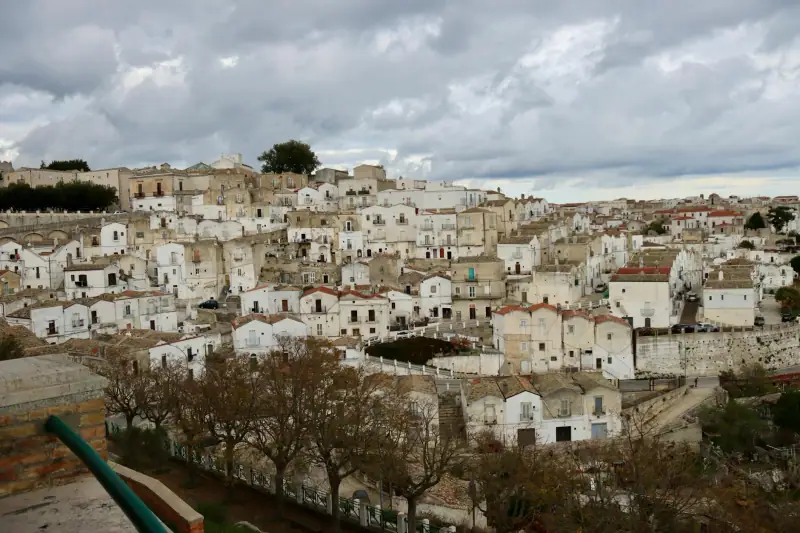
The last day is devoted to the Gargano’s northwest coast, less visited and wilder than the Vieste area.
Morning: Peschici
Peschici is often called “the most beautiful village in the Gargano”. Built on a rocky promontory above a white-sand beach, it is less touristy than Vieste and has better preserved its authenticity.
What to do in Peschici:
- Old town: Norman castle (11th century) with views over the two beaches framing the village; typical white alleys
- Peschici beach: a long stretch of pale sand below the village, far less crowded than Vieste’s beaches
- A place to pause: the café terraces on the main piazza have a superb view over the gulf
Midday: Rodi Garganico and the orange groves
Rodi Garganico is a small fishing port known for its oranges and lemons. The view from the belvedere over the harbor, the terraced orange groves and the Tremiti Islands on the horizon is one of the best in the Gargano.
Use this last stop to buy local citrus, Gargano olive oil (Dauno Gargano PDO, made mostly from Ogliarola garganica, a delicate oil unlike Salento’s) and focaccia garganica to take away.
Lunch: Rodi Garganico’s harbor has several fresh-fish restaurants at reasonable prices. Order a platter of raw seafood (ricci di mare, cozze, ostriche) if the season allows.
Afternoon: the drive back
The drive back to Bari (2 h 30) or Brindisi (3 h) is best done on the inland road via Foggia and the A14, which is faster than the coastal road.
Practical information
How to get to the Gargano
By air: the nearest major airport is Bari Karol Wojtyła (2 h 30 by road to Vieste). Foggia airport is closer (1 h 30) but has fewer flights.
By car: from Bari, take the A14 to Foggia, then the SS89 toward Manfredonia and Vieste. The coastal road (SP52) between Vieste and Peschici is magnificent but slow.
By train: no railway serves the Gargano coast directly. Trains stop at Foggia or Manfredonia; a bus or rental car takes over from there.
Recommended lodging
Vieste is the best base for this circuit:
- High end: masserie (converted traditional farms) outside Vieste offer a distinctive experience with a pool and restaurant
- Mid-range: seafront hotels overlooking Pizzomunno beach
- Budget: B&Bs in the old town, often run by local families
For families, the villaggi turistici (resort-style holiday villages) north of Vieste offer complexes with direct beach access at good half-board rates.
Estimated budget for 4 days
| Item | Budget | Mid-range | Comfort |
|---|---|---|---|
| Lodging (4 nights) | €40-60/night (~$45-70) | €80-120/night (~$95-140) | €150-250/night (~$175-290) |
| Restaurants | €20-25/day (~$23-29) | €35-50/day (~$41-58) | €60-80/day (~$70-93) |
| Activities | €20-30 (~$23-35), boat | €40-60 (~$46-70) | €80-100 (~$93-115) |
| Rental car | €30-40/day (~$35-46) | €50-70/day (~$58-81) | €80-120/day (~$93-140) |
| Total 4 days | ~€400 (~$465) | ~€700 (~$810) | ~€1,200 (~$1,390) |
When to go
June: the best month, with perfect sea, accessible beaches, reasonable crowds and lodging cheaper than in summer.
September: an excellent choice, with the sea still warm (26-27 °C / 79-81 °F), fewer tourists and prices back to reasonable levels.
July-August: absolute peak season. Roads are jammed and lodging prices double, but the water is 27-28 °C (81-82 °F).
Off-season (Oct-May): many hotels close, but the few that stay open charge winter prices, and the Gargano regains its authenticity.
The guide to the best time to visit Puglia compares all the seasons in detail.
Extending your stay in Puglia
The Gargano is only one part of Puglia. If you have more time, combine this circuit with:
- The Itria Valley and Alberobello: trulli and white villages, 3 hours south by road
- Lecce and Salento: baroque architecture and turquoise beaches, 4 hours southeast
- A full Puglia road trip: see the Puglia road trip to combine the Gargano, the Itria Valley and Salento in 10 to 14 days
The Gargano is often the wildest and most authentic part of a trip to Puglia. Take the time to get lost on its corniche roads, swim in its coves and explore its timeless villages.
Sources
- Gargano National Park: experiencing the park
- Italian National Tourist Board (Italia.it): figures checked November 2026
- Vieste Tourist Office: figures checked November 2026
- Sanctuary of Saint Michael the Archangel: figures checked November 2026
Frequently asked questions
How many days do you need to visit the Gargano?
4 to 5 days is the ideal length to explore the Gargano in depth: Vieste, Peschici, Foresta Umbra, the Tremiti Islands and a few beaches. In 2 to 3 days you can see the essentials by focusing on Vieste and its surroundings.
Do you need a car in the Gargano?
Yes, a car is essential in the Gargano. The mountain roads leading to hilltop villages and wild beaches have little or no public transport. Watch out for narrow roads and steep grades.
What is the best base for visiting the Gargano?
Vieste is the best base thanks to its central location, varied lodging and its beach. Peschici is a quieter, more authentic alternative, ideal in the off-season. Monte Sant'Angelo suits exploring the interior.
Can you visit the Gargano from Bari as a day trip?
Technically possible but not recommended: Vieste is 2 h 30 to 3 h from Bari depending on the route. A same-day round trip leaves little time to enjoy it. Plan at least 2 nights there.
Are the Tremiti Islands worth the detour from the Gargano?
Yes. The Tremiti Islands (San Domino, San Nicola, Capraia) are among the most beautiful natural sites in Puglia. The boat crossing from Vieste or Peschici takes about 1 to 2 hours depending on the boat and season (check times with the operators). Plan a full day for the trip.
When is the best time to go to the Gargano?
June and September are ideal: perfect sea, beaches still accessible and fewer people than in July and August. July and August have the warmest sea, but roads are clogged and lodging is overpriced. Off-season (October to May) the Gargano is nearly empty but authentic.
Where is the Gargano promontory?
The Gargano promontory is the spur of Italy's boot, in northern Puglia, in the province of Foggia. It juts into the Adriatic; Manfredonia sits at the foot of the promontory and Vieste at its eastern tip, about 2 h 30 by road from Bari.
How big is the Gargano promontory?
Gargano National Park covers about 121,000 hectares (about 299,000 acres), or nearly 1,200 km² (463 sq mi). The highest point is Monte Calvo, at about 1,056 m (3,465 ft).
More Puglia guides
Keep reading
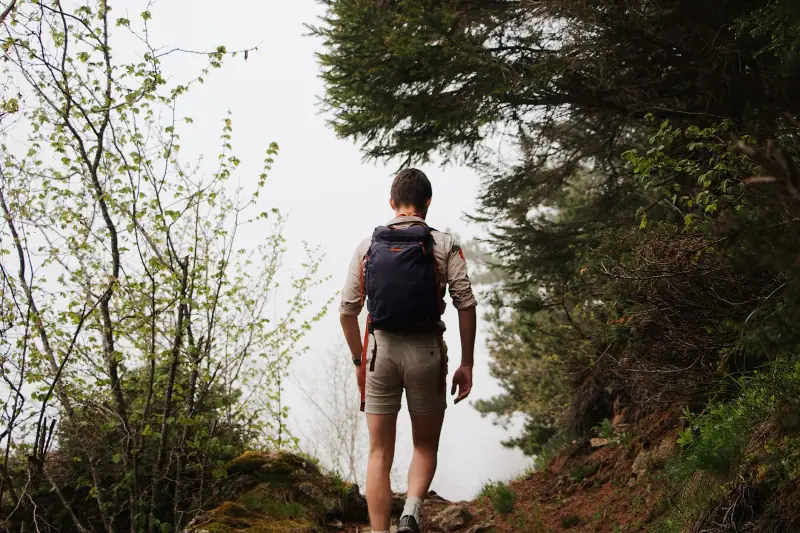
Hiking in the Gargano: The Best Trails in Puglia
The best Gargano hikes: Foresta Umbra, Monte Sant'Angelo, the wild coast and trails between sea and forest in northern Puglia.
Bari or Brindisi airport: which one to choose for visiting Puglia?
Bari Karol Wojtyła or Brindisi-Salento? Full comparison (flights, distances, prices, shuttles) to pick the right airport for your Puglia itinerary.
Where to stay in Bari: the best neighborhoods and hotels
Where to stay in Bari? A guide to the best neighborhoods, hotels and B&Bs for every budget in the capital of Puglia.
Ready-made
Puglia itineraries
3 days
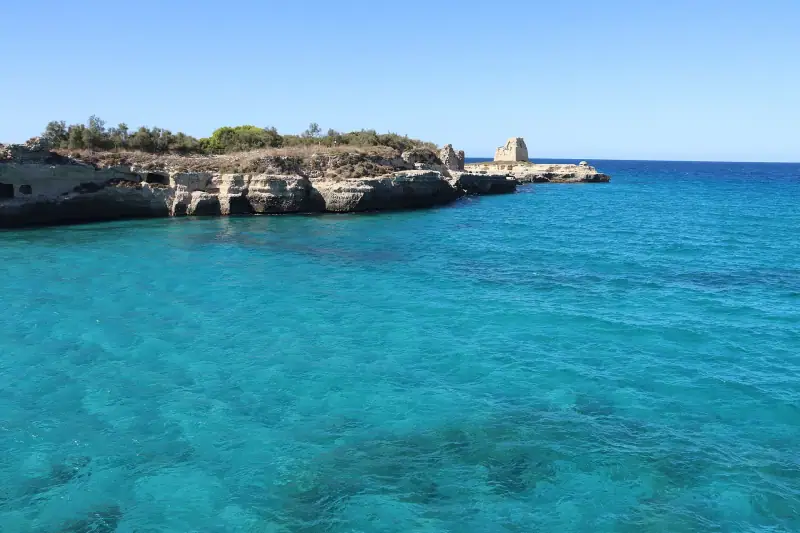
3 days in Salento: a complete itinerary through Lecce, Gallipoli and the secret coves
3 days in Salento: baroque Lecce, turquoise beaches, Gallipoli and Otranto. Detailed plan with transport and accommodation tips.
8 days
Puglia in 8 Days With Kids: Itinerary, Stops and a Relaxed Pace
Itria ValleyGallipoli
5 days
Puglia and Matera in 5 Days by Car: A Realistic Itinerary With Distances and Drive Times
Polignano a Mare or MonopoliMateraOstuniLecce