What to see
Visiting Alberobello: A Complete Guide to the UNESCO Trulli Village
We may earn a commission when you book through links on this page, at no extra cost to you. We don't visit or try the places we cover: we summarize published sources. How we work
In short
- Rione Monti and Rione Aia Piccola take 2 to 3 hours on foot; plan half a day to add a trullo museum, a tasting and lunch.
- Walking the alleys is free; the Trullo Sovrano museum costs €1.50 (~$1.75). A night in a trullo runs about €80-250 (~$93-290).
- Best months are April-June and September-October; the Rione Monti is very crowded in July and August between 10 am and 6 pm.
- From Bari, take the FSE train (about 1 h 30, €5-7 / ~$6-8, change at Putignano) or drive about an hour.
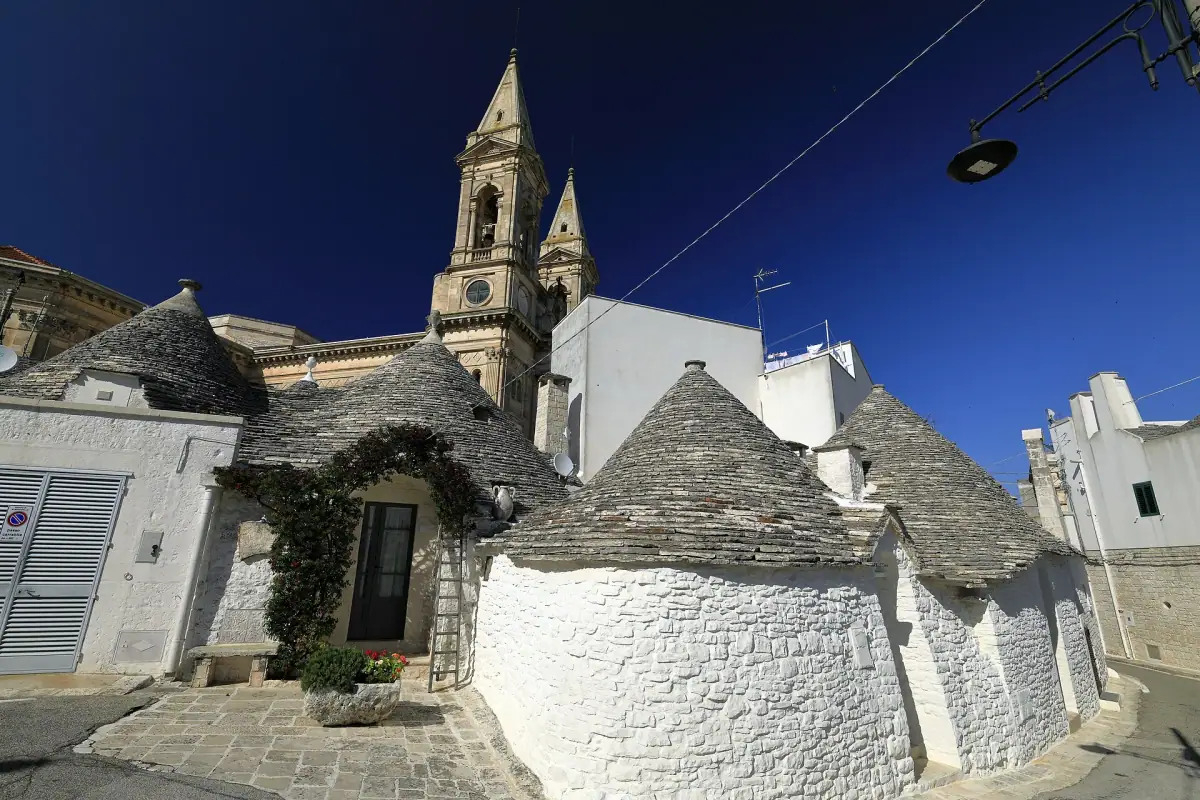
In the heart of the Itria Valley, in inland Puglia, Alberobello is a town like no other on Earth. Its 1,500 trulli, conical dry-stone limestone houses with pointed roofs marked with mysterious white symbols, form a landscape so singular that UNESCO inscribed it as a World Heritage site in 1996. A small town of 11,000 inhabitants, Alberobello is both an open-air museum and a living village where families have lived in their trulli for generations. Here is everything you need to know to plan your visit.
Alberobello’s history: why trulli?
The tax trick that created a World Heritage site
The story of Alberobello’s trulli is inseparable from a juicy historical anecdote. In the 16th century, the local lords of the Acquaviva d’Aragona family wanted to populate their lands in the Itria Valley while avoiding the royal tax on creating new towns and villages. The solution was ingenious: build dwellings without mortar, assembled from dry limestone, which could be taken apart in a hurry if a royal inspector visited.
These buildings, the trulli, were made of local limestone slabs stacked in concentric rings that narrow into a cone toward the top. With no binder, they could in theory be “undone” quickly. In practice they proved remarkably solid and have lasted five centuries. The peasant community that settled here built an entire village of trulli, grouped in what is now the Rione Monti.
In 1797, thanks to the intervention of a local townsman, Gian Giacomo Brunetti, with King Ferdinand IV of Bourbon, Alberobello received the official status of royal town (universitas), ending the Acquaviva lords’ control. From then on trulli could be built with mortar, but the tradition and the conical shape were rooted in local identity.
The roof symbols: magic or religion?
Trullo roofs are often decorated with symbols painted in white directly on the dark limestone. These signs (crosses, stars, suns, primitive figures) have been interpreted in many ways: some see Christian symbols, others the remains of magical practices or farming superstitions. The cross dominates (a protective Christian symbol), but there are also hearts, spirals and human-like figures. These symbols were often repainted for weddings, births or other important family events.
Visiting Alberobello: the two neighborhoods you shouldn’t miss
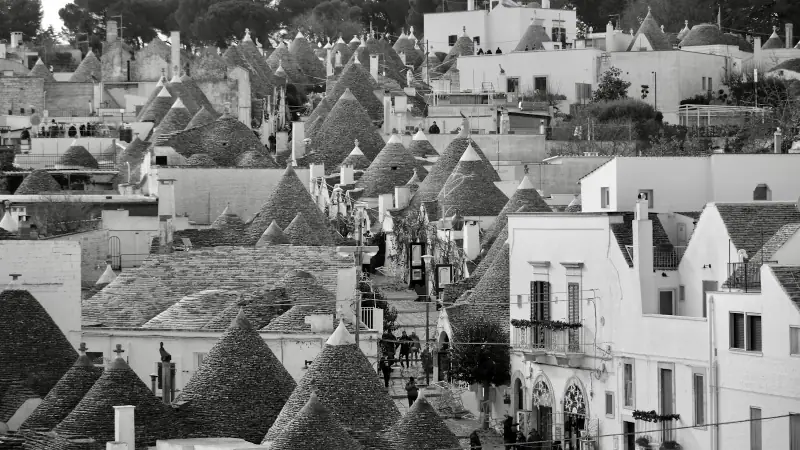
The Rione Monti
The Rione Monti is Alberobello’s emblematic area, the one in all the photos. Set on a hillside, it holds about 1,030 trulli on less than 10 hectares (25 acres), the largest concentration of trulli in the world. The alleys winding between the gray stone cones are now lined with souvenir shops, small restaurants, craft workshops and B&Bs.
Via Monte San Michele and Via Monte Nero are the two main streets of the Rione Monti. Tourist crowds can be intense in summer, but a few side alleys stay calmer and let you see local life. The view from the viewpoint at the end of the district (reached from Via Monte San Michele) gives a striking panorama of cones lined up as far as the eye can see. It is the classic Alberobello shot.
The church of Sant’Antonio (trullo-style, with a conical roof topped by a cross) stands in the middle of the Rione Monti and is one of the few religious buildings in the world built in the shape of a trullo. Built in 1926, it is visible from all the district’s alleys and is a useful landmark.
The Rione Aia Piccola
Less touristy and more authentic, the Rione Aia Piccola (on the other side of the main road) has about 400 trulli, most of them still private homes lived in year-round. The facades are less decorated and shops are rare, but the atmosphere is much livelier and less like a museum.
Getting lost in the alleys of Aia Piccola early in the morning or in late afternoon, when residents return to their trulli and cats doze on the low walls, is a memorable experience. Several trulli here have small inner gardens with fig trees, dwarf olive trees and bay laurels, an unspoiled Mediterranean ease of living.
Stay in a trullo in Alberobello
A unique experience: a night in an authentic trullo inside the UNESCO World Heritage site, with views of the stone cones.
The Trullo Sovrano: the only two-story trullo
On the edge between the Rione Monti and the modern town center, the Trullo Sovrano is Alberobello’s major architectural curiosity. It is the only trullo in Italy with two livable levels, built in the 18th century by a family of priests. The ground floor was used for daily activities (kitchen, storeroom, cellar), the upper floor for family life.
The Trullo Sovrano is now a museum (admission €1.50, about $1.75) showing the traditional life of trulli residents in the 19th century: period furniture, farm tools, kitchen utensils, clothing. It is a short but instructive visit that helps you grasp what life in these stone cones was really like, far from the tourist postcard.
Trullo architecture: how is it built?
The dry-stone technique
A trullo is a circular building of local limestone (chiancarella, a gray limestone from Puglia) put up without any binder or mortar. The walls, 1 to 2 m (3 to 6.5 ft) thick, are made of two facings of roughly cut stones with smaller stones and earth packed between them. This double-wall principle gives remarkable thermal insulation: the inside of a trullo stays cool in summer (not exceeding 18-20 °C / 64-68 °F even in great heat) and relatively warm in winter thanks to the stone’s thermal mass.
The roof is built by corbelling: each course of stone overhangs the previous one slightly, until the tip of the cone is formed. The last stone, called the pinnacolo, caps the top and keeps water out. This technique, identical to that of Sardinian nuraghi or Provençal bories, gives trulli their distinctive silhouette.
Size and layout
A standard trullo (a single conical cell) is usually 4 to 6 m (13 to 20 ft) across inside, with a height under the cone of 5 to 8 m (16 to 26 ft). Interior space is therefore limited, but trulli are often joined in groups of 2 to 8 connected cones, forming more spacious homes. The link between trulli is covered by a small vault or a stone corridor.
Exterior walls are usually painted with white lime, unlike the roofs, which stay gray stone. This creates the photogenic contrast between dark cones and light walls.
Car rental from Bari or Brindisi
Essential for exploring the Itria Valley and linking Alberobello, Locorotondo, Ostuni and the coast freely.
Food in Alberobello
Local specialties to try
Eating in Alberobello means immersing yourself in the cucina della Valle d’Itria, a robust, generous country cuisine deeply rooted in local produce.
The essentials:
- Orecchiette al ragù di agnello: homemade ear-shaped pasta with a lamb ragù braised for hours with tomatoes and wild herbs
- Fave e cicoria: white fava bean purée served with slightly bitter wild chicory sautéed in oil, a peasant dish of absolute simplicity and surprising depth of flavor
- Bombette pugliesi: small rolls of pork (or capocollo) stuffed with cheese and herbs, grilled over embers, the typical street food of Cisternino’s butchers but found throughout the Itria Valley
- Strazzate: local almond and black pepper cookies, crunchy and fragrant, sold in the shops of the Rione Monti
- Taralli al vino: oven-dried dough rings flavored with white wine and fennel, for snacking with an aperitif
- Primitivo and Negroamaro: the local red wines, full-bodied and deep, to try in the cellars of the Itria Valley
Market and local products
Piazza del Popolo and its surroundings host a weekly market (generally Friday morning) where local producers sell extra virgin olive oil, cheeses (pecorino, cacioricotta, canestrato pugliese), dried legumes, honey and traditional sweets. A worthwhile stop for bringing home authentic flavors of Puglia.
Where to stay in Alberobello
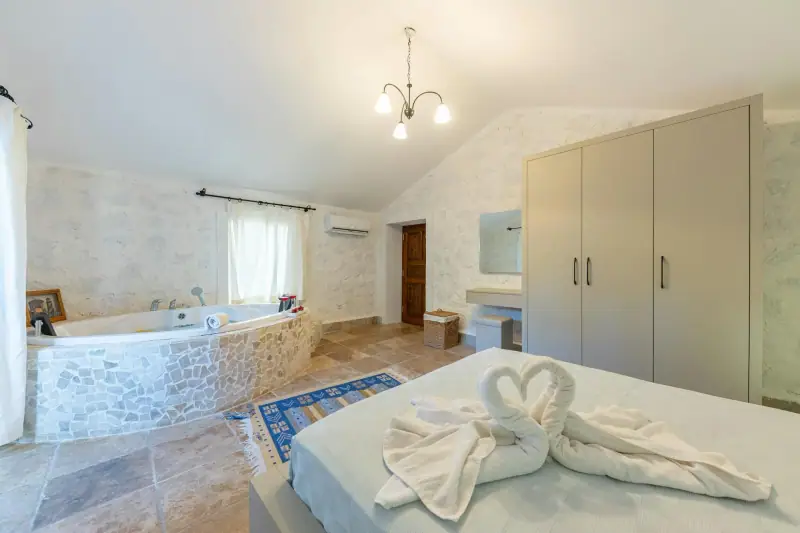
Sleeping in a trullo: an experience worth the trip
The great majority of travelers who come to Alberobello dream of sleeping in a trullo. It is indeed a singular experience: falling asleep under a centuries-old conical stone roof, in a room that stays cool even in midsummer, in the middle of a World Heritage site. Several dozen trulli have been turned into tourist lodging in the Rione Monti and nearby.
The options:
- B&B in a trullo: the most affordable option (€60-100 / ~$70-115 a night), often run by a local family. Simple room, breakfast included, warm welcome.
- Independent trullo rental: ideal for a couple or a family, with a fitted kitchen, terrace and garden (€100-220 / ~$115-255 a night). Book several months ahead in summer.
- Charming or luxury trullo: some trulli have been fully renovated with a private pool, jacuzzi and high-end decor (€180-350 / ~$210-405 a night).
Hotels in the center
For those who prefer the comfort of a regular hotel, a few establishments occupy buildings in Alberobello’s town center (outside the trulli area), a few minutes’ walk from the Rione Monti. Rates are generally lower than for trullo lodging, with more spacious rooms and sometimes a pool.
Guided tours and activities in Alberobello
Guided tour of the Rione Monti, miniature trullo building workshop, tasting of Itria Valley wines and oils.
Day trips from Alberobello
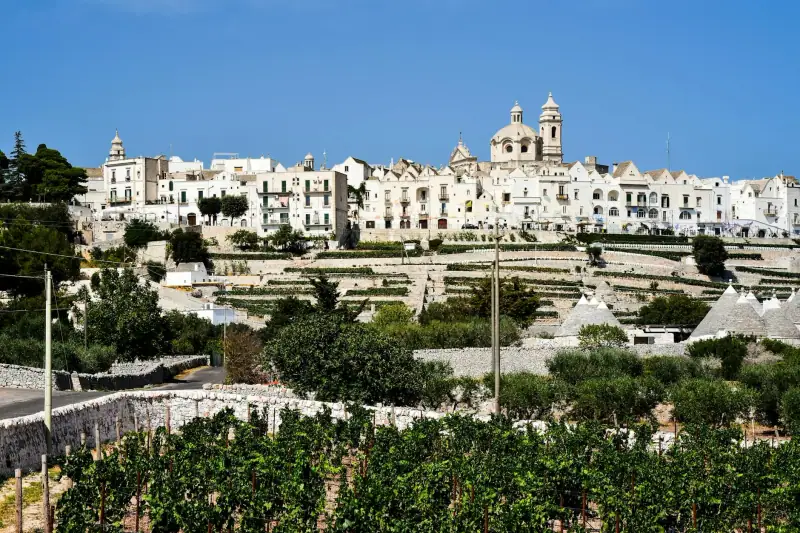
Locorotondo (10 km / 6 mi)
Locorotondo is one of the nicest surprises of the Itria Valley. The village takes its name from its perfectly circular plan (“round place”): seen from above, the centro storico forms an almost perfect ring of houses with pointed pitched roofs, the cummerse, whose unique profile is due to the heavy local rainfall (the multi-sloped roofs channel rainwater to the cisterns). Its alleys are entirely white, its squares decorated with flowers, and its viewpoint offers an extraordinary view over the Itria Valley dotted with trulli. Only 10 km (6 mi) from Alberobello (15 minutes by car), it is a trip you shouldn’t skip.
Locorotondo is also home to a well-known DOC wine: Locorotondo DOC, a dry, fruity white from the Verdeca and Bianco di Alessano grapes, perfect with the region’s antipasti.
Cisternino (18 km / 11 mi) and its grilling butchers
Cisternino is known throughout the region for a unique specialty: its macellerie con fornello (butcher shops with a built-in wood oven). The principle is simple: you pick your cuts from the display case (bombette, gnumarieddi or lamb intestines, brasciole) and they are cooked in front of you over olive-branch embers. The smell of grilled meat fills the whole centro storico. Several grill-butchers in the old borgo have kept up this tradition for decades. An unforgettable lunch on a very modest budget (€12-18 / ~$14-21 per person, drink included).
Martina Franca (15 km / 9 mi)
Martina Franca is the largest town in the Itria Valley and the least known to tourists, which makes it an excellent antidote to Alberobello’s crowds. Its baroque centro storico is remarkable: the 17th- and 18th-century palaces and churches in finely carved white limestone rival those of Lecce for decorative exuberance. Via Cavour and Piazza Roma hold most of the monuments, including the Palazzo Ducale (partly open to visitors).
Martina Franca is also the production center of Puglia’s most reputed capocollo: a cured pork neck, sweet and fragrant, to try in any gastronomia in the town center.
Ostuni (32 km / 20 mi) and Polignano a Mare (30 km / 19 mi)
If you are visiting Alberobello as part of a longer stay in Puglia, Ostuni (the Città Bianca) and Polignano a Mare (the Adriatic cliffs) are 30-35 km (19-22 mi) away by car. See the complete guide to Ostuni and the guide to Polignano a Mare. The Puglia road trip pairs Alberobello with these two stops.
Alberobello in practice
How to get to Alberobello
From Bari (56 km / 35 mi): FSE Bari-Taranto line with a change at Putignano, about 1 h 30, €5-7 (~$6-8). Trains are not very frequent (about 8 a day), so check the schedule on the FSE site (fseonline.it). By car, take the SS100 then the SP634 via Casamassima and Putignano, about 50 minutes.
From Brindisi (80 km / 50 mi): a car is recommended, about 1 h 15. By public transport you have to go through Taranto or Bari, which makes the trip long.
From Lecce (100 km / 62 mi): a car is advised, about 1 h 30 via the SS7 and the SS172.
Getting around
The Rione Monti and the Rione Aia Piccola can only be visited on foot, since the alleys are too narrow for cars. Parking lots are available on the edge of the town center (free in low season, paid in July and August). To explore the Itria Valley and reach Locorotondo, Cisternino or Martina Franca, a rental car is essential.
When to go
- April-June: ideal. Reasonable crowds, perfect light, flowers in the gardens.
- September-October: excellent too, with the mildness of the late season.
- July-August: very busy, especially on weekends and Italian public holidays. The Rione Monti can be very crowded between 10 am and 6 pm.
- November-March: calm and authentic. Some shops close in low season. Cool and mild (8-15 °C / 46-59 °F).
Approximate budget
- Trullo Sovrano admission: €1.50 (~$1.75)
- Guided tour of the Rione Monti: €10-15 (~$12-17) per person
- Trattoria lunch (main + dessert + carafe of wine): €20-30 (~$23-35)
- Strazzate and souvenirs: €5-15 (~$6-17)
- Night in a trullo (B&B): €60-120 (~$70-140) depending on season
- Town center parking (high season): €2-4 (~$2.50-4.50) per hour
Useful information
- Population: about 11,000
- Altitude: 428 m (1,404 ft)
- Distance to Bari: 65 km / 40 mi (1 hour by car, 1 h 30 by FSE train)
- Distance to Brindisi: 80 km / 50 mi (1 h 15 by car)
- Distance to Locorotondo: 10 km / 6 mi
- Distance to Ostuni: 40 km / 25 mi
- Emergencies: 118 (ambulance), 112 (general emergencies)
Alberobello is not only a tourist site: it is a living village where families have lived in their trulli for centuries, where the morning smells of warmed olive oil and bread from the wood-fired oven. The Rione Monti, even crowded in summer, remains an unmatched visual experience: those stone cones rising between white alleys are a sight no photo can truly prepare you for. To go beyond the postcard, sleep there, set out early in the morning before the tour buses, get lost in Aia Piccola and take time for a slow lunch in a trattoria in the center.
For your stay in Puglia, see also the complete guide to the Itria Valley and the 7-day Puglia road trip.
Frequently asked questions
How long do you need to visit Alberobello?
The Rione Monti and the Rione Aia Piccola take 2 to 3 hours on foot. To see the inside of a museum trullo, join a tasting and have lunch there, plan on half a day. If you sleep in a trullo, one night is enough to enjoy the unique experience of staying in this UNESCO World Heritage site.
How do you get to Alberobello from Bari?
By train: the FSE (Ferrovie del Sud Est) line links Bari and Alberobello in about 1 h 30, with a change at Putignano. Expect €5-7 (about $6-8) one way. By car, Alberobello is 65 km (40 mi) from Bari via the SS100 then the SP634, about 1 hour. From Brindisi airport, allow about 80 km (50 mi), 1 h 15 by car.
Can you visit the trulli of Alberobello freely?
The Rione Monti and the Rione Aia Piccola can be visited freely from the outside alleys. Some trulli are shops, restaurants or B&Bs open to the public. The Trullo Sovrano (Alberobello's only two-story trullo) can be visited for an admission fee of €1.50 (about $1.75). Guided tours of the whole site start from Piazza del Popolo.
Can you sleep in a trullo in Alberobello?
Yes, it is one of the most original experiences in Puglia. Many trulli in the Rione Monti and nearby have been turned into charming places to stay, from simple B&Bs to fully equipped luxury trulli. Expect €80 to 250 (about $93-290) a night depending on comfort and season. Book several months ahead for July and August.
When is the best time to visit Alberobello?
April-June and September-October are ideal: moderate crowds, soft light and pleasant temperatures (18-27 °C / 64-81 °F). In July and August Alberobello is very busy and the Rione Monti alleys can be packed in the middle of the day. Winter (November-March) has a more authentic atmosphere and prices cut in half, but some shops close.
What day trips can you make from Alberobello?
Alberobello is the heart of the Itria Valley. The villages of Locorotondo (10 km / 6 mi), Cisternino (18 km / 11 mi), Martina Franca (15 km / 9 mi) and Ostuni (32 km / 20 mi) combine well into a one-day road trip. Locorotondo, with its round white houses, is the ideal complement and only 15 minutes away by car.
Is there an entrance fee to visit Alberobello?
No, walking the alleys of the Rione Monti and the Rione Aia Piccola is entirely free. Only the Trullo Sovrano (museum) and a few indoor exhibits require a ticket. Shops and restaurants inside the trulli are of course open to all.
More Puglia guides
Keep reading
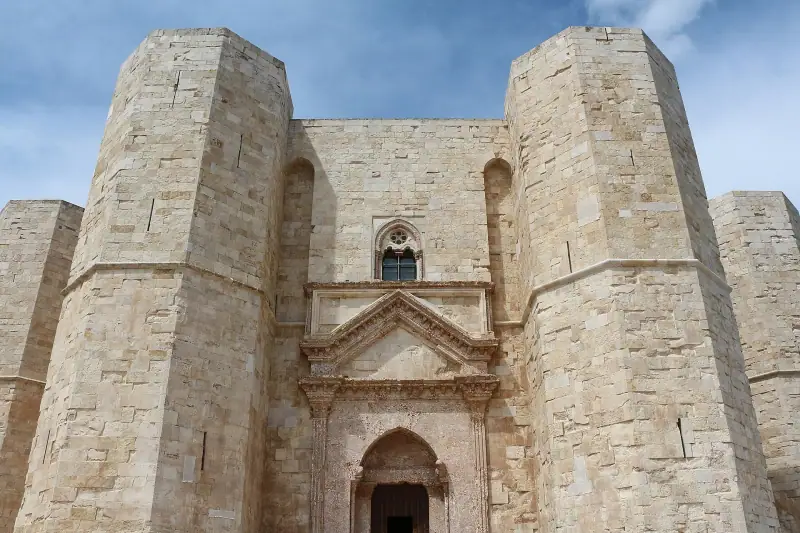
Castel del Monte: hours, prices and how to get there from Bari without a car
Castel del Monte from Bari: hours, ticket price, train and bus or car, visit length and the best time to avoid crowds. A practical guide.
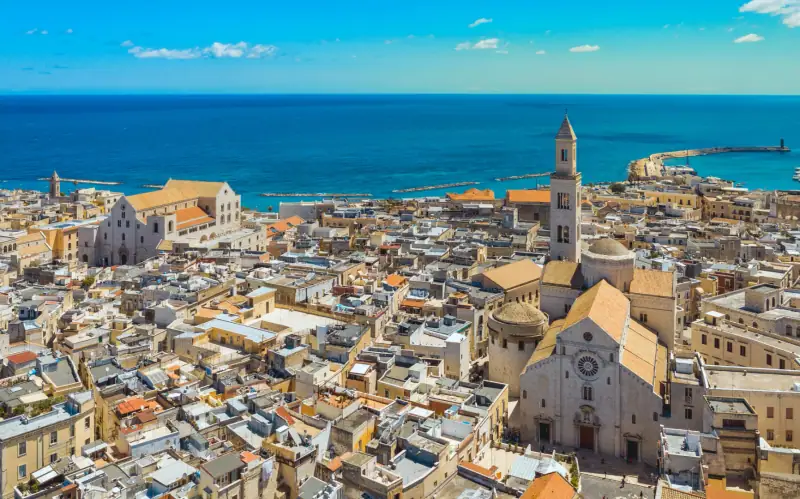
Bari Must-Sees: What to See and Do in the Capital of Puglia
What to see in Bari: the Basilica of San Nicola, Bari Vecchia, the lungomare and the best experiences in Puglia's capital.
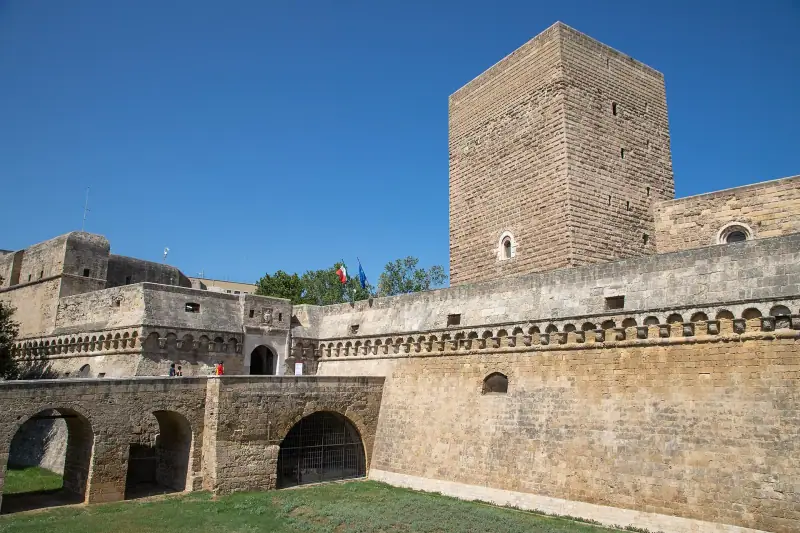
Visiting Bari: a complete guide to the capital of Puglia
Complete guide to visiting Bari: old town, Basilica of San Nicola, neighborhoods, food, beaches and practical tips for a successful stay.
Ready-made
Puglia itineraries
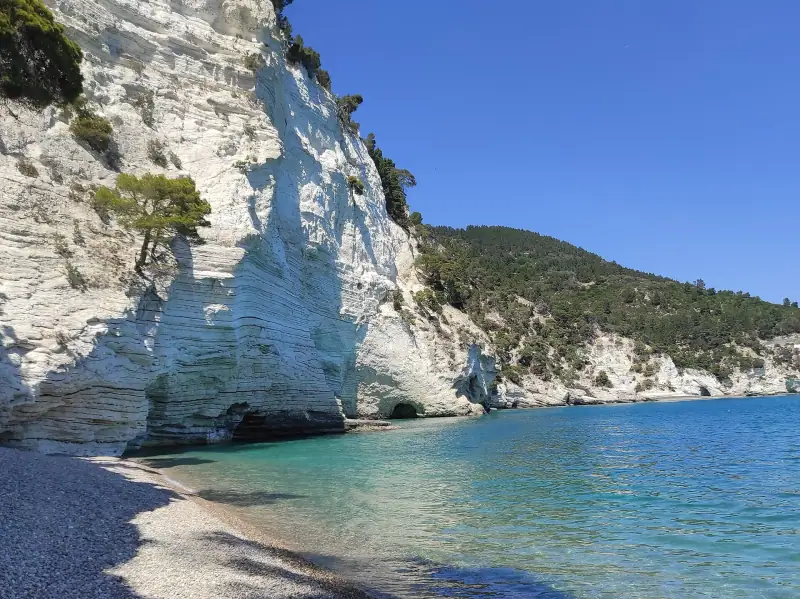
4 days
Gargano in 4 Days: A Complete Itinerary for the Promontory
4-day Gargano itinerary: Vieste, Peschici, Foresta Umbra, Monte Sant'Angelo, sea caves and wild beaches. Day-by-day plan with practical tips.
Can be adapted in the planner
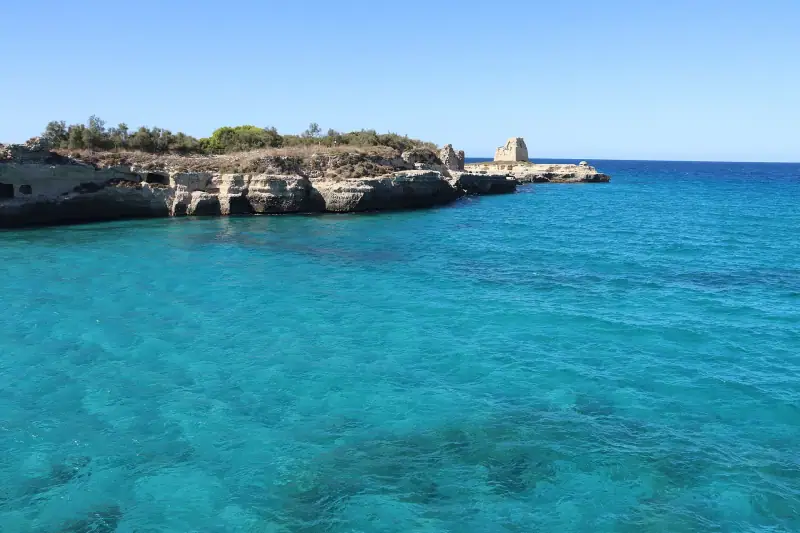
3 days
3 days in Salento: a complete itinerary through Lecce, Gallipoli and the secret coves
3 days in Salento: baroque Lecce, turquoise beaches, Gallipoli and Otranto. Detailed plan with transport and accommodation tips.
8 days
Puglia in 8 Days With Kids: Itinerary, Stops and a Relaxed Pace
Itria ValleyGallipoli