Things to do
Philippines Waterfalls: The 8 Most Beautiful Falls to Visit
We may earn a commission when you book through links on this page, at no extra cost to you. We don't visit or try the places we cover: we summarize published sources. How we work
In short
- Kawasan Falls (Cebu) is the most iconic: entry about 200 PHP, canyoning from about 2,000 PHP per person.
- Tinago Falls (Iligan) is the most dramatic at about 73 m (240 ft), reached by more than 500 steps; Cambugahay (Siquijor) is the easiest for families.
- The dry season (December to May) gives clearer water and safer trails; entry fees are modest, 20 to 200 PHP at most sites.
- Wear water sandals or light trail shoes, not flat flip-flops, and bring a dry bag, biodegradable sunscreen and bottled water.
The Philippines is among the best-endowed countries in Asia when it comes to waterfalls. With more than 7,600 islands, rugged terrain and generous tropical rainfall, the archipelago has waterfalls around every corner of jungle, from the dramatic heights of Mindanao to the vivid turquoise pools of Cebu, by way of the legendary gorges of Laguna. Whether you are a seasoned hiker or a traveler looking for a refreshing swim, here are the 8 waterfalls worth visiting in the Philippines.
Kawasan Falls (Cebu): the Philippines’ iconic waterfall
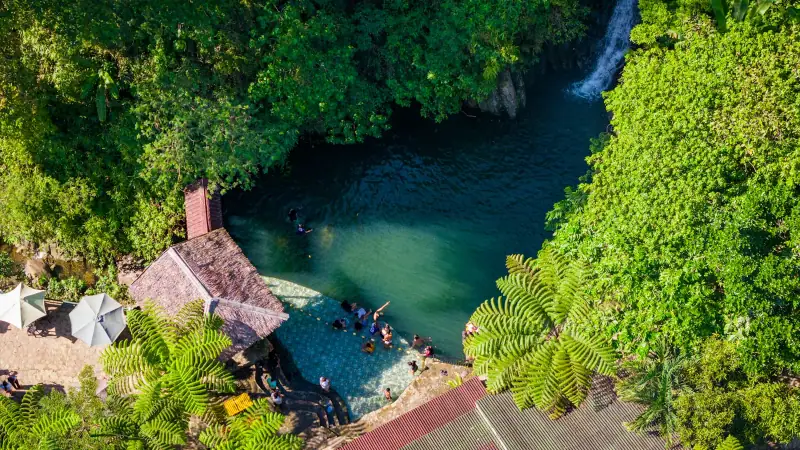
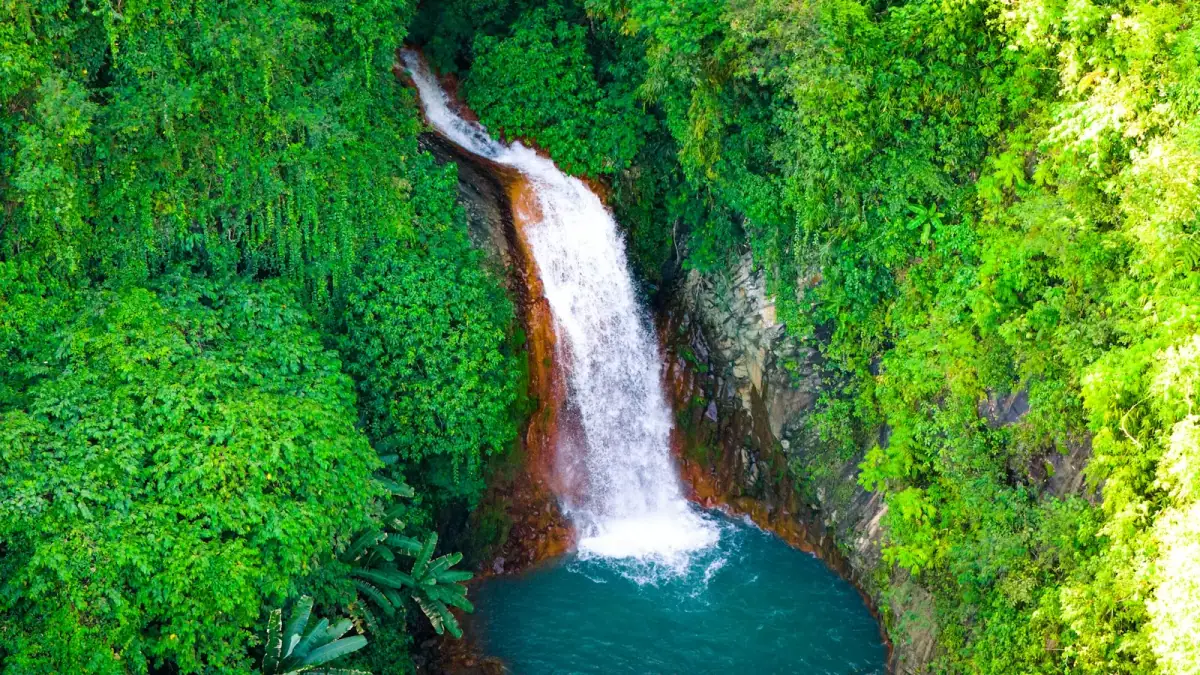
If the Philippines had only one waterfall to show you, it would be Kawasan Falls. Located in the municipality of Badian, in southwest Cebu, this three-tier waterfall plunges into a pool of an unreal turquoise color, fed by ice-cold underground springs. Dense tropical vegetation frames the falls and creates an almost supernatural atmosphere.
The first pool, the most accessible and the most photographed, is the heart of Kawasan Falls. A series of bamboo bridges links the banks and lets you get close to the falls. Hollow bamboo poles serve as natural showers on the sides. The second pool, reached on foot in 10 minutes, is less visited and often calmer. The third level takes a bit more effort but rewards you with a view looking down over all the falls.
Signature activity: canyoning
Kawasan Falls is the end point of the Kawasan River canyoning circuit, one of the most popular in the Philippines. The 4 to 5 hour tour includes ziplines, jumps, natural slides in the gorges and a rappel descent before finishing in the turquoise pool. This circuit is done with certified local guides, so do not try it alone.
Practical information
- Access: from Cebu City, bus to Bato (3-4 h, about 150 PHP) then tricycle to the falls entrance in Badian
- Entry fee: about 200 PHP (the rate in recent guides; confirm it at the entrance)
- Canyoning: from about 2,000 PHP per person (guide, meal and motorcycle transport included), depending on the agency
- Best time: dry season (December-May) for the clearest water
Canyoning at Kawasan Falls
Book your canyoning day with certified guides and transport from Cebu City included.
Pagsanjan Falls (Laguna, Luzon): the gorges of legend
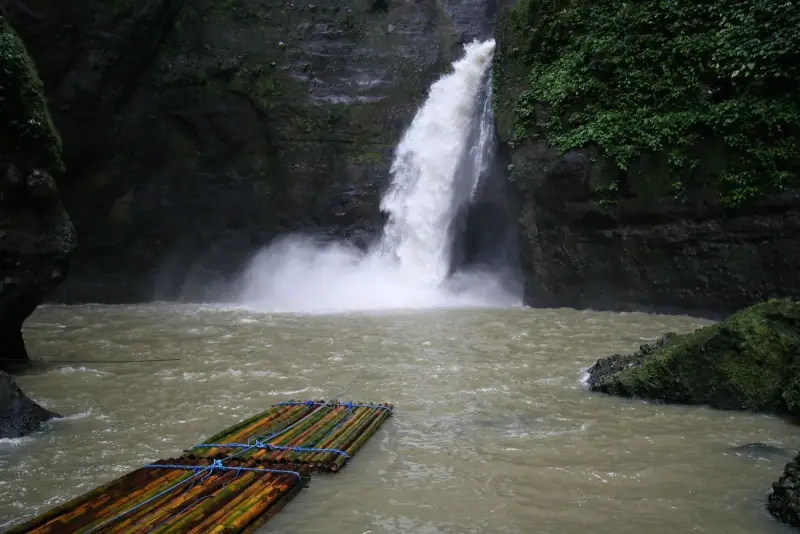
About 90 km (56 mi) southeast of Manila, Pagsanjan Falls (officially called Magdapio Falls) has been the most famous waterfall in the Philippines for decades. The falls drop 120 meters (394 ft) into a deep gorge, surrounded by cliffs covered in giant ferns and almost primary vegetation. Francis Ford Coppola shot several scenes of Apocalypse Now in these gorges in 1976, immortalizing the place in film history.
Getting there is itself a memorable experience. From the town of Pagsanjan, paddlers (boatmen) propel you in a narrow canoe against the current of the Pagsanjan River, for about 7 km (4.3 mi). The trip upstream passes through two increasingly narrow gorges, going under side waterfalls and brushing bare rock walls. On arrival, you put on a life jacket to go by raft to the pool at the base of the falls, with a guaranteed soaking from the spray.
What to know
- The trip upstream is physically intense for the boatmen, so a generous tip is strongly recommended (200-300 PHP minimum)
- The full round trip takes 2 to 3 hours
- Price: about 1,200 PHP per person (boat + guide, tip not included), to be confirmed with the Pagsanjan tourism office
- Access from Manila: ALPS bus (from Cubao) to Santa Cruz then jeepney to Pagsanjan, or a guided tour from Manila
Tinago Falls (Iligan City, Mindanao): the hidden waterfall
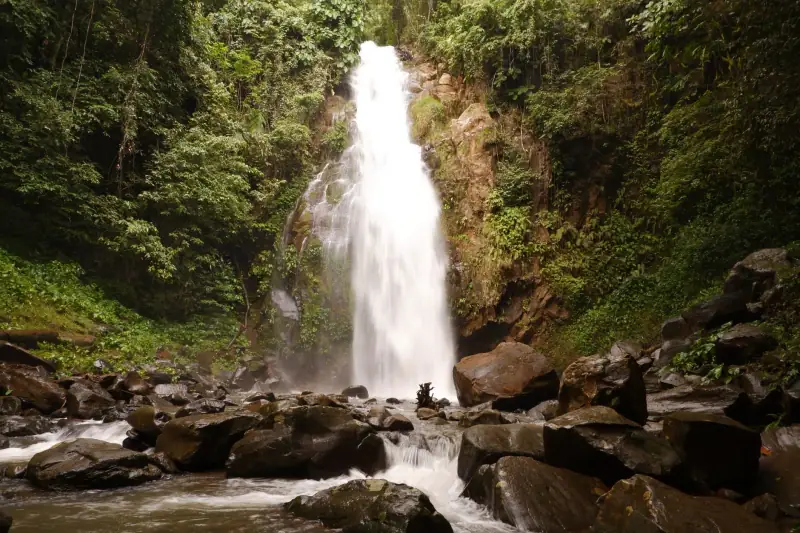
The name tinago means “hidden” in Bisaya, and this waterfall more than lives up to its name. Located in Iligan City, in the Lanao del Norte region of northern Mindanao, Tinago Falls is one of the most spectacular in the whole archipelago: a column of water about 73 meters (240 ft) high that crashes into an emerald pool ringed by cliffs covered in moss and dense rainforest.
The route to get there is remarkable in itself. From the parking lot, you go down more than 500 steps cut into the rock to reach the bottom of the canyon. The atmosphere is cool, humid and almost mystical. Once at the bottom, the green pool is exceptional for swimming. A bamboo raft can take you to the foot of the falls so you can get soaked in the spray.
Practical information
- From Iligan City: tricycle or motorbike rental (about 30 min)
- Entry fee: about 50-100 PHP
- Difficulty: easy descent, but the climb back up the 500 steps takes a minimum of fitness
- Combine with: Iligan is called “the City of Waterfalls,” and the region has several other waterfalls reachable in a day
Car rental in Mindanao
Explore Mindanao's waterfalls and nature at your own pace with a vehicle rented locally.
Cambugahay Falls (Siquijor): the blue pools of the mysterious island
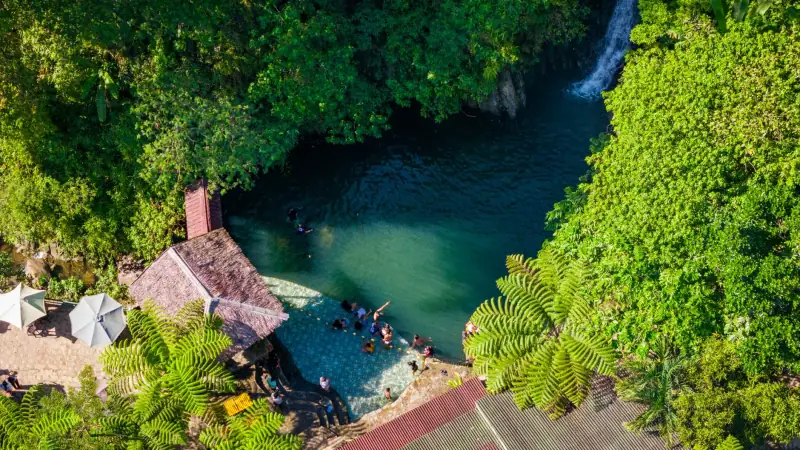
Siquijor island is known throughout the Philippine archipelago for its mysterious atmosphere and its healer traditions (herbolarios). But it is also home to one of the most accessible and pleasant waterfalls in the Visayas: Cambugahay Falls.
Unlike single-wall waterfalls, Cambugahay comes as several levels of successive pools, linked by natural slides and short trails. The clear blue-green water is cool without being cold. Vines hang from the trees above the upper pool, and travelers use them as swings to jump in.
The accessible nature of Cambugahay makes it an ideal destination for families or travelers who do not want to commit to long hikes. You can rent inner tubes there, and small stalls sell water and snacks at the entrance.
Practical information
- From Lazi or San Juan (Siquijor): habal-habal (motorcycle taxi) or rented scooter
- Entry fee: about 20-50 PHP
- Ideal for: families, swimming, a relaxed vibe
- Combine with: a scooter ride around Siquijor island
Aliwagwag Falls (Cateel, Davao Oriental): the series of 84 falls
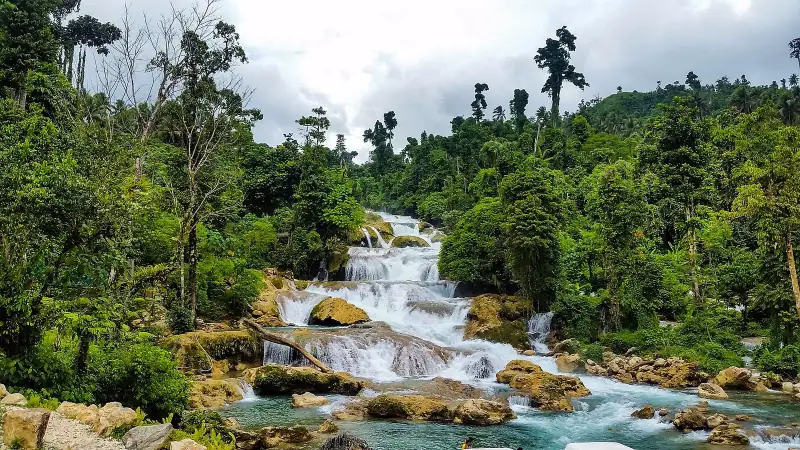
Aliwagwag Falls, in Davao Oriental province in southeast Mindanao, is often presented as one of the largest cascading waterfall series in Southeast Asia. It officially comprises 84 successive tiers of falls along a deep river, in an almost intact forest environment.
The discovery of Aliwagwag is still recent by Philippine tourism standards, which gives it a rare authenticity and tranquility. The main path follows the river and lets you see several successive tiers without much difficulty. For more experienced hikers, trails lead up to the upper levels.
What to know
- Access from Davao City takes about 6 to 7 hours by road
- The road to Cateel is long but crosses fascinating rural landscapes
- A local guide is strongly recommended to explore the upper levels
- Best time: the region’s dry season (March to May) offers the best conditions
Tamaraw Falls (Puerto Galera, Mindoro): the roadside waterfall
More accessible than many of its competitors, Tamaraw Falls is visible from the main road between Puerto Galera and Calapan, on Mindoro island. This waterfall of about 128 meters (420 ft), named after Mindoro’s endemic dwarf buffalo (the tamaraw), falls into a rocky pool surrounded by dense vegetation.
The view from the road is already impressive, but the bravest go down to the pool for an invigorating swim. A small steep path leads to the foot of the falls in 10-15 minutes. The cool water contrasts pleasantly with Mindoro’s humid heat.
Tamaraw Falls fits perfectly into a day of exploring from Puerto Galera, with a lunch stop at one of the restaurants on the main road.
Places to stay in Puerto Galera
Stay in Puerto Galera to explore Tamaraw Falls and Mindoro's beaches at ease.
Batlag Waterfalls (Tanay, Rizal): the nature escape from Manila
For travelers based in Manila who want a nature outing without spending several hours on the road, Batlag Falls in Rizal province is an excellent option. About 60-70 km (37-43 mi) from the capital, the Tanay waterfall park has several levels reachable in a half day.
The main trail from the park entrance (about 2-3 km / 1.2-1.9 mi each way) crosses secondary forest before reaching the first falls. Ropes and wooden steps help at some slippery stretches. The main pool, set in a rocky gorge, allows a soothing swim far from Metro Manila’s traffic jams.
Practical information
- From Manila: bus or jeepney to Tanay, then tricycle to the trailhead (about 2 h in total)
- Entry fee: about 50-100 PHP
- Duration: a half day is enough, a full day if you want to explore several levels
- Note: on weekends the site is busy with Manila residents; prefer weekdays for more peace
Mag-aso Falls (Bohol): Bohol’s green surprise
Bohol is mostly known for its Chocolate Hills and tarsiers, but the island also has lovely lesser-known waterfalls. Mag-aso Falls, in the municipality of Antequera, offers a green setting typical of the inland Visayas.
The name mag-aso means “smoky” in Bisaya, a reference to the spray that rises at the foot of the falls and creates a light permanent mist. A short trail from the parking lot leads to the swimming pools, surrounded by palms and banana trees.
Tip: combine Mag-aso Falls with a day exploring inland Bohol, including the Chocolate Hills, the tarsier sanctuary and the Loboc River cruise. Boat trips also let you see other natural sides of Bohol.
Nature tours in Bohol
Combine waterfalls, Chocolate Hills and tarsiers on a guided circuit from Tagbilaran.
When to visit the waterfalls of the Philippines
Dry season (December to May)
The dry season is the ideal time to explore Philippine waterfalls. The water is clearer (fewer particles suspended by rain), trails are less slippery, and roads are passable without risk. It is also the high tourist season: Kawasan Falls and Pagsanjan can be very busy in January-March.
Rainy season (June to November)
Waterfalls are spectacular during the monsoon, as the flow multiplies tenfold and the falls become immense. But safety is lower: slippery trails, sudden floods, silt-laden water that makes swimming less pleasant. Some sites close temporarily after heavy rain. If you visit in the rainy season, ask locally before heading out.
Our recommendation
December to March is the best compromise: dry season, good light for photos, and temperatures that remain acceptable (27-30 °C / 81-86 °F). Avoid Holy Week (Easter) weekends, when Kawasan Falls and Pagsanjan are overrun by local visitors.
Recommended gear for waterfalls
A few simple purchases or precautions make visiting waterfalls much more pleasant:
Must bring
- Water sandals or light trail shoes: flat flip-flops slip dangerously on wet rocks
- Dry bag: to protect your phone, camera and papers
- Biodegradable mineral sunscreen: required at many protected natural sites
- Mosquito repellent: humid forest areas are mosquito playgrounds
- Bottled water: hiking trails do not always have drinking water points
Optional but handy
- Spare clothes and a microfiber towel
- Energy snacks for long walks
- Headlamp for caves and covered passages
Planning your waterfall circuit in the Philippines
Waterfalls fit easily into a broader itinerary. Cebu lets you combine Kawasan Falls with diving at Tubbataha or around the island, while Siquijor island is reached by ferry from Cebu or Dumaguete. For a full crossing of the Visayas, you can link Cebu, Siquijor and Bohol in two weeks.
See also our guide to Cebu to plan your logistics from the Visayas’ capital, which is an excellent base for branching out to the region’s waterfalls.
The waterfalls of the Philippines are one of the great surprises of a country often reduced to its beaches. From the tourist polish of Kawasan Falls to the wild vastness of Aliwagwag or the quiet pools of Cambugahay, each destination offers a different experience. Respect the sites, follow local safety instructions, and be ready to be surprised by the natural wealth of this archipelago.
Frequently asked questions
What is the most beautiful waterfall in the Philippines?
Kawasan Falls in Cebu is often cited as the most beautiful, with its vivid turquoise pools set in the jungle. Tinago Falls in Iligan is the most dramatic (73 m / 240 ft high, reached by 500 steps). Cambugahay Falls on Siquijor island is the most soothing, with a series of pools you can walk between.
What is the best season to visit waterfalls in the Philippines?
The dry season (December to May) guarantees the best conditions: clearer water, less muddy paths, safer access. Kawasan Falls and Pagsanjan can be visited all year, but monsoon rains (June-November) can make some trails slippery and swell the flow to the point of making swimming dangerous.
Can you swim at every waterfall in the Philippines?
Not always. Kawasan Falls, Cambugahay and Batlag have natural pools that are excellent for swimming. Tinago Falls also has a pool, but access is by a steep staircase. Some waterfalls, especially in the rainy season, can have too strong a current: check with local guides before swimming.
Do you have to pay an entrance fee for the waterfalls?
Yes, most Philippine waterfalls charge a small entrance fee (20 to 200 PHP, or €0.30 to 3.20 / about $0.35-3.70). Extra fees sometimes apply for parking, the mandatory guide (Pagsanjan) or life jacket rental. Always carry small bills.
Are the Philippine waterfalls reachable by public transport?
Most can be reached by jeepney or tricycle from the nearest town. Kawasan Falls can be reached from Cebu City by bus (3-4 hours) then tricycle. Pagsanjan is 2-3 hours from Manila by bus or car. For more remote falls like Tinago, it is simpler to take a guide and a private vehicle.
What gear should you bring to visit waterfalls?
Water sandals or waterproof hiking shoes, shorts or a swimsuit, biodegradable sunscreen, mosquito repellent, a dry bag for your electronics, and bottled water. For Pagsanjan, the tour includes a raincoat. Avoid flat flip-flops, which slip on wet rocks.
More Philippines guides
Keep reading
Diving in the Philippines: the best dive sites and wrecks
Guide to diving in the Philippines: best dive sites, wrecks, marine life, seasons and tips for divers of all levels.
Island hopping in the Philippines: a complete guide to planning your tour
Island hopping in the Philippines: El Nido, Coron, Cebu, Bohol. Prices, tours and tips for choosing the best boat excursions.

Where to stay in Cebu: the best lodging by area
Where to stay in Cebu City and nearby? Hotels and resorts for every budget, from downtown to the beaches of the south coast.
Ready-made
Philippines itineraries
10 days
The Philippines in 10 days with kids: stops, pace and travel times
Cebu (Mactan)Bohol (Panglao)Boracay
12 days
The Philippines in 12 days without a scooter or car: a realistic itinerary
ManilaEl NidoCoronManila
10 days
Cebu, Bohol and Siargao: 10 Days in the Visayas
Cebu CityPanglaoGeneral Luna