Itineraries
2-Week Philippines Itinerary: The Complete Route
We may earn a commission when you book through links on this page, at no extra cost to you. We don't visit or try the places we cover: we summarize published sources. How we work
Day by day
- Day 1Arrival in Manila, Intramuros and Fort Santiago
- Day 2BGC, Binondo, Manila Bay sunset
- Day 3Flight to Puerto Princesa, Underground River
- Day 4Van from Puerto Princesa to El Nido
- Day 5El Nido island hopping, Tour A
- Day 6El Nido island hopping, Tour C
- Day 7Rest in El Nido, flight to Cebu
- Day 8Cebu City: Basilica, Magellan's Cross, Carbon Market
- Day 9Oslob whale sharks, Moalboal sardines
- Day 10Kawasan Falls or rest
- Day 11Ferry to Tagbilaran, Chocolate Hills, tarsiers, Loboc River
- Day 12Panglao, Alona Beach, diving or snorkeling
- Day 13Flight to Siargao, Cloud 9, General Luna
- Day 14Island hopping, flight home
Where to sleep
- Manila2 nights
- Puerto Princesa1 night
- El Nido3 nights
- Cebu City2 nights
- Southern Cebu1 night
- Cebu1 night
- Bohol (Panglao)2 nights
- Siargao1 night
In short
- The 14-day route links Manila, Puerto Princesa and El Nido, Cebu, Bohol and Siargao, with about 1,600 km (1,000 mi) of flying between the main stops.
- Domestic flights cost about €80-200 (about $93-230) in total, depending on the season and how early you book.
- The dry season, November to May, is ideal; avoid June to October (typhoon season), especially for Palawan and the Visayas.
- Book domestic flights 2 to 3 months ahead in high season and keep at least 4 hours of margin after a ferry.
Two weeks in the Philippines is just enough to scratch the surface of this archipelago of 7,000 islands. From the urban jungle of Manila to the postcard lagoons of El Nido, by way of the surf spots of Siargao and the Chocolate Hills of Bohol, this 14-day itinerary takes you to the Philippines’ highlights while optimizing transport and maximizing time to explore.
The itinerary at a glance
This classic itinerary covers five main stops:
- Manila (days 1-2): capital and entry point
- Palawan (days 3-7): Puerto Princesa, El Nido and its lagoons
- Cebu (days 8-10): diving, whale sharks, the south coast
- Bohol (days 11-12): Chocolate Hills and nature
- Siargao (days 13-14): surfing and desert islands
Total distance by air: about 1,600 km (1,000 mi) between the main stops. Cost of domestic flights: between €80 and 200 (about $93-230) depending on the season and when you book.
Days 1-2: Manila, the gateway to the archipelago
Most international flights land at Manila’s Ninoy Aquino International Airport (NAIA). Use these first two days to acclimate and explore the Philippine capital.
Day 1: Intramuros and the historic city
Start with Intramuros, the 16th-century Spanish walled city. The ramparts, the cobbled lanes and Manila Cathedral (Minor Basilica of the Immaculate Conception) carry you into another century. Fort Santiago, a military fortress and memorial to José Rizal (the Philippine national hero), deserves a thorough visit. Allow 2 to 3 hours.
In the afternoon, take a horse-drawn carriage (kalesa) through the lanes of Intramuros or head to Rizal Park (Luneta Park), the big public park on Manila Bay.
Day 2: BGC, Chinatown and sunset over the bay
Bonifacio Global City (BGC) is Manila’s modern district, with glass towers, international restaurants and contemporary art galleries. Less than 3 km (2 mi) away, Binondo is the oldest Chinatown in the world, teeming with bakeries, dim sum restaurants and exotic grocery stores.
At the end of the day, head to the Manila Bay promenade for one of the best sunsets in the city.
Where to stay in Manila
Hotels in every price range in Makati, BGC or Ermita. Book early in high season.
Transport Manila → El Nido: flight from Manila to El Nido Airport (Lio Airport), about 1 hour 15 minutes to 1 hour 30 minutes with Airswift (a specialist airline, being integrated into Cebgo in 2026: check the NAIA terminal on your ticket). Or Manila → Puerto Princesa, then a van/minibus to El Nido (5-6 hours). Book Airswift well in advance, as the airline is often full in high season.
Days 3-5: Puerto Princesa and the Underground River
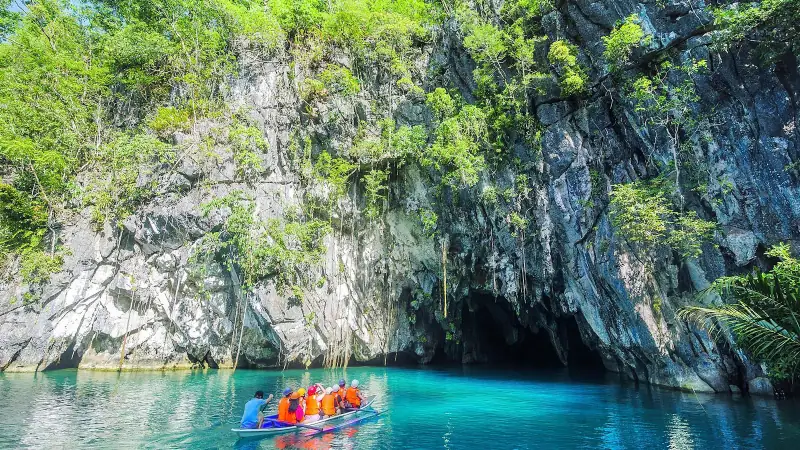
Day 3: Puerto Princesa and the Underground River
Puerto Princesa is the capital of Palawan and the natural gateway if you choose the overland route to El Nido. The city itself is not a major tourist destination, but the Puerto Princesa Underground River (Puerto Princesa Subterranean River National Park) is a UNESCO World Heritage Site and one of the New 7 Wonders of Nature.
The section open to tourists extends for about 4.3 km (2.7 mi) of karst caves (8.2 km / 5.1 mi of total underground length, not fully accessible) with spectacular stalactite and stalagmite formations. Access is by boat from Sabang (about 1 hour 30 minutes from Puerto Princesa). Reserve your permit in advance, as entry is limited to protect the site.
Days 4-5: Road to El Nido
The Puerto Princesa → El Nido trip by shared van or minibus takes about 5 to 6 hours on a largely paved road along Palawan’s west coast. Photo stops are included in some organized minibuses. Private vans can be booked for more comfort.
If you take the direct Manila → El Nido flight with Airswift, you skip this trip and arrive in the middle of the day. In that case, go straight to days 4-5 in El Nido.
Days 5-7: El Nido, the lagoons of Palawan
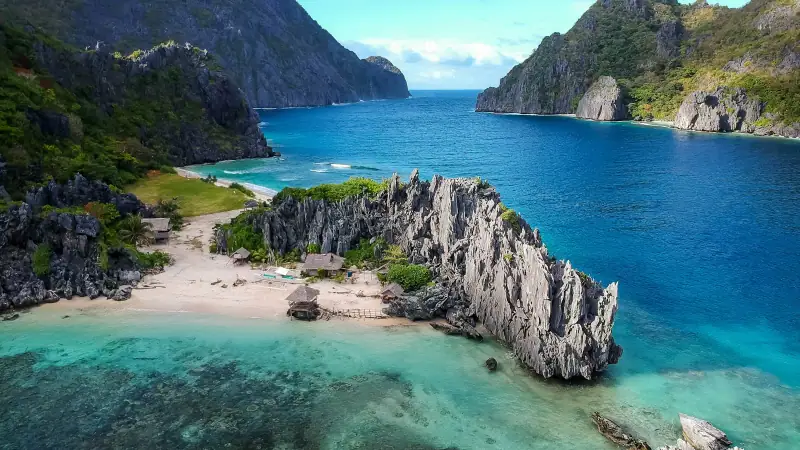
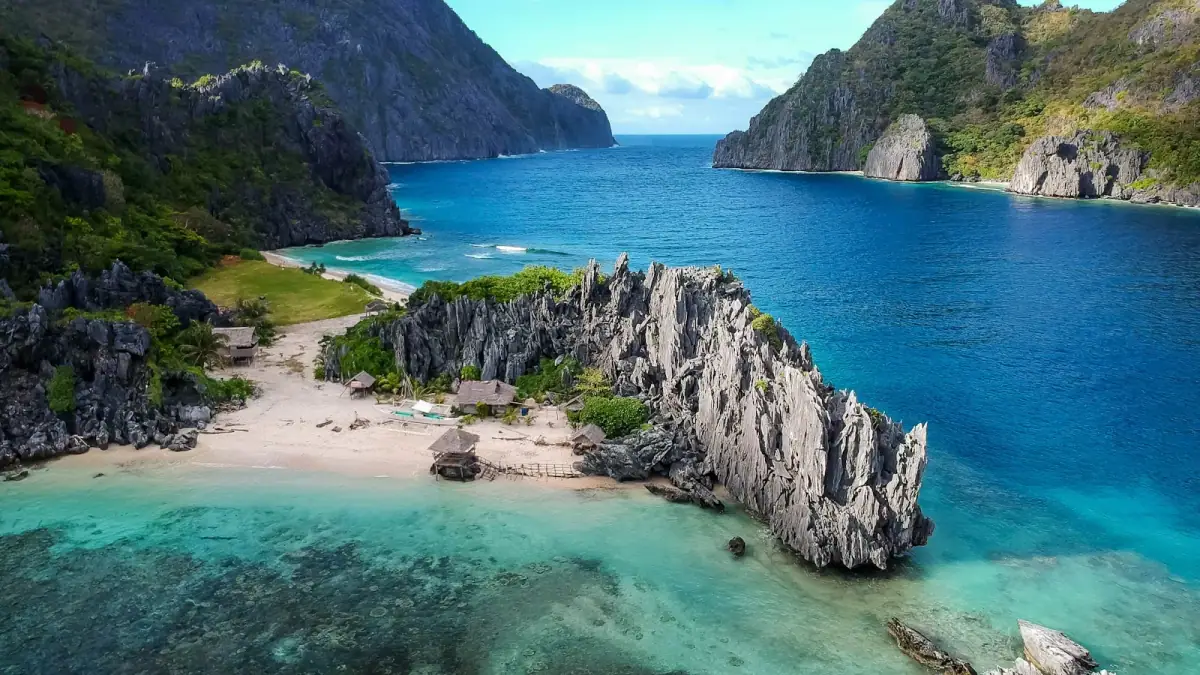
El Nido is the world capital of hidden lagoons. Bacuit Bay brings together more than 40 limestone islands and islets with unreal turquoise water, secret lagoons reachable only by swimming under rock arches, and white sand beaches.
Organized island hopping: tours A, B, C, D
Excursions by banca (the Philippine outrigger canoe) are organized into four standardized tours, each covering a different set of islands and lagoons:
- Tour A: Big Lagoon, Small Lagoon, Cathedral Cave, Shimizu Island, Secret Lagoon. The most popular, to do first
- Tour B: Entalula Island, Pinagbuyutan Island, Cudugnon Cave, Snake Island. Panoramic views from the Snake Island promontory
- Tour C: Helicopter Island (Dilumacad), Matinloc Shrine, Hidden Beach, Secret Beach. Ideal for snorkeling
- Tour D: Cadlao Island, Bukal Beach, Paradise Beach. The quietest, with few people
Plan at least two tours to see the variety of landscapes. Tours usually leave at 8 am from El Nido’s main beach and return around 5-6 pm. Price: between €15 and 25 (about $17-29) per person depending on the tour and the agency.
Activities in El Nido
Island hopping, kayaking, diving: book your excursions online.
Sunset at Las Cabanas Beach
Las Cabanas Beach, south of El Nido Town (about 10-15 minutes by tricycle from the center), is the best spot to watch the sunset over the bay. The zip line that drops toward the sea in late afternoon is a popular attraction with visitors.
Transport El Nido → Cebu
There is no direct flight from El Nido to Cebu. Several options:
- El Nido (Airswift) → Manila (NAIA) + connection → Cebu. Allow half a day of transit.
- El Nido → Puerto Princesa by van (5-6 hours) + flight Puerto Princesa → Cebu (~1 hour). The second option is often cheaper but longer. Plan a whole day for this transition.
Days 8-10: Cebu, diving and whale sharks
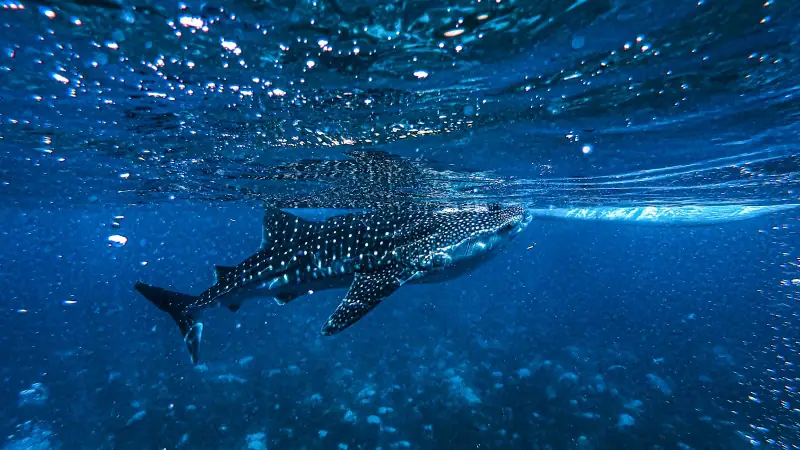
Cebu is the most developed island in the Visayas and a major transport hub. Between city life in Cebu City and spectacular nature in the south, the island surprises with its diversity.
Day 8: Cebu City, Magellan’s Cross and the Basilica
The Basilica Minore del Santo Niño de Cebu houses the oldest Christian relic in the Philippines: the Santo Niño statuette given by Magellan to local chiefs in 1521. Magellan’s Cross, symbolically planted during the baptism of the first Christianized Filipinos, stands right next to it in a small pavilion. These two sites bear witness to the first contact between Europe and the Philippines.
The Carbon Public Market, a few hundred meters away, is the largest public market in the Visayas: tropical fruit, fish, spices, and an authentically Filipino atmosphere far from the tourist circuits.
Day 9: Oslob (whale sharks) and Moalboal (sardines)
Cebu’s south coast holds two unforgettable marine experiences. At Oslob (about 3 hours from Cebu City), whale sharks (Rhincodon typus, the largest fish in the world) visit the coastal waters all year. Viewing is done from traditional boats within 15 m (50 ft) of the animals. Note: this practice is the subject of ethical debate because the sharks are attracted by food. If you prefer a more ethical, seasonal alternative, the town of Donsol (Luzon) offers a similar experience without artificial feeding, from November to June.
At Moalboal (about 3 to 4 hours from Cebu City), the famous sardines form schools of several million just 10 m (33 ft) deep off Panagsama Beach, a natural spectacle accessible by snorkeling or free diving. Sea turtles swim peacefully on the Moalboal reefs, indifferent to swimmers.
Day 10: Relaxing or an excursion
A recovery day or an extra excursion depending on your energy. Cebu City has plenty of malls, spas and restaurants for a rest day. Kawasan Falls (30 minutes from Moalboal) are worth the detour for canyoning in turquoise water.
Car rental in Cebu
Explore Cebu's south coast at your own pace with a rental vehicle.
Transport Cebu → Bohol
The fast ferry (fastcraft) links Cebu City (Pier 1 terminal) to Tagbilaran (Bohol) in about 2 hours. Frequent departures from 6 am. Price: €12-20 (about $14-23) per person depending on class. Book online or buy the ticket at the terminal the day before.
Days 11-12: Bohol, unspoiled nature
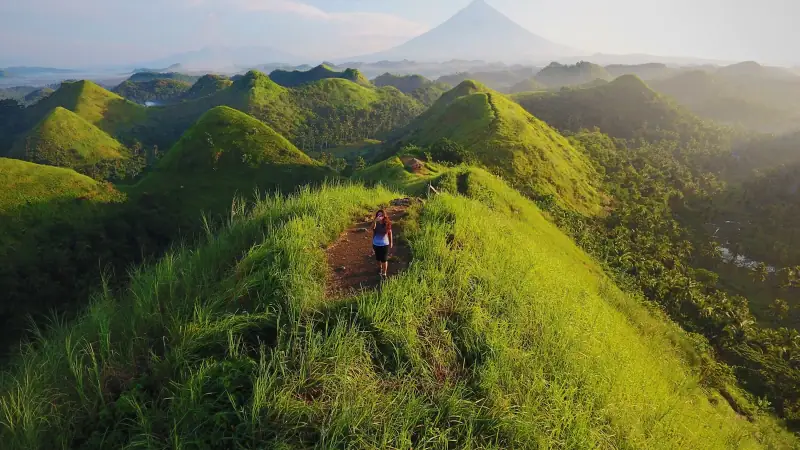
Bohol is one of the most photogenic natural destinations in the Philippines, with its perfectly round hills, its big-eyed primates and its rivers lined with centuries-old mangroves.
Day 11: Chocolate Hills, tarsiers and Loboc River
The Chocolate Hills are 1,268 conical hills about 40 m (130 ft) high, covered in grass that turns brown in the dry season (hence the name). From the main viewpoint in Carmen (about 55 km / 34 mi from Tagbilaran), the view over this sea of hills is striking. The site is classified as a National Geological Monument of the Philippines.
Tarsiers (Carlito syrichta) are nocturnal primates native to a few Philippine islands (including Bohol), with eyes disproportionately large for their tiny bodies (12 cm / 5 in). The Bohol Tarsier Sanctuary in Corella (about 14 km / 9 mi from Tagbilaran) shelters wild tarsiers in a semi-natural environment. Choose this sanctuary over photos with tarsiers in full sunlight (a stressful practice for the animal) or in cages.
The Loboc River Cruise (a river cruise with a Filipino buffet on board) sails under the mangroves and tropical forest of the Loboc River. A relaxed way to discover the interior of Bohol. Duration: about 1 hour 30 minutes.
Day 12: Panglao and diving or snorkeling
The island of Panglao, linked to Bohol by two bridges, has the island’s best beaches, notably Alona Beach, a ribbon of white sand lined with coconut palms and seaside restaurants. The coral reefs around Panglao are known for their rich marine biodiversity.
It is also the base for dive clubs exploring the surrounding spots, notably Balicasag Island (20 minutes by boat), a marine reserve with exceptionally clear water.
Transport Bohol → Siargao
Tagbilaran → Siargao: the direct connection is limited. Main options:
- Ferry or flight Tagbilaran → Cebu + flight Cebu → Siargao (about 50 minutes).
- The Cebu → Siargao flight is operated by Cebu Pacific and Philippine Airlines. Allow half a day of transit in Cebu.
Days 13-14: Siargao, the surfers’ island
Siargao is the surf destination of the Philippines and one of the most beautiful islands in the archipelago, with its natural pools, lagoons and bohemian atmosphere.
Day 13: Cloud 9 and General Luna
Cloud 9 is the most famous surf spot in the Philippines. This hollow right-hand wave breaks over a coral reef about 1 to 2 meters (3-7 ft) deep at low tide, producing consistent barrels sought after by surfers from around the world. The spot hosts the Siargao International Surfing Cup every year (usually in September). Even if you don’t surf, the Cloud 9 viewing pier is an excellent vantage point over the waves.
General Luna is the main village around which most of Siargao’s hotels, restaurants and bars gravitate. The atmosphere is relaxed, and time passes differently than in Manila or Cebu.
Day 14: Island hopping around Siargao and return
Island hopping around Siargao usually covers three neighboring islands: Guyam (a tiny island with a handful of coconut palms and a white sand beach), Daku (the largest, with a long beach and centuries-old coconut palms) and Naked Island (a submersible sandbar, completely bare, barely above the water level). This banca tour takes about 4 to 5 hours and is one of the most picturesque experiences in Siargao.
The Magpupungko natural pools (about 35 km / 22 mi from General Luna) are natural basins carved into the coral reef, accessible only at low tide. The water is clear, warm and shallow, ideal for swimming and snorkeling as a family.
Return flight from Siargao
Siargao → Cebu → Manila for your international return flight.
Transport Siargao → Manila (return)
Siargao → Manila: flight via Cebu (1 hour + 1 hour) or a direct flight depending on availability. Plan to land in Manila at least 3 hours before your international flight. If your night flight leaves from NAIA Terminal 1, 2 or 3, arrive early, as security lines can be long.
Detailed budget for 2 weeks
| Item | Tight budget | Average budget | Comfort budget |
|---|---|---|---|
| Domestic flights (4-5 flights) | €80-150 (~$93-175) | €150-250 (~$175-290) | €250-400 (~$290-465) |
| Lodging (14 nights) | €200-400 (~$232-465) | €400-700 (~$465-810) | €700-1,500 (~$810-1,740) |
| Meals (3 meals/day) | €150-250 (~$174-290) | €250-400 (~$290-465) | €400-600 (~$465-695) |
| Activities and tours | €150-250 (~$174-290) | €250-400 (~$290-465) | €400-600 (~$465-695) |
| Local transport | €50-100 (~$58-115) | €100-150 (~$115-175) | €150-250 (~$175-290) |
| Estimated total (excl. international flights) | €630-1,150 (~$730-1,335) | €1,150-1,900 (~$1,335-2,205) | €1,900-3,350 (~$2,205-3,885) |
Summary table of the itinerary
| Day | Stop | Night |
|---|---|---|
| 1 | Arrive Manila, Intramuros | Manila |
| 2 | BGC, Binondo, sunset | Manila |
| 3 | Flight → Puerto Princesa, Underground River | Puerto Princesa |
| 4 | Van Puerto Princesa → El Nido | El Nido |
| 5 | Island hopping Tour A | El Nido |
| 6 | Island hopping Tour C | El Nido |
| 7 | Relax in El Nido, flight → Cebu | Cebu City |
| 8 | Cebu City: Basilica, Carbon Market | Cebu City |
| 9 | Oslob (whale sharks), Moalboal (sardines) | Southern Cebu |
| 10 | Kawasan Falls or relaxing | Cebu |
| 11 | Ferry → Tagbilaran, Chocolate Hills, tarsiers | Bohol / Panglao |
| 12 | Panglao, Alona Beach, diving | Bohol / Panglao |
| 13 | Flight → Siargao, Cloud 9, General Luna | Siargao |
| 14 | Island hopping Guyam/Daku/Naked Island, return flight | (in transit) |
Practical tips for this itinerary
Book domestic flights in advance. In high season (December to March), flights to El Nido (Airswift) and Siargao fill up weeks ahead. Lock in your flights as soon as you have your dates, ideally 2 to 3 months before.
Aim for morning arrivals. At each stop, try to arrive in the morning so you don’t lose half a day of exploring. Domestic flights in the Philippines are often cheaper early in the morning.
Allow some margin. Ferry and flight delays are common in the Philippines. Don’t schedule a domestic flight too tightly after a ferry. Keep at least 4 hours of margin.
Carry cash. Outside the big cities (Manila, Cebu City), ATMs are rare and often empty. El Nido, Siargao and Bohol have ATMs, but withdrawals can be limited. Carry enough Philippine pesos (PHP) for each stop.
Local SIM from the airport. The operators Globe Telecom and Smart Communications have counters at Manila airport. A SIM with a data plan (1-2 GB/day) costs €5-10 (about $6-12) and makes local navigation and communication much easier. You can also check your carrier’s international plan or consider a travel eSIM.
To organize your trip, see also our complete guide to the Philippines and our article on 7 days in the Philippines if your stay is shorter. You will also find our advice on island hopping in the Philippines to prepare your days at sea.
Sources
- City Government of Puerto Princesa: figures checked November 2026
Frequently asked questions
How long do you need to visit the Philippines?
Two weeks is the minimum to see the big emblematic islands (Palawan, Cebu, Bohol, Siargao). With more than 7,000 islands, the Philippines can fill several months. A 3-week trip lets you explore more calmly and avoid intense travel days.
What is the average budget for 2 weeks in the Philippines?
The article's budget table comes to about €630-1,900 (about $730-2,205) per person for 2 weeks, excluding international flights, which depend on where you fly from. That covers mid-range lodging (€30-60 / $35-70 per night), local meals (€5-15 / $6-17 per meal), domestic transport (flights, van, boat) and the main activities (island hopping, guided tours).
What is the best time of year for this 2-week itinerary?
The dry season from November to May is the ideal time for this itinerary. From December to March, conditions are perfect across all the destinations: calm seas at El Nido and Coron, good visibility for diving in Cebu, and steady swell for surfing in Siargao. Avoid June to October (typhoon season), especially for Palawan and the Visayas.
Do you need a visa for the Philippines?
Entry rules depend on your passport. Check the official Philippine government sources (immigration and eTravel registration) before you book, including passport validity and onward ticket requirements.
How do you get around between islands in the Philippines?
Flying is the fastest and often the cheapest way over long distances. Philippine Airlines, Cebu Pacific and AirAsia Philippines offer domestic flights from €20-40 (about $23-46). For short distances, fast ferries (fastcraft) and banca boats (outrigger canoes) link nearby islands. Book domestic flights well ahead in high season.
Is this itinerary suitable for first-time travelers?
Yes, but the itinerary is fairly intense in terms of transport. It suits independent, organized travelers. The main islands (Manila, Cebu, El Nido, Bohol) have good tourism infrastructure. If it is your first trip to Southeast Asia, allow a few extra days to absorb surprises and enjoy each stop.
More Philippines guides
Keep reading
Diving in the Philippines: the best dive sites and wrecks
Guide to diving in the Philippines: best dive sites, wrecks, marine life, seasons and tips for divers of all levels.

Where to stay in Cebu: the best lodging by area
Where to stay in Cebu City and nearby? Hotels and resorts for every budget, from downtown to the beaches of the south coast.
Sagada without a car: how to get there from Manila, Baguio or Banaue
Reach Sagada by bus or jeepney from Manila, Baguio or Banaue, then see it all on foot: routes, travel times, registration, guides and pitfalls.
Ready-made
Philippines itineraries
10 days
The Philippines in 10 days with kids: stops, pace and travel times
Cebu (Mactan)Bohol (Panglao)Boracay
12 days
The Philippines in 12 days without a scooter or car: a realistic itinerary
ManilaEl NidoCoronManila
10 days
Cebu, Bohol and Siargao: 10 Days in the Visayas
Cebu CityPanglaoGeneral Luna