Where to stay
Where to Stay in Iquitos: Neighborhoods, Hotels and Amazon Eco-Lodges
We may earn a commission when you book through links on this page, at no extra cost to you. We don't visit or try the places we cover: we summarize published sources. How we work
In short
- Iquitos cannot be reached by road: you arrive by plane (about 2 h to 2 h 15 from Lima) or by river boat from Pucallpa or Yurimaguas (2 to 5 days).
- The historic center around the Plaza de Armas is the best base for most travelers; the Malecón offers river views and a few charming hotels.
- In town, expect about €20-80 a night (~$23-93); an eco-lodge in the jungle is €80-300 a night (~$93-350), all inclusive.
- The ideal mix is 1-2 nights in town plus 2-3 nights in an eco-lodge; air conditioning and mosquito nets are the key things to check.
Iquitos is one of the most unusual cities in Peru, and in the whole world. Wrapped in the immensity of the Amazon forest, cradled by the brown waters of the planet’s largest river, it can be reached by neither road nor train. Plane or boat: that is the only way to arrive. This geographic peculiarity gives Iquitos a unique identity, halfway between a frontier town and a gateway to one of the richest ecosystems on the planet.
Choosing where to sleep in Iquitos is not trivial. Between the lively historic center, the Malecón along the Amazon and eco-lodges lost in the jungle several hours away by boat, the options are radically different and suit very distinct traveler profiles. This guide helps you see clearly.
The neighborhoods to stay in Iquitos
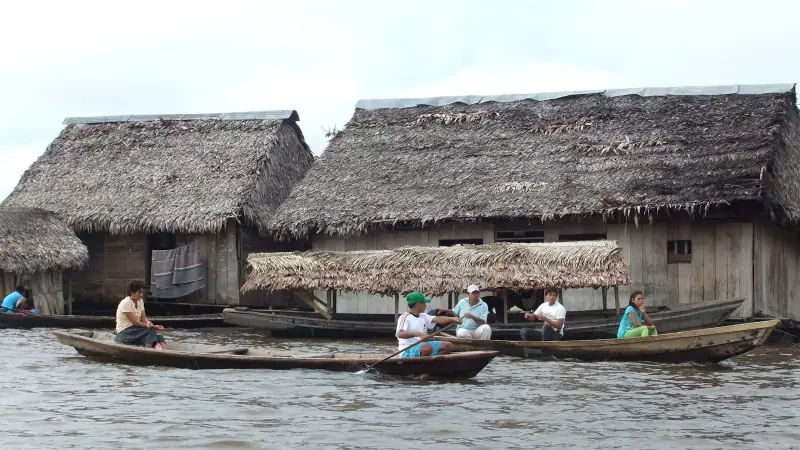
The historic center: the practical, central option
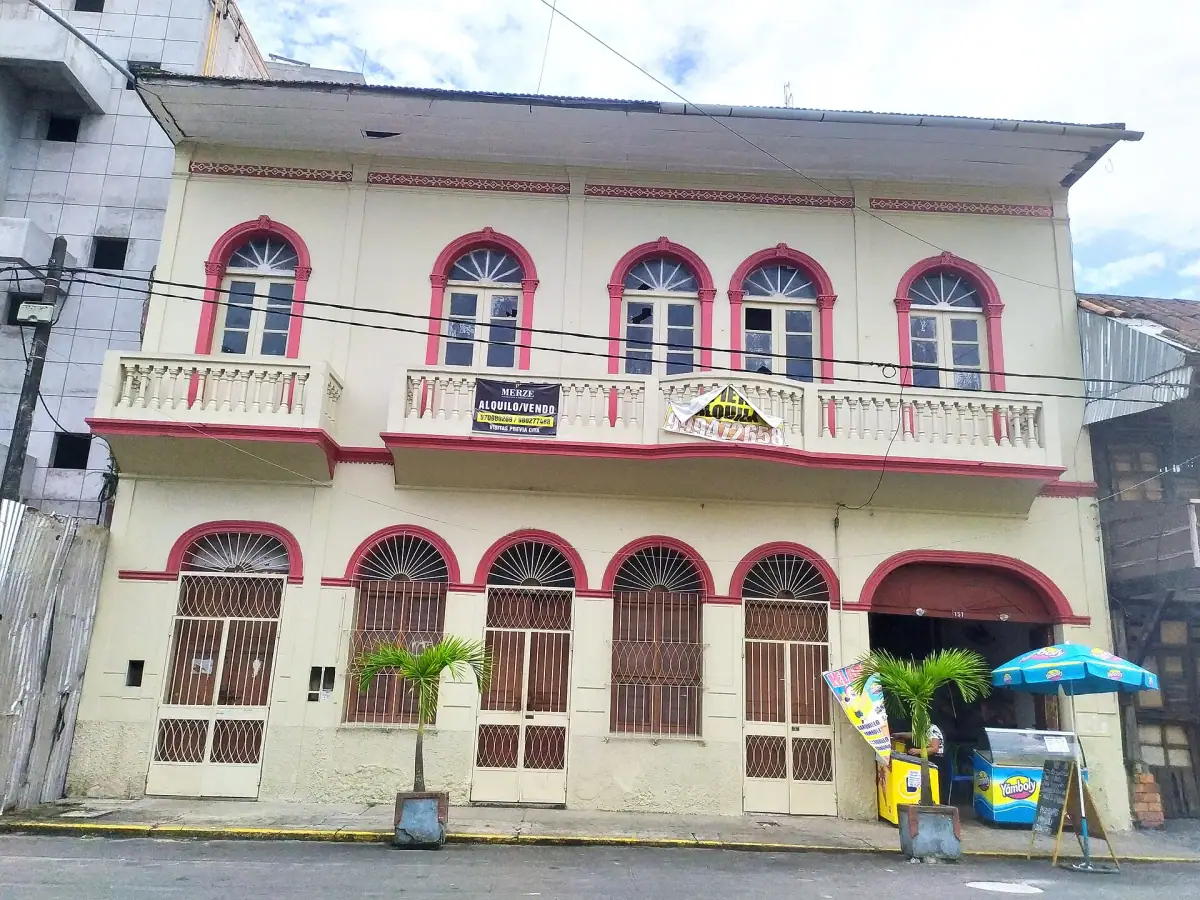
Iquitos’ Plaza de Armas is the beating heart of the city. The streets around it concentrate most of the hotels, restaurants, travel agencies and shops. This is where the famous Casa de Fierro stands, a house built entirely of metal, attributed to Gustave Eiffel’s workshops, and where motocars (three-wheeled mototaxis), exotic fruit juice vendors and travelers from around the world cross paths.
Pros: Everything on foot, many places to stay for every budget, easily accessible excursion agencies, lively nightlife with several bars and terrace restaurants.
Cons: Noisier (motocars are everywhere), less greenery, more intense heat without the river breeze.
The center is the ideal place if you have only one or two nights in Iquitos before heading to an eco-lodge, or if you come mainly for day excursions to the Belén market, the manatee reserve or the pink dolphins.
The Malecón Tarapacá: riverfront and sunsets
The Malecón is the promenade along the banks of the Amazon (actually, here, the confluence of the Nanay, Itaya and Amazon rivers). It is one of the most pleasant places in Iquitos for a walk at the end of the day: sunsets over the river are spectacular, and the breeze off the water brings a welcome hint of coolness.
Several charming hotels and terrace restaurants have set up on and around the Malecón. The atmosphere there is more relaxed than in the middle of the center.
Pros: Superb river views, quieter atmosphere, restaurants with a view, natural breeze.
Cons: Slightly off-center from the agencies and shops of the center (10-15 min on foot or by motocar), fewer hotels.
Hotels in Iquitos
Compare and book the best hotels in Iquitos, center and Malecón.
Belén: the floating market district
Belén is Iquitos’ most iconic and most photographed district. Its houses on stilts or rafts, which rise and fall with the river level through the seasons, form a striking picture. The Belén market is famous for its exotic products: Amazonian fruits you have never seen, medicinal plants, wild animals and traditional remedies.
For sleeping here: Belén is more a place to visit than a tourist accommodation district. Travelers generally do not stay overnight, preferring to discover it on an excursion from the center. If you want a very local immersion, a few small cheap guesthouses exist, but comfort is basic and vigilance is needed at night.
Punchana and San Juan: residential neighborhoods
These neighborhoods on the outskirts of the center house most of Iquitos’ local population. Punchana, to the north, borders the Nanay River and offers a few budget places to stay used mainly by Peruvian travelers. San Juan is closer to the airport. These options lack the liveliness and convenience of the center for a traveler passing through.
Eco-lodges in the Amazon: the unique experience
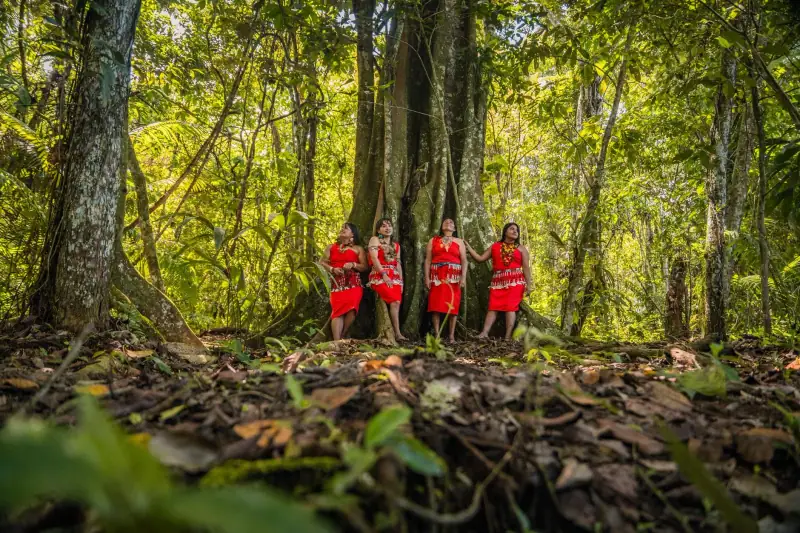
Sleeping in Iquitos without spending at least a few nights in a jungle eco-lodge means missing the very essence of the trip. The Iquitos region is one of the best gateways to Peru’s wild Amazon, with access to little-visited areas where biodiversity is breathtaking.
Eco-lodges are 1 hour to several hours by boat from Iquitos, in the heart of the humid tropical forest. They generally offer all-inclusive packages (accommodation, meals, guided activities).
Amazon excursions from Iquitos
Canoe trips, pink dolphin watching, a night in the jungle...
Eco-lodges 1-2 hours from Iquitos
These lodges are quickly reached by speedboat (lancha). They suit a stay of 2-3 nights perfectly. The environment is already very wild, with wildlife watching (monkeys, parrots, pink dolphins, giant otters), night walks and learning about Amazonian medicinal plants.
Profile: Families, travelers wanting immersion without going too far. Approximate budget: €80-180 per person per night, all inclusive (about $93-210).
Eco-lodges 3-5 hours or more from Iquitos
These lodges, farther from the noise of the city, offer deeper immersion. Some are located on the edges of the Pacaya-Samiria National Reserve, one of the largest nature reserves in Peru. Biodiversity there is exceptional, and traveler groups are smaller.
Profile: Naturalists, adventurers, travelers seeking isolation. Approximate budget: €150-350 per person per night, all inclusive (about $175-405).
What you find in a typical eco-lodge
Most eco-lodges in the Iquitos region offer:
- Accommodation: Wooden bungalows on stilts, well ventilated, with a mosquito net (essential). Some offer air conditioning, others do without it thanks to natural ventilation.
- Meals: Local and international cuisine, often with products from the forest (exotic fruits, Amazonian fish you will find nowhere else, such as arapaima or paiche).
- Included activities: Night canoe trips (to see red-eyed caimans), piranha fishing, pink dolphin watching, guided forest hikes, visits to Indigenous communities, learning about medicinal plants.
- Wi-Fi: Often limited or absent, which is ideal for truly disconnecting.
Types of accommodation in town
3-4 star hotels (mid-range comfort)
Iquitos has several comfortable hotels in and around the historic center. These places offer air conditioning, hot water, a restaurant and often a pool (much appreciated in this tropical heat). Allow between €50 and 120 a night (about $58 to 140).
Hotels with a pool are particularly recommended: Iquitos’ heat (86-97 °F / 30-36 °C by day) is felt from the morning, and a pool makes the stay much more pleasant.
Budget accommodation and hostels
Iquitos has plenty of budget hotels (€20-45 a night, about $23-52) and hostels with dorms (€10-18 / bed, about $12-21). Quality has improved a great deal in recent years with the rise of Amazon tourism. The hostels concentrated around the center are popular with backpackers arriving from Brazil or Colombia by river.
Always check that the air conditioning works: without it, nights in the Amazon can be very uncomfortable.
Boutique and charming hotels
A few charming places have emerged in Iquitos, notably around the Malecón. They rely on decor in local materials (bamboo, Amazonian wood), planted patios and a tropical atmosphere. Perfect for those who want originality without necessarily choosing an eco-lodge.
Flights to Iquitos
Lima–Iquitos in ~1 h 30. Compare fares on Peruvian domestic flights.
Practical tips for choosing your accommodation in Iquitos
Air conditioning: an absolute priority
Iquitos is one of the hottest and most humid cities in Peru. The temperature regularly exceeds 91-95 °F (33-35 °C) by day, and humidity hovers around 85-90%. At night the heat stays high. Air conditioning is not a luxury in Iquitos: it is a necessity for sleeping properly. Always favor places that offer it, and check that it works properly on arrival.
In eco-lodges deep in the jungle, air conditioning is often absent (generator electricity, energy saving, immersion in nature). On the other hand, well-designed bungalows benefit from natural ventilation thanks to their raised position on stilts and the relative coolness of the forest night.
Mosquito nets: essential
All serious hotels provide mosquito nets. If you stay in an eco-lodge, check for them before booking. Also bring your own mosquito repellent (DEET). For health questions before the trip, ask your doctor or a travel clinic, and see the official travel health pages (CDC in the US, TravelHealthPro in the UK).
The ideal length of stay
To enjoy Iquitos without rushing, we recommend:
- 1 night in town: if Iquitos is only a transit point to an eco-lodge
- 2-3 nights in town: to visit the Belén market, the manatee reserve, the Malecón and the historic center
- 2-4 nights in an eco-lodge: the minimum to truly live the Amazon experience (settling in, night wildlife, hiking)
- Ideal total: 5-7 days in Iquitos and the surroundings
Book ahead or when you arrive?
For hotels in town, booking ahead is recommended in high season (July-August, Peruvian national holidays). Outside these periods, it is generally possible to find a hotel when you arrive, although the most popular options may be full.
For eco-lodges, booking ahead is strongly advised, often several weeks ahead for the best-known places. Many eco-lodges work with groups and can host only a limited number of visitors at a time.
What to see and do from your accommodation in Iquitos
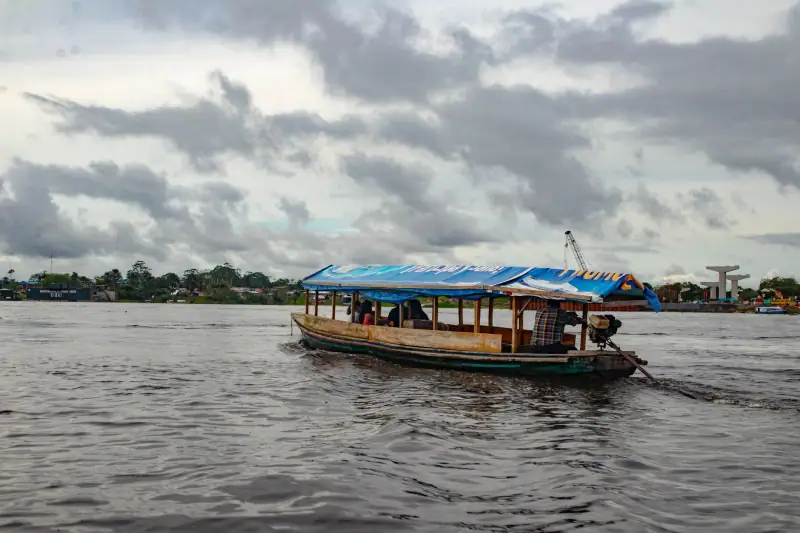
From your hotel or eco-lodge, Iquitos gives access to rare experiences:
In town:
- The Belén market (20-30 min on foot or by motocar from the center): a unique sensory spectacle with its Amazonian products you will not find anywhere else
- The Casa de Fierro, on the Plaza de Armas: attributed to Eiffel’s workshops, it bears witness to the rubber boom period (late 19th century)
- The Malecón Tarapacá: a sunset walk facing the river
- The CIMA (Amazonian Magic Interpretation Center) to understand the cosmology and medicine of Indigenous peoples
Excursions from Iquitos:
- The pink dolphins of the Amazon River (day excursions from the Malecón)
- The Pacaya-Samiria National Reserve, one of the largest flooded forests in the world
- The Yagua Indigenous communities on the river banks
- The Quistococha forest and its lake (about 6 km / 4 mi from the center)
For more information on activities in Iquitos, see our guide Visiting Iquitos and our article on the Peruvian Amazon.
Our recommendation by profile
| Profile | Where to sleep | Indicative budget |
|---|---|---|
| Traveler in a hurry (1-2 nights) | Historic center hotel | €30-80 / night (~$35-93) |
| Family with children | Hotel with a pool, center or Malecón | €60-120 / night (~$70-140) |
| Couple seeking romance | Nearby eco-lodge (1-2 h by boat) | €120-200 / person / night all inclusive (~$140-230) |
| Naturalist/adventurer | Remote eco-lodge (3 h+) | €150-300 / person / night all inclusive (~$175-350) |
| Tight budget | Center hostel + day excursions | €12-25 / night (~$14-29) |
Iquitos is a city you earn. The effort of reaching this city lost in the Amazonian immensity is amply rewarded: an atmosphere like no other, a river that hypnotizes, a jungle where every night reveals a new concert of insects and birds. Whether you choose a comfortable hotel in the city center to leave at dawn to watch pink dolphins, or an isolated eco-lodge in the heart of the forest, Iquitos offers one of the most memorable experiences a traveler can have in South America.
To plan your circuit in Peru including Iquitos, also see our Peru circuit guide and our tips on the Peru budget.
Frequently asked questions
How do you get to Iquitos?
Iquitos is the largest city in the world that cannot be reached by road. You arrive only by plane (from Lima, about 2 h to 2 h 15 of flying) or by river from Pucallpa or Yurimaguas (2 to 5 days by boat). Flying remains by far the most practical option.
Which neighborhood should you choose to stay in Iquitos?
The historic center around the Plaza de Armas is the best choice for the great majority of travelers: hotels, restaurants and travel agencies are concentrated there. The Malecón (riverfront) offers magnificent views of the Amazon and a few charming hotels.
Is it better to sleep in town or in an eco-lodge?
It depends on your budget and expectations. In town (€20-80 a night, about $23-93), you have easy access to restaurants and excursions. A jungle eco-lodge (€80-300 a night, about $93-350, all inclusive) immerses you in the Amazon forest but requires boat transfers. The best option is to combine both: 1-2 nights in town + 2-3 nights in an eco-lodge.
When is the best time to visit Iquitos?
Iquitos is hot and humid all year (79 to 95 °F / 26 to 35 °C). The dry season (May to October) brings less rain and more passable jungle trails. The rainy season (November to April) raises the Amazon's level, giving access to extraordinary flooded forest areas for nature lovers.
Is safety an issue in Iquitos?
The historic center and the Malecón are generally safe by day and in the evening. The Belén district (floating market) calls for caution at night, especially with valuables. As everywhere, the usual precautions apply: avoid displaying valuables, and prefer taxis recommended by your hotel in the evening.
Do eco-lodges include activities?
The great majority of Iquitos eco-lodges offer all-inclusive packages covering accommodation, meals and activities (canoe, wildlife watching, jungle hike, piranha fishing). Check what is included when you book so you can compare offers at their real price.
More Peru guides
Keep reading
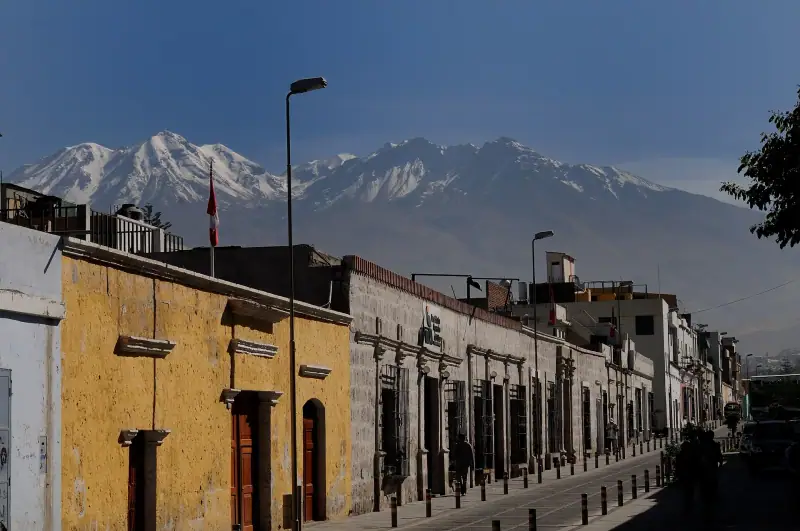
Where to Stay in Arequipa: Best Neighborhoods and Hotels
Where to stay in Arequipa? Centro Histórico, Yanahuara, Cayma: guide to the best neighborhoods and hotels for every budget in Peru's White City.
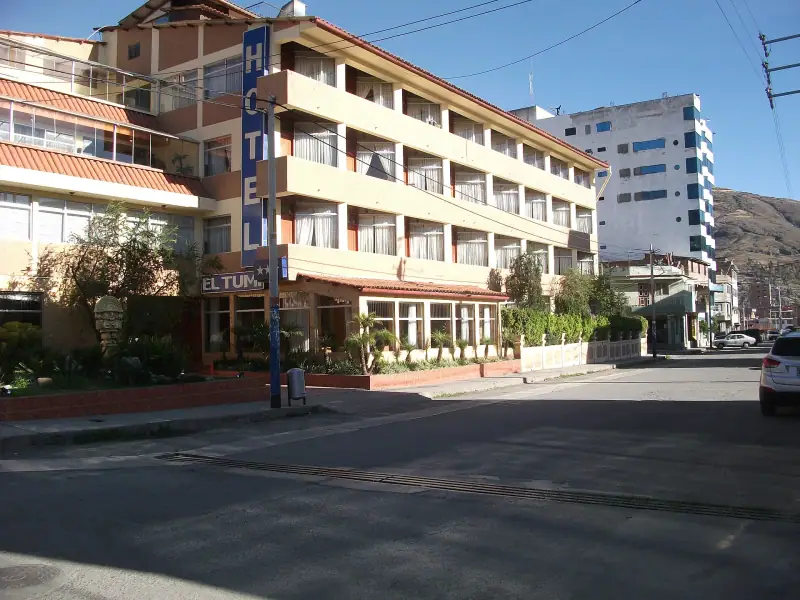
Where to Stay in Huaraz: Best Neighborhoods and Hotels for Trekkers
Where to stay in Huaraz? El Centro, Centenario, Soledad: the best neighborhoods and hotels for every budget at the gateway to the Cordillera Blanca.
Peru Budget 2026: How Much Does a Trip to Peru Cost?
What budget for a trip to Peru? Accommodation, meals, transport, tourist sites: our complete guide with real 2026 figures.
Ready-made
Peru itineraries

7 days
Peru in 7 Days: The Ideal One-Week Itinerary
LimaCuscoAguas CalientesCusco
12 days
Peru Sierra Road Trip: 12 Days from Cusco to Huaraz
12-day Peruvian Sierra road trip: Cusco, Machu Picchu, Lake Titicaca, Arequipa, Colca, Huaraz. Complete itinerary with budget.

4 days
Lima, Paracas, Huacachina and Nazca in 4 Days by Bus: Doable Without a Car?
Lima, Paracas, Huacachina and Nazca in 4 days by bus: stages, km, real travel times, recommended departures and what to sacrifice to keep the pace.