Where to stay
Where to Stay in Huaraz: Best Neighborhoods and Hotels for Trekkers
We may earn a commission when you book through links on this page, at no extra cost to you. We don't visit or try the places we cover: we summarize published sources. How we work
In short
- El Centro, around the Plaza de Armas and Avenida Luzuriaga, is the most practical base for trekkers; Centenario, north of the Quilcay River, is quieter and often cheaper.
- Hostel dorms cost about €8-15 (~$9-17), private hostel rooms €20-40 (~$23-46), 3-star hotels €40-80 (~$46-93) a night.
- Book 2 to 4 weeks ahead in June-August and around Fiestas Patrias in late July; a few days is enough in the off-season.
- Plan 4-5 nights for the classic stay (easy first days plus two day hikes such as Laguna 69 and Pastoruri), 7-10 nights to add the Santa Cruz trek.
Huaraz is one of the most extraordinary destinations in Peru for mountain lovers. Capital of the Ancash region, perched at about 3,052 m (10,013 ft) in the Callejón de Huaylas, it is the essential starting point for exploring the Cordillera Blanca, which holds the highest density of peaks above 6,000 m (19,685 ft) in the tropical Andes, including Huascarán (6,768 m / 22,205 ft), the roof of Peru.
Far less known to hurried tourists than Cusco or Lima, Huaraz offers an authentic experience of legendary treks, breathtaking turquoise lagoons and living Andean culture. But before heading out on the trails, you need to choose where to put down your bags. This guide presents the neighborhoods, types of accommodation and all the practical tips for sleeping in Huaraz according to your budget and wishes.
The neighborhoods to stay in Huaraz
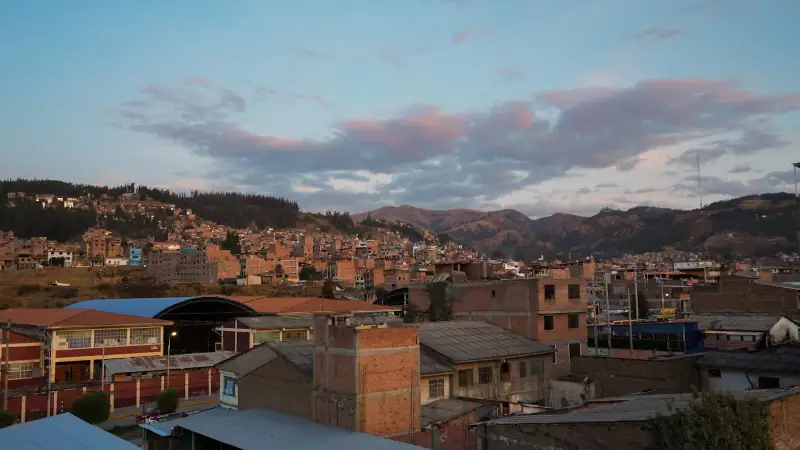
Huaraz is a fairly compact city, largely rebuilt after the 1970 earthquake that practically leveled it. The architecture is therefore functional and modern, without the colonial charm of Arequipa or Cusco, but the appeal is clearly in the landscapes around it, not in the city itself.
El Centro: the ideal base for trekkers
The heart of Huaraz is organized around the Plaza de Armas and Avenida Luzuriaga, the main artery that concentrates restaurants, cafés, trekking agencies and gear rental shops. This is where most of the tourist offer is found: agencies for Laguna 69, the Santa Cruz trek or Huascarán climbs, and rental shops for trekking poles, tents and sleeping bags.
Sleeping in El Centro means optimal logistics: you leave on excursions in the morning from your door, on foot to the meeting point, and come back at the end of the day with no taxi to hail. It is also where trekkers meet to share their experiences, which creates a friendly, cosmopolitan atmosphere.
Pros: Everything on foot, maximum concentration of agencies and services, gentle nightlife (a few craft beer bars), wide variety of accommodation for every budget.
Cons: Can be noisy some evenings in high season, a few poorly lit streets away from the main roads, sometimes chaotic traffic.
Hotels in Huaraz
Compare and book the best hotels of the Cordillera Blanca.
Centenario: the quiet alternative north of the Quilcay
Separated from El Centro by the Quilcay River, the Centenario district is a more residential area, appreciated by travelers looking for a little peace after a long day of trekking. You find family guesthouses there, often cheaper than in El Centro, with owners who know the region well and can advise you on the trails.
Getting to El Centro from Centenario is a 10 to 15-minute walk across the bridge over the Quilcay, or a few minutes by mototaxi (under €1, about $1.15). Most trekking agencies have their offices in El Centro but offer pick-up at the starting point, so it poses no logistical problem.
Pros: Quieter, accommodation often cheaper, local and authentic atmosphere, owners who know the mountains well.
Cons: Slightly off-center from the main agencies and restaurants, fewer options for evening meals.
Soledad and the southern neighborhoods
The Soledad district is a traditional neighborhood in central Huaraz. The Santa River runs along the west of the city, while Soledad has a more commercial, working-class atmosphere, with grocery stores, local markets and some bus terminals nearby. A few budget hotels have set up there, ideal for those who want functional accommodation without particular pretension.
Types of accommodation in Huaraz
Guesthouses and trekker hostels
Huaraz is above all a destination for hikers and mountaineers, and the accommodation offer reflects that identity. Guesthouses and hostels make up the great majority of establishments: relaxed atmosphere, equipped kitchen often available, drying area for wet gear, information boards on treks and weather conditions.
Quality dorms run between €8 and 15 (about $9 to 17) a night. Private hostel rooms range from €20 to 40 (about $23 to 46). These places are generally well kept, with decent Wi-Fi and hot water, no small thing when coming back from a day at 4,000 m (13,123 ft) in the rain.
3-star hotels and boutique hotels
The mid-range is well represented in Huaraz, with 3-star hotels offering double rooms between €40 and 80 (about $46 to 93) a night. These places generally offer a hearty breakfast (essential before a trek), laundry service, and sometimes a view of the Cordillera Blanca from upper-floor rooms.
A few boutique hotels have emerged in recent years to meet a more demanding clientele wanting comfort and a superb view while staying in an authentic Andean setting. Prices remain very reasonable compared with Cusco or Lima for an equivalent level of service.
Treks and excursions from Huaraz
Laguna 69, Santa Cruz trek, Huascarán climb: book your excursions in advance.
Mountain huts
For mountaineers and trekkers who want to sleep in the heart of the Cordillera Blanca, several mountain huts are accessible from Huaraz. These huts, run by the Peruvian Andean Club or private operators, considerably shorten the walking time to the high-altitude zones. Conditions are rustic: dorms, simple meals, thick blankets. Booking ahead is essential in high season, as places are limited.
Tips for choosing your accommodation in Huaraz
Altitude
Arriving in Huaraz (3,052 m / 10,013 ft) directly from Lima (sea level) is a big change in elevation, so take it slow. For anything related to altitude, including a history of heart or breathing problems, ask your doctor or a travel clinic, and see the official travel health pages (CDC in the US, TravelHealthPro in the UK).
The view of the Cordillera Blanca
One of the great pleasures of Huaraz is waking up with the Cordillera Blanca before your eyes. In clear weather, especially in the dry season (May to October), the snow-capped peaks stand out against a royal-blue sky of striking purity. Some hotels and guesthouses offer rooms or a terrace with a direct view of the range.
This view is particularly spectacular at sunrise and sunset, when the summits go from pink to gold to white. If this criterion matters to you, specify it when booking or check the room photos.
Noise
Choose accommodation with windows facing a quiet street, especially if you arrive exhausted from a long bus trip. The streets around Avenida Luzuriaga and the Plaza de Armas can be lively until late evening in high season.
Laundry service
After several days of trekking, laundry becomes a priority. Most hotels and guesthouses offer a laundry service (about €3 to 5 a kilo, about $3.50 to 6 per 2.2 lb). Some hostels have self-service washing machines. If you plan a long stay with several treks back to back, check that your accommodation offers this service.
Getting to Huaraz from Lima
Overnight Lima–Huaraz bus (about 7–8 h) or Lima–Anta flight for bigger budgets.
What to do from your accommodation in Huaraz
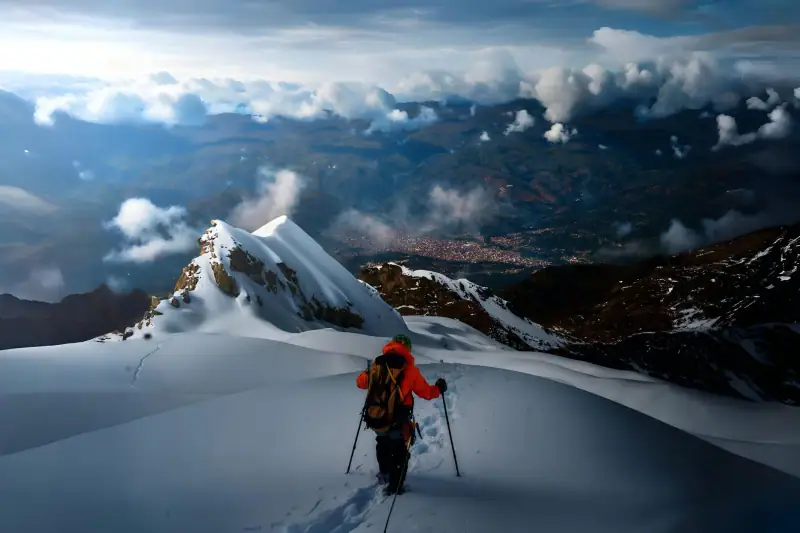
Huaraz is above all a logistics base for exploring the Cordillera Blanca and the Cordillera Negra. From El Centro, you reach all the trekking agencies in a few minutes and can organize your program on arrival.
Day-trip highlights from Huaraz
Laguna 69: The region’s signature hike. The mountain lake with electric-blue water, nestled at about 4,604 m (15,105 ft) beneath Chacraraju, is one of the most beautiful in Peru. Allow a full day (very early start, about 3 to 4 h of walking one way). The difficulty is moderate to high depending on your fitness. Local agencies run this excursion daily in high season.
Laguna Churup: Another emblematic lagoon, more accessible than 69, at about 4,450 m (14,600 ft). The standard starting point is Pitec (also spelled Pitek), reachable by taxi from Huaraz. The climb is more technical than Laguna 69, with a few sections with fixed ropes, but offers a stunning setting facing the Churup glacier. Best done after some easier outings.
Pastoruri: The Pastoruri glacier, at about 5,240 m (17,192 ft), is the easiest excursion for reaching spectacular altitudes without mountaineering experience. Note: the glacier has retreated considerably in recent decades because of climate change. The excursion remains impressive for the high-mountain scenery it crosses.
Multi-day trips from Huaraz
Santa Cruz trek: One of the most beautiful treks in Peru, sometimes ranked among the ten best in the world. Four days of walking through the Cordillera Blanca, among glaciers, lagoons and passes above 4,700 m (15,420 ft). Intermediate to advanced level, with porters and muleteers available through local agencies.
Alpamayo trek: For experienced trekkers, the Alpamayo circuit (often nicknamed “the most beautiful mountain in the world”) is an 8 to 12-day adventure in very little-visited areas of the Cordillera Blanca. It requires good physical condition.
Huaraz → Chavín de Huántar: About 3 hours by bus from Huaraz, the Chavín de Huántar archaeological site is one of the most important pre-Hispanic complexes in Peru, predating the Inca Empire. The carved underground galleries and clavate heads are a valuable cultural complement to the treks.
How many nights to spend in Huaraz
The ideal duration depends on your mountain ambitions:
- 2 nights (short stop): Enough for easy first days + one day excursion (Laguna 69 or Churup). Does not let you really appreciate the region.
- 4-5 nights: The classic formula: 1-2 easy days + 2 day excursions (Laguna 69 + Pastoruri or Churup). Ideal for a first stay in the Cordillera Blanca.
- 7-10 nights: For those who want to include the Santa Cruz trek (4 days) + a few day excursions. The formula for trekkers who make Huaraz their main base for the Cordillera Blanca.
- 2 weeks and more: For mountaineers or trekkers who chain several multi-day trips, or who want to attempt a peak above 5,000 m (16,404 ft) with a guide.
Good to know: From Lima, Huaraz is reachable by overnight bus (about 7 to 8 hours depending on the companies and road conditions). The night trip is very popular because it saves a hotel night and lets you arrive in the morning. Several reliable companies such as Cruz del Sur, Movil Tours or Oltursa run this link daily. There is no train. Anta airfield, a few kilometers from Huaraz, has had regular LATAM commercial flights (Lima–Huaraz) since July 2024; the company announced two daily flights from July 2026 (check schedules with LATAM).
Car rental in Huaraz
Explore the Callejón de Huaylas at your own pace: Andean villages, lagoons and lakes.
Huaraz is one of those destinations that always surprise travelers discovering it for the first time. Less publicized than Machu Picchu or Lima, it nonetheless offers some of the most striking landscapes in South America and a mature trekking infrastructure, with serious agencies and accommodation for every budget. Whatever your program in the Cordillera Blanca, you will find accommodation to suit you in Huaraz, and probably the conviction that you will have to come back to go even further into the Andes.
Frequently asked questions
What is the best neighborhood to stay in Huaraz?
El Centro, around the Plaza de Armas, is the most practical option: all the trekking agencies, restaurants and transport are on foot. If you want more quiet, Centenario (to the north) offers a residential atmosphere with family guesthouses.
Is altitude a problem in Huaraz?
Huaraz is at about 3,052 m (10,013 ft). Take it slow. For anything related to altitude, ask your doctor or a travel clinic, and see the official travel health pages (CDC in the US, TravelHealthPro in the UK).
Do you need to book a hotel in Huaraz far in advance?
In high season (June-August), quality guesthouses and hotels fill up quickly, especially on weekends and around Fiestas Patrias (late July). Book 2 to 4 weeks ahead for this period. Outside the dry season, a few days is enough.
Are there places to stay near the bus station?
The main bus companies (Cruz del Sur, Movil Tours, Oltursa) have their terminals in the southern sector of the centro, less than a 15-minute walk from central hotels. It is not essential to stay right next door, because the city is compact.
What is the difference between El Centro and Centenario for staying?
El Centro is lively and convenient, with all the trekking agencies and restaurants on foot. Centenario, north of the Quilcay River, is quieter and residential, with a more authentic local atmosphere. For a first stay focused on trekking, El Centro is generally preferable.
Can you find cheap accommodation in Huaraz?
Yes, Huaraz is one of the most accessible Peruvian cities for small budgets. Hostels offer dorms for €8 to 15 (about $9 to 17) and private rooms for €20 to 40 (about $23 to 46). Family guesthouses (alojamientos) are plentiful, especially in El Centro and adjacent streets.
More Peru guides
Keep reading
Where to Stay in Arequipa: Best Neighborhoods and Hotels
Where to stay in Arequipa? Centro Histórico, Yanahuara, Cayma: guide to the best neighborhoods and hotels for every budget in Peru's White City.
Where to Stay in Iquitos: Neighborhoods, Hotels and Amazon Eco-Lodges
Where to stay in Iquitos? Downtown, the riverfront or an eco-lodge deep in the Amazon: complete accommodation guide for the capital of the Peruvian jungle.
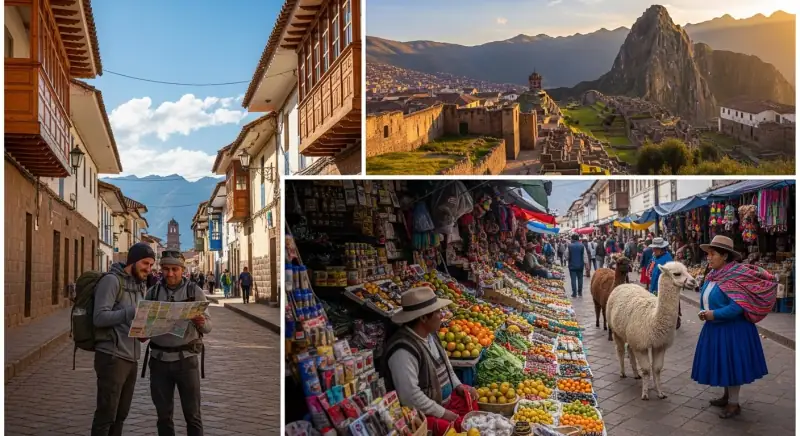
Peru Budget 2026: How Much Does a Trip to Peru Cost?
What budget for a trip to Peru? Accommodation, meals, transport, tourist sites: our complete guide with real 2026 figures.
Ready-made
Peru itineraries
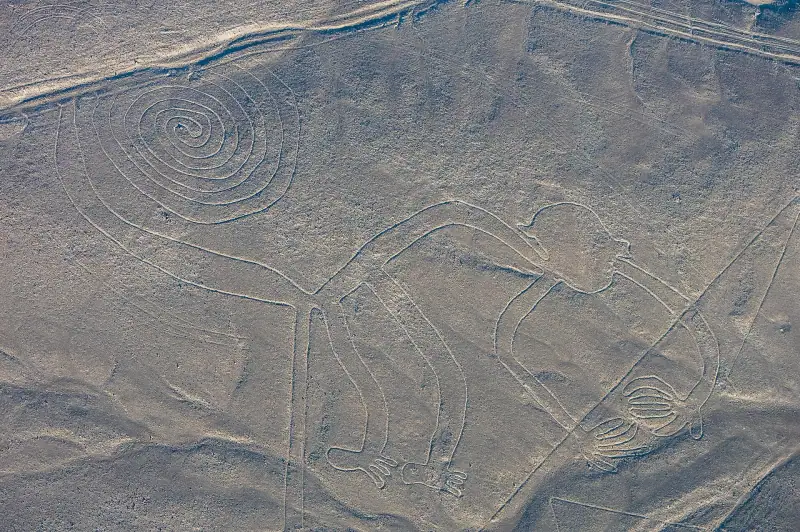
7 days
Peru in 7 Days: The Ideal One-Week Itinerary
LimaCuscoAguas CalientesCusco
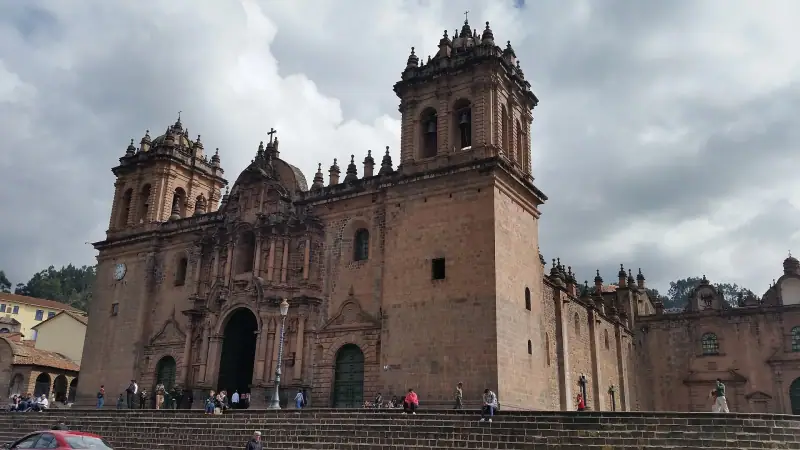
12 days
Peru Sierra Road Trip: 12 Days from Cusco to Huaraz
12-day Peruvian Sierra road trip: Cusco, Machu Picchu, Lake Titicaca, Arequipa, Colca, Huaraz. Complete itinerary with budget.
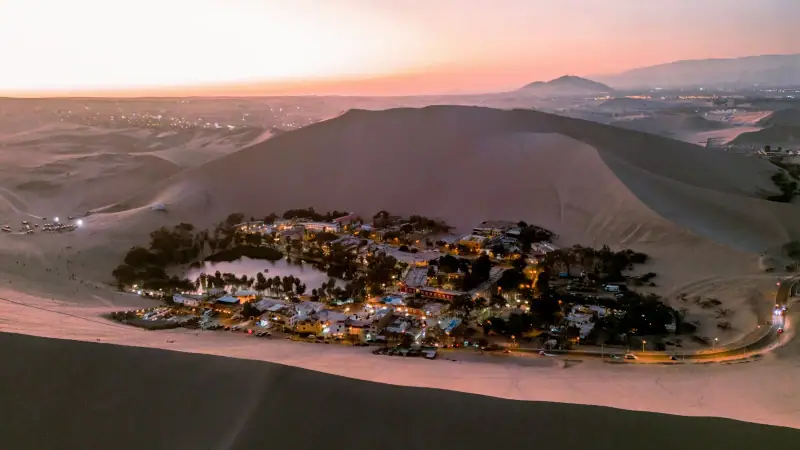
4 days
Lima, Paracas, Huacachina and Nazca in 4 Days by Bus: Doable Without a Car?
Lima, Paracas, Huacachina and Nazca in 4 days by bus: stages, km, real travel times, recommended departures and what to sacrifice to keep the pace.