Where to stay
Where to stay in Penang: a guide to the areas and accommodation
We may earn a commission when you book through links on this page, at no extra cost to you. We don't visit or try the places we cover: we summarize published sources. How we work
In short
- George Town (UNESCO-listed historic center) is unbeatable for atmosphere, culture and street food; Batu Ferringhi, about 20 km (12 mi) north, is the beach and resort choice.
- Gurney Drive, 3 to 5 km (2 to 3 mi) north of the historic center, is a middle ground between the two.
- Hostels and guesthouses in George Town start at €15-30 a night (about $17-35); shophouse boutique hotels run €80-200 (about $93-230).
- Two nights is the reasonable minimum for George Town; 3 to 4 nights lets you add Batu Ferringhi's beaches.
Penang is one of the most fascinating destinations in Malaysia. An island connected to the peninsula by two bridges (the first, cable-stayed, opened in 1985; the second, a 24 km prestressed viaduct, opened in 2014), it is home to George Town, a UNESCO World Heritage city since 2008, known for its street art, exceptional food and Sino-Portuguese colonial architecture. But Penang also has fine-sand beaches at Batu Ferringhi, green hills and one of the most creative hotel scenes in Southeast Asia. Here is where to stay to make the most of the island.
George Town Heritage Zone: the historic heart
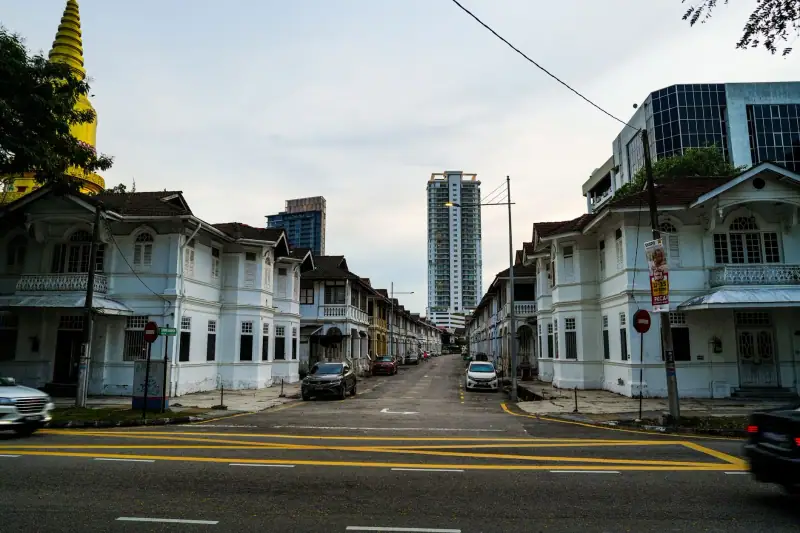
George Town is the soul of Penang. This historic area, a UNESCO World Heritage site since 2008, is a maze of cobbled lanes lined with colorful-fronted shophouses, Buddhist temples, mosques and colonial churches. It is also the world capital of street food according to many travelers and food critics.
Sleeping in the historic center of George Town means waking up a step away from Lebuh Armenian (Armenian Street) and its famous murals, the Khoo Kongsi temples, Little India and the Clan Jetties (stilt jetties inhabited since the 19th century). It also means immediate access to the island’s best street food spots.
Areas inside George Town
The heart of the UNESCO site divides roughly into several zones:
Little India: Around Lebuh Pasar and Lebuh Chulia, this lively area mixes Hindu temples, spice shops and Tamil restaurants. Intense, authentic atmosphere.
Chinatown: Along Lebuh Cannon, Lebuh Kimberley and the adjacent lanes, a concentration of Taoist temples, craft shops and traditional coffee shops still serving local coffee (kopi) in thick cups.
Armenian Street (Lebuh Armenian): Penang’s most photographed street, with the bicycle murals by artist Ernest Zacharevic and many galleries and design shops.
Clan Jetties: East of the center, these wooden stilt jetties have housed Chinese communities for over a century. Clan Chew, Clan Lim, Clan Tan… Each has its own traditions and family temple.
Types of accommodation in George Town
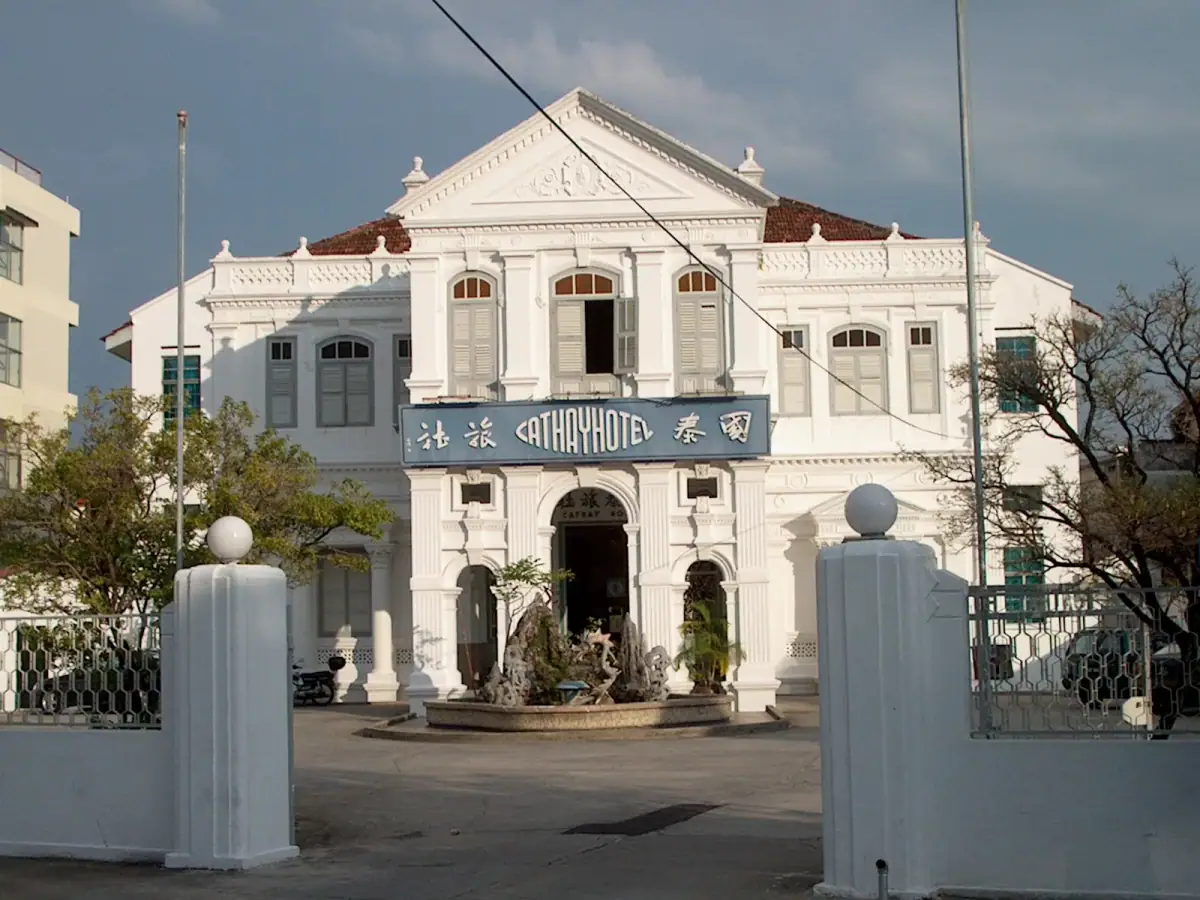
Shophouse boutique hotels: Penang’s great specialty. Historic merchants’ houses have been turned into charming hotels with great creativity: open-air inner courtyards, antique furniture, original tiles preserved. These places (usually 8 to 20 rooms) offer an experience truly different from standard hotels.
Hostels: George Town has a good supply of well-located hostels popular with independent travelers. Dorms at €12-20 (about $14-23) and private rooms at €25-45 (about $29-52).
Standard business hotels: A few mid-range chains (3-4 stars) are found on the edge of the historic center, handy for business guests.
Price ranges in George Town:
- Dorms: €12-25 (~$14-29) per night
- Basic guesthouses: €25-50 (~$29-58)
- Shophouse boutique hotels: €80-200 (~$93-230)
- 4-star hotels: €80-150 (~$93-175)
Hotels in George Town, Penang
Compare boutique hotels, hostels and hotels in the UNESCO-listed historic quarter.
Batu Ferringhi: Penang’s beach area
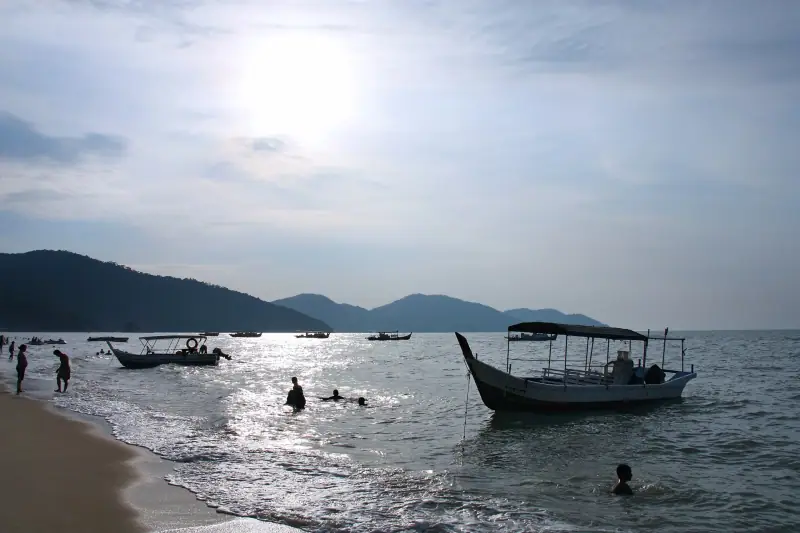
About 20 km (12 mi) north of George Town, Batu Ferringhi is the main beach of Penang Island. A long strip of sand lined with palm trees, it has the big seafront hotels. The atmosphere is more resort-like, more international and less cultural than George Town.
Batu Ferringhi suits travelers who want to combine cultural discovery of Penang (as excursions from the beach) with beach relaxation in a comfortable setting. The coastal road linking Batu Ferringhi to George Town runs along the sea and offers beautiful views.
In the evening, a lively night market sets up on the Batu Ferringhi waterfront. You find clothes, souvenirs, knockoffs and a few street food stalls.
Water activities (parasailing, banana boat, jet ski, windsurfing) are available directly on the beach. For diving and snorkeling, the sites around Penang Island are decent, although the waters of the Strait of Malacca are less clear than at Langkawi or the Perhentians.
Getting there from George Town: Rapid Penang bus no. 101 links Weld Quay (George Town) to Batu Ferringhi in about 40 to 50 minutes. Buses run regularly. Allow 15-20 minutes by Grab as well.
Accommodation in Batu Ferringhi:
- Big 4-5 star hotels directly on the beach (€100-250 / ~$115-290 per night)
- Mid-range hotels set slightly back (€60-100 / ~$70-115 per night)
- A few family-run guesthouses (€35-60 / ~$41-70 per night)
Hotels in Batu Ferringhi
Seafront resorts and hotels at Penang's main beach.
Gurney Drive: the ideal compromise
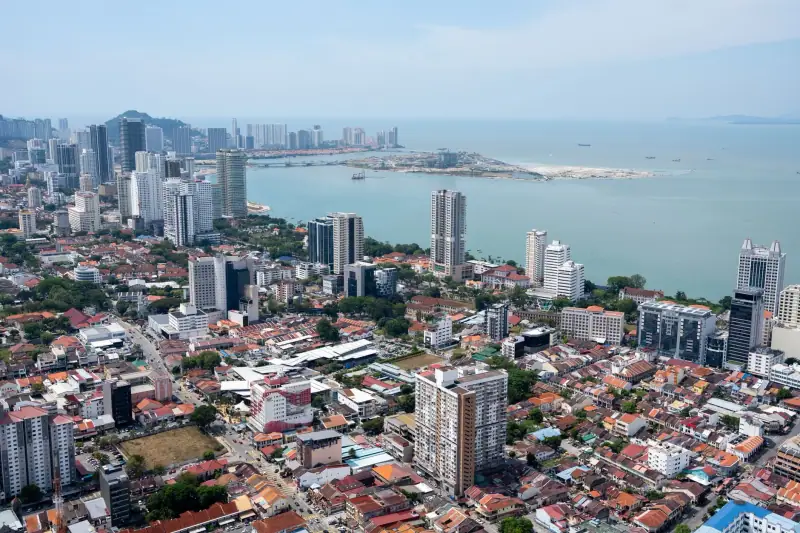
Gurney Drive is a coastal boulevard north of George Town, about 3 to 5 km (2 to 3 mi) from the historic center. This area, booming in recent years, mixes modern shopping malls (Gurney Plaza, Gurney Paragon), quality restaurants, condominiums and a few hotels.
The Gurney Drive promenade runs along the sea and welcomes many Penangites in the evening for a stroll and street food. The Gurney Drive hawker center is one of the most renowned on the island.
Why choose Gurney Drive:
- Middle position between George Town (easily reached by bus or Grab) and Batu Ferringhi
- A good selection of mid-range to upscale restaurants
- A more local, less touristy atmosphere than the other two areas
- Shopping malls nearby for shopping and air conditioning
Type of accommodation: Mainly 4-star and higher hotels, and a few condominiums for short-term rental.
Penang Hill and the hill area
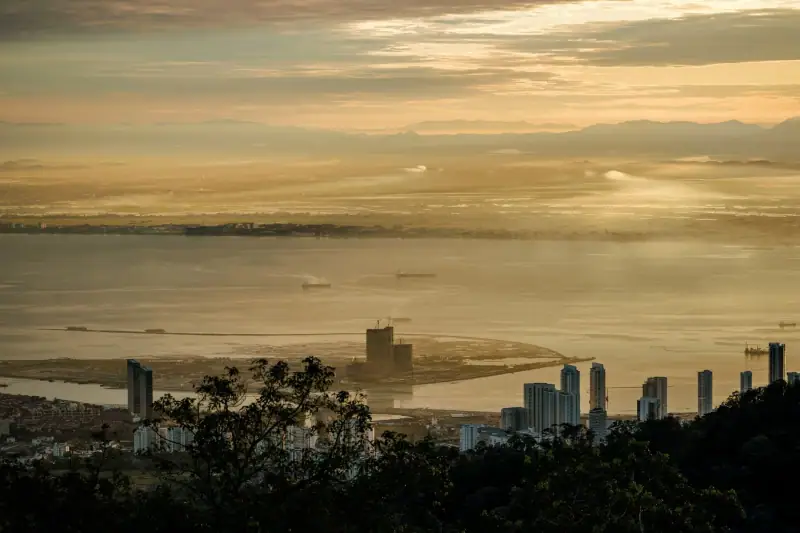
Penang Hill (Bukit Bendera) reaches 833 meters (2,733 ft) at its highest point (Western Hill). The upper funicular station, Flagstaff Hill, is at 735 meters (2,411 ft). You reach it by a funicular that leaves from Air Itam, west of George Town. The funicular closes for a few days twice a year for maintenance (for example January 4 to 10, 2027): check the dates and schedules on the official Penang Hill website before booking. At the top, the temperature is clearly cooler (about 5 to 8 °C / 9 to 14 °F lower than below), the view over the island and the Strait of Malacca is magnificent, and a few colonial houses have been turned into places to stay.
Sleeping at the top of Penang Hill is a very particular experience: coolness, quiet, sunrise views, but limited services and having to take the funicular to come back down.
Eating in Penang: the star of Asian street food
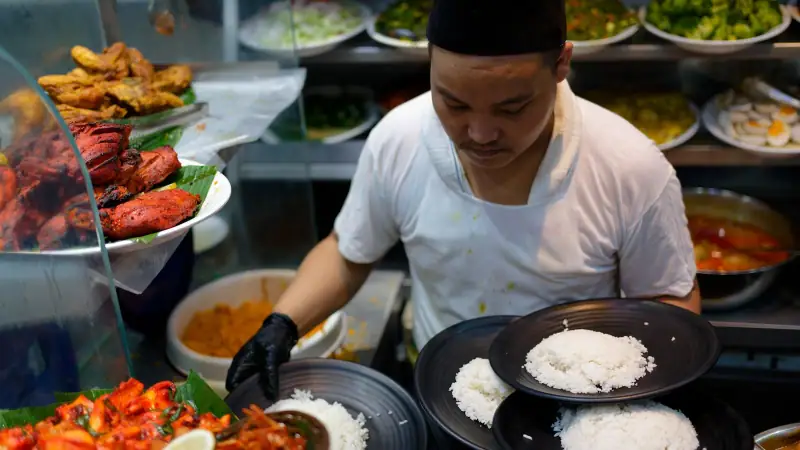
Choosing your area in Penang directly affects your access to the food. George Town remains the best base to explore Penang’s food scene, regularly cited among the best in Asia.
Dishes to try: char kway teow (stir-fried noodles with cockles and bean sprouts), Penang laksa (a noodle soup with fish and shrimp paste), nasi kandar (rice with curry and assorted side dishes), and cendol (an iced dessert made with coconut milk and pandan).
Hawker centers (open-air food courts) are accessible everywhere in George Town. Gurney Drive Hawker Centre and the Lorong Baru (New Lane) hawker center are among the most popular with locals.
Our guide to street food in Malaysia will help you order and eat like a local in George Town.
Tours and activities in Penang
George Town tours, street food tours, Penang Hill excursions and boat days.
Getting around Penang
From the airport (Penang International Airport): The airport is on the island, about 16 km (10 mi) south of George Town. Metered taxis, Grab and a few shuttles serve George Town in 20 to 30 minutes depending on traffic.
Getting around the island:
On foot: George Town is best visited on foot. The heart of the UNESCO site is compact (about 2 km² / 0.8 sq mi for the main attractions). The most interesting lanes (Armenian Street, Love Lane, Lebuh Chulia) are easy to cover in a few hours.
Bicycle: Many bike rental shops operate in George Town (rates vary: check with the renters). The center is flat, which makes cycling very pleasant.
Rapid Penang bus: The bus network is decent and cheap (fares from 1.50 MYR, about $0.35). No. 101 serves Batu Ferringhi, no. 204 serves Air Itam (Penang Hill).
Grab: The local ride-hailing app Grab works very well in Penang. Reasonable fares and reliable drivers.
Ferry: From the Penang Ferry Terminal (Weld Quay, George Town), regular ferries link Butterworth on the peninsula in 10 minutes. It is a good way to arrive or leave if you take the train or a long-distance bus from KL.
Car rental: Useful to explore the rest of the island outside the main tourist areas. Traffic drives on the left. Several agencies operate at the airport and in town.
Our article on visiting Penang gives you a detailed program for 2 to 3 days on the island, including highlights off the usual tourist trail.
Practical tips for choosing your accommodation
Book early in high season: Penang is very busy during festivals (Chinese New Year, the George Town Festival in July-August, the Penang Food Festival). Shophouse boutique hotels are full weeks ahead during these periods.
Watch the air conditioning: Penang is hot and humid all year. Check that your accommodation has air conditioning, especially for the cheapest guesthouses.
Possible scams: As in any tourist city, beware of taxis without meters at the airport. Always use Grab or ask for the fare before getting in.
Wi-Fi: The internet connection is generally good in Penang, including in mid-range accommodation.
Languages: English is widely spoken in Penang, a legacy of the British colonial period. Malay (Bahasa Melayu), Mandarin and Tamil are also very common.
Cashless: Card payments and mobile wallets (Touch ‘n Go, GrabPay) are very common in Penang. Still keep some ringgit in cash for hawker centers and small shops.
To compare Penang with other Malaysian destinations and choose the ideal combination, see our comparison of the peninsula vs Borneo.
How many nights in Penang?
2 nights: A reasonable minimum to see the essentials of George Town (historic heart, Clan Jetties, street art, temples, street food) and make an excursion to Penang Hill.
3-4 nights: Ideal to combine George Town’s culture and Batu Ferringhi’s beaches, and take the time to really enjoy the evening hawker centers.
5 nights or more: For food fans who want to explore the culinary scene in depth, make half-days inland (Kek Lok Si, Penang Botanic Gardens) and perhaps spend a night in Batu Ferringhi.
Penang combines very well with Kuala Lumpur (by plane or bus) or with an extension to the hotels of Langkawi to finish the trip at the beach.
Frequently asked questions
What is the best area to stay in Penang?
For atmosphere, culture and street food, George Town (the UNESCO-listed historic center) is unbeatable. For the beach and resorts, Batu Ferringhi (about 20 km / 12 mi to the north) is the ideal choice. Gurney Drive is a good compromise between the two.
How much does a hotel cost in Penang?
Hostels and guesthouses in George Town start at €15-30 a night (about $17-35). Mid-range hotels (3-4 stars) cost €50-120 (about $58-140). Charming boutique hotels in renovated shophouses run €80-180 (about $93-210). The big 5-star seafront hotels often exceed €200 (about $230).
Do you need to rent a car in Penang?
Not required if you stay in George Town, which is very easy to visit on foot or by bike. To reach Batu Ferringhi, Rapid Penang bus no. 101 links George Town to the beach in about 40 minutes. A car or Grab (the local ride-hailing app) becomes useful to explore the island outside the tourist areas.
How do you get to Penang from Kuala Lumpur?
Flying is the fastest (a flight of about 1 hour, tickets often at €20-60, about $23-70). The bus (leaving from TBS or Puduraya in KL) takes 5 to 6 hours for about €10-20 (about $12-23). The train (ETS) takes about 4 hours to Butterworth, then the ferry crosses the strait in 10 minutes to George Town.
Are there boutique hotels in George Town's shophouses?
Yes, and it is one of Penang's great specialties. Many shophouses (19th and 20th-century merchants' houses) have been renovated into charming boutique hotels. They offer a unique experience, inside the UNESCO heritage area, with interior architecture that is often very successful.
What is the best time to visit Penang?
December to February is generally the best period for weather (dry season on the west coast). June-July is also very good. Avoid September-October, which can be rainy. George Town being a cultural city, it can be visited all year, unlike beach destinations.
More Malaysia guides
Keep reading
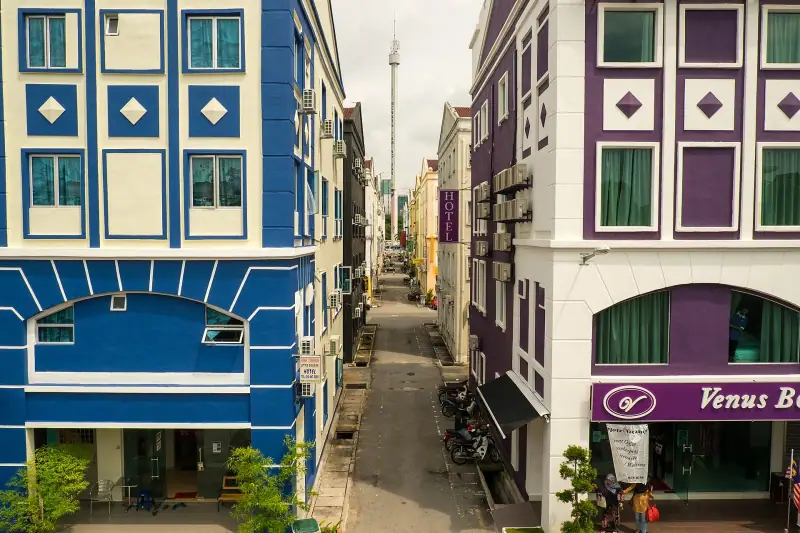
Where to stay in Malacca: a guide to the areas and best places to sleep
Where to stay in Malacca? Chinatown, Jonker Street, Dutch Square: a complete guide to areas, types of accommodation and practical tips for every budget.
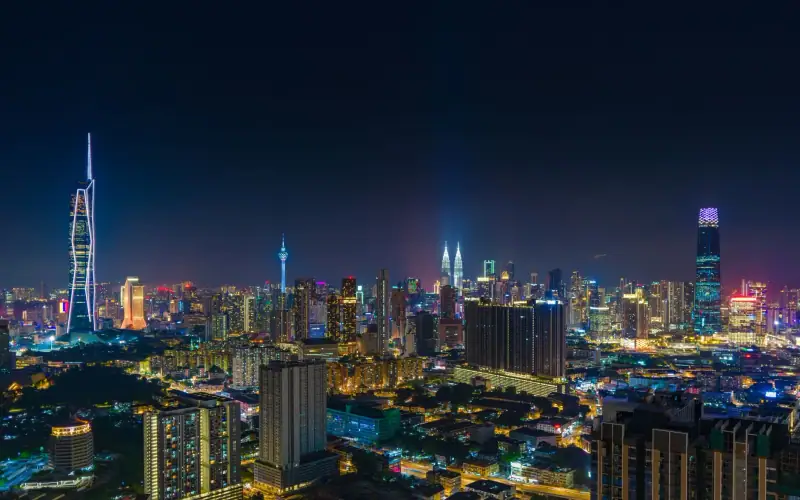
Where to stay in Kuala Lumpur: best areas and hotels
Where to stay in Kuala Lumpur? Bukit Bintang, KLCC, Chinatown, Bangsar: a guide to the best areas and hotels for every budget in KL.
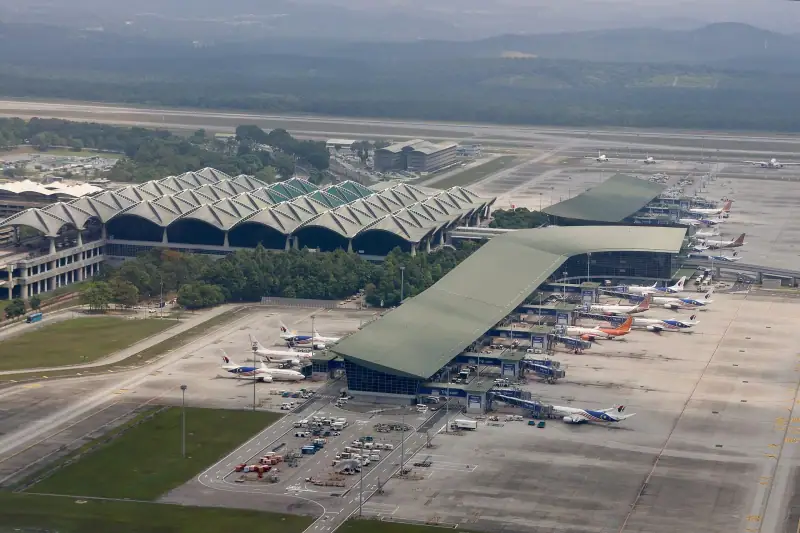
Sleeping near KLIA airport in Malaysia: options and prices
Early flight or connection at KLIA? Comparison of airside, landside and Putrajaya hotels, with prices, distances and tips for choosing well.
Ready-made
Malaysia itineraries
14 days
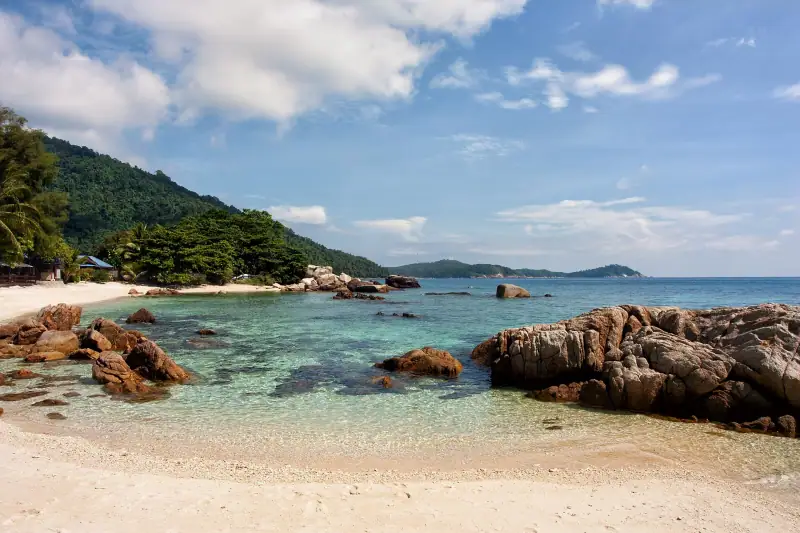
Malaysia's East Coast: Perhentian, Tioman, Redang and the eastern peninsula
Complete guide to Peninsular Malaysia's east coast: Perhentian, Redang, Tioman, Kota Bharu and Taman Negara. Diving, beaches and jungle. 10 to 14 days.
10 days
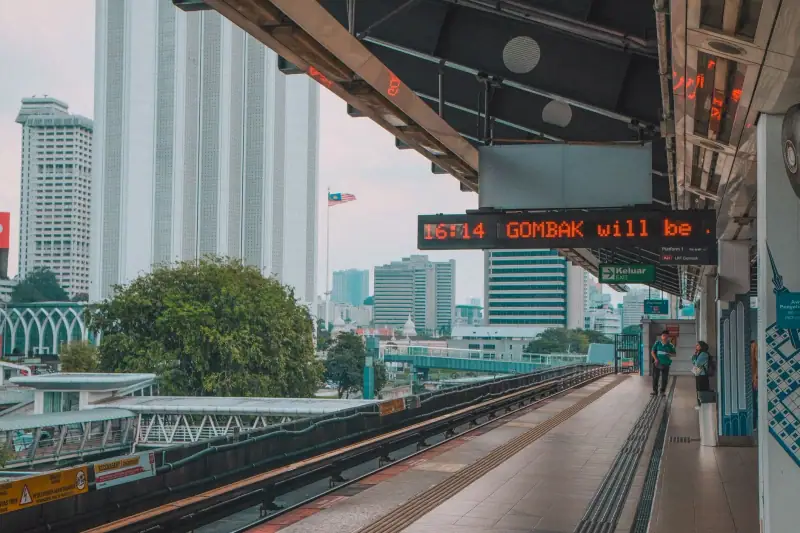
Malaysia in 10 days without a car: a train, bus and ferry itinerary
Kuala LumpurTanah Rata, Cameron HighlandsIpohGeorge Town, PenangLangkawi
14 days
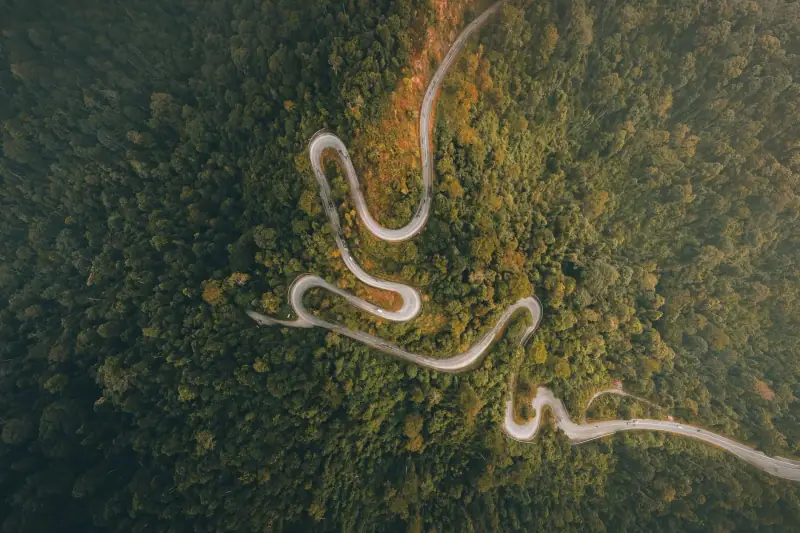
Malaysia road trip: a complete 2 to 3 week itinerary
Malaysia road trip in 2 to 3 weeks: detailed route from KL to Penang, Langkawi, the Cameron Highlands, Malacca and Borneo, with transport and tips.