What to see
Visiting Alta: a complete guide to the capital of Finnmark
We may earn a commission when you book through links on this page, at no extra cost to you. We don't visit or try the places we cover: we summarize published sources. How we work
In short
- The Hjemmeluft rock carvings (UNESCO, 1985) hold over 6,000 figures from 4200 to 500 BC; allow 2 to 3 hours. Entry about 160 NOK (about €14 / $16).
- Aurora season runs from late August to late March, with the best odds from mid-November to mid-February. Alta sits at 70°N.
- Alta Airport (ALF) is served from Oslo in about 2 h 05; the alternative is landing at Tromsø (TOS) and driving about 303 km (188 mi), roughly 5 h 47.
- A rental car is practically essential. Norway is noticeably more expensive than Finland, and cards are accepted everywhere.
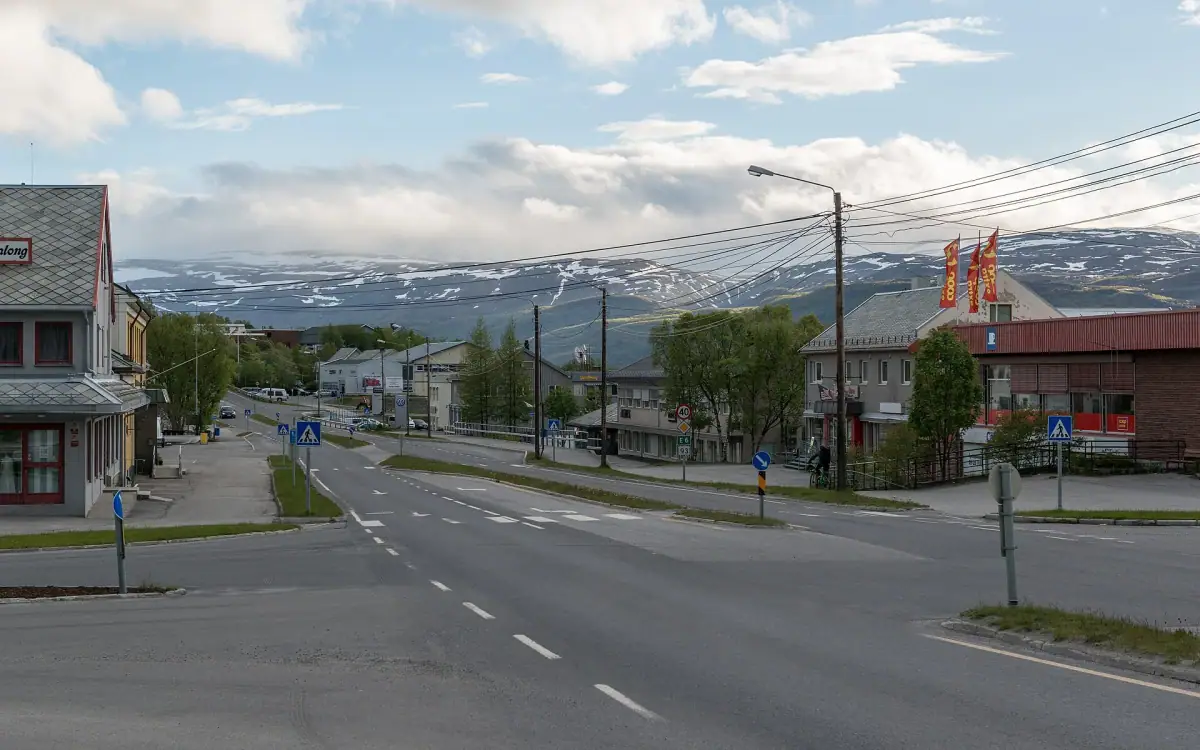
Alta is the capital of Finnmark, Norway’s northernmost county and one of the largest in Europe by area. With 22,000 inhabitants, it is the most populous town in the Norwegian Far North, yet it has none of the urban bustle: surrounded by mountains, bordered by the Alta fjord and bathed in a polar light that changes with the seasons, it combines the accessibility of a service town with the raw majesty of the Arctic.
Alta has built an international reputation on three pillars: some of Europe’s most spectacular northern lights, a UNESCO-listed archaeological heritage that astonishes visitors, and breathtaking Arctic activities, from dog sled safaris on the Finnmarksvidda to descents of the icy Sautso canyon. Whether you are looking for adventure, culture or simply the absolute silence of the winter tundra, Alta offers experiences few destinations in the world can match.
Alta: overview and location
Alta lies at 70°N, at the head of the fjord of the same name in Finnmark county, in northern Norway. It is about 303 km (188 mi) east of Tromsø by road (about 5 h 47 of driving), 530 km (329 mi) northeast of the Swedish border and less than 200 km (124 mi) from the Finnish and Russian borders.
The town’s geography is shaped by the Altafjord, a 38 km (24 mi) arm of the sea that cuts inland between mountain walls rising to 1,000-1,400 meters (3,280-4,590 ft). This configuration creates a particular microclimate: Alta is less windy and often sunnier than the Norwegian coasts at the same latitude, which partly explains its reputation as a northern lights destination. Scientists in the early 20th century also set up one of the world’s first permanent aurora observatories here.
The town stretches several kilometers along the fjord, formed by the historic merger of four municipalities. The commercial and administrative center is at Bossekop, while the Hjemmeluft district, to the west, holds the UNESCO archaeological site. The airport is at Elvebakken, 6 km (4 mi) from the center.
The Alta River runs through the town before flowing into the fjord. This watercourse is world famous among sport anglers: it is one of the best salmon rivers in Europe, with regular catches of Atlantic salmon weighing 20 to 40 kg (44 to 88 lb). The construction of a hydroelectric dam on the Alta River in the 1980s led to one of the biggest environmental and political crises in modern Norwegian history, mobilizing Sámi communities and environmental activists in a struggle that made international headlines.
The Hjemmeluft petroglyphs: Alta’s UNESCO treasure
The Hjemmeluft site is without question the top cultural reason to visit Alta. These rock carvings, listed as a UNESCO World Heritage Site in 1985, form the largest group of petroglyphs in all of northern Europe, with more than 6,000 figures carved into the coastal granite between 4200 and 500 BC.
What the carvings tell
The figures depict scenes from the daily life of the prehistoric peoples who lived around the Alta fjord since the end of the last ice age: reindeer hunts, kayak fishing trips, ritual ceremonies, dances, and depictions of bears, elk, whales and salmon. The precision of some carvings is astonishing: you can clearly make out fishermen’s hooks, costume patterns or types of boats.
A fascinating detail: the height of the carvings above sea level has allowed archaeologists to date the different layers precisely. The oldest carvings (7,000 years) are found at higher elevations, because sea level has dropped by more than 20 meters (66 ft) since then. By “reading” the cliff from top to bottom, you can follow the evolution of art and culture over millennia.
Visiting the site
A 3 km (1.9 mi) marked boardwalk trail runs along the coastal rocks. Bilingual (Norwegian/English) information panels explain each group of carvings. The recommended visit time is 2 to 3 hours to walk the full circuit and read the interpretations.
The adjacent Alta Museum is a worthwhile stop before or after visiting the site. Its collections present the region’s archaeological history, dating techniques, tools and reconstructions of prehistoric life. It also has a section on the history of polar astronomy in Alta, with archives of aurora observations dating from the 19th century.
Practical: open daily from June to August (9 am-7 pm); reduced hours off season. Adult admission: about 160 NOK (about €14 / $16). Reachable from central Alta by route 93 toward Tromsø (5 km / 3 mi), or by bike in summer on the cycle path along the fjord.
Activities and excursions in Alta
Northern lights safari, husky, snowmobile, guided petroglyph visit: compare all the excursions available in Alta.
Sautso Canyon: the Grand Canyon of the Arctic
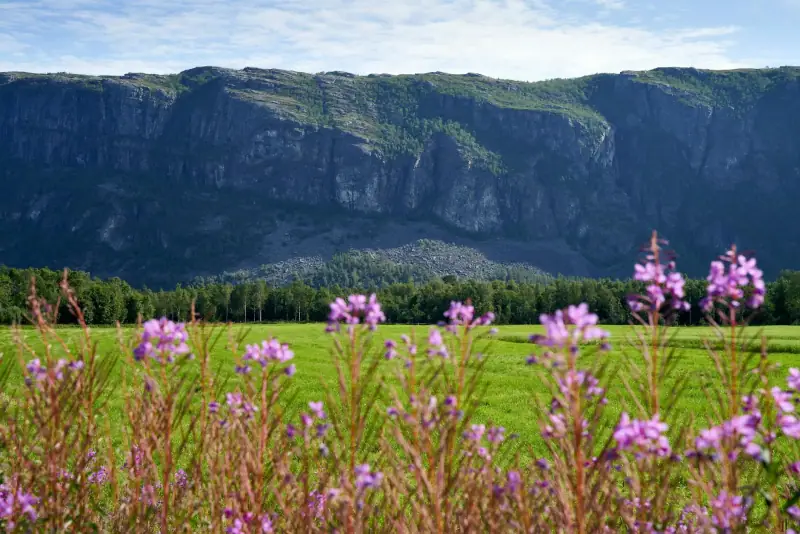
Sautso Canyon, carved by the Alta River in the heart of the Finnmarksvidda, is one of the most impressive in Europe. It plunges 300 to 420 meters (985 to 1,380 ft) deep and stretches about 12 kilometers (7.5 mi) long, dimensions that place it among the largest canyons in northern Europe, in an incomparable subarctic setting.
Summer hiking along the canyon
The main access is from Gargia, about 25 km (16 mi) from Alta heading inland. A marked trail follows the canyon’s upper rim for several kilometers, offering breathtaking views of the turquoise river below. The round trip to the best viewpoint is 8 to 12 km (5 to 7.5 mi) depending on the starting point, for 3 to 5 hours of walking.
The canyon is especially spectacular in June and July, when the limestone walls glow under the midnight sun and the tundra vegetation bursts into purple (heather) and yellow (Arctic willow). Raptors (gyrfalcons, kites, common buzzards) nest in the walls and glide at eye level if you approach the edge carefully.
Boat trip on the Alta River
Local operators offer canyon descents by inflatable boat or jet boat from Gargia (June to August). These trips let you see the walls from below, a very different and equally striking perspective. Duration: 2 to 4 hours depending on the option. Price: €80-160 per person (~$93-185).
The canyon in winter
In winter, the Alta River partly freezes and the canyon becomes a maze of ice and snow. Some experienced guides offer ice hikes on the canyon floor, an experience that requires good physical condition and appropriate equipment. These outings are not for beginners: the ice can be treacherous and temperatures sometimes drop to -30 °C (-22 °F) in this natural corridor.
The northern lights in Alta: an extraordinary show
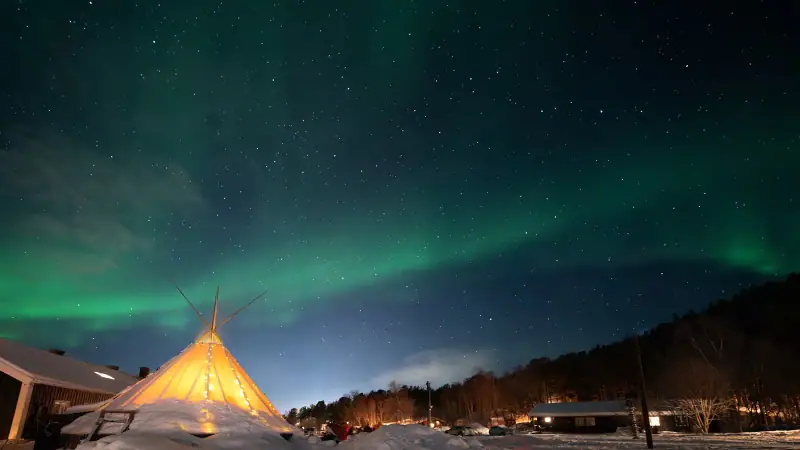
Alta is one of the three or four best destinations in the world for watching the northern lights. Its latitude (70°N), low light pollution, the protection the mountains give against weather disturbances and its scientific tradition of observation make it a place apart.
The history of polar astronomy in Alta goes back to 1838-1839, when the physicist Auguste Bravais led a French expedition aboard La Recherche and carried out the first systematic scientific observations of the northern lights at Bossekop. The world’s first permanent aurora observatory was built on Mount Haldde in 1899 by the scientist Kristian Birkeland. In 1882-83, Alta hosted a station of the International Polar Year. The world record for continuous aurora observation, 7 uninterrupted hours, was set here in 1938.
When and how to watch them
The aurora season runs from late August to late March. The best statistical odds are between mid-November and mid-February, when nights are longest and solar cycles most active. To maximize your chances:
- Get away from city lights: 5 to 10 km (3 to 6 mi) on the E6 inland is enough to reach near-total darkness.
- Watch the KP index via the SpaceWeatherLive app or the Norwegian weather service (yr.no); a KP of 3 or more is generally enough at Alta’s latitude.
- Choose moonless nights: a full moon considerably dims faint auroras.
- Go up in altitude: the heights around Alta often have clearer skies than the fjord floor.
Guided aurora safaris
Dozens of operators offer aurora safaris from Alta, by minibus or snowmobile, with guides who know the best spots and adapt to weather conditions in real time. These outings usually include a stop in a lavvo (Sámi conical tent) for hot coffee and a hot meal around the fire. Duration: 3 to 5 hours. Price: €80-150 per person (~$93-175).
Accommodation in Alta
From the Igloo Hotel to lodges with aurora views: compare the best options for sleeping in Alta in Norwegian Lapland.
Arctic activities and experiences
Dog sled safari
The area around Alta offers ideal conditions for husky sledding: the Finnmarksvidda, the vast tundra plateau stretching south of the town, offers immense landscapes and marked trails over hundreds of kilometers. Several operators such as Holmen Husky Lodge offer outings from 2 hours to a full day, as well as multi-day trips of 3 to 7 days on wilderness routes. Driving your own team of 4 to 8 dogs across an immaculate landscape under the polar sun is an experience of freedom that is hard to match. Price: €100-250 (~$115-290) for a guided half day.
Snowmobiling on the Finnmarksvidda
The Finnmarksvidda plateau, covering about 22,000 km² (8,500 sq mi), or about 51% of the area of Denmark and almost uninhabited, is an exceptional snowmobiling ground. Trails link Alta to the remote Sámi villages of Kautokeino and Karasjok, crossing dwarf birch forests, frozen lakes and stretches of tundra where reindeer graze. Guided safaris range from a half day (€120-180, ~$140-210) to a 2-day circuit with a night in an isolated cabin (€400-700 all inclusive, ~$465-810). Alta is also the starting point of the Finnmarksløpet, the largest sled dog race in Europe.
Salmon fishing on the Alta River
The Alta River is a world sanctuary for salmon fishing. Catches of Atlantic salmon of 20 to 40 kg (44 to 88 lb) are regular there, records that attract anglers from around the world every year. The fishing season runs from early June to late August. Access to some sections of the river is subject to a rotation system (rotasjonsfiske) administered by Statskog; permits are distributed by lottery or sold at auction for the most sought-after sections. Budget €300-800 a day (~$350-930) for a permit on the best stretches. Local guides (Alta Laksefiskelag) offer day packages with equipment supplied.
Cross-country skiing and snowshoeing
The Alta region has a well-developed network of cross-country ski trails, from the town center up to the heights of the Finnmarksvidda. The Tverrelvdalen resort, 10 km (6 mi) from the center, offers marked and groomed trails of all levels, with magnificent views of the fjord below. On snowshoes, the birch forests around the village of Gargia are an easy, refreshing escape from Alta.
The Sorrisniva Igloo Hotel
20 km (12 mi) from Alta on the bank of the Alta River, the Sorrisniva Igloo Hotel is one of the oldest ice hotels in Scandinavia. Opened in 1999, it is rebuilt entirely every winter (December to April) by international artists and sculptors. The rooms and suites, carved from ice and decorated with intricate reliefs, hold a temperature of -4 °C to -7 °C (25 to 19 °F); you sleep in an Arctic sleeping bag on an ice bed covered with reindeer skins. The experience is spectacular and the atmosphere unforgettable, but nights are short (most guests sleep no more than 6-7 hours in the cold). Sorrisniva also offers heated wooden cabins on the same site, a comfortable alternative to enjoy the atmosphere without the sub-zero temperatures. The hotel restaurant serves quality Nordic cuisine with local products (reindeer, salmon, wild berries).
Where to stay in Alta
Thon Hotel Alta
Alta’s main reference hotel, in the town center. Modern rooms with fjord or mountain views, restaurant, bar, indoor pool. The Thon chain guarantees a standardized, reliable level of comfort. Ideal for travelers who want a comfortable base without surprises. Rates: €130-220 for a double room (~$150-255).
Sorrisniva Igloo Hotel
For the unique experience of a night on ice or in a luxury cabin by the river. See the description above. Rates: wooden cabin from €250/night (~$290), ice suite €600-900/night (~$695-1,045).
Scandic Alta
A well-located business hotel near the airport, with a free shuttle. Spacious rooms, generous Scandinavian breakfast, free parking. Less character than other options but practical and affordable. Rates: €100-160/night (~$115-185).
Budget options
Alta has a few guesthouses and bed-and-breakfasts (pensjonat) in residential districts, at €60-90/night (~$70-105). The Kronstad campsite, open from June to August, offers pitches and basic cabins (€40-70/night, ~$46-80). For independent travelers who want to explore the region, renting an apartment via Airbnb often gives the best space-for-price ratio.
Car rental in Alta or Tromsø
A car is essential to explore the Alta area. Compare the best offers from Alta Airport (ALF) or Tromsø (TOS).
How to get to Alta
By air
Alta Airport (ALF) is served from Oslo by Norwegian and Widerøe with several daily flights (duration: about 2 h 05). In high season, flights also operate from Bergen and Tromsø. The airport is 6 km (4 mi) from the center of Alta; taxis and hotel shuttles handle the link (€15-20, ~$17-23).
A popular alternative is to land at Tromsø (TOS), much better served from Europe, and drive to Alta, about 303 km (188 mi) along the magnificent E6 road that follows the fjords (about 5 h 47). This drive is itself worth the detour.
By car from Tromsø
The Tromsø → Alta route mainly follows the E6, passing Nordkjosbotn, Sørkjosen and Langfjordbotn. The drive is superb: fjords, snowy mountains, undersea tunnels and small fishing villages follow one another. Allow about 5 h 47 without stops to cover the ~303 km (188 mi). The roads are well maintained and open all year, but winter or studded tires are mandatory from November to April.
By bus
Snelandia and Boreal coaches link Tromsø to Alta (about 6 h 35) with 1 to 2 departures a day depending on the season. Connections also exist from Hammerfest and Nordkapp. Alta’s bus station is in the town center, at Bossekop.
Food in Alta
Local specialties
The cuisine of the Alta area is deeply rooted in the natural resources of Finnmark. Alta salmon (laks) is the undisputed star: cold-smoked or pan-fried in butter, it has an incomparable flavor thanks to the river’s icy, oxygenated waters. In summer, the town’s restaurants serve it with palpable pride.
Reindeer (reinsdyr) is everywhere: pan-fried reindeer fillet with lingonberries, stew simmered in red wine (reinsdyrgryte) or old-style dried slices (fenalår of reindeer). Arctic cod (torsk) and Finnmark king crab (jumboreke) are other local delights, especially tasty in season (summer-autumn).
Don’t miss the Sámi bread stick (gáhkku) baked over a wood fire in a lavvo, a lightly crisp flatbread to enjoy with butter and smoked salmon during a sled safari.
Restaurants worth knowing
Haldde Restaurant (Thon Hotel Alta) is Alta’s best fine-dining restaurant, with a menu showcasing local Finnmark products. Salmon, reindeer and fjord shellfish are the stars. Elegant setting with a fjord view.
Alta Kafé is the go-to local address in the town center. Relaxed atmosphere, generous portions, fish and meat of the day. Popular with locals, a sign of a good table at reasonable prices.
Sorrisniva Restaurant is for a memorable dinner in the unique setting of the ice hotel or the wooden cabins by the river. The short but careful menu changes every week with deliveries.
Alta in practice
When to go
| Period | Conditions | Best for |
|---|---|---|
| Nov-Feb | Polar night, -10 to -25 °C (14 to -13 °F), frequent aurora, abundant snow | Aurora, husky, snowmobile, igloo hotel |
| Mar-Apr | Light returns, skiing and snowshoeing, last auroras | Cross-country skiing, snowmobile, spring aurora |
| May | Snowmelt, magical light, low prices | Transition, photographers, hikers |
| Jun-Aug | Midnight sun, fishing, canyon, petroglyphs | Salmon fishing, hiking, culture |
| Sep-Oct | Ruska (autumn colors), first snows, first auroras | Hikers, photographers |
To refine your choice according to your priorities, see our guide to the best time to visit Lapland.
Indicative budget
| Item | Moderate budget | Comfort budget |
|---|---|---|
| Accommodation (per night) | €80-130 (~$93-150) | €180-350 (~$210-405) |
| Meals (per day) | €40-60 (~$46-70) | €80-130 (~$93-150) |
| Guided activities | €100-180/activity (~$115-210) | €200-400/activity (~$230-465) |
| Local transport | €20-40 (~$23-46) | €50-100 (~$58-115) |
Prices in Norway are noticeably higher than in Finland. VAT on tourist activities is 25%. To save, cook in your accommodation if you have a kitchenette, buy snacks at the local Rema 1000 or Coop supermarket, and opt for self-guided activities for at least one outing in two.
For detailed advice on managing your budget in Lapland, see our complete article on the budget for a trip to Lapland.
Currency and payments
Norway is not in the euro zone: the currency is the Norwegian krone (NOK). Check the current exchange rate before you go. Bank cards are accepted everywhere (Visa, Mastercard), including for small amounts. Carrying cash is unnecessary, even discouraged: Norway is one of the most “cashless” countries in the world.
Getting around Alta and the region
Alta has no developed public transport network. A rental car is practically essential to visit the surrounding sights (canyon, Gargia, Sorrisniva, secondary roads). Taxis are available but expensive for trips outside town.
In summer, the cycle path along the Alta fjord lets you reach the Hjemmeluft site from the town center by bike in 20-30 minutes, an excellent way to combine sport and culture.
Phone and connectivity
Mobile coverage (4G/5G) is good in town and on the main roads. It becomes nonexistent on the Finnmarksvidda and in remote areas. Download your maps offline (Maps.me, Gaia GPS) before heading out on an excursion, and always tell your accommodation your planned route if you hike somewhere isolated. For using your phone abroad, check your carrier’s international plan or consider a travel eSIM.
Alta in a Lapland itinerary
Alta fits perfectly into a northern Lapland circuit combining Norway and Finland:
Norwegian Lapland circuit (7-10 days): Tromsø (2-3 days) → Alta (3 days) → Hammerfest or Nordkapp (2 days) → return via Tromsø. This circuit combines fjords, northern lights, petroglyphs and the end of the world at the North Cape.
Grand Lapland tour (12-15 days): Helsinki → Rovaniemi (2 days) → Levi (2 days) → Inari (2 days) → Alta (3 days) → Tromsø (2 days) → return. A cross-border circuit that crosses all of Scandinavian Lapland and gives a complete view of the region in its different facets: Sámi culture, Arctic architecture, wild nature and port towns.
To organize your stay, see our guide to the Lapland road trip and our 7-day Lapland itinerary.
Flights to Alta or Tromsø
Compare flight offers to Alta Airport (ALF) or Tromsø (TOS), the gateway to Norwegian Lapland.
Alta is a destination that surprises those who discover it without preconceptions. People often come for the northern lights, and leave remembering the thousands-of-years-old carvings of Hjemmeluft, the vertigo of Sautso canyon in the low light of June, or the smell of burning wood in a Sámi lavvo after a night of sled safari. A service town and a gateway to the Arctic at once, Alta has preserved what makes it irreplaceable: an authenticity that crowds of tourists will not dilute, and wild nature that begins literally at the end of the main street. It may be the biggest surprise in all of Lapland.
Frequently asked questions
How do you get to Alta?
The most common route is to fly to Oslo and then Oslo → Alta (ALF) with Norwegian or Widerøe (about 2 h 05). The other option is to land in Tromsø (TOS) and drive to Alta (about 303 km / 188 mi, about 5 h 47). Check flight options with the airlines.
What is the best time for the northern lights in Alta?
The season runs from late August to late March, with the best odds between November and February. Alta is one of the world's most renowned aurora destinations: its latitude of 70°N, low light pollution and the mountains' shelter from clouds make it an exceptional spot.
How do you visit Alta Canyon?
Sautso Canyon is visited in summer (June-September) on marked hikes along the walls, with spectacular views of the Alta River below. Boat trips are offered from Gargia. In winter, guides organize ice hikes in the frozen canyon.
Are Alta's petroglyphs really worth the detour?
Absolutely. The Hjemmeluft site is a UNESCO World Heritage Site and holds more than 6,000 rock carvings 2,000 to 7,000 years old. A 3 km (1.9 mi) trail runs along the carved coastal rocks. Allow 2 to 3 hours. Entry: about 160 NOK (about €14 / $16) per adult.
Is the Sorrisniva Igloo Hotel worth its price?
Sorrisniva is one of the oldest ice hotels in Scandinavia, rebuilt entirely every winter. Sleeping in a room carved from ice at -5 °C (23 °F) is a unique experience, but nights are short. The hotel also has heated wooden cabins for the atmosphere without the cold. Expect €600-900 (~$695-1,045) for an ice suite, €250 (~$290) for a wooden cabin.
More Lapland guides
Keep reading
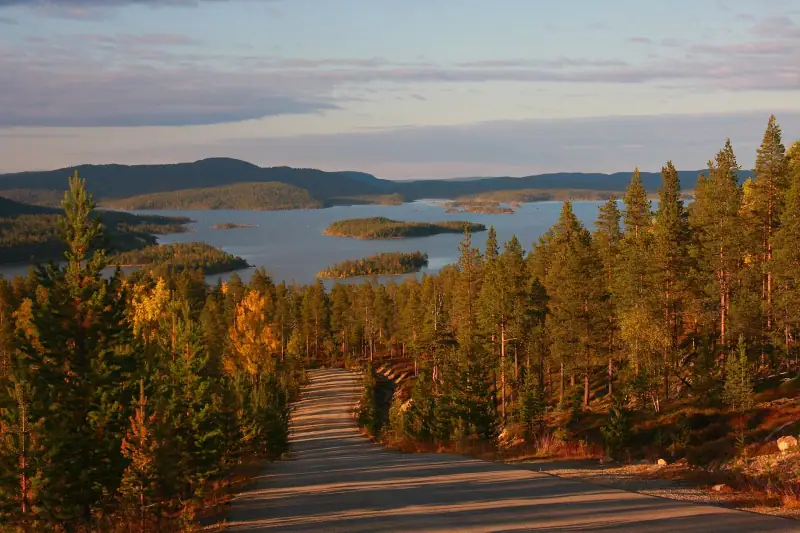
Visiting Inari: a complete guide to the heart of Sámi Lapland
Visiting Inari in Finnish Lapland: Lake Inari, Siida museum, northern lights and Arctic activities. Complete guide to plan your stay.
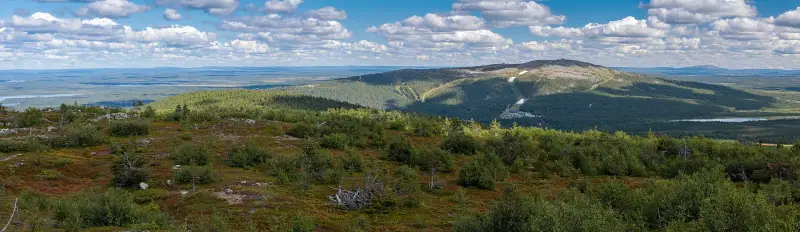
Visiting Levi: a complete guide to Lapland's ski resort
Complete guide to visiting Levi in Finnish Lapland: skiing, northern lights, activities, accommodation and practical tips for a successful stay.
Rovaniemi: what to see and do, the essentials
Rovaniemi must-sees: Arktikum museum, Santa Claus Village, Ounasvaara, restaurants and activities. Complete guide to Lapland's capital.
Ready-made
Lapland itineraries
7 days
Lapland in 7 days: a complete one-week itinerary
RovaniemiSaariselkäRovaniemi
7 days
Rovaniemi and Tromsø in one week: is it doable? A realistic itinerary
RovaniemiKilpisjärviTromsø
14 days
Lapland road trip: a 10 to 14-day itinerary by car
RovaniemiSaariselkäInariKarasjokAltaTromsøKiruna