Things to do
Hiking in Laos: The Best Treks and Trekking Trails
We may earn a commission when you book through links on this page, at no extra cost to you. We don't visit or try the places we cover: we summarize published sources. How we work
In short
- Best trekking areas: around Luang Prabang (easy to moderate), Nong Khiaw and the Nam Ou, Luang Namtha (community treks), the Thakhek Loop karst, and Phou Bia / Xieng Khouang.
- The dry season, November to March, is best; avoid July to September, when trails turn muddy or get cut.
- A local guide is required or strongly recommended in protected areas and remote villages; guided multi-day treks cost about $70 to $230 per person depending on area and length.
- In Xieng Khouang province never leave marked paths: unexploded ordnance remains in fields and forests.
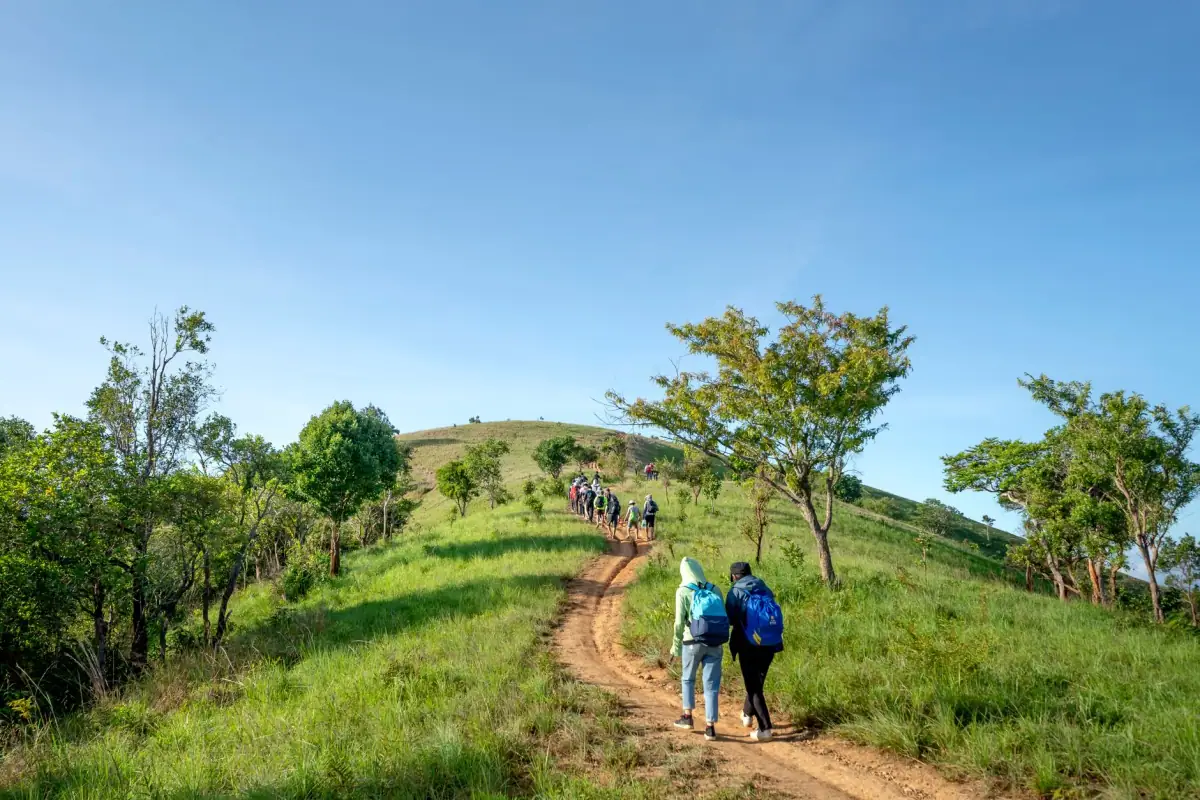
Laos is a trekking paradise that is still little known. With 60% of its territory covered in forests and mountains, the country offers an exceptional natural playground for hikers. Far from the overcrowded trails of other Asian destinations, Lao treks offer genuine encounters with ethnic minorities (Hmong, Khmu, Akha, Lanten), primary forests, turquoise rivers and breathtaking karst landscapes.
The best trekking areas in Laos
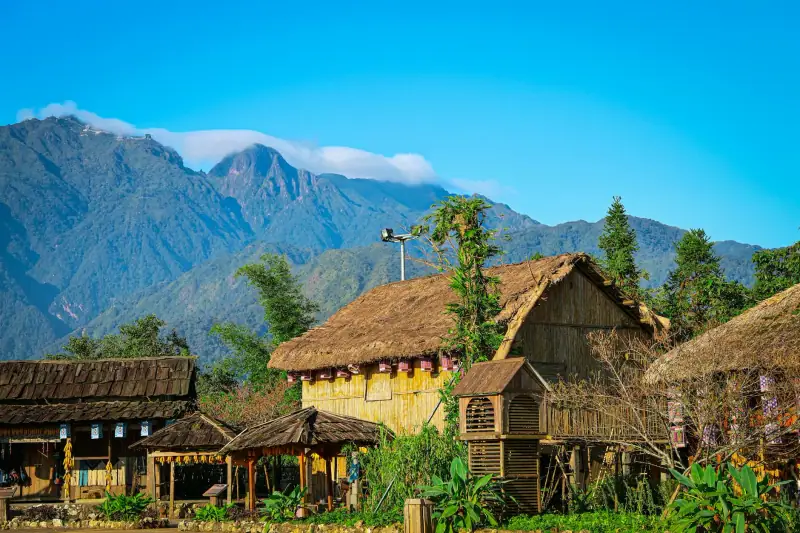
1. Around Luang Prabang: accessible and varied
Luang Prabang is the best starting point for beginner hikers or those with little time. Trails are relatively well marked and several day excursions are offered by local agencies.
The Mount Phousi trail (30 min): 329 steps to the top of the sacred hill that overlooks the old town. Panoramic view over the temple roofs, the Mekong and the mountains. Ideal at sunrise or sunset.
The hilltop temple circuit (2 to 4 hours): several temples are scattered in the hills behind the old town. Wat Chom Si on Phousi is the best known, but trails lead to other, less visited temples with fine views.
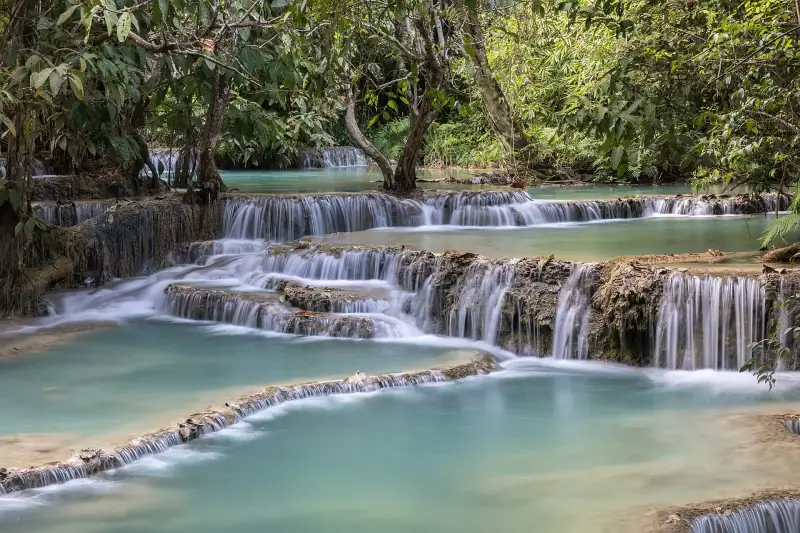
Trek to the Kuang Si falls (4 hours round trip on foot): possible on foot from town (12 km / 7.5 mi), but most visitors take a tuk-tuk out and walk back through the villages. The guide to the Kuang Si falls details the excursion.
2-day trek with the Hmong: from Luang Prabang, several agencies offer 2-day treks to Hmong villages in the surrounding hills, with a night in a home. A memorable cultural experience. ($70 to $105 per person in a group)
2. Nong Khiaw and the Nam Ou: high-mountain trekking
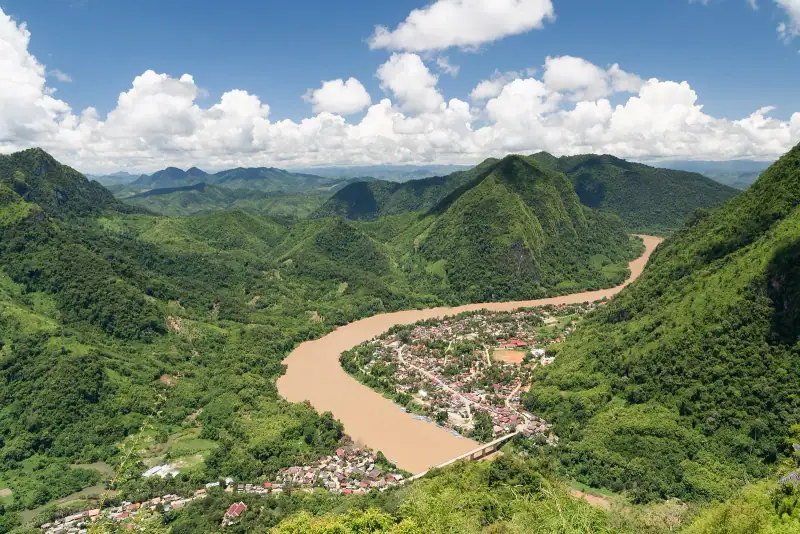
Nong Khiaw (4 hours by minivan from Luang Prabang) is one of the best base villages for mountain trekking in Laos. The spectacular karst landscapes, dense forests and the Nam Ou river below make an exceptional setting.
Pha Daeng viewpoint (1 to 2 hours round trip): 400 steps cut into the cliff to reach a viewpoint over the karsts. Sunset is the best time, and an unforgettable one.
Trek to Ban Sop Jam (4 to 6 hours): a Khmu village reached only on foot, at the bottom of a wooded valley. A local guide is needed, and the fee supports the village economy.
3-day trek Nong Khiaw → Muang Ngoi → return by boat: one of the most spectacular treks in Laos. Dense forests, isolated villages, grand karsts, a river finish. Moderate to hard level. ($115 to $175 per person with guide and lodging)
Kayak combined with trek: several operators offer trek + kayak combinations on the Nam Ou, going down from village to village.
3. Luang Namtha: the paradise of ethnic trekking
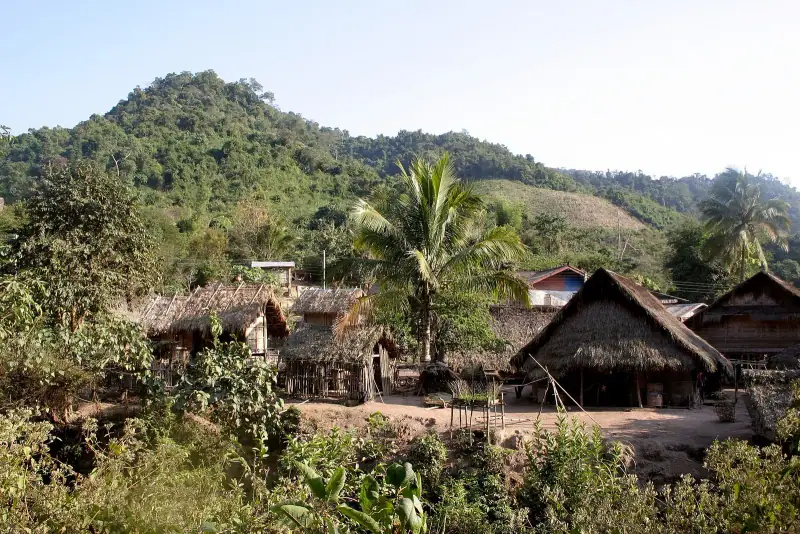
Luang Namtha province, in the far north of Laos (on the Myanmar border), is recognized as one of the best trekking destinations in Southeast Asia for ethnic encounters.
More than 20 different ethnic groups live in this region (Akha, Lanten, Lao Huay, Thai Dam and others). The community treks of the Nam Ha National Protected Area (the region’s historic ecotourism program) are among the most renowned in Laos; ask the agencies on Luang Namtha’s main street to find out the current operators.
Community treks in Nam Ha: treks of 2 to 3 days offered by local operators in Luang Namtha. Part of the income goes directly to the host villages. Nights in stilt houses, meals with families, complete immersion. ($140 to $230 per person depending on length)
Akha village in the hills: a day trek from Luang Namtha with a local guide, visiting a traditional Akha village. ($35 to $58)
4. The Thakhek Loop: karsts and caves
The Thakhek Loop is best known to motorbike riders, but it also offers fine hikes around the karst formations of Khammouane province.
Tham Kong Lor: the walk through the 7 km (4.3 mi) navigable cave is technically a one-of-a-kind underground hike. The galleries reach 100 m (328 ft) high in places. A guide is mandatory. The guide to caves in Laos details the experience.
Hikes in the Phou Hin Boun forest: Phou Hin Boun National Park holds some of the most impressive karst formations in Asia. Several trails cross the primary forest and follow underground rivers.
Vehicle rental to reach trek areas
A motorbike or car to reach the starting points on your own.
5. Phou Bia and the Xieng Khouang plateau
The Xieng Khouang plateau, in northeastern Laos, is dominated by Phou Bia (2,820 m / 9,252 ft), the country’s highest peak. The region is known for the Plain of Jars (mysterious megalithic urns, UNESCO-listed) and its open mountain landscapes, very different from the rest of Laos.
Climbing Phou Bia: the 2 to 3 day trek to the summit is reserved for experienced hikers in good physical shape. Guide mandatory. Pine forest scenery and high alpine meadows found nowhere else in Laos.
Plain of Jars: hikes around the jar sites are accessible to everyone, on marked trails. Ideal for an easy hike between sites 1, 2 and 3.
UXO warning: never leave the marked paths anywhere in Xieng Khouang province. The region suffered the most intense bombing of the Vietnam War and thousands of unexploded bombs remain in fields and forests.
Practical tips for hiking in Laos
Choose a certified local guide: the best guides belong to local cooperatives or work with reputable agencies. They speak the language of the communities visited, know the paths and redistribute income in the villages.
Prepare for the trek: before a multi-day forest trek, ask your doctor or a travel clinic about health precautions, and see the official travel health pages (CDC in the US, TravelHealthPro in the UK). Bring water purification (tablets or a filter).
Respect village rules: take off your shoes before entering a house, ask permission before photographing, and respect the local taboos pointed out by your guide (some sites are sacred, some parts of a house are reserved for spirits).
Pay fairly: guided treks have a fair price that pays the guide and the host families. Do not undercut this service; it is often the main income of an entire community.
Trekking in Laos can be a transformative experience. In these little-explored forests and these villages that have hardly changed for generations, you find a version of Asia that is gradually disappearing, and that deserves to be preserved by visiting responsibly.
Frequently asked questions
Is Laos a good destination for trekking?
Absolutely. Laos offers some of the best treks in Southeast Asia, in preserved forests, with authentic encounters with ethnic minorities. Unlike Vietnam or Thailand, the trails are far less crowded.
Do you need a guide to hike in Laos?
In national protected areas and remote ethnic villages, a local guide is required or strongly recommended for safety and orientation. On the marked trails around Luang Prabang or Nong Khiaw, some treks can be done independently.
What is the best time to hike in Laos?
November to March, the dry season: dry trails, maximum visibility, pleasant temperatures. Avoid July-September (muddy trails, even cut). April-May is still possible but hot.
What fitness level do you need for treks in Laos?
Treks in Laos range from easy to hard. Hikes around Luang Prabang (Phousi, Kuang Si) are accessible to everyone. Forest treks of 2 to 3 days in the north call for good fitness and tolerance of humid heat.
What gear should you bring to hike in Laos?
Waterproof hiking shoes, insect repellent, plenty of water (at least 2 liters), a light rain jacket, cash for the villages, and if you sleep in the forest: a light sleeping bag and a portable mosquito net.
More Laos guides
Keep reading
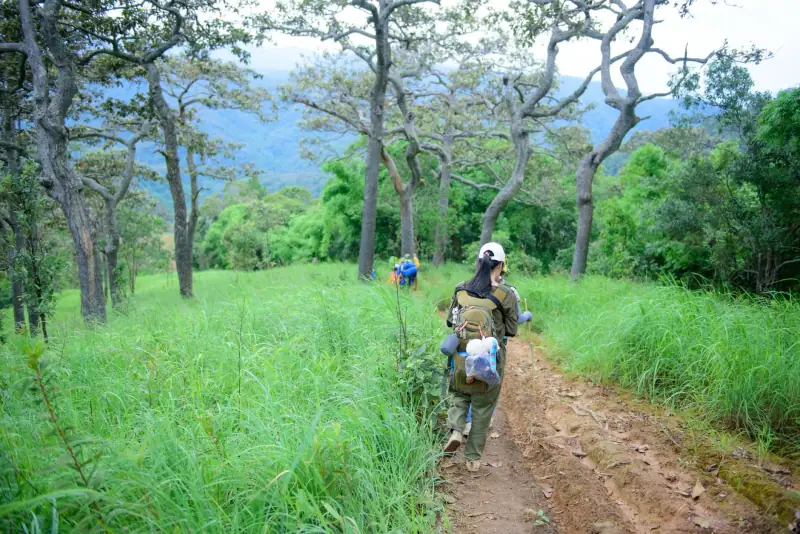
Hiking in Laos Without an Agency: Is It Legal, and What Does It Really Cost?
Can you trek alone in Laos without a guide? Permitted areas, required permit in national parks, UXO risk and agency vs independent price comparison.
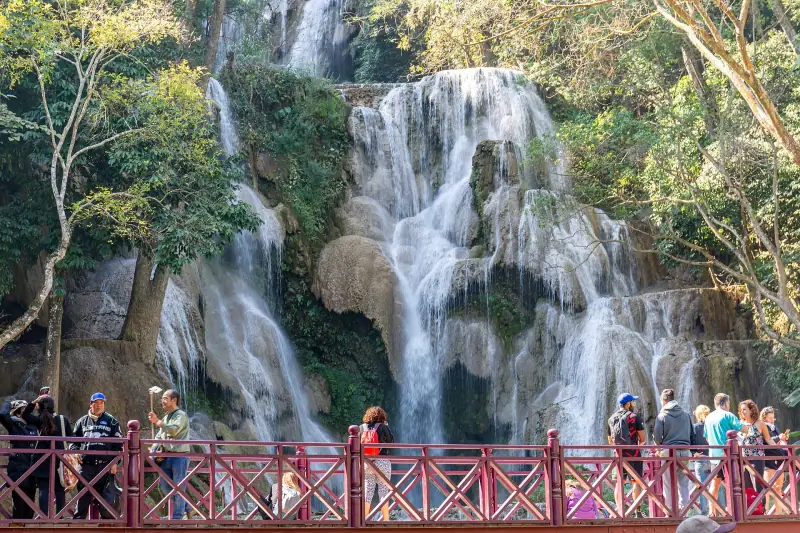
Kuang Si Waterfalls: Complete Guide for Your Visit
Everything about the Kuang Si waterfalls near Luang Prabang: access, fees, swimming, best time to visit and practical tips.
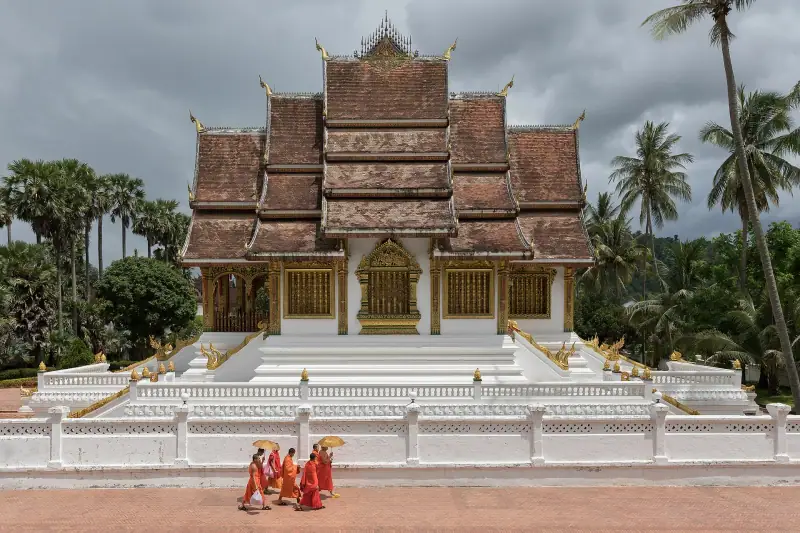
Luang Prabang: The 15 Must-Sees of Laos's Royal Town
What to see in Luang Prabang? The 15 top sights and activities of Laos's spiritual capital: temples, waterfalls, tak bat and markets.
Ready-made
Laos itineraries
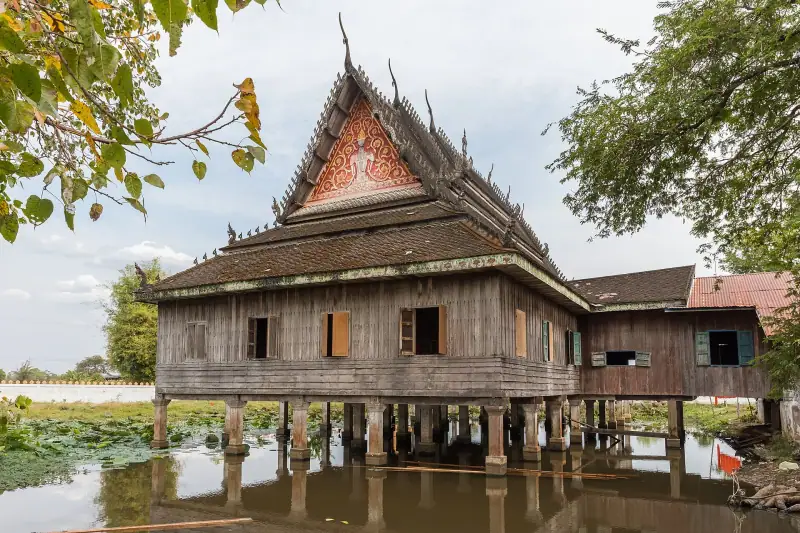
7 days
Laos in 7 Days: A Complete Itinerary for an Unforgettable Week
VientianeVang ViengLuang Prabang
Can be adapted in the planner
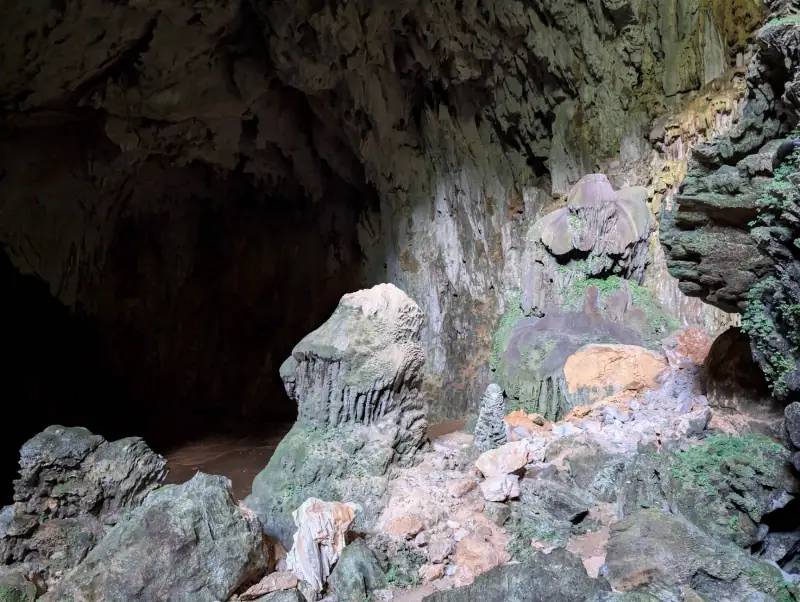
3 days
The Thakhek Loop: Complete Guide to Laos's Motorbike Circuit
Kong LorLak Sao
10 days
Laos in 10 Days Without a Car: A Realistic Train and Bus Itinerary
VientianeVang ViengLuang PrabangNong Khiaw