Things to do
Hiking in Laos Without an Agency: Is It Legal, and What Does It Really Cost?
We may earn a commission when you book through links on this page, at no extra cost to you. We don't visit or try the places we cover: we summarize published sources. How we work
In short
- No national law bans solo hiking, but in National Protected Areas (Nam Ha, Phou Hin Boun) only registered guides hold the entry permit.
- Independent walks are possible on marked trails around Luang Prabang, Nong Khiaw (Pha Daeng) and Plain of Jars sites 1 to 3, if you never leave the path.
- Unexploded ordnance (UXO) is the main danger off-trail: 15 accidents and 25 casualties were recorded in 2025 according to the figures cited.
- Guided treks cost about $25 to $50 for a day and $60 to $90 for 2 days with a village night booked ahead; community cooperatives pay villages directly.
You have spotted a promising trail on the map, between karst forest and an isolated village, and you wonder whether you can simply set off alone, without going through an agency. The question comes up often among independent travelers visiting northern Laos: is it really forbidden, or just a cautious recommendation meant to sell excursions? The answer is more nuanced than a simple yes or no, and it depends entirely on where you plan to walk.
Hiking alone in Laos: what the regulations really say
There is no single national law that would ban solo hiking across all of Laos. The rule is set at the local level, according to the status of the area crossed.
In National Protected Areas (NPAs), the Lao equivalent of national nature parks, such as Nam Ha in Luang Namtha or Phou Hin Boun near Thakhek, access is supervised by community ecotourism programs. The entry permit is issued only to guides registered with these programs, not to individual visitors. In practice, this means it is impossible to enter these areas legally without an approved guide, even if you are an experienced, self-reliant hiker.
Outside the NPAs, on trails around tourist towns, the situation is looser: nothing prevents you from walking alone on a marked path. That is the case for most trails around Luang Prabang, where many travelers climb Mount Phousi or walk the temple circuit with no accompaniment at all.
In short: it is not hiking itself that is forbidden, it is access to certain protected areas without the permit that only an approved guide can obtain.
Where a guide is mandatory: Nam Ha, Phou Hin Boun, Nong Khiaw
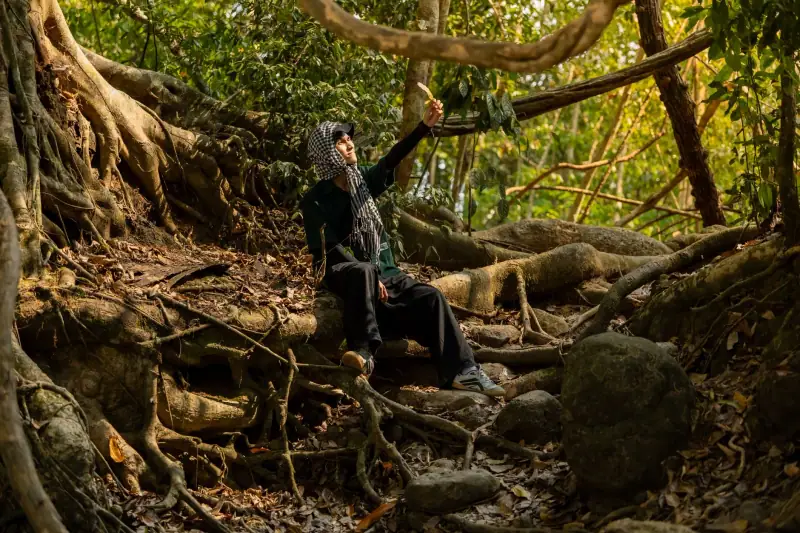
Three of the country’s most popular trek destinations require a guide almost systematically:
- Nam Ha National Protected Area (Luang Namtha): the community program Nam Ha Ecotourism Project is the mandatory entry point for any trek in this area, known for encounters with the Akha, Khmu and Lanten ethnic groups.
- Phou Hin Boun National Protected Area (Thakhek Loop), home notably to Tham Kong Lor, the 7 km (4.3 mi) navigable cave: a guide is required for the crossing, as for the surrounding forest treks. The guide to caves in Laos details this experience.
- Nong Khiaw and the Nam Ou valley, for multi-day treks to isolated Khmu villages at the bottom of the valley: the trails are not marked beyond the immediate surroundings of the village, and a local guide is needed for orientation as much as for access to the host communities.
Where you can walk independently: Luang Prabang, Nong Khiaw, Plain of Jars
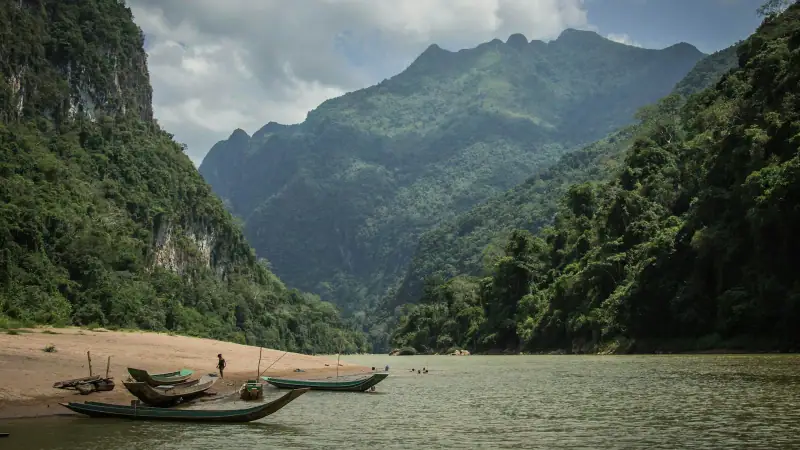
Good news for travelers who prefer to go it alone: some trails remain passable without a guide, provided you stick strictly to the marked route.
- The hills of Luang Prabang: the Mount Phousi trail (329 steps, 30 minutes) and the hilltop temple circuit are accessible without a guide, in daytime (entry fee of about 60,000 kip for Phousi, to check locally).
- The immediate surroundings of Nong Khiaw, notably the climb to the Pha Daeng viewpoint (about 2 to 2.5 hours round trip, 3.7 km / 2.3 mi, 460 m / 1,509 ft of elevation gain): a steep and sometimes muddy jungle trail, with earth and bamboo steps, fixed ropes on the rocky sections and a bamboo ladder near the top, doable solo in dry weather for a hiker in good shape.
- The Plain of Jars (sites 1, 2 and 3): the paths between the megalithic jars are marked and open without a guide, but with a safety warning that must be taken very seriously (see below).
- Some waterfalls reachable on foot, such as the return trip from the Kuang Si falls through the villages, often done on foot by visitors who took a tuk-tuk out.
In every case, independence ends where the marked trail ends. Stepping off the path, even in an area reputed “safe”, changes everything.
The UXO risk: the real reason never to leave the trail
This is the most serious argument in favor of a guide, well beyond the legal question alone. Laos is the most heavily bombed country in the world per capita: between 1964 and 1973, more than 270 million submunitions were dropped on its territory, of which an estimated 80 million never exploded. These unexploded devices (UXO, unexploded ordnance) remain buried in fields, forests and sometimes the edges of villages, notably in the provinces of Xieng Khouang (Plain of Jars), Savannakhet, Attapeu and Sekong, though isolated finds also occur elsewhere. A few dozen casualties are still recorded each year in the country (15 accidents and 25 casualties in 2025 according to official figures).
This risk does not concern the classic tourist trails or regularly visited areas, where the ground has been checked and packed down by foot traffic. It concerns going off-trail: leaving a marked path to cut across a field, a clearing or a forest edge that looks passable. That is exactly what a local guide instinctively avoids, knowing the cleared areas and the safe routes.
The rule to remember, everywhere in Laos: never pick up an unknown metal object on the ground, never leave a marked trail or the path a guide is following, and ask residents or a guide before any improvised route in a rural area, even one that seems harmless.
How much a guided trek costs, compared with improvising
This is often the argument that makes people want to do without a guide: budget. In practice, the price gap stays reasonable, especially given the safety and access a guide provides.
| Option | Indicative price | What it includes |
|---|---|---|
| One-day trek with a guide (Luang Namtha, Nong Khiaw) | $25 to $50/person | Guide, local transport, sometimes lunch |
| 2-day / 1-night trek with homestay | $60 to $90/person (booked ahead) | Guide, village lodging, meals, NPA permit |
| 2-day trek booked in person, last minute | $30 to $62/person | Same, sliding rate depending on availability and group size |
| 3- to 5-day forest trek (Nam Ha Ecotrek) | about $100 to $200/person (depending on length and group; check with the program) | Certified guide, several village nights, full meals |
| Independent hike (free areas only) | Almost free | No supervision, limited to marked trails outside NPAs |
Booking locally rather than ahead often costs less, as long as you accept joining a group that is already formed and have no fixed dates. Conversely, booking from abroad through an online agency generally costs more for the same trek, the intermediary’s margin adding to the local rate. For an overall trip budget including this item, see the Laos budget guide.
How to find a local guide at a fair price
To avoid paying an agency that itself subcontracts the service to a local guide, two approaches work well:
- Go directly through a community cooperative, such as the Nam Ha Ecotourism Project in Luang Namtha. The rate includes direct redistribution to the villages visited, with no extra intermediary margin.
- Book in person, at the tourism office or the protected-area office, rather than online from abroad. Rates posted locally are generally more transparent, and the tourism office can point you to a certified guide available for your dates.
Bargain with restraint: the price of a guided trek often pays an entire family over several days, in regions where tourism remains one of the few sources of income. A rock-bottom price falls directly on the guide and the host families, not on a distant agency margin.
Should you still take a guide?
Even in areas where solo hiking is technically allowed, taking a guide remains widely recommended in Laos, for three concrete reasons: access to the most interesting areas (ethnic villages, primary forests, caves), which are closed without a permit anyway; safety against the UXO risk, which does not forgive improvisation; and the direct economic impact on communities that live largely from this supervised tourism. Independent hiking keeps its place for a half-day walk around Luang Prabang or Nong Khiaw, but as soon as a trek leaves the beaten track, the guide is not an optional extra: he or she is the condition of access itself.
Before you go, also ask your doctor or a travel clinic about health precautions for forest treks, and see the official travel health pages (CDC in the US, TravelHealthPro in the UK).
Frequently asked questions
Can you hike alone in Laos without a guide?
It depends entirely on the place. On marked trails around Luang Prabang or Nong Khiaw, independent hiking is possible and common. However, in National Protected Areas (NPAs) such as Nam Ha in Luang Namtha or Phou Hin Boun near Thakhek, access is regulated: only registered guides hold the permit needed to take visitors there, which makes solo trekking legally impossible in these areas.
Why is a permit required in Lao national parks?
National Protected Areas are managed through community ecotourism programs (such as the Nam Ha Ecotourism Project in Luang Namtha) whose goal is to manage visitor flows, redistribute tourism income to host villages and limit environmental impact. The access permit is issued only to certified guides attached to these programs, not to individual travelers.
How much does a guided trek in Laos cost compared with an improvised one?
A guided day trek starts around $25 to $30 per person, and a 2-day trek with a village night costs $60 to $90 when booked ahead (cheaper if you book on the spot at the last minute and accept joining a group that is already formed). An independent trek in the areas where it is allowed (Luang Prabang, Nong Khiaw) costs almost nothing beyond equipment, but is limited to short, already-marked trails.
What is the real risk of hiking off the marked trails in Laos?
Laos is the most heavily bombed country in the world per capita: tens of millions of unexploded submunitions (UXO) dating from the Vietnam War remain, mainly in the provinces of Xieng Khouang, Savannakhet, Attapeu and Sekong, though isolated munitions can be found elsewhere in rural areas. The risk is not theoretical: a few dozen casualties are still recorded each year (15 accidents and 25 casualties in 2025 according to official figures). The absolute rule is never to leave a marked trail or the path followed by your guide.
Where can you walk freely without a guide in Laos?
The hills behind Luang Prabang's old town (Mount Phousi, the temple circuit), the marked trails around Nong Khiaw outside the deep forest areas, and Plain of Jars sites 1, 2 and 3 can be done independently. Even so, stay strictly on the traced paths everywhere, including in these areas considered safe.
What difference does a certified local guide make compared with a standard agency?
A guide attached to a community cooperative (such as the Nam Ha Ecotourism Project) passes a direct share of the fee to the village visited and knows the host families personally. A standard agency in Luang Prabang or Vientiane often subcontracts the service to these same local guides, with an extra margin. The final price is close, but booking directly through the cooperative or in person ensures better redistribution of income.
More Laos guides
Keep reading
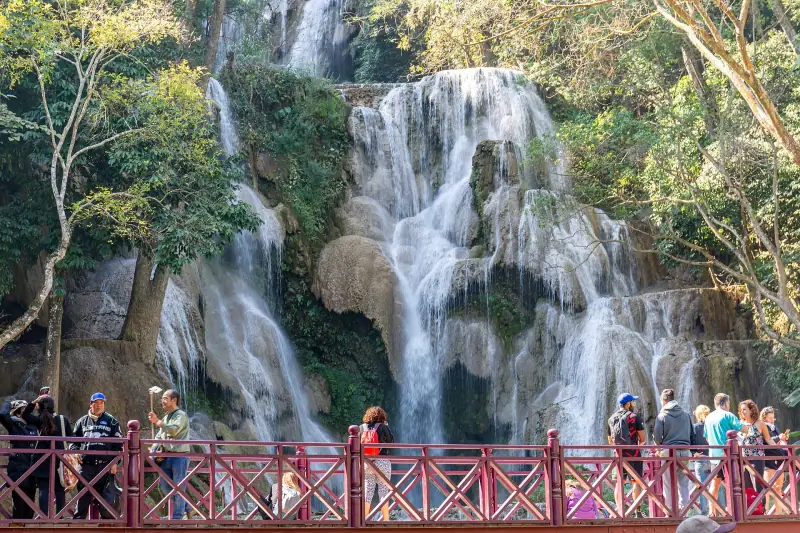
Kuang Si Waterfalls: Complete Guide for Your Visit
Everything about the Kuang Si waterfalls near Luang Prabang: access, fees, swimming, best time to visit and practical tips.
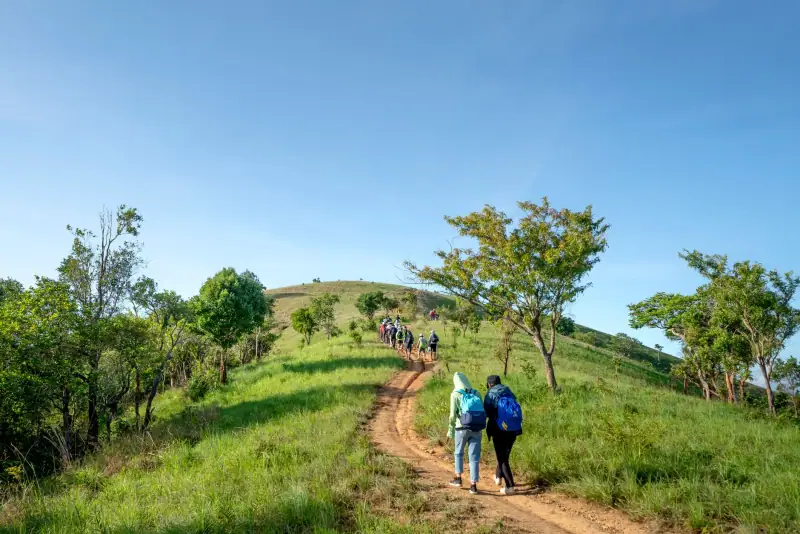
Hiking in Laos: The Best Treks and Trekking Trails
Guide to the best hikes in Laos: trekking in the north, ethnic villages, tropical forests and karst landscapes. All levels.
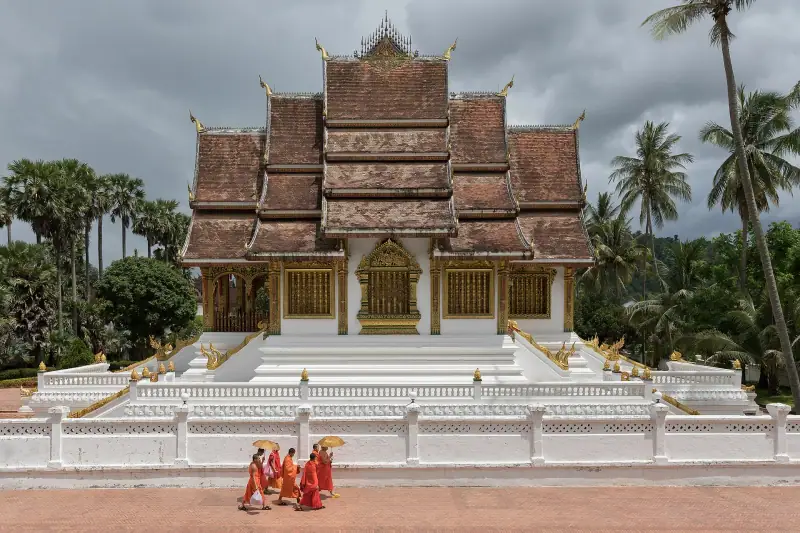
Luang Prabang: The 15 Must-Sees of Laos's Royal Town
What to see in Luang Prabang? The 15 top sights and activities of Laos's spiritual capital: temples, waterfalls, tak bat and markets.
Ready-made
Laos itineraries
7 days
Laos in 7 Days: A Complete Itinerary for an Unforgettable Week
VientianeVang ViengLuang Prabang
Can be adapted in the planner
3 days
The Thakhek Loop: Complete Guide to Laos's Motorbike Circuit
Kong LorLak Sao

10 days
Laos in 10 Days Without a Car: A Realistic Train and Bus Itinerary
VientianeVang ViengLuang PrabangNong Khiaw