Where to stay
Where to stay on Lake Garda: Sirmione, Riva, Malcesine or Lazise?
We may earn a commission when you book through links on this page, at no extra cost to you. We don't visit or try the places we cover: we summarize published sources. How we work
In short
- The south (Sirmione, Desenzano, Lazise) suits first stays, families and wine lovers; the north (Malcesine, Riva del Garda) suits hikers, cyclists and water sports.
- Desenzano has a train station on the Milan-Venice line and generally lower rates than Sirmione, which is usually among the most expensive bases.
- The lake is more than 50 km (31 mi) long and driving around it can take a full day in summer; pick a base that fits what you want to do.
- Three to four nights cover the Sirmione peninsula, a village or two on the east shore and an excursion north.
Lake Garda is the biggest of the Italian lakes, and also the one where the choice of base changes the experience most. Its shores have nothing in common: in the south, gentle hills, vineyards and long beaches; in the north, cliffs plunging into the water, a steady wind and mountain trails. Staying in Sirmione is nothing like staying in Malcesine or Riva del Garda.
This guide compares the main bases, explains how to choose based on your travel style (couple, family, active traveler, small budget) and gives tips for booking at the right time. Rates vary a lot with the season and demand: they are given here only qualitatively and should be checked when you book. If you are still torn between several lakes, start with our comparison of the Italian lakes.
How to choose your base on Lake Garda
The lake is big: it is more than 50 km (31 mi) long, and going all the way around by road can easily take a full day in summer because of traffic. It is better to choose a base suited to what you want to do than to make repeated long trips from a badly placed spot.
A few criteria help you decide:
- Type of stay: relaxation and cultural visits in the south, sport and mountain scenery in the north.
- Transport: the southern shore is the most accessible by train and car; the north takes longer to reach from the airports, but is served by buses and boats.
- Access to the lake: some places are on the water, others on the heights with a view. The view is superb, but the walk down to the village can be long, especially with luggage.
- Quiet: the most famous villages are crowded by day and quieter in the evening; the smaller resorts are calm all day.
- Parking: in historic centers, car access is often restricted. Ask your accommodation where to park before booking.
To see how to link the shores, our guide to getting around the Italian lakes covers the boat, train and bus options.
Sirmione: the medieval peninsula
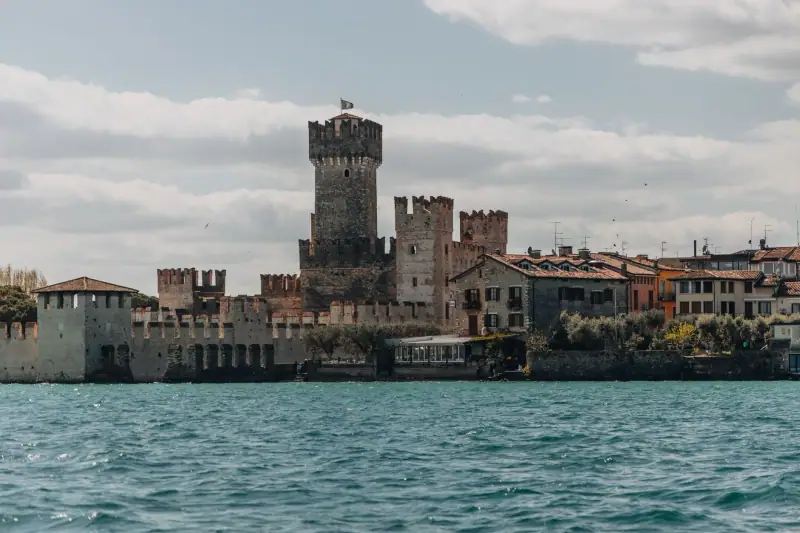
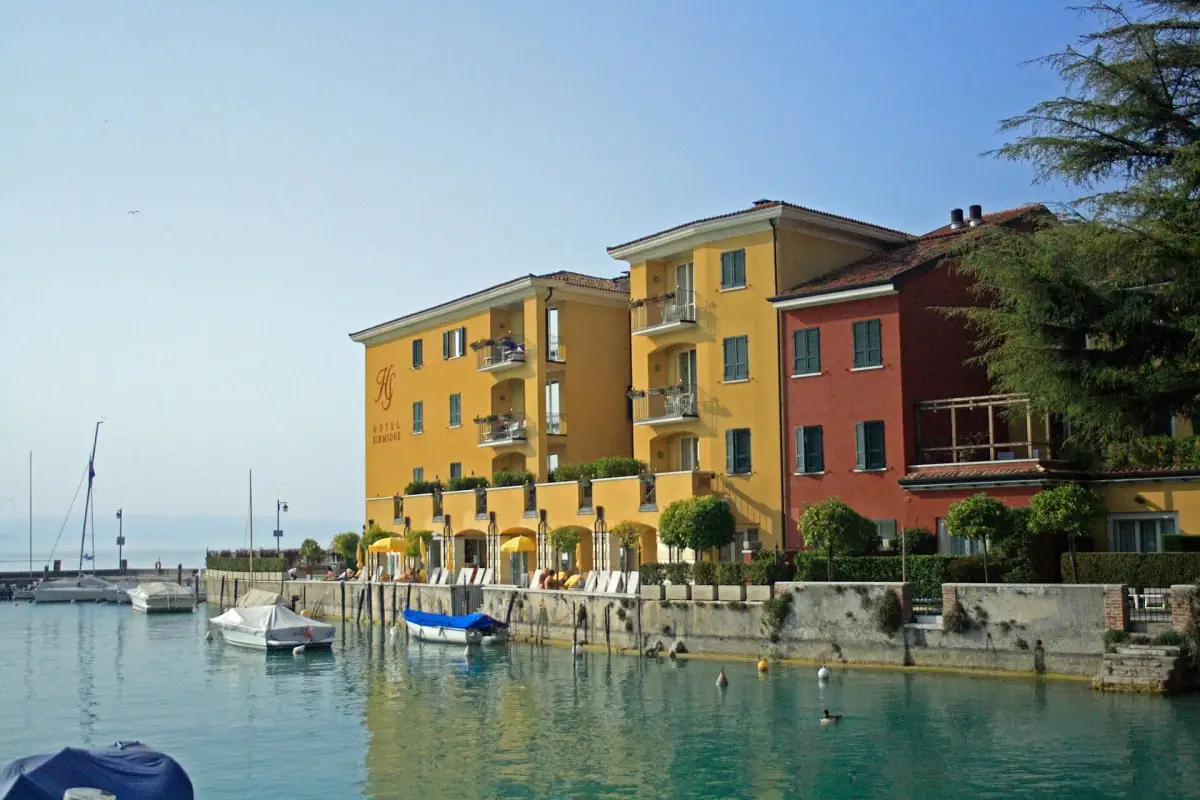
Sirmione juts into the lake on a narrow peninsula, dominated by its medieval castle surrounded by water. It is one of the most famous images of Lake Garda, and the town naturally attracts many visitors, especially by day. The historic center is pedestrian and very compact: you cross it on foot in a few minutes, which is pleasant but makes luggage and parking a bit tricky.
Staying in Sirmione means enjoying the lanes early in the morning and in the evening, when the groups have left. You are also close to the thermal baths, the beaches at the tip of the peninsula and the Roman ruins. The downside is the price: it is generally one of the most expensive bases on the lake, and rooms with a view are booked far in advance.
Who it suits: couples, travelers looking for charm and a medieval atmosphere, and those who want a short, scenic stay. Good to know: check access and parking before booking, and consider staying slightly back, on the mainland side, to save money without giving up the visit. Our article on visiting Sirmione covers what to see there.
Desenzano del Garda: the practical base
West of Sirmione, Desenzano del Garda is the biggest town on the southern shore. It has a station on the Milan-Venice line, a harbor, a lively historic center and many restaurants and shops. It is a very practical base, especially if you travel without a car or combine the lake with Verona, Brescia or Milan.
The atmosphere is more urban and local than in the postcard villages: the streets are lively all year, with markets, cafés and neighborhood life. Rates are generally lower than in Sirmione, which makes it a good choice for a small budget or a short stay. Boats let you reach other villages on the lake without a car.
Who it suits: travelers without a car, small budgets, those who want to combine the lake with nearby cities. Good to know: the town is more functional than picturesque, and the beaches are less wild than on other shores.
Hotels, apartments and guesthouses in Sirmione, Desenzano, Lazise or Riva: compare rates and cancellation conditions for your dates.
Lazise and Bardolino: the east shore, between ramparts and vines
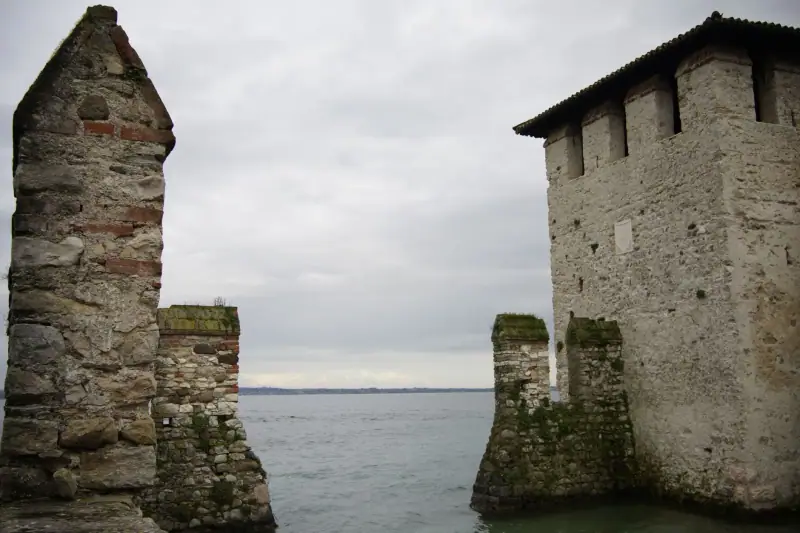
On the eastern shore, on the Veneto side, Lazise and Bardolino offer a calmer atmosphere, between a small harbor, old ramparts and vine-covered hills. Lazise is a fortified village that is very pleasant to explore on foot, with a pretty promenade by the water; Bardolino is known for its wine, and several wineries can be visited nearby. For more on this theme, read our guide to Lake Garda wines.
These villages are good bases for families and couples who want a relaxed stay: access to the water is easy, accommodation is varied (hotels, apartments, campsites) and the pace is less frantic than in Sirmione. The area is also close to several theme parks, very popular with children in summer, which can be a plus or a minus depending on how you feel about noise and crowds.
Who it suits: families, wine lovers, quiet walkers and anyone who wants a pleasant base without Sirmione’s prices. Good to know: in high season, traffic on the lakeside road can be heavy; choose accommodation within walking distance of the center.
Malcesine: the north, between castle and mountain
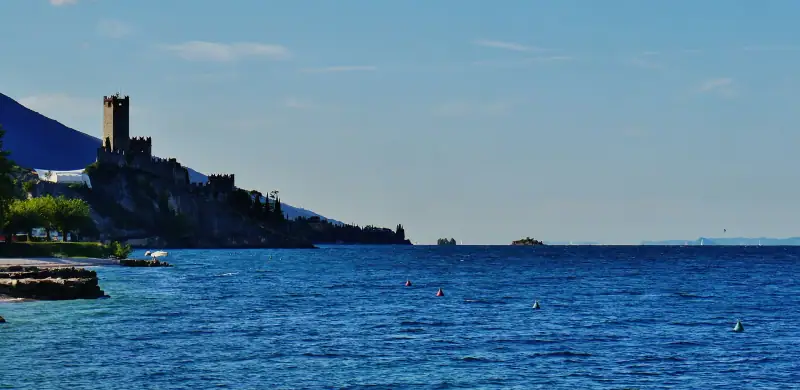
Malcesine, on the eastern shore in the north of the lake, is one of the most photogenic villages on Garda. Its lanes climb from the harbor to a medieval castle overlooking the water, and Monte Baldo, just behind, offers hikes and spectacular viewpoints, reached by a cable car that starts from the village. For the area’s activities, see our guide to northern Lake Garda: Riva and Malcesine.
The atmosphere here is more mountain-like and active than in the south, and walkers, hikers, cyclists and sailing fans will feel at home. Accommodation is varied, from lakeside hotels to guesthouses up the slope. The streets in the center are narrow and steep: think about your luggage and access before booking.
Who it suits: hikers, couples looking for scenery and travelers who like villages with character. Good to know: the village is very busy by day in high season; in the morning and evening, it regains all its charm.
Riva del Garda and Torbole: sport and the outdoors
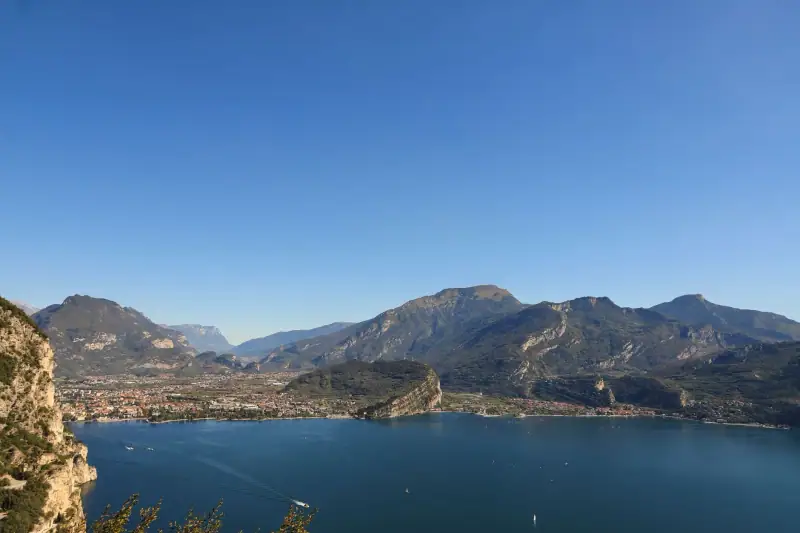
At the northern tip of the lake, Riva del Garda is the main base for outdoor activities. The steady wind that blows in this part of the lake makes it a well-known spot for windsurfing and kitesurfing, notably around neighboring Torbole, while the cliffs and trails around attract climbers, hikers and cyclists. The town itself has a pleasant historic center, a lakeside promenade and genuine local life.
It is also the lake’s gateway for those coming from northern Italy or the Alps: the scenery is more alpine, the atmosphere more active and the nights cooler than in the south. Accommodation ranges from hotels to campsites, with plenty of options for active travelers (bike storage, for example). The town is administratively part of Trentino, which gives it a slightly different character from the rest of the lake.
Who it suits: active travelers, cyclists, hikers and anyone who prefers action to lazing around. Good to know: the wind is an advantage for water sports, but can make swimming choppy on some days. For high mountains, the Dolomites are a separate trip.
Cruises, guided visits and water activities from Sirmione, Riva or Malcesine: compare offers and their cancellation conditions.
The quieter villages of the west shore
The western shore, on the Lombardy side, is steeper and its roads are more winding. It holds pretty villages such as Salò, an elegant lakeside town, or Limone sul Garda, whose old lemon greenhouses recall the area’s farming history. These places are generally calmer than Sirmione or Malcesine, with a more authentic character, but they are also less convenient without a car.
It is a good option if you are looking for peace, a lake view from a terrace and fewer people. Prices are sometimes lower, but check the distance to shops, landing stages and any station or bus stop before booking.
Who it suits: travelers with a car, lovers of quiet and those who like going off the beaten track. Good to know: west-shore roads are narrow and sometimes slow; allow travel time.
Which type of accommodation to choose
Lake Garda offers a wide variety of options, and the right choice depends as much on budget as on the pace of your trip:
- Lakeside hotels: practical and well located, they are often the most expensive in high season. Some close in winter.
- Apartments and holiday homes: very common around the lake, they suit families and week-long stays. Check parking, air conditioning and cleaning terms.
- Guesthouses and agriturismi: often in the hills, they offer a more local experience, sometimes with wine or olive oil tastings. A car is generally needed.
- Campsites and holiday villages: very common around the lake, they are especially suited to families and active trips.
- Hostels and small guesthouses: a budget option, especially in larger towns such as Desenzano or Riva.
In every case, look at the real position of the accommodation: a hotel “with lake view” can be several hundred meters from the village, at the top of a slope.
What to budget for lodging on Lake Garda
It is impossible to give reliable prices in advance, as they vary enormously with the date, the shore and the type of accommodation. A few general rules help control the budget, though:
- Sirmione and the most famous villages are generally the most expensive, especially with a water view.
- Desenzano, Peschiera or municipalities a little farther back usually have better rates.
- July and August have the highest prices; May, June and September are often better value, with the weather still pleasant.
- Weekends generally cost more than weekdays, and some places require a minimum stay.
- Apartments can be economical for families or groups, especially with a kitchen to prepare some meals.
- The tourist tax is generally collected on the spot in Italy and sometimes added to the displayed price: check when you book.
For an overview of trip costs, see our budget for a trip to the Italian lakes. To choose the best time, also read our guide to the best time to visit the Italian lakes.
Getting to Lake Garda
Several airports serve the area: Verona and Brescia for the south of the lake, Bergamo and Milan for the west, followed by a train or road transfer. The Desenzano-Sirmione station, on the Milan-Venice line, is the main rail entry point; from there, buses and boats reach the villages. For the north, plan more travel time, often by car or bus.
Verona, Milan or Bergamo: compare flights to find the best fare for your dates.
Booking well: a few useful habits
A few simple habits avoid unpleasant surprises:
- Book early for July and August, and choose rates with free cancellation to keep flexibility.
- Read recent reviews, especially on noise, real distance to the center and parking.
- Check opening dates: many hotels and campsites close in winter.
- Ask about car access: historic centers are often restricted, and some places provide a permit or parking.
- Consider travel insurance if you book far in advance: a policy can cover cancellation and the unexpected, so compare options for your situation.
Tips for choosing
- First stay, three to four nights: Sirmione or Desenzano for ease, Lazise for a calmer atmosphere.
- Small budget: Desenzano, or accommodation set back from the most famous villages.
- Without a car: Desenzano, with its station, then boats for the rest of the lake.
- With family: the south of the lake and the east shore, with beaches, campsites and theme parks.
- Hiking, cycling, water sports: Malcesine, Riva del Garda or Torbole.
- Quiet and authenticity: the west shore, with a car.
- Rental car: useful if you stay in the hills or on the west shore; compare the offers on this page.
One last tip: do not try to see everything from a single base. Two nights in two different places, for example one in the south and one in the north, often give a better idea of the lake’s diversity than a week in the same spot.
Frequently asked questions
Where should you stay on Lake Garda for a first visit?
For a first stay, Sirmione, Lazise or Desenzano, on the southern shore, are easy bases: close to the main roads, well connected and near the main sights. If you prefer mountain scenery and outdoor activities, Malcesine or Riva del Garda, in the north, are more spectacular.
Which shore of Lake Garda should you choose?
The southern shore, flatter and more open, suits families, wine lovers and theme-park fans. The north, hemmed in by mountains, appeals to hikers, cyclists and sailing and windsurfing fans. The east shore (Veneto side) is often considered calmer than the steeper west.
Do you need a car to stay on Lake Garda?
It is useful if you want to explore several shores, but not essential. Boats link the main villages and the Desenzano-Sirmione station is on the Milan-Venice line. In summer, traffic around the lake is heavy and parking is scarce, notably in Sirmione, so ask your accommodation about parking.
How many nights should you plan on Lake Garda?
Three to four nights let you visit the Sirmione peninsula, a village or two on the east shore and an excursion north. If you want to add hiking or water sports, plan closer to a week.
Where should you stay on Lake Garda with children?
The south of the lake is generally the most practical with young children: equipped beaches and lawns, many places with a pool or large garden, and theme parks nearby. Some campsites and residences also offer family-oriented services.
When is the best time to book accommodation on Lake Garda?
Early summer and September are very popular for swimming. In July and August, prices rise and the most sought-after places fill early. Out of season, several hotels close: check their opening dates before booking.
More Italian Lakes guides
Keep reading
Where to stay on Lake Maggiore: Stresa, Baveno, Verbania or Cannobio?
Where to stay on Lake Maggiore? Stresa, Baveno, Verbania, Arona, Cannobio and Laveno compared: atmosphere, transport, budget and tips.
Where to stay on Lake Como: Bellagio, Varenna, Como or Menaggio?
Where to stay on Lake Como? Bellagio, Varenna, Como, Menaggio and Tremezzo compared: atmosphere, budget, transport and tips for choosing well.
Italian Lakes budget: how much a trip costs (3 costed profiles)
How much does a trip to the Italian Lakes cost? Accommodation, boats, meals, activities: three daily budgets with figures and tips to spend less.
Ready-made
Italian Lakes itineraries
3 days
Lake Como in 3 days: Como, Bellagio and Varenna itinerary
What to see on Lake Como in 3 days? A day-by-day plan by boat and on foot: Como, Tremezzina villas, Bellagio and Varenna, no car needed.
5 days
Italian Lakes in 5 days without a car: a realistic train and boat itinerary
ComoVarennaStresaDesenzano del Garda
7 days
7-day Italian Lakes road trip: Maggiore, Como and Garda
A 7-day drive through Lake Maggiore, Lake Orta, Lake Como and Lake Garda: stops, driving times, driving and parking tips.