What to see
Tbilisi: the 15 must-see sights
We may earn a commission when you book through links on this page, at no extra cost to you. We don't visit or try the places we cover: we summarize published sources. How we work
In short
- Two to three days cover Tbilisi's main sights: the old town, the sulfur baths, Narikala, Sameba and Rustaveli in two days, plus museums and half-day trips in three.
- Most sights are free (old town, Narikala, Sameba, Fabrika, Rike Park); the National Museum is about 40 GEL for foreign visitors and private baths 50-200 GEL an hour.
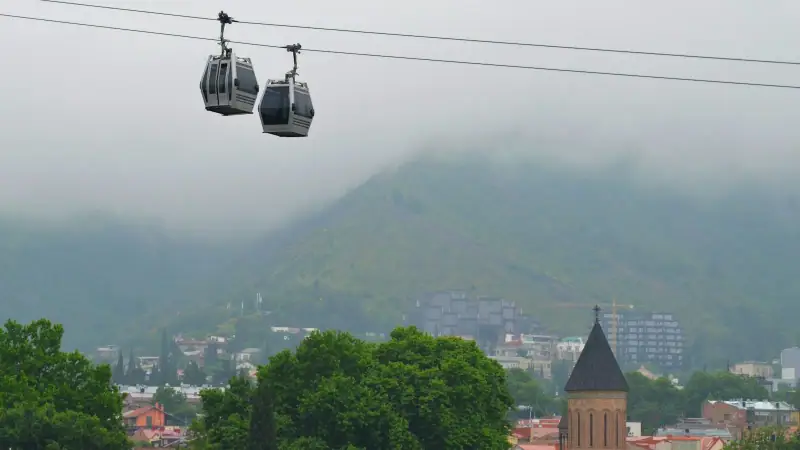
- The funicular to Mtatsminda Park takes 5 minutes and costs about 10-12 GEL one way; the small Rike-Narikala cable car costs 2.5 GEL.
- The old town is very safe for tourists, even in the evening; cover shoulders and knees to enter cathedrals.
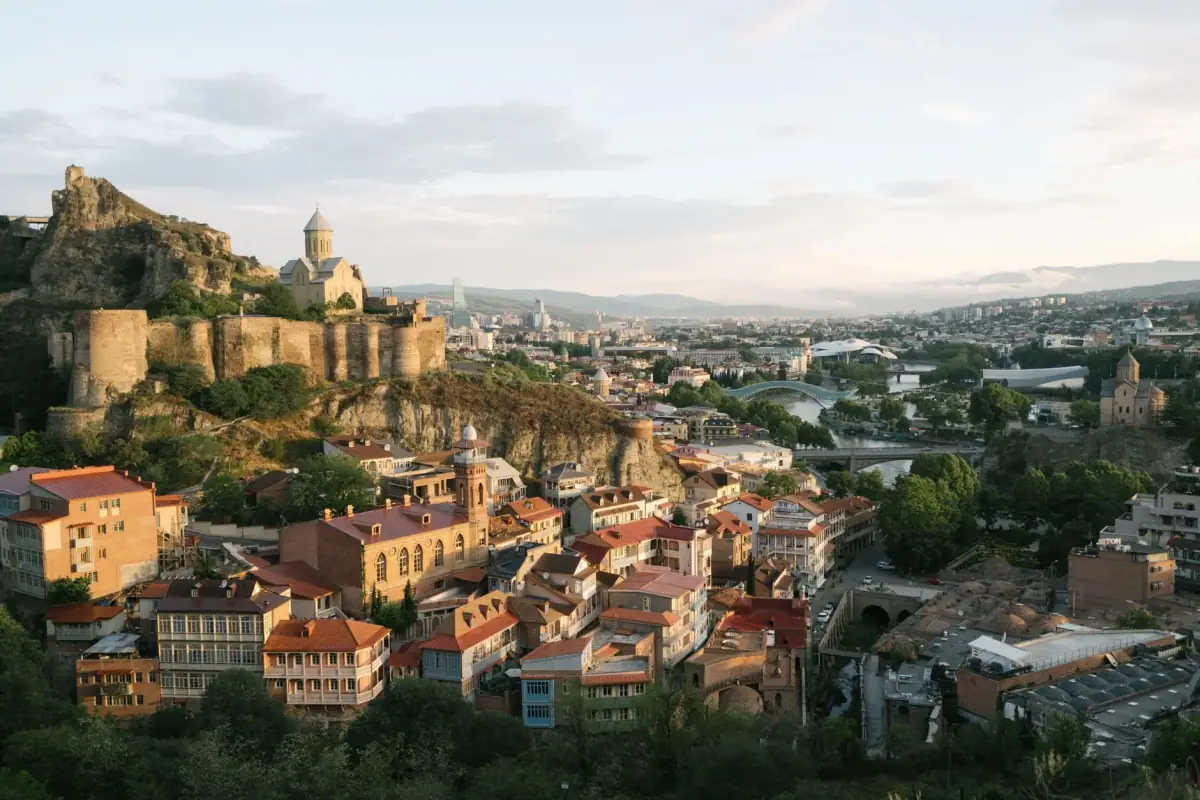
Tbilisi is one of those cities that stay in your memory. Its old town with cobbled lanes and carved balconies, its centuries-old sulfur baths, its massive cathedral dominating the hills, its underground clubs and generous Georgian restaurants form a unique mix you will not find anywhere else. Here are the 15 sights and experiences to put on your list.
1. The old town (Dzveli Kalaki)
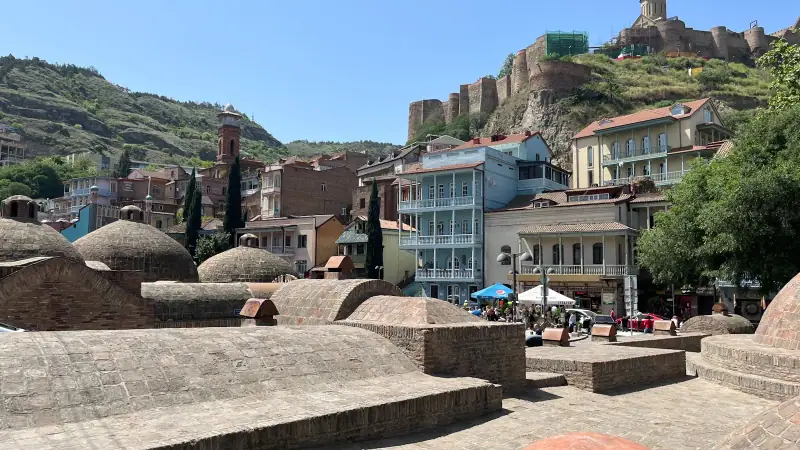
The old town is the heart of Tbilisi. This district of cobbled lanes, colorful houses with carved wooden balconies and flowered inner courtyards spreads around Meidan Square and climbs up to Narikala Fortress. Get lost in its alleys without a map: it is often in the least touristy corners that you find the most beautiful facades and the most secret courtyards.
Highlights: Leselidze Street and its Georgian inns, Meidan Square with its craftspeople, Shardeni Street for restaurants.
2. The Abanotubani sulfur baths
The Abanotubani district and its round brick domes are the best-known image of Tbilisi. The underground baths, fed by natural hot sulfur springs (37-42 °C / 99-108 °F), have welcomed Tbilisi residents for centuries. A unique sensory experience with hot water, the smell of sulfur and horsehair-mitt massages.
Practical: private bath (1 h): about 50-200 GEL depending on the establishment. Shared bath: about 5-15 GEL. Kisi massage extra. Rates vary, so check locally.
3. Narikala Fortress
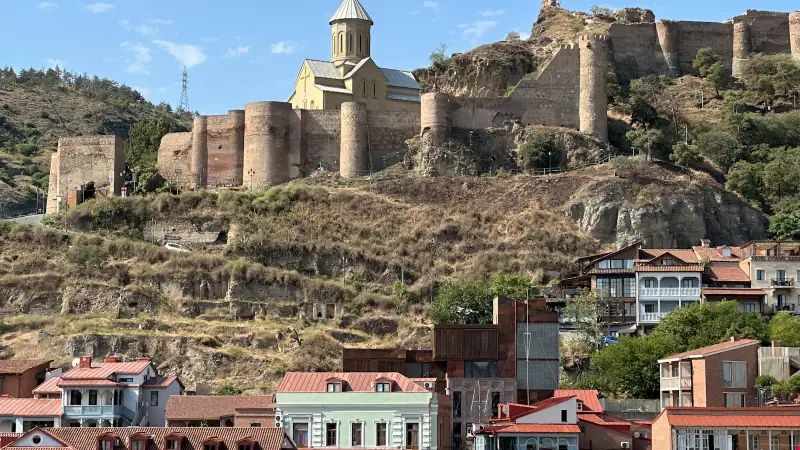
Narikala Fortress has overlooked the old town since the 4th century. Its ruined crenellated walls and towers offer one of the best views of Tbilisi and the Mtkvari River. Access is free. You can walk up from the baths (15 min) or take the cable car from Rike Park.
Tip: sunset from Narikala is one of the most beautiful moments in Tbilisi.
4. Sameba Cathedral
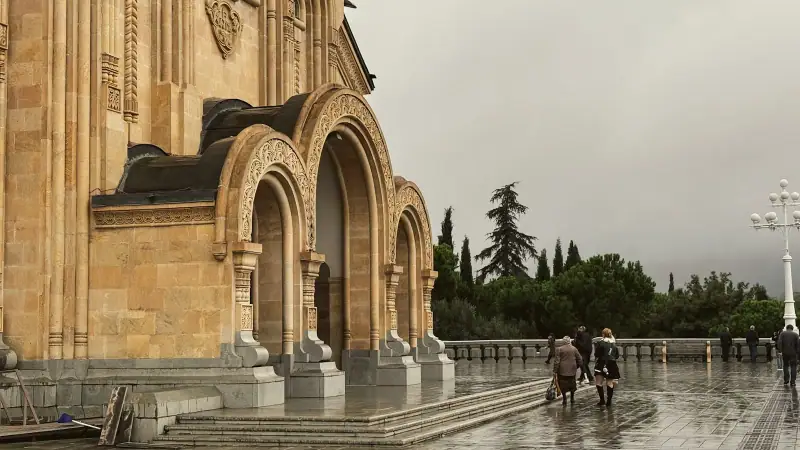
The Holy Trinity Cathedral is the largest Orthodox cathedral in Eastern Europe, built between 1995 and 2004. It dominates Tbilisi from St. Elijah Hill. Its gigantic proportions (84 m / 276 ft tall) and its interior frescoes are impressive. The forecourt offers a fine view of the city.
Access: Avlabari metro, 15 min on foot. Free entry.
5. The Bridge of Peace
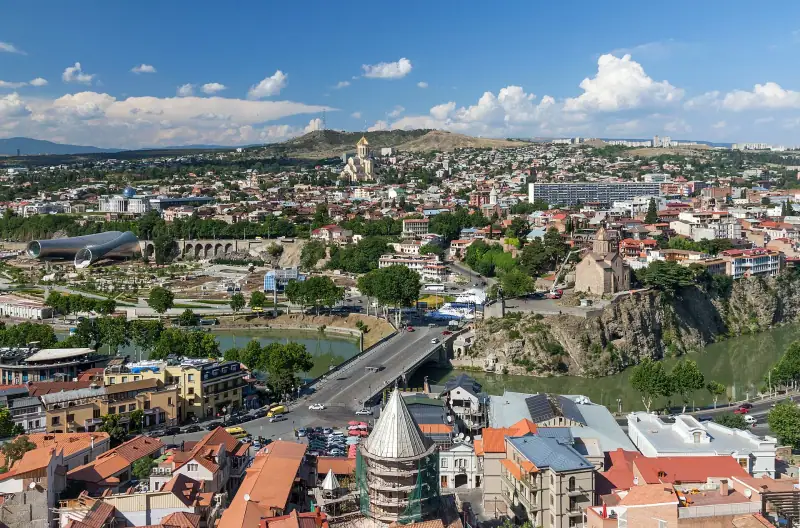
This contemporary glass-and-steel pedestrian bridge (opened in 2010) spans the Mtkvari River between Rike Park and the old town. Its elliptical shape and night lighting make it one of the symbols of modern Tbilisi. From the bridge there is a good view of Metekhi Church and the tuff cliffs.
6. The Fabrika district
Fabrika is a former Soviet garment factory turned into a hipster cultural hub. Its inner courtyards house restaurants, trendy bars, art galleries, coworking spaces and designer shops. It is the ideal place to watch Tbilisi’s creative youth.
Open especially in the evening, with a live music scene on some nights.
7. The Georgian National Museum
The National Museum (on Rustaveli Avenue) is the best introduction to Georgian history and culture. The collection of Bronze Age gold jewelry (a national treasure) is truly remarkable. The archaeology and medieval art sections are also very rich.
Admission: about 40 GEL for foreign visitors (check the current rate with the museum). Allow 2-3 h.
Hotels in Tbilisi's old town
Boutique hotels and guesthouses in the heart of the action.
8. The funicular and Mtatsminda Park
The funicular (opened in 1905) climbs to the Mtatsminda amusement park at the top of the hill of the same name (770 m / 2,526 ft). The 360° view of Tbilisi is breathtaking. The park has children’s rides, restaurants and cafes.
Fare: about 10-12 GEL one way, plus a park card at about 2 GEL. Hours vary by season: check locally.
9. The Metekhi district
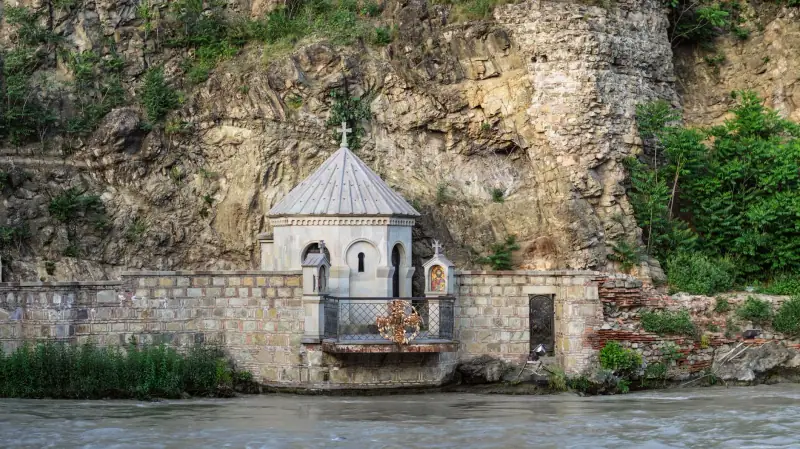
On the right bank of the Mtkvari, the Metekhi district is home to Metekhi Church (5th century, rebuilt in the 13th), one of the oldest in Georgia, and the equestrian statue of King Vakhtang Gorgasali, the legendary founder of Tbilisi. The view from the cliff over the old town is one of the best in the capital.
10. Rustaveli Avenue
Tbilisi’s main avenue is lined with 19th-century neoclassical buildings, cafes, the Rustaveli Theatre, the National Opera and the Georgian Parliament. An essential stroll to feel the pulse of the modern city.
11. The Dry Bridge market
The Dry Bridge flea market is the best place in Tbilisi to find Soviet items, Georgian antiques, old jewelry and handicrafts. Open every day, busier on weekends.
12. The botanical garden
Hidden behind Narikala Fortress in the gorge of the Tsavkisistskali stream, Tbilisi’s botanical garden is a serene island of greenery in the middle of the city. The gorge and the small waterfalls make you forget you are in a capital.
Admission: about 4 GEL. Check the hours and the closing day before you come.
13. A Georgian wine cellar
Tbilisi has excellent wine bars where you can discover traditional Georgian wines, especially the amber qvevri wines (orange wines) that are the great local specialty. The Vera district and Shardeni Street have the best wine cellars.
Recommended: a guided tasting with explanations of the traditional Georgian method. See our wine guide.
14. Night view from Narikala
At night, Tbilisi takes on another dimension. Sameba Cathedral, lit in white, can be seen from everywhere. The Abanotubani baths shine with their golden domes. The old town and its restaurants spill onto terraces. The view from Narikala after sunset is particularly magical.
15. The underground music scene
Tbilisi is one of the best cities in Europe for underground electronic music. The Bassiani club (in the basement of a soccer stadium) is known worldwide. The scene is diverse, politically engaged and very welcoming. Several other clubs and cultural spaces keep Tbilisi’s nights lively.
Practical tips for visiting Tbilisi
- The old town is visited on foot: bring comfortable shoes for the cobblestones
- Modest dress to visit cathedrals (shoulders and knees covered)
- Bath hours: generally open 24 hours a day, but some establishments close from 2 to 6 am
- Marshrutkas in town cost about 1 GEL, faster than buses for some trips
- Withdraw GEL from bank ATMs or at an exchange office, comparing rates and fees (check with your bank)
To find the best place to base your visit, see our guide to Tbilisi’s neighborhoods.
Frequently asked questions
How many days do you need to visit Tbilisi?
Two to three days let you see the main sights of Tbilisi comfortably. In 2 days, you cover the old town, the baths, Narikala, Sameba and Rustaveli. In 3 days, you add the museums, the alternative neighborhoods and half-day excursions.
Is Tbilisi's old town safe?
Yes, the old town is very safe for tourists, even in the evening. As in any city, stay alert with your belongings in very busy areas. The police are present in tourist areas. Tbilisi is a low-crime capital.
Which sights are free in Tbilisi?
The vast majority of sights are free: the old town, Narikala Fortress, Sameba Cathedral, the Abanotubani district (outside), Fabrika, Rike Park. The National Museum costs about 40 GEL for foreign visitors. Private baths generally cost 50-200 GEL an hour depending on the establishment (check rates locally).
Is the Tbilisi cable car recommended?
Yes, the funicular goes up to Mtatsminda Park at the top of the hill, with a 360° view of Tbilisi. The ride takes 5 minutes and costs about 10-12 GEL one way, with a park card at about 2 GEL; hours vary by season, so check locally. The small Rike-Narikala cable car costs 2.5 GEL. It is one of the best experiences in the city.
Is there a good market for souvenirs in Tbilisi?
Yes! The Dry Bridge market is the best place for Soviet antiques, handmade jewelry, old books and Georgian objects. Dezerter Bazaar is ideal for spices, wine and local food products.
More Georgia guides
Keep reading
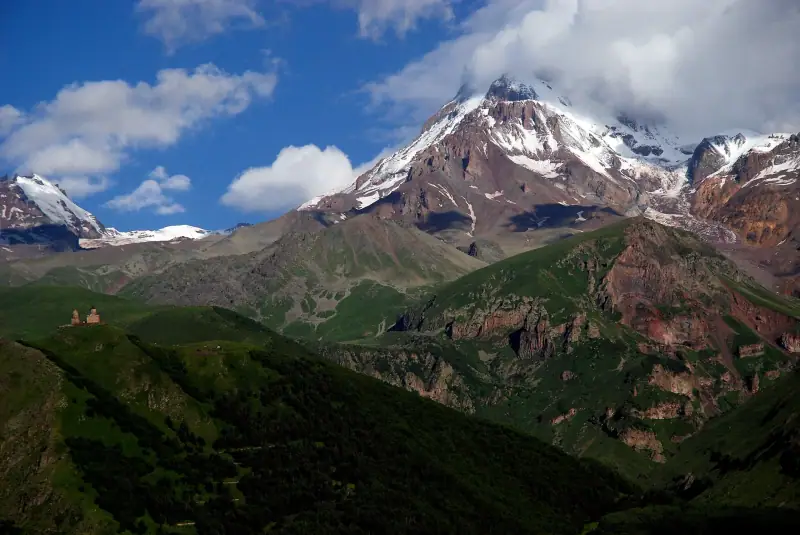
Visiting Kazbegi (Stepantsminda): a complete guide to the roof of the Caucasus
Kazbegi: Gergeti church at 2,170 m, Mount Kazbek at 5,054 m, hikes and the Georgian Military Road. A complete guide to plan your stay in Stepantsminda.
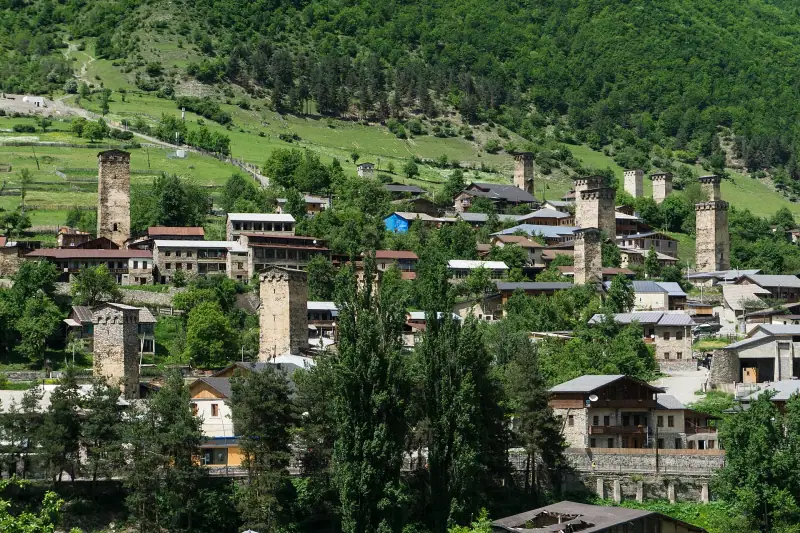
Visiting Mestia and Svaneti: a complete guide to the roof of the Caucasus
Mestia and Svaneti, Georgia: UNESCO Svan towers, the trek to Ushguli, glaciers and epic hikes. A complete guide to plan your stay.
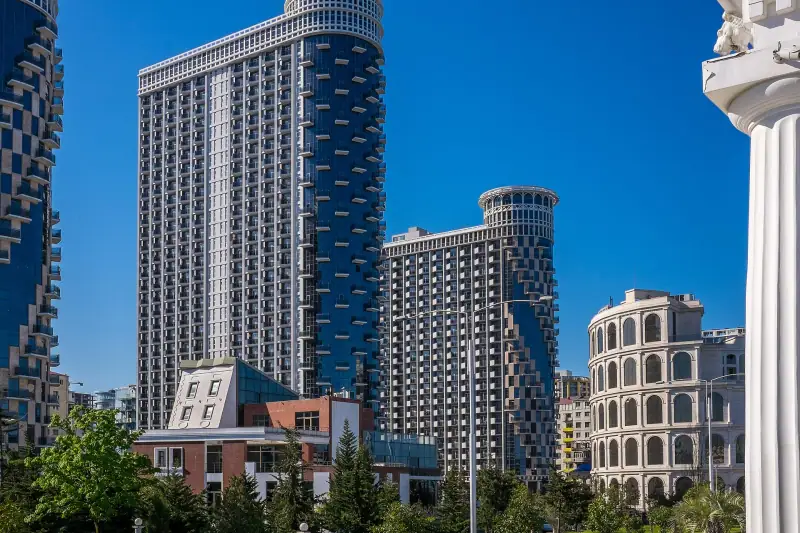
Visiting Batumi: a complete guide to the pearl of the Black Sea
Batumi, Georgia: seaside boulevard, botanical garden, old town and Adjarian food. A complete guide for your stay on the Black Sea coast.
Ready-made
Georgia itineraries
10 days
Georgia road trip: a 10-day route from Tbilisi to Svaneti
A 10-day Georgia road trip: Tbilisi, Kazbegi, Svaneti, Kutaisi and Kakheti. Detailed route, roads, places to stay and practical tips.
10 days
Georgia in 10 days without a car: a realistic itinerary by train and marshrutka
TbilisiKazbegiKutaisiMestiaBatumi
3 days
Batumi in 3 days: what to do on the Georgian Riviera
A practical guide to visiting Batumi in 3 days: beach, boulevard, old town, Botanical Garden, excursions in Adjara. Places to stay and tips.