What to see
Davit Gareja from Tbilisi without a car: bus, taxi or tour?
We may earn a commission when you book through links on this page, at no extra cost to you. We don't visit or try the places we cover: we summarize published sources. How we work
In short
- Davit Gareja is about 100-110 km (62-68 mi) from Tbilisi by road; allow 1 h 30 to 2 h each way, and 6 to 8 hours door to door.
- Without a car, a round-trip private taxi is the best balance of price and freedom; a tour is the simplest; the marshrutka is the least reliable.
- Arrive before 10 am and avoid weekends and Orthodox holidays. Spring and fall are the most pleasant; summer is very hot with no shade.
- Part of the complex lies on a disputed border with Azerbaijan: stay on the Georgian side and do not photograph military staff or installations.
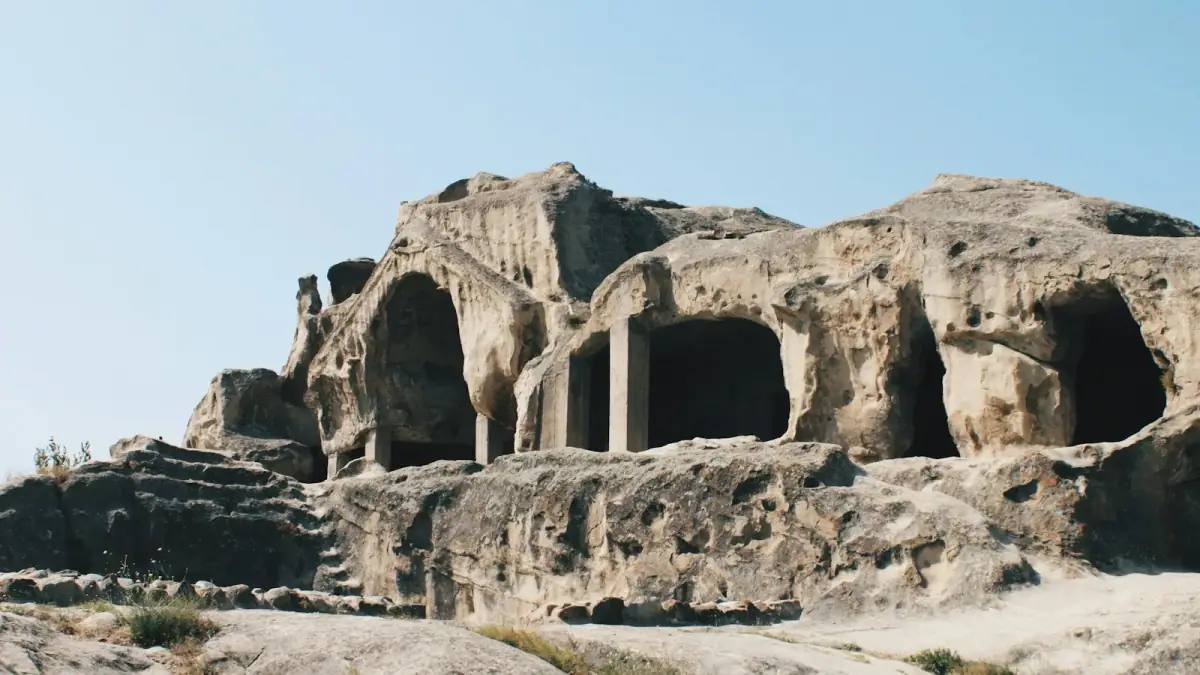
Davit Gareja is one of the most photogenic sites in Georgia: monasteries dug into a cliff, in the middle of an ochre semi-steppe, on the border with Azerbaijan. The catch is that there is no train, no well-established direct bus, and ride-hailing apps generally do not go that far. Here are the three realistic ways to get there from Tbilisi without renting a car, with their strengths and limits.
Davit Gareja at a glance: what to know before you choose
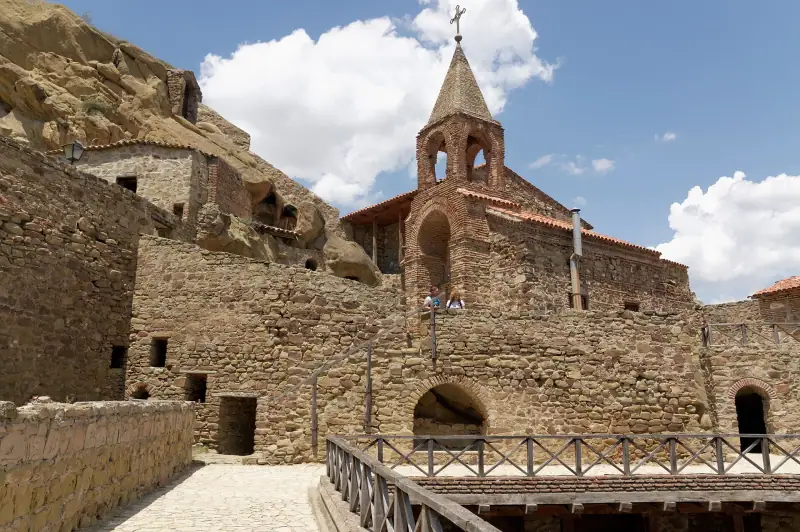
The complex is about 60-70 km (37-43 mi) as the crow flies southeast of Tbilisi (100-110 km / 62-68 mi by road), on the Kakheti side. Between the village of Udabno and the monastery, allow about 15 km (9 mi), including roughly 10 km (6 mi) of unpaved track depending on its condition: fine when dry, muddy after rain.
Two areas to know:
- Lavra: the founding monastery, still inhabited by monks. It has a church in the rock, cells, a refectory carved into the cliff and a spring at the entrance.
- Udabno: the upper complex, on the ridge, reachable on foot from Lavra (about 2.5 km / 1.6 mi, 200 m / 660 ft of elevation gain, 40 to 60 minutes uphill). This is where the most cited frescoes and the view over the border are.
For historical context and a comparison with Vardzia and Uplistsikhe, see our guide to the cave cities of Georgia.
Option 1: the marshrutka, cheap but risky
This is the cheapest option, and the least reliable. Most often you take a marshrutka toward Sagarejo or the village of Udabno, then a taxi or a hitched ride for the last stretch. A dedicated shuttle (such as Gareji Line, around 25 GEL according to some sources) may also run depending on the season: its departure point varies, so confirm it before you come.
Its limits are serious:
- schedules are not published and change with demand;
- the vehicle does not necessarily go all the way to the monastery, so you walk or take private transport for the end;
- returns are irregular: you may be stuck there late in the afternoon.
If you try it anyway, leave early, ask the driver about the return as soon as you board and keep a plan B (a taxi negotiated on the spot). To understand how these minibuses work in general, read our guide to marshrutkas in Georgia.
Davit Gareja tour from Tbilisi
Transport from the capital and a guided visit of the monasteries: the option that avoids depending on marshrutka schedules.
Option 2: a private taxi or driver, the best compromise
A private driver drops you off, waits during the visit and brings you back at the time you choose. It is the most flexible option, especially in a group, since the cost of the vehicle is shared. Ride-hailing apps generally do not go that far: book ahead through your accommodation or a recommended driver.
When negotiating, agree in advance on:
- the round-trip price, waiting included (allow 3 to 4 hours of waiting);
- the departure time (before 8:30 am to arrive before 10 am);
- whether the driver can go up to Lavra even if the track is damaged.
Our tips for negotiating taxis and prices in Georgia apply as is. Rates vary a lot by season and vehicle: ask for several quotes rather than relying on a single figure.
Option 3: the organized tour, the simplest
Day tours from Tbilisi are plentiful. Their main advantage: everything is handled, including the track and the explanation of the frescoes. The downside: a group pace and sometimes an arrival in the middle of the day, when the site is busier and hotter. Some combine Davit Gareja with a wine tasting in Kakheti, which lengthens the day.
Before booking, check:
- the departure time and total duration (7 to 12 hours depending on the package);
- the time actually spent at the site;
- whether the climb to Udabno is included;
- the cancellation policy.
A comparable wine tour is detailed in our article on visiting wineries in Kakheti from Tbilisi without a car.
What is the best time to avoid crowds?
The site is never as packed as Mtskheta, but visitors cluster around a few time slots:
- Mornings before 10 am: quiet, soft light, bearable temperatures.
- Weekends and Orthodox holidays: pilgrimages to Lavra, so more people and sometimes very busy churches.
- Summer (July-August): 35 to 40 °C (95 to 104 °F), no shade. If you go, leave at dawn.
- Spring and fall: the best seasons. In April-May, the hills are greener.
The site is open every day, generally from 9 am to 6 pm. Check these hours before you leave, as they come from unofficial sources.
At the site: rules, safety and the border
Dress. Shoulders and knees covered, voices low: monks live at Lavra. Our guide to the dress code in churches and monasteries details what is expected of women and men.
Terrain. Loose stones, a path that is poorly marked in places and almost no shade. Sandals are a bad idea for the climb to Udabno.
Border. Part of the complex is in a zone disputed with Azerbaijan. Seeing border guards in the distance is normal. Stay on the Georgian side, do not cross the markers and do not photograph soldiers or installations.
Water. No shop and no reliable drinking water: plan 1.5 to 2 liters (about 50 to 70 fl oz) per person. Do not drink the water from the Lavra spring without precautions.
A typical day without a car
- 8 am: leave Tbilisi by taxi or on a tour.
- 9:30-10 am: arrive at Lavra, visit the church, cells and refectory (45 minutes to 1 h).
- 10:45 am: climb to Udabno along the ridge, frescoes and view of the border (1 h 30 to 2 h round trip with stops).
- 1 pm: picnic or lunch in a village on the way back.
- 3-4 pm: return to Tbilisi.
If you sleep in Tbilisi, choose a well-connected neighborhood so you can leave early: our guide on where to stay in Tbilisi compares the areas.
Hotels in Tbilisi for an early start
Compare places to stay in the capital and pick one close to the metro station or to where your driver will pick you up.
Davit Gareja or another outing?
If you are undecided, Davit Gareja suits fans of arid landscapes, frescoes and light walking. If you prefer a shorter visit that is easier by public transport, Mtskheta can be done in half a day. For linking a whole trip without a car, see our 10-day itinerary by train and marshrutka.
A rental car remains the freest option if you also want to explore Kakheti: you can compare rental companies and read our guide to renting a car in Georgia. Keep in mind that the final track is less pleasant to drive after rain.
Key takeaways
- Without a car, a round-trip private taxi is the best balance of price and freedom.
- The tour is the simplest if you do not want to organize anything.
- The marshrutka only suits flexible travelers ready to improvise the return.
- Leave early, bring water and stay on the Georgian side of the border.
Frequently asked questions
Can you get to Davit Gareja by public transport?
In theory yes, but it is the least reliable option. You generally take a marshrutka toward Sagarejo or the village of Udabno, then finish by taxi or hitchhiking; departures are irregular and returns even more so. A dedicated shuttle (such as Gareji Line) exists depending on the season: check its schedule. The last kilometers to the monastery are on a dirt track, which usually means private transport for the end of the trip. If you only have one day, choose a taxi or a tour.
How long does it take from Tbilisi?
The site is about 60-70 km (37-43 mi) as the crow flies southeast of the capital, or 100-110 km (62-68 mi) by road, and 1 h 30 to 2 h of travel including the final track. With a visit to Lavra monastery and the climb to Udabno, plan a day of 6 to 8 hours door to door.
Is there an entrance fee for Davit Gareja?
Access to the site is generally free for visitors, but conditions may change: check before you go. Transport and, if you take one, a guide make up most of the budget.
What is the best time to avoid crowds?
Arrive before 10 am and avoid weekends and major Orthodox holidays, when pilgrims go to Lavra. Spring (April-May) and fall (September-October) offer the most pleasant temperatures; summer is very hot with no shade.
Can you cross into Azerbaijan at Davit Gareja?
No. Part of the complex lies on a disputed border. Stay on the Georgian side of the ridge, do not go past the boundary markers and do not photograph military installations or personnel. The situation can change: ask your accommodation or your driver.
Do you need a guide to visit Davit Gareja?
It is not mandatory, but a guide or a driver who knows the site helps you understand the frescoes and stay on the right side of the border. Without a guide, download an offline map: the path to Udabno is not marked everywhere.
What should you bring?
At least 1.5 to 2 liters (about 50 to 70 fl oz) of water per person, a hat, sunscreen and closed shoes with grippy soles. There is no shop or drinking water point at the site. Shoulders and knees must be covered to enter the churches.
More Georgia guides
Keep reading
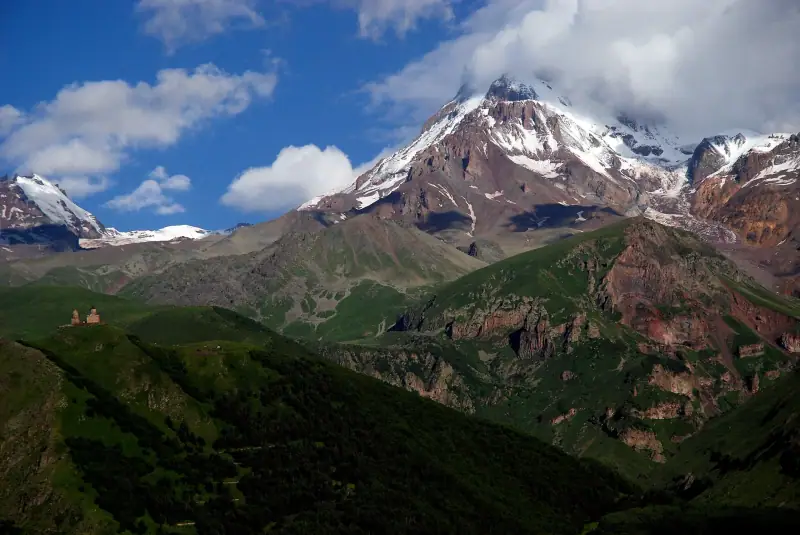
Visiting Kazbegi (Stepantsminda): a complete guide to the roof of the Caucasus
Kazbegi: Gergeti church at 2,170 m, Mount Kazbek at 5,054 m, hikes and the Georgian Military Road. A complete guide to plan your stay in Stepantsminda.
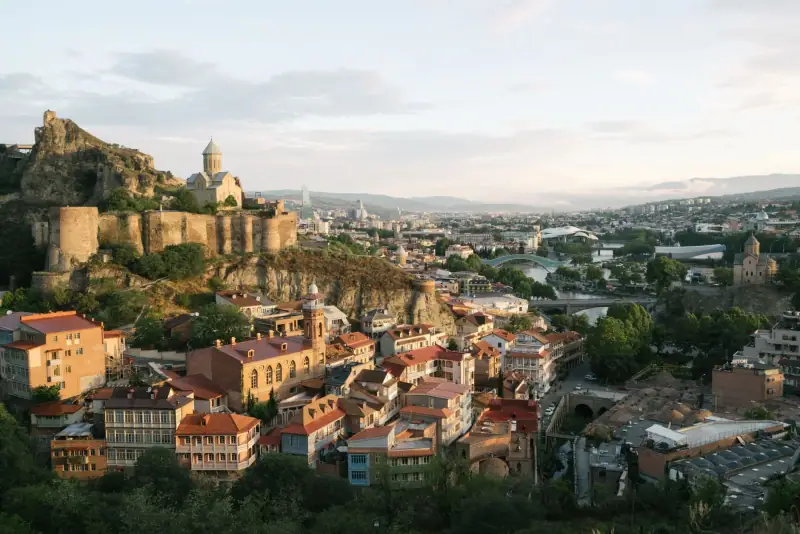
Tbilisi: the 15 must-see sights
Old town, Narikala Fortress, sulfur baths, Sameba Cathedral: the 15 must-see sights in Tbilisi.
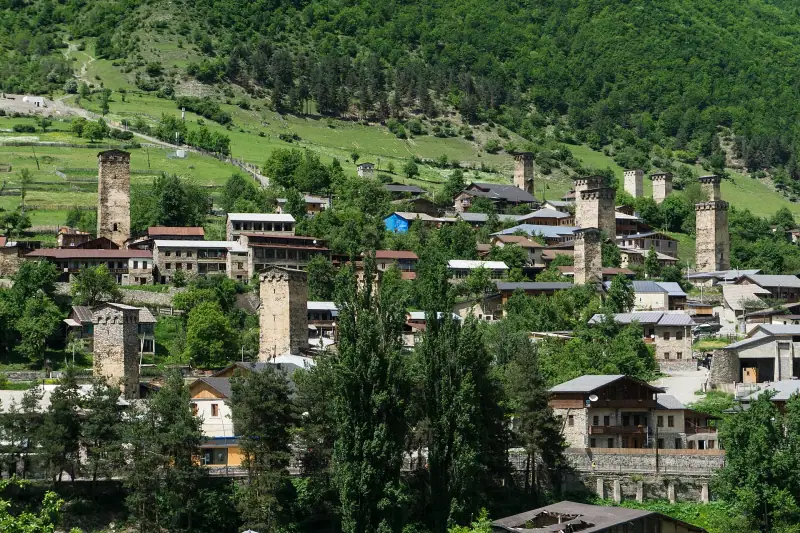
Visiting Mestia and Svaneti: a complete guide to the roof of the Caucasus
Mestia and Svaneti, Georgia: UNESCO Svan towers, the trek to Ushguli, glaciers and epic hikes. A complete guide to plan your stay.
Ready-made
Georgia itineraries
10 days
Georgia road trip: a 10-day route from Tbilisi to Svaneti
A 10-day Georgia road trip: Tbilisi, Kazbegi, Svaneti, Kutaisi and Kakheti. Detailed route, roads, places to stay and practical tips.
10 days
Georgia in 10 days without a car: a realistic itinerary by train and marshrutka
TbilisiKazbegiKutaisiMestiaBatumi
3 days
Batumi in 3 days: what to do on the Georgian Riviera
A practical guide to visiting Batumi in 3 days: beach, boulevard, old town, Botanical Garden, excursions in Adjara. Places to stay and tips.