Things to do
Wildlife watching in Costa Rica: animal guide and best areas
We may earn a commission when you book through links on this page, at no extra cost to you. We don't visit or try the places we cover: we summarize published sources. How we work
In short
- Manuel Antonio is the best place to see sloths easily; Monteverde for the quetzal; Tortuguero, Ostional and Playa Grande for turtles.
- Turtle seasons: green turtles at Tortuguero from July to October, olive ridleys at Ostional from September to December (arribadas), leatherbacks at Playa Grande from October to March.
- Turtle watching is allowed only with a certified guide, in groups of 15 maximum, with no direct light or flash and a minimum distance of 5 meters (16 ft).
- A guide is not mandatory but strongly recommended; a naturalist guide can multiply the number of species seen.
Costa Rica is often described as “the most biologically intense place on the planet”, a claim that makes sense when you find yourself facing a sloth in the trees, watch a giant turtle lay her eggs by moonlight, or hear the haunting call of howler monkeys at sunrise. This tiny country holds about 5% of the world’s biodiversity on only 0.03% of the Earth’s land surface. This guide will help you see Costa Rica’s emblematic animals in their natural habitats.
The emblematic species
Sloths
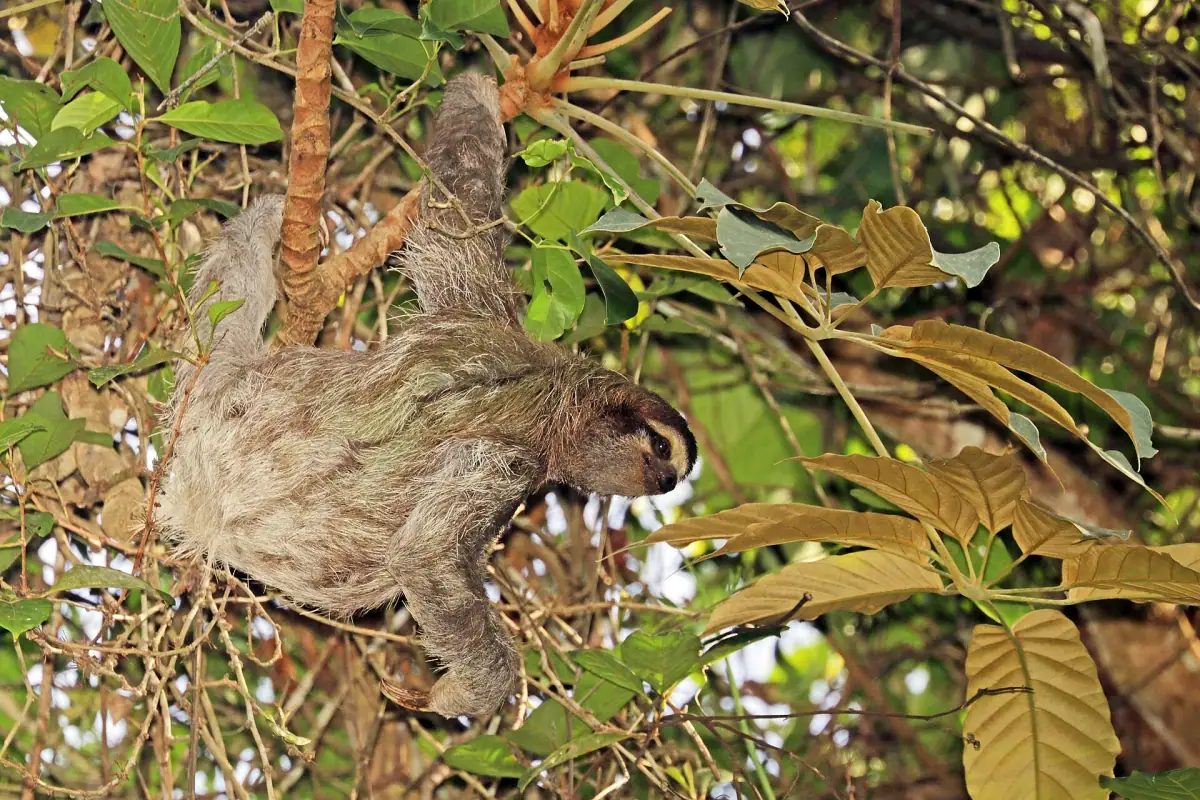
Symbols of Costa Rica, sloths are the animals travelers ask for most. There are two species in Costa Rica:
Three-toed sloth (Bradypus variegatus): smaller, with a characteristic facial mask. Active by day, which makes it easier to see. It comes down from its tree once a week to defecate.
Two-toed sloth (Choloepus hoffmanni): larger and stockier. Mainly nocturnal, so harder to see by day.
Where to see them:
- Manuel Antonio: the best place, guides locate them easily
- Cahuita and Puerto Viejo: often in hotel garden trees, and on the coastal trail of Cahuita National Park
- La Fortuna: in the trees around the village
- Anywhere in Costa Rica: look in trees with dense crowns, especially cecropia
Tip: sloths sleep 15 to 20 hours a day, so even the “active” ones move very little. If you see one motionless for 30 minutes, that is normal. Wait and you will eventually see it move.
Monkeys
Four monkey species live in Costa Rica:
White-faced capuchin (Cebus capucinus): the most common and the most familiar with humans. Lives in noisy, active groups. Curious and sometimes mischievous (food theft!). Easily seen at Manuel Antonio, La Fortuna, Cahuita.
Spider monkey (Ateles geoffroyi): large and slender with a long prehensile tail. Lives in the densest forests. Seen in Corcovado and Braulio Carrillo national parks, and sometimes Manuel Antonio.
Howler monkey (Alouatta palliata): the loudest of all; its roar can be heard from several kilometers away. Common throughout the country but hard to see despite the sound.
Squirrel monkey or titi (Saimiri oerstedii): the smallest and most threatened species. Found mainly in Manuel Antonio and Corcovado parks.
Where to see monkeys:
- Manuel Antonio: capuchins and titis very easy to see
- Cahuita: capuchin monkeys in hotel gardens
- Corcovado: all four species together
- Tortuguero: howler monkeys audible from the morning
Birds: a paradise for birders
Costa Rica has more than 900 bird species, 52 of them endemic. It is one of the best birdwatching destinations in the world.
Species to look for:
Resplendent quetzal (Pharomachrus mocinno): considered the most beautiful bird in the Americas, with metallic green feathers and a 60 cm (24 in) tail. Endemic to cloud forests. Seen in Monteverde, Cerro de la Muerte and Los Quetzales. Best time: February to April (nesting season)
Scarlet macaw (Ara macao): the giant red and yellow parrot that flies in noisy pairs above the canopy. Easy to see at Carara and on the Osa Peninsula.
Swainson’s toucan (Ramphastos swainsonii): the large toucan, a Costa Rica icon with its multicolored bill and characteristic call. Present in almost all tropical forests.
Hummingbirds: Costa Rica has 52 hummingbird species! Many gardens and refuges attract these birds with flowers and feeders. Easy to see in Monteverde and the Central Valley.
Where to watch birds:
- Monteverde: cloud forest, quetzal, bellbird
- Carara: scarlet macaws in large numbers
- La Selva Biological Station (Sarapiquí): a world reference, more than 450 species recorded
- La Paz Waterfall Gardens: hummingbirds within arm’s reach
- Térraba Delta (southern Pacific): wetland birds
Lodges in the heart of nature
Stay in the midst of Costa Rica's wildlife.
Sea turtles
Costa Rica is one of the most important countries in the world for sea turtle conservation. Five species nest here:
Green turtle (Chelonia mydas): the largest nester at Tortuguero. Females return to exactly the beach where they were born to lay. Site: Tortuguero (Caribbean coast) Season: July to October (peak in August)
Olive ridley turtle (Lepidochelys olivacea): the unique phenomenon of arribadas (thousands of females laying simultaneously). Site: Playa Ostional (Guanacaste) Season: July to December, main arribadas September-December
Leatherback turtle (Dermochelys coriacea): the largest sea turtle in the world (up to 500 kg / 1,100 lb). Critically endangered. Site: Playa Grande (Guanacaste) Season: October to March
Loggerhead turtle (Caretta caretta): Site: Pacific (Osa), a few Caribbean sites
Hawksbill turtle (Eretmochelys imbricata): Site: Caribbean coral reefs
Important regulations:
- Turtle watching only with a certified guide
- Groups limited to 15 people maximum
- No direct light on the turtles (red lamps only)
- No flash photography
- Minimum distance of 5 meters (16 ft)
Whales and dolphins
Humpback whales: Costa Rica is one of the few places in the world where humpback whales come from two different hemispheres.
- Northern hemisphere population: December to April
- Southern hemisphere population: July to November Main site: Marino Ballena National Park (Uvita, southern Pacific)
Dolphins: several species (bottlenose, spotted, melon-headed) can be seen year-round. Boat tours from Manuel Antonio, Jacó and Uvita offer frequent sightings.
Reptiles
American crocodile (Crocodylus acutus): the “Tárcoles” is the most famous bridge in Costa Rica, not for its looks but for the dozens of crocodiles basking in the sun below. An essential stop on the road between San José and Jacó.
Spectacled caiman (Caiman crocodilus): smaller than the crocodile, common in the rivers and canals of Tortuguero and the Pacific.
Green iguana (Iguana iguana): common everywhere, often visible on branches overhanging rivers and in gardens.
Basilisk lizard (Basiliscus plumifrons): nicknamed the “Jesus Christ lizard” for its ability to run on water. Spectacular neon green, found near water.
The best watching sites
| Site | Wildlife specialty | Access |
|---|---|---|
| Manuel Antonio | Monkeys, sloths, toucans | Road, parking |
| Tortuguero | Green turtles, manatees, caimans | Boat only |
| Corcovado | Tapirs, jaguars, 4 monkey species | Boat or plane, guide mandatory |
| Monteverde | Quetzal, monkeys, coatis | Road, 4x4 recommended |
| La Selva (Sarapiquí) | Birds, frogs, snakes | Road |
| Tárcoles bridge | American crocodiles | Road, stop on the bridge |
| Ostional | Olive ridley turtles (arribadas) | Road, 4x4 |
| Marino Ballena | Whales, dolphins, manta rays | Road |
Ethical rules for wildlife watching
- Never feed wild animals: it changes their behavior, makes them dependent and can be dangerous
- Keep a respectful distance: minimum 3-5 meters (10-16 ft), more for sensitive species
- Never touch wild animals, even if they seem tame
- No flash when photographing: especially for nocturnal reptiles and turtles
- Stay on marked trails in national parks
- Choose eco-certified operators (CST certification from the Costa Rican government)
- Report any animal in danger to park rangers or SINAC
Costa Rica is truly a temple of the world’s biodiversity. Every day in this country can reveal species you will not meet anywhere else. With respect, patience and the right guides, you will have animal encounters that stay with you forever. ¡Pura Vida!
Frequently asked questions
Where can you see sloths in Costa Rica?
Sloths are found throughout Costa Rica, but Manuel Antonio is the best place to see them easily. National park guides know exactly where they are. They are also often seen in the trees of hotels in the area. Three-toed sloths are more active by day than two-toed sloths.
When can you see turtles in Costa Rica?
It depends on the species and the site. Green turtles nest at Tortuguero from July to October (peak in August). Olive ridley turtles make their mass arribadas at Ostional from September to December. Leatherbacks nest at Playa Grande from October to March. See our details by species in the article.
Can you see jaguars in Costa Rica?
The jaguar exists in Costa Rica, mainly on the Osa Peninsula (Corcovado National Park) and in La Amistad International Park. Sightings are very rare and considered extraordinary luck. Tracks, camera traps and footprints are more common than direct sightings.
Are wild animals dangerous in Costa Rica?
The vast majority of animals you will see are not dangerous if you keep your distance and do not feed them. Venomous snakes (the fer-de-lance in particular) are present but very rarely seen. Wear closed-toe shoes in vegetation, do not move rocks or logs with bare hands and stay on marked trails.
Do you need a guide to watch wildlife?
Not mandatory, but strongly recommended. An experienced naturalist guide can multiply the number of species seen by 10. They know animal behavior, where to look depending on the time and season, and often carry a spotting scope to see animals perched high in the trees.
More Costa Rica guides
Keep reading
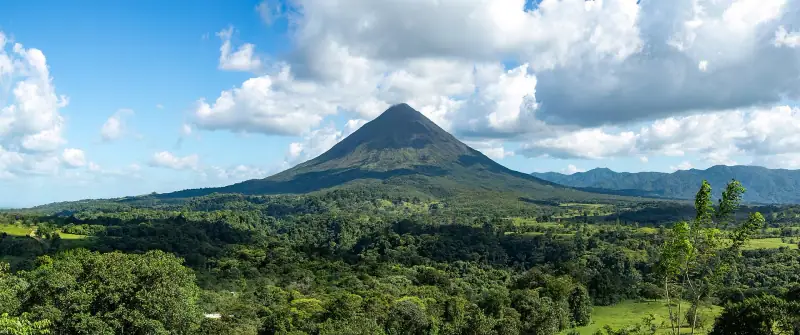
Arenal Volcano, Costa Rica: visit, hikes and hot springs
Arenal Volcano, Costa Rica: visits, hikes and hot springs from La Fortuna. Complete guide to exploring the country's emblematic volcano.

Surfing in Costa Rica: the best spots for every level
Costa Rica surf guide: Tamarindo, Jacó, Dominical, Pavones. Best spots for beginners and top surfers, seasons, lessons and surf camps.
Best time to visit Costa Rica: a month-by-month guide
When to go to Costa Rica? Find the best time by region, weather, prices and seasonal events.
Ready-made
Costa Rica itineraries
10 days
Costa Rica in 10 days: an itinerary from the Caribbean to the volcanoes
TortugueroPuerto ViejoLa FortunaMonteverde
14 days
Costa Rica road trip: the grand tour in 2 weeks
14-day Costa Rica road trip by 4x4: from volcanoes to beaches, Caribbean to Pacific. Full itinerary with road tips and where to stay.
10 days
Costa Rica in 10 days without a car: a realistic shuttle and bus itinerary
San JoséLa FortunaMonteverdeManuel AntonioSan José