Where to stay
Where to Stay in Kep: Best Areas and Hotels for Every Budget
We may earn a commission when you book through links on this page, at no extra cost to you. We don't visit or try the places we cover: we summarize published sources. How we work
In short
- Kep has four lodging zones: around the crab market, Kep Beach, the hillside toward the national park, and the quiet outskirts.
- Guesthouses start at $15-25, hotels with a pool run $40-90 a night, and upscale resorts $100-200.
- Book 3 to 6 weeks ahead for resorts in high season (November to February); Kep has few quality properties.
- Kep is about 168-170 km (104-106 mi) from Phnom Penh (3.5 to 4 hours by bus) and 25 km (16 mi) from Kampot.
Kep is one of the most intimate destinations on Cambodia’s south coast. Founded by the French in the early 20th century as a colonial seaside resort, it keeps a unique character today: ghost villas buried under tropical vegetation, a famous crab market busy from dawn, a quiet beach facing the Gulf of Thailand, and the dense greenery of Kep National Park rising in the background. Choosing where to stay in Kep is a decision that directly shapes your experience, because the town is small and the lodging varied, from a waterside bungalow to a charming villa perched on the hill.
Understanding Kep’s layout to choose your accommodation
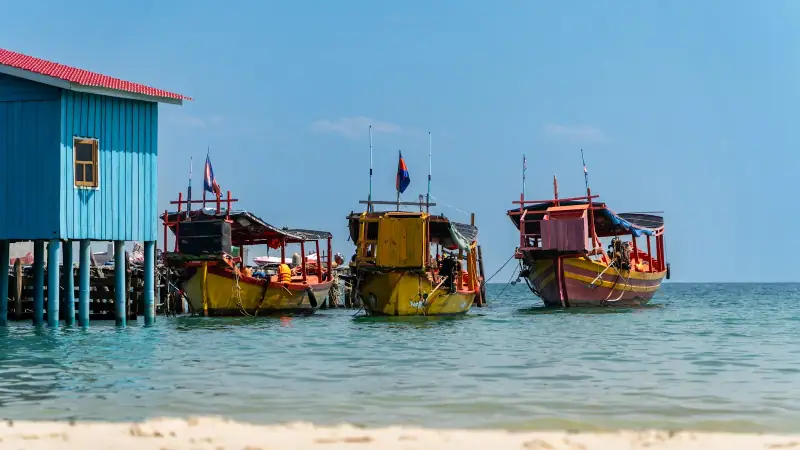
Kep is much smaller than the other destinations on Cambodia’s south coast. There is no structured “downtown” as in Kampot or Sihanoukville. Most tourist life is concentrated along two to three kilometers (1 to 2 mi) of coast: around the crab market (Phsar Kdam) in the northwest, along the main Kep Beach in the center, and toward the quieter residential area in the southeast, in the direction of the Vietnamese border.
On the hillside, toward the national park, you find more secluded lodgings with panoramic sea views. The main road along the coast links these zones in under 10 minutes by tuk-tuk. Kep is easy to get around by motorbike or electric bike, and most properties arrange shuttles or rent two-wheelers.
The lodging zones in Kep
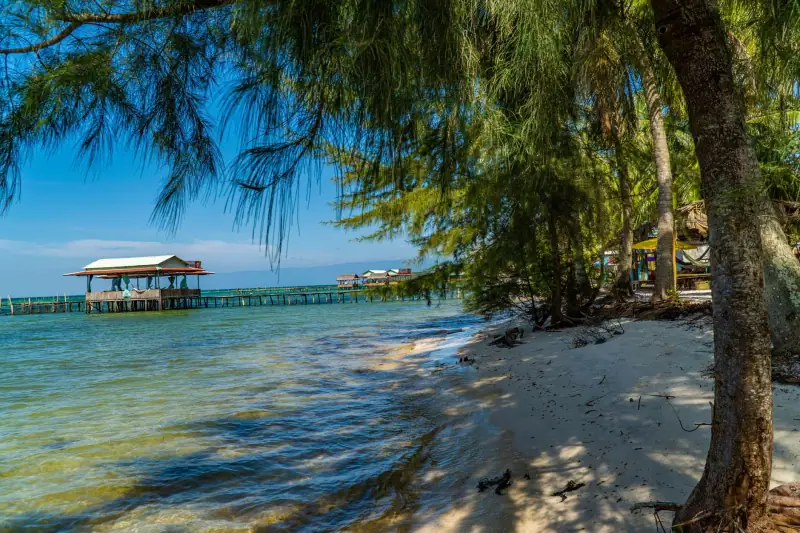
Around the crab market (Phsar Kdam)
The liveliest area of Kep, if you can call it lively. The crab market is the region’s must-do food attraction: from the morning, vendors prepare fresh crabs with Kampot pepper in front of braziers set up at the water’s edge, and the area is surrounded by seafood restaurants open into the evening. Staying right nearby lets you walk there at any hour for meals.
Best for: food lovers, travelers who want to be in the middle of Kep’s activity Atmosphere: lively (by Kep standards), market-driven, with the characteristic smell of the sea Advantages: restaurants within reach, the pier for Koh Tonsay very close Drawbacks: some engine noise in the morning when the fishing boats unload
Hotels in Kep
Compare prices and book your Kep accommodation with free cancellation.
Kep Beach and the coastal promenade
Kep’s main beach is a modest but pleasant strip of sand, surrounded by palm trees and a handful of terrace restaurants over the water. The water is generally calm and shallow, ideal for children, although its color can vary with the tides and the season. Lodgings of all categories line this coastal area, from simple guesthouses to boutique hotels with a pool. It is the favorite spot of families and couples who want the sea within walking distance.
Best for: families, couples, travelers who want the sea close by Atmosphere: quiet seaside, more restful than lively Advantages: beach within walking distance, sunsets over the gulf, coastal restaurants Drawbacks: the beach remains modest in size compared with other destinations in the region
On the hillside, toward the national park
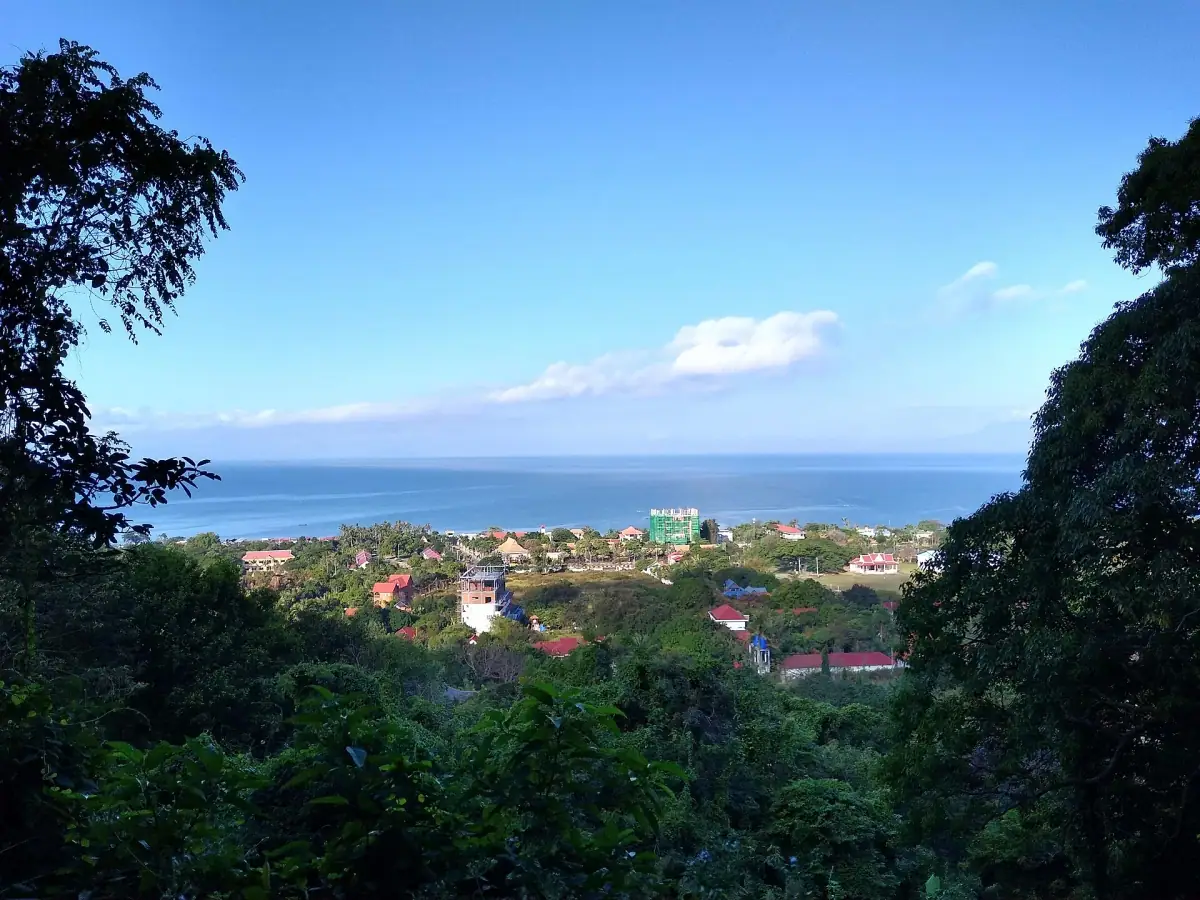
The road up to Kep National Park winds through lush vegetation and, as you climb, offers increasingly striking views over the Gulf of Thailand and the surrounding islands. Several boutique resorts and eco-lodges have settled on these heights to give guests an open view and absolute calm, away from the main road. These properties bank on nature: tropical gardens, infinity pools facing the sea, private terraces with hammocks.
Best for: honeymooners, nature and panorama lovers, travelers seeking seclusion Atmosphere: serene, lush, contemplative Advantages: exceptional panoramic views, relative coolness, garden and pool at almost every property Drawbacks: a tuk-tuk or motorbike is essential to get down to the crab market or the beach (5-15 min depending on the height)
The immediate surroundings of Kep
2 to 5 km (1 to 3 mi) from the heart of Kep, a few resorts and isolated guesthouses have settled in a discreet rural setting: rice fields, coconut palms, dirt tracks and a distant view of the sea. These places suit travelers who want to get away from everything and have their own vehicle. The calm is total, nature is right there and the stars at night are spectacular.
Accommodation by budget in Kep
Low budget: guesthouses and simple bungalows ($15-30 a night)
Kep is slightly more expensive than Kampot at the low end because supply is less abundant. For $15 to $25, you find decent private rooms with air conditioning and a bathroom, in family guesthouses run by Khmer people or expats who have lived here for many years. For $25 to $30, rooms are more spacious and often have a terrace or veranda with a view of the garden or the sea.
These lodgings are ideal for travelers who want to stay in Kep without spending an entire vacation budget. They are generally a few minutes on foot or by tuk-tuk from the beach and the crab market. The staff, often familiar with the habits of Western travelers, readily advise on Koh Tonsay trips and the best tables in town.
What you find in this category:
- Private rooms with a fan or air conditioning
- Private bathroom in most cases at this price in Kep
- Basic Wi-Fi, generally fine for everyday needs
- Bike or motorbike rental often available at the property
- Local or continental breakfasts at low prices
Mid-range: hotels and boutique guesthouses ($40-90 a night)
This is the category where Kep offers its most appealing deals. For $40 to $70, good hotels offer bright, well-decorated rooms, often with a pool and a partial sea view. Owners invest in the details: quality bedding, tiled bathrooms with hot water, flowered terraces, breakfasts with local products. At $70-90, boutique hotels rival much more expensive places in Europe, with careful architecture that incorporates traditional Khmer elements or contemporary tropical design.
In this price range, several properties include a pool with a view of the gulf, an on-site restaurant serving Kep seafood, and a service geared to travelers’ needs: organizing excursions, renting motorbikes, transfers to Kampot or the Phnom Penh airport.
What you find in this category:
- A pool at most properties
- Breakfast often included or available at a reasonable price
- Adjoining seafood restaurant
- Organized service for excursions (Koh Tonsay, national park, Kampot)
- Reliable Wi-Fi, powerful air conditioning
Activities in Kep and Kampot
Koh Tonsay trips, national park hikes, boat cruises: book online.
Charming resorts and upscale lodging ($90-200 a night)
Kep has a handful of truly exceptional places in the upper categories. These properties, often modest in size at 10 to 20 rooms, stand out for a remarkable integration into the landscape: architecture open to tropical vegetation, infinity pools facing the sea, a fine-dining restaurant offering creations built around local seafood and Kampot pepper. Some have independent villas with a private terrace, a plunge pool and personalized concierge service.
These upscale properties suit travelers who make Kep a romantic stop, a honeymoon getaway or a recharging weekend after several weeks of touring. The value for the experience is generally excellent by Asian standards, even if the level of service remains more modest than in ultra-touristy destinations like Bali or Phuket.
What to do from your accommodation in Kep
The Kep crab market
The region’s must-do food experience. The crab market, Phsar Kdam in Khmer, comes alive in the first hours of the morning when fishermen unload the night’s catch. Vendors, set up in wooden stalls on stilts at the water’s edge, prepare live crabs with Kampot pepper to order, along with grilled shrimp, sautéed clams and other seafood. It is a food institution that every guide recommends, and for good reason: quality and freshness are there, and prices remain very accessible.
Tip: arrive between 11 am and 1 pm to find the crab market at its peak. Avoid later hours (after 3 pm), when the choice in terms of freshness starts to shrink.
Koh Tonsay, Rabbit Island
About 20 to 30 minutes by boat from the Kep pier, Koh Tonsay (known in English as “Rabbit Island”, tonsay meaning “rabbit” in Khmer) is a small island with white-sand beaches, turquoise water and lush vegetation. The atmosphere is authentically relaxed: a few dozen bamboo bungalows, hammocks strung between coconut palms, and an island life away from the world. Day trips leave early in the morning; it is also possible to spend one or two nights on the island in rustic bungalows run by fishing families.
Tip: book your crossing early through your accommodation. In high season, boats are full by 8 am. A private boat generally costs between $15 and $25 for the group.
Car rental in Cambodia
To explore the south coast and reach Kampot and the pepper plantations at your own pace.
Kep National Park
Kep National Park is a dense tropical forest rising directly behind the town, reached by a paved road starting from the center of Kep. Marked hiking trails lead up to viewpoints overlooking the Gulf of Thailand and the surrounding islands. Park entry is paid (about $1-2 per person). The main hike, a loop around the hill, takes 1.5 to 2.5 hours depending on pace. Start early in the morning (before 8 am) to avoid the heat and have the best chance of spotting monkeys and birds.
Day trip to Kampot
Kep and Kampot are only about 25 km (16 mi) apart, or 30 to 40 minutes by tuk-tuk. Many travelers use Kep as a base for a day trip to Kampot (or vice versa). Kampot’s main attractions, the colonial riverside, the pepper plantations and the Bokor Plateau, can all be done as day trips from Kep. A round-trip tuk-tuk with waiting time generally costs $20 to $30 depending on the length.
How to get to Kep
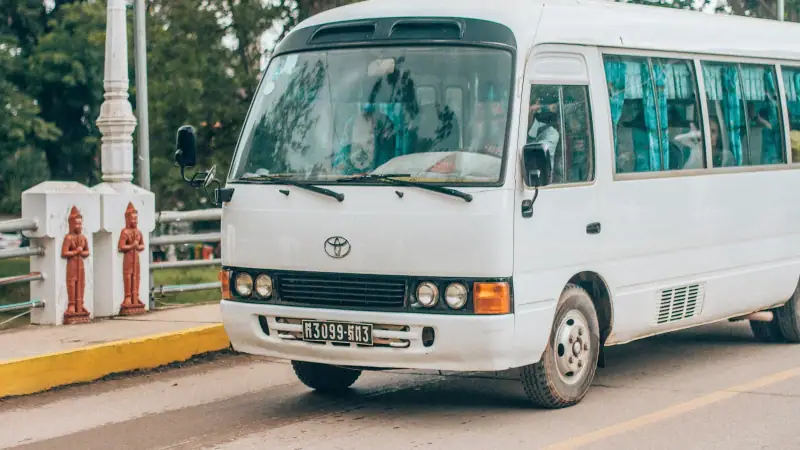
From Phnom Penh (about 168-170 km / 104-106 mi):
- Bus or minibus: 3.5 to 4 hours, possible stop in Kampot, $7-12 per person
- Private taxi or van: 2.5 to 3 hours, $60-90 per vehicle
- Shared taxi: about 3 hours, $12-18 per person
From Kampot (about 25 km / 16 mi):
- Tuk-tuk: 30-45 min, $8-12
- Motorbike taxi (remork): 20-30 min, $5-8
- Rental scooter (from Kampot): about 30 min
From Sihanoukville (about 118-125 km / 73-78 mi):
- Bus with a stop in Kampot: 3 to 3.5 hours, $8-12
- Shared taxi: about 2 hours, $12-15 per person
Drop-off point in Kep: buses and taxis generally stop on the national road, at the entrance to Kep. A local tuk-tuk takes you to your accommodation for $2-5.
Practical tips for choosing where to stay in Kep
Recommended length of stay
One to two nights are enough to see the essentials of Kep: the crab market, the beach and a Koh Tonsay trip. Two to three nights let you add a hike in the national park and a day out to Kampot. Kep is a destination for unwinding and good food more than a town to visit intensively, so do not rush it.
Season
The dry season (November to April) is ideal: sunny weather, calm seas for boat trips, temperatures of 26 to 33 °C (79 to 91 °F). The rainy season (May to October) makes crossings to Koh Tonsay less certain and national park trails slipperier, but the landscapes are brilliantly green and lodging rates drop noticeably (up to 30% off at some properties).
Getting around
There is no local bus network in Kep. The options are: tuk-tuk by the ride or half day (negotiate a flat rate with your driver), scooter rental ($8-15 a day), and electric bike rental ($8-12 a day, ideal for linking the beach, the market and the national park). Your accommodation will generally arrange the rental without difficulty.
Kep’s atmosphere compared with other south coast destinations
Kep deliberately stays on the fringe of mass tourism. No nightclubs, few lively cocktail bars, no pushy travel agents on every corner. The atmosphere is that of an authentic Cambodian seaside village that has welcomed tourism without being transformed by it. It is a deliberate choice that travelers who come to Kep deeply appreciate, and it makes the choice of accommodation all the more important, because it shapes the whole atmosphere of your stay.
Flights to Cambodia
Compare flights to Phnom Penh, the gateway to Kep and the south coast.
To round out your preparation
Kep is best enjoyed when you arrive prepared. These articles will help you plan your stay on the south coast:
- Complete guide to visiting Kep - crab market, Koh Tonsay, national park and colonial villas
- Activities in Kampot and Kep - all the excursions, hikes and experiences in the region
- Where to stay in Kampot - if you combine the two destinations for a south coast stay
Kep is one of the few Cambodian destinations that has not succumbed to standardized tourism. Its unique flavor, with pepper crab, ghost colonial villas, fishing boats and an open horizon over the gulf, deserves one more night than planned. Choose your accommodation well, because in Kep the best moments are often enjoyed from your own terrace.
Frequently asked questions
What kind of accommodation is there in Kep?
Kep is a small town and its lodging reflects that: charming boutique hotels, family guesthouses, seaside bungalows and a few hillside eco-lodges. Big hotel chains are absent, which preserves an authentic, relaxed atmosphere that travelers appreciate.
How much does accommodation cost in Kep?
The most affordable guesthouses start at $15-25 for a private room. Comfortable hotels with a pool run between $40 and $90 a night. Upscale boutique resorts with views of the gulf reach $100-200. Kep is generally slightly more expensive than Kampot in the mid-range and upper categories, because supply is scarce.
Do you need to book far ahead in Kep?
Yes, more than elsewhere. Kep has only a limited number of quality properties, and the best ones fill up quickly in high season (November to February) and during Khmer holidays. Book 3 to 6 weeks ahead for boutique resorts, and at least a week for guesthouses. The rest of the year, booking 3 to 5 days ahead is usually enough.
Is it better to stay in Kep or Kampot?
It depends on your priorities. Kep suits those who want calm, relative seclusion, a beach within walking distance and seafood right at hand. Kampot is livelier, has a wider choice of restaurants and bars, and offers more activities (kayaking, Bokor, plantations). Many combine the two: 2-3 nights in Kampot and 1-2 nights in Kep.
Are there hotels with a pool in Kep?
Yes, several properties in the mid-range and upper categories have pools, often with views of the Gulf of Thailand. These properties are generally on the hillside or slightly back from the sea, which makes up for the lack of swimming in the sometimes cloudy water of Kep's main beach.
How do you get to Kep from Phnom Penh?
From Phnom Penh, Kep is about 168-170 km (104-106 mi) away. By bus or minibus with a stop in Kampot, allow 3.5 to 4 hours for $7-12. By private taxi, about 2.5 to 3 hours for $60-90 per vehicle. From Kampot (25 km / 16 mi), a tuk-tuk costs $8-12 for a 30-45 minute ride, and a shared taxi $3-5 per person.
Can you visit Koh Tonsay from your accommodation in Kep?
Absolutely. Koh Tonsay (Rabbit Island) is reached by boat from the Kep pier in 20-30 minutes. Most lodgings organize or recommend day trips, and even nights on the island in rustic bungalows. Leave early in the morning to enjoy the calm waters and beaches before the crowds arrive.
More Cambodia guides
Keep reading
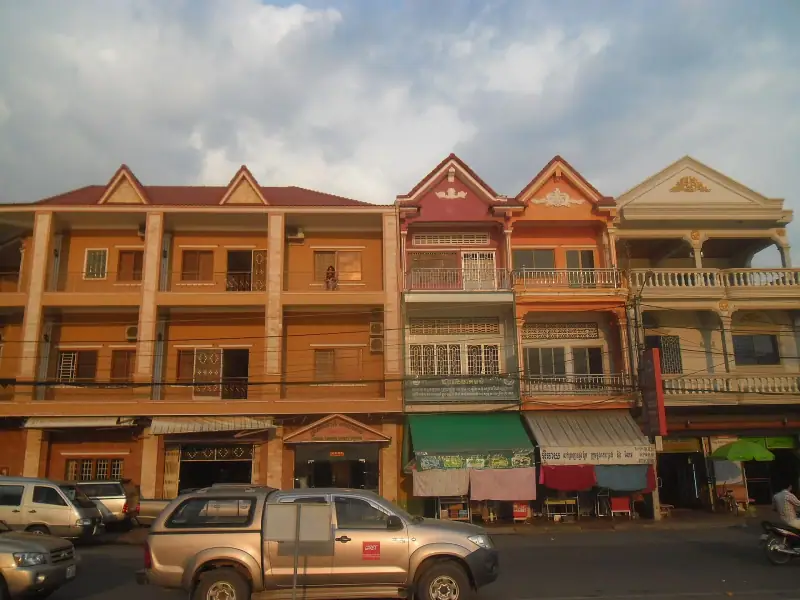
Where to Stay in Kratie: In Town or on Koh Trong Island?
Stay in Kratie or on Koh Trong island? Areas, lodging types, getting to the Mekong dolphins and tips for choosing based on your trip.
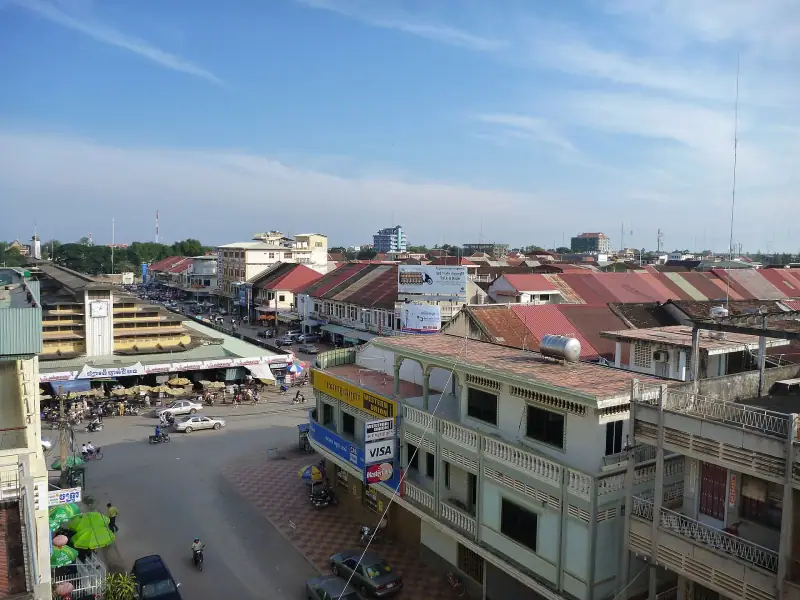
Where to Stay in Battambang: Best Areas and Hotels for Every Budget
Where to stay in Battambang? A guide to the best areas, guesthouses and hotels in the colonial pearl of northwestern Cambodia.
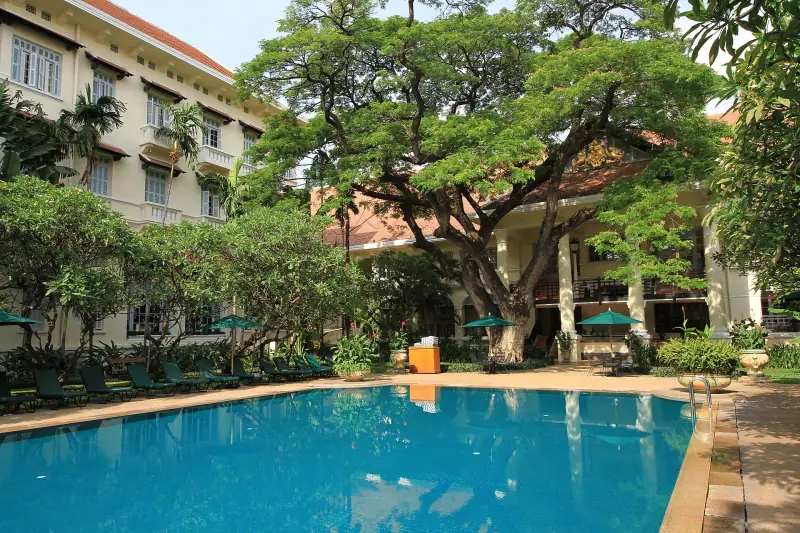
Where to Stay in Phnom Penh: Neighborhoods and Hotels for Every Budget
Guide to the best areas and hotels in Phnom Penh: BKK1, Riverside, Daun Penh. Budget lodging and boutique hotels for your stay.
Ready-made
Cambodia itineraries
12 days
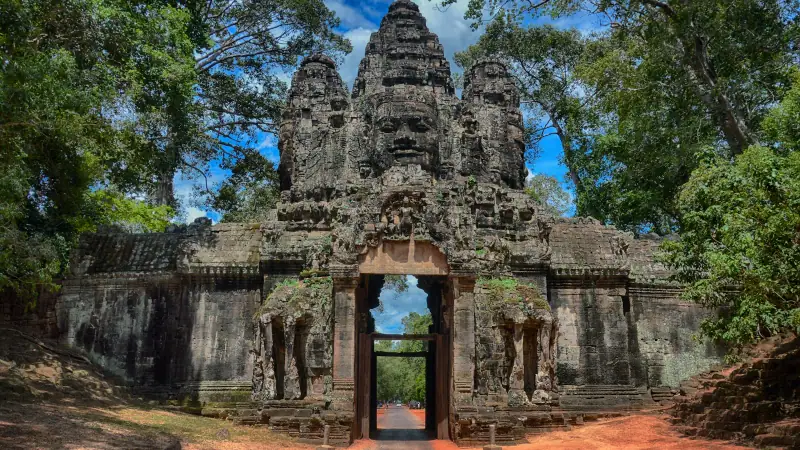
Cambodia in 12 Days with Kids: Stops, Distances and a Realistic Pace
Siem ReapPhnom PenhKampotKoh Rong Samloem
7 days
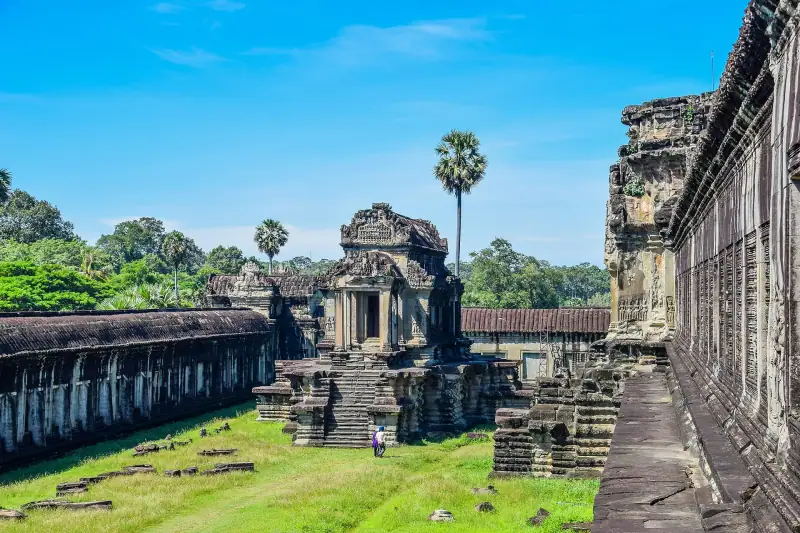
Cambodia in 7 Days: The Perfect One-Week Itinerary
Phnom PenhSiem Reap
Can be adapted in the planner
4 days
Road Trip in Northwest Cambodia: Battambang and Around in 4 Days
4-day road trip itinerary in northwest Cambodia: bamboo train, rice paddies, Phnom Sampeau bats and Angkorian temples away from the crowds.
Can be adapted in the planner