Things to do
Visiting Tonle Sap: Floating Villages, Boat Trips and Nature in Cambodia
We may earn a commission when you book through links on this page, at no extra cost to you. We don't visit or try the places we cover: we summarize published sources. How we work
In short
- Chong Kneas is the closest village (15 km / 9 mi from Siem Reap) but the most touristy; Kampong Phluk and Kampong Khleang (55 km / 34 mi) are more authentic.
- Half-day and full-day tours from Siem Reap run about $15-35 per person; the Prek Toal bird tour costs $60-100 for a full day.
- For the flooded forest, go July to November; for birds at Prek Toal, December to April. Avoid April-May, when the water is lowest.
- Do not combine Angkor and Tonle Sap in one day; go at sunrise or sunset rather than at midday heat.
Tonle Sap is not just a lake. It is a natural phenomenon unique in the world, an exceptional ecosystem designated a UNESCO biosphere reserve since 1997, and the lifeline of an entire people. This large, shallow lake in central Cambodia, linked to the Mekong by the Tonle Sap River, goes through one of the most spectacular hydrological reversals on the planet every year: in the rainy season, the swollen Mekong pushes its waters back toward the lake, which triples or quadruples in size, flooding the surrounding forests and creating an amphibious world where houses float, where fishing nets disappear into an inland sea, and where entire villages have lived on the water for generations. To understand Tonle Sap is to understand Cambodia.
Tonle Sap, Southeast Asia’s hydrological marvel
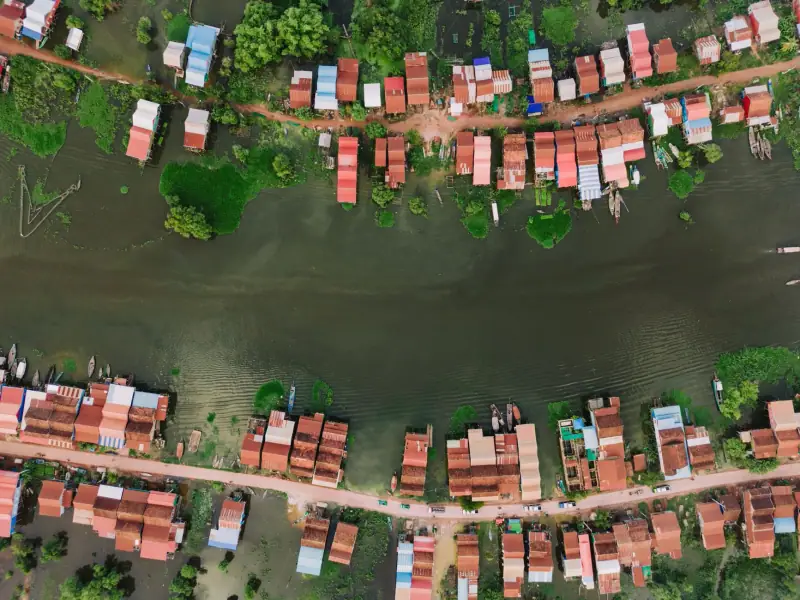
Tonle Sap is the largest freshwater lake in Southeast Asia. In the dry season (November to May), it covers about 2,500 to 3,000 km² (965 to 1,160 sq mi), already a considerable expanse. But between June and October, when the monsoons swell the Mekong to saturation, the Tonle Sap River that normally links the lake to the Mekong literally reverses: it flows the other way, pushing billions of cubic meters of water into the lake, which then spreads to about 16,000 km² (6,200 sq mi) depending on the year. The forested areas around the lake, the semi-submerged forests so characteristic of the region, are covered by up to about ten meters (33 ft) of water.
This phenomenon is at the heart of the lake’s richness. The flooded forests are a unique spawning ground for hundreds of fish species, which come to breed in this protected habitat. As a result, Tonle Sap is one of the most productive freshwater fisheries in the world. It is estimated to supply a major share of the Cambodian population’s protein, with annual catches that make Cambodia one of the top consumers of freshwater fish per capita.
The Water Festival (Bon Om Touk), celebrated in Phnom Penh in November when the current reverses, is directly tied to this phenomenon: Cambodians celebrate the river flowing back toward the Mekong and the start of the big fishing season. If you are in Cambodia in late October or early November, do not miss it.
Floating villages: how to choose
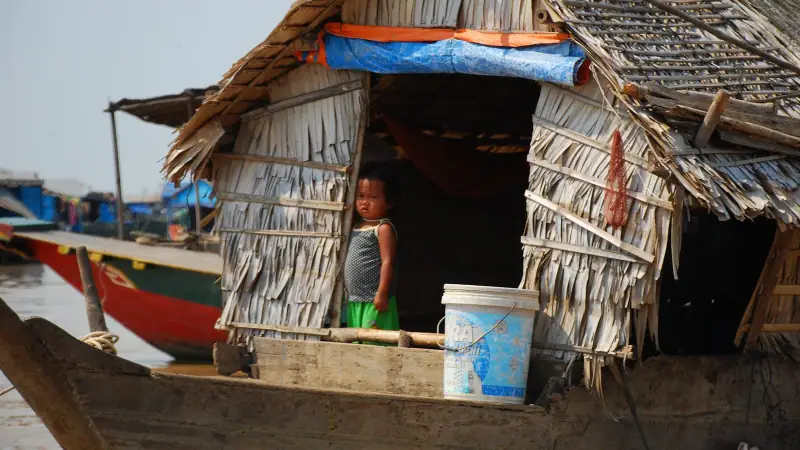
This is the question every traveler asks before leaving. Several floating or semi-floating villages line Tonle Sap, each with its own traits. Here are the main destinations reachable from Siem Reap:
Chong Kneas: the most accessible
Chong Kneas is the village closest to Siem Reap, about 15 km (9 mi) to the south, or thirty minutes by tuk-tuk. It is also the most touristy. The boat landing is well organized, boats leave regularly, and within minutes you will find local guides, boats and even floating restaurants.
What you will see: houses actually on the water (floating on bamboo or barrel rafts), a floating school, sometimes a floating mosque (a significant part of the community is Khmer Muslim, of Cham origin), and the constant comings and goings of fishermen. It is photogenic, lively and easy.
What to know: Heavy tourist traffic has led to aggressive sales practices. It is not unusual to be sold buckets of food to feed crocodiles from your boat, or to be invited into floating shops under the pretext of a “free” visit. Stay aware of this and keep control of your schedule. If you want a less packaged experience, go to Kampong Phluk or Kampong Khleang instead.
Kampong Phluk: the submerged forest
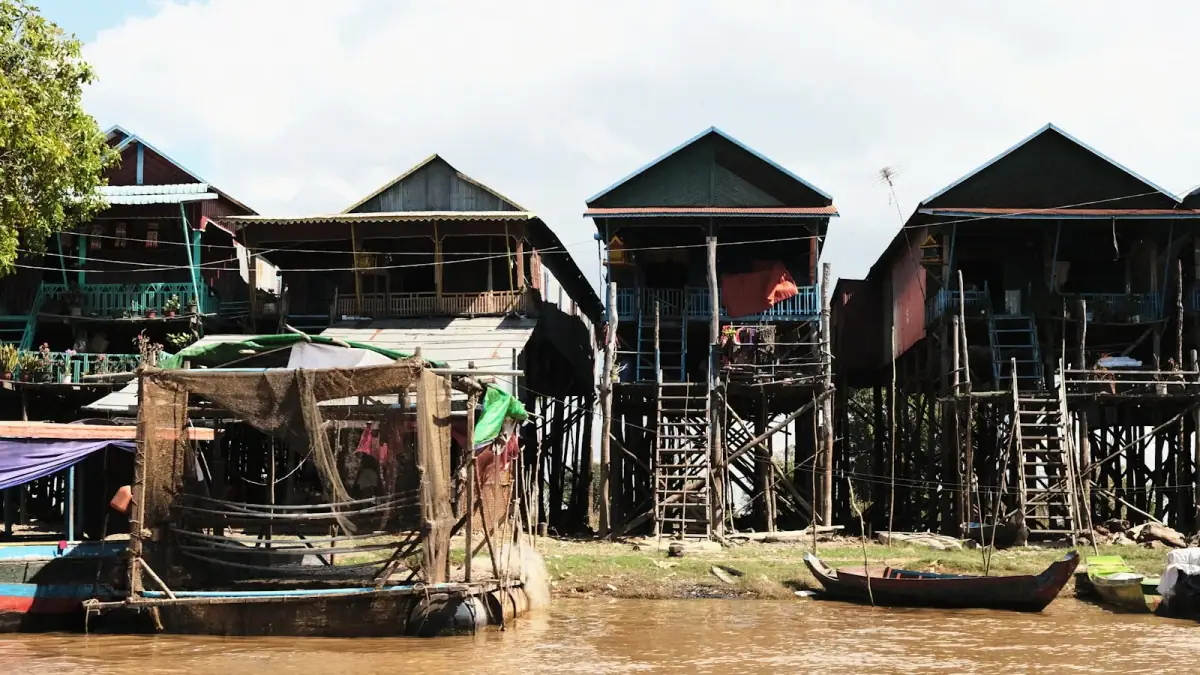
About 30 km (19 mi) from Siem Reap by road (then a boat ride), Kampong Phluk is one of the most striking experiences Cambodia offers travelers. This village of several thousand people is built on stilts 6 to 9 meters (20 to 30 ft) high, a necessity to stay above the water during the lake’s annual rise.
In the wet season (July to November), the rising water floods the forest around the village, creating an almost unreal setting: your dugout canoe glides silently between trees of which only the trunks and crowns emerge, in filtered light and a fairy-tale atmosphere. Monkeys watch from the branches, and water birds take flight as you pass.
In the dry season, the stilts are fully visible and the village is reached by a dusty track. The boat ride is shorter because the lake is lower, but you can walk in the now-dry mangrove forest, a different experience but just as interesting.
Tonle Sap excursions from Siem Reap
Guided tours to Kampong Phluk, Chong Kneas and the bird sanctuary. Book online.
Kampong Khleang: the authentic immersion
For travelers who want to get off the beaten path, Kampong Khleang is the most fascinating Tonle Sap destination, and the least known. About 55 km (34 mi) from Siem Reap (one to one and a half hours by road depending on road conditions), this village is one of the largest on the lake, with a permanent population of several thousand.
Unlike Chong Kneas or Kampong Phluk, Kampong Khleang is rarely visited by tourists. Residents live from fishing as their ancestors did, in a subsistence economy that tourism has barely changed. Stilt houses stretch for kilometers, nets dry in the sun, children play in dugout canoes: life on the water in its most authentic form.
Practical organization: A visit to Kampong Khleang is ideally a full day, with a Khmer-speaking guide to ease communication with residents. Ask at your Siem Reap lodging: some local agencies offer small-group visits with a guide hired directly from the community, which gives a more direct economic impact.
The Prek Toal bird sanctuary
On the northwest shore of Tonle Sap, the Prek Toal reserve is one of the most important waterbird nesting areas in all of Southeast Asia. It is part of the Tonle Sap wetland complex, protected by UNESCO as part of the biosphere reserve.
Between December and April, the dry season, tens of thousands of birds nest in the semi-submerged forest: spot-billed pelicans, giant ibis (one of the most threatened birds in the world, found essentially only in northern Cambodia), storks, adjutants, egrets and purple herons. The spectacle is breathtaking for birders, but also for newcomers; seeing several thousand birds take off from their perches at sunrise is an unforgettable experience.
How to visit Prek Toal: The reserve is far from Siem Reap (allow about 1.5 to 2 hours by boat from the Chong Kneas landing). The visit must be made with a guide approved by the reserve’s management authority (Osmose, the NGO that manages the reserve’s protection, runs responsible tours with trained local guides). The ideal visit is early in the morning, in a slow boat, to watch bird activity at sunrise.
Prek Toal is not a mass-market site; access is deliberately limited to protect the ecosystem. If you are passionate about birding or wild nature, book well in advance, especially in high season (January to March).
Hotels in Siem Reap: the ideal base for Tonle Sap
Boutique hotels, guesthouses and resorts near the lake. Book with free cancellation.
Sunset on the lake: a Cambodian classic
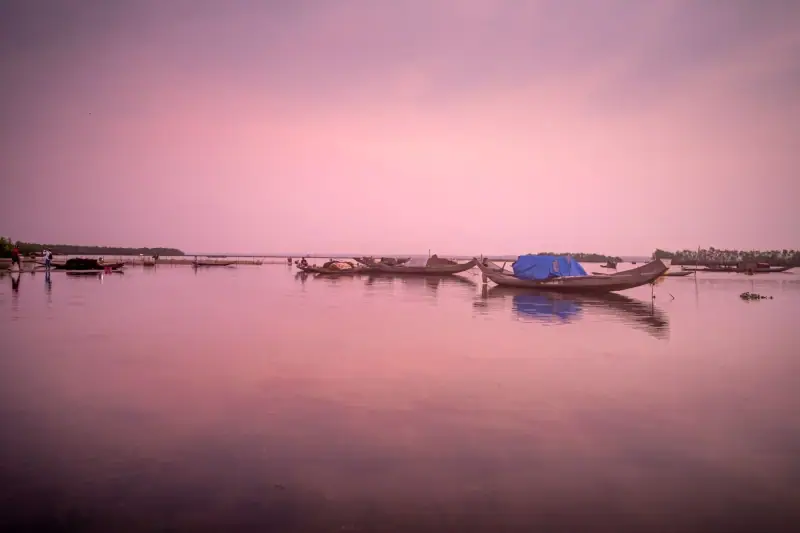
One of the most photographed moments in Cambodia happens on Tonle Sap at sunset. From a moving boat or from the shore, the golden late-day light sets the lake’s waters aglow, silhouettes the fishermen’s canoes heading back to the village and sets ablaze the tin roofs and bamboo of the floating houses.
Sunset from Chong Kneas is the most accessible, with “sunset boat” excursions leaving regularly from the main landing in late afternoon. It is touristy but undeniably beautiful, especially if you have a camera and a little patience to find an angle without other boats in the frame.
For a more solitary sunset, choose Kampong Phluk or the lake’s northern banks (reachable from Siem Reap by road), where there are few or no tourists, and where you will share the horizon only with local fishermen.
Fishing and crafts: life around the lake
Tonle Sap supports hundreds of thousands of Cambodian fishermen. Fishing here is a matter of family, tradition and economic survival. Techniques vary by season: at high water, large drift nets catch the schools of fish moving through the flooded forest; in the dry season, traditional bamboo barriers and fixed traps channel catches toward holding ponds.
During a village visit, it is not unusual to see women making nets by hand, men repairing their wooden dugouts, or children learning to paddle as soon as they can walk. It is a world apart, as fascinating as it is fragile; overfishing, deforestation of the banks and climate change now put this unique ecosystem under pressure.
A few villages around the lake have set up small craft workshops (basketry, bamboo carving, net making) where visitors can watch local skills and buy directly from the artisans. These purchases go straight into the local economy, a good alternative to the factory-made souvenirs sold in Siem Reap.
Tonle Sap and the Angkor temples: the ideal combination
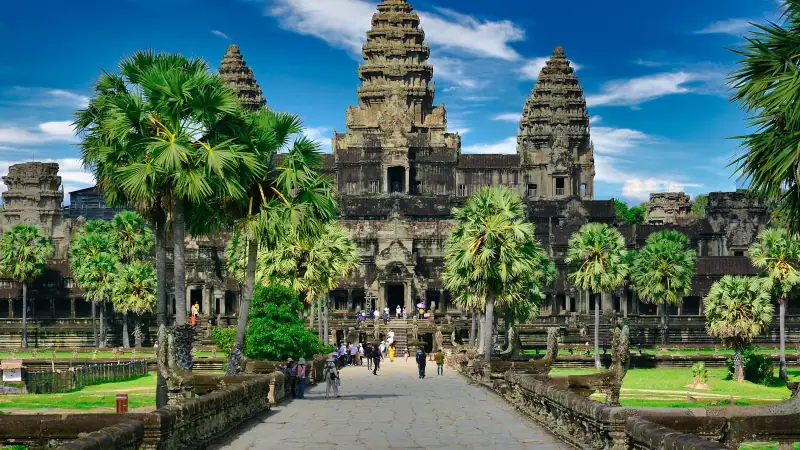
Siem Reap is the natural base for exploring both Tonle Sap and the Angkor complex. The two sites are about twenty kilometers (12 mi) apart, and combining them in one stay is almost a given.
A classic plan: spend two to three days on the Angkor temples, visiting Angkor Wat, the Bayon and the jungle temples in the morning (before the heat); then set aside a half day or a full day for Tonle Sap, ideally in the evening for sunset or early in the morning for the birds. For a fuller route, see our 7-day Cambodia itinerary.
Tip: Avoid grouping an Angkor visit and Tonle Sap into the same day. Both deserve your full attention, and fatigue lowers the quality of the experience. Tonle Sap in the midday heat is also less pleasant than at sunrise or sunset.
Car rental in Siem Reap
Explore Tonle Sap and the temples at your own pace with a rental vehicle.
Tonle Sap: practical information
Getting there
From Siem Reap (the natural starting point):
- Tuk-tuk to Chong Kneas: About 30 minutes, $8-12 round trip. Every tuk-tuk driver in Siem Reap knows the boat landing.
- Organized tour: Most Siem Reap hotels and guesthouses offer organized excursions including transport, guide and boat, usually a half day (Chong Kneas) or a full day (Kampong Phluk, Kampong Khleang).
- Kampong Khleang: Needs a car or tuk-tuk for the road (~55 km / 34 mi, 1 to 1.5 hours), then a boat. Better to arrange through an agency to make sure you get a Khmer-speaking guide.
When to go
- Best overall period: November to March (cool dry season, water still relatively high in early November).
- For the submerged forest: July to November (high water, canoe rides through the flooded forest possible at Kampong Phluk).
- For birds at Prek Toal: December to April (nesting season for the large colonies).
- To avoid: April-May (maximum drought, very low water, limited boat access to some villages).
Budget and indicative prices
Prices vary by season, provider and group. As a guide:
- Half-day Chong Kneas tour (transport + boat + guide): $15-25 per person
- Full-day Kampong Phluk or Kampong Khleang tour: $20-35 per person
- Prek Toal bird tour (full day): $60-100 per person (book through Osmose or approved local operators)
- Private boat on the lake (no guide): $15-30 per hour depending on size
What to bring
- High-SPF sunscreen (the sun on the water is fierce)
- Hat and sunglasses
- Insect repellent in the wet season (mosquitoes at the end of the day)
- Light, long-sleeved clothing for religious sites
- Shoes that can get wet (you may have to board unsteady barges)
- Small dollar bills ($1-5) for purchases there and tips
Respect and visiting ethics
Tonle Sap villages are living communities, not tourist attractions. A few simple rules:
- Do not photograph residents without their consent (a smile and a gesture are usually enough to ask permission).
- Avoid operators who offer animal “shows” (crocodiles, monkeys); these practices harm animal welfare.
- Prefer local village guides over outside guides: the money stays in the community.
- Do not hand out candy or money to children directly; it encourages school absenteeism.
A lake, a memory
Tonle Sap is also a place of memory. The communities that live here, Khmer, Khmer Muslim (Cham) and Vietnamese, have lived through decades of instability, forced displacement and revival. Under the Khmer Rouge regime, the lake’s fishermen were among those hit hardest by forced collectivization policies. Today, their resilience shows in every net mended by hand, in every dugout launched at dawn on the gray waters of the lake.
To visit Tonle Sap with awareness is to go beyond the photo of the floating village at sunset. It means understanding that this water has fed Cambodia for millennia, and that the Angkor temples themselves could never have existed without the fish and rice harvests made possible by the lake’s regular floods. To go further in understanding this fascinating country, see our guide to Khmer culture and our complete guide to Siem Reap.
Frequently asked questions
Which Tonle Sap floating village should you visit?
Chong Kneas is the closest and easiest to reach from Siem Reap (15 km / 9 mi), but also the most touristy. Kampong Phluk offers a more authentic experience, with stilt houses in a semi-submerged forest, ideal in the wet season. Kampong Khleang is the most remote and the largest, for travelers who want to get off the standard circuits.
When is the best time to visit Tonle Sap?
It depends on what you want. In the dry season (November to April), the lake is smaller but the stilt villages show off their imposing structures, rising several meters out of the water. In the wet season (June to October), the lake grows considerably and floods the forests, lake-country Cambodia at its fullest. November and December are ideal for combining still-high water with cooler weather.
How do you get to Tonle Sap from Siem Reap?
Chong Kneas is about 15 km (9 mi) from Siem Reap, reachable by tuk-tuk in 30 minutes. Kampong Phluk is about 30 km (19 mi) by road, followed by a boat ride. Kampong Khleang is about 55 km (34 mi) from Siem Reap. Most hotels offer organized tours including transport and a guide, which is the simplest and often the cheapest option.
How much does a Tonle Sap excursion cost?
A tour from Siem Reap including transport, guide and boat generally costs $15-35 per person depending on the destination and length. Chong Kneas is the cheapest, Kampong Phluk slightly more. Kampong Khleang often needs a full day and costs more. The dugout canoe ride at Kampong Phluk in the wet season is especially popular.
Can you visit Tonle Sap year-round?
Yes, but access to the villages varies by season. In the deep dry season (March to May), some boat access can be limited by falling water levels, especially toward Kampong Phluk. In the wet season (June to October), boat access is at its best. Check conditions with your Siem Reap lodging before setting out.
Can you visit Tonle Sap without a guide?
Technically yes, but a local guide adds real value: they make communication with residents easier, explain the lake's history and community life, and help negotiate boat prices. For Kampong Khleang or the Prek Toal reserve, a guide is essential. For Chong Kneas, you can go by tuk-tuk and take a boat there.
More Cambodia guides
Keep reading
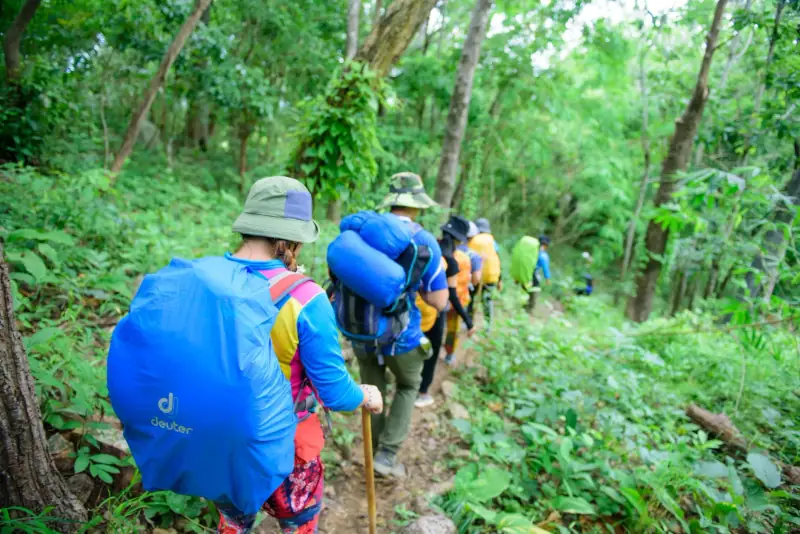
Hiking in the Cardamom Mountains: Ecotourism Guide to Cambodia
Hiking and ecotourism in the Cardamoms: Chi Phat, Tatai, Koh Kong. Wildlife, treks and practical tips for exploring this preserved wilderness.
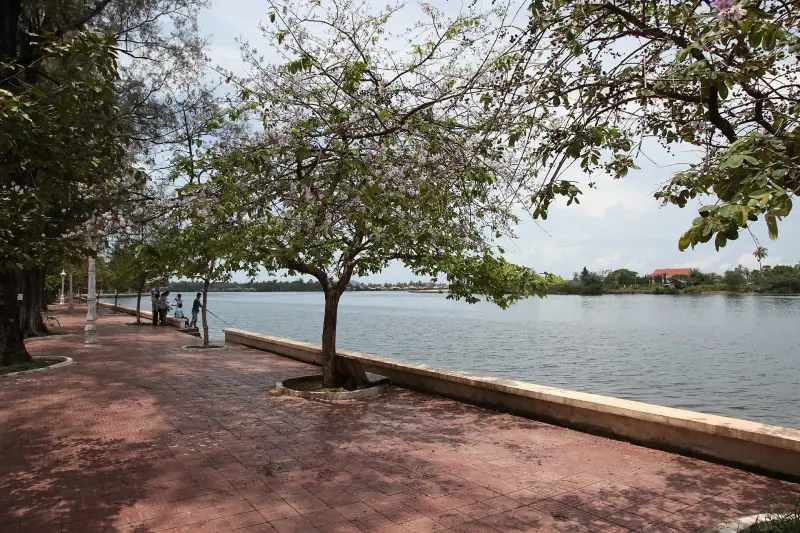
Kampot and Kep: What to Do, See and Eat in Southern Cambodia
Guide to Kampot and Kep: top activities, day trips, Kampot pepper, Kep crab, beaches and places to stay. Everything you need for southern Cambodia.
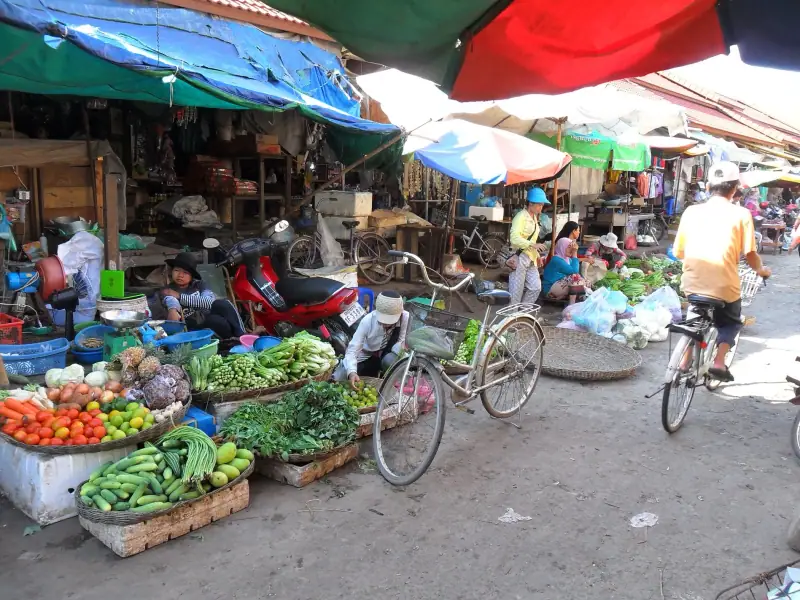
Cambodia Travel Budget: How Much Does a Trip Cost in 2026?
How much does a trip to Cambodia cost? Daily budgets, hotel prices, transport, meals and activities so you can plan your stay without surprises.
Ready-made
Cambodia itineraries
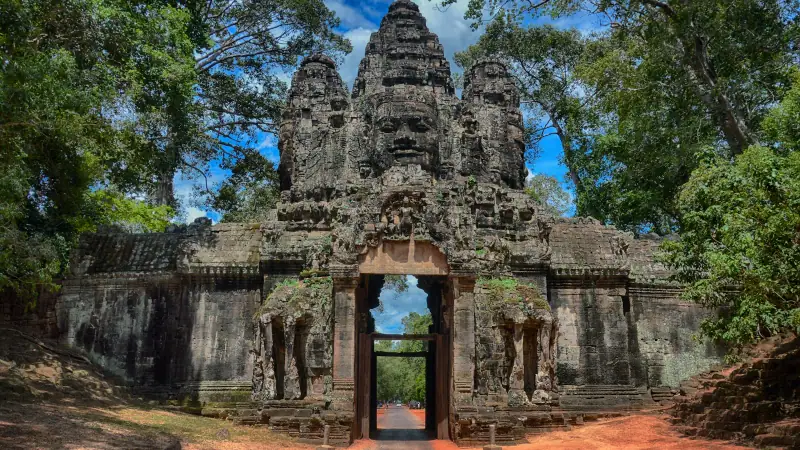
12 days
Cambodia in 12 Days with Kids: Stops, Distances and a Realistic Pace
Siem ReapPhnom PenhKampotKoh Rong Samloem
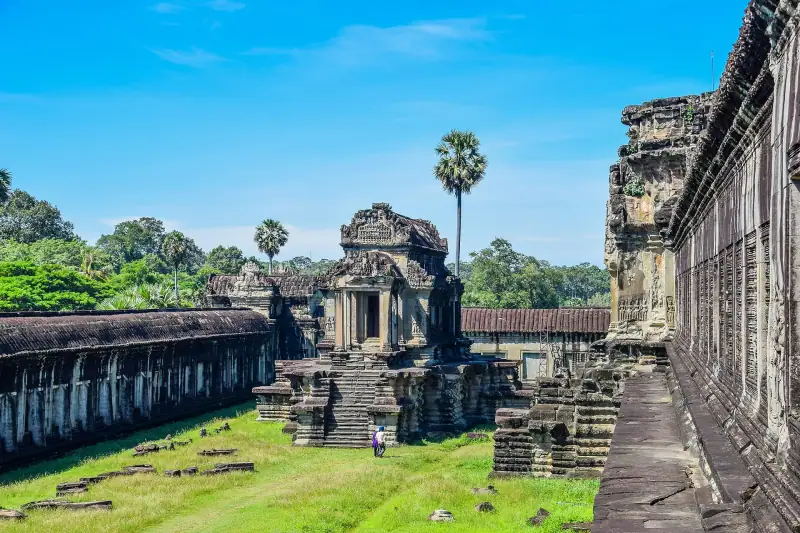
7 days
Cambodia in 7 Days: The Perfect One-Week Itinerary
Phnom PenhSiem Reap
Can be adapted in the planner
4 days
Road Trip in Northwest Cambodia: Battambang and Around in 4 Days
4-day road trip itinerary in northwest Cambodia: bamboo train, rice paddies, Phnom Sampeau bats and Angkorian temples away from the crowds.
Can be adapted in the planner