What to see
Visiting Koh Rong: Complete Guide to Cambodia's Island Getaway
We may earn a commission when you book through links on this page, at no extra cost to you. We don't visit or try the places we cover: we summarize published sources. How we work
In short
- Koh Rong is reached by fast ferry from Sihanoukville in 45 to 60 minutes; expect about $10-15 one way. Book ahead from December to February.
- The dry season (November to April) has the calmest seas and best diving visibility. Bioluminescence depends on the moon, not the season: go on a moonless night.
- There is no hospital and no reliable ATM on the island. Withdraw cash in Sihanoukville and carry US dollars in small bills.
- Plan 3 to 5 days. Stay in Koh Tuch for convenience, or on Long Set Beach or Lonely Beach for isolation.
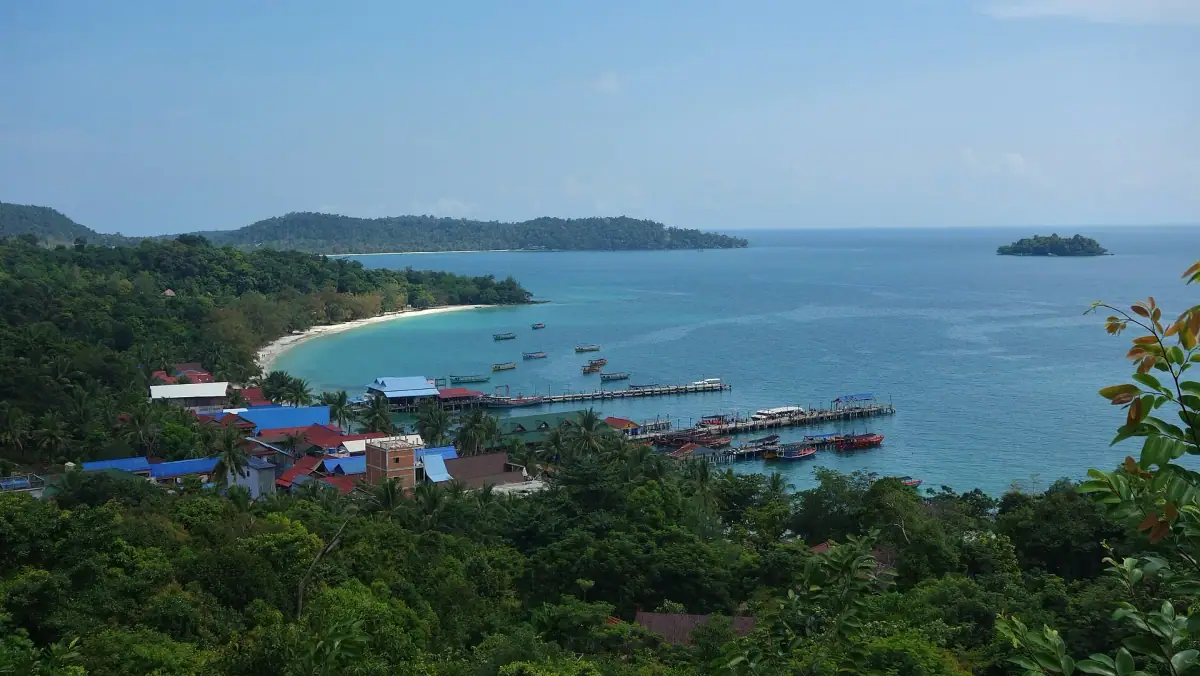
Koh Rong is the island you expect to see in a movie. Miles of fine white sand, turquoise water so clear you can see the bottom at 5 m (16 ft), dense jungle running almost down to the sea, and at night a show found almost nowhere else: thousands of glowing blue particles that make the ocean look like an inverted starry sky. That is the bioluminescence of Koh Rong, and it alone justifies the detour.
Cambodia’s second-largest island, 25 km (16 mi) off Sihanoukville, was long one of Southeast Asia’s best-kept secrets. Travelers know it well today, but thanks to its size (78 km², or 30 sq mi) and rugged geography, it has kept much of its wild character. This guide gives you what you need to enjoy Koh Rong and avoid unpleasant surprises.
Koh Rong at a glance: an island of extremes
Koh Rong is an island of sharp contrasts. It has four villages: Koh Tuch (southeast), Daem Thkov (east), Prek Svay (northeast) and Sok San (west/north), the last three being small fishing villages. Koh Tuch, where the ferries dock, concentrates restaurants, bars, dive shops and lodging in a relaxed beach-resort atmosphere. But a 30-minute walk through the jungle away, on the western coast, the beaches are completely wild, with no buildings and no electricity. This coexistence of the lively and the remote is what gives the island its charm.
Key figures:
- Area: 78 km² (30 sq mi)
- Permanent population: about 4,000 people in four villages (fishermen, farmers and tourism workers, 2019 census)
- Coastline: more than 40 km (25 mi)
- Main beaches: Koh Tuch (Village Beach), Long Set Beach (4K Beach), Lonely Beach, Coconut Beach
- Access: ferry from Sihanoukville, 45-60 min
Koh Rong has no hospital, ATMs are rare and unreliable, electricity comes from generators (often switched off after midnight in simpler places) and Wi-Fi is unpredictable. Its fans mind these least, and they make the island a real break from the connected world.
The beaches of Koh Rong: an inventory
Koh Tuch Beach (Village Beach): the lively heart
Koh Tuch is the beach along the main village. About 1 km (0.6 mi) long, it is the busiest and most developed on the island, though “developed” is a strong word by Thai standards. You will find restaurants, beach bars, dive and craft shops, and almost all the lodging reachable without a hike.
The water at Koh Tuch is calm and shallow, good for family swims or first snorkeling. In the morning, before the ferries arrive, the beach is surprisingly peaceful. In the evening, this is where the island’s nightlife gathers, modest but real, with beach bars and bonfires.
Long Set Beach (4K Beach): the wildest beach you can walk to
Nicknamed “4K Beach” for marketing reasons, Long Set Beach is about 3 km (1.9 mi) of white sand without a single building visible from the sea. It is Koh Rong’s postcard beach. You reach it from Koh Tuch by a jungle path of about 30-45 minutes (ask for a map or a local guide, as the trail can be misleading).
The reward matches the effort: a ribbon of pristine sand, turquoise water and near-certain solitude on weekdays. A few isolated bungalows and one or two beach restaurants let you spend the night away from any bustle. This is where the night bioluminescence is most spectacular, sheltered from village lights.
Bungalows and stays on Koh Rong
From wooden seafront bungalows to jungle eco-lodges: compare and book with free cancellation.
Lonely Beach: for lovers of total quiet
Lonely Beach lives up to its name. Located in the north of the island in an isolated bay, it can be reached by a jungle trail from Koh Tuch (1 h 30 to 2 h on foot) or by water taxi. Its few rustic bungalows host travelers looking for real escape, with no music, no lively bar and no immediate neighbors.
The atmosphere is bohemian and meditative. Hammocks, sunsets and starry nights make up most of the program. If you come to get away, Lonely Beach is your answer.
Coconut Beach, Palm Beach and Sok San: beaches away from Koh Tuch
Coconut Beach is about ten minutes on foot from the fishing village of Daem Thkov, not at Koh Tuch, so most people arrive by water taxi. Palm Beach, near Prek Svay, and the long beach at Sok San in the northwest are also reached by water taxi ($15-20 USD one way from Koh Tuch). In return, these beaches offer almost total solitude and an intact natural setting. For travelers who want to get away from everyone, this is the ultimate option.
Bioluminescence: Koh Rong’s unique night show
Marine bioluminescence is the most memorable thing you will experience on Koh Rong. Caused by an exceptional concentration of dinoflagellates (microscopic phytoplankton), it turns seawater into living light: every movement in the water, whether a swimming arm, a passing fish or a breaking wave, sets off a burst of glowing blue particles.
Where and when to see bioluminescence:
The phenomenon is visible all year on Koh Rong. It depends mostly on the phase of the moon: moonless nights (around the new moon) give the best results, whatever the season.
- Dry season (November to April): Clear sky and calm sea, comfortable conditions for watching while swimming or kayaking.
- Rainy season (May to October): The phenomenon is still there, but showers, clouds and sometimes rough seas can spoil the outing; take advantage of clear evenings.
Tips for a good experience:
- Wait for a moonless night (or a thin crescent). A full moon cancels the visual effect
- Move away from the village lights (Long Set Beach or Lonely Beach are ideal)
- Swim gently and stir the water with your hands. Slow movements produce the best trails of light
- Let your eyes adjust to the dark for 10-15 minutes before getting in the water
- Avoid sunscreen and chemical products, as they harm the plankton
Guided outings: Several agencies in Koh Tuch offer bioluminescence outings in clear-bottom kayaks, an even more immersive experience. Expect $15-25 USD per person.
Diving and snorkeling on Koh Rong
The waters around Koh Rong hold surprisingly rich marine life for a shallow gulf. Visibility ranges from 8 to 20 m (26 to 66 ft) depending on the season, and the coral reefs, though less spectacular than those of the Andaman Sea, shelter green turtles, stingrays, moray eels, barracudas and plenty of colorful reef fish.
Main dive sites:
Koh Rong Corner: The island’s documented dive site, appreciated for its reefs and coral fauna. Dive centers in Koh Tuch run trips to this site; ask locally about depths and the day’s conditions.
Koh Rong Samloem, the neighboring island: Other well-known sites, such as Secret Garden and Cobia Point, are at Koh Rong Samloem. Marine Conservation Cambodia (MCC), a conservation NGO based on Koh Rong Samloem, runs reef protection and awareness programs there. Check with local dive centers to see which sites are accessible in each season.
Diving, snorkeling and tours on Koh Rong
PADI intro dives, reef trips, bioluminescence kayaking and boat tours: book online.
Practical diving information:
- PADI Open Water course: $320-510 USD depending on the center (3-4 days, international certification; check the price with the center)
- Intro dive: $45-70 USD (1 supervised dive)
- 2-dive trip (certified divers): $55-80 USD with equipment
- Surface snorkeling: $15-25 USD (half day, mask, fins and vest provided)
Snorkeling without an operator: Koh Tuch beach itself offers decent snorkeling at its ends (less in the middle, where boats pass). Long Set Beach, with its clear shallow water, is ideal for independent snorkeling from the shore.
Things to do on Koh Rong away from the beach
Koh Rong is not only a place to lie around. The island’s interior jungle and coastline offer a range of activities for active travelers.
Jungle hiking: The interior of the island is covered with primary jungle crossed by a few trails. The Koh Tuch → Long Set Beach hike (30-45 min) is the most popular. Other trails lead to the north of the island or up to viewpoints over the archipelago. Bring good shoes (the path can be slippery), water and insect repellent, as ticks and mosquitoes are present.
Sea kayaking: Kayak rental is available in Koh Tuch ($8-15 USD per hour). Paddling part of the way around the island is a wonderful experience: the cliffs of the west coast plunge straight into turquoise water, and you can land on beaches that are otherwise out of reach. Allow a full day for a complete circuit with breaks.
Sea fishing: Several local fishermen offer line or casting trips from small traditional boats. It is an authentic way to see the island from the sea and meet residents. Expect $20-40 USD for a half day.
Dolphin watching: The Irrawaddy dolphin is a rare species in Cambodia, found mainly in the Mekong near Kratie. Sightings in coastal waters are exceptional but possible between Koh Rong and the mainland. A few local agencies occasionally offer outings ($25-40 USD), but nothing is guaranteed and sightings are very infrequent.
Visiting the fishing village: Away from the tourist village of Koh Tuch, a real Cambodian fishing village coexists on the island. A walking visit shows how permanent residents live, with morning markets, fishing boats and daily life far from the tourist circuit. Be respectful, and it makes an enriching stop.
Koh Rong at night: atmosphere and bars
Koh Rong has a well-established nightlife for such a small island. It cannot match the beaches of Koh Phangan or Koh Samui in Thailand, perhaps apart from the intensity, but it offers a genuinely festive atmosphere in a setting that stays human-sized.
Iconic bars of Koh Tuch:
Sky Bar: Perched high with a view over the bay, it draws travelers for a late-afternoon drink before turning into a lively night bar. The view of the bay at dusk is spectacular.
Beach bars in Koh Tuch: A dozen bars line the beach, playing reggae and serving tropical fruit cocktails. The atmosphere is warm, international and unpretentious. Happy hours (often 5-7 pm) offer cocktails at $2-3 USD.
Bonfires and quiet nights: For a calmer evening, Long Set Beach and Lonely Beach offer the best nights under the stars, perfectly quiet, with bioluminescence as the only show.
Flights to Phnom Penh or Siem Reap
Compare fares to start your Cambodian adventure.
Where to stay on Koh Rong
Lodging on Koh Rong is concentrated in Koh Tuch for the easy options, and scattered along the remote beaches for isolated bungalows.
Koh Tuch Village: the practical base
Most travelers sleep in Koh Tuch for convenience: restaurants, shops, ferries and dive centers are all within walking distance. Options range from guesthouse dorms to air-conditioned hotels with pools.
- Dorm ($8-15 USD/night): Mainly in village guesthouses. Basic comfort, fan, shared bathroom. The classic backpacker option.
- Budget private room ($20-40 USD/night): Guesthouses and small hotels with a private room, air conditioning or fan, and a private bathroom. Good value for money.
- Seafront bungalow ($40-80 USD/night): Wooden bungalows on stilts or on the waterfront. Authentic tropical feel, terrace with hammock. The best balance of immersion and comfort.
- Upscale resort ($80-200 USD/night): A few resorts with pool, spa and full service have developed on the island, notably in Koh Tuch and in more isolated bays. Song Saa Private Island (located on Koh Ouen and Koh Bong in the archipelago) represents the very top end of Koh Rong.
Long Set Beach and Lonely Beach: total isolation
Several rustic bungalows are dotted along these remote beaches. Electricity is often supplied only in the evening by generator, there is no Wi-Fi, and food is limited to what the beach restaurant prepares. In exchange you get absolute calm, bioluminescence nights without light pollution, and a sense of the end of the world that is hard to find elsewhere.
If you are still deciding between the two islands, Where to Stay on Koh Rong Samloem: Saracen Bay, M’Pai Bay or Lazy Beach? covers the quieter neighbor.
How to get to Koh Rong
From Sihanoukville (main route)
Ferries to Koh Rong leave from the Sihanoukville Autonomous Port, about 10 minutes by tuk-tuk from the city center.
Main companies:
- Speed Ferry Cambodia: The best-known company. Several departures during the day, usually between 8 am and 5 pm (check schedules with the company, as they change by season). Online booking is recommended in high season.
- GTVC Speedboat: Similar departures, slightly lower fares.
Practical information:
- Duration: 45-60 minutes to Koh Tuch
- Fare: $10-15 USD one way, $20-25 USD round trip
- Luggage: 1 checked bag included, extra charge for bulky luggage
- Last ferries: about 5 pm from Sihanoukville, 4 pm from Koh Rong (check by season)
Important tip: In November-December during season changes, and in October during tropical storms, ferries can be canceled for weather reasons several days in a row. Always keep a buffer day in your schedule.
From Phnom Penh
There is no direct connection. The classic route is:
- Bus Phnom Penh → Sihanoukville (3 to 4 hours, $12-17 USD)
- Ferry Sihanoukville → Koh Rong (45-60 min, $10-15 USD)
Several bus companies sell combined bus + ferry packages on a single ticket from Phnom Penh.
Budget for a stay on Koh Rong
| Item | Tight budget | Comfortable | High end |
|---|---|---|---|
| Lodging | $8-20 | $30-60 | $80-200 |
| Meals (x3) | $8-15 | $15-30 | $30-60 |
| Round-trip ferry | $20-25 | $20-25 | $20-25 |
| Activities | $0-15 | $20-50 | $50-150 |
| Total for 3 nights | ~$70-120 | ~$170-275 | ~$350-700 |
All amounts are in US dollars.
Budget tips:
- Eat at local restaurants in the village rather than at tourist places on the waterfront (saves 30-50%)
- Negotiate excursions directly with local boatmen rather than through the agencies in Koh Tuch
- Withdraw all your money in Sihanoukville. Cash prices on Koh Rong are generally lower than card prices and avoid transaction fees
When to visit Koh Rong
November to April (dry season): The island’s high season. Clear sky, calm sea, crystal-clear water. Diving visibility peaks in January-February. The island is busier, prices are higher and lodging should be booked ahead. December-January is the absolute peak of tourism.
May to October (rainy season): Daily tropical showers (often short and intense), sometimes rough seas, and some ferries canceled. The upsides: prices 30-50% lower and far fewer tourists. A compromise for flexible travelers who enjoy the island without the crowds.
Best compromise: November or April, the end or start of the dry season, with fewer people than December-February and excellent weather. Koh Rong’s “sweet spot.”
To pick the best time for your full route, see Best Time to Visit Cambodia: Month by Month.
Koh Rong in your Cambodia route
Koh Rong fits naturally at the end of a Cambodian trip, as a beach reward after the temples and the city. Here are the most common combinations.
10-day route with Koh Rong: Siem Reap / Angkor (3 nights) → Phnom Penh (2 nights) → Sihanoukville (1 night) → Koh Rong (3 nights) → back to Phnom Penh for the flight
South coast extension (5 days from Phnom Penh): Phnom Penh → Sihanoukville (1 night) → Koh Rong (2-3 nights) → Kampot (1-2 nights) → Kep → back to Phnom Penh. A route that covers the three faces of the Cambodian coast.
Koh Rong on its own (long weekend): For travelers based in Asia, Koh Rong can be done in 4-5 days from Phnom Penh, a quick paradise mini-stay.
Our Cambodia in 10 Days: The Ideal Itinerary From Siem Reap to Phnom Penh gives a detailed day-by-day plan you can adapt to add Koh Rong.
Practical tips before you go
Health and safety:
- There is no hospital on the island. For any serious medical problem, you have to return to Sihanoukville by ferry. Bring a basic first-aid kit and travel insurance that covers medical evacuation.
- Health: ask your doctor or a travel clinic about mosquito-borne illness before you leave, and see the official travel health pages (CDC in the US, TravelHealthPro in the UK). Use repellent and a mosquito net at night.
- Tap water is not drinkable. Buy bottled water or use purification tablets.
- Entry rules depend on your passport. Check the official travel advice of your government before you book: travel.state.gov (US), GOV.UK (UK), travel.gc.ca (Canada), Smartraveller (Australia) (checked November 2026).
Connectivity:
- Wi-Fi is available in most Koh Tuch lodging, but slow and unstable. Long Set Beach and Lonely Beach generally have no connection.
- A Cambodian SIM card (Smart or Metfone) with data works on the island, but speeds can be very low. Check your carrier’s international plan or use a travel eSIM.
Money and payments: ATMs are rare and unreliable on the island. Bring US dollars in small bills, the main currency for all transactions. Some places accept cards, but always withdraw cash in Sihanoukville before boarding.
Environment: Koh Rong remains a fragile island. Travel responsibly: refuse straws and single-use plastics, do not touch coral while snorkeling, do not feed marine wildlife, and respect the protected zones marked out by Marine Conservation Cambodia.
Koh Rong is not a perfect island in the marketing sense. It has neither the infrastructure of a luxury beach resort nor the regularity of an all-inclusive. But it has something much rarer: raw natural beauty, a sense of adventure that has not yet been tamed, and the night bioluminescence that turns every swim into a lasting memory. For travelers who are happy to be surprised, Koh Rong is one of the last islands in Southeast Asia that still keeps its promise of paradise.
To fit the island into a wider trip, start from the Cambodia destination page and the Cambodia trip planner, or compare the ready-made routes: Road Trip in Northwest Cambodia: Battambang and Around in 4 Days, Cambodia in 10 Days: The Ideal Itinerary From Siem Reap to Phnom Penh and Cambodia in 7 Days: The Perfect One-Week Itinerary.
Frequently asked questions
How do you get to Koh Rong from Sihanoukville?
Fast ferries leave several times a day from the Sihanoukville Autonomous Port. Speed Ferry Cambodia and GTVC Speedboat run the route in 30 to 60 minutes. Expect about $15-20 USD per trip (fares vary, so check with the companies). In high season (December to February), book your ticket ahead because ferries fill up quickly.
What is the best beach on Koh Rong?
Koh Tuch Beach (Village Beach) is the liveliest and most accessible, good for evenings and snorkeling. Long Set Beach (4K Beach) is the longest and wildest: about 3 km (1.9 mi) of nearly empty white sand, reached on foot through the jungle. For even more isolation, Lonely Beach in the north of the island offers complete quiet.
Can you see bioluminescence on Koh Rong?
Yes, Koh Rong is one of the best places in the world to see marine bioluminescence. It is caused by microscopic plankton that glows blue-green when disturbed. It can be seen all year: the absence of moonlight matters far more than the season. The best way to see it is to swim at night when there is no moon, away from the village lights.
How many days should you spend on Koh Rong?
3 to 5 days is ideal to enjoy the island without rushing. Allow at least 2 days to see the main beaches and have one night of bioluminescence. Plan 5 to 7 days if you want to explore the remote beaches, dive and slow down. Koh Rong is not suited to flying visits.
When is the best time to visit Koh Rong?
The dry season (November to April) offers the best conditions: calm sea, plenty of sun and excellent diving visibility. December and January are high season, with a livelier island and higher prices. The rainy season (May to October) brings daily showers but fewer tourists and lower prices. Be careful in October and November: tropical storms can disrupt ferries for several days in a row.
Are there ATMs on Koh Rong?
No, there is no reliable ATM on the island. Withdraw enough cash (US dollars or Cambodian riel) in Sihanoukville before boarding the ferry. Places in Koh Tuch sometimes accept bank cards, but the connection is often unstable. Always carry a cash reserve for your whole stay.
Koh Rong or Koh Rong Samloem: which one should you choose?
Koh Rong is bigger and livelier, with real nightlife in Koh Tuch. It suits backpackers, partygoers and travelers who want a variety of activities. Koh Rong Samloem is smaller, quieter and more upscale, and its Saracen Bay is one of the most beautiful in Cambodia. Choose Samloem for total rest and a preserved setting, and Koh Rong for atmosphere.
More Cambodia guides
Keep reading
Banteay Srei or Beng Mealea: Which Should You Visit With a Half Day?
Banteay Srei or Beng Mealea near Angkor: distance, ticket, visit time and atmosphere. Which one to pick when you only have half a day.
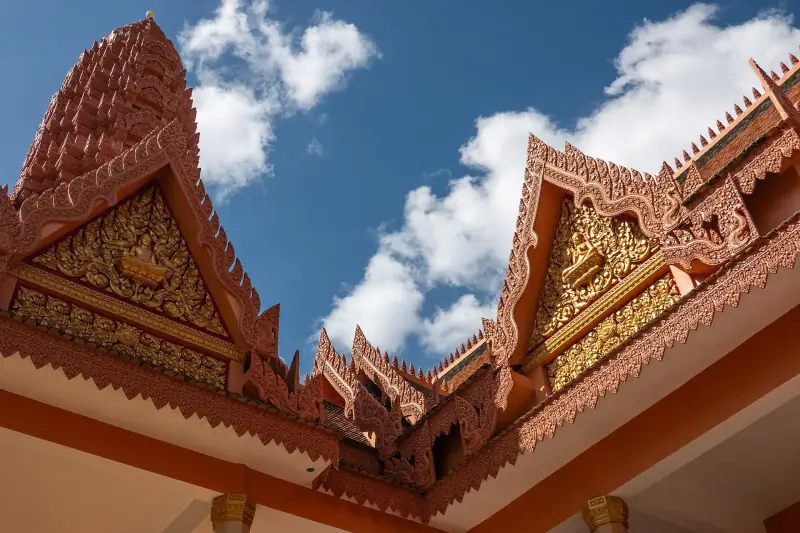
Visiting Siem Reap: Complete Guide to Cambodia's Temple Town
Everything for visiting Siem Reap: Angkor temples, Pub Street, markets, apsara dance, Tonle Sap, getting around, food and practical tips.
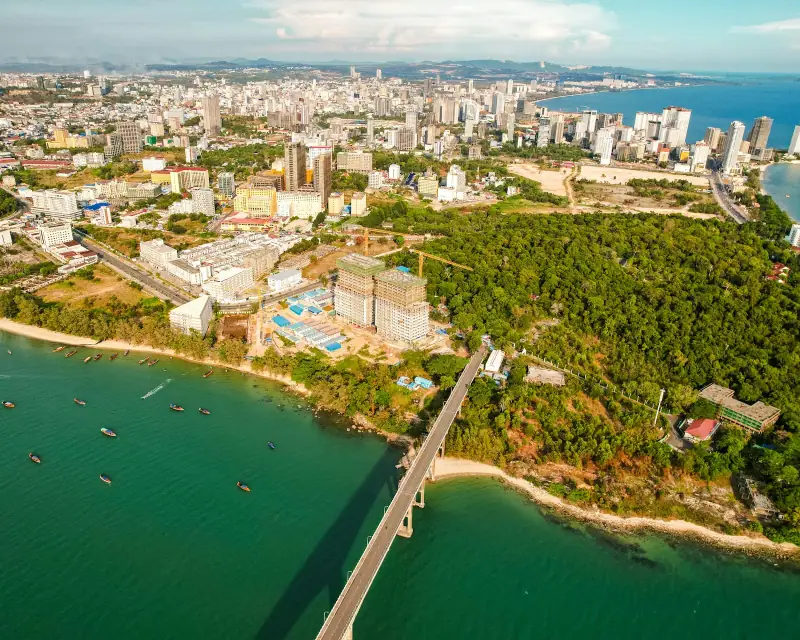
Visiting Sihanoukville: Complete Guide to Cambodia's Coast
Complete guide to Sihanoukville: Otres and Occheuteal beaches, diving, the ferry to Koh Rong, where to stay and practical tips.
Ready-made
Cambodia itineraries

12 days
Cambodia in 12 Days with Kids: Stops, Distances and a Realistic Pace
Siem ReapPhnom PenhKampotKoh Rong Samloem
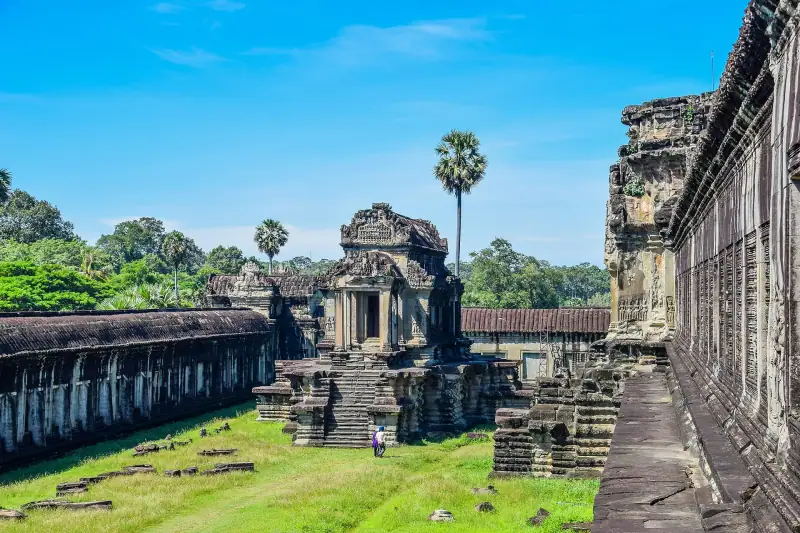
7 days
Cambodia in 7 Days: The Perfect One-Week Itinerary
Phnom PenhSiem Reap
Can be adapted in the planner
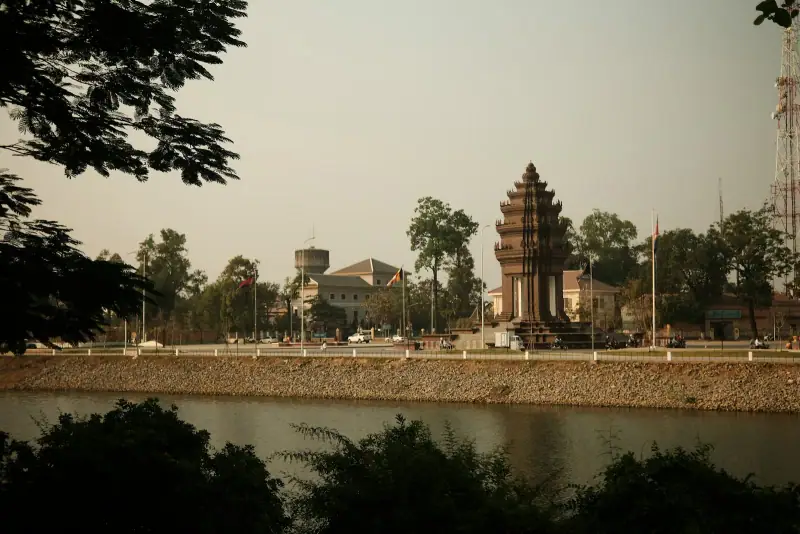
4 days
Road Trip in Northwest Cambodia: Battambang and Around in 4 Days
4-day road trip itinerary in northwest Cambodia: bamboo train, rice paddies, Phnom Sampeau bats and Angkorian temples away from the crowds.
Can be adapted in the planner