Itineraries
Cambodia Itinerary for 2 to 3 Weeks: The Complete Route
We may earn a commission when you book through links on this page, at no extra cost to you. We don't visit or try the places we cover: we summarize published sources. How we work
Day by day
- Day 1Phnom Penh: Riverside, Royal Palace, Sisowath Quay
- Day 2Tuol Sleng museum and Choeung Ek Killing Fields
- Day 3National Museum, Central Market, Russian Market; leave for Siem Reap
- Days 4-5Angkor Wat, Angkor Thom, Bayon, Ta Prohm
- Day 6Banteay Srei, Preah Khan, East Mebon; optional Beng Mealea
- Day 7Tonle Sap lake cruise and floating villages
- Day 8Siem Reap: Artisans Angkor, Phsar Chas, Pub Street
- Days 9-10Battambang: bamboo train, Phnom Sampeau cave, Wat Banan
- Days 11-12Kampot: colonial streets, Phnom Chhnork cave, pepper plantations
- Day 13Kep: crab market, beach, national park, Koh Tonsay
- Days 14-16Ferry to Koh Rong or Koh Rong Samloem
Weather through the year on this route
| Jan | Feb | Mar | Apr | May | Jun | Jul | Aug | Sep | Oct | Nov | Dec | |
|---|---|---|---|---|---|---|---|---|---|---|---|---|
| High °F (°C) | 9334 | 9937 | 10038 | 9937 | 9334 | 9032 | 8831 | 8630 | 8630 | 8630 | 8831 | 9032 |
| Low °F (°C) | 7222 | 7323 | 7725 | 7926 | 7926 | 7725 | 7524 | 7524 | 7524 | 7524 | 7323 | 7222 |
| Rain in (mm) | 0.820 | 0.410 | 1.230 | 2.870 | 5.7145 | 8.5215 | 7.7195 | 7.9200 | 8.1205 | 7.3185 | 3.590 | 1.230 |
Normals 1991–2020 at Phnom Penh: averages over 30 years, not a forecast. Source: NASA POWER (MERRA-2), grid of about 50 km. Figures computed by us in November 2026.
In short
- The 2-week route: Phnom Penh (2 days), Siem Reap/Angkor (4), Battambang (2), Kampot (2), Kep (1), Sihanoukville and the islands (2).
- A full route including Phnom Penh, Angkor, Battambang, Kampot/Kep and the islands takes 3 weeks at minimum. With 2 weeks, you have to make choices.
- The Siem Reap to Battambang boat takes 6 to 8 hours and costs 25 to 30 USD. Battambang to Kampot is 8 to 9 hours via Phnom Penh.
- Extensions for days 17 to 21: Mondulkiri, Ratanakiri, the south coast, Kratie and its Irrawaddy dolphins.
Cambodia is a country you never tire of exploring. Beyond the must-sees of Angkor and Phnom Penh, the country holds treasures that are often overlooked: the colonial town of Battambang, the melancholy atmosphere of Kampot, the seaside charm of Kep and the crystal-clear islands of the Gulf of Thailand. This complete route takes you through all these faces of Cambodia in 2 to 3 weeks.
Route overview
2-week route: Phnom Penh (2 days) → Siem Reap/Angkor (4 days) → Battambang (2 days) → Kampot (2 days) → Kep (1 day) → Sihanoukville/islands (2 days) → return 3-week route: Add extensions into the nature parks and remote provinces, or lengthen each stop.
Days 1-3: Phnom Penh, the capital of contrasts
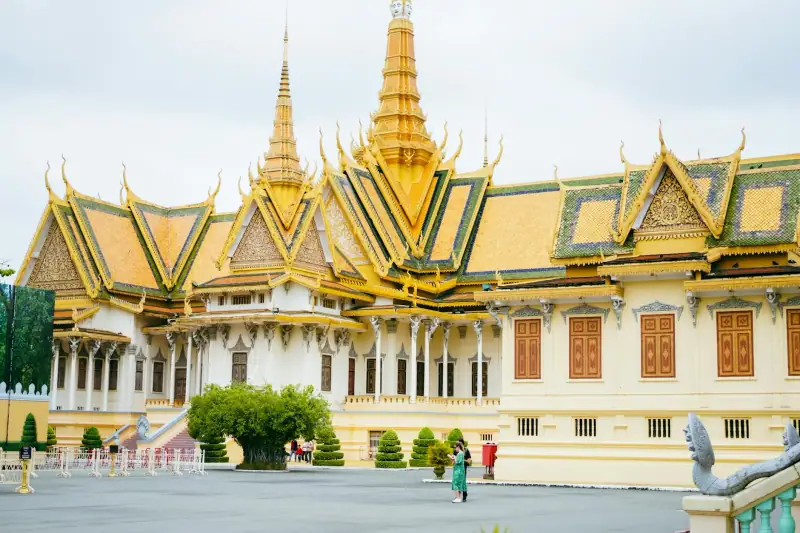
The Cambodian capital is often underrated by travelers in a hurry to reach Angkor. That is a mistake: Phnom Penh deserves at least 2 full days, ideally 3.
Day 1: Arrival, check-in, and a first look at the Riverside and the Royal Palace. Dinner at a Khmer restaurant on the Tonle Sap. Enjoy a walk along Sisowath Quay at sunset.
Day 2: Morning at the Tuol Sleng Genocide Museum (S-21) and afternoon at the Choeung Ek Killing Fields. This double historical program is emotionally intense, so allow time for reflection and do not plan anything demanding for the evening.
Day 3: National Museum (Khmer art), Central Market (Phsar Thmei), Russian Market for shopping. Lunch at a Cambodian restaurant in BKK1. Leave in the afternoon or the next morning for Siem Reap.
See our complete guide to Phnom Penh and our guide to where to stay in Phnom Penh.
Days 4-8: Siem Reap and the Angkor temples
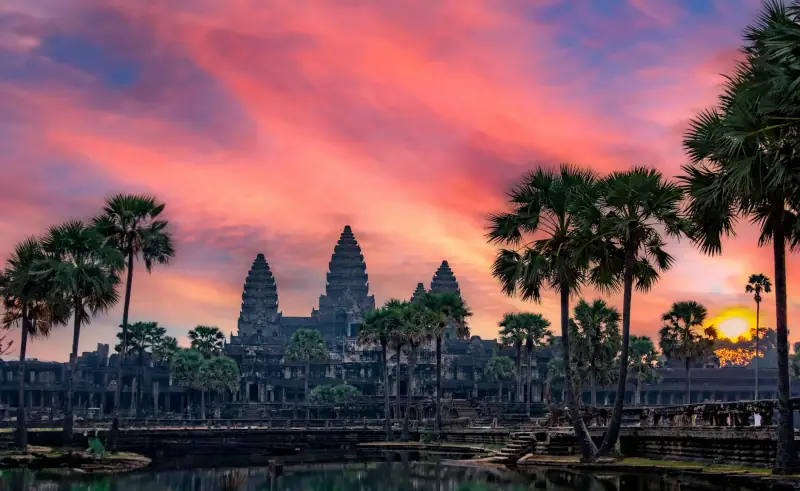
Five days in Siem Reap let you explore Angkor in depth while also getting to know the town.
Days 4-5: The major temples of Angkor: Angkor Wat (sunrise is the highlight), Angkor Thom, the Bayon, Ta Prohm. The short circuit covers about 20 km (12 mi).
Day 6: The outlying temples: Banteay Srei (a temple with superb pink carvings), Preah Khan, East Mebon. Optional: Beng Mealea (a “jungle” temple 70 km / 43 mi away, a half-day trip, impressive).
Day 7: Excursion to Tonle Sap lake: a cruise on the largest lake in Southeast Asia with a visit to the floating villages. Spectacular in the dry season when the lake is at its lowest, fascinating during the monsoon when it grows 5 to 6 times larger (from 2,500 km² to 16,000 km², or 965 to 6,180 sq mi).
Day 8: Siem Reap itself: Artisans Angkor, the town’s temples, Phsar Chas market, Pub Street. Leave for Battambang in the afternoon or the next day.
For details, see our guide to the Angkor temples and our guide to where to stay in Siem Reap.
Days 9-10: Battambang, the authentic town
The boat trip from Siem Reap to Battambang (6 to 8 h, 25 to 30 USD) on the Sangker River is one of the most beautiful river cruises in the country, through jungle landscapes and fishing villages. The duration varies with the water level and the season.
Day 9: Arrival in Battambang. Bike ride around the colonial town center, morning market, the temples of Wat Banan (on a hill, panoramic view). Dinner at an authentic Cambodian restaurant.
Day 10: The famous bamboo train: a platform on wheels set on rails and driven by a generator engine. Unique and unforgettable. Visit the cave paintings of Phnom Sampeau and the Killing Caves memorial (an execution site of the Khmer Rouge). Leave for Kampot on the morning of day 11: the trip (8 to 9 h via Phnom Penh by minivan) takes a full day.
Days 11-12: Kampot, the sleepy colonial town
Kampot is one of Cambodia’s lesser-known gems. This provincial town on the Praek Tuek Chhu River has kept its French colonial architecture and a laid-back atmosphere that makes longer stays appealing.
Day 11: Arrival in Kampot, a walk through the colonial streets, a visit to the old Khmer quarter. Rent a bike (2 USD a day) to explore the surroundings. Dinner by the river with a view of the Elephant Mountains.
Day 12: Excursion to the Phnom Chhnork cave (a 7th-century Hindu temple dedicated to Shiva, sheltered by a natural cave, free) and the Kampot pepper plantations (one of the world’s most renowned peppers). In the evening, sunset from the Kampot bridge.
Day 13: Kep, the forgotten seaside resort
Kep is only 25 km (16 mi) from Kampot, a short excursion or an extra night. This former French seaside resort from the 1960s, devastated by the Khmer Rouge, is slowly rebuilding. Its abandoned colonial villas overgrown with vegetation have a unique, melancholy charm.
Kep highlights: the crab market (be sure to try the crabs with Kampot pepper), Kep beach (small but pleasant), Kep National Park, and Koh Tonsay (Rabbit Island), reached by boat (30 min, 7 USD round trip).
Days 14-16: The islands, paradise of the Gulf of Thailand
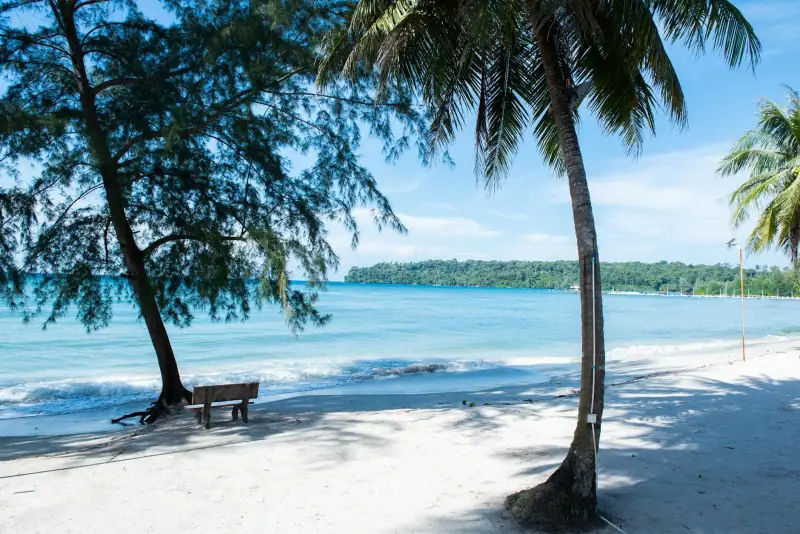
Take the ferry from Sihanoukville (or directly from Kampot in high season) to Koh Rong or Koh Rong Samloem.
Koh Rong: Beautiful beaches, lively nightlife in Koh Touch (the main village), snorkeling, nighttime bioluminescence in the sea. For details, read our guide to the Cambodian islands.
Koh Rong Samloem: Quieter, with preserved forests and deserted beaches at Saracen Bay. Ideal for diving and unplugging.
Activities on the islands: snorkeling, diving, kayaking, hiking, a night in a bungalow on stilts.
Hotels on the Cambodian coast
Bungalows, resorts and guesthouses by the sea.
Days 17-21: Possible extensions
If you have more time, here are the possible extensions:
Mondulkiri (the wild province of the east): Meet elephants at the ELIE sanctuary or the Mondulkiri Project, waterfalls, Bunong ethnic minorities. 6 to 7 h by minivan or bus from Phnom Penh.
Ratanakiri (far northeast): Yeak Laom volcanic lake, dense forests, hill-tribe villages. Reached from Stung Treng.
Sihanoukville and the coast: The town has been massively transformed by Chinese tourism investment since 2017. The atmosphere is no longer what it was, but the surroundings (Otres Beach, Koh Russei island) still have some lovely spots.
Kratie and the Irrawaddy dolphins: A quiet village on the Mekong where the rare Irrawaddy dolphins live. 5 hours by bus from Phnom Penh.
Getting back
If you are coming back from the islands or Sihanoukville, there are several options:
- Bus Sihanoukville to Phnom Penh (3 to 4 h, 12 to 15 USD), then your flight home from Phnom Penh
- To return via Thailand, fly (Phnom Penh or Siem Reap to Bangkok): the direct Sihanoukville to Bangkok bus is not possible while the land border is closed
- Flight Sihanoukville to Phnom Penh to save time (check direct connections with the airlines)
Cambodia will leave you with unforgettable images and emotions. This route is designed so that you leave wanting to come back, and that usually ends up happening.
Frequently asked questions
How long does it take to do a complete tour of Cambodia?
For a full route including Phnom Penh, Angkor, Battambang, Kampot/Kep and the islands, allow 3 weeks at minimum. With 2 weeks, you can see the essentials by making choices. With 1 week, focus on Phnom Penh and Angkor.
Do you need a local guide for a trip through Cambodia?
A local guide is not essential but enriches the experience considerably, especially at Angkor and the historic sites of Phnom Penh. Local agencies such as Terre Cambodge or Cambodian Trails offer tailor-made tours with guides.
Is it possible to travel through Cambodia solo?
Yes, Cambodia is very accessible to solo travelers. Transport between the main cities is well developed, hostels make it easy to meet people, and Cambodians are very welcoming. A solo trip of 2 to 3 weeks is entirely feasible.
Can you include a neighboring country in the trip?
Yes, many travelers combine Cambodia and Thailand (by air: the land border crossings, including Poipet, have been closed to tourists since June 2025 and no reopening had been announced as of fall 2026; check before you go), Cambodia and Vietnam (eastern border via Bavet or Moc Bai), or do a full Indochina trip including Laos, Vietnam and Cambodia.
What is the best way to travel between Cambodian cities?
Air-conditioned buses (Giant Ibis, Mekong Express) are the most comfortable and economical option. For Phnom Penh to Siem Reap, the plane (45 min) saves time. Boats run on some stretches in the rainy season. Avoid night buses on roads in poor condition.
More Cambodia guides
Keep reading
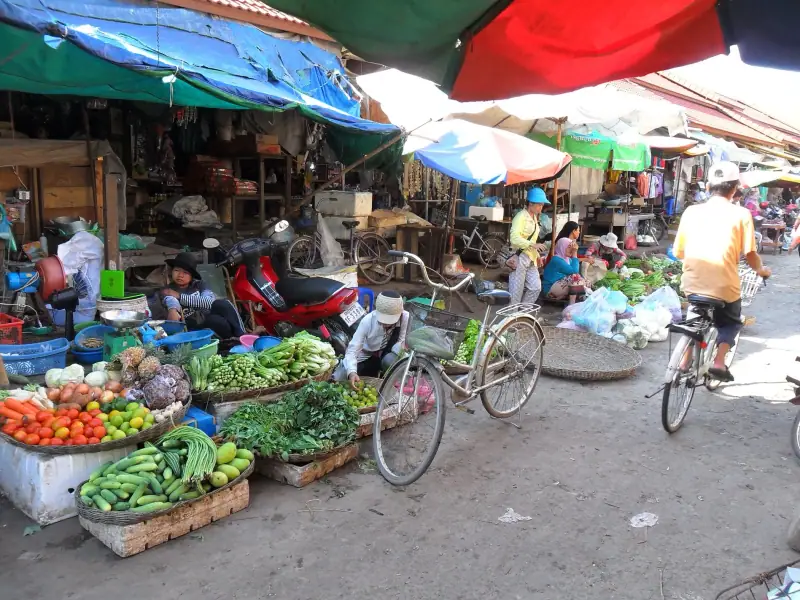
Cambodia Travel Budget: How Much Does a Trip Cost in 2026?
How much does a trip to Cambodia cost? Daily budgets, hotel prices, transport, meals and activities so you can plan your stay without surprises.
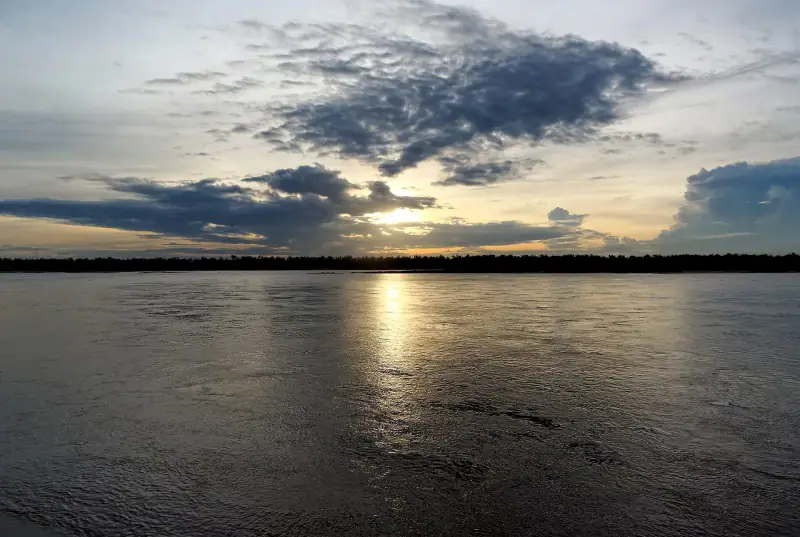
Eastern Cambodia: Kratie, Ratanakiri and Mondulkiri, the wild east
Exploring eastern Cambodia: Mekong dolphins at Kratie, Yeak Loam lake in Ratanakiri, ethical elephant experiences in Mondulkiri. A practical guide.
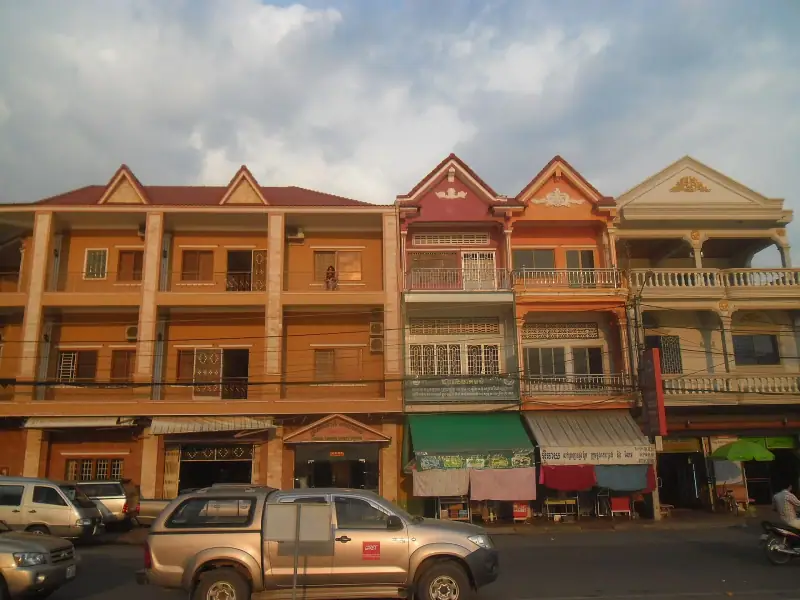
Where to Stay in Kratie: In Town or on Koh Trong Island?
Stay in Kratie or on Koh Trong island? Areas, lodging types, getting to the Mekong dolphins and tips for choosing based on your trip.
Ready-made
Cambodia itineraries
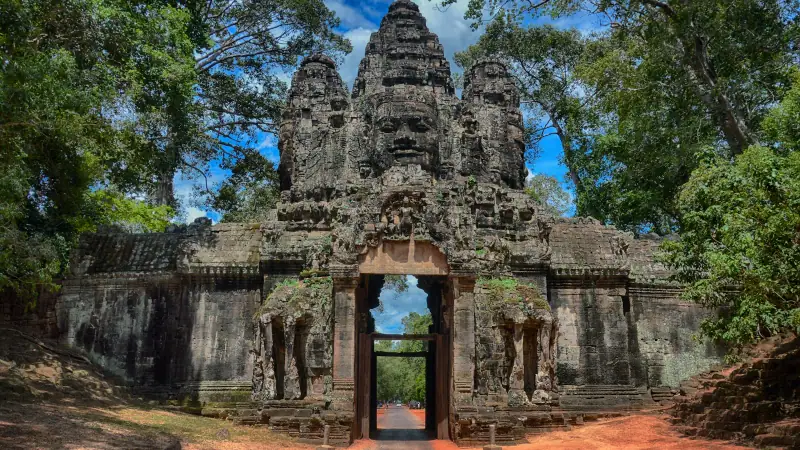
12 days
Cambodia in 12 Days with Kids: Stops, Distances and a Realistic Pace
Siem ReapPhnom PenhKampotKoh Rong Samloem
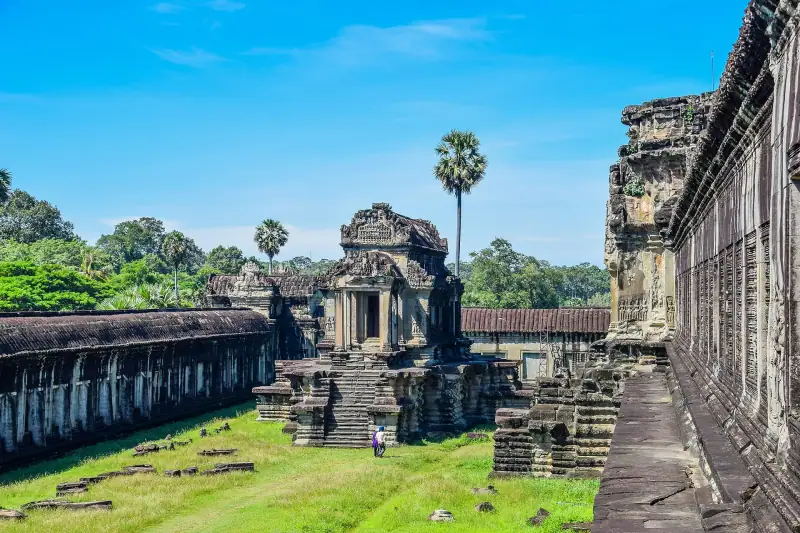
7 days
Cambodia in 7 Days: The Perfect One-Week Itinerary
Phnom PenhSiem Reap
Can be adapted in the planner
4 days
Road Trip in Northwest Cambodia: Battambang and Around in 4 Days
4-day road trip itinerary in northwest Cambodia: bamboo train, rice paddies, Phnom Sampeau bats and Angkorian temples away from the crowds.
Can be adapted in the planner